
Top 12 Best All Trail Mountain Bike Picks You Can’t Miss
Riding a cheap mountain bike on rough trails often means dealing with frequent breakdowns, poor handling, and uncomfortable fit. Finding the best all trail mountain bike can solve these issues by offering a bike built to handle a variety of terrains without constant repairs.
Many riders know how frustrating it is to push a bike that’s either too heavy or too flimsy, turning what should be an enjoyable ride into a chore.
The key features that separate a solid all trail mountain bike from a poor one start with the frame material. Most quality bikes use aluminum or carbon fiber frames, aluminum offers durability without too much weight, while carbon fiber is lighter but more expensive.
Suspension travel is another critical aspect; all trail bikes typically have between 120mm and 150mm of front and rear travel to absorb bumps without sacrificing pedaling efficiency. Fit also plays a big role, with frame sizes tailored to rider height and adjustable components to ensure control and comfort on longer rides.
Need a Quick Check?
| Image | Product | Price |
|---|---|---|
Our Top Picks 1  | Huffy Stone Mountain | Check Price |
Our Top Picks 2  | Lightweight Aluminum Bike | Check Price |
Our Top Picks 3  | SAVADECK Titan 612 | Check Price |
Our Selected Top 12 All Trail Mountain Bike You Can Trust
This list features versatile all-trail mountain bikes designed for varied terrains and rider needs. Each review covers performance, suitability for different skill levels, and highlights both strengths and weaknesses to help you make an informed choice.
1. Huffy Stone Mountain Bike
Comfort and control stand out with this bike’s smooth dual suspension, making it ideal for beginner riders tackling trails and gravel paths. It suits anyone looking for an affordable, reliable mountain bike that handles rough terrain without fuss.
The steel frame also adds durability, so it feels solid without being overly complex.
Setup is straightforward with easy assembly, which is a relief for those who don’t want to spend hours in the garage. Daily rides feel controlled thanks to the front suspension fork paired with the rear spring shock that absorb bumps nicely. The twist shifters and 21-speed Shimano gears offer smooth changes when climbing or descending, while the adjustable seat and included kickstand add convenience during stops and rides.
It handles mountain terrain well, offering a stable and comfortable ride. The steel frame feels sturdy and built to last, though it does add some weight compared to lighter materials.
The linear pull brakes respond adequately, providing reliable stopping power on trails. Some riders note the bike could be heavier, but most praise the suspension’s ability to smooth out rough ground.
The bike receives strong praise for its comfortable dual suspension that smooths out rough trails, making outdoor rides more enjoyable. The most common issue mentioned is the bike’s weight, which can feel a bit heavy, especially when compared to lighter mountain bikes.
Riders new to mountain biking and those prioritizing comfort and durability will find it a good fit. Better options might be available for those seeking a lighter or more competitive mountain biking experience, given the bike’s heavier steel frame and basic shifter setup.
Pros
- Comfortable ride with dual suspension
- Durable steel frame with stylish design
- Wide 21-speed Shimano gear range
- Easy to assemble and adjust seat
Cons
- Heavier due to steel frame construction
- Twist grip shifters less precise than trigger types
| Specification | Details |
|---|---|
| Suspension Type | Dual |
| Number Of Speeds | 21 |
| Gear Shifter Type | Twist Grip |
| Frame Material | Steel |
| Brake Style | Dual linear pull |
| Intended Riding Terrain | Mountain Terrain |
2. Lightweight Aluminum Mountain Bike
Lightweight Aluminum Mountain Bike suits riders looking for a solid all-trail option with reliable stopping power. Its standout strength lies in combining a strong yet lightweight aluminum frame with responsive dual mechanical disc brakes that handle all weather conditions confidently.
Setup arrives nearly complete with 85 percent pre-assembled parts and tools included, making the quick-release front wheel easy to attach. Daily rides benefit from smooth gear changes thanks to the 21-speed drivetrain. Front suspension softens bumps, keeping rides comfortable on rough or unpaved paths.
Brake levers respond sharply, giving you control when terrain gets challenging.
Traveling over mountain and trail terrain feels secure due to the durable frame and dependable trigger shifters. The front suspension fork effectively absorbs shocks, while the drivetrain shifts smoothly between gears. Most users praise the braking consistency and lightweight build, though a few note that mechanical disc brakes require occasional adjustment.
Build quality holds up well to regular outdoor use.
Braking system stands out for instant response even in wet conditions, providing reliable control. The main drawback is that the mechanical disc brakes can need periodic adjustments to maintain their performance. The lightweight frame and suspension create a comfortable experience on rough terrain without weighing the rider down.
Riders who want a dependable trail bike with efficient stopping and gear versatility will enjoy this mountain bike. Those preferring minimal assembly or hydraulic brakes might want to consider other models. It fits best on unpaved trails and mountainous rides but handles city and touring use adequately as well.
Pros
- Lightweight aluminum frame for easier climbs
- Dual mechanical disc brakes deliver consistent stopping power
- Front suspension fork absorbs trail shocks smoothly
- 21-speed drivetrain offers versatile gear options
Cons
- Mechanical disc brakes need occasional tuning
- Assembly required despite pre-assembled parts
| Specification | Details |
|---|---|
| Bike Type | Mountain Bike |
| Number Of Speeds | 21 |
| Suspension Type | Front Suspension |
| Brake Style | Disc |
| Frame Material | Aluminum |
| Wheel Type | Quick Release |
3. SAVADECK Titan 612 Carbon Fiber Mountain Bike
Riding over rocky descents and tricky trails feels surprisingly smooth and controlled with its lightweight carbon fiber frame, built for precision and speed. Suited for anyone focused on technical and enduro mountain biking, it handles tough terrain without feeling bulky or heavy.
Setup involves adjusting the dual-link suspension with its DNM air shock and hydraulic lockout to fit your ride style, making climbs feel supported and descents manageable. Internal cable routing keeps things clean, avoiding mud buildup and drag during rides. Daily use shows the advantage of strong disc brakes and a 12-speed cassette for quick, responsive shifting on various trails.
Performance excels on uneven, root-filled paths thanks to the full-suspension design that helps maintain traction and stability. The reinforced rear triangle adds durability without weight, perfect for high-speed cornering.
Most praise focuses on the bike’s balanced feel across rough terrain, while some note the trigger shifters could be a bit more refined for smoother shifting.
The carbon frame combined with the dual-link suspension creates a rider experience praised for stability and smoothness on challenging trails, although some find the trigger shifters less refined when changing gears. Dirt and debris stay clear thanks to the internal cable routing, helping maintain reliable performance throughout rides.
Technical trail riders and those focused on enduro biking will appreciate the bike’s responsiveness and specialized suspension setup. Riders prioritizing the smoothest gear shifting might consider other options, but anyone wanting a strong frame and hydraulic disc brakes will find this bike a solid choice.
Pros
- Lightweight full-suspension carbon frame
- Dual-link suspension handles rough terrain well
- Hydraulic lockout for customizable riding
- Internal cable routing protects cables
Cons
- Trigger shifters feel slightly less smooth
- No electric shifting option available
| Specification | Details |
|---|---|
| Bike Type | Mountain Bike |
| Number Of Speeds | 12 |
| Suspension Type | Dual |
| Brake Style | Disc |
| Bicycle Gear Shifter Type | Trigger |
| Bicycle Drivetrain Type | Derailleur |
4. VEVOR Mountain Bike
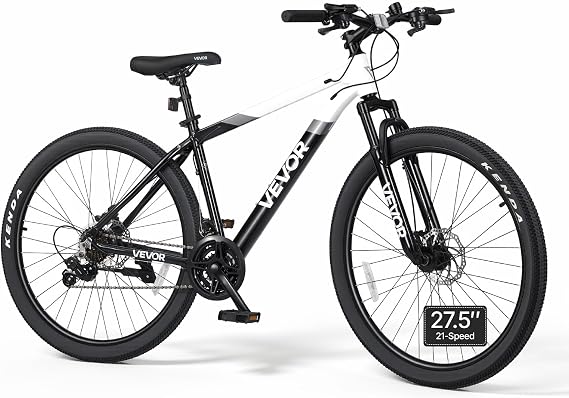
Great for anyone wanting a reliable all-trail mountain bike without breaking the bank, it shines in handling rough paths and daily rides thanks to its sturdy suspension fork. Perfect for casual riders aiming for comfort and control over varied terrains.
Setup is straightforward, with the Shimano 21-speed drivetrain making it simple to switch gears smoothly during rides. The suspension fork softens bumps well, and the wider tires grip dirt and pavement firmly, keeping rides steady.
Day-to-day, it manages unpaved trails and street rides without feeling too heavy or sluggish.
It performs solidly on mountain terrain, paved roads, and unpaved trails thanks to its front suspension and strong mechanical disc brakes that handle wet conditions confidently. The bike feels well-built for its category, while some users mention that the mechanical disc brakes could require occasional adjustments to maintain responsiveness.
Many find the suspension fork and tire design keep rides comfortable and controlled, while the most frequent complaint revolves around the disc brakes needing occasional adjustments to maintain braking power. This means it works well for daily and light off-road rides but may require some maintenance attention.
Riders who enjoy casual mountain and trail biking without intense off-road demands will be satisfied. Those seeking advanced suspension or more powerful braking for aggressive trails should consider a different option.
Pros
- Shock-absorbing suspension fork improves comfort
- Widened tires provide steady traction on varied surfaces
- Smooth Shimano 21-speed gear shifting
- Reliable front and rear mechanical disc brakes
Cons
- Disc brakes sometimes need fine-tuning
- Front suspension only, no rear shock
| Specification | Details |
|---|---|
| Bike Type | Mountain Bike |
| Number Of Speeds | 21 |
| Suspension Type | Front |
| Brake Style | Disc |
| Intended Riding Terrain | Mountain Terrain, Paved Roads, Unpaved Trails |
5. WEIZE Mountain Bike

Lightweight aluminum makes this bike a solid choice for adults seeking flexibility in trail riding and city cruising. Available in two sizes to fit a wide height range, it stands out for smooth gear shifting across varied terrains.
It suits anyone looking for an easy-to-ride mountain bike that works just as well on streets as on dirt paths.
Setup is straightforward with an adjustable seat and a rear derailleur for 21-speed options that allow smooth transitions as you move from flat roads to hills. The bike includes a rigid suspension and disc brakes, offering control without complicated maintenance.
The included kickstand and front reflector add practical touches for everyday city or park riding.
The bike feels stable and responsive on mountain terrain and paved paths alike, thanks to its 2.125-inch wide tires and lightweight frame. The build emphasizes durability over suspension comfort, reflecting in some reports of a firm ride on rough trails. Most praise comes from appreciating the dependable gear shifting, while complaints center around the rigid suspension’s lack of cushioning.
Gear shifting is smooth and keeps pace with changes in terrain, making rides enjoyable across streets and trails. The rigid suspension is often noted as uncomfortable when the path gets bumpy, which may limit trail comfort.
People seeking a reliable bike for commuting and light off-road use will appreciate this bike. Anyone looking for more suspension comfort or true mountain biking performance on rougher trails might want to explore options with front or full suspension systems.
Pros
- Lightweight aluminum frame for easy handling
- 21-speed system for varied terrain
- Disc brakes provide reliable stopping power
- Adjustable seat improves riding comfort
Cons
- Rigid suspension can feel harsh on rough trails
- Single-speed gear listed contradicts 21-speed claim
| Specification | Details |
|---|---|
| Bike Type | Cruiser Bike |
| Number Of Speeds | 1 |
| Suspension Type | Rigid |
| Brake Style | Disc |
| Adjustable Seat | Yes |
| Bicycle Drivetrain Type | chain drive |
6. Mongoose Flatrock

Lightweight aluminum frame and 26-inch wheels stand out for anyone eyeing a solid all-trail mountain bike. It fits riders from 5’4 to 6’2 comfortably and is designed to tackle rougher terrain with good traction and a smooth ride experience.
Setup involves a simple twist grip shifter for the 7 speeds, making gear changes straightforward, while the front suspension fork takes the edge off bumps on unpaved trails. V-brakes provide dependable stopping power, and the durable mountain tires hold grip well, allowing you to confidently explore off-road paths without constant worry about the bike’s handling.
It really excels on mountain terrain where the suspension fork and knobby tires help you maintain control. The aluminum build keeps it lightweight enough for easier rides uphill but tough enough for trails.
Reviews often praise its traction and smooth ride but mention that the brakes could feel less responsive on very steep descents.
The bike is praised for smooth handling on rough terrain and the way the suspension fork absorbs bumps. The most common issue noted is the V-brakes’ performance during steep descents, which some find less effective than expected. It holds up well during trail rides and feels sturdy and reliable.
People seeking a capable all-trail mountain bike with manageable weight and straightforward controls will be pleased. Those wanting full suspension or more powerful braking might want to look elsewhere. It works best for intermediate riders enjoying unpaved and mountainous paths.
Pros
- Lightweight aluminum frame
- Knobby tires for solid traction
- Front suspension smooths out bumps
- Easy twist grip shifting
Cons
- Brakes could be more responsive downhill
- Only front suspension, no rear shock
| Specification | Details |
|---|---|
| Bike Type | Mountain Bike |
| Number Of Speeds | 7 |
| Suspension Type | Front |
| Brake Style | V Brake |
| Bicycle Gear Shifter Type | Twist Grip |
| Intended Riding Terrain | Mountain Terrain, Unpaved Trails |
7. Mongoose Impasse

Designed for riders between 5’3 and 6’0, the Mongoose Impasse handles rough trails with confidence thanks to its sturdy yet lightweight aluminum frame. It stands out because of its wide 2.6-inch tires that grip uneven terrain well, making it a solid choice for anyone who wants reliable control off the beaten path.
Setting up the bike is straightforward, and daily rides feel smooth, thanks to the front suspension fork that softens bumps. The 7-speed trigger shifters offer easy gear changes, helping you adjust quickly to steep climbs or rough patches. The disc brakes provide consistent stopping power, which is crucial when descending or navigating tricky sections.
Trail performance is solid, with the aluminum hardtail frame balancing durability and weight well. The knobby tires stick to dirt and rocks effectively, giving confidence on uneven ground.
A common note mentions the 7-speed drivetrain works fine but could offer more range for serious mountain riding. Build quality feels durable without adding unnecessary bulk, suitable for both men and women.
The strong point is the bike’s ability to maintain control on difficult terrain using its wide tires and suspension fork. Some find the 7-speed system a bit limited when tackling very steep or varied climbs. The frame and components feel sturdy and well made for the price.
The Impasse suits riders who want dependable performance on regular trail rides and value a lightweight frame. Someone looking for more advanced gearing or full suspension might look elsewhere for their mountain biking needs.
Pros
- Lightweight aluminum hardtail frame
- Wide tires for better grip and stability
- Reliable disc brakes for safety
- Easy-to-use 7-speed trigger shifters
Cons
- Limited gear range for very steep trails
- Only front suspension, no rear shock
| Specification | Details |
|---|---|
| Bike Type | Mountain Bike |
| Number Of Speeds | 7 |
| Suspension Type | Full |
| Brake Style | Disc |
| Bicycle Tires | 2.6 inches wide, knobby |
8. WEIZE Dual Suspension Mountain Bike

Hitting uneven trails and city paths calls for a reliable bike that fits just right and cushions every bump. The WEIZE Dual Suspension Mountain Bike suits riders between 5’2 and 6’2 who want comfort and control without fuss.
Its standout feature is the dual suspension, which softens rough rides for smoother adventures.
Getting started is straightforward with an adjustable seat that helps find a comfy riding position quickly. The twist grip shifter makes switching through 18 speeds smooth enough for varying terrain.
Kickstand and reflectors add practical touches for convenience and safety during daily rides, whether off-road or on paved paths.
The front suspension fork paired with rear coil shock handles bumps very well, making the ride feel less jarring. A high-carbon steel frame ensures durability without feeling excessively heavy.
Most users praise the suspension setup for comfort, while some wish the V brakes offered stronger stopping power.
Riders appreciate how well the front and rear suspension work together to smooth out rough patches, making rides more enjoyable. Some feel the V brakes don’t provide enough stopping force when going downhill or on challenging trails.
People looking for a solid, adjustable mountain bike for mixed terrain will find this one suits their needs well. Those who prioritize lighter weight or stronger braking might want to explore other options.
Pros
- Fits riders from 5’2″ to 6’2″ comfortably
- Dual suspension absorbs bumps well
- 18-speed twist grip gear shifting
- Includes kickstand and reflectors
Cons
- V brakes are less powerful on steep descents
- Steel frame adds noticeable weight
| Specification | Details |
|---|---|
| Bike Type | Mountain Bike |
| Number Of Speeds | 18 |
| Suspension Type | Dual |
| Brake Style | V Brake |
| Adjustable Seat | Yes |
9. Mongoose Dolomite Fat Tire Mountain Bike

Supersized knobby tires and a steel frame make this mountain bike a solid choice for riders between 5’4 and 6′ tall, especially those looking to tackle rough trails without much fuss. Its biggest strength lies in how those fat tires grip all kinds of off-road surfaces with ease.
Setup feels straightforward, with a threadless headset designed to boost speed and performance. The twist grip shifter paired with a 1 x 7 drivetrain lets you shift gears smoothly on the go.
Beach cruiser pedals add to the comfort, while front and rear mechanical disc brakes give reliable stopping power. Adjustable sizing makes it fit a range of heights, which covers most casual trail riders well.
Performance-wise, the bike handles rugged paths competently, thanks to its 26-inch wheels and fat tire combination that provide good stability. The steel frame keeps it durable but adds some extra weight compared to lightweight materials.
Most praise the traction on tricky terrain, while the main complaint is about the bike’s weight making it less nimble for quick maneuvers.
Traction on off-road trails consistently impresses with the fat tires, but the overall weight and rigid suspension lead to a heavier, less forgiving ride. Comfort comes more from the tires and pedals than from shock absorption.
Anyone looking for a straightforward, sturdy mountain bike that performs well on varied terrain will appreciate it. Riders seeking lighter frames or smoother suspension might want to explore other options better suited for more aggressive trail riding.
Pros
- Wide tires offer excellent grip on various surfaces
- Adjustable fit for riders 5’4″ to 6′
- Mechanical disc brakes provide solid stopping power
- Simple 7-speed drivetrain with smooth gear shifts
Cons
- Steel frame adds noticeable weight
- Rigid suspension can feel harsh on rough trails
| Specification | Details |
|---|---|
| Bike Type | Mountain Bike |
| Number Of Speeds | 7 |
| Suspension Type | Rigid |
| Brake Style | Disc |
| Intended Riding Terrain | Mountain Terrain |
10. Schwinn High Timber Electric Mountain Bike

Mountain trail riders looking for an electric boost to handle hills and rough terrain will appreciate how easy the ride feels. The Schwinn High Timber Electric Mountain Bike offers a smooth, confident experience with a 350W motor that supports speeds up to 20 mph, making tough climbs less daunting.
Setting it up involves a quick charge of the rechargeable lithium battery and adjusting the quick release seat to your comfort. Day-to-day use benefits from three pedal-assist levels and a throttle for instant power when you need it, all controlled through a clear digital display. Its front suspension softens bumps, and the dual disc brakes provide reliable stopping power.
Performance-wise, the bike handles mountain terrain and unpaved trails well, blending motor assistance with manual pedaling. The frame and components are solidly built for trail use, though some users note that the 7-speed gear range can feel limited on varied inclines. The best feature is the power delivery, but expect some weight from the battery and motor setup.
The 350-watt motor power makes it easy to tackle tough terrain, a feature many users really appreciate. On the downside, the limited number of gears can make some steep or varied trails more challenging to manage smoothly. Battery weight also affects handling for longer rides.
Riders who want electric assistance primarily for moderate to difficult trails and prefer straightforward controls will find this bike suitable. Those looking for very lightweight builds or a wider gear range for technical climbs might want to explore other models.
Pros
- Throttle for immediate acceleration
- Three pedal-assist levels
- Dual disc brakes for strong stopping
- Front suspension for trail comfort
Cons
- Seven speeds may feel limited on hills
- Battery weight adds to overall bike heft
| Specification | Details |
|---|---|
| Power Source | Battery |
| Wattage | 350 watts |
| Lithium Battery Energy Content | 375 watt-hours |
| Number Of Speeds | 7 |
| Suspension Type | Front |
| Brake Style | Disc |
11. Canyon Stoic 4

Hardtail mountain bikes often lack the confidence needed for aggressive trails, but the Canyon Stoic 4 breaks that mold with a tough aluminum frame and modern geometry for stable handling. It suits riders seeking a playful yet reliable bike that can tackle rough mountain terrain without unnecessary complexity.
Adjusting the seat height is straightforward, which helps dial in the fit for long rides. The 140mm RockShox Pike Select fork smooths out technical sections and big drops, keeping control tight.
A 12-speed Shimano Deore drivetrain shifts crisply whether climbing or descending, making everyday trail riding enjoyable and responsive.
Performance on jumps and technical trail features feels confident with the slack geometry and durable build standing up to rough use. The aluminum frame combines strength with surprisingly light weight, making the bike feel nimble but sturdy.
Most praise focuses on its capable handling and suspension, while the common complaint notes it’s limited to front suspension only, which may not suit riders who prefer full suspension.
Riders appreciate the bike’s stable and responsive ride, especially praising the 140mm RockShox fork for handling rough mountain terrain confidently. A common drawback is the absence of rear suspension, which limits comfort and control on extremely technical descents.
The Stoic 4 fits riders who want a durable, straightforward bike that’s easy to maintain and reliable for varied trail conditions. Those looking for softer rides or full suspension benefits would be better off considering other models designed for added rear shock absorption.
Pros
- Strong and lightweight aluminum frame
- 140mm RockShox Pike Select suspension fork
- Reliable Shimano 12-speed drivetrain
- Stable handling with slack geometry
Cons
- Front suspension only, no rear shock
- May feel less comfortable on very rough trails
| Specification | Details |
|---|---|
| Bike Type | Mountain Bike |
| Number Of Speeds | 12 |
| Suspension Type | Front |
| Brake Style | Disc |
| Bicycle Drivetrain Type | Shimano |
12. ROCKBROS 29 Inch Mountain Bike

ROCKBROS 29 Inch Mountain Bike excels at handling rough mountain trails with stability and comfort. It suits riders looking for a reliable bike that smooths out rocky terrain while providing easy gear shifting and solid control.
Its adjustable suspension stands out as its strongest feature for all-day rides.
Setting it up involves adjusting the 140mm-travel air fork to match your weight, which helps absorb shocks from roots and rocks. The crown-mounted lockout button is handy for locking the suspension on climbs or smooth surfaces.
Daily rides benefit from adjustable handlebars and seat, allowing a comfortable and personalized fit. Dual disc brakes give consistent stopping power in different weather conditions.
Performance-wise, the front suspension does a great job calming trail chatter, making descents more manageable. Shimano Deore M6100 1×12 drivetrain simplifies shifting while offering a broad range of gears suited for climbing and flat sections.
The frame feels durable without adding unnecessary weight. Most praise highlights its smooth ride over rough terrain; common complaints mention the complexity of setup for newcomers.
The suspension system earns praise for making rocky rides less jarring, offering a smoother experience on technical trails. Common issues arise with the initial setup process, which may require patience to dial in air pressure and lockout functions correctly.
Anyone wanting a sturdy, front-suspension mountain bike with versatile gearing and strong brakes will appreciate this model. Riders seeking full suspension or simpler assembly might want to explore other options better suited to those needs.
Pros
- Adjustable 140mm-travel air fork absorbs shocks well
- Shimano Deore M6100 1×12 drivetrain simplifies shifting
- Dual disc brakes provide reliable stopping power
- Adjustable handlebars and seat improve rider comfort
Cons
- Setup can be complex for those new to mountain bikes
- Front suspension only, no rear shock for full suspension
| Specification | Details |
|---|---|
| Bike Type | Mountain Bike |
| Number Of Speeds | 12 |
| Suspension Type | Front |
| Brake Style | Disc |
| Bicycle Gear Shifter Type | Trigger |
| Intended Riding Terrain | Mountain Terrain |
Best All Trail Mountain Bikes Comparison Table
| Product | Suspension Type | Number Of Speeds | Brake Style | Intended Riding Terrain |
|---|---|---|---|---|
| Huffy Stone Mountain | Dual | 21 | Dual linear pull | Gravel, Trail |
| Lightweight Aluminum Bike | Front Suspension | 21 | Disc | Mountain Biking, Trail, Urban |
| SAVADECK Titan 612 | Dual | 12 | Disc | Mountain Terrain, Unpaved Trails |
| VEVOR Mountain Bike | Front | 21 | Disc | Mountain Terrain, Paved Roads |
| WEIZE Mountain Bike | Rigid | 1 | Disc | Mountain Terrain, Paved Roads |
| Mongoose Flatrock | Front | 7 | V Brake | Mountain Terrain, Unpaved Trails |
| Mongoose Impasse | Full | 7 | Disc | Mountain Terrain, Unpaved Trails |
| WEIZE Dual Suspension | Dual | 18 | V Brake | Off-road |
| Mongoose Dolomite Fat Tire | Rigid | 7 | Disc | Trail |
| Schwinn High Timber E-Bike | Front | 7 | Disc | Trail |
| Canyon Stoic 4 | Front | 12 | Disc | Jumping, Trail |
| ROCKBROS 29 Inch | Front | 12 | Disc | Mountain Terrain |
- Suspension TypeDual
- Number Of Speeds21
- Brake StyleDual linear pull
- Intended Riding TerrainGravel, Trail
- Suspension TypeFront Suspension
- Number Of Speeds21
- Brake StyleDisc
- Intended Riding TerrainMountain Biking, Trail, Urban
- Suspension TypeDual
- Number Of Speeds12
- Brake StyleDisc
- Intended Riding TerrainMountain Terrain, Unpaved Trails
- Suspension TypeFront
- Number Of Speeds21
- Brake StyleDisc
- Intended Riding TerrainMountain Terrain, Paved Roads
- Suspension TypeRigid
- Number Of Speeds1
- Brake StyleDisc
- Intended Riding TerrainMountain Terrain, Paved Roads
- Suspension TypeFront
- Number Of Speeds7
- Brake StyleV Brake
- Intended Riding TerrainMountain Terrain, Unpaved Trails
- Suspension TypeFull
- Number Of Speeds7
- Brake StyleDisc
- Intended Riding TerrainMountain Terrain, Unpaved Trails
- Suspension TypeDual
- Number Of Speeds18
- Brake StyleV Brake
- Intended Riding TerrainOff-road
- Suspension TypeRigid
- Number Of Speeds7
- Brake StyleDisc
- Intended Riding TerrainTrail
- Suspension TypeFront
- Number Of Speeds7
- Brake StyleDisc
- Intended Riding TerrainTrail
- Suspension TypeFront
- Number Of Speeds12
- Brake StyleDisc
- Intended Riding TerrainJumping, Trail
- Suspension TypeFront
- Number Of Speeds12
- Brake StyleDisc
- Intended Riding TerrainMountain Terrain
How to Choose the Right All Trail Mountain Bike
Choosing the right all trail mountain bike involves considering factors like frame material, suspension type, and wheel size to match your riding style and terrain. Getting these right ensures better performance, comfort, and durability, saving money on repairs and upgrades over time.
Frame and Suspension
Riding across mixed terrain quickly reveals how a bike’s suspension setup can make or break the experience. Bikes with around 120 to 150mm of travel provide enough cushion for roots and rocks without feeling sluggish on smoother sections.
A full suspension frame smooths out rough trails, but it adds weight. Hardtails are lighter but transfer more trail vibrations to the arms.
The frame material also plays a key role. Aluminum frames balance weight and durability for daily trail use, while carbon frames are lighter but often come at a higher cost and require more care.
Geometry influences both comfort and control, with slacker angles offering stability on steep descents, and steeper angles promoting quicker handling. Finding the right balance means rides stay comfortable after hours on the trail and the bike handles predictably on technical sections.
Wheel Size and Tires
Wheels around 27.5 or 29 inches suit most trail conditions, though smaller wheels are more agile in tight corners, while larger wheels roll over obstacles more easily. Tire choice affects grip and effort.
Tires with aggressive tread provide good traction in mud and loose dirt but can slow you down on hardpack. Smoother treads reduce rolling resistance but may slip on loose surfaces.
Many riders prefer tubeless tires since they allow running lower pressures for better grip without risking pinch flats. Maintenance is simpler too, as tubeless setups self-seal small punctures.
The ease of installing and repairing these tires matters, especially if you’re far from help on the trail.
Drivetrain and Gearing
Trail riding demands a wide gear range. Bikes with 10 to 12 gears deliver versatility across climbs and descents.
A broad range, like 11-50 teeth on the cassette, means tackling steep hills without over-spinning on flats. Smooth shifting under load is critical; nothing derails a ride faster than chain slips during climbs.
Reliable drivetrain components that tolerate mud and debris and don’t require constant tuning stand up better to trail abuse. Compatibility with common aftermarket parts like derailleurs or shifters means upgrading or replacing worn items won’t be a headache down the line.
Brakes and Stopping Power
Hydraulic disc brakes dominate the trail because they offer stronger stopping power and better modulation compared to mechanical disc or rim brakes. Controlling speed on steep descents becomes more precise with hydraulics, reducing hand fatigue from squeezing too hard.
Regular brake pad checks and occasional bleeding of the hydraulic lines keep performance consistent. While these brakes can last thousands of miles, neglect leads to noisy or spongy brakes that don’t instill confidence on technical terrain. Mechanical brakes need more frequent cable adjustments and tend to lack the same smooth feel.
Fit and Comfort
Riding feels more natural when frame size matches your height, but preferences for a more aggressive or relaxed riding posture also influence fit. Standard sizing charts provide a starting point, but small adjustments improve comfort drastically.
Saddle choice affects how long you can comfortably ride, with padded and well-shaped models reducing pressure points.
Handlebars and grips make a difference too. Wider bars improve control but tire the arms faster; the ability to adjust reach and angle helps dial in a comfortable position.
Swapping stems, blocks under the saddle, or different grips tailors the setup for long rides and technical trails.
Trail Riding Techniques to Maximize Your All-Terrain Mountain Bike
Mastering the basics of trail riding improves control and boosts confidence over rough terrain. Start by maintaining a balanced posture, keeping your weight centered but slightly back when descending. This positioning helps prevent going over the handlebars on steep declines.
Use your brakes strategically; rely more on the rear brake to avoid skidding and losing traction, especially on loose or rocky sections.
Here are some trail riding techniques to get the most from an all-terrain mountain bike:
- Look ahead to anticipate obstacles instead of focusing solely on the front wheel.
- Keep elbows bent and relaxed to absorb shocks instead of locking your arms rigidly.
- Shift your weight smoothly to maintain traction when navigating corners or switchbacks.
- Maintain a steady cadence when climbing steep inclines to avoid sudden loss of momentum.
Learning these techniques can help riders use their bike’s full capabilities on challenging trails.
Essential Maintenance Tips to Prolong the Life of Your Mountain Bike
Regular maintenance keeps a mountain bike dependable and extends its service life, especially with off-road use. Clean the bike after every ride to remove dirt and debris that wear down components.
Lubricate the chain frequently but wipe off excess to avoid attracting more grime.
Important upkeep tips include:
- Check tire pressure before each ride to prevent flats and improve grip.
- Tighten bolts on the frame, handlebars, and seat post regularly to ensure safety.
- Inspect brake pads and replace them once worn for consistent stopping power.
- Monitor cable tension and replace frayed cables to maintain smooth gear shifting.
A consistent maintenance routine helps avoid costly repairs and ensures the bike performs well on all types of trails.
Comparing Full Suspension vs. Hardtail Bikes for Different Trail Conditions
Full suspension and hardtail bikes serve different roles depending on trail conditions and rider preferences. Full suspension models have shock absorbers on both the front and rear wheels, offering better traction and comfort over rough, rocky trails. They absorb impacts that would otherwise tire the rider, making longer or technical rides less strenuous.
Hardtail bikes feature suspension only on the front fork, making them lighter and mechanically simpler. They excel on smoother trails and climbs where efficient power transfer is more important.
Riders often appreciate the direct feel and lower maintenance.
Choosing between the two depends on the terrain:
- Rough, technical, or downhill trails benefit from full suspension capabilities.
- Cross-country and less technical rides favor the efficiency and lighter weight of hardtails.
The decision should align with the rider’s trail goals and budget.
People Also Asked
How Do I Choose the Right Size for an All Trail Mountain Bike?
Choose the right size by checking the bike’s frame size against your height and inseam measurement, as a proper fit makes handling easier and safer. Test riding different sizes before buying helps find a comfortable and responsive feel on the trail.
What Safety Gear Is Essential for All Trail Mountain Biking?
A helmet, gloves, and padded shorts are essential for protection and comfort during rides. Adding knee and elbow pads can help prevent injury on rough terrain or falls.
How Do I Properly Maintain and Care for My Mountain Bike?
Regularly clean your bike after rides to remove dirt and grit that wear down components; lubricate the chain every few rides to keep shifting smooth. Check tire pressure before setting off to avoid flats and ensure better control.
What Are Common Issues with All Trail Mountain Bikes and Solutions?
Common issues include flat tires and chain drops. Carrying a repair kit with tire levers, a spare tube, and a multi-tool helps fix most problems on the trail quickly without a trip back home.
How Long Do All Trail Mountain Bikes Typically Last with Regular Use?
All trail mountain bikes generally last several years with consistent use if maintained well. Replacing worn parts like tires, chains, and brake pads as needed keeps the bike riding reliably over time.
Conclusion
Choosing the right all trail mountain bike involves considering frame material for durability and weight, suspension type for the terrain you plan to ride, and wheel size for the handling and speed you need. These factors affect how the bike feels and performs on varied trails. Pay attention to the fit too, since comfort during long rides is important.
Think about where you will store the bike and how much time you’ll spend riding. Bikes that cost more or have advanced features may not be worthwhile if used only occasionally or in limited spaces. Refer back to the comparison table to find the best match for your needs and budget before making a choice.