
Top 12 Best Balance Bike for 1 Year Old Boy That Wow!
Choosing the best balance bike for 1 year old boy can be tricky because many models are either too big, too heavy, or have hard-to-grip handles. Kids at this age often struggle with bikes that don’t fit their small frames, causing frustration and sometimes even minor injuries from falls. A poorly matched balance bike can slow down a child’s confidence in learning to ride, turning what should be a fun activity into a struggle for both the child and the parent.
A good balance bike for this age should be lightweight, usually under 6 pounds, so the child can easily pick it up and move around. The seat height should be adjustable between 11 and 14 inches to accommodate growth and ensure the child can touch the ground with their feet comfortably. Soft, puncture-proof tires and a simple brake or no brake at all keep things safe and straightforward, while washable seat and frame materials help maintain cleanliness after rough play outside or in the park.
Need a Quick Check?
| Image | Product | Price |
|---|---|---|
Our Top Picks 1  | SEREED Balance Bike | Check Price |
Our Top Picks 2  | Retrospec Cricket Bike | Check Price |
Our Top Picks 3  | Tiger Balance Bike | Check Price |
Our Selected Top 12 Balance Bike for 1 Year Old Boy Worth Your Money
This list features carefully chosen balance bikes designed for 1-year-old boys, offering insights into their performance, suitability, and standout features. Each review highlights strengths and potential drawbacks to help readers find the best match for their child’s needs and development stage.
1. SEREED Baby Balance Bike
Recommended for toddlers aged 12 to 24 months, the SEREED Baby Balance Bike focuses on safety to help little ones learn balance and coordination. Its biggest strength lies in avoiding foot-pinching with a fully widened closed wheel design, making early riding a safer experience.
Daily use is simple since the bike is lightweight and easy to handle, ideal for toddlers starting to walk and ride. It has a non-slip TPU handle and softly padded seat to keep the child comfortable, while the non-destructive, wear-resistant wheels allow riding both indoors and outdoors without damaging floors.
Setup is minimal, thanks to its sturdy aluminum alloy frame.
The bike’s single speed and rigid suspension work well for beginners learning to balance and steer. A 135° turning limit prevents oversteering and tipping. Reviews praise how secure the design feels, while some note the absence of brakes as a drawback.
Durable materials and a gravity steering system contribute to safe, confident rides at an early age.
The bike is highly praised for its safety features like the foot-clamp prevention and limited turning angle, but the lack of a brake system is frequently mentioned as a downside. Its durability and comfort make it suitable for toddlers starting out on balance bikes.
Parents seeking a secure first bike for indoor and light outdoor use will find this model fitting. Those looking for more advanced features like brakes or suspension might want to consider alternatives designed for older children or rougher terrain.
Pros
- Fully widened closed wheel for foot safety
- Non-slip TPU handle and supportive seat
- Lightweight with aluminum alloy frame
- Wear-resistant, floor-friendly wheels
Cons
- No brake for speed control
- Rigid suspension lacks shock absorption
| Specification | Details |
|---|---|
| Bike Type | Balance Bike |
| Number Of Speeds | 1 |
| Suspension Type | Rigid |
| Additional Features | Lightweight |
| Brake Style | No brake |
| Specific Uses For Product | Learning To Ride, Trail |
2. Retrospec Cricket Baby Balance Bike
Parents looking for a beginner balance bike for toddlers around 12 to 24 months will appreciate an option that focuses on safety and stability. Perfect for 1-year-old boys and girls, it stands out for helping little ones develop balance and coordination with its four-wheel design that keeps tipping at bay.
Assembly is mostly done out of the box, so you can get it ready quickly. The four stable wheels support toddlers as they scoot, walk, and begin to ride, while the feet-to-floor design allows them to comfortably keep their balance by pushing with their feet.
The lightweight frame and quiet, non-slip wheels make it easy to use both indoors on furniture-friendly floors and outdoors on various surfaces.
It effectively introduces balance to toddlers and feels sturdy enough to handle typical toddler roughness. The build combines lightweight materials with four wheels, offering reliable stability, which many appreciate.
Some users note that it can feel a bit small or limited as children grow out of toddler size, which is expected given the targeted age range.
The bike is praised for its four-wheel stability and quiet wheels, making early riding safe and comfortable for toddlers. Common complaints mention the size limitation as children outgrow the age range quickly, typical for beginner balance bikes.
Families with toddlers just starting to explore walking and riding will find this a practical choice. Those seeking a balance bike for older toddlers or longer use might consider more adjustable options that grow with their child.
Pros
- Four wheels prevent tipping and aid stability
- Quiet, non-slip wheels safe for indoor use
- Lightweight design easy for toddlers to handle
- 95% assembled for quick setup
Cons
- Limited to toddlers aged 12 to 24 months
- May feel small as child grows
| Specification | Details |
|---|---|
| Age Range Description | Toddler |
| Capacity | 44lb |
| Included Components | Balance Bike |
| Number of Wheels | 4 |
| Weight | Lightweight |
| Assembly | 95% Assembled |
3. Tiger Baby Balance Bike
Designed with a unique mouth that can chew while moving, the Tiger Baby Balance Bike suits toddlers aged 10-36 months who are just beginning to explore balance. Its standout feature is the limited 135-degree turning, which helps prevent falls and keeps your little one safer while learning to ride.
Setting up the bike takes little effort since it arrives nearly ready to go. The carbon steel frame feels sturdy but light enough for a small child to handle.
Its pedal-free design means kids push off with their feet, building leg strength and coordination indoors or out. The fully enclosed wheels and soft EVA handlebar grips add to the safety and comfort during play.
The bike excels at teaching early balance and coordination without overwhelming the child. Carbon steel construction provides solid durability, while the coaster brake offers simple control. The main praise highlights its safety features.
Common drawbacks point to the turning limit sometimes feeling restrictive for those wanting wider steering angles.
The biggest praise revolves around the safety-conscious design, especially the limited turning angle and enclosed wheels that protect little feet during rides. On the downside, some find the turning restriction a bit limiting when their child becomes more confident. This balance bike offers reliable support in early learning stages.
Parents looking for a safe, durable bike to help a toddler gain confidence in balance will appreciate this model. Those seeking more agile steering or longer-term use might prefer bikes with adjustable turning or pedal options. Perfect choice for beginners aged 10 to 36 months focused on basic balance skills.
Pros
- Limited turning angle reduces side falls
- Fully enclosed wheels prevent foot pinching
- Carbon steel frame for solid durability
- Padded EVA handlebar grips for comfortable hold
Cons
- Turning limited to 135 degrees
- May feel restrictive for wider steering needs
| Specification | Details |
|---|---|
| Bike Type | Balance Bike |
| Number Of Speeds | 1 |
| Suspension Type | Rigid |
| Additional Features | no pedal |
| Brake Style | Coaster |
| Intended Riding Terrain | Indoor Terrain, Outdoor Terrain |
4. Unbranded Baby Balance Bike

Unbranded Baby Balance Bike offers a sturdy and safe ride, perfect for a 1-year-old boy just starting to find his balance. Its strong steel frame and secure design provide confidence for toddlers as they practice coordination and balance.
Setting up the balance bike is simple thanks to the adjustable seat made from soft PU material, which grows along with your child. Handling feels natural with the non-slip handles, and the foot brake keeps things straightforward.
The bike suits paved roads well, making everyday rides easy and comfortable for little ones.
Performance-wise, it supports weights up to 55 lbs without compromising stability, giving toddlers a safe experience. Built with a durable steel frame and closed wheels, it prevents foot injuries and side falls. Most praise highlights the stable ride, while a few mention the lack of suspension might affect comfort over rougher surfaces.
Many appreciate the safe and sturdy build, especially the frame’s stability and foot protection from the closed wheels. Some users find the lack of suspension makes the ride less smooth on uneven surfaces, which can be a downside for outdoor adventures beyond paved paths.
Parents looking for a reliable and safe starter bike on smooth surfaces will find this balance bike fitting well. Those seeking a model suited for rougher terrain or more advanced features should consider other options that include suspension or all-terrain wheels.
Pros
- Durable steel frame for long-term use
- Adjustable soft PU seat supports growth
- Closed wheels prevent foot injuries
- Non-slip handles for secure grip
Cons
- No suspension affects comfort on rough terrain
- Limited to paved roads only
| Specification | Details |
|---|---|
| Bike Type | Balance Bike |
| Number Of Speeds | 1 |
| Suspension Type | Rigid |
| Brake Style | Foot |
| Intended Riding Terrain | Paved Roads |
| Adjustable Seat | Yes |
5. Umatoll Baby Balance Bike
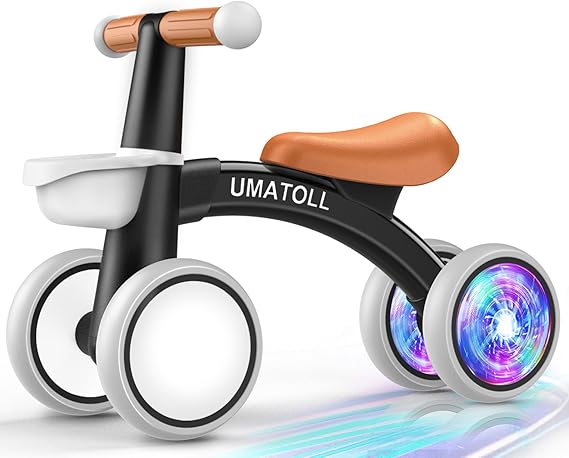
Riding it around feels fun and safe for little ones just learning to balance. Perfect for toddlers aged 1 to 2 years, the bike’s glowing rear wheel grabs attention and keeps children engaged.
Its main strength lies in combining engaging features with important safety measures designed specifically for tiny riders.
Setting up the balance bike is straightforward, thanks to its adjustable seat with three positions. The seat clicks in place securely, accommodating growing babies.
Daily rides are enjoyable because the rear wheel lights up without needing batteries, just by spinning. The steering limiter stops sudden sharp turns, making every ride more controlled and less wobbly. The enclosed wheels and firm TPU handles support safety during playtime.
The bike performs well as a beginner balance bike, helping toddlers gain confidence on two wheels. Its build focuses on safety with no sharp parts and a design that prevents feet from getting caught in the wheels.
Praise often points to the glowing rear wheel as a fun touch, while some find the lack of brakes a limitation as their child grows more skilled. The materials feel sturdy but simple, appropriate for this age group.
The glowing rear wheel attracts toddlers and keeps them interested during rides, highlighting a fun feature appreciated by many. At the same time, the absence of brakes is repeatedly pointed out as a drawback when children start getting more confident and want to control their stopping better.
Parents seeking a safe, engaging first balance bike for very young toddlers will find this model fitting and reliable. Those wanting a bike that grows with an older or more experienced child may want to look for options with brakes and more advanced features.
Pros
- Colorful lighted rear wheels without batteries
- 135° steering limiter for safe turns
- Three-position adjustable seat for growing kids
- Handles with firm TPU grip
Cons
- No brakes included for better stopping control
- Limited to toddlers aged 12-24 months
| Specification | Details |
|---|---|
| Bike Type | Balance Bike |
| Number Of Speeds | 1 |
| Suspension Type | No |
| Additional Features | Adjustable Seat |
| Brake Style | No |
| Number of Handles | 2 |
6. Bobike Baby Balance Bike

Perfect for toddlers just starting to explore riding, the Bobike Baby Balance Bike suits one-year-old boys learning balance and walking basics. Its safety features, like the 135° steering limit and closed non-slip wheels, stand out as a major advantage for cautious parents.
Assembly takes only a few minutes without special tools, so it’s easy to get started right away. The strong steel frame and comfortable seat make daily rides comfortable and sturdy.
Lightweight design helps your little one push and glide smoothly on various surfaces including paved roads and trails found around town.
Handling is steady thanks to its rigid suspension and disc brake, helping kids gain confidence without sudden stops. The fully widened closed wheels keep feet safe, although some might wish for a bit more suspension for rougher terrains.
The bike’s overall build feels solid and ready for active beginners.
The bike’s main praise lies in its child-friendly safety features, especially the steering limit and non-slip wheels that reduce falls and foot damage. A noted drawback involves the rigid suspension, which may not soften hard bumps enough for very uneven surfaces.
Parents wanting a straightforward, safe starter bike focused on balance will appreciate it the most. Those looking for more comfort over rough terrain or multiple speed options should consider other models better suited for growing riding skills.
Pros
- Strong steel frame adds lasting durability
- Closed non-slip wheels prevent foot injuries
- Quick and easy assembly without tools
- Lightweight for small children to handle
Cons
- Rigid suspension can feel stiff on bumpy ground
- Only one speed limits ride variety
| Specification | Details |
|---|---|
| Bike Type | Balance Bike |
| Number Of Speeds | 1 |
| Suspension Type | Rigid |
| Brake Style | Disc |
| Intended Riding Terrain | Paved Roads, Unpaved Trails, Urban Terrain |
7. WETIFY Baby Balance Bike

Made with safety in mind, the WETIFY Baby Balance Bike suits toddlers aged 10 to 36 months looking to build balance and coordination. Its standout feature is the colorful lighting rear wheel that lights up just by spinning, adding a fun twist without needing batteries.
Setting it up is straightforward since there are no pedals involved, making it easy for little ones to start using right away. The bike’s design prevents feet from getting caught with fully widened, closed wheels. Steering is limited to 135°, which helps reduce the chance of falls.
The glow-in-the-dark rear wheel provides light excitement during rides, keeping toddlers engaged as they practice walking and riding.
The balance bike handles urban terrain well and performs its main job of boosting balance and confidence effectively. The rear suspension adds a bit of comfort on bumpy surfaces. Most praise focuses on the safe design and fun lighting, while some note the lack of adjustable features can limit use as the child grows.
The coaster brake offers simple stopping but might be less familiar for kids used to hand brakes.
Many appreciate the bike’s safe design elements like the widened closed wheels and limited steering, along with the fun lighting on the rear wheel that activates just by spinning. However, some find the lack of adjustable features a drawback as their child outgrows it.
Kids ready to start walking and riding in safe, urban environments will enjoy this bike’s playful and secure design. Those needing a fully adjustable balance bike for longer use or variety in terrain might look for other options.
Pros
- Colorful lighting rear wheel requires no batteries
- Steering limited to 135° for safety
- Fully widened closed wheels prevent foot pinching
- Simple coaster brake for easy stopping
Cons
- Not many adjustable parts for growing toddlers
- Rear suspension may not suit all terrain types
| Specification | Details |
|---|---|
| Bike Type | Balance Bike |
| Number Of Speeds | 1 |
| Suspension Type | Rear |
| Brake Style | Coaster |
| Intended Riding Terrain | Urban Terrain |
8. Liberry Baby Balance Bike

Closed wheels and four-wheel stability stand out immediately, making it safe for toddlers starting out on balance bikes. It suits one-year-old boys who are just beginning to explore riding toys and need extra security to build confidence.
Adjusting the PU seat from 9.7 to 11 inches is straightforward, letting the bike grow with your child over time. Rubber handlebars feel secure and won’t tear easily, while the smooth EVA tires keep noise and skidding low during rides. Keeping feet on the ground helps your little one stay balanced and confident on each outing.
Balance, steering, and coordination improve steadily thanks to the stable four-wheel design. Its steel frame feels solid and durable, handling a max load of 55 lbs without issue.
A common complaint is the limited seat height range, which might restrict use as kids grow taller, but overall it performs well for beginners learning to ride.
Most find the four-wheel design very stable and safe, greatly reducing falls and boosting balance building for toddlers. A common point is that the seat height adjustment might not accommodate children beyond the early toddler stage comfortably.
Parents looking for a simple, secure first balance bike for a one-year-old will appreciate this model. Those needing a lighter bike or one for older toddlers may want to consider alternatives with higher seat adjustments or fewer wheels for easier maneuvering.
Pros
- Closed wheels prevent pinching and rolling accidents
- Adjustable PU seat grows with the child
- Soft EVA tires reduce noise and skidding
- Four wheels improve stability and confidence
Cons
- Limited seat height adjustment for taller toddlers
- Not designed for advanced riding skills
| Specification | Details |
|---|---|
| Bike Type | Balance Bike |
| Number Of Speeds | 1 |
| Suspension Type | Soft EVA Wheels |
| Additional Features | Adjustable Seat |
| Brake Style | Foot Brake |
| Skill Level | Beginner |
9. Radio Flyer Steady Start Balance Bike

Perfect for toddlers just starting to explore riding, this balance bike stands out by offering excellent stability with its three-wheel design. It suits little ones who are learning balance and coordination, providing a secure, confidence-building experience before moving on to pedal bikes.
Setting it up is straightforward since the seat adjusts to fit growing toddlers. The wide front wheel combined with dual rear wheels means the bike doesn’t topple when stationary, so kids can practice scooting indoors or on smooth outdoor surfaces without assistance. Quiet, treaded wheels work well on hardwood floors and paved driveways, making daily play smooth and fun without causing much noise or floor damage.
Performance-wise, it does well in helping kids develop gross motor skills as they walk and scoot. The lightweight and chainless design add to convenience and safety.
Durability appears solid for typical toddler use. The strongest praise highlights its stable ride and how it stands on its own without a kickstand. Most common complaint relates to the basic foot brake that might feel unfamiliar or tricky for some at first.
The balance bike receives strong praise for its stable, self-standing design which makes learning to ride safer and less intimidating for toddlers. The most common drawback is the foot brake, which some find challenging to operate initially but improves with familiarization.
Young children ready to build balance and coordination indoors or on smooth outdoor surfaces will benefit most. Those needing a bike for rough terrains or looking for more advanced features might want to explore other options better suited to those conditions.
Pros
- Stable 3-wheel design prevents tipping
- Quiet, treaded wheels suit indoor/outdoor use
- Adjustable seat fits growing toddlers
- Lightweight and easy to carry
Cons
- Foot brake may require practice to use effectively
- Not suitable for rough or uneven terrain
| Specification | Details |
|---|---|
| Bike Type | Balance Bike |
| Suspension Type | Rigid |
| Additional Features | Adjustable Seat, Chainless, Durable, Lightweight, Portable |
| Brake Style | Foot Brake |
| Intended Riding Terrain | Paved Roads |
10. Gotrax Baby Balance Bike

Getting a little one comfortable on two wheels can be tricky, but the Gotrax Baby Balance Bike supports toddlers starting at one year old with a stable and secure design. Suitable for kids up to three years old, it stands out for its wide 7-inch silent wheels that provide excellent balance and safety for early riders.
Assembly is quick, taking just a couple of minutes, and the bike’s lightweight feel means your toddler can handle it without much effort. The soft-edge design protects from small bumps and scrapes, while the ergonomic curved PU seat and lean-to-steer technology make daily rides smooth. It’s perfect for indoor or outdoor play thanks to its sturdy steel frame and quiet EVA wheels.
The bike’s main role is helping toddlers develop balance, and it performs solidly with its limited 45° steering to prevent tipping. The steel alloy frame holds up well under active use and can support children up to 66 pounds. The most frequent drawback mentioned is the absence of brakes, requiring some caution on downhill or steeper terrain.
The bike receives praise for its stability and secure design, including silent, wide wheels that offer plenty of legroom for toddlers. A common complaint revolves around the missing brake, making it less safe on inclines or rough surfaces. Assembly is quick and the materials feel solid.
Young toddlers starting to develop balance will find this bike helpful and safe for gentle riding. Families looking for braking control or more advanced steering may want to consider other options better suited for outdoor or sloping areas.
Pros
- Wide 7″ EVA silent wheels provide good stability
- Durable steel alloy frame supports up to 66 pounds
- Soft edges protect toddlers during rides
- Fast and simple 2-minute assembly
Cons
- Lacks a braking system for safety on slopes
- Limited 45° steering restricts sharp turns
| Specification | Details |
|---|---|
| Bike Type | Balance Bike |
| Number Of Speeds | 1 |
| Wheel Size | 7″ Front & Rear EVA Silent Wheels |
| Frame Material | Sturdy Steel Alloy |
| Max Weight Supported | 66 lbs |
| Assembly Time | 2 Minutes |
11. Unbranded Baby Balance Bike

Lightweight and designed for toddlers aged 12 to 24 months, this balance bike helps little ones develop balance, steering, and coordination safely. Its biggest strength lies in its toddler-friendly safety features, including limited steering to prevent falls, making it well suited for beginners just starting to walk and ride.
Setup is straightforward, requiring minimal adjustments thanks to its simple design without pedals. Day-to-day, the enclosed training wheels prevent little feet from getting caught, and the steering is purposely limited to 135° to reduce tipping risks.
The bike is light enough for toddlers to handle on paved surfaces, making learning to ride fun and steady.
Built without sharp edges and featuring a rigid suspension, it provides a solid and safe ride for young children. The U brake offers basic stopping power appropriate for beginners.
The main praise is the safety-oriented design that prevents falls, while the most common complaint refers to the lack of suspension, which may affect comfort on uneven surfaces.
Safety is clearly the focus with limited steering and full foot protection, making it a reassuring choice for early learners. However, the absence of suspension means the ride can feel a bit stiff on anything other than smooth pavements.
This bike fits toddlers just starting to walk and ride, especially on flat surfaces. Families wanting something more cushioned or suitable for older kids might look for a bike with suspension or higher weight capacity instead.
Pros
- Lightweight for easy handling by toddlers
- Enclosed training wheels prevent foot injury
- 135° steering limit reduces fall risk
- No sharp edges for safer play
Cons
- Rigid suspension can be uncomfortable on rough paths
- Weight limit is 35KG, limiting use beyond toddler years
| Specification | Details |
|---|---|
| Bike Type | Balance Bike |
| Number Of Speeds | 1 |
| Suspension Type | Rigid |
| Brake Style | U Brake |
| Intended Riding Terrain | Paved Roads |
12. KRIDDO Baby Balance Bike

Parents looking for a balance bike suitable for toddlers as young as 1 year old will find this model fitting well. It stands out for its thoughtful design aimed specifically at helping little ones develop fine motor skills while enjoying early riding fun.
Assembly comes with a toolkit included, making setup manageable without extra purchases. The adjustable seat adapts easily as your child grows, fitting children from 12 months up to 2.5 years.
Bright colors and a classic bike look contribute to keeping toddlers interested during daily rides around the yard or park.
Performance centers on stability and comfort, with the structure built for small riders exploring balance. Materials feel sturdy enough to handle typical toddler use. Positive feedback highlights its role in building motor skills, though some note the bike’s lightweight frame may feel less durable over longer periods or rough terrain.
Many appreciate how this balance bike encourages fine motor development and keeps toddlers entertained. However, the lightweight construction can sometimes cause concerns about its durability with rough play.
Ideal for toddlers just starting out with balance bikes, especially those needing a seat that adjusts over time. Families with older or stronger riders might want to consider options designed for heavier use and a wider age range.
Pros
- Adjustable seat fits growing toddlers
- Tool kit included for assembly
- Designed to build fine motor skills
- Bright colors attract toddler interest
Cons
- Lightweight frame may feel less sturdy
- Limited age range up to 2.5 years
| Specification | Details |
|---|---|
| Brand Name | KRIDDO |
| Age Range Description | 12 month to 2.5 year old |
| Included Components | Tool Kit |
| Item Type Name | Balance Bike |
| Manufacturer | LFUN |
| Model Number | KB004-Black |
Best Balance Bikes for 1 Year Old Boy Comparison
| Product | Age Range | Adjustable Seat | Brake Type | Lightweight |
|---|---|---|---|---|
| SEREED Balance Bike | – | – | No brake | Yes |
| Retrospec Cricket Bike | Toddler | – | – | Yes |
| Tiger Balance Bike | – | – | Coaster | – |
| Generic Baby Bike | – | Yes | Foot | – |
| Umatoll Balance Bike | – | Yes | No | – |
| Bobike Baby Bike | – | – | Disc | Yes |
| WETIFY Balance Bike | – | – | Coaster | – |
| Liberry Balance Bike | – | Yes | Foot Brake | – |
| Radio Flyer Steady Start | – | Yes | Foot Brake | Yes |
| Gotrax Baby Bike | – | – | – | Yes |
| Plain Baby Balance Bike | – | – | U Brake | Yes |
| KRIDDO Balance Bike | 12-24 Months | Yes | – | – |
- Age Range–
- Adjustable Seat–
- Brake TypeNo brake
- LightweightYes
- Age RangeToddler
- Adjustable Seat–
- Brake Type–
- LightweightYes
- Age Range–
- Adjustable Seat–
- Brake TypeCoaster
- Lightweight–
- Age Range–
- Adjustable SeatYes
- Brake TypeFoot
- Lightweight–
- Age Range–
- Adjustable SeatYes
- Brake TypeNo
- Lightweight–
- Age Range–
- Adjustable Seat–
- Brake TypeDisc
- LightweightYes
- Age Range–
- Adjustable Seat–
- Brake TypeCoaster
- Lightweight–
- Age Range–
- Adjustable SeatYes
- Brake TypeFoot Brake
- Lightweight–
- Age Range–
- Adjustable SeatYes
- Brake TypeFoot Brake
- LightweightYes
- Age Range–
- Adjustable Seat–
- Brake Type–
- LightweightYes
- Age Range–
- Adjustable Seat–
- Brake TypeU Brake
- LightweightYes
- Age Range12-24 Months
- Adjustable SeatYes
- Brake Type–
- Lightweight–
How to Choose the Right Balance Bike
Choosing a balance bike with the right size, weight, and adjustable features ensures comfort and safety for a 1-year-old boy. Prioritizing sturdy construction and easy handling helps the child develop confidence while preventing the need for frequent replacements or repairs.
Size and Fit
Toddlers grow fast, and a bike that fits one month can feel too small shortly after. Getting the size right makes all the difference between frustration and fun.
Bikes designed for this age typically fit children with a height around 28 to 33 inches and an inseam length between 12 and 15 inches. Without adjustable seats and handlebars, the bike may become uncomfortable or unsafe as your child’s proportions change.
The seat height should be easy to raise or lower without tools, ideally ranging from about 10 to 15 inches. Handlebars that move up and down help maintain proper posture.
Another factor is the bike’s weight; too heavy and a toddler struggles to lift or steer it, which can discourage early learning. A balance bike weighing around 4 to 6 pounds tends to be manageable for a 1-year-old.
Frame Material and Durability
Materials affect not just how the bike feels but how long it lasts. Aluminum frames offer a good balance of being lightweight and sturdy enough to handle impacts from falls and accidental bumps common at this age.
Plastic bikes tend to be lighter, but the quality varies, and cheaper ones may crack easily.
Look for finishes that resist rust and weather damage, especially if the bike will be used outdoors regularly. Powder-coated aluminum or UV-resistant plastics hold up well under sun, rain, or mud. This keeps the bike safe and looking good without constant upkeep.
Safety Features
Sharp edges and toxic paint can turn a fun activity into a risky one. Rounded edges help reduce the chance of cuts during falls or while playing.
Paint or finishes should be certified non-toxic since toddlers often put their hands in their mouths after touching the bike.
Stopping and controlling speed are essential. Footrests that double as brakes, or simple hand brakes, give toddlers more control as they develop skills. Tires with solid rubber or air-filled options featuring good grip help prevent slipping on smooth or uneven surfaces.
Puncture-resistant tires minimize interruptions caused by flats.
Ease of Use and Comfort
Comfort plays a big role in how long a child wants to ride. A padded seat designed with toddler proportions encourages longer playtime.
Some models offer removable or washable covers which help keep things clean.
The steering should feel smooth and predictable without too much resistance or looseness, supporting early motor skills development. Bikes with a low center of gravity tend to be more stable, reducing the chance of tipping over and giving toddlers confidence as they learn to balance.
Portability and Storage
Parents often need to carry or load the bike into a car frequently. Bikes under six pounds are easier to lift and transport without strain.
Size matters for storage; a compact frame or models that fold help save space at home or on trips.
Maintenance is easier with fewer parts that require regular attention. Features like airless tires or sealed bearings mean less time fixing flats or lubricating moving parts, keeping the bike ready to ride at any moment.
Tips for Teaching Your 1 Year Old to Use a Balance Bike
Choosing the right balance bike size is crucial for a 1 year old. The seat height should allow the child to touch the ground with their feet flat.
Starting on a smooth, flat surface helps them gain confidence without worrying about bumps or hills.
Encourage natural movement:
- Let your child sit and walk the bike around rather than pushing or lifting them initially.
- Practice short sessions to keep their interest without causing frustration.
- Support their balance by holding the back of the seat or frame lightly rather than steering or lifting the bike completely.
Use positive reinforcement and keep body language relaxed. Most toddlers learn by watching and mimicking, so showing them how to move their feet and lean slightly helps.
Patience is key since development varies.
Essential Safety Precautions When Using Balance Bikes
Always ensure your child wears a properly fitting helmet when using a balance bike, even at a young age. Helmets designed for toddlers have adjustable straps and pads to fit securely and comfortably.
Check the surroundings before riding:
- Choose safe, traffic-free areas such as parks or fenced yards.
- Remove any sharp objects or obstacles that might cause tripping or falls.
- Keep rides short and supervise at all times to intervene if the child loses balance or moves toward dangerous spots.
Regularly inspect the bike’s parts, like the tires and brakes, to make sure they function properly. Avoid overly fast or uneven terrains that a 1 year old can’t handle yet. Proper footwear also reduces slipping risks.
Comparing Balance Bikes with Other Toddler Riding Toys
Balance bikes differ from traditional tricycles by promoting coordination and balance more naturally. Tricycles rely on pedals and might delay learning proper bike balance.
Key differences include:
- Balance bikes let toddlers focus on gliding and steering, which builds balance before pedaling.
- Tricycles provide stability but don’t teach balancing skills as effectively.
- Balance bikes are generally lighter and easier for small children to maneuver, especially at age one.
Other riding toys like push cars offer fun but don’t contribute much to the balance skills needed for biking. Choosing a balance bike can provide a smoother transition to pedal bikes later on.
People Also Asked
What Size Balance Bike Is Suitable for a 1 Year Old?
A balance bike with a seat height around 11 to 13 inches works well for most 1 year olds. Measure your child’s inseam to find the exact fit so their feet can touch the ground comfortably for pushing and stopping.
How Do I Properly Adjust the Seat for My Toddler?
Adjust the seat so your toddler can sit with their feet flat on the ground and knees slightly bent when seated. This allows better control and confidence while they push and glide. Check this regularly as your child grows and change it accordingly.
Are Balance Bikes Safe for 1 Year Old Boys?
Balance bikes can be safe for 1 year olds if they fit properly and are used under supervision. Look for models with no sharp edges, wide tires for stability, and non-slip grips to reduce falls. Helmets are important even at this age.
How Long Will a Balance Bike Last for My Child?
Balance bikes typically last about 1 to 3 years depending on the child’s growth and usage. Kids outgrow them when their legs get too long for the smallest seat setting, so choose an adjustable seat and handlebar model for longer use.
What Common Problems Should I Watch for with Balance Bikes?
Common problems include loose bolts, squeaky parts, or worn grips and tires. Regularly check and tighten all screws and nuts, lubricate moving parts, and replace components if needed to keep the bike safe and functional.
Conclusion
Choosing a balance bike for a 1 year old boy means focusing on weight, size, and safety. The bike should be light enough for little legs to lift and push easily. It also needs to fit your child’s height so they can touch the ground with their feet for control.
Look for features like a low center of gravity and no sharp edges to keep things safe.
Think about where the bike will be used and how often to help narrow your options. Smaller bikes work well indoors or on smooth surfaces, while sturdier models handle rougher terrain. Check the comparison table above to see which models suit your needs and budget best.
That way, you get the right fit without overspending.