
Top 12 Best Balance Bike to Buy as a Gift for a Toddler Now!
Giving a toddler the best balance bike to buy as a gift for a toddler can seem straightforward but quickly becomes frustrating when the bike is too heavy, poorly sized, or breaks easily. Many cheaper options come with tiny wheels that wear out fast or frames that are unsteady, making it tough for a kid to gain confidence and enjoy riding. The wrong balance bike usually leads to more falls and tears rather than fun practice.
A quality balance bike should have a lightweight frame, ideally around 4 to 6 pounds, making it easy for small children to push and carry. The seat and handlebars need to adjust so the child can maintain a comfortable, slightly bent knee and reach the grips without stretching. Tires that are either durable foam or air-filled with some tread offer better grip on various surfaces.
These details make a big difference in safety and learning progress.
Need a Quick Check?
| Image | Product | Price |
|---|---|---|
Our Top Picks 1  | SEREED Baby Bike | Check Price |
Our Top Picks 2  | SEREED Toddler Bike | Check Price |
Our Top Picks 3  | Radio Flyer Balance | Check Price |
Our Selected Top 12 Balance Bike to Buy as a Gift for a Toddler Worth Your Money
This list features a variety of balance bikes designed for toddlers, highlighting their performance, suitability for different ages and skills, and key advantages and drawbacks. Readers will gain insight into which options offer the best comfort, safety, and value for their child’s first riding experience.
1. SEREED Baby Balance Bike
SEREED Baby Balance Bike is designed specifically for toddlers aged 12-24 months to help develop balance, steering, and coordination. Its standout feature is the safety-focused design that prevents feet clamping and limits turning, making it a great first ride for beginners.
Setting it up is simple since it’s lightweight and requires no pedals or brakes. The widened closed wheels keep little feet safe, while the 135° turning limit avoids sharp spins that might cause falls.
Its non-slip TPU handles and softly padded seat keep toddlers comfortable and confident riding indoors or outside.
It performs well at teaching basic balance because of the sturdy aluminum alloy frame and wear-resistant wheels. Most praise highlights how safe and easy it feels for toddlers to ride, while some mention the lack of brakes as a minor inconvenience once skills improve.
Construction is solid and suitable for beginner riders just starting out.
The bike’s strongest praise is its safety with closed wheels and steering limits that keep toddlers secure. Most users note the frame as strong and comfortable. The top complaint centers on the absence of brakes, which could affect control as toddlers get more confident riding.
Ideal for first-time riders around one to two years old focusing on balance skills. Those toddlers ready for more speed or control might want a bike with brakes or pedals. This balance bike suits parents seeking a safe and simple way to introduce riding early on.
Pros
- Safety-focused design prevents foot clamping
- Lightweight aluminum alloy frame
- Non-slip, wear-resistant wheels for indoor/outdoor
- Comfortable padded seat and handle grips
Cons
- No brakes for more advanced control
- Limited turning angle may feel restrictive
| Specification | Details |
|---|---|
| Bike Type | Balance Bike |
| Number Of Speeds | 1 |
| Suspension Type | Rigid |
| Brake Style | No brake |
| Bicycle Drivetrain Type | Hub Drive |
2. SEREED Toddler Balance Bike
Nice and sturdy to handle a toddler’s early cycling attempts, this balance bike suits kids ready to learn balance and steering. Its biggest strength lies in its adjustable design that grows with your child, making it a practical gift that lasts through several ages.
Setup is simple thanks to a quick-release mechanism that allows adjusting both seat and handlebars without extra tools. The starting seat height at 12.6 inches is ideal for small toddlers, and you can raise it up to 17.1 inches as they grow.
Rubber grips and a soft saddle add comfort during daily rides around paved areas, while the safe footrest pad offers extra stability for beginners.
The wide, tough carbon steel frame holds up well under use, supporting up to 110 lbs. The bike’s main job of teaching balance without pedals runs smoothly, helping toddlers gain confidence before moving on. The most common complaint relates to the lack of brakes, which might feel limiting for some parents.
The solid build gives it a reliable feel and good longevity.
The most praised feature is how well the frame and adjustments work to grow with kids over time. The common drawback is the absence of brakes, which some find less safe during rides.
Great choice for parents wanting a durable and easy-to-adjust balance bike for toddlers starting out. Those needing braking control or softer rides may want to consider other models.
Pros
- Sturdy carbon steel frame supports up to 110 lbs
- Seat and handlebars adjust quickly without tools
- Soft saddle and rubber grips for comfort
- Safe footrest pad for stability
Cons
- No brakes, which can limit stopping control
- Rigid suspension offers no shock absorption
| Specification | Details |
|---|---|
| Bike Type | Balance Bike |
| Number Of Speeds | 1 |
| Suspension Type | Rigid |
| Brake Style | No Brakes |
| Seat Height | 12.6-17.1 inch adjustable |
3. Radio Flyer Steady Start Balance Bike
Great for toddlers starting to learn balance, coordination, and confidence, this balance bike is built around stability. Its three-wheel design offers a steady ride that stands up on its own, making it a perfect gift for little ones who want to practice walking and scooting safely.
Setting up this bike requires no complicated assembly. The adjustable seat fits growing toddlers, and its lightweight frame is easy to carry around. The wide front and dual rear wheels keep it balanced on various surfaces, indoor or outdoor, including hardwood floors and paved sidewalks.
The bike does not have pedals, encouraging kids to use their feet to push along comfortably.
It excels at helping toddlers develop gross motor skills while feeling secure due to its wide tire base. The durable and rigid build handles regular play well without being too heavy. The main praise points highlight how quietly the bike runs on all kinds of flooring.
Some users mention the three-wheel design may limit the sense of freedom compared to standard two-wheel bikes, which might affect transitioning later on.
The quiet, steady ride on multiple floor types is the most praised feature, making it pleasant for both indoor and outdoor use. Some note that the three-wheel structure feels less like a traditional bike, which could delay confidence on two wheels.
Families wanting a gentle, balanced start for toddlers making their first moves will find it ideal. Those looking for a closer experience to a regular bike or earlier pedal training may want to look at other options tailored to two-wheel balance bikes.
Pros
- Stable 3-wheel design prevents tipping over
- Quiet, smooth ride on different surfaces
- Adjustable seat grows with the toddler
- Lightweight and easy to carry
Cons
- Three wheels may hinder transition to two-wheel bike
- No pedals, limiting early pedaling practice
| Specification | Details |
|---|---|
| Bike Type | Balance Bike |
| Suspension Type | Rigid |
| Additional Features | Adjustable Seat, Chainless, Durable, Lightweight, Portable |
| Brake Style | Foot Brake |
| Intended Riding Terrain | Paved Roads |
4. Bobike Toddler Balance Bike

Carbon steel gives the Bobike Toddler Balance Bike a solid and durable frame built to last. It’s designed for toddlers up to 4 years old who are just starting to learn balance and coordination. Its biggest strength is the adjustable seat and non-slip wheels, which make learning safer and more comfortable for little riders.
Putting the bike together takes just a few minutes without any special tools. Day-to-day use is simple thanks to the single-speed manual power and coaster brake that is easy for toddlers to handle. The rigid suspension keeps things steady while the enclosed wheels help prevent slipping, so you can feel confident while your child practices riding.
The bike does a great job teaching balance and basic bike skills with its straightforward setup. Its carbon steel build is tough enough for active toddlers but keeps the bike reasonably light.
The adjustable seat fits kids as they grow. Most praise focuses on its sturdy frame and safe design, while a common complaint involves the lack of suspension for bumpier rides.
Reviews highlight its sturdy construction and secure riding experience, especially valuing the non-slip wheels and adjustable seating. Some users mention the ride can feel bumpy due to the rigid suspension, which may not suit uneven terrain as well.
Parents looking for a safe, low-maintenance first bike for beginners will find this a reliable choice. Those needing smoother rides over rough ground may want to look for a balance bike with built-in suspension.
Pros
- Strong and durable carbon steel body
- Adjustable seat grows with the child
- Enclosed, non-slip wheels add safety
- Quick and easy to assemble
Cons
- Rigid suspension can be rough on uneven surfaces
- No multiple speeds for growing skill levels
| Specification | Details |
|---|---|
| Bike Type | Balance Bike |
| Number Of Speeds | 1 |
| Suspension Type | Rigid |
| Additional Features | Adjustable Seat |
| Brake Style | Coaster |
| Power Source | Manual |
5. JMMD 6-in-1 Toddler Bike

A 6-in-1 convertible toddler bike designed to grow alongside your child, suitable for ages 18 to 60 months. Its standout feature is the ability to transform from a push trike to a balance bike and more, meaning you only need to invest in one bike for multiple stages of early riding development.
Setting up takes just a few adjustments to the seat and handlebars, both of which can be tailored to your child’s size. The parent push handle rotates 135° and adjusts to your height, making guiding and controlling the bike straightforward.
Features like the hand brake and training wheels add safety layers while the foldable design helps with storage and transport on daily outings.
It performs reliably across different terrains thanks to its all-terrain design and a gear-driven system. The frame is sturdy but lightweight enough for toddlers to manage as they progress. Praise often centers on how well it adapts to growing children.
Complaints mainly focus on the complexity of switching modes and the rigidity in suspension during rough rides.
The most praised feature is how the bike grows with the child through six different modes, which means less need to buy new bikes as toddlers develop. A common issue comes from the somewhat stiff suspension that doesn’t absorb bumps well on uneven surfaces, making rides less smooth.
Those wanting a bike that adapitates across early learning stages while offering good parent control will appreciate this model. Toddlers who often ride on very rough terrain or families prioritizing plush suspension may want to look for alternatives.
Pros
- Adjustable parent push handle for comfort and control
- Multiple configurations suit different toddler stages
- Compact folding for easy storage and transport
- Hand brake adds extra safety for beginners
Cons
- Switching between modes can feel complicated
- Rigid suspension offers less comfort on rough ground
| Specification | Details |
|---|---|
| Bike Type | Balance Bike |
| Number Of Speeds | 1 |
| Brake Style | Hand Brake |
| Additional Features | Adjustable Handlebars, Adjustable Seat, Foldable, Toddler Bike With Push Handle, Toddler Bike with Training Wheels |
| Specific Uses For Product | All Terrain |
6. Umatoll Baby Balance Bike
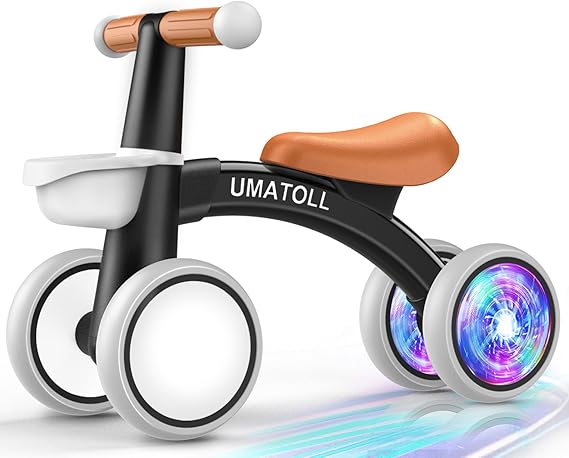
Ideal for toddlers aged 12 to 24 months, the Umatoll Baby Balance Bike stands out with its glowing rear wheels that catch little eyes and spark curiosity. It’s designed to make early riding both fun and safe, tackling common concerns like steering control and foot safety for the youngest riders.
Setting up the balance bike involves adjusting the seat to one of three positions to fit growing toddlers comfortably, making sure to hear the seat click securely into place. Daily rides are enjoyable thanks to the glow-in-the-dark rear wheel that doesn’t require batteries, spinning light with every move.
The handle features a tough TPU grip that stays put while little hands hold on tight. Safety measures include a steering limiter to prevent tipping and fully enclosed wheels to keep tiny toes secure.
Performance focuses on steady, controlled riding with a single speed and no suspension, making it easy for beginners to build balance skills. The bike is built without sharp edges, prioritizing safety over complex features. The most praised elements highlight how engaging the glowing rear wheels are for toddlers.
On the flip side, the lack of brakes means riders rely entirely on foot power to stop, which is a notable limitation for some parents.
Parents notice the glowing rear wheels are a big hit with toddlers, keeping them engaged longer during rides. The main drawback mentioned is the absence of brakes, which means toddlers must rely on their feet to stop, requiring close supervision and extra care.
The bike suits toddlers who are just learning to balance and need a safe, simple introduction to riding. Families wanting a braking system or more riding complexity may want to look elsewhere for a bike with those features.
Pros
- Colorful glow in rear wheel sparks toddler interest
- 135° steering limiter prevents tipping accidents
- Adjustable seat fits 12-24 month olds smoothly
- Fully enclosed wheels protect little feet safely
Cons
- No brakes for controlled stopping
- Single speed limits riding variety
| Specification | Details |
|---|---|
| Bike Type | Balance Bike |
| Number Of Speeds | 1 |
| Suspension Type | No |
| Additional Features | Adjustable Seat |
| Brake Style | No |
| Number of Handles | 2 |
7. Newyoo TR007 5-in-1 Tricycle

Finding a bike that grows with a toddler and also keeps them safe during early rides can be a real challenge. Designed for kids ages 1 to 3, the newyoo TR007 5-in-1 Tricycle adjusts easily while switching between five riding modes, making it perfect for parents wanting a versatile gift that lasts through different stages of a toddler’s development.
Setting it up is straightforward thanks to its adjustable handlebar, seat, and pedals using a simple red button. Day-to-day use is smooth with a steering push handlebar that parents can control and adjust to their height, so guiding your child safely becomes manageable. The tricycle quickly transforms into balance bike or bike modes as the toddler grows, supporting different skill levels without needing extra equipment.
The carbon steel frame feels sturdy and durable, matching the planned long-term use. EVA wheels keep the ride steady with low maintenance, and safety gets extra focus with the handlebar’s 135-degree rotation for controlled steering.
Praises highlight how helpful the adjustable handle and multifunctionality are. Common complaints often mention the pedals may feel small or less sturdy in bike mode.
Multiple reviews point out the ease and usefulness of the adjustable handlebar for parent control, which aids safety and confidence during rides. However, the pedals get a mention as somewhat small or less secure once switched to bike mode, which might affect comfort or longevity.
The tricycle suits parents wanting an all-in-one bike that grows with toddlers from 1 to 3 years, especially those who plan to actively guide their child. Families looking for a simple, no-tool, fully assembled option might prefer something else.
Pros
- Adjustable handlebar, seat, and pedals
- Helps parents steer and control speed
- Five modes fit growing toddlers
- Durable carbon steel frame
Cons
- Pedals can feel small in bike mode
- Multiple parts require assembly tools
| Specification | Details |
|---|---|
| Brand Name | newyoo |
| Age Range Description | 1-3 Years |
| Set Name | 5 Modes: Push Tricycle, Push Balance Bike, Tricycle, Balance Bike, Bike |
| Material | Carbon Steel Frame & EVA Wheels |
| Steering Push Handlebar | Rotating 135 degrees, height adjustable |
8. Umatoll Toddler Balance Bike

Adjusting the seat and handlebar without any tools stands out as the biggest plus of this balance bike, designed for toddlers aged 2 to 5. It fits young riders perfectly and gently helps them learn balance and coordination before moving on to a pedal bike.
Setup is pretty straightforward since the handlebar and seat heights adjust quickly to match your growing child. The soft rubber grips give good control, and the comfortable seat keeps little ones happy during rides. The air-free EVA foam tires don’t need any maintenance like pumping, so it’s easy to use outdoors without worrying about flats.
It does its job well by helping kids develop confidence and balance with its solid carbon steel frame providing a secure ride. Most praise is about how easy it is to adjust as the child grows.
A few notes mention the lack of brakes, which means toddlers must rely on foot stopping, so it might take some getting used to.
The bike receives strong praise for how easily it adjusts as toddlers grow, making it convenient to keep using over several years. The most common issue is the absence of brakes, requiring kids to learn to stop only with their feet, which some parents find challenging at first.
Parents looking for an easy-to-adjust, low-maintenance bike for paved or urban areas will appreciate this balance bike. Those who want a model with brakes or some suspension for bumpier terrains might want to explore other options.
Pros
- Tool-free adjustable seat and handlebar heights
- Strong carbon steel frame
- Air-free EVA foam tires never go flat
- Soft rubber grips for better control
Cons
- No brakes on the balance bike
- Rigid suspension may be less comfortable on rough ground
| Specification | Details |
|---|---|
| Bike Type | Balance Bike |
| Number Of Speeds | 1 |
| Suspension Type | Rigid |
| Brake Style | No Brakes |
| Intended Riding Terrain | Paved Roads, Urban Terrain |
| Additional Features | adjustable |
9. Retrospec Cricket Baby Balance Bike

Parents of toddlers learning to walk and balance will appreciate a bike made just for beginners aged 12 to 24 months. Ideal as a first birthday gift, it offers stability and confidence for little ones taking early scooting steps, focusing on safety and simple control as its biggest strength.
Assembly arrives mostly done, with 95% of the bike ready for quick setup, making it easy to get going right away. The four stable wheels prevent tipping, so toddlers can walk, scoot, or ride safely on both indoor floors and outdoor surfaces. Soft handlebars and a cushy seat keep comfort during play, while a steering limit helps little hands stay in control.
The balance and coordination development it supports works well because the feet-to-floor design encourages natural movement and confidence. Built to hold up to 44 pounds, it balances lightweight construction with durability. Quiet, non-slip wheels are a highlight, though some mention it could be a bit bigger to grow with kids longer.
It’s a solid, safe ride-on toy for early walkers.
People praise the four-wheel design for providing excellent stability and safety. A common downside noted is that the bike may feel small quickly as toddlers grow, which limits how long it stays useful.
The bike suits toddlers just starting to walk and build coordination, especially for indoor and outdoor play. Those looking for a balance bike that grows over several years might want to consider larger or adjustable models instead.
Pros
- Four stable wheels prevent tipping
- Soft handlebars and cushioned seat
- Quiet, floor-friendly wheels for indoor use
- Lightweight and easy to handle for toddlers
Cons
- Limited size range may restrict long-term use
- No adjustable seat height for growing kids
| Specification | Details |
|---|---|
| Manufacturer | Retrospec |
| Model Number | 4504 |
| Age Range | 12 months – 2 years |
| Weight Capacity | 44lb |
| Assembly | 95% Assembled |
| Wheel Type | Non-slip, no-scratch wheels |
10. Strider 12 Sport Balance Bike

Lightweight and simple, the Strider 12 Sport Balance Bike helps toddlers learn to ride faster without training wheels. It fits kids aged 1 to 4 with adjustable seat and handlebars.
The no-flat foam tires make it reliable over many surfaces, ideal for parents wanting easy maintenance and safe learning for their little ones.
Assembly requires no special tools and comes with everything needed for a quick start. Adjusting the seat height from 11 to 17 inches and handlebars to grow with the child means it stays comfortable through toddlerhood.
Weighing just 6.7 lbs., it’s easy to carry or transport, great for park visits or backyard practice on different terrain.
The balance bike’s rigid design with no pedals focuses fully on balance, helping children gain confidence quickly. Its steel frame feels sturdy without being heavy.
Reviews say the foam tires hold up well but don’t offer the smoothest ride on rough ground. Lightweight construction is praised, while some wish there was a braking option for added control.
Many appreciate the lightweight frame and simple setup that let toddlers start balancing quickly, while some find the lack of brakes and firm foam tires less comfortable on rough ground. It’s built to be sturdy but remains light enough for parents to manage easily.
Those wanting a straightforward, no-fuss balance bike for early riders will be happy here. Toddlers ready to progress soon might look for models with brakes or suspension for smoother control. Parents valuing low maintenance and easy adjustments will find this bike a practical gift choice.
Pros
- Adjustable seat and handlebars for growing toddlers
- Lightweight 6.7 lbs. steel frame for easy carrying
- Foam rubber tires that never go flat
- Quick, tool-included assembly
Cons
- No braking system included for added safety
- Foam tires provide a rougher ride on uneven terrain
| Specification | Details |
|---|---|
| Seat Height Range | 11-17 in. (28-43 cm) |
| Suitable Inseam | 12-18 in. (31-46 cm) |
| Weight | 6.7 lbs. (3.0 kg) |
| Tire Type | 12″ foam rubber, no maintenance |
| Maximum Rider Weight | 60 lbs. (27 kg) |
11. KRIDDO Toddler Balance Bike

KRIDDO Toddler Balance Bike is designed for toddlers aged 2-3, making balance and coordination development fun and easy. The standout feature is its lightweight build combined with dual-bearing wheels that let kids glide smoothly without tiring out their knees.
Setting up the bike involves attaching one of the two fun plates under the seat, which adds a personal touch for your toddler. Adjustments for handlebars and seat height keep it comfortably fitting as your child grows. It’s built to handle different surfaces, so daily rides on paved roads or trails remain enjoyable and comfortable.
Performance-wise, the bike excels at helping toddlers gain stability before moving to pedals. Its sturdy construction supports active play, while the rigid suspension keeps things simple and durable. Most users appreciate the smooth ride from the dual-bearing wheels, though some mention the lack of brakes as a limitation.
The smooth gliding experience thanks to dual-bearing wheels is highly valued, making rides easier on toddlers’ knees. However, the absence of brakes can be a drawback for control on slopes or uneven terrain. The bike handles different terrains but stays simple with a rigid setup.
Children ready to learn balance and coordination will find this bike a helpful companion, especially those who enjoy a smooth ride and mild outdoor adventures. Careful consideration is needed for parents wanting braking options or more cushion on rough ground, who might prefer a different model.
Pros
- Lightweight and easy for toddlers to handle
- Dual-bearing wheels provide smooth gliding
- Customizable with flower and clover plates
- Adjustable seat and handlebars for growth
Cons
- No brakes for added safety control
- Rigid suspension may feel less comfortable on bumpy paths
| Specification | Details |
|---|---|
| Bike Type | Balance Bike |
| Number Of Speeds | 1 |
| Suspension Type | Rigid |
| Adjustable Handlebars | Yes |
| Adjustable Seat | Yes |
| Brake Style | No |
12. Strider 12 Classic Balance Bike

Riding this balance bike feels natural for toddlers, helping them get the hang of two-wheeling without any pedals to worry about. Designed for very young kids, it fits really small toddlers well thanks to its adjustable seat and lightweight frame.
The biggest plus is how easy it is to handle and ride over paved roads.
Setting it up involves adjusting the seat and handlebars to grow with your child between ages 1 and 3. The no-flat foam tires mean you won’t have to deal with air pumps or flats, making day-to-day use straightforward. Its low weight at 6.5 lbs means even small kids can maneuver it themselves, while the simple coaster brake adds safety with little effort.
The bike’s main job of teaching balance is done effectively since there are no pedals to complicate things. The steel frame feels sturdy yet light on little legs.
Most praise highlights how easy the bike is for toddlers to ride confidently, while common feedback points out that it’s best suited to smooth surfaces and not rough terrain.
Many find the balance bike excellent for helping toddlers quickly learn to ride while appreciating the lightweight frame and maintenance-free tires. The most frequent downside is that it performs poorly on anything other than paved roads, limiting its use in rougher outdoor settings.
Parents looking for a reliable, easy-to-use balance bike for young toddlers will appreciate this design. Those planning to use it on uneven terrain might want to explore models with suspension or different tires better suited for off-road riding.
Pros
- Adjustable seat and handlebars for toddlers 1 to 3 years
- Lightweight steel frame easy for kids to move
- No flat foam tires require zero maintenance
- Simple coaster brake adds basic safety control
Cons
- Best suited for smooth, paved surfaces only
- No suspension to absorb bumps on rough terrain
| Specification | Details |
|---|---|
| Bike Type | Balance Bike |
| Number Of Speeds | 1 |
| Seat Range | 11-16 in. (28-40 cm) |
| Weight | 6.5 lbs. (2.9 kg) |
| Tire Type | 12″ Foam Rubber |
| Maximum Rider Weight | 60 lbs. (27 kg) |
Best Balance Bikes for Toddlers Gift Comparison
| Product | Brake Style | Adjustable Features | Intended Terrain | Skill Level |
|---|---|---|---|---|
| SEREED Baby Bike | No brake | Lightweight | Trail | Beginner |
| SEREED Toddler Bike | No Brakes | Adjustable | Paved Roads | Beginner |
| Radio Flyer Balance | Foot Brake | Adjustable Seat | Indoor, Outdoor | – |
| Bobike Toddler Bike | Coaster | Adjustable Seat | – | Beginner |
| JMMD 6-in-1 Bike | Hand Brake | Adjustable Handlebars, Seat | All Terrain | – |
| Umatoll Baby Bike | No | Adjustable Seat | – | – |
| newyoo TR007 Tricycle | – | Converts to Balance Bike | – | – |
| Umatoll Toddler Bike | No Brakes | Adjustable | Paved Roads, Urban | – |
| Retrospec Cricket Bike | – | Lightweight | – | – |
| Strider 12 Sport | No braking | Training Wheel | All Terrain | Beginner |
| KRIDDO Toddler Bike | No | Adjustable Handlebars, Seat | Paved, Unpaved Trails | – |
| Strider 12 Classic | Coaster | No pedal | Paved Roads | Beginner |
- Brake StyleNo brake
- Adjustable FeaturesLightweight
- Intended TerrainTrail
- Skill LevelBeginner
- Brake StyleNo Brakes
- Adjustable FeaturesAdjustable
- Intended TerrainPaved Roads
- Skill LevelBeginner
- Brake StyleFoot Brake
- Adjustable FeaturesAdjustable Seat
- Intended TerrainIndoor, Outdoor
- Skill Level–
- Brake StyleCoaster
- Adjustable FeaturesAdjustable Seat
- Intended Terrain–
- Skill LevelBeginner
- Brake StyleHand Brake
- Adjustable FeaturesAdjustable Handlebars, Seat
- Intended TerrainAll Terrain
- Skill Level–
- Brake StyleNo
- Adjustable FeaturesAdjustable Seat
- Intended Terrain–
- Skill Level–
- Brake Style–
- Adjustable FeaturesConverts to Balance Bike
- Intended Terrain–
- Skill Level–
- Brake StyleNo Brakes
- Adjustable FeaturesAdjustable
- Intended TerrainPaved Roads, Urban
- Skill Level–
- Brake Style–
- Adjustable FeaturesLightweight
- Intended Terrain–
- Skill Level–
- Brake StyleNo braking
- Adjustable FeaturesTraining Wheel
- Intended TerrainAll Terrain
- Skill LevelBeginner
- Brake StyleNo
- Adjustable FeaturesAdjustable Handlebars, Seat
- Intended TerrainPaved, Unpaved Trails
- Skill Level–
- Brake StyleCoaster
- Adjustable FeaturesNo pedal
- Intended TerrainPaved Roads
- Skill LevelBeginner
How to Choose the Right Balance Bike for Toddlers
Choosing a balance bike that fits a toddler’s size and has a lightweight, sturdy frame ensures ease of use and safety. Prioritizing adjustable features and durable materials helps the bike grow with the child, preventing the need for early replacements and reducing long-term costs.
Size and Fit
Many toddlers struggle to keep up with balance bikes that either feel too big or too heavy. Bikes with adjustable seat height that can be lowered as the child grows save a lot of frustration. A seat height range from about 10 to 15 inches usually covers ages 18 months to 4 years.
Proper frame size matters too, as the toddler should comfortably reach both the handlebars and the ground with their feet flat. A bike that’s too tall or too long forces awkward postures, making balancing harder.
Weight also plays a role. Balance bikes that weigh around 4 to 6 pounds are easier for toddlers to handle, especially when starting out.
Heavier models can tire little riders quickly or slow down their skill development. Look for a light frame and a compact build that fits your child’s current size rather than one that only suits older toddlers.
Build Quality and Materials
Frames made from quality steel or aluminum tend to last longer despite being tossed around by active toddlers. Frequent bumps, drops, and scrapes put materials and welds to the test; cheaper plastics or flimsier metals don’t hold up well.
Tires also affect the experience, air-filled or foam tires with decent tread offer better traction on various surfaces and absorb shocks better than hard plastic wheels.
The finishes and paint should be free from toxic chemicals and rough spots that could irritate sensitive skin. Components like bolts and grips need to be child safe, without sharp edges or parts that come loose easily.
Choosing models labeled non-toxic or child-safe can ease these concerns.
Safety Features
Stability is key to avoid falls and injuries. Balance bikes with a wider wheelbase or lower center of gravity reduce tipping risks, especially for beginners. Small detachable parts such as reflectors or accessories can pose choking hazards, so their absence or secure construction matters.
The bike’s edges and corners should be smoothed out to reduce scrapes and cuts during inevitable tumbles.
Reliable braking systems vary. Some toddlers benefit from simple hand brakes that are easy to apply without much force, while others do fine with a foot drag or rear-wheel design that naturally slows the bike.
The chosen method should match the child’s coordination level to maintain safe control.
Ease of Use and Maintenance
Some balance bikes require a lot of complicated assembly, leading to frustration or improper setup. Clear instructions with clear diagrams often make the difference.
Components that need regular cleaning, like chains (rare on balance bikes) or bearings, are better avoided in favor of sealed, low-maintenance parts.
Adjustments without tools are a major time saver. Quick-release clamps on seats or handlebars allow parents to change the bike’s fit in seconds, accommodating growing children with minimal hassle. This simplicity makes daily use more practical, especially when frequently switching between kids or storage and riding.
Portability and Storage
Carrying a toddler’s bike up stairs or into a car can get tiring quickly. Bikes weighing under 7 pounds make transportation easier for parents.
Compact designs that tuck into tight spaces or fold flat help keep hallways and closets clear without bulky clutter.
Some models include built-in handles or straps, which simplify carrying or hanging the bike. Without these features, lifting awkward frames awkwardly is more common.
Choosing one with thoughtful transport options reduces effort on busy days out or visits.
Proper Safety Gear and Precautions When Using Balance Bikes
Choosing the right safety gear is essential when toddlers start using balance bikes. A well-fitting helmet is the most important item and should meet safety standards to protect against impacts. Knee and elbow pads help shield against scrapes since beginners often fall.
Good shoes provide grip and foot protection. Avoid sandals or bare feet because toes are vulnerable around bike parts.
Make sure the balance bike itself has a low seat height so the child can touch the ground comfortably to maintain control.
Key safety points include:
- Selecting a certified helmet designed for young children
- Using protective pads on knees and elbows for added injury prevention
- Proper footwear that offers good traction and coverage
- Checking that the bike’s seat and handlebar heights adjust to your child’s size
- Supervised playtime in safe, flat, and traffic-free areas
Following these precautions helps minimize the risk of injury and builds confidence while riding.
How to Teach Your Toddler to Ride a Balance Bike Effectively
Starting with balance bikes often means toddlers learn by experimenting with sitting and walking the bike forward using their feet. Encouraging the child to use their feet actively to push, stop, and steer is the first important step.
Use a gentle slope or flat surface for practice sessions, allowing the toddler to get comfortable with balance without needing to pedal. Keep initial outings short to match the child’s attention span and energy levels.
Effective teaching tips include:
- Let the child explore the bike freely rather than pushing for quick progress
- Demonstrate by walking or riding alongside to model balance and steering
- Encourage looking straight ahead instead of down at feet or the ground
- Celebrate small milestones like longer glides or steering around obstacles
- Maintain patience and adjust bike fit as the child grows
Consistent, positive practice builds the coordination needed for smooth balance and control before transitioning to pedal bikes.
Comparing Balance Bikes to Other Early Riding Options for Toddlers
Balance bikes differ from tricycles and pedal bikes primarily by focusing on balance instead of pedaling. Without pedals, toddlers learn to balance using their feet, which builds core coordination earlier and aids smoother transitioning to two-wheel bikes.
Tricycles provide stability but can delay learning true balance skills because they don’t require active balancing. Pedal bikes often need training wheels at first, which also reduce balance practice opportunities.
Comparison points include:
- Balance bikes promote independent balance control from the start
- Training wheels can create reliance and postpone natural balancing ability
- Tricycles are easier to ride initially but less effective in developing balance
- Balance bikes are generally lighter and easier for toddlers to maneuver
- Transition to pedal bikes tends to be faster and smoother after learning balance
The no-pedal design helps toddlers build confidence and stability that pedal-based options don’t provide during early stages.
People Also Asked
How Do I Choose the Right Size Balance Bike for a Toddler?
Choose a balance bike that fits your toddler’s height so their feet can touch the ground while sitting. This allows them to balance easily and avoid tipping over. It’s helpful to measure your child’s inseam to match it with the bike seat height.
What Safety Features Should I Look for in a Balance Bike?
Look for bikes with sturdy frames, non-slip grips, and reliable brakes. Vinyl or foam tires reduce punctures and improve grip on different surfaces. Checking that all parts are securely attached also prevents accidents during rides.
How Long Can a Toddler Typically Use a Balance Bike?
Toddlers can generally use a balance bike from about 18 months up to 5 years old. Usage depends on growth and comfort; lower seat adjustments extend the bike’s usability. Once they move to pedal bikes, the balance bike usually retires.
Are Balance Bikes Easy to Assemble and Maintain for Parents?
Most balance bikes come with straightforward assembly instructions and require minimal tools. Maintenance mainly involves checking tire pressure and tightening bolts occasionally. Keeping the bike clean also helps avoid wear and prolongs its life.
What Common Problems Do Toddlers Face When Using Balance Bikes?
Toddlers often struggle with balancing initially and may feel unsure pushing off smoothly. They can also lose interest if the seat or handlebar is uncomfortable. Regular practice in safe areas and proper fit adjustments help solve these issues.
Conclusion
Choosing a balance bike for a toddler mostly comes down to size, weight, and build quality. The bike should be light enough for the child to handle easily and have a low seat height for stability. Durable construction matters, since it needs to stand up to rough use.
Safety features like good grips and tires suited for the child’s usual riding surface also help.
Think about where the bike will be used and how often to decide what fits your budget and space best. Smaller or budget-friendly models work well for infrequent outdoor rides or smaller storage areas. Check the comparison table and earlier sections for bikes that match your needs and preferences before making a choice.