
Top 12 Best Cheap Trail Bike Deals You Can’t Miss Today
Riding a cheap trail bike that isn’t up to the task quickly turns from fun to frustrating. The best cheap trail bike avoids common issues like flimsy frames or poor-quality suspension, which can lead to frequent breakdowns or an uncomfortable ride.
Finding one that handles rough paths without breaking the bank means paying attention to certain key factors.
Durable frame material, usually aluminum or steel, makes a big difference by balancing weight and toughness. The suspension system, typically front forks with about 80-120mm travel, helps absorb bumps and keeps control steady.
Proper fit is another crucial aspect, wheels around 27.5 or 29 inches fit most riders well, and the bike should feel stable but responsive on uneven trails. These characteristics matter more than flashy features or light weight alone.
Need a Quick Check?
| Image | Product | Price |
|---|---|---|
Our Top Picks 1  | Unbranded Mountain Bike 26/27.5 | Check Price |
Our Top Picks 2  | WEIZE Mountain Bike 26/27.5 | Check Price |
Our Top Picks 3  | Unbranded Full Suspension MTB 24-27.5 | Check Price |
Our Selected Top 12 Cheap Trail Bike Picks for Every Need
This list features affordable trail bikes suited for various riding styles and skill levels. Each review covers performance details, ideal users, and key strengths and weaknesses to help readers choose the best option for their specific needs and preferences.
1. Unbranded 26/27.5 Inch Mountain Bike
Light and responsive on rough paths, this bike suits those who want a simple, reliable mountain bike without breaking the bank. Its biggest strength is how well the mechanical disc brakes and front suspension handle uneven terrain, giving confidence on trails or city streets alike.
Setting it up is straightforward thanks to the 85 percent pre-assembled design and quick-release front wheel. Daily rides benefit from smooth shifting through 21 speeds and a lightweight aluminum frame that makes climbing less tiring. Brakes react quickly, which is reassuring in wet or muddy conditions, while the front suspension softens bumps to avoid constant shocks on the arms.
It performs solidly for trail riding, with the 21-speed drivetrain allowing easy adjustments for different inclines. The aluminum frame proves sturdy without feeling clunky, and the mechanical disc brakes consistently respond well. Common feedback points to a basic feel compared to pricier models and some riders mention the setup takes patience despite the instructions.
Strong points include the consistent control from the dual mechanical disc brakes and effective shock absorption by the front suspension fork. A common complaint involves the assembly process, which, while mostly pre-done, can still require careful attention and patience.
Riders looking for simple, budget-friendly mountain biking will find this bike satisfying, especially for trail or urban use. Those wanting advanced features or premium parts may want to consider other options with more refined components and finish.
Pros
- Dual mechanical disc brakes for reliable stopping
- Lightweight aluminum frame eases climbs
- Front suspension smooths rough trails
- Quick-release wheel speeds up assembly
Cons
- Assembly instructions can be confusing
- Feels basic compared to higher-end bikes
| Specification | Details |
|---|---|
| Bike Type | Mountain Bike |
| Number Of Speeds | 21 |
| Suspension Type | Front Suspension |
| Brake Style | Disc |
| Frame Material | Aluminum |
2. WEIZE 26/27.5 Inch Mountain Bike
Affordable and practical, the WEIZE 26/27.5 Inch Mountain Bike suits casual riders looking for a solid, everyday bike without spending much. Its best feature is a lightweight aluminum frame paired with 21-speed shifting that makes handling various terrain easy and approachable.
The bike arrives ready for light outdoor rides and commuting with features like an adjustable seat, a kickstand, and front reflector for added convenience. The mix of 26 and 27.5-inch sizes covers a good range of rider heights, fitting most adults comfortably.
Daily adjustments using the 21-speed system help tackle everything from flat roads to small hills smoothly.
Built with a rigid suspension and disc brakes, the bike handles mountain terrain and paved roads with confidence. The aluminum frame keeps it light but durable, while the most praised aspect is the smooth gear changes.
Some riders find the single-speed cruiser configuration confusing since the official setup shows 21 speeds, which is a point of misunderstanding.
Plenty of riders appreciate how easy it is to handle with the lightweight frame and disc brakes, making rides on varied terrain simple. Confusion around the number of speeds is common, as the bike technically comes with a single-speed setup, not 21 speeds as sometimes described.
Those wanting a straightforward, rugged bike for trails and neighborhood streets will find this a good pick. Anyone needing multiple gears or suspension for rougher trails should look elsewhere for more technical options.
Pros
- Lightweight aluminum frame
- Adjustable seat for comfort
- Disc brakes for reliable stopping power
- Kickstand included
Cons
- One-speed drivetrain despite mentioning 21 speeds
- No suspension beyond rigid frame
| Specification | Details |
|---|---|
| Bike Type | Cruiser Bike |
| Number Of Speeds | 1 |
| Suspension Type | Rigid |
| Brake Style | Disc |
| Intended Riding Terrain | Mountain Terrain, Paved Roads, Unpaved Trails |
3. Unbranded 24/26/27.5 Inch Full Suspension Mountain Bike
Lightweight metal frame and a dual suspension system make this a solid choice for trail riders on a budget. Riders between 4.75 and 6.4 feet tall will find a suitable size here.
Its biggest strength lies in balancing versatility for casual mountain biking and daily rides.
Assembly is straightforward enough, with the 21-speed gear system and twist grip shifters making it easy to adjust to different terrains. V-brakes provide reliable stopping power while riding on urban streets or mountain trails. The bike supports riders up to 265 lbs, making the fit comfortable for a wide range of adults.
It handles various terrains reasonably well, from mountain trails to paved roads, thanks to the dual suspension absorbing shocks. The construction feels sturdy for the price point, although some note that higher-end components could improve durability. Shifting gears is smooth, but the V-brake performance can require occasional tuning.
Many found the shifting to be smooth and the suspension effective at cushioning rough trails. The most frequent complaint relates to the V-brakes requiring regular tuning to maintain good stopping power. This makes sense given the pricing and entry-level focus.
Great match for casual riders and those new to mountain biking who want a bike that handles a mix of urban and light trail use. Serious trail riders looking for more rugged components or higher performance braking might want to look elsewhere.
Pros
- Supports riders up to 265 lbs
- Suitable sizes for riders 4.75 to 6.4 feet
- 21-speed gear system for varied terrain
- Dual suspension for smoother rides
Cons
- V-brakes need occasional adjustments
- Build materials less durable than pricier bikes
| Specification | Details |
|---|---|
| Suspension Type | Dual |
| Number Of Speeds | 21 |
| Brake Style | V Brake |
| Bicycle Gear Shifter Type | Twist Grip |
| Intended Riding Terrain | Mountain Terrain, Paved Roads, Urban Terrain |
4. Unbranded 26 Inch 21-Speed Mountain Bike

Wide gear variety stands out first on this 26 Inch 21-Speed Mountain Bike, making it ideal for riders tackling varied terrain. Its biggest strength is easy gear shifting that suits both tough climbs and smoother rides, helping you adjust on the fly without straining your fingers.
Setting up involves a straightforward saddle adjustment and familiarizing yourself with the trigger shifters, which feel light but responsive. The included tool kit comes in handy for minor tweaks on the trail. Its all-terrain tires and rigid suspension keep the bike predictable across mountain trails, paved roads, and loose switchbacks alike, making daily riding feel balanced and reliable.
Performance-wise, the bike handles climbs and descents well thanks to the 21-speed range and reliable V-brakes, which provide steady, linear stopping power without complicated brake adjustments. The frame and mechanics focus on simplicity and serviceability. Positive remarks often mention easy gear shifting, while some highlight the rigid suspension as less forgiving on rougher trails.
Gear shifting receives high praise for its light trigger action and wide range, making climbs and road riding manageable. Common complaints revolve around the rigid suspension, which offers less comfort compared to bikes with shock absorbers.
Casual riders and those new to mountain biking will appreciate the bike’s straightforward mechanics and all-terrain capability. Those seeking more comfort on technical or rocky trails might prefer models with front or full suspension instead.
Pros
- Wide 21-gear range suits varied terrain
- Trigger shifters are light and easy to use
- Powerful, reliable V-brakes
- Comes with adjustable saddle and tool kit
Cons
- Rigid suspension can feel harsh on rough trails
- V-brakes require occasional maintenance
| Specification | Details |
|---|---|
| Number Of Speeds | 21 |
| Suspension Type | Rigid |
| Brake Style | V Brake |
| Bicycle Gear Shifter Type | Trigger |
| Additional Features | 21 Speed Shifting, Adjustable Saddle, All-Terrain Tires, Includes Tool Kit, Powerful V Brake |
5. WEIZE 24/26/27.5 Inch Dual Suspension Mountain Bike

Good for riders between 5’2 and 6’2 looking for a full suspension mountain bike that won’t break the bank. It stands out with its dual suspension system, tackling rough terrain while keeping rides comfortable for intermediate cyclists.
Getting it ready mostly involves adjusting the seat to your height and getting used to the twist grip shifters for changing gears. The adjustable seat and kickstand add convenience, while the V brakes give straightforward stopping power.
Tires are all-terrain, so pavement, park paths, and light gravel are all manageable without upgrading anything immediately.
It rides well on off-road trails with bumps thanks to the front suspension fork combined with the rear coil shock doing a fine job absorbing impacts. The frame is made from high-carbon steel, providing solid durability.
Users find the dual suspension comfortable for intermediate skill levels, though some mention that the bike’s weight and V brakes might feel basic compared to higher-end models.
Riders appreciate the smooth ride on uneven surfaces thanks to the dual suspension setup. Common feedback points to heavier weight and simpler V brakes, which can feel insufficient in more demanding situations.
People between 5’2″ and 6’2″ who want a budget-friendly mountain bike for casual off-road trails will find this bike suitable. More serious riders looking for lighter weight or advanced braking should consider other options.
Pros
- Dual suspension absorbs bumps effectively
- Adjustable seat fits a wide height range
- 18-speed gears cover varied terrain
- Kickstand keeps bike upright when parked
Cons
- V brakes less powerful than disc brakes
- High-carbon steel frame adds extra weight
| Specification | Details |
|---|---|
| Bike Type | Mountain Bike |
| Number of Speeds | 18 |
| Suspension Type | Dual |
| Brake Style | V Brake |
| Bicycle Gear Shifter Type | Twist Grip |
| Intended Riding Terrain | Off-road |
6. Huffy Stone Mountain Bike

Rough trails and uneven paths call for a bike that can handle bumps without breaking the bank. Perfect for beginners wanting to explore gravel and mountain terrain, this bike’s biggest strength is its dual suspension that keeps your ride comfortable over rough ground.
Setup is straightforward, and the adjustable seat fits a range of riders comfortably. The 21-speed Shimano gear system paired with twist shifters allows for smooth changes, making climbs and descents easier.
The included kickstand adds convenience when pausing for breaks on your trail rides.
Riding on trails feels controlled thanks to front and rear suspension absorbing shocks well. The steel frame combines strength with a stylish gray and red look that holds up over time.
Most praise highlights comfort and reliable gear shifting, while the common complaint points to the bike’s weight, which can feel hefty during long rides.
The dual suspension system consistently provides a comfortable ride over rough surfaces, but the steel frame adds noticeable weight that some may find tiring after extended use. Shifting gears is smooth with the 21-speed Shimano setup, enhancing trail control without complicated maintenance.
Beginners looking for a solid entry-level trail bike will appreciate the comfort and gearing options. Riders seeking a lightweight or high-performance racing bike might want to explore other models better suited to competitive or long-distance use.
Pros
- Comfortable dual suspension soaks up bumps
- Durable steel frame with eye-catching design
- 21-speed Shimano gears are smooth and precise
- Adjustable seat fits different rider heights
Cons
- Heavier frame can feel tiring on longer rides
- Linear pull brakes may require regular adjustment
| Specification | Details |
|---|---|
| Bike Type | Mountain Bike |
| Number Of Speeds | 21 |
| Suspension Type | Dual |
| Brake Style | Dual linear pull |
| Bicycle Gear Shifter Type | Twist Grip |
7. Earth 26/27.5 Inch Mountain Bike

Featuring a switchable suspension fork, the Earth 26/27.5 Inch Mountain Bike suits intermediate riders looking for adjustable ride comfort on varied terrain. Its biggest strength lies in blending a lightweight aluminum alloy frame with versatile all-terrain tires.
Daily use feels practical thanks to the adjustable seat and quick-release tires that let you swap between 26-inch and 27.5-inch options. The 21-speed derailleur system provides a wide range of gears for climbing and cruising. Dual disc brakes offer dependable stopping power regardless of trail conditions, making it easy to control on rocky paths or dirt.
Handling mountain trails, the bike delivers solid performance with responsive gear shifts and reliable braking. The aluminum frame and rims keep it sturdy yet light, helping with maneuverability. Most users praise the solid build and adaptable suspension, while occasional complaints mention limited suspension travel and occasional minor adjustments needed after rough rides.
Many appreciate the durable build and adjustable suspension, which helps tailor the ride to different trail conditions. Reports of needing minor tweaks after bumpy rides point to some suspension limits for more aggressive terrain.
Riders who want a solid, adaptable mountain bike without spending too much will find this a good match. Those tackling very rough or technical trails regularly might want to look for a bike with more advanced suspension features.
Pros
- Switchable suspension fork for ride comfort
- Lightweight aluminum alloy frame and rims
- 21-speed derailleur offers versatile gearing
- Disc brakes ensure reliable stopping power
Cons
- Suspension travel feels limited on rough trails
- Minor adjustments needed after heavy use
| Specification | Details |
|---|---|
| Bike Type | Mountain Bike |
| Number Of Speeds | 21 |
| Suspension Type | Front |
| Brake Style | Disc |
| Bicycle Gear Shifter Type | Trigger |
| Intended Riding Terrain | Mountain |
8. Unbranded 26 Inch Mountain Bike

Anyone between 53 and 66 inches tall looking for a capable and affordable bike for light trails, parks, or city streets will appreciate this mountain bike. Its biggest strength is the 21-speed drivetrain, giving you enough gears to handle gentle hills and varied terrains without feeling overwhelmed.
Setting up the bike is straightforward, with an adjustable seat that helps fit different heights comfortably. Day-to-day, the front suspension smooths out bumps on unpaved trails, making rides less jarring. The dual disc brakes offer reliable stopping power, while the kickstand lets you park easily without leaning it awkwardly.
The bike handles neighborhood and fitness rides well, with smooth shifting through the 21 speeds making climbs and longer rides manageable. It’s built solidly with a front suspension and durable chain drive, which suits mixed terrain.
The most frequent praise mentions its dependable brakes, but the common complaint is that some might find it a bit heavy compared to lighter models.
Many people appreciate how reliable and responsive the dual disc brakes are on this bike. A common issue is the overall weight, which can feel a bit cumbersome when carrying it or accelerating quickly.
Riders seeking a budget-friendly option for light off-road or neighborhood use will find this bike practical and comfortable. Those wanting a lighter bike for serious trail riding or racing might want to consider other options.
Pros
- 21-speed drivetrain for varied terrain
- Adjustable seat fits 53–66 inches tall riders
- Dual disc brakes provide strong stopping power
- Front suspension improves comfort on bumpy trails
Cons
- Heavier than some similar mountain bikes
- Limited for very rough or technical trails
| Specification | Details |
|---|---|
| Bike Type | Mountain Bike |
| Number Of Speeds | 21 |
| Suspension Type | Front |
| Brake Style | Disc |
| Gear Type | cassette |
| Intended Riding Terrain | Paved Roads, Unpaved Trails |
9. VEVOR 26/27.5/20 Inch Mountain Bike
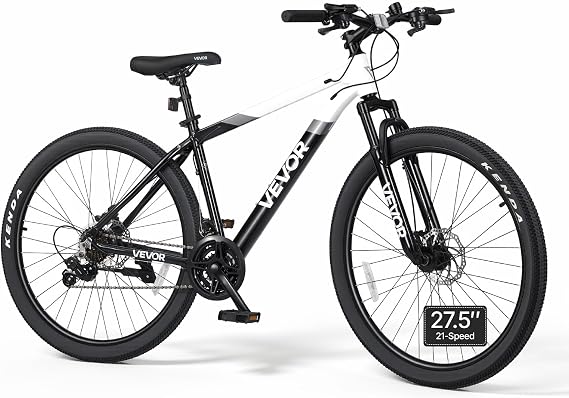
Designed for riders on a budget who want a sturdy option for light off-road and daily rides, this bike stands out with its reliable components at a low price point. Its smooth Shimano 21-speed drivetrain makes shifting through different terrain straightforward and enjoyable.
Setup involves attaching the suspension fork and adjusting the mechanical disc brakes, both of which contribute significantly to the ride quality. The suspension fork takes the edge off uneven paths, while the all-terrain tires grip firmly across dirt and pavement.
Managing gear changes is easy with the rear derailleur providing clear, responsive shifts for both climbs and flat stretches.
Good at handling mountain terrain and unpaved trails, it offers stable control thanks to the dual disc brakes that perform well even in wet conditions. The build focuses on practical durability with its chain drive and front suspension. Most praise points to its smooth gear transitions; the main downside mentioned is a bit of extra weight that might slow aggressive trail riding.
Praise focuses on how the Shimano drivetrain delivers smooth, precise shifting which makes rides across mixed terrain easier. Common complaints highlight the bike’s weight, which can make fast or technical trail riding more tiring.
This bike works well for casual riders or those looking for a low-cost option to explore light off-road trails and everyday routes. More dedicated mountain bikers seeking a lighter, performance-focused ride may want to consider alternatives.
Pros
- 21-speed Shimano drivetrain for varied terrain
- Front suspension fork improves comfort on rough roads
- Dual mechanical disc brakes for reliable stopping power
- Wide tires offer strong traction off-road
Cons
- Heavier frame limits aggressive trail maneuvering
- Basic mechanical disc brakes require occasional adjustment
| Specification | Details |
|---|---|
| Bike Type | Mountain Bike |
| Number Of Speeds | 21 |
| Suspension Type | Front |
| Brake Style | Disc |
| Intended Riding Terrain | Mountain Terrain, Paved Roads, Unpaved Trails |
10. Unbranded 24/26 Inch Full Suspension Mountain Bike

Unbranded 24/26 Inch Full Suspension Mountain Bike serves riders between 5’2 and 5’11 who want an affordable and comfortable option for mixed terrain. Its full suspension setup stands out by smoothing out bumps and making it easier to handle gravel and light trails without breaking the bank.
Setting up the bike involves adjusting the seat to fit your height, which is simple thanks to the adjustable post. Daily rides benefit from the 21-speed Shimano drivetrain with trigger shifting, allowing quick gear changes on varied terrain.
Dual disc brakes offer solid stopping power, while the 26 × 2.35-inch tires provide decent grip whether you’re on the road or trails.
Performance-wise, the front suspension fork and rear coil shock work together to soften rough ground, making trail rides more comfortable. The frame and components are solid for the price, but some riders mention the bike is a bit on the heavier side. Many appreciate the responsive shifting, though the finish and some parts feel basic compared to more expensive models.
The full suspension setup reliably smooths out uneven surfaces, making rides more comfortable across different terrain. The most frequent complaint revolves around the bike’s weight and the simplicity of some components, which can leave it feeling less refined.
People looking for a budget-friendly option that handles basic trails and roads will appreciate this bike. Riders wanting a lighter, higher-end feel or tackling more aggressive mountain terrain might want to look for alternatives better suited to those demands.
Pros
- Full suspension absorbs bumps well
- Adjustable seat fits a range of heights
- 21-speed gearing for varied terrain
- Dual disc brakes offer good stopping power
Cons
- The bike feels somewhat heavy in use
- Build quality feels basic compared to pricier bikes
| Specification | Details |
|---|---|
| Bike Type | Mountain Bike |
| Number Of Speeds | 21 |
| Suspension Type | Dual |
| Brake Style | Disc |
| Bicycle Gear Shifter Type | Trigger |
11. Unbranded 26 Inch Full Suspension Mountain Bike

Riding on tough patches feels smoother thanks to full suspension, making it a solid pick for trail beginners and casual riders. Handling rough ground is easier, so you stay more comfortable and less tired.
The standout feature is the 21-speed setup combined with shock absorption, which keeps things steady and adaptable.
Assembly is straightforward enough for anyone familiar with bikes, and daily rides feel controlled on different surfaces. The 262.325 anti-slip tires grip well on dirt trails and city roads alike.
Front and Rear Double Disc Brakes provide reliable stopping power, adding confidence in varied conditions. Gear shifting moves through 21 speeds with decent smoothness, helping you tackle inclines or flat stretches.
The bike proves its worth on mountain terrain and paved roads, maintaining comfort without too much jarring. Its frame and suspension balance durability with a ride that absorbs shocks well. Praises often highlight the suspension reducing arm fatigue, while some note the bike feels a bit heavier than sportier models, affecting speed.
The full suspension system helps absorb bumps effectively, keeping arm fatigue low during longer rides. On the downside, the bike tends to feel on the heavier side, which can impact its speed and agility slightly. Users often appreciate the comfort but note the weight trade-off.
This bike suits someone looking for a practical and comfortable ride on mixed surfaces without breaking the bank. Riders focused on speed or lightweight competition may want to seek alternatives designed for performance over comfort.
Pros
- Comfortable full suspension reduces arm fatigue
- 21-speed drivetrain handles varied terrains well
- Anti-slip 26*2.325 tires for solid grip
- Front and rear double disc brakes for strong stopping
Cons
- Feels heavier than some sportier bikes
- Gear shifting can be less smooth on steep climbs
| Specification | Details |
|---|---|
| Bike Type | Mountain Bike |
| Number Of Speeds | 21 |
| Suspension Type | Full Suspension |
| Brake Style | Disc |
| Intended Riding Terrain | Mountain Terrain, Unpaved Trails, Paved Roads |
12. Unbranded Full Suspension Mountain Bike

Great for teens wanting an affordable mountain bike with effective suspension, it stands out for handling rough trails with ease. Its 21-speed gear system lets riders tackle varying surfaces without hassle, making it perfect for newcomers to off-road cycling.
Setup is straightforward, with a heavy-duty high-carbon steel frame that feels sturdy from the start. The full suspension smooths out rough paths well, so riding on dirt or gravel doesn’t feel jarring.
Daily use beams from its responsive mechanical dual disc brakes, giving control and safety when slowing down or stopping in tricky spots.
It handles mountain terrain confidently thanks to its dual suspension absorbing shocks effectively. The chain drive and 21-speed cassette allow for quick gear changes adapting to different inclines. Users appreciate the solid build and comfort, though some mention it can feel a bit heavy compared to lighter models.
Brakes respond reliably, gaining praise for safety.
The bike’s ability to absorb trail vibrations through its full suspension and deliver smooth gear shifts stands out as a key benefit. Regular use confirms dependable stopping power from the mechanical disc brakes, although some riders note the brakes might need adjustment over time.
Younger riders or beginners looking for a tough, budget-friendly mountain bike will find it a good fit. Those seeking a lighter frame or more advanced brake systems might want to explore other options instead.
Pros
- Smooth and precise 21-speed gear transitions
- Full suspension cushions bumps effectively
- Reliable front and rear dual disc brakes
- Durable high-carbon steel frame
Cons
- Can feel heavy for some riders
- Mechanical brakes may require occasional tuning
| Specification | Details |
|---|---|
| Bike Type | Mountain Bike |
| Number Of Speeds | 21 |
| Suspension Type | Dual |
| Brake Style | Disc |
| Bicycle Drivetrain Type | chain drive |
Best Cheap Trail Bikes Comparison Table
| Product | Suspension Type | Speeds | Brake Style | Intended Terrain |
|---|---|---|---|---|
| Unbranded Mountain Bike 26/27.5 | Front Suspension | 21 | Disc | Mountain, Trail, Touring, Urban |
| WEIZE Mountain Bike 26/27.5 | Rigid | 1 | Disc | Mountain, Paved, Unpaved Trails |
| Unbranded Full Suspension MTB 24-27.5 | Dual Suspension | 21 | V Brake | Mountain Biking |
| Unbranded 21-Speed MTB 26 | Rigid | 21 | V Brake | – |
| WEIZE Dual Suspension MTB 24-27.5 | Dual Suspension | 18 | V Brake | Off-road |
| Huffy Stone MTB | Dual Suspension | 21 | Dual linear pull | Gravel, Trail |
| Earth Mountain Bike 26/27.5 | Front | 21 | Disc | Mountain |
| Unbranded Mountain Bike 26 | Front | 21 | Disc | Paved, Unpaved Trails |
| VEVOR Mountain Bike 20-27.5 | Front | 21 | Disc | Mountain, Paved, Unpaved |
| Unbranded Full Suspension MTB 24/26 | Dual Suspension | 21 | Disc | Road, Trail |
| Unbranded Full Suspension MTB 26 | Full Suspension | 21 | Disc | Garden, Outdoor |
| Unbranded Full Suspension MTB | Dual Suspension | 21 | Disc | Mountain Terrain |
- Suspension TypeFront Suspension
- Speeds21
- Brake StyleDisc
- Intended TerrainMountain, Trail, Touring, Urban
- Suspension TypeRigid
- Speeds1
- Brake StyleDisc
- Intended TerrainMountain, Paved, Unpaved Trails
- Suspension TypeDual Suspension
- Speeds21
- Brake StyleV Brake
- Intended TerrainMountain Biking
- Suspension TypeRigid
- Speeds21
- Brake StyleV Brake
- Intended Terrain–
- Suspension TypeDual Suspension
- Speeds18
- Brake StyleV Brake
- Intended TerrainOff-road
- Suspension TypeDual Suspension
- Speeds21
- Brake StyleDual linear pull
- Intended TerrainGravel, Trail
- Suspension TypeFront
- Speeds21
- Brake StyleDisc
- Intended TerrainMountain
- Suspension TypeFront
- Speeds21
- Brake StyleDisc
- Intended TerrainPaved, Unpaved Trails
- Suspension TypeFront
- Speeds21
- Brake StyleDisc
- Intended TerrainMountain, Paved, Unpaved
- Suspension TypeDual Suspension
- Speeds21
- Brake StyleDisc
- Intended TerrainRoad, Trail
- Suspension TypeFull Suspension
- Speeds21
- Brake StyleDisc
- Intended TerrainGarden, Outdoor
- Suspension TypeDual Suspension
- Speeds21
- Brake StyleDisc
- Intended TerrainMountain Terrain
How to Choose the Right Budget Trail Bike
Focus on the bike’s durability, suspension type, and frame material to ensure it can handle rough trails without frequent repairs. Choosing the right size and reliable components helps avoid costly upgrades and keeps your rides comfortable and safe over time.
Frame Material and Weight
Riding on rough trails quickly exposes how frame quality influences bike longevity. Aluminum frames tend to resist rust and handle impacts well but can feel stiffer and transmit more trail vibrations.
Steel frames, while heavier, often absorb shocks better and can bend rather than crack on hard hits, allowing for easier repairs. Weight plays a big role here, lighter bikes make climbing less tiring and allow quicker handling on technical sections, but very light frames might sacrifice some durability.
Expect the frame material to affect daily trail use significantly. Bikes weighing around 12-14 kilograms strike a decent balance for maneuverability and endurance. Strong welds and tubing of at least 6061 aluminum or chromoly steel ensure good resilience against trail wear.
A good frame should still look solid after months of hitting roots and rocks, without cracks or dents that could shorten its life span.
Suspension Quality and Travel
Front and rear suspension settings define how well a bike tackles uneven terrain. Basic coil shocks are durable but heavier and less adjustable, often feeling harsh on smaller bumps. Air suspensions allow tuning rebound and compression, adapting to rider weight and trail type and making the ride smoother for longer stretches.
Suspension travel typically ranges from 80mm for cross-country to 150mm or more for aggressive trails.
Daily off-road riding thrives on suspension that soaks up vibrations and sudden jolts without bottoming out. A front fork with about 100mm travel suits most mixed trails, while rear suspension with 90-120mm travel can improve control and reduce fatigue. Ability to adjust firmness and lock out the shock helps riders optimize for climbs or rough descents, preventing wasted energy and ensuring confidence over rocks and roots.
Tire Size and Tread
Tire size can make or break traction across different trail surfaces. Wider tires (2.3 to 2.5 inches) offer better grip on loose or muddy ground by increasing contact area, while narrower tires roll faster on hard-packed trails. Diameter usually comes in 27.5 or 29 inches; the larger wheels roll over obstacles easier and maintain speed better, but smaller wheels turn quicker and handle tight corners well.
Tread pattern plays a key role depending on terrain: spaced, aggressive knobs help in muddy or rocky conditions by shedding debris and locking into uneven surfaces, while tighter, smaller knobs work better on dry dirt. Durable casings with reinforced sidewalls resist punctures and cuts, crucial in rough trails. Look for tires with puncture-resistant layers and tubeless compatibility to reduce flats.
Gear Range and Drivetrain
Grading steep climbs and descents relies on a wide and reliable gear range. Bikes with 1x drivetrains simplify shifting but need a wide cassette, often 11-42 teeth, to cover low gears for climbing and high gears for speed. More traditional 2x setups offer closer gear steps but can be heavier and require more maintenance.
Smooth shifting is essential, avoiding chain drops and missed shifts on technical trails.
Daily use reveals how poorly adjusted or cheap derailleurs can cause gear skipping or stiff triggers, adding frustration. Simple, well-built drivetrains made by known brands tend to function smoothly and last longer, with parts easy to replace or upgrade. Regular cleaning and occasional tuning keep gears shifting reliably without expensive repairs.
Braking System
Stopping power affects safety and riding confidence on varied descents or slippery conditions. Hydraulic disc brakes provide strong, consistent stopping force and easy modulation even in wet or muddy settings.
Mechanical disc brakes offer decent power but sometimes require more hand strength. Rim brakes tend to lose effectiveness in wet weather and wear down the wheel surface.
Brake responsiveness also depends on good setup and maintenance. Pads should be checked frequently and replaced before wearing thin. Adjustments can often be made with simple tools on the trail, preventing loss of control caused by dragging or faded brakes.
A bike with reliable brakes means less stress on tight or technical sections and more controlled, safer rides.
Tips for Getting the Most Out of Your Budget Trail Bike
Budget trail bikes prioritize value, so knowing how to maximize their strengths matters. Start by upgrading the tires soon after purchase. Entry-level tires often lack durability or grip, and replacing them can make a noticeable difference in handling on rough trails.
Regularly checking and adjusting the bike’s suspension settings improves ride comfort and control. Even simple tweaks to air pressure or rebound damping can tailor the bike’s feel without extra cost.
Focus on these practical tips:
- Invest in durable tires suited to your typical terrain
- Keep the drivetrain clean and lubricated for smooth shifting
- Use basic suspension adjustments to optimize comfort
- Add aftermarket pedals or grips for better ride feel
Small investments like these extend the fun and usefulness of a budget bike beyond what its price tag might suggest.
Essential Maintenance Routines to Extend Your Bike’s Lifespan
Keeping a trail bike running well depends on a few straightforward maintenance routines. Start by cleaning the bike after every trail ride, focusing on removing dirt and debris from the chain, gears, and suspension components.
Lubricate the chain regularly to reduce wear and prevent rust. A dry or noisy chain signals it’s time for fresh lube.
Check brake pads for wear too, as worn pads drop braking performance and can stress rims or rotors.
Key maintenance tasks to do often:
- Clean and lubricate the drivetrain after muddy or dusty rides
- Inspect brake pads and cables for signs of wear or damage
- Check tire pressure before each ride to avoid flats and improve traction
- Tighten bolts and inspect suspension seals periodically
Routine care helps a budget bike stay reliable and safe over many miles of trail use.
How Budget Trail Bikes Compare to Mid-Range and High-End Models
Budget trail bikes usually come with entry-level components that balance cost and performance. Frames tend to be heavier than those on mid-range or high-end models, often using basic aluminum rather than lighter alloys or carbon fiber.
Suspension parts and drivetrains on cheaper bikes typically don’t offer the refinement or adjustability found on pricier sets. This can mean less responsiveness on technical terrain and slower, less precise shifting.
Comparisons to consider:
- Mid-range bikes often feature better suspension tuning and lighter frames
- High-end models use advanced materials and can have more gear options for varied terrain
- Precision and durability of components generally improves as price climbs
- Budget bikes are good for casual riders and less demanding trails
A budget trail bike can manage many trail conditions well but may show its limits on very rough or challenging rides compared to more expensive alternatives.
People Also Asked
How Do I Choose the Right Size for a Trail Bike?
Select a trail bike size based on your height and inseam length. Always check the manufacturer’s sizing chart and test ride if possible, as comfort and control depend greatly on proper fit. Adjust the seat height so your leg is slightly bent at the bottom of the pedal stroke for better efficiency.
What Safety Gear Is Essential for Trail Biking?
A helmet is the most important safety gear for trail biking. Gloves protect hands from scrapes and improve grip, while knee and elbow pads guard against falls. Wear bright or reflective clothing to increase visibility on trails with other riders or hikers.
How Long Do Cheap Trail Bikes Usually Last?
Cheap trail bikes generally last a few years with moderate use, but may require more frequent maintenance. Components like brakes and gears might wear out or need adjustment sooner, so keeping an eye on parts and replacing worn items can extend the bike’s life considerably.
Are Cheap Trail Bikes Compatible with Standard Bike Accessories?
Most cheap trail bikes use standard sizes for accessories such as water bottle cages, lights, and racks. It’s practical to confirm compatibility before buying extras, especially for tires or wheels, as some entry-level models might have less common specifications.
What Common Problems Should I Expect with a Cheap Trail Bike?
Expect issues like gear slipping, brake noise, and loose bolts with cheaper trail bikes. Regular tuning and tightening can help, but some parts may wear faster, requiring replacement. Check cables and tires regularly since cheaper components are more prone to damage on rough trails.
Conclusion
Choosing a cheap trail bike comes down to a few key things: durability that can handle rough trails, reliable components that don’t need constant fixing, and a comfortable fit for the kind of riding you plan to do. These factors ensure you get the most use without spending extra on maintenance or upgrades soon after buying.
Think about your available storage space and how often you’ll ride before making a choice. Stretching your budget a little for a bike that fits your needs will save money in the long run.
Check the comparison table and earlier picks to find the bike that meets your criteria best.