
Top 12 Best Desert Dirt Bike Tire That Will Blow Your Mind!
Riding through desert sand with the wrong tire quickly turns a fun outing into an exercise in frustration. The best desert dirt bike tire is designed to resist frequent digging in or slipping, common issues with cheaper or unsuitable options that lack proper tread or flexibility. A tire that fails the terrain’s loose grit can leave you stuck or force constant adjustments.
Durability and tread pattern are critical in a desert dirt bike tire. The rubber compound must withstand abrasive sand and heat without warping or wearing too fast.
Look for tires with paddled or widely spaced knobs, typically 10-15 millimeters tall, to maintain grip in soft sand and prevent clogging. Correct sizing ensures balanced pressure distribution, often around 80 to 100 psi, improving stability and reducing sinkage.
Need a Quick Check?
| Image | Product | Price |
|---|---|---|
Our Top Picks 1  | Maxxis Maxxcross Desert Front | Check Price |
Our Top Picks 2  | Maxxis Maxxcross Desert Rear | Check Price |
Our Top Picks 3 | Maxxis Maxxcross Desert Rear 2 | Check Price |
Our Selected Top 12 Desert Dirt Bike Tire Worth Buying
This list features twelve carefully chosen desert dirt bike tires, each reviewed for performance, durability, and suitability for different riding styles and conditions. Readers will find detailed insights into the strengths and weaknesses of each tire to help make an informed choice.
1. Maxxis Maxxcross Desert IT Front Tire
Maxxis Maxxcross Desert IT Front Tire is designed specifically for desert and rocky terrain, prioritizing durability where chipping and cuts can ruin lesser tires. Its standout strength is the tall knob design that significantly boosts traction on loose sand, making it ideal for riders tackling harsh desert conditions.
Setting it up involves using a tube since it’s a tube-type tire, and its stiffer carcass means less flex, which helps prevent pinched tubes during rough rides. On a daily basis, the tire holds up well against sharp rocks and sand thanks to its specially formulated compound aimed at reducing damage.
It’s not just tough; the tall knobs provide grip that you notice immediately in soft terrain situations.
Performance-wise, the tire delivers consistent traction and resists common desert wear like chipping thanks to its durable compound. Construction feels solid with the stiffer carcass reducing tire deflection and improving stability.
Praise often highlights its improved lifespan on rocky rides, while the shared drawback points to the tube setup requiring more careful installation compared to tubeless systems.
The tire shows strong durability, especially resisting chipping and cuts in desert environments, a feature frequently praised. On the downside, several accounts mention the need for more effort when mounting since it’s a tube-type, which adds complexity compared to tubeless options.
Riders spending a lot of time navigating rocky or sandy trails will find this tire suits them well. Those looking for lighter front tires or a tubeless setup might consider alternatives to avoid extra maintenance.
Pros
- Durable against chipping and cutting
- Tall knobs improve loose sand traction
- Stiffer carcass reduces tire flex
- Good rock and desert terrain resistance
Cons
- Tube type requires careful installation
- Heavier than some front tire options
| Specification | Details |
|---|---|
| Brand Name | Maxxis |
| Item Weight | 8.3 pounds |
| Number of Items | 1 |
| Unit Count | 1 Count |
| Manufacturer Part Number | TM88187100 |
2. Maxxis Maxxcross Desert IT Rear Tire
Riding on rough desert trails feels confident with the Maxxis Maxxcross Desert IT Rear Tire, especially if you need durability in rocky, dry environments. It suits riders looking for a tire that handles harsh conditions without giving in to chipping or cuts. Its standout feature is the strong compound designed specifically for desert terrain.
Setting it up on a 19-inch rim was straightforward, though keep in mind it requires tubes due to its tube type design. The stiffer carcass reduces tire flex, which helps avoid pinched tubes during rides over sharp rocks. Tall knobs grip well in loose dirt, making daily trail rides less stressful when traction matters most in sandy or rocky spots.
Traction on different desert surfaces holds up well thanks to the tall knob pattern, while the tougher rubber compound keeps the tire from wearing down quickly. The radial construction adds stability at speed, but some note the tire runs a bit stiff for those used to softer sidewalls.
The biggest praise highlights its durability, and the usual complaint points to the heavier feel compared to softer tires.
Durability stands out as the best feature, especially against cuts and chips in rough desert environments. Common frustration shows up in the tire’s stiffness, which some find less forgiving on bumps than expected. Tube setup can also add some extra hassle for riders used to tubeless tires.
Anyone tackling rocky or desert trails regularly will find the tire well-suited to their needs. Riders looking for a softer ride or a tube-free setup might want to consider alternative tires that prioritize comfort over toughness.
Pros
- Specifically designed for rocky desert conditions
- Stiffer carcass minimizes flex and pinching
- Tall knob design improves traction in loose terrain
- Durable compound resists chipping and cutting
Cons
- Requires tubes, not tubeless compatible
- Can feel stiff compared to softer tires
| Specification | Details |
|---|---|
| Rim Size | 19 inches |
| Load Capacity | 1653 pounds |
| Speed Rating | M |
| Tread Type | Non-Directional |
| Construction Type | Radial |
3. Maxxis Maxxcross Desert IT Rear Tire
Maxxis Maxxcross Desert IT Rear Tire suits riders tackling rocky or sandy desert terrains. Its toughest feature is the durable compound that holds up well against chipping and cutting, making it reliable for harsh off-road conditions.
Setting up the tire on an 18-inch rim is straightforward, with a maximum pressure of 36 psi helping maintain stability. The tall knob design grips sandy surfaces effectively, while the stiffer carcass reduces flex. This lowers the chances of pinched tubes, which matters when you’re out riding in challenging terrain day after day.
Traction in sandy conditions stands out thanks to the knob layout, helping you maintain control at speed. The radial construction and load index of 77 mean it supports a solid load while keeping a steady ride. Praise often highlights durability, especially against rock damage.
On the downside, some riders find the non-directional tread less optimal on mixed terrain.
This tire stands out for its durability in desert conditions, reducing damage from rocks and cuts. The most frequent issue noted is its tread design, which doesn’t offer the best grip on varied surfaces beyond sand.
Riders focused on sandy or rocky desert racing will appreciate the strong grip and low tube pinch risk. Those needing a tire that performs well on a mix of terrains could look for options with directional tread patterns.
Pros
- Durable compound resists chipping and cutting
- Tall knobs improve sandy traction
- Stiffer carcass lowers pinched tube risk
- Universal fit on 18-inch rims
Cons
- Non-directional tread less versatile on mixed ground
- Maximum pressure limited to 36 psi
| Specification | Details |
|---|---|
| Rim Size | 18 inches |
| Load Index | 77 |
| Speed Rating | M |
| Tread Type | Non-Directional |
| Maximum Pressure | 36 psi |
4. Tusk EMEX T-35 Tire Set

Durable rubber construction and an aggressive deep tread pattern define the Tusk EMEX T-35 Tire Set, designed specifically for soft to intermediate terrain. Great for riders who need solid traction on loose dirt, sand, and packed trails, its biggest strength lies in reliable grip and consistent control during off-road rides.
Mounting these tube-type tires on a 16-inch rim is simple and makes maintenance easier during trail rides. The sizes include a 70/100×19 front and a 90/100×16 rear tire, which fit well for handling varied terrain conditions. Day-to-day use on soft soils and mixed surfaces feels confident thanks to non-directional tread patterns that support braking and cornering without surprises.
Performance on the trail shows excellent traction and responsiveness through slippery or loose patches. Built from a rubber compound that resists abrasion, they hold up well against wear over time.
One common positive mention is the traction boost in sandy sections, while the occasional complaint notes they might wear faster on harder packed surfaces.
The strongest praise points to its traction in soft and sandy conditions, which boosts confidence on challenging trails. The most frequent issue is quicker wear when used extensively on harder, packed terrains, dampening its longevity in those settings. Most riders appreciate the balance of grip and durability on typical desert dirt.
The tire set suits trail riders tackling mixed soft soils who want reliable control without complicated installation. Those planning mostly hard-packed riding or higher speed runs might consider tires with tougher compounds or higher speed ratings for longer use and safety margins.
Pros
- Excellent grip on loose dirt and sand
- Durable rubber resists abrasion well
- Tube-type design simplifies mounting
- Good braking and cornering traction
Cons
- Tread wears quicker on harder packed trails
- Speed rating limited to M
| Specification | Details |
|---|---|
| Rim Size | 16 inches |
| Tread Type | Non-Directional |
| Load Capacity | 772 pounds |
| Speed Rating | M |
| Load Range | M |
5. Maxxis Maxxcross IT Front Tire

Unique knob design stands out most, offering exceptional grip on desert trails. Geared towards riders needing reliable traction and sturdy handling for varied terrain.
Setting it up on a 21-inch rim is straightforward, fitting well with standard dirt bike specifications. Tube type construction allows for traditional mounting techniques. The reinforced sidewall gives a confident feel during turns and when powering through rough patches, while the advanced rubber compound adds stability on straight stretches.
Traction is consistent in different desert conditions, helping maintain control even when the terrain gets loose or rocky. Build quality feels solid, with the sidewall providing extra durability.
Most praise centers on how well it sticks without wearing out too fast. A noted downside is the tube type design, which some consider less convenient than tubeless options.
Excellent traction and stability come from the knob design and reinforced sidewall, though tube type setup is often seen as less convenient compared to modern tubeless options. Riders appreciate how it holds up on multiple terrains without quickly deteriorating.
Those riding frequently in desert and mixed conditions will find reliable control and durability here. Riders favoring tubeless tires or more specialized directional tread patterns might want to explore other options.
Pros
- Exceptional traction on diverse surfaces
- Reinforced sidewall for stability
- Compatible with common 21-inch rims
- Advanced rubber compound improves control
Cons
- Tube type setup less convenient than tubeless
- Non-directional tread may limit specialized grip
| Specification | Details |
|---|---|
| Rim Size | 21 inches |
| Load Index | 51 |
| Speed Rating | H |
| Tread Type | Non-Directional |
| Construction Type | B |
6. Tusk EMEX T-45 Tire

Tusk EMEX T-45 Tire fits 19 rear motocross and off-road bikes, designed for riders tackling intermediate to hard terrain. Its standout feature is an aggressive tread pattern that grips well on rock-lined trails and tough hardpack surfaces, making it a solid upgrade for those wanting extra control in challenging conditions.
Installing the 100/90×19 tire is straightforward, fitting a variety of dirt bikes needing that specific size. The reinforced side knobs cut down on flex when cornering, which keeps stability high during aggressive riding. You’ll notice the self-cleaning tread sheds mud and debris quickly, so traction stays consistent even as trails shift between dry and muddy.
Traction feels reliable across rugged terrain thanks to a bridged knob design that helps maintain grip while cornering. Constructed for longer wear, it holds up well despite rough use. The most praised feature is how well it sticks in tough conditions without a premium cost.
On the downside, it might feel a bit heavier and could wear faster under extremely soft or loose terrain.
The tire delivers solid traction and cornering control thanks to its bridged knobs and aggressive tread layout, but some find it heavier than other options, which can make handling feel less nimble. It cleans out mud well, maintaining grip throughout changing trail conditions.
Riders who mainly ride on hardpack and rocky trails will appreciate this tire’s durability and grip. Those focusing on softer, looser surfaces or seeking a lighter tire might want to consider alternatives better suited for those conditions.
Pros
- Strong grip on hardpack and rocky trails
- Reinforced side knobs for better cornering stability
- Self-cleans mud and debris during rides
- Good value compared to race-inspired tires
Cons
- Heavier than some other 19″ rear tires
- Not ideal for very soft or loose terrain
| Specification | Details |
|---|---|
| Size | 100/90×19 |
| Terrain suitability | Intermediate to hard terrain |
| Weight | 17.4 pounds |
| Design | Self-cleaning tread with reinforced side knobs |
| Manufacturer | TUSK |
| Part Number | 201-615-0001 |
7. Kenda Trakmaster K760 Rear Tire

Tackling a mix of desert trails and occasional road stretches calls for a tire that can handle both with confidence. Designed for dirt bikes, this tire suits riders looking for durability and reliable grip without breaking the bank.
Its biggest strength lies in offering a solid balance between aggressive off-road performance and road legality.
Mounting the tire onto an 18-inch rim is straightforward, making it a practical choice for many standard dirt bikes. The tall, aggressive knobs grip well across varying terrain, so switching from loose sand to firmer paths feels smooth. Since it’s DOT approved, you can comfortably ride on the road between trails without swapping tires.
The durable compound helps it last longer under regular use, and 33 psi maximum pressure lets you adjust for different trail conditions.
Performance on dirt surfaces remains strong thanks to the asymmetrical tread pattern, providing good traction on sand and rougher patches. The tire holds up well under a 617-pound load and speed rating M, making it tough for everyday trail riding.
A common appreciation is how affordable it is without sacrificing durability. Some users mention the knobs aren’t the tallest or widest, which can limit extreme off-road traction in very loose conditions.
The tire’s biggest plus is its durability and versatility between dirt and road riding. Commonly noted is the limitation in knob height, which can reduce traction in very loose or deep sand. It performs reliably in most desert conditions but isn’t specialized for extreme soft terrain.
Anyone needing a solid, affordable option for year-round trail riding that includes some road sections will be satisfied. Riders expecting the highest off-road traction for soft sands might prefer a tire with taller, wider knobs designed specifically for deep desert dunes.
Pros
- Durable compound extends tread life
- Good grip with tall, aggressive knobs
- DOT approved for road use
- Affordable price point
Cons
- Knobs not ideal for extremely loose sand
- Load capacity may limit heavier riders
| Specification | Details |
|---|---|
| Rim Size | 18 inches |
| Load Capacity | 617 pounds |
| Speed Rating | M |
| Tread Type | Asymmetrical |
| Maximum Pressure | 33 psi |
| DOT Approved Use | 90% dirt / 10% road |
8. Maxxis Maxxcross Desert IT Rear Tire
Stiffer carcass design stands out for desert riders focused on reducing tube pinches at high speeds and heat. Suited for desert terrain enthusiasts, it offers durability that goes beyond typical tires, handling sandy and rocky conditions without wearing down too quickly.
Setting up the tire on a 19-inch rim is straightforward, matching the bike’s specifications with a load capacity of 992 pounds and a max pressure of 35 psi. Tall knobs grip well in loose sand during races, while the bias ply construction helps absorb shocks from rougher ground. The asymmetrical tread keeps traction balanced across diverse desert surfaces.
Performance shows in consistent traction and toughness, barely chipping or cutting despite aggressive riding on rocks and dunes. The tire compound lasts longer under extreme heat, maintaining shape with minimal flex thanks to the stiff carcass. Praise often goes to its durability; the main drawback mentioned is the limited speed rating of D, potentially restricting very high-speed runs.
The tire receives strong praise for its durability in desert conditions and ability to resist cuts and chipping. Most users note it performs reliably under heat and rough surfaces but mention the speed rating limits for more aggressive racers.
Riders tackling varied desert environments needing long-lasting traction and protection will find this tire suits them well. Those aiming for very high top speeds or lighter tire options might want to explore alternatives.
Pros
- Stiff carcass reduces tube pinching
- Long-lasting compound resists chipping
- Tall knobs improve sand traction
- Handles heat and rocky terrain well
Cons
- Speed rating limited to D
- Bias ply not as light as some radial tires
| Specification | Details |
|---|---|
| Rim Size | 19 inches |
| Load Capacity | 992 pounds |
| Maximum Pressure | 35 psi |
| Speed Rating | D |
| Tread Type | Asymmetrical |
| Construction Type | Bias Ply |
9. Maxxis Desert IT Tire

Riders who spend a lot of time tearing through sandy desert trails will appreciate the Maxxis Desert IT Tire. It stands out for its strong grip in loose sand environments, thanks to its large, aggressive knobs that dig in where it counts. Ideal for anyone looking to keep traction without worrying about flats from tube pinches.
Setting up the tire on an 18-inch rim is straightforward, and its rigid construction means the tire doesn’t flex much during rides. This reduces the chance of pinching the tube, which is a big relief on rough terrain.
The compound is tough, designed to last through various desert conditions, so it holds up well under year-round use. Cleaning is also manageable since the tire tracks off sand without getting too clogged.
Traction on sandy surfaces is solid, making it easier to maintain control in races or high-speed runs. The rigid build keeps the tire stable and responsive but might make the ride feel a bit harsher compared to more flexible tires. A common note is how well it lasts, but some riders mention the knobs wear down with extended use.
It delivers strong performance in its intended terrain.
High knobs provide excellent traction and the rigid build lowers tube pinch issues, making it dependable on sandy trails. On the downside, the knobs tend to wear faster with heavy use, and the stiffness can make the ride a bit rough in choppy terrain.
This tire is perfect for riders focusing on desert racing or adventures needing grip and durability over comfort. Those looking for a softer ride or less knob wear might consider softer compounds or different construction styles.
Pros
- High knobs improve grip on sand
- Rigid construction reduces tube pinch risk
- Long-lasting compound for tough desert use
- Fits standard 18-inch rims easily
Cons
- Knobs can wear down after extensive riding
- Rigid design may reduce ride comfort
| Specification | Details |
|---|---|
| Rim Size | 18 inches |
| Seasons | Year Round |
| Knobs | High, for enhanced traction |
| Construction | Rigid to reduce tube pinches |
| Compound | Long life, diverse desert terrains |
10. Scoop36 Sand Mud Dirt Bike Tire

Designed specifically for sand motocross tracks, the Scoop36 Sand Mud Dirt Bike Tire offers standout lateral traction thanks to rigid traction scoop blocks on each side. Ideal for riders tackling soft, sandy terrain, its biggest strength lies in maintaining grip at extreme lean angles where many tires struggle to hold.
Setting up the tire is straightforward with the included heavy-duty 2.5mm butyl inner tube featuring a TR4 valve stem, providing durability and a secure fit. The three-piece paddle tread design flexes just enough to shed debris naturally, keeping traction consistent day after day without frequent cleaning. Its focus on sand and mud means it’s purposely built for off-road use only.
Performance on sand tracks excels as the grip from the lateral traction scoops keeps you confident leaning into corners. Constructed from a durable intermediate compound, the tire balances lasting wear with reliable traction.
Strong praise highlights its grip and debris shedding, while some note the tire’s weight at 16 pounds as heavier compared to other options.
The tire provides solid grip and effectively sheds debris thanks to its three-piece paddle design and lateral traction scoops. Some users remark that its 16-pound weight adds bulk, which may affect handling compared to lighter options.
Riders focused on sandy motocross tracks will appreciate its traction and durability. Those needing a lighter tire or a model for mixed terrain would be better served looking at alternatives tailored for more varied conditions.
Pros
- Strong lateral traction at high lean angles
- Auto release tread clears debris consistently
- Durable 2.5mm butyl inner tube included
- Built for sand motocross tracks only
Cons
- Weighs 16 pounds, heavier than similar tires
- Not suitable for non-sand or mixed terrains
| Specification | Details |
|---|---|
| Brand Name | WIG Racing |
| Included Components | Inner tube |
| Item Weight | 16 pounds |
| Manufacturer Part Number | Scoop36_120_19_2.5HD |
| Color | Black |
11. Maxxis Maxxcross Desert IT Front Tire
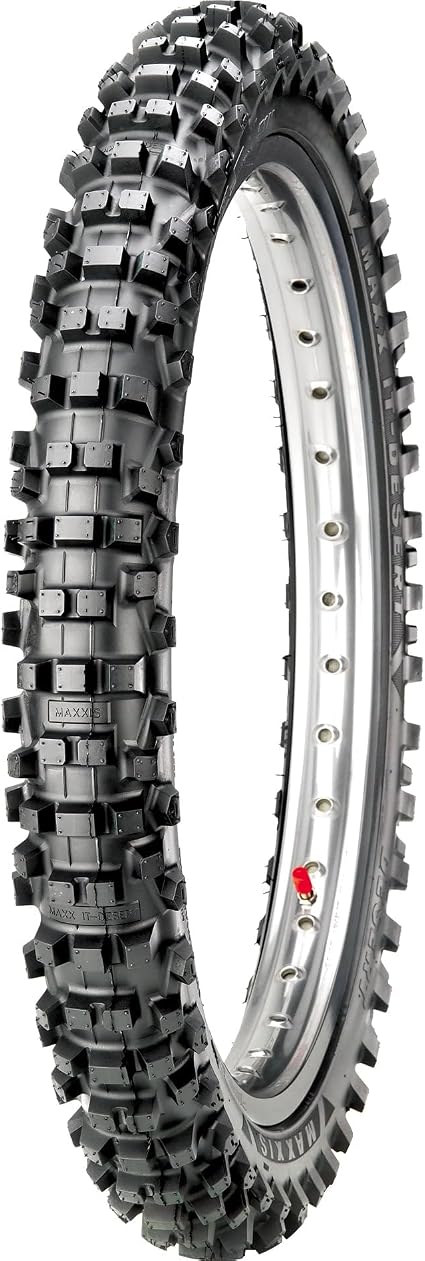
Maxxis Maxxcross Desert IT Front Tire stands out for its durability in tough desert and rocky riding conditions. Ideal for riders tackling rough terrains, it offers a strong balance of grip and resilience, especially where chipping and cuts are a concern.
Setting up on a 21-inch rim, this tire fits specific vehicles perfectly without hassle. Its non-directional tread makes rotating easier and provides consistent traction year-round. The specially designed compound reduces wear from sharp rocks, helping it maintain grip and shape even during frequent rides in challenging environments.
Performance-wise, it grips well on loose desert surfaces without breaking down quickly. The build leans towards heavy duty, given its load capacity of 27 pounds and load range LL, ensuring it holds up under pressure.
Praise often centers on its durability, while the main complaint involves occasional stiffness making the ride feel less forgiving.
Durability against desert wear stands out as the biggest advantage, with many appreciating how the tire holds up against rock damage. Some users note the tire feels stiff, which may reduce comfort over long, rough rides. These details highlight the tire’s focus on toughness rather than plush handling.
Riders tackling rocky, abrasive deserts will find this tire well suited to their needs. Those prioritizing a softer ride or carrying loads heavier than 27 pounds should consider other options better matched to those demands.
Pros
- Durable compound reduces chipping and cutting
- Non-directional tread for easier rotation
- Fits perfectly on 21-inch rims
- Good performance on rocky desert terrain
Cons
- Ride can feel stiff in some situations
- Load capacity limits very heavy loads
| Specification | Details |
|---|---|
| Rim Size | 21 inches |
| Load Index | 27 |
| Speed Rating | M |
| Load Capacity | 27 pounds |
| Tread Type | Non-Directional |
| Load Range | LL |
12. Michelin Desert Race Baja Rear Tire

Riding on soft desert terrain feels more controlled and confident than expected, especially when pushing hard on corners. Designed for high-performance off-road bikes, this tire’s standout feature is its reinforced tread that grips well without sacrificing handling.
Setting it up on an 18-inch rim is straightforward, and the lightweight design cuts about 500g off compared to similar tires, making the bike respond better over bumps and during quick direction changes. The directional tread pattern adds stability on loose sand, while the specific 140/80-18 size fits bikes demanding professional traction and durability.
Built to handle demanding soft ground, the tire’s reinforced tread blocks provide solid grip in challenging conditions. The reduced unsprung mass improves suspension response, making riding less tiring at high speeds.
Positive feedback highlights reliable traction and structure, but a few mention it could wear quicker under harsh use.
The tire is praised for its reinforced tread offering solid grip and structure on soft terrains, while some note faster wear when pushed hard in tough off-road environments. Its lighter weight helps with suspension responsiveness, making it easier to handle at speed.
Riders needing a rear tire fit for aggressive desert riding and superior traction will find this a reliable choice. Those requiring different sizes or maximum durability on extremely rough tracks might look for alternative options.
Pros
- Reinforced tread blocks for better traction
- 500g lighter than standard model
- Fits high-performance off-road motorcycles accurately
- Directional tread improves stability on loose surfaces
Cons
- May wear faster under very rough conditions
- Only available in one rear size (140/80-18)
| Specification | Details |
|---|---|
| Rim Size | 18 inches |
| Load Capacity | 739 pounds |
| Speed Rating | R |
| Tread Type | Directional |
| Load Index | 70 |
| Seasons | Year Round |
Best Desert Dirt Bike Tires Comparison Table
| Product | Rim Size | Load Capacity | Construction Type | Tread Type |
|---|---|---|---|---|
| Maxxis Maxxcross Desert Front | – | – | – | – |
| Maxxis Maxxcross Desert Rear | 19 inches | 1653 pounds | Radial | Non-Directional |
| Maxxis Maxxcross Desert Rear 2 | 18 inches | – | Radial | Non-Directional |
| Tusk EMEX T-35 Set | 16 inches | 772 pounds | Bias | Non-Directional |
| Maxxis Maxxcross IT Front | 21 inches | – | B | Non-Directional |
| Tusk EMEX T-45 Tire | – | – | – | – |
| Kenda Trakmaster Rear | 18 inches | 617 pounds | B | Asymmetrical |
| Maxxis Maxxcross Desert Rear 3 | 19 inches | 992 pounds | Bias Ply | Asymmetrical |
| Maxxis Desert IT Tire | 18 inches | – | – | – |
| Scoop36 Sand Mud Tire | – | – | – | – |
| Maxxis Maxxcross Desert Front 2 | 21 inches | 27 pounds | – | Non-Directional |
| Michelin Desert Race Baja Rear | 18 inches | 739 pounds | B | Directional |
- Rim Size–
- Load Capacity–
- Construction Type–
- Tread Type–
- Rim Size19 inches
- Load Capacity1653 pounds
- Construction TypeRadial
- Tread TypeNon-Directional
- Rim Size18 inches
- Load Capacity–
- Construction TypeRadial
- Tread TypeNon-Directional
- Rim Size16 inches
- Load Capacity772 pounds
- Construction TypeBias
- Tread TypeNon-Directional
- Rim Size21 inches
- Load Capacity–
- Construction TypeB
- Tread TypeNon-Directional
- Rim Size–
- Load Capacity–
- Construction Type–
- Tread Type–
- Rim Size18 inches
- Load Capacity617 pounds
- Construction TypeB
- Tread TypeAsymmetrical
- Rim Size19 inches
- Load Capacity992 pounds
- Construction TypeBias Ply
- Tread TypeAsymmetrical
- Rim Size18 inches
- Load Capacity–
- Construction Type–
- Tread Type–
- Rim Size–
- Load Capacity–
- Construction Type–
- Tread Type–
- Rim Size21 inches
- Load Capacity27 pounds
- Construction Type–
- Tread TypeNon-Directional
- Rim Size18 inches
- Load Capacity739 pounds
- Construction TypeB
- Tread TypeDirectional
How to Choose the Right Desert Dirt Bike Tire
Choosing desert dirt bike tires involves considering tread pattern, durability, and traction to handle sandy and rough terrain effectively. Selecting the right tires improves performance and minimizes frequent replacements, ultimately saving money and preventing avoidable mechanical issues during rides.
Tread Pattern and Design
Riding on loose desert sand quickly shows how much the tread pattern matters. Lugs that are too close get clogged with sand and dirt, making the tire slip instead of grip. Tires with a good self-cleaning design shed debris naturally as the wheels spin, which means traction stays consistent during long rides.
Without this, riders find themselves constantly losing control or having to stop and clean the tires.
The spacing between lugs should be wide enough to avoid packing but not so wide that they dig in too deep and slow progress. For sandy areas, deeper, more widely spaced lugs work best, while finer lug patterns suit harder, compact dirt better. A tire designed with these factors in mind provides better stability and control across different desert terrains.
Durability and Material Quality
Desert terrain usually includes sharp rocks and rough patches that quickly wear down poor-quality tires. A tire with a tough rubber compound resists abrasion and cuts, allowing it to last much longer on these surfaces. While strong rubber is vital, the right balance with flexibility prevents the tire from cracking or becoming too stiff to provide good traction.
Sidewall strength plays a critical role in avoiding punctures and damage from rocky edges or unexpected hits. Tires with reinforced sidewalls give confidence on rough trails without adding unnecessary weight. Ignoring these qualities often means getting stranded with flats or damaged tires far from help.
Size and Fit Compatibility
Matching tire size to the bike’s rims and suspension is essential for safe handling. A tire that’s too large or too small can upset the bike’s balance, leading to poor stability or strain on the suspension components.
Correct diameter and width help maintain control over uneven desert ground and allow suspension to work as intended.
Wider tires offer better flotation on soft sand but can reduce agility on firm dirt, while narrower tires cut through sand with more precision but risk sinking. Correct tire pressure compatible with the size also impacts their performance; low pressure improves grip on sand but must be balanced to avoid rim damage or pinch flats.
Heat Resistance and Performance
Desert surfaces heat up significantly under the sun, putting stress on tire materials. Tires that cannot handle high temperatures tend to soften too much or lose structural integrity, risking flats or blowouts during long rides. A good tire maintains firmness and grip despite the heat, offering reliable traction throughout.
Heat resistance also affects ride comfort and control since overheating tires can cause unpredictable handling. Riders have noticed that tires designed to dissipate heat better reduce vibrations and feel more stable, which is crucial for tackling miles of hot desert terrain without fatigue or safety concerns.
Weight and Rolling Resistance
The weight of a tire directly influences how easily the bike responds to rider input. Heavier tires slow down acceleration and make handling feel sluggish, which can be frustrating in technical or fast desert sections.
Balancing weight with necessary durability is important to avoid tires that feel heavy but wear out quickly.
Rolling resistance impacts how much effort the rider must put into maintaining speed. Tires with lower rolling resistance use less fuel and reduce rider fatigue over long distances. Choosing a tire that offers a smooth roll without compromising toughness or traction can significantly improve the desert riding experience.
Tips for Optimizing Traction on Desert Terrain
Traction depends heavily on tire pressure, especially on loose desert sand and rocky patches. Running slightly lower tire pressure increases the contact patch, helping the tire grip better. However, dropping pressure too much risks damaging the rim or causing a flat.
Using tires with aggressive knobs placed to shed sand helps maintain consistent traction and avoid clogging. It’s important to ride smoothly; sudden acceleration or hard braking can cause the tire to lose grip quickly.
Balancing the bike’s weight evenly also prevents digging into the sand and keeps the bike stable. Adding a soft compound tire designed for loose terrain improves bite without compromising durability. Regularly checking the terrain and adjusting your riding style avoids spinning out or getting stuck.
Monitoring the rear tire for signs of sliding can guide adjustments in throttle control and tire choice. These practical points help riders handle unpredictable desert surfaces more confidently.
Maintenance Practices to Extend the Life of Desert Dirt Bike Tires
Keeping desert dirt bike tires in good condition starts with cleaning off abrasive sand after every ride. Sand particles can work into the rubber and cause premature wear if left unchecked. Inspecting for small cuts or embedded rocks helps catch damage early before it leads to a flat tire.
Rotating the tires when possible evens out wear patterns, especially if you use the bike on different terrains. Avoid riding on sharp rocks or debris whenever you can, as this sharply reduces tire life.
Using the recommended tire pressure not only improves performance but also reduces stress that can cause sidewall cracking. Store the bike away from direct sunlight and extreme temperatures to prevent the rubber from drying out and cracking.
Applying a rubber protectant after cleaning can preserve flexibility. These maintenance habits extend the usable life of desert tires, saving money over time.
Comparing Desert Dirt Bike Tires with Other Off-Road Tire Types
Desert dirt bike tires differ noticeably from other off-road tires in tread design and rubber compound. They often have taller, widely spaced knobs to dig through loose sand and prevent clogging, unlike motocross tires that focus on hard dirt tracks with tighter tread patterns.
The rubber in desert tires is usually softer to increase grip in dry, loose conditions but tougher than soft trail tires to resist cuts from desert rocks. Compared to dual-sport tires, which balance road and off-road use, desert tires sacrifice some on-road comfort and durability for superior off-road traction. Sand-specific tires also tend to have larger footprint areas to keep the bike afloat on soft terrain, different from hardpack tires that prioritize cornering stability.
Choosing the right tire for desert terrain means weighing traction needs against durability and terrain type, as each tire type serves distinct riding environments.
People Also Asked
How Do I Choose the Right Size Desert Dirt Bike Tire?
Choose a tire size that matches your bike’s manufacturer recommendations, usually found in the owner’s manual or on the sidewall of your current tire. Make sure the diameter and width fit both the rim size and frame clearance to avoid handling issues or damage during rides.
What Is the Average Lifespan of a Desert Dirt Bike Tire?
Desert dirt bike tires typically last between 500 to 1,000 miles depending on terrain, riding style, and tire quality. Regular inspection helps identify wear early, so replacing tires before the tread wears too thin can prevent loss of traction in sandy conditions.
How Do I Properly Maintain My Desert Dirt Bike Tires?
Maintain desert tires by regularly checking air pressure, cleaning off sand and debris, and inspecting for cuts or punctures after each ride. Low tire pressure can cause poor performance, while overtightening can damage the tire bead, so keep pressure within manufacturer specs.
Are Desert Dirt Bike Tires Compatible with All Rim Types?
Most desert dirt bike tires fit standard off-road rims, but compatibility depends on the tire’s bead specifications and rim width. Confirm that the tire’s size matches the rim to ensure a proper seal and safe riding experience without the tire slipping on the rim.
What Common Problems Should I Watch for with Desert Dirt Bike Tires?
Watch for common issues like dry rot, sidewall cracks, punctures, and uneven tread wear on desert tires. These problems reduce performance and can lead to sudden flats, so inspect tires regularly and replace them if significant damage or wear shows up.
Conclusion
Choosing the right desert dirt bike tire comes down to tread design, durability, and traction on loose sand. Tires that can grip well without digging in too much help you maintain control and avoid getting stuck. Durability matters since desert terrain can wear tires quickly, so a good balance of toughness and performance is key.
Consider where and how often you’ll be riding. A tire that works great for frequent long rides might be overkill for occasional weekends.
Match your choice to your budget and terrain, then check the comparison table and the detailed picks above to find the one that fits your needs best.