
Top 12 Best Exercise Bike for Knee Surgery Recovery Now
Using an exercise bike after knee surgery often starts with frustration. Many models on the market miss the mark on comfort and adjustability, leading to pain or limited mobility rather than aiding recovery.
The best exercise bike for knee surgery recovery needs to accommodate sensitive joints while allowing smooth, controlled motion to avoid aggravating the injury.
A good recovery bike typically features a low step-through frame for easy access and an adjustable seat and pedals to ensure proper alignment and support. Magnetic resistance systems provide quiet operation and precise control, usually ranging from 8 to 20 resistance levels.
Durability matters too, a solid steel frame and non-slip pedals contribute to safety and stability during rehabilitation sessions.
Need a Quick Check?
| Image | Product | Price |
|---|---|---|
Our Top Picks 1  | Mini Pedal Exerciser | Check Price |
Our Top Picks 2  | Classic Recumbent Bike | Check Price |
Our Top Picks 3  | PHYCISER Electric Bike | Check Price |
Our Selected Top 12 Exercise Bike for Knee Surgery Recovery Picks for Every Need
This list features carefully chosen exercise bikes designed to support knee surgery recovery, highlighting their performance, suitability for different users, and key advantages and drawbacks. Each review provides clear insights to help you find the best option for your rehabilitation needs.
1. Pedal Exerciser Mini Exercise Bike
Using the Pedal Exerciser Mini Exercise Bike feels gentle and manageable, making it ideal for anyone recovering from knee surgery or needing low-intensity exercise for arms and legs. Its biggest strength is adjustable resistance that lets you control how much effort you put in, which suits varying recovery stages well.
Setting it up takes just a moment since it’s compact and straightforward. You can use it at home or under your desk while working, thanks to its quiet and smooth pedal motion.
The tension knob allows switching between 5 resistance levels, so you can start light and increase as you grow stronger without any extra equipment or power source.
The mini bike performs steadily for knee and shoulder rehab, providing enough resistance without straining joints. It’s built with a manual knob for control and a handlebar for balance. Reviews often highlight how smooth and easy the pedaling feels, though some mention wishing for sturdier construction or a bit more footprint stability during use.
Smoothness of pedaling and adjustable resistance are praised most for helping gentle recovery exercises. Some users find the frame a bit wobbly, which can affect balance during use. Its simple manual design makes it easy but may limit users who want advanced features.
People recovering from knee or shoulder surgery looking for a low-impact, easy-to-use exerciser will appreciate this mini bike. Those seeking stronger build quality or digital resistance levels should look for a different model.
Pros
- Adjustable tension for tailored resistance
- Portable size fits under desk or in small spaces
- Quiet and smooth pedal motion
- Works for both legs and arms
Cons
- Build could be more sturdy for balance
- Lacks electronic resistance or tracking features
| Specification | Details |
|---|---|
| Number of Resistance Levels | 5 |
| Controls Type | Knob |
| Handle Type | handlebar |
| Operation Mode | Manual |
| Power Source | Self-Powered |
2. Recumbent Exercise Bike
Quiet and supportive, this recumbent exercise bike suits anyone recovering from knee surgery needing a gentle, stable workout. Its biggest strength is the ergonomic design with a padded seat and backrest, which provides comfort during longer sessions.
Setting up requires adjusting the seat using a simple lever, which fits different heights easily. Daily use is smooth and quiet thanks to the advanced magnetic resistance system. The bike supports up to 400 lbs, so it feels secure when you’re easing back into exercise at home.
The pulse sensors and LCD display add helpful feedback for tracking progress without complexity.
Performance is steady with 16 resistance levels to vary intensity safely during recovery. Built from commercial-grade steel, it feels solid and durable.
The strongest praise focuses on how quiet the bike is, making early morning rides unobtrusive. The most common complaint mentions the seat adjustment lever could be easier to reach for some users.
Many appreciate how whisper-quiet the magnetic resistance system operates, allowing exercise at any time without noise disturbance. Some users find the seat adjustment lever less accessible, which can slow setup or repositioning during a workout.
Ideal for those recovering from knee surgery needing comfort and gradual resistance changes in a sturdy bike. Those wanting a bike for outdoor use or with more advanced tech features might look for other options.
Pros
- Quiet magnetic resistance system
- Adjustable padded seat with ergonomic backrest
- Supports up to 400 pounds
- Pulse sensors for heart rate monitoring
Cons
- Seat adjustment lever can be hard to reach
- Limited to indoor use only
| Specification | Details |
|---|---|
| Model Number | W239 |
| Resistance Levels | 16 |
| Weight Capacity | Supports 400LB |
| Frame Material | Commercial-grade steel |
| Display Features | Pulse Sensors & LCD Display |
3. PHYCISER Electric Pedal Exercise Bike
Metal construction and a motorized design make the PHYCISER Electric Pedal Exercise Bike a solid choice for those recovering from knee surgery. Its biggest strength lies in the dual arm and leg exerciser function, offering versatility for gentle, low-impact workout sessions that aid in regaining mobility.
Setup is fairly straightforward with the corded electric power source and touch controls on an LCD display. Everyday use involves switching between upper and lower body workouts, supported by high-calf leg supports for stability.
With 20 resistance levels and automatic operation modes, adjusting intensity and speed to fit recovery stages is simple and convenient.
Performance centers on smooth and gentle cycling movement that helps reduce swelling and joint stiffness through three training modes, including motor-assisted and resistance training. The build feels reliable, with fixed handles providing steady support.
Most users praise its smooth operation and effective joint lubrication. Some find the maximum speed of 55 rpm a bit on the slower side for advanced workouts.
The bike delivers smooth, gentle motion well suited for easing joint stiffness and boosting circulation. Stability from the fixed handles and leg supports is well appreciated. Complaints mostly focus on the limited speed range that can restrict more intense sessions as recovery advances.
People seeking effective low-impact therapy and joint lubrication will benefit from this bike. Those wanting a portable or faster pedal bike might explore alternative options better suited to higher intensity workouts or cordless usability.
Pros
- 2-in-1 arm and leg exerciser for versatile workouts
- 20 resistance levels for gentle to advanced rehab
- LCD display with touch controls for easy adjustments
- High-calf leg supports ensure stability during use
Cons
- Maximum speed limited to 55 rpm may feel slow
- Corded electric power limits portability around the house
| Specification | Details |
|---|---|
| Maximum Speed | 55 rpm |
| Number of Resistance Levels | 20 |
| Motor Horsepower | 60 watts |
| Maximum Stride Length | 6 inches |
| Controls Type | Touch |
4. Recumbent Exercise Bike with Magnetic Resistance

A padded seat stands out right away, making this recumbent exercise bike a great fit for knee surgery recovery. It suits anyone needing low-impact workouts with adjustable resistance to gently increase effort over time.
Setup involves basic assembly with clear instructions, and the bike feels sturdy from the start. Using the 16 levels of magnetic resistance makes it easy to start slow and increase intensity gently.
The soft seat keeps you comfortable for longer sessions, and the LCD monitor helps track progress without fuss.
The bike delivers smooth resistance through all 16 levels, ideal for rehabilitation or light cardio. Its thickened steel frame supports up to 400 lbs, ensuring stability even during longer workouts.
Most praise centers on comfort and reliable resistance, while a few note it’s bulkier than some other models.
Comfort tops the list with the padded seat praised for support during recovery workouts. Magnetic resistance adjusts smoothly, yet the bike’s size and assembly complexity come up as minor drawbacks.
Ideal for anyone needing stable, low-impact exercise with customization options, best suited for home use where space isn’t an issue. Those looking for a lightweight, compact design might want to explore smaller alternatives.
Pros
- Supports up to 400 lbs weight capacity
- Comfortable padded seat for long sessions
- 16 levels of adjustable magnetic resistance
- Stable, heavy-duty steel frame
Cons
- Larger footprint may not suit small spaces
- Assembly can take some time for beginners
| Specification | Details |
|---|---|
| Resistance Levels | 16 Levels Magnetic Resistance System |
| Weight Capacity | 400 LBS |
| Frame | Thickened Steel Frame |
| Seat | Soft Padded Seat |
| Model Number | W356 |
5. Pedal Exerciser Desk Exercise Bike

Designed for gentle leg and arm workouts, this mini pedal exerciser fits perfectly for those recovering from knee surgery who need low-impact exercise. Its biggest strength lies in adjustable resistance levels that let you tailor the intensity as you regain strength without overexertion.
Setup is simple since it’s a compact unit meant to fit under a desk, allowing you to pedal while working or relaxing. The manual knob lets you set five resistance levels easily, and the LCD monitor tracks time, count, RPM, and calories to keep your progress clear.
Battery power and lightweight design make it easy to move and use anywhere in the home or office.
It performs well for steady recovery exercise, offering smooth pedaling with clear resistance adjustments for both warm-up and rehab. The build is straightforward and durable, though some users note the stride length might feel short for taller legs.
Most praise the machine’s quiet operation and continuous display, with common complaints about limited software updates and simple manual controls.
The machine is praised for being quiet and displaying multiple exercise metrics clearly, helping users keep good track of their progress. One common issue is the stride length, which some find too short for their comfort, especially when recovering mobility.
It suits people needing a lightweight, portable exerciser for low-impact knee rehab and arm strengthening. Those requiring longer stride lengths or more advanced programmability might want to consider other models.
Pros
- Adjustable tension with five resistance levels
- Compact design fits easily under desks
- LCD shows time, count, RPM, and calories
- Quiet operation during exercise
Cons
- Stride length may be short for taller users
- No software updates supported
| Specification | Details |
|---|---|
| Number of Resistance Levels | 5 |
| Display | LCD |
| Maximum Stride Length | 15.75 inches |
| Operation Mode | Manual |
| Power Source | Battery Powered (1 LR44 battery) |
6. Pedal Exerciser Under Desk Bike

Recovering from knee surgery often means needing gentle, controlled exercise to regain mobility without strain. Great for seniors and those in rehabilitation, the Pedal Exerciser Under Desk Bike offers quiet, low-intensity leg and arm workouts, helping build strength while keeping pressure off healing joints.
Setting it up takes just moments since it fits snugly under most desks, making it easy to use at home or even discreetly at work. Adjusting resistance is simple with a knob, letting you choose between very light pedaling and more challenging effort.
The compact size means it tucks away neatly when not in use, so it doesn’t clutter your space.
It performs steadily, providing smooth cycling motion that supports both leg and arm recovery exercises. The manual operation requires no power, which adds to its convenience. Built with a standard handle and easy-to-turn tension knob, it stays stable during use.
Praise focuses on how gentle and accessible the resistance is, while complaints often mention the simplicity of design lacking digital tracking or feedback.
The quietness and ease of adjusting resistance receive repeated praise, making it ideal for low-intensity rehabilitation work. Common complaints note that this exerciser is very basic, lacking electronic feedback or advanced support features for tracking progress.
People needing straightforward, gentle workouts will benefit most, especially seniors recovering from surgery. Those wanting detailed workout data or a sturdier frame for rigorous use might prefer a different model with more features.
Pros
- Quiet and compact design fits under desks
- Adjustable tension knob for gentle cycling
- No power source required
- Supports both leg and arm exercises
Cons
- Lacks digital tracking features
- Simple design without advanced stability aids
| Specification | Details |
|---|---|
| Controls Type | Knob |
| Handle Type | Standard |
| Maximum Speed | 20 revolutions per second |
| Maximum Stride Length | 12 inches |
| Minimum Speed | 1 revolutions per hour |
| Operation Mode | Manual |
7. Pedal Exerciser Bike for Seniors

Manual control with 4 resistance levels makes this pedal exerciser bike a good fit for seniors recovering from knee surgery who need gentle, adjustable workouts. Its biggest strength is combining lower and upper body exercise with muscle tension relief through resistance bands and massage features.
Setup is straightforward, powered by the user without relying on mains electricity. The LCD display keeps track of progress, and the included AAA battery powers the screen.
Daily use includes pedaling with adjustable resistance and squeezing the resistance bands to loosen shoulders. The massage function activates easily to boost circulation and reduce fatigue after exercising.
The low-impact cycling supports muscle strength and joint flexibility well, making recovery manageable. The build feels sturdy enough for steady pedaling sessions. Best praised is how the massage feature helps with relaxing tired muscles.
Some mention the manual control can feel limiting and would prefer more resistance options.
The massage feature receives strong praise for aiding muscle relaxation after workouts. Most common complaint revolves around the manual controls being somewhat basic for users wanting finer resistance settings.
Those seeking a low-impact, multi-function exercise option for gentle recovery will appreciate this model. Anyone needing more resistance variety or automatic adjustments should consider alternatives.
Pros
- Four resistance levels cover light to moderate intensity
- Includes resistance bands for upper body exercises
- Massage function helps improve circulation and reduce fatigue
- LCD display tracks workout progress clearly
Cons
- Limited resistance levels may not suit all recovery stages
- Manual operation lacks automatic adjustment features
| Specification | Details |
|---|---|
| Controls Type | Manual |
| Display | LCD |
| Number of Resistance Levels | 4 |
| Power Source | Self-Powered |
| Number of Batteries | 1 AAA batteries required. (included) |
| Operation Mode | Manual |
8. Sunny Health & Fitness Smart Mini Cycle

People recovering from knee surgery who need gentle, low-impact exercise will find the Sunny Health & Fitness Smart Mini Cycle fits well. Its biggest strength lies in providing quiet, adjustable resistance to keep knees moving without strain, suitable for casual use during daily activities.
Setup is simple since the pedal exerciser is lightweight and portable, with a convenient handle for moving it around. Its compact size allows it to fit easily under a desk, making it easy to use while sitting. The LCD monitor and knob controls help track progress and adjust the 16 levels of resistance smoothly to match recovery needs.
Performance-wise, it offers a quiet and steady pedal motion driven by a mesh belt, important during recovery when smooth movement is key. The unit is sturdy enough for leg and arm workouts, but some users mention it can feel a bit light or less stable during intense use.
The most frequent compliment is how silently it operates, while the usual complaint concerns the pedals feeling small for some feet.
Quiet operation receives strong praise, adding comfort during recovery sessions. Common dissatisfaction arises from the pedal size, which some find too narrow, affecting foot stability.
This pedal exerciser suits anyone seeking an easy, low-impact workout around the house, especially those with limited space. It might not be ideal for people requiring a heavier, more stable unit for intense exercise periods.
Pros
- Quiet mesh belt drive avoids disturbance
- Stepless micro-adjustment for smooth resistance
- Compact and lightweight for easy portability
- Can be used for both legs and arms
Cons
- Pedals may feel small for larger feet
- Unit can be less stable during vigorous pedaling
| Specification | Details |
|---|---|
| Controls Type | Knob |
| Display | LCD |
| Number of Resistance Levels | 16 |
| Operation Mode | Manual |
| Power Source | Battery Powered |
9. KneeSled Knee Exercise Device

Unlike many exercise bikes, the KneeSled Knee Exercise Device is designed specifically for knee surgery recovery, providing controlled heel-slide movements that anyone can adjust to fit. Its universal sizing and smooth glide make it ideal for adults recovering from knee replacement or injuries like ACL and MCL tears.
Setting it up takes no measuring since the adjustable rope easily fits around any leg length. Daily use involves placing your heel on the sled and sliding it back and forth in a controlled motion, which helps gradually rebuild knee mobility without strain.
The motion feels stable and secure, encouraging consistent rehab sessions without awkward adjustments.
It performs well by targeting key leg muscles to improve flexibility and joint health, aiding in reducing stiffness and pain during recovery. The device feels sturdy and stable during use, though some users note the sliding motion can feel a bit limited if expecting full cycling movement. Most appreciate the simple, functional design and reliable support for gentle exercise.
People praise the device for its universal fit and the smooth, controlled motion that helps reduce stiffness and pain. Some mention the sliding range feels limited compared to full cycling, which is something to consider for those wanting varied exercise movements.
This will suit adults recovering from knee surgery or injuries who need gentle, stable rehab exercises focusing on range of motion. Those looking for a full exercise bike experience or more intense workouts might want to explore other options better suited for varied leg motions.
Pros
- One size fits all with adjustable rope
- Smooth gliding for controlled knee motion
- Supports knee replacement and injury rehab
- Targets mobility, flexibility, and joint health
Cons
- Sliding motion may feel limited for some
- Only designed for heel-slide exercises
| Specification | Details |
|---|---|
| Brand Name | KNEE SLED |
| Model Name | Knee Sled |
| Model Number | NS101 |
| Part Number | NS101 |
| Age Range Description | Adult |
10. Under Desk Bike Pedal Exerciser

Under Desk Bike Pedal Exerciser offers gentle, low-impact exercise ideal for those recovering from knee surgery or needing light movement for legs and arms. Its heavy 5-pound steel flywheel provides a stable and smooth pedaling experience, making it the standout feature for long sessions without wobbling or slipping.
Setting it up is simple, just place it under your desk or in front of a chair. The knob controls make adjusting resistance quick and easy.
Day-to-day use feels quiet and smooth, which is great for use during work or relaxation without disturbing others nearby. The compact size lets you fit it into tight spaces, perfect for home or office use.
The pedal exerciser performs smoothly thanks to the internal metal flywheel that supports over 400 pounds without issues. Its build feels durable and stable, avoiding the flimsy feel of plastic models. Positive feedback often highlights how quiet and steady it runs.
Some mention the resistance knob isn’t very precise, which can make fine-tuning effort a little tricky.
Quiet operation and stability during use receive the most praise, making it comfortable for extended sessions. The resistance knob’s precision is commonly noted as a drawback, sometimes making it harder to fine-tune the workout intensity exactly as desired.
Anyone needing gentle, low-impact exercise after knee surgery or for circulation will find this pedal exerciser practical and effective. It’s not ideal for those wanting a higher intensity workout or standing exercise options, so they might want to consider alternative machines.
Pros
- Stable heavy metal flywheel
- Quiet and smooth pedaling
- Supports over 400 pounds
- Adjustable resistance knob
Cons
- Resistance knob can feel imprecise
- Limited to seated use only
| Specification | Details |
|---|---|
| Flywheel Type | 5-pound steel metal flywheel |
| Weight Capacity | Over 400 pounds |
| Controls Type | Knob |
| Use Environment | Office or home |
| Suitable For | Legs and arms low-impact exercise |
11. TODO Mini Exercise Bike Pedal Exerciser
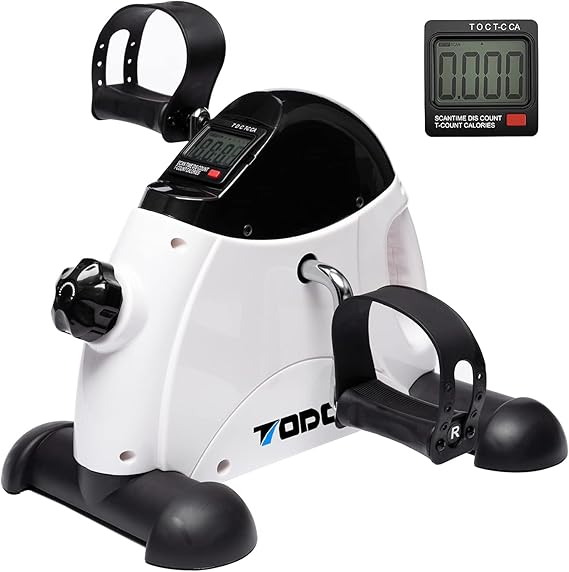
Using the mini exercise bike feels straightforward and quiet, making it suitable for anyone working through knee surgery recovery. Its greatest strength is the compact size combined with adjustable resistance levels, which lets you tailor your workout without needing a full bike setup.
Setup requires just placing it on the floor or a desk depending on whether you’re exercising legs or arms. The nonslip pedals with finger grips and adjustable toe loops keep feet secure, while anti-scuff rubber feet protect flooring during use.
A simple touch-button control with an LCD display helps track progress, and only one AAA battery is needed to operate smoothly.
Pedaling feels smooth and the resistance offers a decent range with 12 levels to match your strength and comfort. The build quality is lightweight yet sturdy enough to avoid slipping during use. One strong compliment is how quiet it operates, suited to multitasking activities.
Some found the experience less ideal for very intensive cardio sessions due to its manual operation mode.
Quiet operation and portability receive the most praise, making it easy to use while focusing on other activities. Some users found that it doesn’t allow very high-intensity workouts, which can be a downside during later recovery stages.
Those seeking gentle, manageable exercise for knee rehabilitation will find it fitting, especially in tight spaces. Users needing heavy resistance or more vigorous cardio might want to explore larger or motorized options instead.
Pros
- Compact and lightweight for easy storage
- Quiet pedal motion suits multitasking
- Adjustable toe loops add security
- Multiple resistance levels for gradual recovery
Cons
- Manual mode limits workout intensity
- Smaller size may feel unstable for some
| Specification | Details |
|---|---|
| Controls Type | Touch Button |
| Display | LCD |
| Number of Batteries | 1 AAA batteries required. (included) |
| Number of Resistance Levels | 12 |
| Operation Mode | Manual |
12. Sunny Health & Fitness 2-in-1 Smart Magnetic Pedal Exerciser

An excellent choice for anyone recovering from knee surgery, this pedal exerciser suits users looking for low-impact, adaptable workouts. Its standout feature is the ability to engage both arms and legs separately or together, making it a versatile tool during rehabilitation.
Setting it up is straightforward, using just two AAA batteries already included. The compact design allows easy placement under a desk or on a table.
Users can adjust resistance across eight levels, tailoring effort to daily energy and recovery progress. The included 20LB exercise bands add an arm workout option, expanding usability beyond simple pedaling.
Performance meets expectations with smooth pedal motion suitable for gentle rehabilitation. Build quality feels sturdy yet lightweight enough to move when needed. Most praise focuses on the variety of resistance levels and the added arm workout capability, while some find the pedal size limiting for bigger feet.
Many appreciate the option to work arms and legs separately with consistent resistance, adding value for rehabilitation routines. The most common complaint revolves around pedal size, which can be restrictive for those with larger feet.
Anyone needing a gentle, flexible exercise option will find this a good fit, especially during knee surgery recovery. Those seeking a device accommodating larger foot sizes or AC power might prefer alternatives.
Pros
- Low-impact for safe knee recovery
- Works arms and legs independently
- Adjustable resistance with 8 levels
- Compact and lightweight design
Cons
- Pedal size may feel small for large feet
- Battery powered, no AC adapter option
| Specification | Details |
|---|---|
| Number of Batteries | 2 AAA batteries required (included) |
| Number of Resistance Levels | 8 |
| Power Source | Battery Powered |
| Exercise Bands Included | Yes, 20LB resistance |
| App Access | SunnyFit App – free, no membership |
Best Exercise Bikes for Knee Surgery Recovery Comparison
| Product | Resistance Levels | Operation Mode | Power Source | Display |
|---|---|---|---|---|
| Mini Pedal Exerciser | 5 | Manual | Self-Powered | – |
| Classic Recumbent Bike | 16 | – | – | LCD |
| PHYCISER Electric Bike | 20 | Automatic | Corded Electric | LCD |
| Magnetic Recumbent Bike | 16 | – | – | LCD |
| Desk Pedal Exerciser | 5 | Manual | Battery Powered | LCD |
| Under Desk Pedal Bike | – | Manual | No Need | – |
| Seniors Pedal Exerciser | 4 | Manual | Self-Powered | LCD |
| Sunny Mini Cycle | 16 | Manual | Battery Powered | LCD |
| KneeSled Exercise Device | – | – | – | – |
| Under Desk Pedal Exerciser | – | – | – | – |
| TODO Mini Pedal Bike | 12 | Manual | – | LCD |
| Sunny 2-in-1 Magnetic Bike | 8 | – | Battery Powered | – |
- Resistance Levels5
- Operation ModeManual
- Power SourceSelf-Powered
- Display–
- Resistance Levels16
- Operation Mode–
- Power Source–
- DisplayLCD
- Resistance Levels20
- Operation ModeAutomatic
- Power SourceCorded Electric
- DisplayLCD
- Resistance Levels16
- Operation Mode–
- Power Source–
- DisplayLCD
- Resistance Levels5
- Operation ModeManual
- Power SourceBattery Powered
- DisplayLCD
- Resistance Levels–
- Operation ModeManual
- Power SourceNo Need
- Display–
- Resistance Levels4
- Operation ModeManual
- Power SourceSelf-Powered
- DisplayLCD
- Resistance Levels16
- Operation ModeManual
- Power SourceBattery Powered
- DisplayLCD
- Resistance Levels–
- Operation Mode–
- Power Source–
- Display–
- Resistance Levels–
- Operation Mode–
- Power Source–
- Display–
- Resistance Levels12
- Operation ModeManual
- Power Source–
- DisplayLCD
- Resistance Levels8
- Operation Mode–
- Power SourceBattery Powered
- Display–
How to Choose the Best Exercise Bike for Recovery
Look for an exercise bike with adjustable resistance and comfortable seating to support gentle, controlled movement during recovery. Choosing the right features ensures effective exercise without strain, helping prevent setbacks and reducing the need for costly replacements or repairs.
Adjustability and Comfort
Adjusting the seat height and position can make a huge difference, especially if knee movement is limited. Ignoring this leads to discomfort or even pain during use because the wrong seat height forces extra strain on the joint.
A good bike lets you adjust the seat in small increments, usually around 1-2 cm steps, so you can find the exact right fit. Similarly, pedal resistance should offer smooth, gradual changes rather than sudden jumps. This allows you to increase intensity carefully without overloading the knee.
Look for models with at least 8 to 10 resistance levels that can be fine-tuned.
Handlebars tend to be overlooked but play an important role. Ergonomic placement prevents added strain on the back and shoulders during longer sessions.
Handlebars that adjust vertically or horizontally work best for different body types and comfort preferences.
Stability and Safety Features
A stable frame makes a noticeable difference in confidence and safety. Bikes with flimsy or narrow frames tend to wobble, making every pedal stroke feel uncertain. Solid, wide bases with steel construction add weight and stability.
Pedals with strong nonslip surfaces and straps secure your feet, preventing slips that can aggravate healing knees. Without these, even mild slips can cause painful surprises.
Some models offer an emergency stop or quick release on the resistance control, allowing immediate relief if you feel discomfort. This feature is highly useful for those recovering, as it avoids pushing too far too fast.
Low Impact and Smooth Operation
The quietness of pedal motion reflects the quality of the drive system. Magnetic or belt-driven flywheels maintain smooth resistance and avoid the noisy jerks common in chain-driven bikes. These quieter systems also provide gentle, continuous tension that reduces impact on sensitive joints.
Sudden spikes in resistance risk flare-ups, so look for bikes where resistance increases in small, measurable steps.
A minimum of 8 resistance levels with consistently smooth transitions is ideal. This setup accommodates gradual progress without shock to recovering muscles or ligaments.
Size and Accessibility
Space is often limited in home setups. Compact bikes with a small footprint fit better in tight rooms.
Wider or bulkier models may not fit easily, making daily use inconvenient. A stepthrough or low-entry frame design allows easier mounting and dismounting, a significant help for anyone dealing with stiffness or swelling.
Moving the bike around is easier if it’s lightweight or has built-in wheels. This enables shifting it between rooms or storage without strain or needing extra help.
Ease of Use and Monitoring
Controls should be straightforward, with large buttons and a clear screen that displays speed, time, and distance accurately. Complex interfaces can be frustrating, especially during recovery when focus should be on safe movement rather than fiddling with settings.
Compatibility with external heart rate monitors or rehabilitative apps helps track progress more precisely. This data can guide how much effort to exert. Look for bikes that require minimal setup and have no complicated maintenance routines, so you spend time exercising instead of adjusting hardware regularly.
Proper Usage Tips for Accelerating Knee Surgery Recovery with Exercise Bikes
Starting with low resistance and slow pedaling speeds is crucial during knee surgery recovery. This reduces stress on the joint while maintaining mobility.
Aim for short sessions, gradually increasing duration as comfort allows.
Key usage tips include:
- Adjust the seat height so your knee has a slight bend at the bottom of the pedal stroke. This helps avoid overextension.
- Use smooth, controlled movements rather than fast or jerky pedaling to minimize strain.
- Incorporate rest periods between sessions to prevent inflammation.
- Wear supportive shoes that stabilize your foot during cycling.
Consistency matters more than intensity. Maintaining regular, gentle activity encourages blood flow and promotes healing. Always listen to your body’s signals, and consult a physical therapist for personalized settings and progression.
Safety Precautions and Common Mistakes to Avoid During Knee Rehabilitation
Protecting your knee during recovery means avoiding sudden increases in resistance or workout time. Overdoing it can cause swelling and delay healing.
Avoid pedaling with locked knees; keep them slightly bent throughout the motion.
Common mistakes that slow recovery:
- Setting the seat too low, which leads to excessive knee bending and discomfort.
- Ignoring pain signals and pushing through sharp or persistent discomfort.
- Neglecting proper warm-up and cool-down routines before and after cycling sessions.
- Failing to maintain good posture, which can put unnecessary strain on the knee.
Safety measures include consulting your healthcare provider before increasing workout intensity, and stopping immediately if swelling, redness, or significant pain occur. Using a bike with adjustable resistance and seat settings helps tailor sessions to your recovery stage.
Comparing Recumbent and Upright Exercise Bikes for Post-Surgery Knee Therapy
Recumbent bikes feature a reclined seat with back support, reducing pressure on the knees and hips. This position can be more comfortable for those in early recovery stages who need added stability and lower joint load.
In contrast, upright bikes mimic traditional bicycles with a vertical seating position. Benefits include:
- Engaging more muscle groups, including the core and lower body.
- Enabling a more natural pedaling motion similar to outdoor cycling.
Both types allow adjustable resistance and seat height, but recumbent bikes generally offer easier entry and exit, which can matter when mobility is limited. Choice depends on personal comfort and rehabilitation goals. Anyone recovering from knee surgery should prioritize bikes that provide stability and smooth pedal motion while minimizing joint stress.
People Also Asked
How to Choose the Right Exercise Bike After Knee Surgery?
Find an exercise bike with adjustable resistance and seat height for comfort and proper leg extension. Look for models with good stability so you don’t risk wobbling, which can put extra strain on your knee.
Is Using an Exercise Bike Safe During Knee Surgery Recovery?
Exercise bikes are generally safe after knee surgery, but start slowly and follow your doctor’s guidance. Pay attention to any pain or discomfort and stop if it increases during use.
What Size Exercise Bike Is Suitable for Post-Surgery Knees?
A medium-sized bike with a smaller frame that allows you to sit close to the pedals works well. Ensure you can adjust the seat forward and backward to avoid overstretching your knee.
How Long Can an Exercise Bike Last with Regular Knee Rehab Use?
With gentle, consistent use for rehab, an exercise bike can last several years before parts like pedals and seat cushions show wear. Cleaning and occasional tightening of screws helps maintain durability.
What Common Problems Should I Watch for When Using Exercise Bikes?
Watch for seating discomfort and overly stiff pedals, which can stress your knee or cause improper movement. Regularly check the bike for loose parts and make sure resistance is smooth to avoid jerky motions.
Conclusion
Choosing an exercise bike for knee surgery recovery comes down to a few key factors. Look for adjustable resistance to control workout intensity, a comfortable seat to avoid pressure on sensitive knees, and smooth pedal motion to reduce joint strain.
Stability and ease of getting on and off also matter to prevent falls or discomfort during use.
Consider your available space and how often you’ll use the bike when making a selection. Balancing budget and features will help you find the right fit for your recovery needs.
Take another look at the comparison table and detailed picks above to make an informed choice.