
Top 12 Best Indoor Mountain Bike Trainer You Can’t Miss
Spending time on a cheap or poorly chosen indoor mountain bike trainer can quickly turn a solid workout into a frustrating experience. The resistance might feel unrealistic, the bike wobbles unpredictably, or the setup doesn’t fit the frame properly.
Finding the best indoor mountain bike trainer means avoiding these common pitfalls, ensuring steady rides regardless of weather or time constraints.
A quality indoor mountain bike trainer stands out through stable construction, often with heavy steel or aluminum frames, supporting at least 100 kilograms without flex. Resistance control is key, with many offering magnetic or fluid-based systems that mimic outdoor terrain more closely than basic wind trainers.
Compatibility with various bike sizes and easy maintenance also matter; trainers that can adjust for different tire widths and clean up without disassembly save effort and time in the long run.
Need a Quick Check?
| Image | Product | Price |
|---|---|---|
Our Top Picks 1 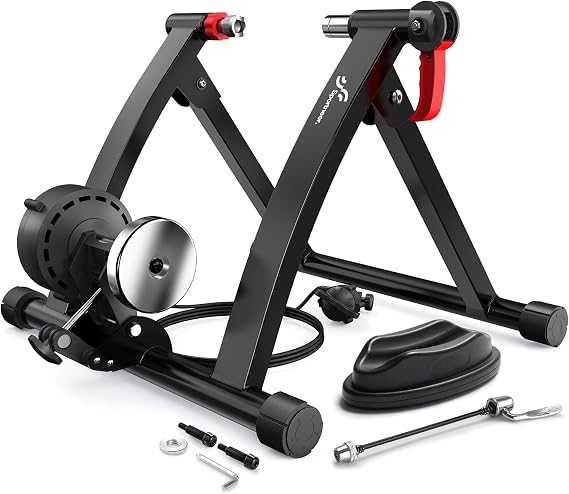 | Sportneer Magnetic Trainer | Check Price |
Our Top Picks 2  | Fluid Portable Foldable Stand | Check Price |
Our Top Picks 3  | Saris Fluid2 Smart Trainer | Check Price |
Our Selected Top 12 Indoor Mountain Bike Trainer for Different Needs
This list features a variety of indoor mountain bike trainers designed for different preferences and skill levels. Each review covers how well the trainer performs, who it is best suited for, and highlights its main advantages and drawbacks to help you make an informed choice.
1. Sportneer Magnetic Indoor Bike Trainer Stand
Indoor cycling workouts need a trainer that fits various bikes and adjusts easily for effort levels. Ideal for riders with mountain or road bikes seeking solid resistance control, the Sportneer Magnetic Indoor Bike Trainer Stand stands out for letting you switch resistance levels quickly, simulating rides from flat roads to climbs.
Setting up the trainer is straightforward thanks to the included quick-release skewer and front wheel block, making it ready for most 26–28 wheels without extra hassle. Day-to-day, switching resistance is simple through the bar-mounted remote control, so adjustments happen mid-ride without stopping.
The option to get a non-standard version with a Thru Axle Adapter also means compatibility doesn’t get in the way of training.
Performance-wise, the magnetic resistance covers six different levels and responds quickly when changed, helping replicate different ride intensities well. Built to support a range of bikes and with a sturdy frame, the bike stand weighs 19.3 pounds, providing stable support during workouts. Many find it quiet and reliable, though some mention the resistance range might feel limited for intense training needs.
The magnetic resistance shifts smoothly through six levels using the remote, praised for quick changes during rides. Most common complaint focuses on the resistance range feeling too limited for stronger, high-intensity training sessions.
People who want straightforward, reliable resistance adjustments and bike compatibility will appreciate this trainer stand. Those seeking a broader resistance spectrum or lighter frames might look for alternative options.
Pros
- Fits most road and mountain bikes
- Quick-release skewer for easy setup
- Simple bar-mounted resistance control
- Comes with front wheel block for stability
Cons
- Resistance levels may not challenge advanced riders
- Heavier than some competitors at 19.3 pounds
| Specification | Details |
|---|---|
| Wheel Compatibility | 26–28″ and 700C |
| Rear Axle Compatibility | 4.92″–6.57″ |
| Resistance Levels | 6 levels magnetic adjustment |
| Weight | 19.3 pounds |
| Included Components | Trainer Stand, Resistance Remote, Front Wheel Block, Skewer |
| Warranty | 1 Year |
2. Fluid Portable Foldable Indoor Bike Trainer Stand
Near silent fluid technology is the standout feature in this bike stand, perfect for anyone looking to keep their indoor cycling quiet and smooth. It converts mountain and road bikes into stable stationary bikes, making it ideal for year-round training and fitness at home.
Setting it up is straightforward, with a foldable design that makes storage easy when not in use. The dual-lock system helps keep the bike stable during workouts. The built-in noise reduction means it won’t disturb others, and the fluid resistance mimics a real ride, so daily training feels natural and consistent.
Performance-wise, the fluid flywheel offers progressive resistance that matches different effort levels well. The stainless steel build gives it a solid, durable feel.
Strong points include the quiet operation and sturdy locking, while some note it requires a bit of space and can be a bit heavy to move around frequently.
The most praised feature is the near-silent resistance provided by the fluid flywheel, which helps extend tire life and makes for a smooth, realistic ride. A common complaint is that it is heavier and requires more space than some other trainers, affecting portability in smaller rooms.
People wanting quiet, dependable indoor training with a sturdy build will appreciate this stand. Those needing a lightweight, very compact option might want to look elsewhere. It suits mountain and road cyclists looking for reliable at-home exercise gear with progressive resistance.
Pros
- Very quiet operation during use
- Stable and secure dual-lock system
- Portable and foldable for easy storage
- Durable stainless steel frame
Cons
- Takes up a fair amount of space
- Somewhat heavy to move frequently
| Specification | Details |
|---|---|
| Brand Name | Alpcour |
| Model Name | APC-BTSFBK |
| Included Components | Bike Trainer |
| Item Type Name | Alpcour Fluid Bike Trainer Stand |
| Manufacturer Part Number | APC-BTSFBK |
| Warranty Description | 2-Year Warranty |
3. Saris Fluid2 Smart Indoor Bike Trainer
People aiming to maintain cycling fitness at home will find the Saris Fluid2 Smart Indoor Bike Trainer a solid pick. Its realistic resistance system gives a true road feel that can keep indoor sessions engaging and productive.
Quiet operation stands out as its biggest strength in daily use.
Setting up the trainer takes just a few minutes with the wheel-on design and foldable frame making storage convenient. It feels sturdy and compact when not in use.
Pairing a speed or cadence sensor connects easily with apps like Zwift, letting you track progress without extra hassle. The quiet flywheel is a big plus during longer rides.
Performance matches the feel of riding outside thanks to precision fluid resistance that adjusts smoothly to how hard you pedal. The build quality feels solid with a balanced flywheel that keeps noise low.
Most users say it runs very quietly, though some people wish it included sensors out of the box.
The trainer is praised for delivering a consistent and whisper-quiet indoor cycling session thanks to its precision-balanced flywheel. A common drawback is the need to buy additional sensors to fully connect with training apps, adding to the overall setup cost.
Strong performers looking for a quiet, realistic resistance experience will appreciate this indoor trainer. Cyclists wanting sensors included or a lighter device might want to consider other options that bundle those features or focus on minimal weight.
Pros
- Quiet and smooth operation
- Realistic progressive fluid resistance
- Foldable frame for compact storage
- Compatible with popular training apps
Cons
- Speed or cadence sensor sold separately
- Heavier than some competitors
| Specification | Details |
|---|---|
| Model Name | Fluid2 Indoor Trainer |
| Item Weight | 7.3 pounds |
| Included Components | Indoor Trainer |
| Model Number | SAR9904T |
| Manufacturer Part Number | SAR9904T |
| Warranty Description | Limited Lifetime Warranty |
4. Saris M2 Smart Electromagnetic Bike Trainer

Designed for riders wanting quick setup and accurate resistance, the Saris M2 Smart Electromagnetic Bike Trainer works with your bike’s rear wheel without any disassembly. Great for anyone who values consistent training sessions, its standout feature is the controlled workout experience, enabled by precise electromagnetic resistance.
Getting started is straightforward with the included steel quick release skewer for most road and mountain bikes. The wheel-on design means no fuss removing your wheel before each ride. Connectivity with Zwift and other apps via ANT+ FE-C and Bluetooth makes tracking progress and switching workouts simple.
Noise is noticeable at 69 decibels around 20 mph but manageable for many home setups.
Resistance accuracy stays within 5%, ensuring each session feels like what you programmed. The electromagnetic system keeps changes reliable and smooth throughout your ride. Weighing 20 pounds, it’s sturdy but portable enough to move when needed.
Reviewers praise its consistency during workouts. Some find the sound level on the loud side during faster pedaling.
The most appreciated aspect is the consistent, controlled resistance that reliably matches workout settings. The main drawback mentioned is the noise level that comes with faster pedaling, making it less ideal for quiet environments. Setup and app connectivity generally receive positive notes for ease and functionality.
Enthusiasts looking for an accurate and well-supported smart trainer that fits standard frames will find it fitting well. Those wanting a quieter option or compatibility with thru-axles may want to consider other models better suited for those needs.
Pros
- Quick setup with wheel-on design
- Precise resistance control +/- 5%
- Connects easily to popular cycling apps
- Includes steel quick release skewer
Cons
- Noisy at higher speeds, around 69 decibels
- Only compatible with quick release frames
| Specification | Details |
|---|---|
| Noise level | 69 decibels at 20 mph |
| Resistance accuracy | +/- 5% |
| Connectivity | Dual ANT+ FE-C and Bluetooth |
| Included components | SMART Indoor Trainer |
| Item weight | 20 pounds |
| Model Number | 9930T |
5. Portable Foldable Magnetic Indoor Bike Trainer Stand

Alpcour APC-BTSMBK Portable Foldable Magnetic Indoor Bike Trainer Stand turns any mountain or road bike into a steady indoor trainer. It stands out for its quiet magnetic resistance, making it perfect for anyone wanting to train indoors without noisy distractions.
Setting up takes just a few minutes since it folds up compactly, so storage isn’t a pain. The magnetic technology creates smooth drag by pressing against your tire, which feels natural while pedaling. There’s no loud noise from it running, so you can focus on your workout or keep watching shows without interruption.
Performance-wise, it offers realistic resistance that mimics riding outdoors thanks to its high-quality flywheel. The solid build holds the bike securely and reduces friction, which helps your bike’s parts last longer.
People appreciate how quiet it is, though some mention it can be a bit heavy to move around due to its 9.34 kg weight.
The magnetic system produces notably quiet drag, enhancing focus during workouts. The most common downside is its weight, making it less convenient to move frequently or carry around.
Anyone looking for a low-noise, solid indoor trainer with their own mountain or road bike will find it useful. Those needing a lighter or portable option might want to look elsewhere.
Pros
- Quiet magnetic resistance
- Stable and secure bike hold
- Folds for easy storage
- Reduces tire friction for longevity
Cons
- Relatively heavy at 9.34 kg
- Requires your own bike tire contact
| Specification | Details |
|---|---|
| Brand Name | Alpcour |
| Item Weight | 9.34 kg |
| Model Number | APC-BTSMBK |
| Unit Count | 1 Count |
| Manufacturer Part Number | APC-BTSMBK |
6. Magnetic Bicycle Stationary Indoor Bike Trainer

Getting a good indoor ride can be tough, but this magnetic bike trainer makes it straightforward for anyone wanting to keep cycling when the weather turns rough. It fits well for mountain bike riders who want a reliable indoor setup with solid stability as its biggest strength.
Setting it up is pretty simple. The stand unfolds into a pyramid shape that really holds steady, so your bike won’t wobble while pedaling. Once mounted, daily use feels stable and safe, letting you pedal at various speeds without worrying about slipping.
It weighs over 10 kilograms, so moving it around might take a little effort, but it stays put during workouts.
It does its job well, providing a steady platform for indoor training. Built from strong materials, it handles the weight safely with no noticeable movement during rides.
Most appreciate how solid it feels, though some mention the lack of included accessories like resistance controls. It focuses on stability and basic training rather than fancy features.
Riders say it is impressively stable during use, making workouts secure and consistent. A common downside is that it doesn’t come with additional components like resistance adjustment, limiting training variety.
Those seeking a dependable, no-frills trainer that stays solid under pressure will find this a good fit. Cyclists wanting built-in resistance control or a lighter, more portable setup might want to look elsewhere.
Pros
- Strong pyramid structure for stability
- Handles heavy load comfortably
- Simple and straightforward design
- Easy to mount your bike
Cons
- No included resistance controls
- Relatively heavy and less portable
| Specification | Details |
|---|---|
| Brand Name | CXWXC |
| Item Weight | 10.05 kg |
| Model Number | MT-04BLACK |
| Unit Count | 1 Count |
| Manufacturer Part Number | MT-04BLACK |
7. VEVOR Foldable Magnetic Indoor Bike Trainer Stand

Foldable Magnetic Indoor Bike Trainer Stand from VEVOR suits riders wanting quiet indoor cycling with adjustable resistance. Its biggest strength lies in providing six levels of magnetic resistance that closely mimic real cycling conditions from warm-up sessions to hill climbs.
Setting it up is straightforward with the included quick-release lever and front wheel riser block, compatible with 26-29 inch or 700C wheels. Daily use is comfortable thanks to its low-noise motor, which cuts down friction and vibrations so you can ride indoors without distraction or noise issues.
Performance is solid with a heavy-duty aluminum alloy shaft ensuring durability during intense rides. The magnetic resistance effectively simulates various terrains, supporting fitness and skill development.
Most users appreciate the quiet operation. Some find the weight of 17.3 pounds a bit heavy for moving or storing frequently.
Quiet riding is one of the most praised features, making it well-suited to apartments or homes where noise matters. Magnetic resistance adjustment lets riders tailor effort from easy to challenging climbs. The weight can make it less convenient to move or store frequently.
Those looking for a simple, stable trainer with reliable resistance will appreciate this stand. Users wanting lighter or electronically connected trainers might consider other options better suited to their needs.
Pros
- Quiet operation with low noise motor
- Adjustable resistance with six levels
- Compatible with multiple wheel sizes
- Foldable and portable design
Cons
- Relatively heavy at 17.3 pounds
- No electronic connectivity for data tracking
| Specification | Details |
|---|---|
| Resistance Levels | 6 Level Magnetic Resistance |
| Wheel Compatibility | 26-29 in & 700C Wheels |
| Item Weight | 17.3 pounds |
| Material | Aluminum Alloy Shaft |
| Included Components | Bike Trainer, Extended Quick-Release Lever, Front Wheel Riser Block, User Manual |
8. ThinkRider X2Max Smart Bike Trainer

Metal construction and smart design make the ThinkRider X2Max Smart Bike Trainer a solid choice for cyclists looking to bring outdoor rides inside. It suits anyone wanting accurate power tracking and realistic resistance changes, especially for training with apps like ZWIFT. Its standout strength lies in its precise power output paired with quiet operation.
Setting up the trainer is straightforward, connecting via BLE or ANT+ protocols to your cycling software in minutes. Daily use feels natural thanks to the automatic adjustment of resistance based on map gradients, simulating up to an 18% incline. The quietness lets you train without drawing complaints from neighbors, and the weight of 35.2 pounds keeps it stable during intense sessions.
Power measurement reaches up to 2000W with an error margin of just ±2%, delivering reliable data you can trust for workouts. The frame feels sturdy, reflecting its metal build and thoughtful engineering to handle intense rides. Praise centers on the quiet mode and accurate resistance, while some mention the 1-year warranty as a bit short compared to other trainers.
Quietness and precise resistance matching to simulated routes are highlights that make indoor rides enjoyable and realistic. The most common downside comes from the warranty length, which some may find limiting for a product used regularly.
Cyclists who want accurate power data combined with quiet operation will appreciate this trainer. Those needing lighter or longer-warrantied options might look elsewhere for alternatives better suited to travel or extended coverage.
Pros
- Accurate power meter within ± 2%
- Quiet operation at high speeds
- Supports most cycling software easily
- Simulates realistic hill resistance up to 18%
Cons
- Relatively heavy at 35.2 pounds
- Warranty lasts only 1 year
| Specification | Details |
|---|---|
| Power Output | up to 2000W |
| Power Meter Accuracy | ± 2% |
| Resistance Simulation | up to 18% incline |
| Compatibility | BLE and ANT+ dual mode |
| Noise Level at 30km/h | about 58dB |
| Weight | 35.2 pounds |
9. ThinkRider XXPRO Smart Bike Trainer

Accuracy and power stand out the most with this indoor mountain bike trainer. Designed for cyclists focused on precise data and reliable performance, it suits those looking for realistic and intense training sessions at home.
Its self-power generation and downhill simulation are unique features that set it apart from typical trainers.
Setup requires no extra calibration, making it straightforward to get started quickly. The trainer connects smoothly via Bluetooth or ANT+ to popular apps like Zwift. Its ability to generate its own electricity removes the need for constant plugging in, which adds convenience on a daily basis.
Downhill simulation adjusts automatically with map slopes for a more immersive ride experience.
With a maximum power output of 2500w and 25% slope simulation, it handles powerful sprints and steep climbs with ease. Built as a direct motor drive unit, it offers data accuracy within ±1%.
Most feedback highlights how solid the performance feels, although some mention it lacks simplicity in initial setup details beyond calibration-free claims.
Every ride benefits from precise data and powerful resistance up to 2500w, making training feel realistic and intense. The downhill simulation makes the ride more engaging, though some users find the initial setup more detailed than they expected.
Cyclists who want data accuracy and powerful performance will appreciate this trainer, especially those who enjoy app integration and varying terrain. Casual riders or those seeking lightweight, easy-to-move trainers might prefer a simpler model.
Pros
- Highly accurate data within ±1%
- Self-power generation means no plug needed
- Downhill simulation matches map slopes
- Compatible with popular cycling apps
Cons
- Setup complexity beyond calibration-free can be confusing
- Heavy and less portable compared to simpler trainers
| Specification | Details |
|---|---|
| Maximum Power | 2500w |
| Maximum Analog Slope | 25% |
| Data Accuracy | ±1% |
| Connectivity | Bluetooth, ANT+, bike GPS PC, Zwift app |
| Power Source | Self-power generation, no adapter needed |
10. VEVOR Foldable Fluid Indoor Bike Trainer Stand

Ideal for indoor training on road or mountain bikes, this trainer stands out for its Bluetooth and ANT+ smart connectivity. It suits riders looking to combine real-world resistance with virtual training apps like Zwift, bringing a high-tech touch to home workouts.
Setting it up takes a bit of space due to its 36.4-pound weight, but folding makes storage easier. It fits bikes with 26–29 inch or 700C wheels and an 8–11 speed cassette, making compatibility straightforward.
Daily use involves adjusting resistance levels from 1 to 13 via a remote, letting you simulate different terrains without changing equipment.
Performance matches its technical promise well, delivering a smooth and adjustable resistance that feels authentic for training purposes. The build feels sturdy and stable, thanks to the foldable frame and solid materials.
One highlight from feedback is its smart connection with popular apps. Users have noted its weight can be cumbersome for quick moves or frequent setup changes.
Smart connectivity with apps and smooth resistance control stand out as top features, with users appreciating detailed data tracking. The main drawback is its weight, making frequent reconfigurations less convenient for some.
Those wanting a solid, app-compatible indoor trainer with varied resistance will appreciate this model. People needing a lightweight or ultra-portable option might consider a different trainer better suited for easy moves or smaller spaces.
Pros
- Works with popular training apps like Zwift
- Adjustable resistance simulates varied road conditions
- Fits most mountain and road bike wheels easily
- Folds for easier storage despite solid frame
Cons
- Heavier than many trainers at 36.4 pounds
- Setup might feel bulky or less portable
| Specification | Details |
|---|---|
| Item Weight | 36.4 pounds |
| Compatible Wheel Sizes | 26–29 in & 700C |
| Resistance Levels | 1–13 adjustable via remote |
| Connectivity | Bluetooth 4.0 and ANT+ |
| Compatible Cassettes | 8–11 speed |
11. Elite Novo Force Magnetic Bike Trainer

Training indoors without losing the road feel can be a challenge for cyclists wanting to keep sharp throughout the year. The Elite Novo Force Magnetic Bike Trainer suits riders looking for a realistic, progressive resistance system that can handle intense sessions while being easy to store. Its smooth magnetic resistance really makes a difference for those strength and endurance workouts at home or in the garage.
Setup involves unfolding the compact frame with its wide footprint, which keeps the bike stable during workouts. Weighing 21.8 pounds, it’s light enough to move around or put away quickly after use. Pairing it with the Misuro B+ sensor connects you to apps like My E-Training and Rouvy, bringing virtual rides and data tracking to your training routine without extra hassle.
Performance-wise, it handles power outputs up to 690 Watts at 40 km/h, which means it serves a wide range of training intensities. The sturdy design feels reliable, and the magnetic resistance delivers a smooth, progressive feel that closely mimics outdoor cycling.
Some users mention that the noise level can be noticeable, which is the main drawback compared to quieter fluid trainers.
The Elite Novo Force offers a realistic road feel with its magnetic resistance, making intense indoor training effective and varied. Most users appreciate the balance between performance and portability, but noise is the most frequent downside mentioned in reviews. It is solidly built and delivers good power output for different training levels.
Cyclists wanting an immersive, app-compatible trainer that’s easy to store will find it a strong fit. Those prioritizing ultra-quiet workouts might prefer other trainer types, especially fluid models known for lower noise during sessions.
Pros
- Smooth and progressive magnetic resistance
- Compact and folds for easy storage
- Supports high power output for intense training
- App compatible for virtual riding and tracking
Cons
- Produces noticeable noise during use
- Magnetic system less quiet than fluid trainers
| Specification | Details |
|---|---|
| Item Weight | 21.8 pounds |
| Power Output | Up to 690 Watts at 40 km/h |
| Frame Design | Lightweight 8 kg with wide footprint |
| Compatibility | Pairs with Misuro B+ sensor |
| Warranty | 2 year manufacturer |
12. Wahoo KICKR CORE 2 Smart Bike Trainer

Delivering smooth resistance and a road-like ride feel, the KICKR CORE 2 Smart Bike Trainer suits anyone serious about indoor cycling training. Its strongest feature is the upgraded connectivity through integrated WiFi, which speeds up pairing and updates, making it a reliable choice for structured workouts at home.
Setup is straightforward with included adapters for various axle types, meaning it works with a wide range of bikes. The automatic firmware updates occur whenever connected to WiFi, saving manual effort.
Day-to-day use feels stable and quiet, letting you focus on training without distractions. The solid design keeps the bike steady through intense sessions.
Performance-wise, it replicates outdoor riding resistance accurately, supporting hard efforts without lag. Built at 13.6 kg, it balances weight and durability well. The smooth resistance mechanism is praised for making indoor rides feel natural, although some note the setup can still require patience in matching bike components.
The 2-year manufacturer warranty adds confidence to the purchase.
Most praise goes to the realistic ride feel and reliable resistance, making indoor training effective. Common complaints center around compatibility setup taking some trial and error, which slows the initial experience. The solid construction and smooth performance stand out during longer sessions.
Ideal for cyclists looking to maintain or improve fitness year-round with structured indoor training. Those prioritizing ultra-lightweight or extremely quick setup may want to consider alternatives. The integrated WiFi and included adapters make it a strong fit for riders with diverse bike types aiming for serious workouts indoors.
Pros
- Smooth, road-like resistance feel
- Integrated WiFi for fast pairing and updates
- Stable and solid ride platform
- Compatible with multiple axle types
Cons
- Setup may require patience with bike compatibility
- Heavier than some other trainers at 13.6 kg
| Specification | Details |
|---|---|
| Item Weight | 13.6 kg |
| Model Name | KICKR CORE 2 ZWIFT COG AND CLICK |
| Included Components | KICKR CORE 2, AC Power Adapter, 1.8mm Cassette Spacer, Drive Side Adapter for QR, Reversible non drive side adapter for 130mm and 135mm QR, Non drive side adapters for 12×142 and 12×148 Thru Axle |
| Manufacturer Part Number | WFBKTR125-3CC |
| Warranty Description | 2 year manufacturer |
Best Indoor Mountain Bike Trainers Comparison Table
| Product | Brand | Weight | Resistance Type | Warranty |
|---|---|---|---|---|
| Sportneer Magnetic Trainer | Sportneer | 19.3 pounds | Magnetic | – |
| Fluid Portable Foldable Stand | Alpcour | – | Fluid | – |
| Saris Fluid2 Smart Trainer | Saris | 7.3 pounds | Fluid | – |
| Saris M2 Smart Trainer | Saris | 20 pounds | Smart Trainer | – |
| Portable Foldable Magnetic Trainer | Alpcour | 9.34 kg | Magnetic | – |
| Magnetic Bicycle Trainer | CXWXC | 10.05 kg | Magnetic | 1 year |
| VEVOR Foldable Magnetic Trainer | VEVOR | 17.3 pounds | Magnetic | – |
| ThinkRider X2Max Trainer | ThinkRider | 35.2 pounds | – | 1 year |
| ThinkRider XXPRO Trainer | ThinkRider | – | – | 1 year |
| VEVOR Foldable Fluid Trainer | VEVOR | 36.4 pounds | Fluid | – |
| Elite Novo Force Trainer | ELITE | 21.8 pounds | – | – |
| Wahoo KICKR CORE 2 Trainer | Wahoo | – | Smart Trainer | – |
- BrandSportneer
- Weight19.3 pounds
- Resistance TypeMagnetic
- Warranty–
- BrandAlpcour
- Weight–
- Resistance TypeFluid
- Warranty–
- BrandSaris
- Weight7.3 pounds
- Resistance TypeFluid
- Warranty–
- BrandSaris
- Weight20 pounds
- Resistance TypeSmart Trainer
- Warranty–
- BrandAlpcour
- Weight9.34 kg
- Resistance TypeMagnetic
- Warranty–
- BrandCXWXC
- Weight10.05 kg
- Resistance TypeMagnetic
- Warranty1 year
- BrandVEVOR
- Weight17.3 pounds
- Resistance TypeMagnetic
- Warranty–
- BrandThinkRider
- Weight35.2 pounds
- Resistance Type–
- Warranty1 year
- BrandThinkRider
- Weight–
- Resistance Type–
- Warranty1 year
- BrandVEVOR
- Weight36.4 pounds
- Resistance TypeFluid
- Warranty–
- BrandELITE
- Weight21.8 pounds
- Resistance Type–
- Warranty–
- BrandWahoo
- Weight–
- Resistance TypeSmart Trainer
- Warranty–
How to Choose the Best Indoor Mountain Bike Trainer
Choosing the right indoor mountain bike trainer depends on factors like resistance type, noise level, and compatibility with your bike. Prioritizing these ensures a smooth, realistic ride and prevents costly upgrades or frustration from poor fit or performance.
Compatibility with Bike Types
One time, trying to fit my mountain bike onto a trainer designed for road bikes resulted in a frustrating mismatch of axles and wheel sizes. Many trainers simply don’t accommodate larger 27.5 or 29 wheels or wider tires that mountain bikes use, which quickly leads to setups that feel unstable or even unsafe. Trainers that specify compatibility with fat tires and have adaptable axle mounts save a lot of headache.
A good model usually supports a range from 26 up to 29, sometimes even 27.5+ or 2.6 wide tires, with adjustable skewers or thru-axle fittings. Some also accommodate common suspension designs without putting stress on the frame. Confirming compatibility here ensures the trainer sits firmly and the ride feels natural, letting you focus on training rather than hardware problems.
Resistance and Power Accuracy
Trainers offering adjustable resistance bring real mountain climbs indoors, changing tension in seconds to match trail efforts. Cheaper models often rely on basic magnetic resistance, which can feel inconsistent and lack the smooth gradation needed for interval training. Power accuracy matters too, especially if you track progress or follow structured workouts.
Models with power meters tend to provide numbers within a 2-3% error range, giving reliable feedback. Smoothness during resistance shifts is critical for high-intensity intervals and avoiding sudden jerks. Look for responsiveness that adjusts gradually to simulate real terrain changes, which keeps workouts more effective and reduces joint stress.
Stability and Durability
The difference in stability becomes clear when standing and pushing hard on a lightweight trainer that wobbles under pressure. Mountain bikers often pedal aggressively, so a frame made from steel or reinforced aluminum feels sturdier. Plastic or thin metal frames can bend or wear out quickly, especially when sweat corrodes them over time.
A trainer with a wide, low base prevents tipping, crucial during out-of-saddle sprints or climbs. Features like rubber feet or floor anchors add extra security.
Longevity depends on quality build materials and finishes that resist sweat damage. A solid frame means less noise and movement, allowing you to train with confidence even during intense sessions.
Noise Level
Some trainers sound like a running chainsaw, which quickly makes indoor sessions unpleasant or impractical in shared spaces. Resistance mechanisms based on fluids or magnets generally produce less noise compared to wind or direct-contact units.
Quiet operation allows longer workouts without disturbing family or neighbors.
Dampening features such as rubber mounts or vibration-absorbing feet reduce rattling on hard floors. Noise levels under 60 decibels tend to blend into ambient room sounds, making indoor training more manageable.
Attention to how the trainer attaches and what materials contact the bike also influences noise and vibration output.
Ease of Setup and Adjustability
Setting up a trainer can be a real chore if it involves complex tools or multiple parts just to secure the bike. Quick clamp systems and clear instructions speed this process significantly.
Adjustability for different wheel sizes and axle types should be straightforward without extra adapters.
Look for trainers that support common tire pressures for mountain bikes, as mismatched pressure can damage tires or reduce performance. Storage convenience is important too; models that fold flat or disassemble quickly save space in small apartments or garages. Easy portability also encourages more consistent use.
Optimizing Your Indoor Training Sessions for Maximum Performance
Consistency makes a huge difference in indoor training results. Setting up your space where you can focus without distractions improves workout quality. Place your bike trainer on a level, stable surface to avoid any wobbling during intense sessions.
Using a fan nearby helps regulate body temperature, preventing early fatigue from overheating. Selecting structured workouts with varied intensity prevents boredom and pushes your limits effectively.
Make sure your device firmware and any connected apps are up to date for accurate resistance and data tracking. Hydration is easy indoors; keep water within reach to sip regularly without breaking rhythm.
Adding a mat beneath the trainer protects your flooring and reduces noise. Small adjustments like proper shoe fit and saddle height tailored to your body encourage comfortable, injury-free riding. Tracking progress with performance metrics like power output and cadence helps monitor improvement over time and guides future training choices.
Essential Maintenance Tips to Prolong Your Mountain Bike Trainer’s Lifespan
Regular checks can keep a mountain bike trainer running smoothly for years. Clean the roller or contact surface frequently with a soft cloth to remove sweat and grime that cause wear.
Inspect bolts and screws monthly to ensure tightness since vibrations can loosen them over time. Lubricate any moving metal parts sparingly following the manufacturer’s instructions to avoid excess buildup attracting dirt. Examine electrical cables and connections for signs of damage or wear to avoid sudden malfunctions.
Make sure there are no leaks or cracks in your trainer’s fluid or magnetic resistance unit. Store the trainer indoors in a dry place when not in use to protect from rust and corrosion.
Periodically calibrate resistance settings to maintain training accuracy. Keeping software updated ensures compatibility with training apps and fixes bugs. Small, consistent maintenance steps prevent costly repairs or replacements down the road.
Comparing Direct Drive and Wheel-On Trainers: Which Suits Your Riding Style?
Direct drive trainers attach your bike by removing the rear wheel, connecting directly to the cassette. This setup provides precise power readings and quieter operation.
They tend to be more stable and can handle higher wattage outputs, making them ideal for intense interval training or serious cyclists. Installation takes slightly longer but offers better tire wear protection since the wheel isn’t spinning. Wheel-on trainers clamp onto the rear tire and spin it against a roller.
These are usually easier to set up, portable, and more budget-friendly. Their resistance feel varies more with tire pressure and wear, and noise levels tend to be higher. They suit casual riders and those who want a quick, convenient way to train indoors.
Picking between the two depends on priorities like precision, noise tolerance, budget, and how often you plan to use the trainer.
People Also Asked
How Do I Set up an Indoor Mountain Bike Trainer Safely?
Secure the bike firmly to the trainer by tightening the clamps or quick-release levers to avoid wobbling during use. Ensure the trainer sits on a flat, stable surface and double-check all connections before starting to ride. Using a mat under the trainer can help keep it in place and protect the floor from sweat and vibration.
What Maintenance Is Required to Keep My Bike Trainer Working?
Wipe down the trainer after each use to prevent sweat corrosion, especially around metal parts and the flywheel. Periodically check bolts and screws are tight and lubricate moving parts if the manual suggests. Keeping the unit clean and dry extends its working life and keeps noise levels down.
Will My Mountain Bike Fit This Indoor Trainer Frame Size?
Most trainers can accommodate various mountain bike frame sizes, but it’s important to check the axle compatibility and wheel size range provided by the manufacturer. Measure your bike’s rear axle width and wheel diameter before buying to avoid fit issues. Some trainers include adapters for different axle types.
How Long Do Indoor Bike Trainers Typically Last with Regular Use?
Indoor bike trainers generally last several years with routine use and proper care. The lifespan depends on the trainer type, frequency of use, and maintenance routines. Basic wheel-on trainers may wear quicker on resistance components compared to direct-drive models, which often have longer durability.
What Common Problems Should I Expect with Indoor Mountain Bike Trainers?
Expect occasional issues like slipping skewer clamps, noise from bearings or the flywheel, and wear on tire contact surfaces. Regularly inspecting and tightening parts can reduce these problems. Replacing worn-out tires or brake pads designed for trainers can also improve performance and extend equipment life.
Conclusion
Choosing an indoor mountain bike trainer comes down to a few key points: how well it fits your bike, how much noise it makes, and how stable it feels during use. These factors determine your comfort and how likely you are to stick with training inside.
Accuracy in simulating your ride can matter depending on your goals, but stability and compatibility should always come first.
Consider the space available and how often you’ll use the trainer before buying. Some options fold up easily for smaller rooms, while others are better for dedicated training areas. Also, balance your budget against features that you will actually use.
The comparison table and detailed picks above can help you find a trainer that fits your specific needs without overspending.