
Top 12 Best Power Meter for Gravel Bike You Can’t Miss
Choosing the best power meter for gravel bike rides is often more complicated than it seems. A cheap or wrong meter can give inaccurate data, making it hard to track progress or plan training. Some struggle with devices that fail under rough conditions or don’t fit well on gravel-specific setups, leading to frustration mid-ride.
A reliable power meter for gravel bikes usually excels in durability, staying accurate despite dust, mud, and vibrations common on uneven trails. Many weigh between 40 and 80 grams so they don’t affect the bike’s handling.
Compatibility with crank arms and chainrings used on gravel setups is critical, as is battery life, often around 200-300 hours, to avoid interruptions during long rides.
Need a Quick Check?
| Image | Product | Price |
|---|---|---|
Our Top Picks 1  | Favero Assioma PRO MX-1 | Check Price |
Our Top Picks 2  | Favero Assioma PRO MX-1 | Check Price |
Our Top Picks 3  | Favero Assioma Duo | Check Price |
Our Selected Top 12 Power Meter for Gravel Bike Worth Your Money
This list features a selection of reliable power meters designed specifically for gravel biking, covering various types and technologies. Each review explains how the product performs, identifies the ideal user, and highlights its strengths and potential drawbacks to help you make an informed decision.
1. Favero Assioma PRO MX-1 Power Meter Pedal
Favero Assioma PRO MX-1 stands out by providing power measurement through a single left pedal, designed for MTB, gravel, XC, and cyclocross riders who want accurate data without extra hassle. Its most notable feature is its precise power sensor that tracks cadence and power with reliable accuracy.
Setup involves swapping your pedals for the PRO MX-1, which comes with MTB-compatible SPD cleats. The left pedal contains the power meter, while the right pedal is standard.
Connecting to bike computers or apps happens smoothly over both Bluetooth and ANT+, allowing real-time tracking of power and cadence during rides and intervals. Charging uses a magnetic connector, making maintenance straightforward.
Accuracy is tight around ±1%, making your training data trustworthy for effort and FTP assessments. The pedals feel solid and well-made, designed to withstand off-road conditions. Many users appreciate the consistent performance whereas a common drawback is that only the left pedal measures power, potentially limiting data granularity for some.
The power accuracy reliably hits within ±1%, which helps track training load with confidence. Many riders note the convenience of wireless connections and easy pedal swaps. On the downside, collecting power data only from the left pedal can feel incomplete during detailed performance analysis.
Riders who want a straightforward and accurate system on one pedal, especially in gravel and MTB settings, will find this ideal. Those who want both legs measured for balance or nuanced data might want to look for dual-sided power meters instead.
Pros
- Accurate power measurement with ±1% precision
- Compatible with popular MTB SPD cleats
- Wireless connection via both Bluetooth and ANT+
- Simple magnetic charging system
Cons
- Power data only from left pedal
- Limited to single-sided measurement
| Specification | Details |
|---|---|
| Power meter type | Single-sided (left pedal) |
| Power accuracy | ±1% |
| Connectivity | Bluetooth and ANT+ |
| Included components | 1x left pedal with power meter, 1x right pedal, 2x pair SPD cleats |
| Charging | Magnetic Charging Connector |
2. Favero Assioma PRO MX-1 Power Meter Pedal
Favero Assioma PRO MX-1 is a single-sided power meter pedal designed for gravel riders who want accurate power data without the complexity of dual-sided units. Its main strength lies in precise and consistent power measurement that doesn’t require changing your pedal system.
It works well for cyclists who prefer a simple setup while maintaining excellent performance tracking.
Setup is straightforward since the pedal fits standard pedal systems, making it easy to swap onto your gravel bike. Daily rides offer reliable power readings that sync smoothly with most cycling computers and training apps.
The durable design stands up well to rough conditions common on gravel routes. You’ll find connecting and charging the unit easy, with data staying solid mile after mile.
The power meter provides consistent and accurate measurements for pacing and training. Built by Favero Electronics Srl, it feels solid and dependable with a design built for long-lasting use over varied terrain. The strongest praise is for its accuracy and integration, while the main complaint often involves the single-sided measurement, which some see as less complete compared to dual-sided devices.
Accuracy and easy integration with training setups are the most praised features. The most common downside is the limitation of measuring power from only one side, which some find less informative for balanced pedaling analysis.
Gravel riders looking for a simple yet precise power meter that fits easily will be well served by this pedal. Cyclists needing detailed dual-sided power data or more advanced metrics should consider other options.
Pros
- Accurate single-sided power data
- Compatible with standard pedal systems
- Reliable integration with cycling computers
- Durable in mixed riding conditions
Cons
- Single-sided measurement limits full power analysis
- May not suit riders wanting left and right data
| Specification | Details |
|---|---|
| Brand Name | FAVERO |
| Unit Count | 1 Count |
| Model Number | 773-10-01 |
| Included Components | 1 x Favero Assioma PRO MX-1 Single Sided Power Meter Pedals |
| Manufacturer | Favero Electronics Srl |
| Warranty | Limited Warranty |
3. Favero Assioma Duo Power Meter Pedal
Tracking precise power output on gravel rides can be tricky, especially when terrain and cadence fluctuate constantly. Favero Assioma Duo pedals suit riders wanting accurate, dual-sided power measurement that works for both road and gravel biking. The single biggest strength lies in its IAV power calculation system, delivering power data with ±1% accuracy.
Installation involves swapping your current pedals for these, which connect easily via Bluetooth or ANT+ to your cycling computer. The pedals have an internal cadence sensor and gyroscope that capture detailed ride data without extra devices.
Rechargeable batteries lasting up to 50 hours reduce charging worries, letting you focus on your ride without interruptions.
Power readings come through reliably, offering dual-sided measurement for nuanced insights into left and right leg output. The build is sturdy and designed to withstand different conditions encountered on rougher trails.
Most praise highlights precise power data, while a noted downside from reviews is occasional challenges during initial setup or connectivity hiccups.
Power data is highly accurate and reliable during rides, making it clear why it’s praised so much. Some find the setup process tricky at first, with connectivity not always instantly stable. The battery life helps reduce frequent charging, which is a big plus for longer excursions.
Anyone looking for precise dual-leg power numbers and ease of integration with existing devices will appreciate these pedals. Riders who prioritize simple plug-and-play or want a less tech-intensive setup might explore other options better suited to their needs.
Pros
- Accurate dual-sided power measurement
- Long-lasting rechargeable battery
- Works with both Bluetooth and ANT+
- Includes cadence sensor and gyroscope
Cons
- Initial setup may require troubleshooting
- Connectivity can occasionally be inconsistent
| Specification | Details |
|---|---|
| Model Number | 772-02 |
| Unit Count | 1 Count |
| Battery | Rechargeable lithium, lasts to 50 hours |
| Connectivity | Bluetooth and ANT+ |
| Power Accuracy | ±1% |
| Features | Inbuilt cadence sensor and gyroscope |
4. Favero Assioma Uno Power Meter Pedal

Left pedal power sensor stands out as the core strength, perfect for gravel riders wanting precise power data without hassle. Favero Assioma Uno Power Meter Pedal suits anyone needing accurate and detailed metrics with easy installation on their gravel bike.
Setup involves swapping your left pedal with minimal tools, and the pedal pairs with Bluetooth and ANT+, making it compatible with most devices. The built-in cadence sensor and gyroscope track your pedal strokes and angular velocity with ±1% accuracy, so daily rides provide consistent, reliable power readings without extra sensors.
Power measurement is solid, focusing on the left side, delivering advanced analyses like IAV Power Phase and Rider Position to better understand your pedaling technique. The pedal itself feels sturdy, crafted by Favero, though some mention occasional calibration needs.
Accuracy is praised consistently, while a few find that relying on a single-left pedal might miss nuances on the right side.
Accurate power data with detailed metrics get frequent praise, helping riders track pedaling efficiency closely. On the downside, some find it necessary to recalibrate the sensor now and then for consistent accuracy. Relying on the left pedal alone can miss full power balance insights.
Cyclists who want a reliable power meter focusing on left-leg data and ease of setup will like this. Those seeking both sides’ power or wanting a fully symmetrical system may prefer other options.
Pros
- Accurate left pedal power measurement
- Bluetooth and ANT+ for wide device compatibility
- Includes cadence sensor and gyroscope
- Provides advanced pedaling metrics
Cons
- Single pedal only measures left side power
- Occasional calibration needed
| Specification | Details |
|---|---|
| Brand Name | FAVERO |
| Unit Count | 1 Count |
| Bluetooth and ANT+ connectivity | Yes |
| Inbuilt cadence sensor and gyroscope | Included |
| Angular velocity accuracy | ±1% |
| Model Number | 772-01 |
5. Favero Assioma PRO MX-2 Power Meter Pedal

Gravel riders looking for a power meter pedal that also works perfectly on mountain bikes will appreciate the Favero Assioma PRO MX-2. Its biggest strength lies in the universal SPD compatibility and the ability to swap pedal bodies quickly, making it ideal for those juggling gravel and MTB setups.
Installing these pedals is straightforward, similar to any regular pedal, with no special tools needed. The package includes SPD cleats, but you can also use Shimano SM-SH51 cleats if preferred. Pairing with bike computers or smartphones is smooth via Bluetooth or ANT+, which keeps daily use simple and practical.
Charging is convenient with two magnetic connectors and a USB Type-C cable included.
Power readings feel reliable and consistent as expected for a pedal-based system tailored to gravel and MTB use. The build quality is solid, designed to withstand off-road conditions.
Most praise goes to the quick body swap feature, while some mention occasional slight weight difference compared to traditional pedals.
The Favero Assioma PRO MX-2 stands out for its innovative modular design that lets you switch pedal bodies fast, making it a favorite for riders using multiple bike types. Some users notice the pedals feel a bit heavier compared to regular pedals, which might affect those prioritizing minimal weight.
Gravel and mountain bike enthusiasts who want accurate power tracking combined with flexibility in pedal setup will find this a great fit. Riders focused solely on the lightest possible option or minimal maintenance may want to consider alternatives that prioritize weight savings or battery life.
Pros
- Universal SPD compatibility for MTB and gravel
- Easy pedal body swap for quick bike changes
- Simple installation without special tools
- Bluetooth and ANT+ for wide device pairing
Cons
- Slightly heavier than some traditional pedals
- Periodic charging necessary due to power meter use
| Specification | Details |
|---|---|
| Brand Name | RiseUP |
| Included Components | 1x Favero Assioma PRO MX-2 Power-meter Pedals, SPD cleats, magnetic charging connectors, USB Type-C cable |
| Compatibility | 100% SPD compatible, Shimano SM-SH51 supported |
| Charging | Magnetic Charging Connectors, USB Type-C 2-way |
| Number of Items | 1 Pair (2 pedals) |
6. Favero Assioma PRO MX-1 Power Meter Pedal
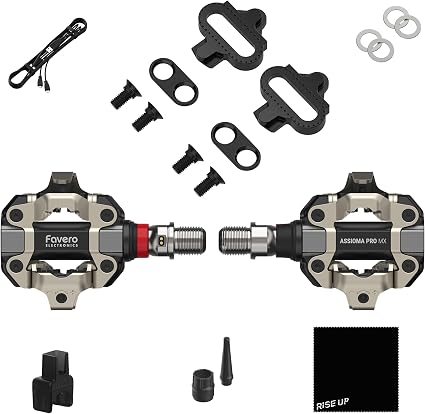
Favero Assioma PRO MX-1 stands out as a power meter pedal designed specifically for gravel and MTB riders craving a reliable, SPD-compatible system. Its biggest strength lies in its modular design, allowing you to swap pedal bodies quickly while keeping the same power sensor, perfect for those with multiple bike setups.
Installation feels no different than clipping on standard pedals, requiring no special tools and fitting smoothly onto your bike. Pairing is simple through Bluetooth or ANT+, connecting easily to your bike computer or smartphone. The inclusion of compatible SPD cleats means you’re ready to ride right out of the box, with the flexibility to use your own Shimano cleats if preferred.
Performance-wise, the power meter delivers accurate data from a single sensor on the left pedal, giving reliable readings for training and racing. The build quality is solid, benefitting from a design that supports quick pedal swaps without compromising durability. Most praise appreciates its MTB and gravel focus, while some note the single-sensor setup may not satisfy users seeking dual-leg data.
The strongest praise focuses on how easily the pedals move between bikes and their full compatibility with mountain and gravel cleats. Most common complaints mention the single-sensor setup, which doesn’t provide dual-leg power data some cyclists desire.
This power meter suits riders needing a versatile, SPD-compatible pedal that supports multiple bikes without fuss. Anyone wanting full dual-leg measurement or a complete pedal pair in one offer might want to look at alternative options.
Pros
- Quick pedal body swap for different bike setups
- SPD compatible with supplied and Shimano cleats
- Easy pairing via Bluetooth and ANT+
- Simple installation with no special tools
Cons
- Power measured only on the left pedal
- Limited to single unit purchase, no dual pedal set
| Specification | Details |
|---|---|
| Brand Name | RiseUP |
| Included Components | 1x Favero Assioma PRO MX-1 Pedal, SPD cleats, Magnetic Charging Connector, USB Type-C Cable |
| Compatibility | 100% SPD compatible, uses power sensor on left pedal only |
| Number of Items | 1 |
| Number of Packs | 1 |
7. Favero Assioma PRO RS-2 Power Meter Pedal

Favero Assioma PRO RS-2 Power Meter Pedals deliver reliable power measurement perfectly suited for gravel bike riders who want detailed data without changing their familiar pedal setup. The pedal’s universal compatibility with Shimano SPD-SL cleats stands out as the biggest advantage for anyone integrating power tracking into multiple bikes.
Installation is straightforward and familiar, just like putting on any road pedal, no special tools needed. Switching between bikes is quick since the power meter electronics are housed in a compact spindle, letting you swap pedal bodies for different setups.
Included Shimano-compatible cleats mean you’re ready to ride right out of the box.
The power meter provides precise output and feels solid underfoot, with a durable design that withstands regular gravel rides. Its battery is rechargeable and integrated neatly, and the magnetic charging connectors are convenient.
Most praise centers on consistent power data, though some users find the weight slightly heavier compared to standard pedals.
Users appreciate its reliable and consistent power data during rides, highlighting the compact and durable design. The most frequent drawback is the slightly heavier feel compared to standard pedals, which might affect those prioritizing weight savings.
Anyone riding gravel and wanting to keep a familiar Shimano SPD-SL setup while adding power data will find these pedals a smart fit. Riders looking for lighter options or non-Shimano cleat compatibility should look elsewhere.
Pros
- Compatible with Shimano SPD-SL cleats included
- Rechargeable battery with magnetic charging connectors
- Swap pedal bodies quickly without losing power sensor
- Easy installation without special tools
Cons
- Heavier than regular pedals
- Limited to SPD-SL pedal systems only
| Specification | Details |
|---|---|
| Brand Name | RiseUP |
| Number of Items | 1 |
| Included Components | 1x Favero Assioma PRO RS-2 Power-meter Cycling Pedals, 1x Pair of Assioma PRO RS Shimano compatible SPD-SL cleats, 2x Magnetic Charging Connectors, 1x USB Type-C 2-way Charger |
| Age Range Description | Adult |
| Unit Count | 1 Count |
8. Magene P715 Power Meter Pedal

Feels natural underfoot and delivers power data you can rely on, ideal for gravel riders chasing accurate efforts. Its biggest strength lies in delivering ±1% consistent power accuracy that makes every watt count on variable terrain.
Setup takes just about a minute, making it a quick swap between bikes whether on gravel, road, or triathlon setups. Dual Bluetooth and ANT+ compatibility mean it connects easily to most head units.
Long battery life keeps it running through long rides, while IPX7 waterproof rating stands up to muddy conditions.
Performance aligns well with expectations for a pedal-based meter, offering precise power tracking with no noticeable lag. Pedals feel solid yet lightweight at 157g each, giving confidence in durability and safety.
Most praise focuses on its accuracy and ease of installation. A common drawback noted is the occasional need to recharge, despite the long battery life.
Accuracy stands out as the highlight, delivering precise power data for focused training. The ease of swapping between bikes and quick setup also receives regular mention. Some find recharging can be inconvenient, especially after extended use despite the claimed 120-hour battery life.
Riders wanting reliable power measurement on multiple bikes and long rides will appreciate this model. Those seeking the absolute lightest pedal or who prioritize minimal maintenance might look elsewhere.
Pros
- Consistent power accuracy within ±1%
- Fast installation under one minute
- Supports Bluetooth and ANT+
- Long 120-hour battery life
Cons
- Recharge needed despite long battery life
- Weight slightly higher than some pedals
| Specification | Details |
|---|---|
| Power Accuracy | ±1% |
| Battery Life | 120 Hours |
| Weight | 157g Each Pedal |
| Connectivity | Bluetooth & ANT+ dual protocol |
| Waterproof Rating | IPX7 |
9. Garmin Rally RS210 Power Meter Pedal

Garmin’s Rally RS210 power meter pedal suits gravel riders looking for pedal-based accuracy without messing with their bike setup. Its standout feature is the dual sensing capability that gives detailed cycling dynamics, making it ideal for riders who want comprehensive power data.
Installation is straightforward, just like swapping regular pedals, and it fits Shimano SPD-SL cleats, making it easy to switch between compatible road bikes. The removable power sensor also lets you use the same unit on off-road Rally XC210 pedals, which adds versatility for riders who split time between gravel and more rugged trails.
Daily calibration and charging are simple with included clips and cables.
Power readings are highly accurate, within plus or minus 1%, thanks to the new strain gauge and gyroscope. The pedals track left/right balance, seated versus standing effort, and power phase, offering useful insight into your pedal stroke. The build quality feels solid, but some mention the weight is a bit on the heavier side compared to other power pedals.
Accuracy and data richness get praise, while weight and occasional charging hassles come up as drawbacks.
The power sensor delivers precise metrics that reveal left/right balance and power phase, helping riders understand their pedal stroke deeply. It’s praised for accuracy and detailed data but criticized for its weight and the slight hassle of regular charging.
Riders who value detailed cycling dynamics and want one power meter for multiple bikes will appreciate this pedal. Those looking for the lightest option or minimal charging effort might prefer alternative models.
Pros
- Highly accurate power measurement at +/- 1%
- Dual sensing captures detailed cycling metrics
- Removable sensors for multi-bike use
- Easy installation similar to standard pedals
Cons
- Heavier than some other power pedals
- Charging process can feel a bit cumbersome
| Specification | Details |
|---|---|
| Brand Name | Garmin |
| Model Number | 010-02875-10 |
| Compatibility | SHIMANO SPD-SL cleats |
| Included Components | Documentation, Hardware, Rally RS210 pedal-based power meter, SHIMANO SPD-SL compatible cleats, Two charging clips and charging cables |
| Accuracy | +/- 1% |
| Warranty | 1 Year Limited Warranty |
10. Magene P715 Power Meter Pedal

Premium silver finish and durable materials give the Magene P715 Power Meter Pedal a clean look and solid build, aimed at serious gravel cyclists who want precise data. Its standout feature is the dual-sensing capability that measures power independently on both legs with ±1% accuracy, making it reliable for focused training.
Setting up the pedals is straightforward since they fit SPD-SL cleats, so no need to switch your existing ones. The included crank washers and magnetic charging cable make installation and charging simple and convenient.
Battery life lasts up to 120 hours, so it won’t cut short long rides or races. The quick start guide makes getting going simple, and daily data collection feels consistent and dependable.
Power measurement on left and right legs is accurate within ±1%, giving solid confidence in training and pacing. The pedals are noticeably sturdy with a premium finish that resists common wear from gravel rides. Most praise focuses on its precision and long battery life.
A noted drawback is that it only fits SPD-SL pedal systems, limiting shoe compatibility without swapping cleats.
The most appreciated aspect is the precision in tracking power from each leg independently, which benefits training accuracy. Battery life also meets the needs for long sessions. The common concern is the restricted compatibility limited to SPD-SL systems, which may require some users to change their cleats.
Those focused on detailed power data and using SPD-SL pedals will find value here. Gravel riders needing excellent battery life and durability will also appreciate it. Cyclists using other pedal systems or wanting lighter weight options might want to explore alternative models.
Pros
- Accurate dual-leg power measurement to ±1%
- Long 120-hour battery life supports extended rides
- Fits SPD-SL cleats, no shoe changes needed
- Durable pedals with premium silver finish
Cons
- SPD-SL only limits compatibility with other cleats
- Some may prefer lighter pedal options for gravel riding
| Specification | Details |
|---|---|
| Compatibility | SPD-SL pedal systems |
| Accuracy | ±1% |
| Battery Life | 120 hours |
| Included Components | Pedal Power Meter*2, Crank Washer*2, Magnetic Charging Cable*1, Quick Start Guide*1 |
| Warranty | 2 Year Manufacturer |
11. PM500 Power Meter Crankset

Accuracy stands out immediately with this power meter crankset, making it ideal for gravel riders who need reliable power data. It suits riders focused on training and performance tracking, where consistent and precise measurements are key for improvement.
Setup involves a straightforward installation with a lightweight design that doesn’t add much bulk to your bike. The magnetic charging system means no fiddly battery swaps, and the 300-hour battery life helps you go on long rides without charging frequently. Real-time temperature compensation ensures the readings stay accurate regardless of weather shifts during your ride.
The power meter delivers solid accuracy at ±1.5%, combining strain gauges and an accelerometer for dependable data. Its aluminum build balances weight and stiffness well, making it sturdy yet light at 680g. Many appreciate the stable, reliable power numbers, while some mention the crankset could be heavier than others in this category.
Precision in power measurement earns strong praise while the crankset’s weight is a recurring note among riders who weight-optimize every component. Daily use benefits from consistent data unaffected by temperature changes, keeping training on point across diverse conditions.
Those seeking accurate and steady power readings on their gravel bike will appreciate this setup. Riders aiming for the absolute lightest option might prefer alternative models, but anyone focusing on reliability and battery endurance will find it well suited.
Pros
- Highly accurate ±1.5% power measurement
- Lightweight aluminum construction at 680 grams
- Long-lasting 300h battery life with magnetic charging
- Real-time temperature compensation for stable data
Cons
- Heavier than some similar power meters
- Only one battery included, no extras
| Specification | Details |
|---|---|
| Weight | 680g (170mm crank + 100g spider) |
| Power Accuracy | ±1.5% |
| Battery Life | 300 hours |
| Battery Type | 1 Lithium Ion battery (included) |
| Material | 6061 & 7075 aluminum alloy |
| Package Dimensions | 9.72 x 9.49 x 2.52 inches |
12. Magene PES P505/P515 Power Meter Crankset

Magene PES P505/P515 Power Meter Crankset suits gravel cyclists looking for precise power data without adding unnecessary weight. Its standout feature is the ±1% power accuracy, which makes reliably tracking your efforts in varied terrains practical and consistent.
Installation feels straightforward thanks to the bilateral crank design and quick start guide included in the package. Day-to-day use benefits from the long-lasting battery, delivering up to 380 hours, which means fewer interruptions for charging.
The lightweight nature keeps pedaling natural, and temperature compensation stabilizes readings when conditions change during rides.
Performance-wise, the power meter maintains solid accuracy across diverse gravel paths through the advanced strain gauges and sensors. Crafted from 7075 aircraft-grade aluminum with a triple hollow crank design, it balances stiffness and durability well enough for 100,000 pedaling cycles.
The clearest praise is its precision, while the most noted drawback relates to the origin and warranty concerns some express about components coming from China.
Users praise the power meter for delivering highly accurate readings even in changing temperatures thanks to integrated sensors and compensation technology. The most frequent criticism revolves around the product’s origin and warranty duration, leading some to question long-term reliability despite the solid materials.
Gravel riders wanting precise, consistent power measurements over many hours will appreciate this crankset’s combination of accuracy, lightness, and durability. Those prioritizing longer warranty coverage or prefer products made closer to home may want to consider alternatives.
Pros
- ±1% power accuracy for reliable data
- Lightweight at 625g for better handling
- Long battery life of up to 380 hours
- Durable aluminum withstands extensive use
Cons
- Made in China, concerns about component sourcing
- Warranty limited to 2 years, less than some competitors
| Specification | Details |
|---|---|
| Power Accuracy | ±1% |
| Weight | 625g (99g spider) |
| Material | 7075 aircraft-grade aluminum |
| Battery Life | Up to 380 hours |
| Package Weight | 1 kg |
Best Power Meters for Gravel Bikes Comparison Table
| Product | Included Components | Compatibility | Battery | Warranty |
|---|---|---|---|---|
| Favero Assioma PRO MX-1 | 1x Left pedal, cleats, washers | MTB-compatible SPD® cleats | Magnetic Charging Connector | – |
| Favero Assioma PRO MX-1 | 1x Single sided pedal | – | – | – |
| Favero Assioma Duo | – | – | – | Limited Warranty |
| Favero Assioma Uno | – | – | – | Limited Warranty |
| Favero Assioma PRO MX-2 | 1x Pedals, cleats, chargers | MTB-compatible SPD® cleats | Magnetic Charging Connectors | – |
| Favero Assioma PRO MX-1 | 1x Pedals, cleats, charger | MTB-compatible SPD cleats | Magnetic Charging Connector | – |
| Favero Assioma PRO RS-2 | 1x Pedals, cleats, chargers | Shimano SPD-SL cleats | Magnetic Charging Connectors | – |
| Magene P715 | 2x Pedal Power Meter, charger | – | Magnetic Charging Cable | 2 Year Manufacturer |
| Garmin Rally RS210 | Pedals, cleats, chargers | Shimano SPD-SL cleats | Charging clips and cables | – |
| Magene P715 | 2x Pedal Power Meter, charger | – | Magnetic Charging Cable | 2 Year Manufacturer |
| PM500 Crankset | – | – | Lithium Ion battery included | – |
| Magene PES P505/P515 | – | – | – | 2 Year Manufacturer |
- Included Components1x Left pedal, cleats, washers
- CompatibilityMTB-compatible SPD® cleats
- BatteryMagnetic Charging Connector
- Warranty–
- Included Components1x Single sided pedal
- Compatibility–
- Battery–
- Warranty–
- Included Components–
- Compatibility–
- Battery–
- WarrantyLimited Warranty
- Included Components–
- Compatibility–
- Battery–
- WarrantyLimited Warranty
- Included Components1x Pedals, cleats, chargers
- CompatibilityMTB-compatible SPD® cleats
- BatteryMagnetic Charging Connectors
- Warranty–
- Included Components1x Pedals, cleats, charger
- CompatibilityMTB-compatible SPD cleats
- BatteryMagnetic Charging Connector
- Warranty–
- Included Components1x Pedals, cleats, chargers
- CompatibilityShimano SPD-SL cleats
- BatteryMagnetic Charging Connectors
- Warranty–
- Included Components2x Pedal Power Meter, charger
- Compatibility–
- BatteryMagnetic Charging Cable
- Warranty2 Year Manufacturer
- Included ComponentsPedals, cleats, chargers
- CompatibilityShimano SPD-SL cleats
- BatteryCharging clips and cables
- Warranty–
- Included Components2x Pedal Power Meter, charger
- Compatibility–
- BatteryMagnetic Charging Cable
- Warranty2 Year Manufacturer
- Included Components–
- Compatibility–
- BatteryLithium Ion battery included
- Warranty–
- Included Components–
- Compatibility–
- Battery–
- Warranty2 Year Manufacturer
How to Choose the Best Power Meter for Gravel Bikes
Accuracy, durability, and ease of installation are key factors when selecting a power meter for gravel biking, as rough terrain demands reliable performance. Choosing the right specifications prevents costly replacements and ensures consistent data for effective training and riding.
Accuracy and Consistency
Precise power readings directly influence how effectively training sessions translate into performance improvements. Inconsistent data makes it tough to gauge real effort, especially when comparing rides over hilly gravel courses or mixed terrain. Riders often find themselves guessing whether changes in power output result from fatigue or measurement errors.
A reliable unit maintains tight accuracy margins, typically within ±1-2%, across varied conditions.
Features like automatic calibration and self-correction play a crucial role in keeping readings stable. Regular recalibration can become tiresome, so a sensor that self-adjusts or simplifies this process saves time and ensures consistency. This reliability means workouts and race efforts are tracked meaningfully, allowing for smarter adjustments and honest performance feedback ride after ride.
Compatibility with Gravel Bikes
Gravel bikes usually have diverse cranksets and bottom bracket standards that differ from road or mountain bikes. Finding a power sensor compatible with your specific setup avoids installation headaches and inaccurate readings. It’s important to check if the device fits common crank arm lengths of around 165-175 mm and supports bottom bracket shells like BB30, PF30, or threaded types.
Some sensors integrate well with common gravel drivetrain setups, including smaller or non-standard chainring sizes. For riders who switch between bike types, choosing a power meter that supports road, gravel, and mountain bike configurations adds practical versatility without the need for multiple units.
Durability and Weather Resistance
Riding on gravel often exposes equipment to mud, dust, and sudden weather changes. Power devices made from durable materials like stainless steel or reinforced composites hold up better against physical shocks and abrasion. Units with sealed components prevent water and grit from entering sensitive areas, preserving sensor function.
Devices without strong weather protection often experience erratic readings or complete failure after wet or muddy rides. Prioritizing solid construction and IP-rated weather resistance ensures the power meter continues to perform accurately in rugged, real-world conditions longer term.
Battery Life and Maintenance
Battery life is a major concern during long gravel rides where charging opportunities are limited. Many riders report frustration from devices dying mid-ride without warning. A power meter offering 200+ hours of operation on a single charge or battery change minimizes these risks on multi-hour adventures.
Ease of swapping batteries or recharging without specialized tools is equally important. Clear low battery indicators or notifications help avoid surprises.
Practical designs allow users to quickly replace batteries outdoors, keeping data flow consistent without disrupting training or navigation.
Connectivity and Data Integration
Real-time power data gains full value only when it integrates smoothly with devices like cycling computers and smartphone apps. Supporting both ANT+ and Bluetooth ensures compatibility across a range of bike GPS units and platforms without pairing issues. This dual protocol coverage also lets riders simultaneously connect to multiple devices if desired.
Simplicity in pairing is crucial since fiddling with complex connections wastes valuable ride time. Frequent firmware updates from manufacturers can fix bugs and add features, improving reliability and future-proofing the sensor over years of use.
Optimizing Power Meter Accuracy for Gravel Riding Conditions
Power meter accuracy depends heavily on proper calibration and environmental factors. Gravel riding often involves variable terrain, which can affect power readings if the meter isn’t zeroed correctly before starting.
Temperature changes during a ride might cause minor fluctuations, so it helps to recalibrate frequently, especially after long descents or exposure to shade and sunlight alternation. Vibration from rougher surfaces can sometimes interfere with sensor readings, making it important to check the power meter’s firmware for updates that improve signal filtering.
Tips to maintain accuracy on gravel:
- Calibrate the power meter while stationary before each ride.
- Monitor temperature changes and recalibrate accordingly.
- Keep firmware updated to benefit from manufacturer improvements.
- Inspect sensors and batteries regularly to avoid signal dropouts.
By paying attention to these steps, riders get more reliable data reflective of their actual effort on uneven surfaces.
Common Installation Mistakes to Avoid with Gravel Bike Power Meters
Many installation issues come from handling and positioning the power meter incorrectly. For gravel bikes, extra care is needed since the setup must withstand vibrations and mud. Over-tightening bolts can damage components or affect strain gauge readings, while under-tightening may cause the meter to shift during rides.
Incorrect alignment of crank arms or pedals leads to inaccurate power output data.
Common mistakes to avoid:
- Not following torque specifications for crank arm and pedal installation.
- Failing to clean mounting surfaces before attaching sensors.
- Neglecting to check for compatibility between the power meter and existing components.
- Skipping a thorough signal test after installation to confirm the device is working properly.
Taking time during setup prevents performance issues and unreliable readings on gravel terrain.
Comparing Pedal-Based vs Crank-Based Power Meters for Gravel Bikes
Pedal-based and crank-based power meters each have pros and cons specific to gravel cycling. Pedal meters offer straightforward installation and easy transfer between bikes but may be more exposed to impacts and dirt. Crank-based meters typically provide more consistent data since they measure power directly at the crank arm, though installation is more involved.
Key differences for gravel use:
- Pedal meters allow quick swaps which helps if riding multiple frames.
- Crank meters tend to be less vulnerable to damage from mud and rocks.
- Battery life usually lasts longer in crank-based systems as they have larger battery compartments.
- Pedals can affect cleat compatibility and foot position slightly, which matters on technical terrain.
Choosing depends on priorities like ease of use, durability, and how often the meter will switch between bikes on rough gravel routes.
People Also Asked
How Do I Choose the Right Power Meter Size for Gravel Bikes?
Choose a power meter that matches your crank arm length and is compatible with your bike’s drivetrain. Check the specs for your crank to ensure the meter fits properly without interfering with chain clearance. Measuring your current crank arms helps avoid buying the wrong size.
Are Power Meters Compatible with All Types of Gravel Bike Cranks?
Power meters usually fit specific crank models, so compatibility varies. Confirm the meter’s make matches your crank brand and model year. Some meters also fit direct mount chainrings, so consider your setup before purchasing.
What Is the Average Battery Life of a Gravel Bike Power Meter?
Most gravel bike power meters run on coin cell batteries lasting about 200-300 hours of ride time. Keep spare batteries on hand since performance drops when power is low. Regularly check battery status on your head unit to avoid surprise shutdowns.
How Do I Properly Maintain and Care for My Power Meter?
Clean the power meter gently with a damp cloth, avoiding direct water spray, especially near the sensors. Remove the cranks occasionally to check for tightness and clean under crank arms. Store your bike in a dry place to prevent moisture damage.
What Common Issues Should I Expect with Gravel Bike Power Meters?
Battery depletion and signal loss during rides are common annoyances. Sometimes, the readings can drift and require occasional recalibration. Dirt and gravel can cause sensor errors, so regular cleaning helps keep data accurate and consistent.
Conclusion
Accuracy, durability, and compatibility with your gravel bike are the most important factors to consider when choosing a power meter. The unit should provide reliable data across varied terrain and weather conditions. It also needs to fit your bike’s setup, whether that means a crank-based, pedal, or hub option.
Battery life and ease of installation are worth keeping in mind as well.
Think about how often you plan to use the power meter and your budget before making a choice. Some options require regular maintenance or have a higher initial cost but last longer, while others work well for occasional tracking. Reviewing the comparison table above will help match these points with your priorities and find the best fit for your rides.