
Top 12 Best Recumbent Bike for Knee Replacement Rehab Revealed
Finding the best recumbent bike for knee replacement rehab can be frustrating when the seat doesn’t adjust properly or the pedals feel too far to reach. Many cheaper models overlook the specific needs of post-surgery knees, causing discomfort or even slowing recovery.
A bike that’s too bulky or hard to get on and off creates extra strain instead of easing movement.
Key features to look for include adjustable seating that supports a natural leg extension without locking the knee, typically with seat adjustments ranging about 15 to 20 inches. Smooth pedal resistance with multiple settings allows gradual progression without putting stress on healing joints. Sturdy materials withstand regular use and make cleaning easier, especially models with exposed frames rather than complex covers that trap dust or sweat.
Need a Quick Check?
| Image | Product | Price |
|---|---|---|
Our Top Picks 1  | Generic Recumbent Bike | Check Price |
Our Top Picks 2  | Recumbent Bike with Arms | Check Price |
Our Top Picks 3  | MERACH Recumbent Bike | Check Price |
Our Selected Top 12 Recumbent Bike for Knee Replacement Rehab Picks for Every Need
This list features carefully chosen recumbent bikes designed to support knee replacement recovery, highlighting their performance and suitability for different users. Each review covers key benefits and drawbacks, helping readers find the best option to match their rehabilitation needs and preferences.
1. Recumbent Exercise Bike
Perfect for those recovering from knee replacement surgery, this recumbent exercise bike focuses on comfort and stability. The standout feature is its adjustable ergonomic seat that adapts easily to different heights, making long rehab sessions comfortable without straining the knees or back.
Setting up requires no tools thanks to the simple lever-based seat adjustment, which makes it quick to find the right position. The plush padded seat and ergonomic backrest support good posture during workouts.
Day-to-day, the magnetic resistance offers 16 levels to gradually build strength without loud noise disturbing the household.
Built with commercial-grade steel, the frame feels solid and holds up to 400 lbs, giving a secure ride every time. The bike operates quietly due to the magnetic resistance, ideal for early morning exercise without waking others.
Common praise highlights comfort during longer sessions; a noted drawback is the seat may feel bulky for smaller spaces.
The bike is praised for offering quiet and comfortable sessions suitable for knee rehab, but some find the seat size takes up more space than expected. Its sturdy build gives reliable support during longer exercise periods.
Ideal for those prioritizing comfort and quiet operation in home rehab. Those needing a compact bike for tight spaces might want to look for models with a smaller footprint.
Pros
- Quiet magnetic resistance system
- Supports up to 400 lbs securely
- Comfortable padded seat and backrest
- Easy lever seat adjustment
Cons
- Seat may be bulky for small rooms
- Limited to indoor use only
| Specification | Details |
|---|---|
| Brand Name | XVGVSV |
| Model Number | W239 |
| Resistance Levels | 16-Level Resistance |
| Max Weight Support | 400 lbs |
| Seat Adjustment | Lever-Based, Fits Different Heights |
| Pulse Sensors | Included |
2. Recumbent Exercise Bike with Arm Exerciser
WFLGFT W80601 recumbent exercise bike with arm exerciser offers a low-impact cardio workout that targets both upper and lower body. Designed for knee replacement rehab and home fitness, its standout feature is synchronized arm and leg movement that helps reduce knee strain while boosting circulation and endurance.
Setup involves positioning it indoors where you have room for movement, which is straightforward given its single-piece design. The adjustable magnetic resistance lets you tailor workouts from gentle rehab to more intense cardio, while the LCD monitor tracks progress.
Using the arm handles and pedals separately or together allows you to vary your routine easily depending on how your knees feel each day.
Performance sits comfortably within its rehab focus with 16 resistance levels providing smooth, gradual intensity shifts. The construction supports users up to 450 pounds, built solidly for stability.
Most find the combined arm-leg action effective for coordinated full-body exercise though some mention the pedals can feel a bit narrow, which might affect comfort.
Reviewers appreciate how the bike’s synchronized arm-leg exercise musters full-body activity without stressing the knees, making it ideal for rehab. A frequent downside mentioned is the pedal width, which could be uncomfortable for some users needing more foot space. The magnetic resistance adjusts smoothly but feels better suited for moderate effort.
People recovering from knee surgery seeking gentle but effective exercise will find this bike a solid option. Those needing wider pedals or who want intense, high-power training might look toward alternative equipment. Its app connectivity adds a modern touch, making daily rehab tracking easier for seniors or adults.
Pros
- Combined arm and leg movement reduces knee stress
- 16 levels of magnetic resistance for varied intensity
- Supports up to 450 pounds comfortably
- Bluetooth-enabled for app tracking
Cons
- Pedals may feel narrow for wider feet
- Arm exerciser may not suit all users
| Specification | Details |
|---|---|
| Resistance Levels | 16 Level Magnetic Resistance |
| Weight Capacity | 450LBS |
| Connectivity | Smart Bluetooth App |
| Monitor Type | LCD Monitor |
| Model Number | W80601 |
3. MERACH Recumbent Exercise Bike
Comfort during exercise is immediately noticeable, making it great for anyone recovering from knee replacement surgery. Its biggest strength lies in the adjustable padded seat and backrest, offering support that helps avoid strain on sensitive joints.
Setting up this bike is straightforward, with the adjustable seat fitting various body types to ensure a good riding position. The quiet magnetic resistance runs smoothly through eight levels, so workouts feel controlled and gentle on the knees.
Tracking progress is easy using the Bluetooth app, which syncs real-time stats and adds interactive cycling games to keep motivation steady.
Performance delivers steady, low-noise cycling with resistance levels that suit different stages of rehab. The solid build supports up to 300 pounds and feels stable underfoot.
Few find the seat cushion a little basic for those with back injuries, but most appreciate how the seat adjusts for comfort. Smooth resistance and heart rate handles make monitoring effort simple and effective.
Comfort and smooth resistance stand out as the main positives of this bike, especially helpful for sensitive knees during rehab. The adjustable seat greatly aids comfort but some users find the basic cushion less supportive for spine problems. The app makes using the product easier, though its Bluetooth connection can be spotty sometimes.
Ideal for those seeking a quiet and supportive recumbent cycle at home with rehab-friendly resistance adjustments. People needing extra back support might want to look for a model with a more specialized seat option or additional cushions. Those wanting consistent app reliability should consider alternatives.
Pros
- Adjustable padded seat and backrest
- Quiet operation with smooth magnetic resistance
- Tracks distance, time, calories, heart rate
- Supports users up to 300 pounds
Cons
- Seat cushion may be uncomfortable for some back issues
- App connection occasionally unstable
| Specification | Details |
|---|---|
| Brand Name | MERACH |
| Model Number | MR-S08 |
| Resistance Levels | 8-Level Magnetic Resistance |
| Weight Capacity | Supports 300lb |
| Features | Heart Rate Handle, LCD Display |
| Connectivity | Bluetooth for App Sync |
4. Recumbent Exercise Bike with Arm Exerciser

Great for knee replacement rehab, this recumbent bike offers a full-body workout by engaging both arms and legs simultaneously. It’s especially suited to anyone looking for gentle, low-impact cardio that won’t aggravate sensitive knees. Its standout feature is the synchronized arm and leg movement which aids coordination and circulation while keeping strain low.
Setting up at home is straightforward and doesn’t take long, making daily use practical. The adjustable resistance with 16 levels lets you tailor workouts from light rehab motions to more intense cardio. You can use the arm handles and pedals together or separately depending on how you feel each day, which allows easy variation during your recovery without overloading your joints.
The magnetic resistance system works smoothly and quietly, allowing consistent progress without disturbing noise. The frame can support users up to 450 pounds, ensuring solid stability during exercise. Many appreciate how the synchronized action reduces knee stress, though some mention the seats could be a bit more cushioned for longer sessions.
The construction feels sturdy and well-thought-out for home rehab use.
Users point out that the synchronized use of arms and legs really helps improve coordination and reduces knee pressure, which is vital during rehab. The most frequent complaint highlights the seat’s firmness, suggesting it may not be ideal for extended sessions without extra padding.
Those recovering from knee surgery or needing very low-impact, full-body workouts will find it fitting. People seeking longer rides with plush seating or compact machines for tight spaces might want to explore alternatives.
Pros
- Combines arm and leg exercise to reduce knee stress
- 16 resistance levels for customizable workouts
- Strong weight support up to 450 pounds
- Bluetooth app and LCD monitor included
Cons
- Seat could be more comfortable for long rides
- Requires space at home for setup
| Specification | Details |
|---|---|
| Model Name | W80601 |
| Resistance Levels | 16 Level Magnetic Resistance |
| Weight Capacity | 450LBS |
| Special Features | Smart Bluetooth App, LCD Monitor |
| Recommended Use | Indoor |
5. Recumbent Exercise Bike with Arm Exerciser

Sturdy steel frame supports both upper and lower body workouts, ideal for knee replacement rehab. Designed for those needing low-impact exercise, it combines cycling with arm movements, making it perfect for rehab that focuses on coordinated muscle recovery.
Its defining strength lies in offering a full-body workout without stressing the knees.
Setting it up is straightforward and it fits well in most home spaces. The adjustable magnetic resistance offers 16 levels, allowing you to start gently and increase intensity as your recovery progresses. The integrated LCD monitor tracks your heart rate and workout data, making daily sessions easier to follow and motivate yourself.
The included arm exerciser adds variety without extra strain.
Performance centers on quiet, smooth cycling that protects vulnerable joints during rehab. The bike’s build supports users up to 450LBS, ensuring durability.
The strongest praise is for its effective full-body movement and quiet operation. The most frequent complaint involves the Bluetooth app connection, which some find inconsistent.
The bike’s smooth, low-impact full-body motion and quiet operation make it a strong choice for knee rehab, though some find the Bluetooth app connectivity to be inconsistent. It provides detailed heart rate and workout tracking that supports progressive recovery efforts.
Those looking for a gentle but comprehensive rehab bike will appreciate this unit’s features and build. Users needing a strictly indoor bike or fully reliable app connectivity might consider other options better suited to those specifics.
Pros
- Supports coordinated upper and lower body training
- Quiet magnetic resistance for smooth workouts
- High weight capacity of 450LBS
- 16 resistance levels for progressive rehab
Cons
- Bluetooth app connection can be unreliable
- Designed mainly for outdoor use despite indoor features
| Specification | Details |
|---|---|
| 16-Level Magnetic Resistance | Yes |
| Weight Capacity | 450LBS |
| Heart Rate Monitoring | Included |
| LCD Monitor | Included |
| Model Number | W215 |
| Recommended Uses For Product | Outdoor |
6. Recumbent Exercise Bike with Arm Exerciser

Comfort stands out right away thanks to a plush padded seat and ergonomic backrest made for long sessions. Perfect for anyone recovering from knee replacement surgery, it offers gentle support while allowing you to switch between recumbent cycling and elliptical motions for variety.
Setting up the bike is straightforward, with a lever-based seat adjustment that fits different heights easily. The multi-function LCD keeps track of heart rate and resistance levels, helping you customize your workouts indoors.
Noise is minimal thanks to whisper-quiet magnetic resistance, making it suitable for use in shared spaces without disruption.
Performance is solid across both cycling and elliptical modes, allowing tailored low-impact exercise vital for rehab. The machine supports up to 400 pounds, giving it a sturdy feel during workouts.
Most users appreciate its quiet operation, though some find that resistance levels could be a bit tougher for advanced training.
The quiet magnetic resistance combined with a supportive seat makes it ideal for long, low-impact workouts during knee rehab. The most common issue identified is that the resistance levels may not satisfy those wanting high-intensity training options.
People needing gentle, versatile exercise options will find the bike suits them well. Those looking for very challenging workouts or with very limited space might want to consider alternative machines.
Pros
- Comfortable padded seat with ergonomic backrest
- Quiet magnetic resistance suitable for home use
- Switches between cycling and elliptical modes
- Adjustable seat fits various user heights
Cons
- Resistance may be weak for more intense sessions
- Machine size could be challenging for small spaces
| Specification | Details |
|---|---|
| Brand Name | XVGVSV |
| Model Number | W241 |
| Resistance Levels | 16 Levels Magnetic Resistance |
| Weight Capacity | 400LB |
| Heart Rate Monitoring | Yes |
| Seat Adjustment | Lever-based, fits different heights |
7. Exerpeutic 2000M Motorized Under Desk Exercise Bike
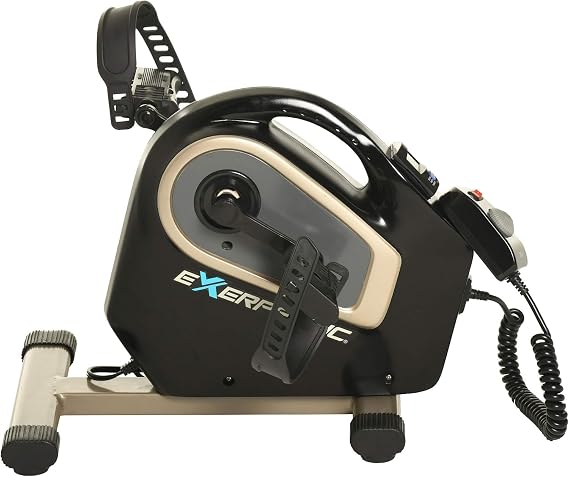
Motor-assisted pedaling sets this recumbent bike apart, ideal for knee replacement rehab and limited mobility. It provides low-impact exercise to help strengthen muscles and improve joint movement without stressing the knees.
Setup is pretty straightforward, with the hand-held speed controller attached via a 6ft cord so you can adjust without bending over. Daily use is gentle, thanks to its motorized assistance and an automatic 15-minute timer that keeps sessions manageable. You can also pedal manually for more resistance when the motor is off.
Performance focuses on slow, controlled movement that aids recovery while avoiding strain. The bike feels solid with a rotating D-type handle and offers 24 resistance levels, great for adjusting workout intensity as strength returns. Most users appreciate the motor support, though some find the automatic session timer a bit limiting if they want longer rides.
Most praise focuses on the motorized assistance making pedaling easier and safer for knees during rehab. The automatic 15-minute timer often draws complaints, as it cuts sessions short for those wanting longer exercise periods.
People recovering from knee surgery who need guided, gentle workouts will like the motor support and adjustable resistance. Anyone wanting longer or more varied workout sessions might consider a bike without a fixed timer for more freedom.
Pros
- Motor-assisted for low-impact exercise
- Long 6ft cord for easy speed control
- 24 resistance levels for varied intensity
- Automatic 15-minute timer session
Cons
- Automatic timer limits session length
- Manual pedaling can feel too resistant
| Specification | Details |
|---|---|
| Number of Resistance Levels | 24 |
| Operation Mode | Automatic |
| Power Source | Electric |
| Controls Type | Knob |
| Display | LCD |
| Handle Type | D Type, Rotating Handle |
8. Sunny Health & Fitness Smart Recumbent Bike
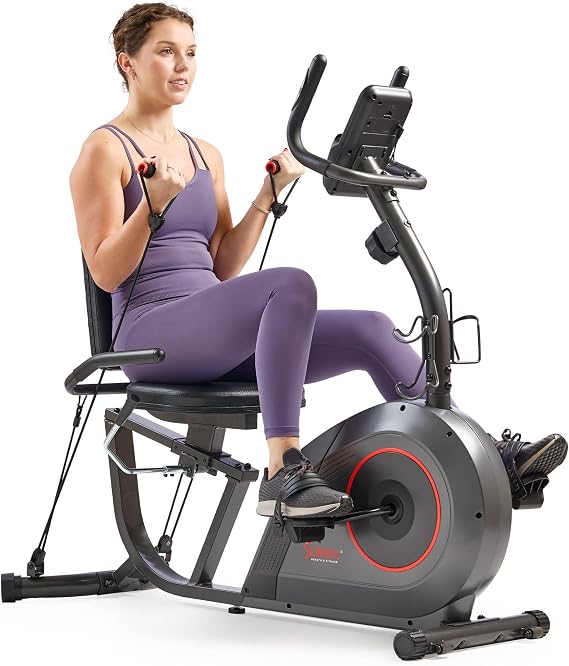
Knee replacement recovery requires gentle exercise that avoids strain but still builds strength. The Sunny Health & Fitness Smart Recumbent Bike fits perfectly for those needing low-impact workouts, especially seniors. Its biggest plus is the wide cushioned seat that keeps you comfortable during longer rehab sessions.
Setup is straightforward, and the adjustable seat makes daily rides more comfortable by fitting inseam sizes from 27.2 to 35.8 inches. The bike connects to a free fitness app, giving you access to a wide variety of workouts and scenic virtual rides. Built-in resistance bands also let you add some upper body movement without extra equipment.
Performance-wise, the bike handles resistance smoothly across 16 levels, allowing for gradual strength building. The frame supports up to 300 pounds, making it solid and stable.
Most praise revolves around the comfort and app features. Some users mention the resistance could feel a bit light for intense training needs.
Comfort from the cushioned seat is praised for keeping knee discomfort low during exercise. Many appreciate the variety of workouts available through the free app. The most common complaint is that the resistance can feel too gentle for those seeking more challenging sessions.
This bike suits seniors or those in knee rehab wanting gentle, consistent workouts with comfort. Anyone needing very heavy resistance or advanced training should consider other options better suited for increased difficulty.
Pros
- Wide cushioned seat for extra comfort
- 16 resistance levels for adjustable workouts
- Free access to 1,000+ trainer-led workouts
- Supports users up to 300 pounds
Cons
- Resistance may feel light for advanced training
- Some find app setup slightly confusing
| Specification | Details |
|---|---|
| Resistance Levels | 16 |
| Maximum User Weight | 300LB |
| Inseam Range | 27.2–35.8in |
| Built-in Features | Resistance bands, Pulse sensors |
| App Connection | SunnyFit App (no membership fees) |
9. Niceday Recumbent Exercise Bike

Designed with a 400 lb capacity and 16 levels of resistance, this recumbent bike suits those recovering from knee replacement surgery. Its biggest strength is how it reduces pressure on the knees and lower back, making it ideal for physical therapy and low-impact cardio.
Setup is straightforward, with an adjustable seat that helps find the right position to avoid strain. The bike includes a heart rate handle and an LCD display that tracks your progress. Daily sessions feel manageable thanks to the smooth resistance adjustment and comfortable seating, which takes the focus off painful joints.
Performance-wise, the bike supports endurance building and fat burning without putting extra load on sensitive areas. It’s built solidly for long-term use and built to help mobility recovery after surgery. Most users appreciate how gentle it is on joints, while some note the manual could offer clearer instructions.
Many users mention the bike’s comfort and support during knee rehab as its strongest benefit, helping to maintain mobility without extra pain. Some reviews point out that the manual isn’t very detailed, making initial setup a bit confusing.
People aiming for gentle, controlled exercise after knee or lower back surgery will appreciate this bike. Those needing a smaller footprint or more guidance during setup might want to explore other options.
Pros
- Adjustable seat for comfort and fit
- Low joint impact for knee rehab
- Wide weight capacity
- Multiple resistance levels
Cons
- Manual instructions could be clearer
- Not suitable for very compact spaces
| Specification | Details |
|---|---|
| Capacity | 400 lb |
| Resistance Levels | 16 |
| Seat | Adjustable |
| Heart Rate Handle | Included |
| Display | LCD |
10. YOSUDA Recumbent Magnetic Exercise Bike

People recovering from knee replacement will find the YOSUDA Recumbent Magnetic Exercise Bike a gentle and practical choice for rehab. Its main strength lies in providing joint-safe, low-impact workouts designed with input from rehab professionals, making it suitable for seniors and those with mobility concerns.
Setting it up involves adjusting the seat with a simple knob, allowing a perfect fit for heights ranging from 4’9 to 6’2. Day-to-day use is quiet, so workouts don’t disturb others.
The seat’s infinite adjustability means you can find a comfortable position easily, supporting longer sessions without strain on your knees or waist.
This bike fulfills its main job well by offering a smooth, low-stress workout with 16 resistance levels to customize intensity. It supports up to 350 pounds and comes with an LCD monitor and pulse tracking for monitoring your effort. Most users appreciate how quiet it runs and the comfort of the adjustable seat.
Some found assembly instructions a bit challenging, though the overall build feels sturdy.
The quiet workout and adjustable seat are praised for enabling comfortable and joint-friendly exercise sessions. Some people find the setup process difficult, especially the instructions for seat adjustment. Despite this, the bike holds up well during routine use.
This exercise bike suits those needing low-impact workouts with careful joint protection. Users outside the recommended height or weight ranges may want to consider other options designed for different body sizes or heavier loads.
Pros
- Quiet operation suitable for any time of day
- Comfortable seat with infinite adjustment
- Wide user height range supported
- Strong weight capacity up to 350 pounds
Cons
- Assembly instructions can be confusing
- Seat adjustment knob may take some getting used to
| Specification | Details |
|---|---|
| Maximum Weight Capacity | 350LB |
| Resistance Levels | 16 |
| Adjustable Seat | Infinitely adjustable, fits 4’9″ to 6’2″ |
| Display | LCD Monitor & Pulse |
| Exercise Type | Indoor |
11. Schwinn Recumbent Bike

Designed for indoor use and supporting knee replacement rehab, this recumbent bike stands out by combining adaptive workouts with over 200 virtual courses you can explore at your own speed. Its biggest strength lies in the JRNY Mobile-Only Membership, providing tailored trainer-guided sessions directly to your phone or tablet.
Set up is simple with clear instructions in the manual, and the bike includes all needed hardware and an AC adapter. Turning it on brings up a 7 inch LCD display showing your progress, fitness metrics, and 13 workout programs, so daily use stays motivating. You can ride anywhere indoors and pick courses or adaptive sessions to suit your pace for comfort during recovery.
Performance excels at offering a smooth, adjustable resistance experience thanks to Terrain Control Technology in select workouts, helping manage knee strain through elevation changes. The bike’s sturdy frame and components ensure it feels stable and reliable, while some note that advanced features require a JRNY membership.
The LCD provides useful data but might feel small to some users.
The bike receives praise for its adaptive workouts and wide variety of virtual courses that keep rehab engaging and flexible. Common complaints point to the dependency on a JRNY membership to unlock the best features and a smaller-than-ideal screen size for displaying workout data. This affects some users’ long-term engagement.
Those seeking a guided, customizable indoor cycling experience with tech support and many workout options will appreciate this bike. People wanting fully unlocked features without subscriptions or a larger display might prefer other models better suited to simple use and bigger screens.
Pros
- Adaptive workouts tailored to your fitness level
- 200+ virtual courses to vary training
- Automatic resistance adjustment for smooth rides
- Clear 7 inch LCD for tracking progress
Cons
- Advanced features need a paid JRNY membership
- LCD display may be small for some users
| Specification | Details |
|---|---|
| Brand Name | Schwinn Fitness |
| Model Name | Schwinn 290 Recumbent |
| Included Components | Bike, Hardware Card, Assembly/Owner’s Manual, AC Adapter |
| Unit Count | 1 Count |
| Recommended Uses For Product | Indoor |
12. MERACH Recumbent Exercise Bike

MERACH Recumbent Exercise Bike MR-S19 stands out for knee replacement rehab by offering a comfy, low-impact workout that minimizes knee stress. It suits anyone needing a gentle yet effective indoor cycling option, especially taller users looking for stability and reduced fatigue during exercise sessions.
Setup feels straightforward with an adjustable seat that ensures a proper fit even if you’re tall, up to 6’3. Using it daily becomes easier thanks to the MERACH app syncing feature, automatically adjusting resistance to match workout intensity without manual input. The ergonomic seat design supports you well, making longer sessions comfortable and safer compared to upright bikes.
The bike performs well by lowering knee pressure about 90%, which helps during rehab. Its magnetic resistance system paired with smart auto-resistance changes offers smooth transitions through workout levels. Build quality feels solid with a low-center gravity frame enhancing stability.
Users find the app integration useful, though some mention the app can be a bit tricky to sync on occasion.
The bike’s biggest strength is its ability to reduce knee pressure significantly, making it ideal for knee replacement rehab. Its smart resistance changes tied to the app create a smooth workout experience. However, some users have difficulty keeping the app connected, which can interrupt sessions.
This recumbent bike works well for anyone needing low-impact rehab exercise with ergonomic support and easy resistance control. Those wanting more manual control or without interest in app-based workouts might want to consider other models.
Pros
- Reduces knee pressure by 90%
- Comfortable ergonomic seat
- Automatically adjusts resistance via app
- Fits users up to 6’3″
Cons
- App syncing can be unreliable at times
- Lacks manual resistance adjustment option
| Specification | Details |
|---|---|
| Brand Name | MERACH |
| Model Name | MR-S19 |
| Recommended Uses For Product | Indoor |
| Item Highlight | Recumbent Bike for Seniors Adults, Heart Rate Handle |
| Manufacturer | MERACH |
| Part Number | S08 |
Best Recumbent Bikes for Knee Replacement Rehab Comparison
| Product | Capacity | Resistance Levels | Heart Rate Monitor | Seat Adjustability |
|---|---|---|---|---|
| Generic Recumbent Bike | 400LB | 16-Level | Pulse Sensor | Adjustable |
| Recumbent Bike with Arms | 450LBS | 16 Level Magnetic | Yes | – |
| MERACH Recumbent Bike | 300lb | 8 Levels Magnetic | Yes | Adjustable |
| Arm Exerciser Recumbent Bike | 450LBS | 16 Level Magnetic | Yes | – |
| Arm-Enhanced Recumbent Bike | 450LBS | 16-Level Magnetic | Yes | – |
| Recumbent Bike w/ Arm Workout | 400LB | 16 Levels Magnetic | Yes | Comfortable Seat |
| Exerpeutic 2000M Desk Bike | – | 24 Levels | – | – |
| Sunny Health Smart Recumbent | – | – | – | Wide Cushioned Seat |
| Niceday Recumbent Bike | – | – | – | – |
| YOSUDA Magnetic Recumbent | 350LB | 16-level | Pulse | Adjustable |
| Schwinn Recumbent Bike | – | – | – | – |
| MERACH Recumbent Model | – | – | Yes | Adjustable |
- Capacity400LB
- Resistance Levels16-Level
- Heart Rate MonitorPulse Sensor
- Seat AdjustabilityAdjustable
- Capacity450LBS
- Resistance Levels16 Level Magnetic
- Heart Rate MonitorYes
- Seat Adjustability–
- Capacity300lb
- Resistance Levels8 Levels Magnetic
- Heart Rate MonitorYes
- Seat AdjustabilityAdjustable
- Capacity450LBS
- Resistance Levels16 Level Magnetic
- Heart Rate MonitorYes
- Seat Adjustability–
- Capacity450LBS
- Resistance Levels16-Level Magnetic
- Heart Rate MonitorYes
- Seat Adjustability–
- Capacity400LB
- Resistance Levels16 Levels Magnetic
- Heart Rate MonitorYes
- Seat AdjustabilityComfortable Seat
- Capacity–
- Resistance Levels24 Levels
- Heart Rate Monitor–
- Seat Adjustability–
- Capacity–
- Resistance Levels–
- Heart Rate Monitor–
- Seat AdjustabilityWide Cushioned Seat
- Capacity–
- Resistance Levels–
- Heart Rate Monitor–
- Seat Adjustability–
- Capacity350LB
- Resistance Levels16-level
- Heart Rate MonitorPulse
- Seat AdjustabilityAdjustable
- Capacity–
- Resistance Levels–
- Heart Rate Monitor–
- Seat Adjustability–
- Capacity–
- Resistance Levels–
- Heart Rate MonitorYes
- Seat AdjustabilityAdjustable
How to Choose the Right Recumbent Bike
Comfort, adjustable seating, and smooth resistance are key factors for knee replacement rehab to ensure safe, low-impact exercise. Choosing the right bike prevents strain and supports proper recovery, ultimately saving money on potential setbacks and discomfort.
Adjustability and Fit
Finding the right seat position can drastically change how comfortable a workout feels, especially when mobility is limited. A seat that doesn’t adjust easily or won’t shift far enough forward or backward leads to awkward leg positioning, causing more knee pain rather than relief. Adjustments should be simple to operate without requiring much bending or stretching, and the range should accommodate different body sizes comfortably.
Pedal straps are essential for keeping feet stable during exercise, but tight or poorly positioned straps may cause pressure points. Look for adjustable straps made from soft but durable materials that hold feet securely without digging in.
Handlebar placement also matters; handles should be positioned for a natural, stable grip that helps maintain balance and support. Handles that can adjust or have a slight tilt can make a big difference in comfort during longer sessions.
Resistance Levels and Smoothness
Using resistance that’s too high can create unnecessary strain on recovering joints, while very low resistance might not provide enough benefit. Machines offering fine control over low to moderate resistance levels allow gradual, manageable increases that help build strength without sudden jolts. Smoothness of the mechanism is crucial; jerky or noisy bikes can discourage consistent use and add stress to sensitive knees.
A good exercise bike should deliver near-silent and fluid pedal movement. Resistance changes should feel gradual, not abrupt, allowing you to adjust workload precisely. Magnetic resistance is common in models designed for rehab because it provides steady adjustment and minimal vibration compared to other systems.
Comfort and Ergonomics
Long rehab sessions can be tough on knees and back if the seat lacks padding or the wrong shape. Cushioned seats with a wider, contoured design distribute pressure more evenly and reduce soreness.
A seat with higher-density foam tends to keep comfort over time rather than compressing quickly, which matters for daily use.
Pedals that are wider and textured help keep feet stable without causing strain around the ankles. Combined with a supportive backrest, the setup encourages proper posture, reducing fatigue and preventing slouched positions that can worsen knee and back pain.
Stability and Safety Features
Feeling unsteady on the bike adds a risk factor and can limit your willingness to exercise regularly. Sturdy steel frames are usually the most reliable, preventing wobbling or shifting during pedaling.
Stability helps build confidence especially in early rehab stages.
Nonslip pedal surfaces along with grips that have a tactile, rubberized finish protect against accidental slips. An emergency stop or easily reachable resistance control lets you quickly slow down or stop without hassle if discomfort arises.
Monitor and Feedback Options
Keeping track of progress with clear displays helps maintain motivation over time. A monitor that shows speed, distance, time, and calories burned provides tangible feedback for setting daily goals.
Simple screens with large digits are easier to read during exercise.
Compatibility with heart rate monitors adds a safety layer by allowing users to maintain exercise within safe limits. Interfaces designed with minimal buttons and intuitive menus reduce frustration, especially for those who experience limited hand dexterity or weakness.
Proper Usage Techniques to Maximize Knee Replacement Rehabilitation
Starting slowly with short sessions helps prevent overloading the knee joint after surgery. Adjust the seat so your leg extends nearly fully at the bottom of each pedal stroke but without locking the knee.
This position reduces strain and encourages smooth motion.
A steady, low-resistance pedaling pace promotes blood flow and reduces stiffness. Set the resistance to a level where you can maintain a comfortable cadence without pain or fatigue.
Gradually increase session length by a few minutes every few days as comfort allows.
Pay attention to how your knee feels during and after exercise. Swelling or sharp pain indicates the need to stop and reassess intensity or consult a physical therapist.
Using foot straps on the pedals can help maintain proper foot placement, improving stability and movement quality.
- Keep your back supported and avoid hunching forward.
- Use smooth, controlled motions to avoid jerky pedal strokes.
- Take breaks if your knee feels tired or stiff.
Maintenance Tips to Ensure Longevity and Safety of Your Recumbent Bike
Check the recumbent bike regularly for any loose bolts or components. Tightening these improves safety and prevents damage to the bike over time. Clean the pedals and seat areas to remove sweat and dirt that can cause wear.
Lubricate the chain or belt mechanism as recommended by the manufacturer to keep pedaling smooth. Monitor the condition of the pedal straps and replace them when they show signs of fraying or reduced grip.
Inspect the adjustment levers or knobs to ensure they lock firmly in place. A loosely adjusted seat or backrest can lead to improper posture, increasing stress on your recovering knee.
- Store the bike in a dry place to avoid rust or corrosion.
- Refer to the user manual for specific maintenance intervals.
- Keep a log of maintenance to track when tasks were last performed.
Common Mistakes to Avoid During Knee Replacement Recovery Exercises
Exercising too intensely too soon after knee replacement can cause swelling and delay healing. Avoid high resistance levels and long workout sessions during early recovery.
Failing to properly adjust the seat height often results in excessive knee bending or incomplete extension, both of which can cause pain and reduce rehabilitation effectiveness. Ensure the position allows a slight bend at the knee’s fullest extension.
Neglecting warm-up routines or attempting abrupt movements can lead to muscle strain around the joint. Use gentle, consistent pedaling and give your muscles time to prepare before increasing intensity.
- Do not ignore persistent discomfort; consult a healthcare professional.
- Avoid locking the knees fully during pedaling to prevent joint stress.
- Do not rush progression, listen to your body’s signals.
People Also Asked
How Do I Size a Recumbent Bike for Knee Replacement Rehab?
Choose a recumbent bike with adjustable seat distance to ensure your legs extend comfortably without locking the knee. Measure the distance from your hip bone to your heel to match the seat’s range of adjustment. Test sitting on the bike if possible to confirm comfort before buying.
Is It Safe to Use a Recumbent Bike After Knee Replacement Surgery?
Using a recumbent bike can be safe during knee replacement rehab when cleared by your doctor. Start with low resistance and short sessions to avoid stressing the joint. Keep your movements smooth and avoid forcing the knee into uncomfortable positions.
What Common Problems Should I Watch for with Recumbent Bikes?
Common issues with recumbent bikes include seat adjustment difficulties and squeaky pedals. Make sure the seat moves easily and locks firmly in place. Regularly oil the pedals and check the resistance mechanism to keep it working quietly and smoothly.
How Do I Properly Use a Recumbent Bike for Knee Rehab Exercises?
Begin with a low resistance level and pedal at a slow pace to avoid straining your new knee. Maintain good posture by sitting back comfortably and keeping your foot flat on the pedal throughout the pedal stroke. Gradually increase time and resistance as comfort improves.
How Long Does a Quality Recumbent Bike Last with Regular Use?
A quality recumbent bike lasts about 5 to 10 years with regular use, depending on maintenance and build quality. Keep the bike clean, lubricate moving parts, and check bolts periodically to extend its lifespan. Avoid excessive resistance early in rehab to prevent wear and tear.
Conclusion
Comfort during use and adjustability are key when choosing a recumbent bike for knee replacement rehab. Look for models with smooth pedal action and seats that can move forward or backward easily to avoid strain. Sturdy construction makes a difference, too, since a stable bike reduces the risk of further injury.
A clear, easy-to-read display can help you track progress without confusion or frustration.
Think about where the bike will fit in your living space and how often you plan to ride it. This can narrow down choices between compact models or those with more features but larger footprints.
Review the comparison table and detailed picks to find the bike that meets your specific rehab needs and practical considerations.