How To Ride A Motorcycle In The Rain – Step-by-Step Guide
To ride a motorcycle in the rain, gear up with waterproof, breathable clothing and fit your visor with anti-fog treatments like Pinlock inserts. Check your tires’ tread and pressures, and activate electronic aids such as ABS and traction control.
Slow down, increase your following distance, and choose lane positions that avoid standing water and spray. Brake smoothly and earlier to maintain control. Keep these basics in mind, and you’ll gain vital skills for tackling wet roads more confidently.
Prepare Your Waterproof Gear and Inspect Your Motorcycle

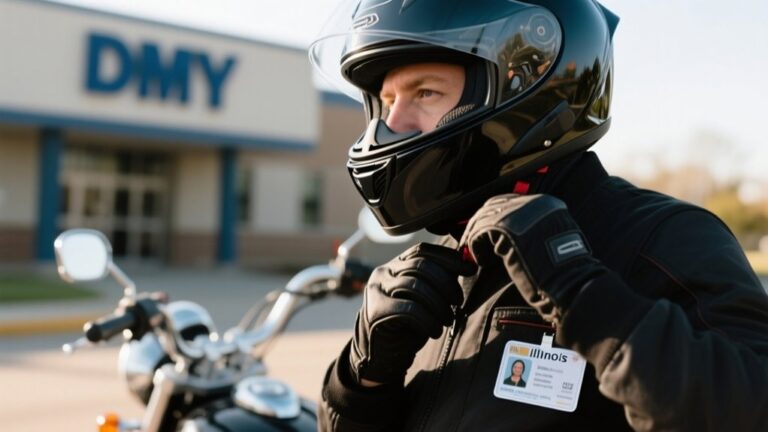
Before you hit the road in wet conditions, gear up with breathable waterproof clothing that seals out moisture while keeping you visible and comfortable. Wear a waterproof jacket and pants with sealed seams and a high-visibility layer.
Waterproof gloves and boots protect your hands and feet while maintaining dexterity. Fit a Pinlock insert or apply anti-fog treatment to your helmet visor and keep it clean to prevent rain cling.
Check tyre tread depth and make certain of correct inflation to reduce hydroplaning risk. Verify brakes and ABS function properly, dry discs with gentle braking, and keep controls grime-free.
Pack waterproof storage like dry bags for essentials and bring a compact towel to dry controls after stops. Proper preparation keeps you safe and comfortable in the rain.
Improve Visibility With Anti-Fog Visors and Lighting
When riding in the rain, improving your visibility starts with outfitting your helmet visor properly. Fit a Pinlock anti-fog insert or a similar solution to reduce fogging by creating an insulating air pocket.
Enhance rain riding visibility by fitting your helmet visor with a Pinlock anti-fog insert for clear vision.
Treat the inside of your visor with approved anti-fog sprays or a thin soapy water film to prevent condensation during short rides. Keep your visor clean to avoid water beads scattering light and worsening visibility.
Opt for a clear visor in low-light or heavy rain. Use your motorcycle’s lighting strategically. Briefly dip to high beam when safe, and consider adding auxiliary lights to boost your conspicuity.
When stopped or in drizzle, slightly crack your visor or use breath-deflectors to maintain airflow and reduce fogging without letting rain impair your view.
Select Tires and Use Electronic Rider Aids for Wet Riding
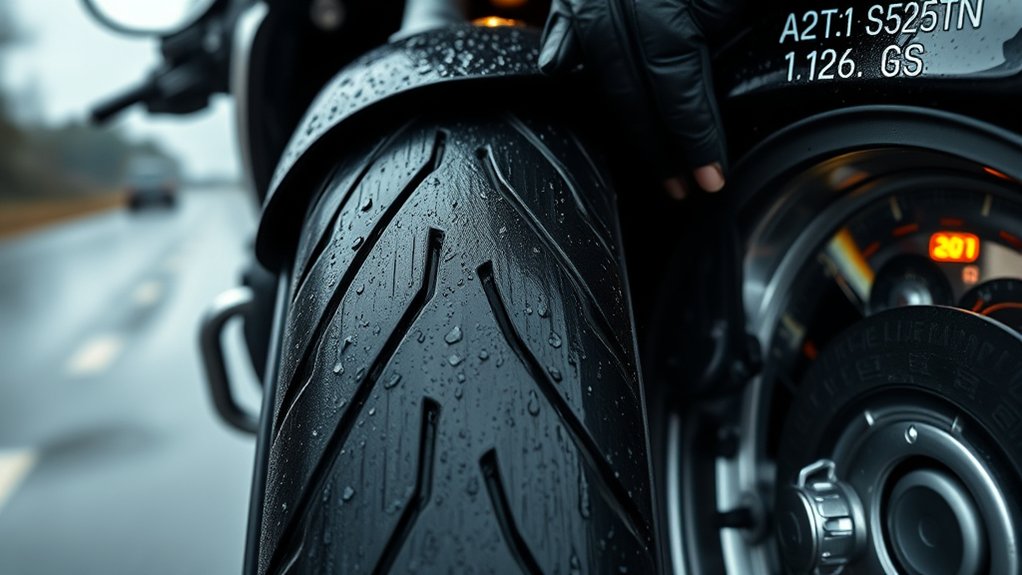
You’ll want to choose tires designed for wet conditions, like all-purpose or touring types, to ensure better water dispersion and grip. It really makes a difference when the roads are slick.
Always keep the manufacturer’s recommended tire pressure in check—that helps maintain the contact patch and reduces the risk of hydroplaning.
And don’t forget about electronic rider aids like ABS and traction control. They can really boost your stability and control when the roads get slippery.
Using these tools together can make wet riding a lot safer and more confident.
Choosing Wet-Weather Tires
Selecting the right tires is essential for safe and confident riding in wet conditions. Opt for all-purpose tyres or sports-touring rubber rather than trackday or sport tires, as they offer superior wet grip and better water dispersion.
Always check your tread depth. Aim for well above the legal minimum, ideally over 3mm, since worn tread drastically reduces traction on wet surfaces. Maintain tyre pressures according to manufacturer specs to make certain grooves evacuate water effectively and help prevent hydroplaning.
If your bike features electronic rider aids like traction control or ABS, use them to manage wheel slip and improve stability. Finally, warm tyres before pushing limits; sports-touring compounds perform best at operating temperature, unlike cold, sticky race-style rubber that can be unpredictable in wet conditions.
Maintaining Proper Tire Pressure
Choosing the right tires sets the foundation for wet-weather riding, but maintaining the proper tire pressure keeps that performance consistent. Always check cold pressures before riding to make certain tyre pressures match the manufacturer’s recommendations.
Overinflated tires reduce the contact patch, compromising wet grip and increasing hydroplaning risk. Underinflated tires cause uneven wear and heat build-up, also harming traction.
Regularly inspect tread depth, aiming for more than 3 mm, to maintain effective water channeling. Worn tread drastically limits grip on wet roads.
Remember, tyres and the road interact closely, so correct pressures maximize safety. After switching tires or riding in colder conditions, recheck pressures after a short ride.
While traction control and ABS help manage wet traction, your first line of defense is properly inflated, well-treaded tires.
Utilizing Electronic Rider Aids
For wet riding, all-purpose or sports-touring tires outperform trackday compounds by offering superior water-channeling and grip. To maximize safety, maintain correct tyre pressures so tread grooves reduce hydroplaning risk effectively.
Utilize your bike’s electronic aids like ABS and traction control, which intervene early to smooth wheel slip on slick surfaces. If available, activate Wet mode or manually reduce power and throttle response before the rain hits. This limits engine torque, enhancing control in low-grip conditions.
Keep tyre temperatures up by avoiding aggressive inputs when cold, as warmer tyres provide better wet grip. Sports-touring compounds retain usable warmth longer than trackday rubber, further improving traction.
Adjust Your Riding Style for Riding in the Rain

You’ll want to slow down a bit and keep more space between you and the rider or vehicle in front. That way, you’ve got extra time to react when the road is wet.
Also, try to use the throttle and brakes gently—no sudden moves. Those quick shifts can make you lose traction. Staying smooth and steady really helps you stay balanced on those slippery roads.
Smooth Throttle And Braking
Master smooth throttle and braking techniques to maintain control when riding in the rain. On a wet road, abrupt throttle or brake inputs can cause a loss of traction, risking a slide. Roll on and off the throttle gently to prevent rear-wheel slip.
Start braking earlier than usual, applying both front brake and rear brake progressively. Keep your pressure smooth on the brake to avoid upsetting the bike’s balance.
Key points to remember:
- Feather the throttle for barely perceptible changes, avoiding sudden bursts.
- Use mostly the front brake, adding rear brake gently at lower speeds to stabilize.
- Double your stopping distance to accommodate reduced grip and visibility.
Practice these smooth controls to confidently ride safely in wet conditions.
Increase Following Distance
A safe following distance becomes essential when riding in the rain, as wet roads can double your usual stopping distance and reduce visibility markedly. To stay safe, double your normal following distance. Aim for at least four seconds or more, especially in heavy rain.
Reduce speed by 10–25% right when rain starts and maintain that pace to give yourself extra time to react. Ride slightly off the wheels’ spray path of the vehicle ahead to improve visibility and keep water off your visor.
Avoid risky tyre tracks, especially behind large vehicles where standing water collects. Position yourself within the lane’s driest available line while keeping a safe buffer. If you face hydroplaning risks or heavy spray, increase your following distance further or pull over until conditions improve, protecting your brake pads and overall control.
Master Braking Techniques on Wet Roads
Adjust your braking approach when riding on wet roads to guarantee safety and control. Wet roads increase braking distance markedly, so double your normal dry stopping distance. Use smooth, progressive brake application. Start early and gently build lever pressure, focusing on the front brake while watching for any front tyre slip. If the front tyre begins to slide, ease pressure slightly to regain traction and avoid wheel lock.
Keep these key points in mind: maintain longer following gaps to allow extra stopping room. Minimise weight transfer by applying brakes gently and progressively. Practice braking on wet surfaces in safe areas to understand front brake limits.
Rely on ABS and traction control, but never depend solely on electronics for wet braking safety.
Avoid Road Hazards and Choose the Safest Lane
Braking effectively on wet roads sets the foundation, but your safety also depends on spotting and avoiding hazards that become more dangerous in the rain. Avoid painted lines, manhole covers, and metal grates because they’re slippery when wet.
Steer clear of standing water, especially in inside lanes where runoff collects. Ride in the dry tracks left by cars, and maintain extra distance for better visibility and reaction time.
Choose a lane offering escape routes and clear sightlines, typically center or offside lanes. Avoid wheel ruts filled with water.
| Hazard | Risk Level | Action |
|---|---|---|
| Painted lines | High slip risk | Avoid |
| Standing water | Hidden depth | Slow, assess, avoid deep |
| Manhole covers | Very slippery | Steer clear |
Frequently Asked Questions
Can I Ride in Heavy Rain With a Passenger Safely?
You can ride in heavy rain with a passenger safely if you manage passenger weight carefully, as it affects braking distance and seat traction.
Adjust tyre pressures for two-up riding and keep a larger following gap.
Prioritize visibility communication with your passenger and wear protective gear.
Use smooth cornering technique to reduce hydroplaning risk, avoid abrupt movements on slippery road surfaces, and review emergency procedures beforehand to handle unexpected situations confidently.
How Do I Handle a Rain-Soaked Motorcycle Parking Spot?
Handling a rain-soaked parking spot feels like dancing on a slippery eel!
Always avoid puddles and check traction before you stop.
Keep stall prevention in mind by using a low gear.
Make certain kickstand stability by parking on firm ground away from drain channels.
Use a puck if needed.
Waterproof your seat and clear your helmet visor for visibility.
Confirm footpeg grip and plan an emergency exit route to stay safe and steady.
What Maintenance Is Needed After Riding in the Rain?
After riding in the rain, dry your brakes and inspect for glazing.
Then check tire pressure and wheel alignment to make certain of safe handling.
Clean and lubricate the chain promptly to prevent rust and wear.
Dry electrical connectors thoroughly and treat them with corrosion protection.
Check the air filter for moisture, top up fluids, and treat any exposed metal to avoid corrosion.
Don’t forget upholstery care.
Dry seats and fasteners to keep everything in good shape.
Are Rain Tires Worth the Investment for Occasional Wet Rides?
You probably won’t find rain tires worth the investment for occasional wet rides. Their compound tradeoffs and specialized tread patterns boost wet grip and braking performance, but the cost benefit favors all-purpose tires if you ride mostly dry.
Rain tires wear faster, reducing tire longevity and puncture resistance. Plus, seasonal storage and poor secondhand market value add hassle.
Stick to versatile tires for better overall value and practicality.
How to Prevent Rust on My Motorcycle After Wet Rides?
To prevent rust after wet rides, dry your bike thoroughly and apply chain lubrication promptly to avoid sprocket rustproofing.
Polish chrome and protect paint with a quality sealant.
Use bolt anti-seize on fasteners and waterproof your seat to keep moisture out. Seal electrical connections carefully with dielectric grease for electrical sealing, and apply frame undercoating to shield vulnerable areas.
Finally, clean and coat the exhaust to prevent corrosion for lasting protection.
Conclusion
Riding in the rain doesn’t have to be a stormy challenge if you prepare right. Equip yourself with waterproof gear, sharpen your visibility, and choose tires that grip like a lifeline.
Adjust your riding style and brake smoothly to keep control on slick roads. Remember, staying alert and avoiding hazards is your best umbrella against danger.
With these steps, you’ll ride confidently through any downpour, turning wet weather into just another smooth ride.