When Did The Kawasaki H2 Come Out – Timeline & Facts
You’ll find the Kawasaki H2 first hit the scene in September 1971 as the powerful 750cc H2 Mach IV. It quickly became known for its speed and raw performance, holding that reputation until 1975.
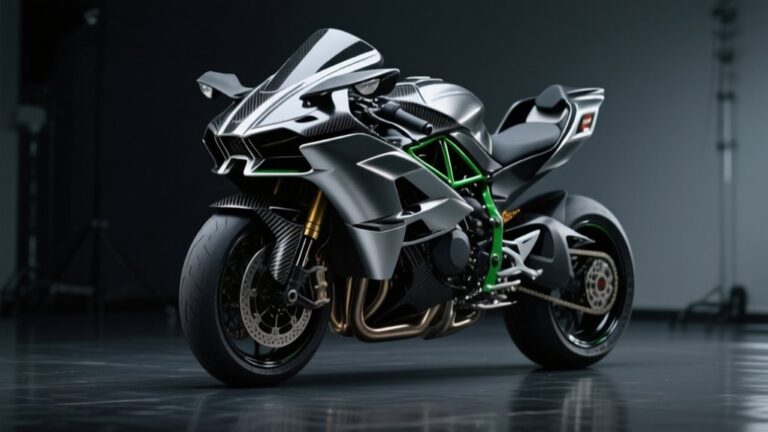
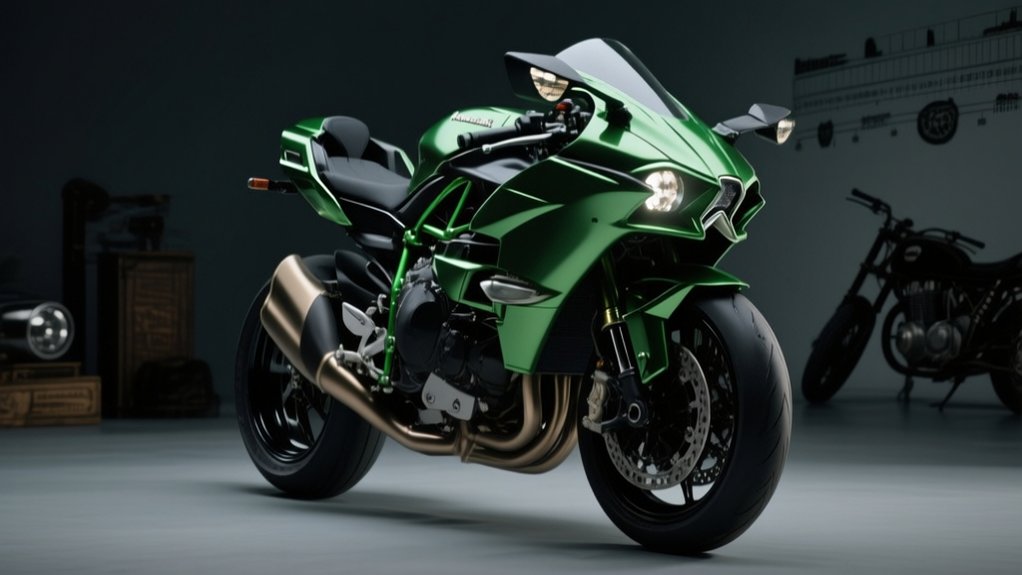
Kawasaki brought the name back with the modern Ninja H2 in 2015. This new model features a 998cc supercharged engine and cutting-edge electronics. It really set new speed records and changed what people expected from performance bikes.
If you want to dive into Kawasaki’s engineering breakthroughs and the H2’s lasting legacy, there’s plenty more to explore. It’s a fascinating story that shows how the brand keeps pushing limits.
When Was the Kawasaki H2 First Released?
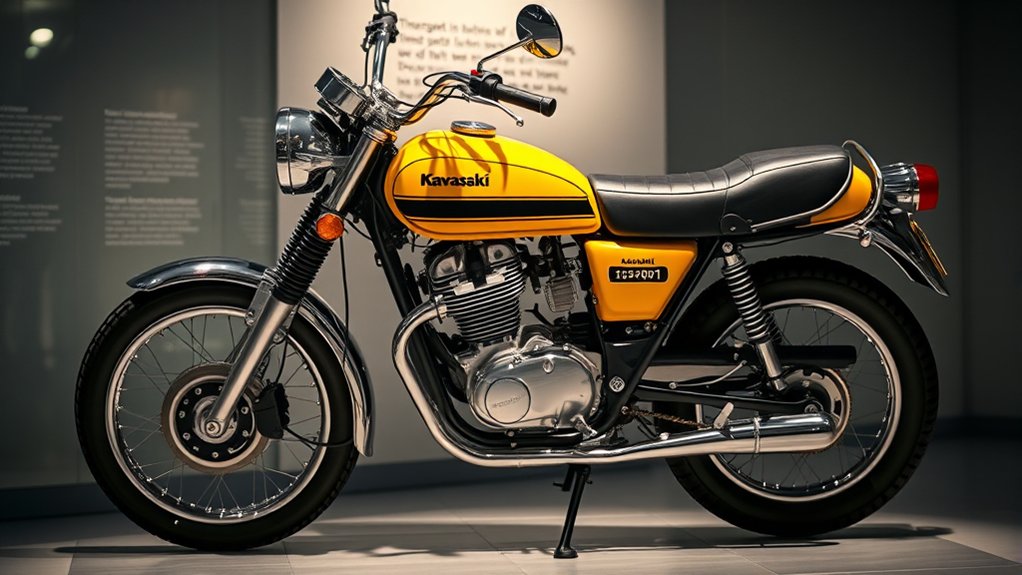
Although the Kawasaki H2 is now legendary, it first appeared in September 1971 at the Cologne motorcycle show. This marked Kawasaki’s bold entry into the 750cc superbike market.
You should know that the H2, officially called the Kawasaki H2 Mach IV, was Kawasaki’s release designed specifically to compete in the high-performance 750cc category.
This three-cylinder, two-stroke engine motorcycle combined raw power and speed in a package meant to challenge rivals.
Production began right after its 1971 debut and continued through 1975, showing Kawasaki’s commitment to this model.
The H2 quickly gained attention for its performance and set the stage for Kawasaki’s reputation in superbikes.
Understanding this 1971 release helps you appreciate Kawasaki’s smart move into a competitive market niche.
It was a game-changer for them and the superbike world alike.
What Made the Original H2 Mach IV Stand Out?
When you look at the original Kawasaki H2 Mach IV, its standout feature is the sheer power packed into a 750cc two-stroke triple engine that delivered record-breaking speed and acceleration for its time. You’d experience a top speed of 126 mph and a 0 to 60 mph sprint in just 5 seconds.
The H2 Mach IV was built purely for speed, sacrificing refinement in noise, pollution, and cornering. Its lightweight tubular frame struggled with the engine’s force, causing challenging handling characteristics like front-wheel lift and weaving.
This made the bike notoriously difficult to control, earning it the nickname “Widow Maker.” What made the H2 Mach IV stand out was this raw combination of speed and unpredictable handling. It was truly a bold statement in motorcycle performance.
How Did the 1970s H2 Influence Kawasaki’s Legacy?
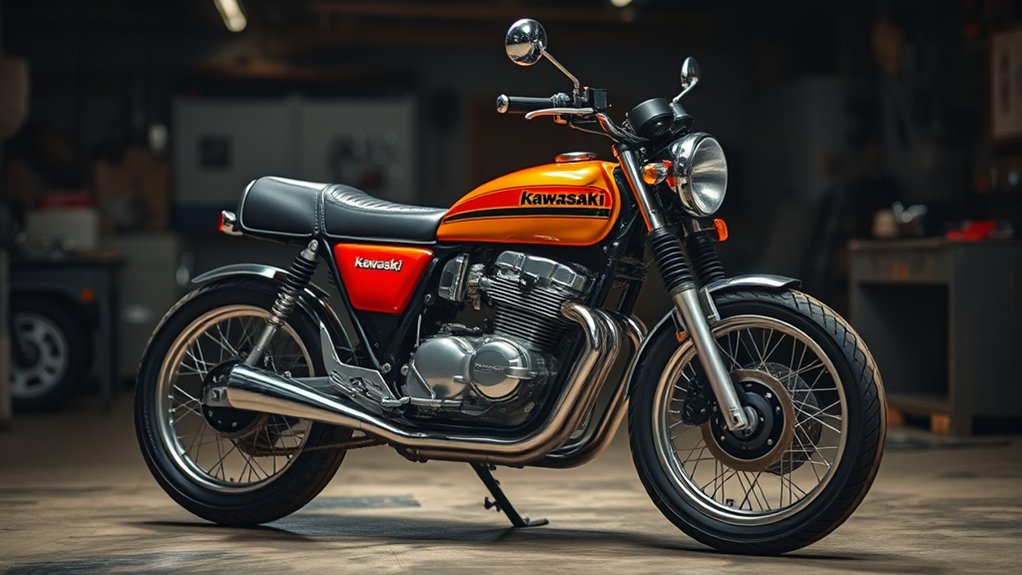
Because the 1972 Kawasaki H2 Mach IV pushed performance boundaries with its powerful 750cc two-stroke engine and aggressive speed capabilities, it played a crucial role in defining Kawasaki’s legacy. You’ll see how this bike’s legend shaped Kawasaki’s identity as a manufacturer known for high performance and daring designs.
The H2 Mach IV’s reputation as the “Widow Maker” emphasized bold risk-taking. This influence showed up in future models and helped solidify Kawasaki’s image as a pioneer in speed and innovation.
| Feature | Impact on Legacy |
|---|---|
| 750cc Two-Stroke | Set new performance standards |
| Aggressive Speed | Defined Kawasaki’s bold image |
| Risky Handling | Boosted adrenaline appeal |
| Technological Edge | Inspired future Kawasaki bikes |
When Did Kawasaki Introduce the Modern Ninja H2?
Kawasaki built on the daring spirit of the 1970s H2 Mach IV by introducing the modern Ninja H2 in 2015, redefining performance with cutting-edge technology. You’ll find the Ninja H2 as a supercharged hypersport motorcycle, marking Kawasaki’s return to forced induction after decades.
It debuted at the 2014 INTERMOT show in Cologne and officially launched worldwide in 2015 with a 998cc supercharged inline-four engine. This powerful setup distinguished Kawasaki by reintroducing supercharging to sportbikes. It offered unprecedented acceleration and top-end performance.
The 2015 Ninja H2 showcased Kawasaki’s commitment to blending advanced engineering with street-legal usability. If you’re exploring Kawasaki’s timeline, the modern Ninja H2 represents a pivotal moment. It shows how the brand merged its historic performance ethos with innovative technology.
What Innovations Defined the 2014 Kawasaki Ninja H2 Launch?
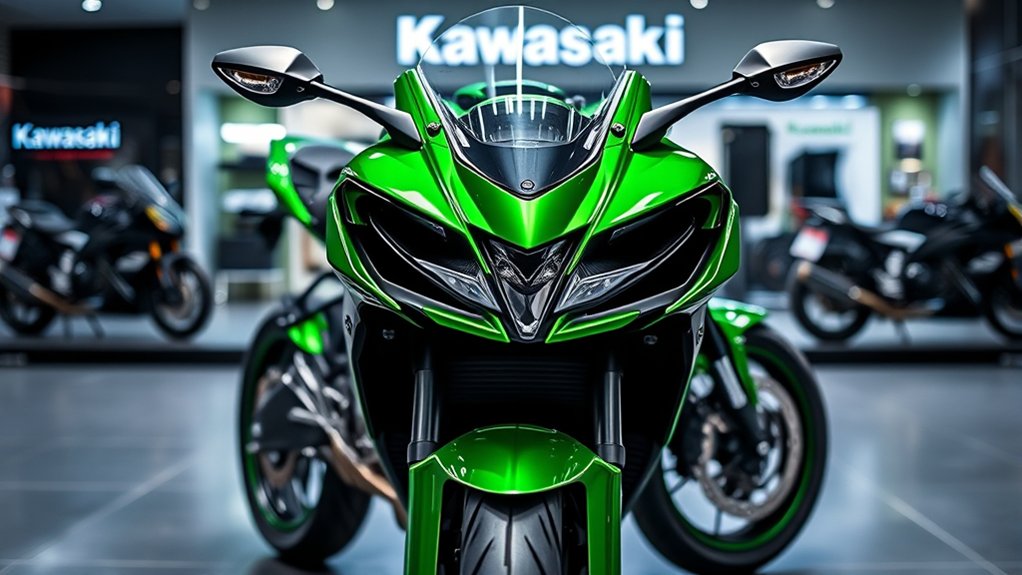
Although the 2014 Kawasaki Ninja H2 marked the brand’s return to supercharged motorcycles after over 30 years, it also introduced groundbreaking innovations that set new standards. You’ll find its 998 cc four-stroke inline-four engine uniquely paired with a variable-speed centrifugal supercharger, driven by planetary gears. This was a real technological leap for Kawasaki.
The 2014 Ninja H2 redefined performance with its innovative 998 cc supercharged inline-four engine.
This supercharged engine produces up to 200 horsepower in street-legal form, with the supercharger spinning beyond 130,000 RPM to deliver about 5 psi of boost pressure.
Beyond raw power, Kawasaki integrated advanced electronics such as ABS, traction control, a quick-shifter, and their proprietary electronic throttle.
These innovations combined cutting-edge supercharged engine technology with sophisticated electronics. Together, they redefined motorcycle performance and rider control at the time of the Ninja H2’s launch. It was a game-changer in the sportbike world.
How Did the H2R Track-Only Model Change Motorcycle Racing?
Building on the groundbreaking innovations of the Ninja H2, the H2R track-only model took motorcycle performance to unprecedented levels in racing.
With its supercharged engine delivering up to 310 horsepower, the H2R redefined power benchmarks in motorcycle racing. You’ll notice its advanced aerodynamics, including carbon fiber winglets, drastically improved downforce and stability at extreme speeds.
This high-performance machine’s lightweight construction lets it exceed 200 mph, pushing the limits of track capabilities. Plus, electronic aids like cornering ABS and traction control made rider safety and handling way more precise.
Because of all this, the H2R’s extreme speed and cutting-edge technology influenced racing strategies and pushed manufacturers to develop more powerful, supercharged race bikes. It really marked a pivotal shift in the evolution of motorcycle racing.
What Are the Key Performance Milestones of the H2 Since 2014?
Since its debut in 2014, the Ninja H2 has consistently pushed performance boundaries through a series of key milestones. You can track the Kawasaki H2’s evolution by noting these highlights:
Since 2014, the Ninja H2 has relentlessly advanced, setting new benchmarks in motorcycle performance milestones.
In 2015, the street-legal Ninja H2 reached a top speed of around 183 mph with a quarter-mile time of 9.62 seconds, showcasing its supercharger-enhanced power.
The 2015 H2R track-only model delivered a staggering 310 horsepower, setting new performance standards.
By 2016, Kawasaki broke the 226.9 mph speed barrier at Bonneville Speed Week using bolt-on modifications.
Then, in 2019, the Ninja H2’s horsepower increased to 228 hp, coupled with electronic advancements like ride-by-wire, enhancing both power and control.
These milestones underline the Kawasaki H2’s relentless pursuit of speed and power. It’s clear this bike has continually evolved to stay at the top of its game.
How Has Kawasaki’s Supercharger Technology Evolved?
The impressive performance milestones of the Kawasaki H2 are closely tied to the evolution of its supercharger technology. Kawasaki pioneered the use of a supercharged inline-four engine in 2014, featuring a two-speed centrifugal supercharger spinning at over 130,000 RPM. This design delivers exceptional power, with the H2R producing up to 300 hp.
To manage intake heat without a bulky intercooler, Kawasaki relies on evaporative cooling via port fuel injection, reducing pre-ignition risks.
Over time, the supercharger system evolved to include electronically controlled variable boost levels, with the H2R reaching around 35 psi.
Kawasaki also integrated advanced electronic aids, such as IMUs and electronic suspension, optimizing the supercharger’s performance and handling. This ensures the H2 remains a benchmark in motorcycle engineering.
It’s pretty impressive how they’ve kept pushing the limits with this tech.
What Speed Records Showcase the Kawasaki H2’s Impact?
You can really see the Kawasaki H2’s impact when you look at its impressive quarter-mile times and top speed records. For instance, it’s been clocked hitting 152 mph in just 9.62 seconds. Pretty remarkable, right?
And it doesn’t stop there. The H2 has repeatedly broken the 200 mph barrier at famous events like Bonneville Speed Week. These high-speed runs really show off the bike’s exceptional performance and engineering.
It’s clear that Kawasaki built something special with the H2.
Quarter-Mile Performance Records
Although many motorcycles claim impressive speed, few match the Kawasaki H2’s quarter-mile performance records. These records clearly show its impact on acceleration and top-end velocity. You’ll find its capabilities highlighted by several key records:
- Cycle World clocked the Kawasaki H2 at 9.62 seconds in the quarter-mile, reaching 152.01 mph. This showcases its rapid acceleration.
- In quarter-mile drag races, the H2 hit a top speed of 183 mph, underlining its high-performance engineering.
- Land-speed racers pushed H2 engines with bolt-on parts to exceed 226.9 mph, emphasizing its potential beyond stock limits.
- The Ninja H2 excelled in speed trials like the Mojave Mile, surpassing 209 mph, affirming its blend of acceleration and top speed.
These records really confirm the Kawasaki H2’s significant influence in quarter-mile performance. It’s clear this bike stands out in both speed and engineering.
Top Speed Achievements
When you explore the Kawasaki H2’s top speed achievements, its record-breaking runs at events like Bonneville Speed Week immediately stand out. The H2 set a land-speed record surpassing 226.9 mph, asserting its dominance among production motorcycles. Its high-speed achievements also include a 2016 speed demonstration on the Osman Gazi Bridge, reaching 249 mph.
At the Mojave Mile, the H2 exceeded 209 mph, further proving its top speed prowess. These feats highlight the Kawasaki H2’s impact on speed records and performance benchmarks.
| Event | Top Speed Achieved |
|---|---|
| Bonneville Speed Week | 226.9 mph |
| Osman Gazi Bridge Demo | 249 mph |
| Mojave Mile | 209+ mph |
| Quarter-Mile (Cycle World) | 152.01 mph (9.62 sec) |
Notable High-Speed Demonstrations
Because the Kawasaki H2 consistently shatters speed barriers, its high-speed demonstrations serve as clear indicators of its engineering excellence and performance capabilities. These record-breaking feats highlight Kawasaki’s commitment to pushing limits.
For example, the H2R reached a top speed of over 206 mph during the 2016 Isle of Man TT demonstration, showcasing extreme high-performance.
At Bonneville Salt Flats, a modified H2 set a speed record of 226.9 mph, emphasizing its record-breaking potential.
In another impressive feat, the H2R accelerated to 400 km/h (249 mph) in just 26 seconds across Turkey’s Osman Gazi Bridge in 2016, proving incredible speed.
Cycle World also recorded a quarter-mile time of 9.62 seconds at 152.01 mph, underlining the bike’s impressive acceleration on drag strips.
All these demonstrations really solidify the Kawasaki H2’s reputation as one of the fastest production motorcycles worldwide. It’s clear Kawasaki knows how to build machines that push the envelope.
Why Does the Kawasaki H2 Remain a Milestone in Motorcycle History?
You know the Kawasaki H2 stands out as a real milestone because it was the first to bring supercharged engines into production motorcycles. That move really pushed technological innovation forward in a big way.
Plus, it didn’t just stop there. The H2 shattered records by hitting speeds over 200 mph, setting new benchmarks for performance and engineering bravery.
Because of this mix of groundbreaking technology and incredible power, the Kawasaki H2 still has a major influence on how modern sportbikes are designed and the legacy they carry today.
Technological Innovation Legacy
Although many motorcycles boast impressive power, the Kawasaki H2 stands out by pioneering supercharging technology in production bikes back in 2015. Its supercharged engine redefined performance benchmarks, blending innovation with cutting-edge technology.
You’ll appreciate how Kawasaki’s engineering tackled traditional challenges with clever solutions. Key innovations include a planetary gear-driven supercharger delivering high-boost power without excessive weight.
Then there’s evaporative cooling via port fuel injection, which gets rid of bulky intercoolers and boosts reliability.
They also integrated advanced electronics like IMUs, cornering ABS, and electronic suspension for superior control. Plus, the H2 set new standards in power-to-weight ratio, influencing future motorcycle design.
This mix of technology and innovation guarantees the H2’s legacy as a milestone in motorcycle history. It continues to inspire ongoing advancements in supercharged performance.
Record-Breaking Performance
When evaluating the Kawasaki H2’s impact on motorcycle history, its record-breaking performance stands as a defining factor. You’ll find that the H2 shattered numerous speed records, including surpassing 226.9 mph at Bonneville Salt Flats and exceeding 209 mph in the Mojave Mile.
Its 2016 high-speed attempt on the Osman Gazi Bridge aimed for 400 km/h (249 mph), demonstrating extraordinary capabilities. The supercharged H2R track-only model delivers up to 310 hp, highlighting the potential of advanced supercharged engineering.
Thanks to its innovative supercharger system and aerodynamic design, the H2 accelerates from 0 to 400 km/h in just 26 seconds. These achievements in speed records and performance firmly establish the Kawasaki H2 as a milestone in motorcycle history.
Frequently asked questions
What Maintenance Challenges Are Common With Kawasaki H2 Motorcycles?
You’ll face maintenance challenges like frequent supercharger belt inspections and replacements due to high stress. You’ll need specialized diagnostics for the complex electronics, including the IMU and sensors, plus software updates.
Keep an eye on the cooling system to prevent overheating, especially in the supercharger. Regularly check wiring harnesses for corrosion or damage.
And don’t forget to carefully maintain the self-healing paint to preserve its durability and look.
How Does Fuel Efficiency Compare Between the Original and Modern H2 Models?
You’ll find that the original Kawasaki H2 gets about 20-25 miles per gallon, thanks to its two-stroke carbureted engine.
In contrast, modern H2 models achieve roughly 30-35 miles per gallon due to advanced electronic fuel injection and supercharging technology.
While both prioritize performance over fuel economy, the newer H2’s precise fuel delivery and engine management systems help you enjoy better efficiency without sacrificing power.
What Customization Options Are Popular Among Kawasaki H2 Owners?
Think of your Kawasaki H2 as a blank canvas ready for a masterpiece. You’ll want to add aftermarket exhausts like Akrapovic for a roaring voice, aerodynamic winglets for sharper stability, and upgraded suspension from Ohlins for smooth control.
Custom paint jobs give your bike a unique personality, while performance tweaks like larger sprockets, high-performance tires, and ECU remapping help you release its true power on the road.
These modifications really make your ride stand out and perform just the way you want.
Are There Any Notable Safety Concerns Specific to the Kawasaki H2?
Yes, the Kawasaki H2 has some notable safety concerns you should be aware of. Its powerful engine and narrow power band can cause sudden acceleration, which might make control tricky. This is especially true for less experienced riders.
The original model didn’t come with advanced rider aids, which increased risks like front-wheel lift. But newer H2 versions have traction control, ABS, and electronic suspension. These features help you manage those challenges and boost safety during high-performance riding.
How Does the Kawasaki H2’s Sound Differ From Other Motorcycles?
You’ll notice the Kawasaki H2’s sound stands out because of its supercharger’s high-pitched whine combined with an aggressive exhaust note. Unlike typical motorcycles, its forced induction creates a deeper, mechanical tone with a turbine-like quality.
The supercharger spins incredibly fast, over 130,000 RPM, producing a unique, loud noise that’s sharper and more intense than naturally aspirated bikes.
This gives the H2 a distinct, aggressive auditory signature you won’t find elsewhere.
Final Thought
You’ve seen how the Kawasaki H2 first roared onto the scene in the 1970s, redefining speed and power with its Mach IV legacy. Fast forward, the 2014 Ninja H2 introduced cutting-edge supercharger technology, pushing boundaries like a futuristic jetpack.
Its ongoing innovations and record-breaking speeds prove why the H2 remains a milestone in motorcycle history. Whether you’re a rider or enthusiast, the H2’s evolution shows Kawasaki’s commitment to thrilling performance through the decades.