Is Indian Better Than Harley – Here’s the Truth
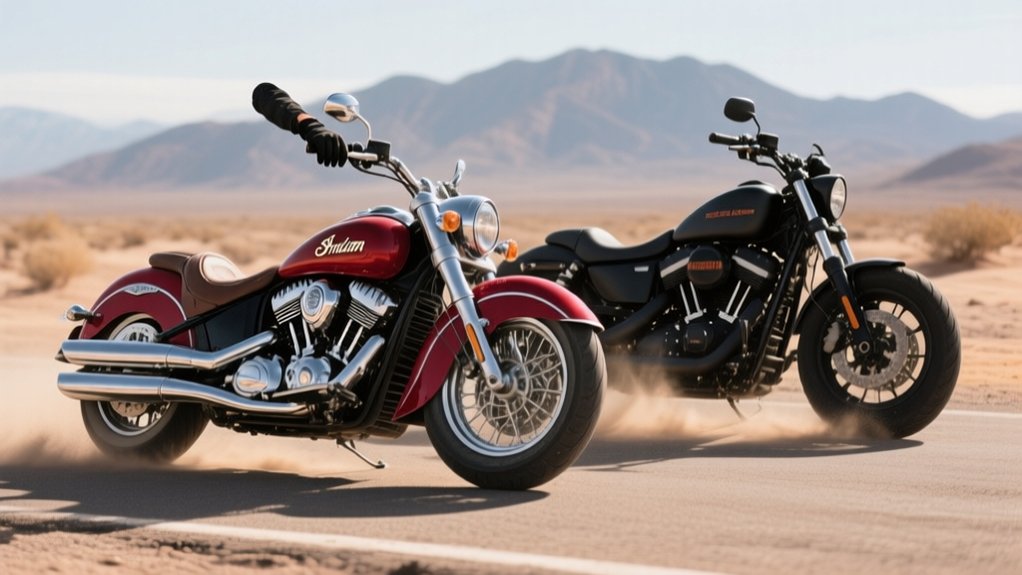
If you’re weighing Indian versus Harley, Indian offers modern tech, cooler liquid-cooled engines, and sharper handling for a sportier, comfortable ride. Harley sticks to classic styling, air-cooled engines, and a massive dealer network that supports tradition and community loyalty.
Indian tends to cost more but provides advanced features. On the other hand, Harley holds higher resale value and broader accessibility. Both excel in different areas, so understanding these contrasts can help you decide which fits your riding style and priorities best.
Key Rider Priorities When Choosing Indian or Harley
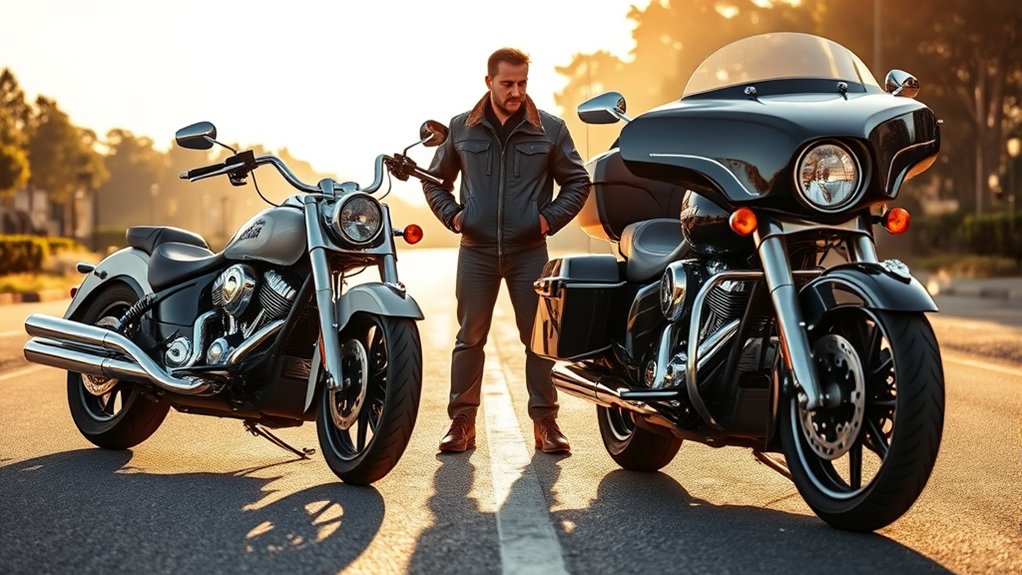
When choosing between Indian and Harley, you’ll find that rider priorities often center on safety features, handling, and brand identity.
If you value advanced tech features and better heat management, Indian stands out with liquid-cooled engines and radar assist. This reduces heat exposure compared to Harley’s traditional air-cooled models.
Indian’s responsive aluminum frame enhances handling, appealing to riders seeking performance alongside riding comfort.
In contrast, Harley focuses on classic styling and brand legacy. It attracts those who cherish community and tradition, even if it means less advanced heat management and handling.
Your choice really depends on whether you lean toward modern innovation and cooler rides or prefer the timeless comfort and identity Harley offers.
Both brands cater well to distinct rider priorities, so think about what matters most to your riding experience.
Comparing Performance: Indian vs. Harley Engines and Power
You’ll notice that Indian’s PowerPlus engine delivers higher horsepower and runs cooler, thanks to its liquid-cooling system. This gives it a clear edge when it comes to top-end performance.
On the other hand, Harley’s Milwaukee-Eight engines focus more on low-end torque and that classic V-twin feel. This means you get instant power delivery right at lower RPMs.
Engine Power Comparison
Although both Indian and Harley-Davidson offer powerful engines, Indian generally delivers higher horsepower and torque, making their bikes more performance-oriented.
For example, the Indian Pursuit Dark Horse’s liquid-cooled PowerPlus 108 engine produces 122 hp and 128 lb-ft of torque, while Harley’s Milwaukee-Eight 114 engine offers 93 hp and 122 lb-ft of torque.
Indian’s liquid-cooled design supports higher horsepower and smoother power delivery compared to Harley’s traditional air-liquid-cooled engines.
Harley’s Milwaukee-Eight 117 engine emphasizes torque with 129 lb-ft but only about 105 hp, focusing on low-end grunt and classic V-twin feel.
So, if you prioritize engine power with quicker acceleration and top speed, Indian’s higher-revving engines clearly provide more horsepower and torque.
This makes their bikes more responsive and aligned with performance demands.
Cooling Systems Differences
Beyond raw engine power, how these engines manage heat plays a big role in overall performance and rider experience. Indian motorcycles use fully liquid-cooled engines, which offer superior heat management by keeping post-ride temperatures around 188°F. This helps maintain engine reliability and cuts down on rider heat exposure.
On the other hand, Harley’s Milwaukee-Eight engines rely on air or air-liquid cooling. This often leads to higher exhaust temperatures, sometimes up to 380°F, which can be uncomfortable, especially in hot weather.
While Harley’s traditional air-cooled systems have a nostalgic appeal, they tend to produce more heat, making effective cooling and rider comfort more challenging.
Indian’s advanced liquid-cooled engines do a great job preventing heat buildup during long rides. This not only boosts engine reliability but also improves your overall riding experience by reducing the risk of overheating.
Torque And Performance
When comparing torque and performance, Indian’s PowerPlus Liquid-Cooled 108 engine clearly stands out with 128 lb-ft of torque and 122 horsepower. You’ll notice Indian’s liquid-cooled engine offers smoother, higher-revving performance and better heat management, enhancing overall responsiveness.
This surpasses Harley’s Milwaukee-Eight 114, which delivers 122 lb-ft torque and 93 horsepower.
In contrast, Harley’s air-cooled Milwaukee-Eight emphasizes low-end torque, peaking at 3,250 RPM. This suits riders seeking strong, immediate power for cruising.
While both engines deliver robust torque ideal for touring, Indian’s higher horsepower and advanced liquid-cooled design give you a sportier, more exhilarating ride.
Ultimately, if you prioritize peak torque and dynamic performance, Indian’s engine provides a clear advantage over Harley’s traditional air-cooled setup.
Comfort and Heat Management on Indian vs. Harley Long Rides
When you’re comparing long rides on Indian and Harley motorcycles, two big things come into play: riding position and engine heat.
Indian’s liquid-cooled engines run a lot cooler than Harley’s air-cooled V-Twins, which tend to get uncomfortably hot on those extended trips.
This difference in how they manage heat really makes a difference. Plus, both bikes come with adjustable features that can change how you feel after logging many miles on the road.
Riding Position Comfort
Although both Indian and Harley offer designs suited for long rides, their approaches to riding position comfort and heat management differ markedly. Harley’s upright riding position with raised handlebars provides classic comfort, allowing you to sit tall and relaxed.
However, this setup often increases heat exposure due to its air-cooled engine. The exhaust pipes can reach temperatures up to 380°F, which can cause discomfort on hot days.
In contrast, Indian’s slightly forward-leaning, more aerodynamic riding position promotes a relaxed posture that reduces fatigue.
Coupled with its liquid-cooled engine maintaining post-ride temperatures near 188°F, Indian minimizes heat exposure considerably.
This combination enhances overall comfort during extended tours, especially in warm climates, making Indian’s ergonomics and heat management more rider-friendly for long-distance comfort.
Engine Heat Comparison
Beyond riding position, how each brand manages engine heat considerably affects comfort on long rides. Indian motorcycles utilize liquid-cooled engines that keep post-ride temperatures around 188°F, offering superior heat management.
In contrast, Harley’s air-cooled V-Twin engines can push exhaust pipe temperatures up to 380°F, exposing you to intense engine heat.
Consider these points:
- Indian’s liquid-cooled system dissipates heat effectively
- Harley’s air-cooled engines create a “rolling Hibachi” sensation
- Indian riders experience less heat-related fatigue
- Harley’s heat exposure can cause discomfort, especially in hot weather
- Indian’s heat management supports longer, cooler cruising
If managing engine heat matters to you, Indian’s liquid-cooled technology clearly delivers a more comfortable ride compared to Harley’s heat-intensive design. It makes a real difference when you’re out on the road for hours.
You’ll appreciate the cooler cruise every time.
Long-Distance Ride Experience
Since long-distance rides demand sustained comfort, Indian motorcycles’ liquid-cooled engines provide a clear advantage over Harley’s air-cooled V-twins. Indian’s superior heat management keeps engine temperatures around 188°F, which is notably cooler than Harley’s exhaust pipes that can reach 380°F.
This difference directly impacts rider comfort, especially during extended trips in warm climates.
When you ride an Indian, you’ll experience less heat buildup, which reduces fatigue and the need for frequent breaks to cool down.
On the other hand, Harley’s air-cooled engines generate more heat, and that can get uncomfortable over time.
Ultimately, Indian’s effective heat management system enhances your long-distance ride experience by maintaining a consistent, comfortable temperature.
This lets you focus more on the journey and less on overheating discomfort.
Storage Capacity and Fuel Range: Indian vs. Harley
When comparing storage capacity and fuel range, Indian motorcycles provide 5.6 cubic feet of lockable storage, which is slightly more than Harley’s 4.7 cubic feet. Both include top cases that fit two full-face helmets. Touring models from both brands offer practical storage and advanced audio systems, making your ride more enjoyable.
Fuel range is where they really differ. Harley’s 6-gallon tank delivers about 258 miles at 43 mpg, while Indian’s fuel efficiency ranges from 34 to 37 mpg, resulting in 204 to 222 miles per tank.
Indian’s extra storage is great if you like to pack more gear for longer trips. On the other hand, Harley’s better fuel efficiency means fewer stops on the road.
Both brands secure their storage with locks, so your belongings stay safe and give you peace of mind. Their touring models balance comfort with practical storage, making them ideal for long rides.
Fuel range definitely affects how you plan your route and how freely you can ride. So, you’ll want to weigh storage capacity against fuel range depending on your touring style.
Handling and Braking: Which Feels More Responsive?
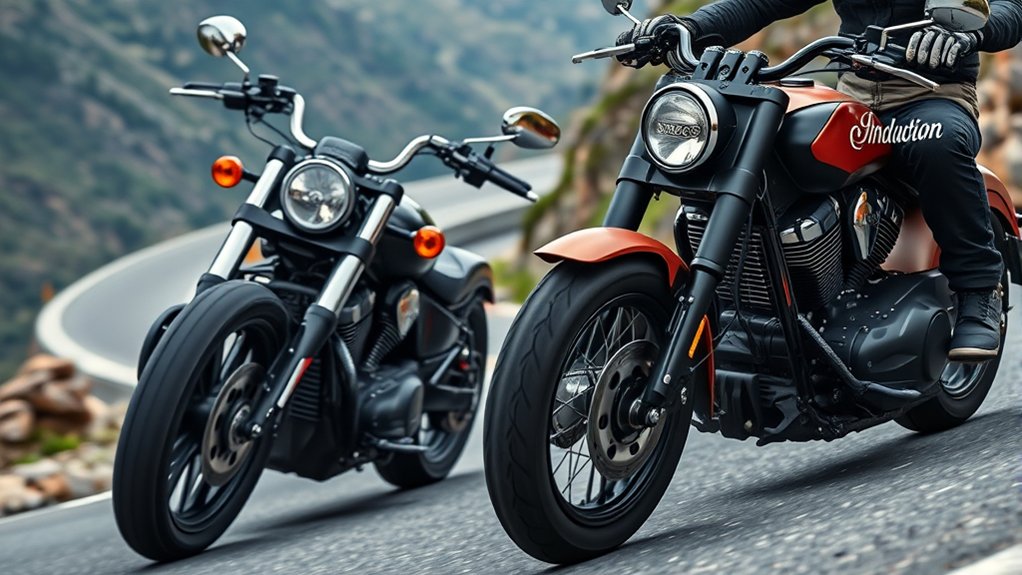
Although both Indian and Harley motorcycles offer reliable braking systems with ABS and strong stopping power, Indian stands out with a lighter weight and a more responsive aluminum frame that enhances handling agility.
When you ride an Indian, you’ll notice its precise steering and improved suspension allow for more agile, responsive handling, especially at higher speeds.
Harley’s handling feels smooth and stable, but its heavier steel frame can make quick directional changes less nimble.
In terms of braking, both brands provide confident stopping power with twin front discs and rear single discs, maintaining performance without fade on long rides or mountainous terrain.
Styling and Brand Identity: Classic Harley vs. Modern Indian
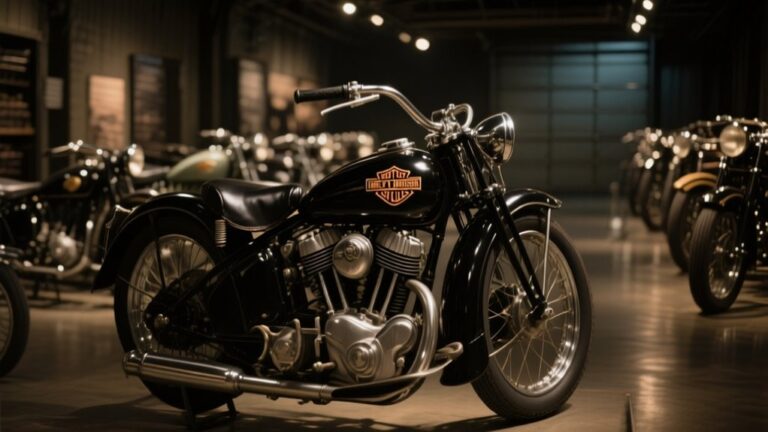
You’ll notice Harley sticks to a timeless, classic look with its vintage cruiser style and iconic branding that really emphasizes heritage. It’s all about that old-school vibe.
Indian, on the other hand, mixes nostalgic elements with modern design, giving you a more diverse and contemporary visual identity.
Harley’s Timeless Classic Look
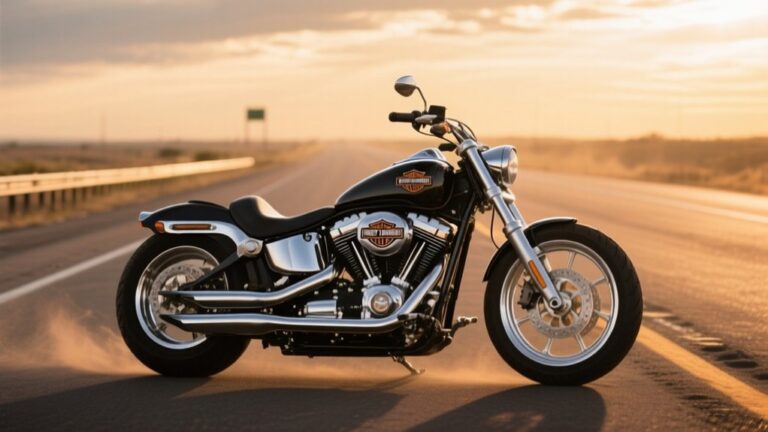
While Indian Motorcycles skillfully blend vintage charm with modern design, Harley-Davidson remains unmatched in delivering a timeless classic look through its minimalist, chrome-heavy styling.
When you choose a Harley, you embrace classic styling that’s deeply vintage-inspired and rooted in American cruiser tradition.
Models like the Street Glide and Fat Boy showcase this heritage with refined simplicity and iconic silhouettes. You’ll notice Harley-Davidson’s focus on a clean, bold aesthetic that honors decades of motorcycle culture.
Here’s what sets Harley’s timeless classic look apart:
- Chrome accents that gleam with authenticity
- Minimalist design emphasizing heritage over flash
- Vintage-inspired shapes that evoke nostalgia
- Extensive personalization options for a traditional feel
- A brand identity synonymous with classic American motorcycles
This classic approach offers a visual legacy you can ride.
Indian’s Modern Distinctiveness
When you look beyond Harley’s classic Americana styling, Indian motorcycles stand out by merging vintage inspiration with modern design innovations. You’ll notice Indian’s modern styling incorporates sleek, bold bodywork and advanced materials that contrast with Harley’s minimalist cruiser look.
Indian’s brand identity emphasizes innovation and uniqueness, featuring electronically adjustable windshields and cutting-edge safety technology. This blend of retro charm and contemporary appeal creates a dynamic, aggressive aesthetic that feels more visually striking than Harley’s extensive chrome accents and nostalgic design ethos.
While Harley leans heavily into heritage, Indian targets riders who want a distinctive, sophisticated ride that balances tradition with modernity.
If you value a motorcycle that combines classic roots with fresh, contemporary styling, Indian’s design approach clearly sets itself apart.
Brand Identity And Appeal
How do Harley-Davidson and Indian motorcycles express their brand identities through styling? Harley-Davidson sticks to a classic American cruiser look, rich with chrome and vintage-inspired designs that scream heritage and rebellion.
Indian, by contrast, merges vintage charm with modern refinement, crafting a sleek, premium aesthetic. Their distinct visual styles reflect their unique brand identity: Harley’s rugged tradition versus Indian’s sophisticated modernity.
You’ll notice these key differences in styling and brand identity:
- Harley’s timeless chrome accents evoke nostalgia and strength
- Indian’s minimalist details convey elegance and innovation
- Harley appeals to riders craving classic American identity
- Indian attracts those who want retro style with modern flair
- Both brands use visual styles that strongly define their appeal and legacy
Indian vs. Harley Technology and Safety Features
Though both Indian and Harley-Davidson prioritize rider safety, Indian integrates more advanced technology that enhances control and comfort. Indian’s safety tech includes radar-assisted rider safety and electronic stability control. These features provide superior situational awareness and stability compared to Harley’s offerings.
Harley’s touring bikes feature the Skyline OS touchscreen for navigation and audio, but Indian focuses on rider-centric systems like bike hold control and adaptive cruise control. Both brands come standard with ABS, but Indian adds ride modes and electronically adjustable windshields. This improves safety across different conditions.
Plus, Indian’s liquid-cooled engines run cooler than Harley’s air-cooled ones, which helps reduce rider fatigue on long rides.
Pricing Breakdown: Why Indian Bikes Often Cost More
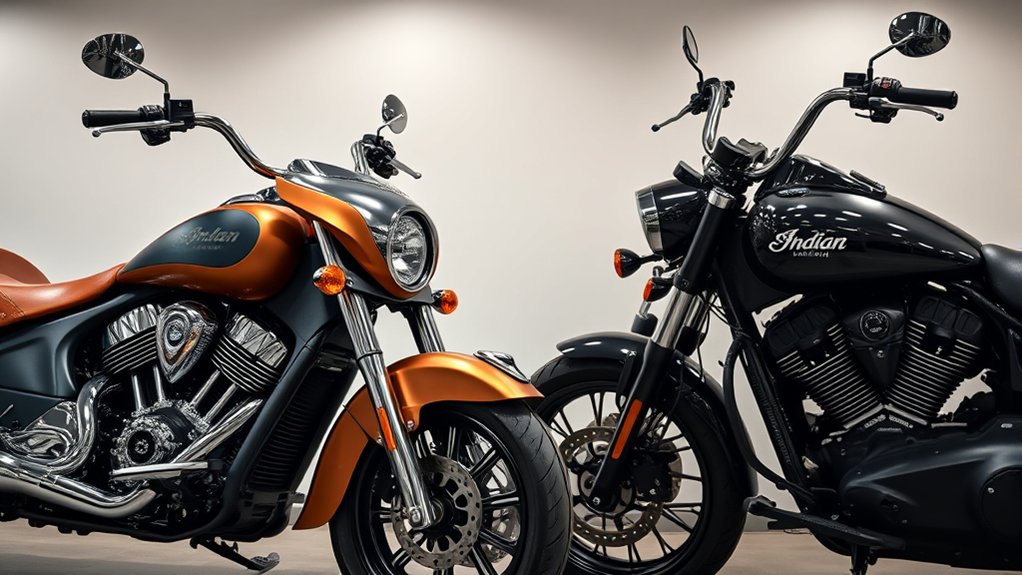
Indian’s advanced technology and premium features come with a higher price tag compared to Harley-Davidson’s more traditional models. When you look at pricing, Indian bikes like the Pursuit Dark Horse start at $30,999, while Harley’s base models, such as the Street 750, begin near $7,599.
The difference mostly comes from Indian’s use of cutting-edge tech features and the higher manufacturing costs that follow. You get more luxury and safety tech as standard, which adds to the price.
Think about these factors: fully liquid-cooled engines in Indian models, electronic windshields that boost rider comfort, and radar-based safety systems for advanced protection. Plus, Indian uses lightweight aluminum frames, which make production more complex.
On the other hand, Harley sticks with simpler, air-cooled engines and fewer tech features.
Dealer Networks, Events, and Rider Communities Compared
When you consider dealer networks and community engagement, Harley-Davidson offers unmatched accessibility with over 1,400 dealerships worldwide. This ensures riders can easily find service and support wherever they go.
Harley also hosts major events like the Sturgis Motorcycle Rally and Daytona Bike Week. These events fuel a highly active rider community through clubs and organized rides that emphasize camaraderie.
Harley’s signature events foster a vibrant rider community built on camaraderie and shared passion.
In comparison, Indian Motorcycle has a smaller but growing dealer network. They organize IMRG rallies that cultivate a dedicated rider community focused on heritage and modern experiences.
Both brands prioritize events that strengthen brand connection. But Harley’s larger dealer networks and more frequent, large-scale events provide broader access and community interaction.
If you value extensive dealer networks and expansive rider communities, Harley currently holds a clear advantage. Still, Indian’s focused events offer a meaningful alternative.
Which Brand Keeps Its Value Longer?
Beyond dealer networks and community events, another important factor to contemplate is how well each brand retains its value over time. When you consider resale value, Harley-Davidson generally outperforms Indian, thanks to its expansive market presence and deeply rooted brand loyalty.
Indian’s resale value is improving but still trails due to a smaller dealer network and newer market status. Here’s what you should know:
- Harley’s larger market share supports stronger resale value
- Extensive aftermarket parts boost Harley’s long-term worth
- Indian’s limited production can lead to initial depreciation
- Collector interest may increase Indian’s value over time
- Overall, Harley keeps value longer in the used market
If resale value matters to you, Harley remains the safer bet between these iconic brands.
Frequently asked questions
What Is the History Behind the Indian Motorcycle Brand?
You’ll find Indian Motorcycle started in 1901 in Massachusetts, making it America’s oldest major bike brand. It pioneered the V-twin engine in 1907, setting a performance standard. Indian clinched early racing wins, including the Isle of Man TT in 1911 and 1912.
After facing closures, Polaris revived it in 2011.
More recently, Carolwood LP took control in 2026, making Indian a standalone company under CEO Mike Kennedy. It’s pretty cool how the brand has bounced back and kept its legacy alive.
How Customizable Are Indian and Harley Motorcycles?
You might be surprised how much customization both Indian and Harley motorcycles offer. Indian provides targeted options like saddlebags, adjustable windshields, and sleek exhausts, enhancing its modern style.
Harley, on the other hand, boasts a vast aftermarket ecosystem, giving you broader choices for performance, comfort, and aesthetics. If you want extensive personalization, Harley’s dealer network and community support make it easier to find diverse parts.
Indian focuses more on unique, tech-forward packages.
Which Brand Offers Better Options for Beginner Riders?
If you’re a beginner, Indian offers lower seat heights and lighter, sportier models like the Scout, making balance and handling easier.
Harley provides lighter weight bikes like the Street 750 and beginner-friendly features such as ride modes and extensive safety systems, plus a larger dealer network.
You’ll find Indian’s liquid-cooled engines deliver smoother power, while Harley’s support infrastructure boosts confidence.
Both brands suit beginners. Your choice really depends on what feels more comfortable and the tech you prefer.
Are Indian Motorcycles Easier to Maintain Than Harleys?
You might think all big cruisers demand the same upkeep, but Indian motorcycles are generally easier to maintain than Harleys.
Indian’s liquid-cooled engines require fewer valve adjustments and less frequent cooling checks, cutting down on routine maintenance.
Their modern sealed components and electronics simplify troubleshooting.
In contrast, Harley’s traditional air-cooled engines need more regular attention, increasing maintenance frequency.
Do Indian Motorcycles Have More Eco-Friendly Options Than Harley?
Yes, Indian motorcycles generally offer more eco-friendly options than Harley. You’ll find Indian’s liquid-cooled engines run more efficiently and produce fewer emissions compared to Harley’s traditional air-cooled setups.
Indian also integrates advanced features like electronic fuel injection and emission controls across many models.
While Harley is moving toward electric options like the LiveWire, most of their lineup remains less eco-conscious than Indian’s newer, greener designs. So, if you’re looking for a bike that’s a bit easier on the environment, Indian might have the edge.
Final Thought
When choosing between Indian and Harley, you’ll notice each excels in different areas. Indian offers advanced technology and often better comfort on long rides. Harley’s extensive dealer network and community really stand out.
Notably, Indian motorcycles tend to retain about 10% higher resale value over five years. This reflects their strong build and desirability.
Ultimately, your choice depends on what you prioritize—performance, comfort, tech, or brand experience. Both deliver iconic rides tailored to distinct rider needs.