What Is Harley Davidson – Meaning & More
Harley-Davidson isn’t just a motorcycle brand. It’s a symbol of American freedom, innovation, and heritage since 1903. You’ll find its iconic V-twin engine and classic designs blending tradition with cutting-edge technology like electric models.
The bikes are built mainly in the U.S. but have a global presence. Harley fosters a loyal community rooted in pride and adventure.
If you want to understand how it became an enduring cultural phenomenon and industry leader, there’s much more to explore.
Why Harley-Davidson Is an Iconic American Motorcycle Brand?
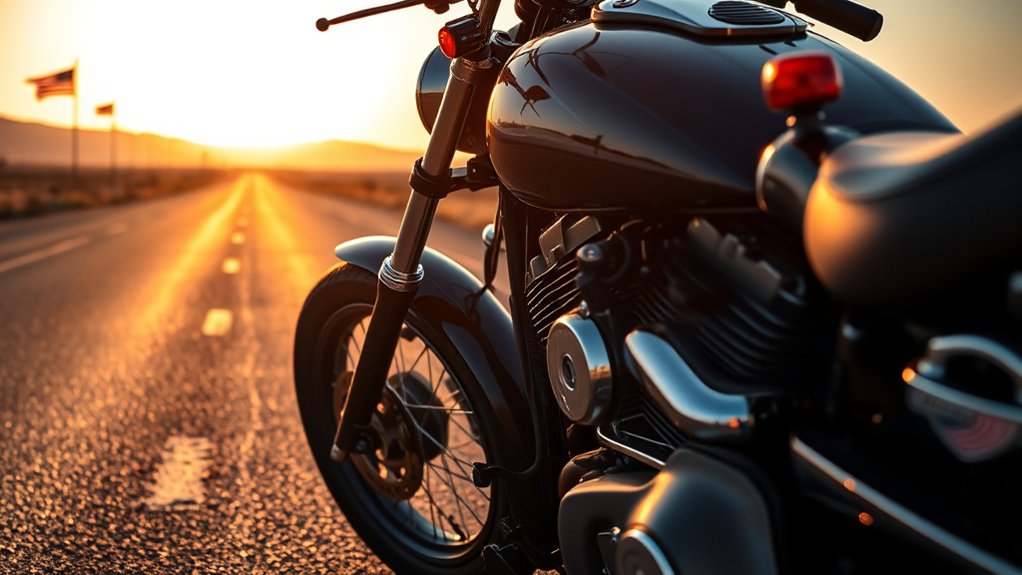
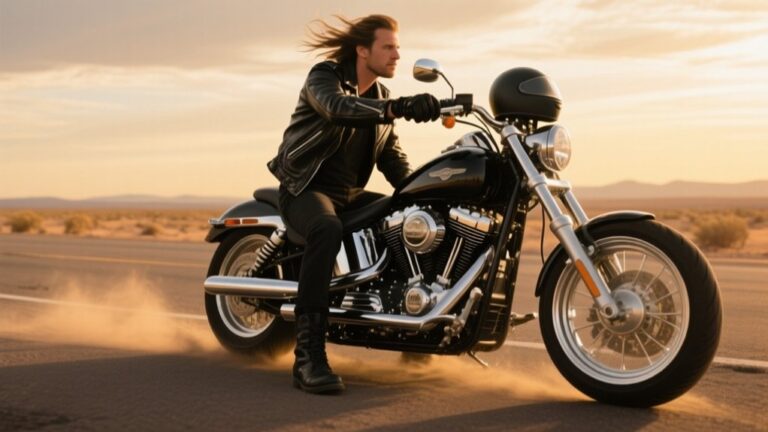
Although many motorcycle brands exist, Harley-Davidson stands out as an iconic American symbol because it’s deeply woven into the nation’s history and culture since 1903. When you think of Harley-Davidson, you’re embracing more than just a motorcycle. You’re connecting with a rich heritage that embodies freedom, rebellion, and rugged individualism.
This American motorcycle brand played a crucial role in military history, supplying bikes during both World Wars. That helped reinforce its national identity and durability.
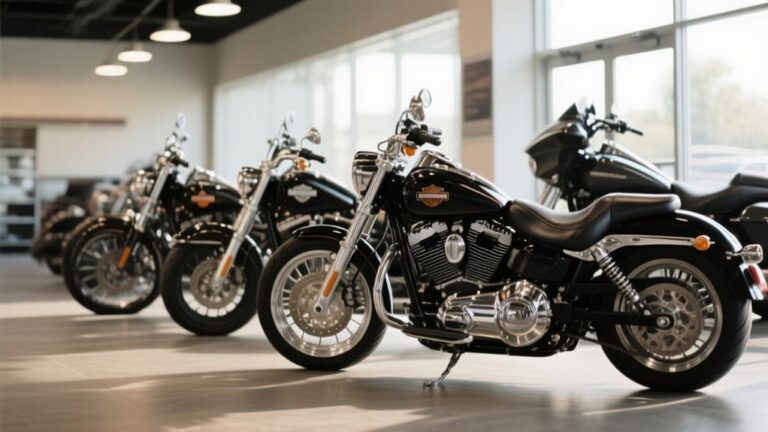
You’ll also notice Harley’s distinctive designs and legendary models, like the Fat Boy and Heritage Softail, that continue to capture the American spirit.
How Harley-Davidson Started and Evolved Over Time?
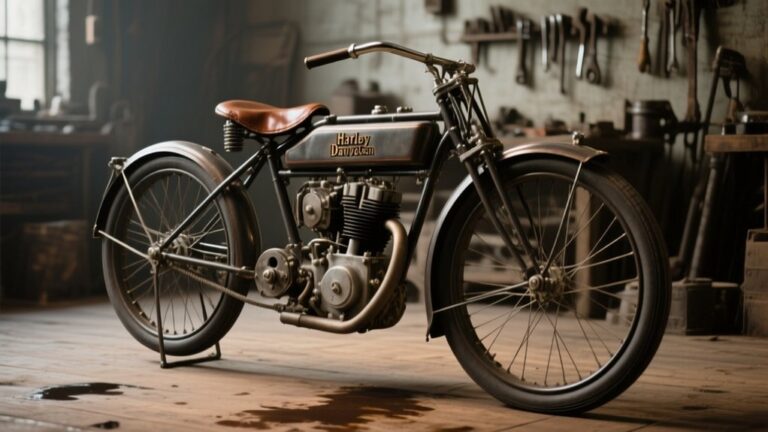
You’ll be fascinated to learn that Harley-Davidson got its start back in 1903. It all began with a simple prototype, built right in a Milwaukee shed by William Harley and Arthur Davidson.
From that humble beginning, the company didn’t take long to grow.
Pretty soon, they were launching groundbreaking models like the Model No. 1®. And just a few years later, in 1909, they introduced the powerful V-twin engine, which really set them apart.
As you follow their journey, you’ll notice how these key innovations and important milestones helped shape Harley-Davidson into the legendary brand we know today.
Founding And Early Growth
When you trace Harley-Davidson’s roots back to 1903, you’ll find a story of innovation sparked in a small Milwaukee shed by William S. Harley and the Davidson brothers. Founded in Milwaukee, Harley-Davidson quickly evolved from its first prototype in 1904 to the production of the Model No. 1® in 1905. Early growth milestones include establishing their first factory in 1906 and producing over 1,100 motorcycles by 1909.
The introduction of the V-twin engine in 1907 marked a defining moment, setting the foundation for Harley’s reputation. By World War I, Harley-Davidson’s motorcycles were essential to the U.S. military, with half their sales supporting the armed forces. This early growth shaped the brand’s enduring legacy.
| Year | Key Event |
|---|---|
| 1903 | Harley-Davidson Founded |
| 1905 | Model No. 1® Released |
| 1907 | V-twin Engine Introduced |
Key Milestones And Innovations
As Harley-Davidson grew from a small Milwaukee workshop into an iconic motorcycle brand, it reached several key milestones that shaped its legacy and innovation. You’ll find that the introduction of the powerful V-Twin engine in 1907 set a new standard for motorcycle performance and sound, becoming a hallmark of Harley’s identity.
During both World Wars, Harley’s military motorcycles, like the WLA, demonstrated resilience and versatility.
Innovations like the teardrop gas tank in 1925 and the launch of the Sportster in 1957 showcased continuous evolution.
A pivotal milestone came in 1984 with the Softail series, blending classic style with modern engineering.
These milestones highlight how Harley-Davidson has constantly pushed boundaries, passionately refining its motorcycles to maintain its legendary status.
Where Harley-Davidson Motorcycles Are Made Today?
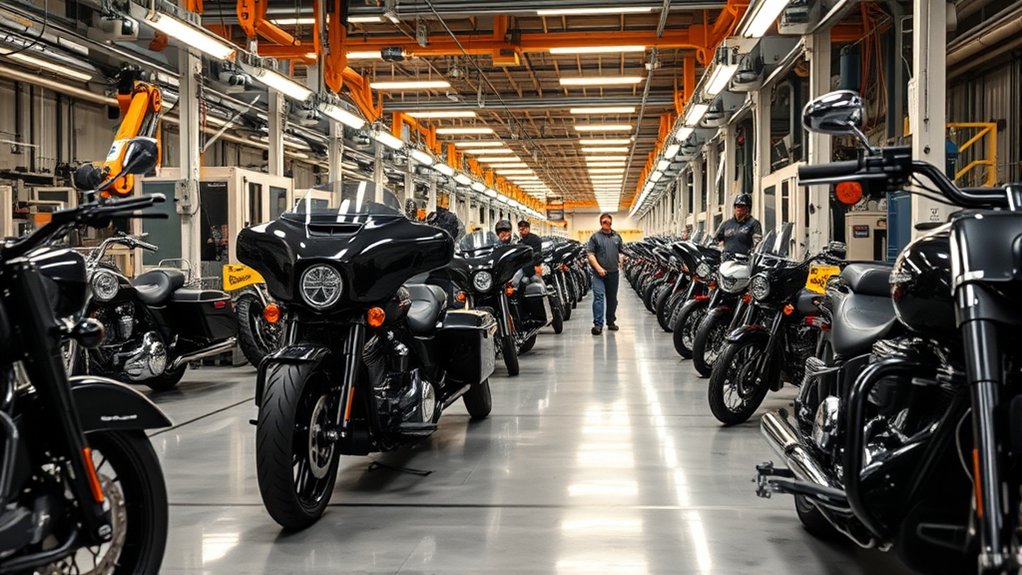
You’ll find Harley-Davidson motorcycles mainly crafted in the U.S.. The major plants are in York, Pennsylvania, and Milwaukee, Wisconsin. That’s where they do specialized work like assembling the iconic V-twin engines.
But Harley-Davidson doesn’t stop there. They also make bikes in Brazil, Thailand, and India to keep up with demand all around the world.
Knowing where these motorcycles are made really shows how the brand mixes its traditional roots with a global presence. It’s how they keep their legacy alive while reaching riders everywhere.
U.S. Manufacturing Facilities
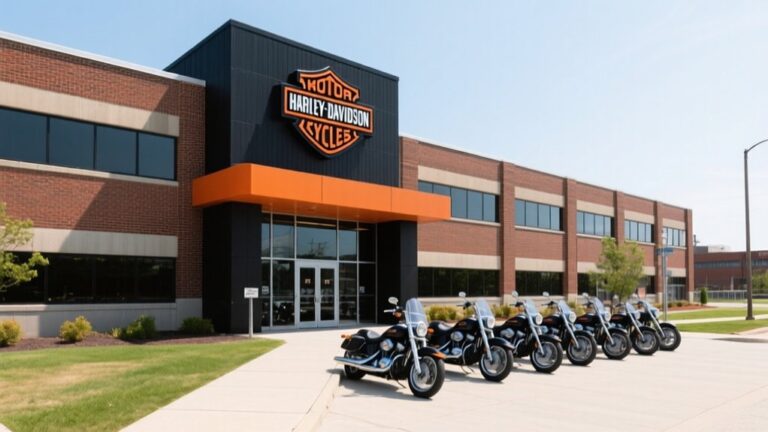
Harley-Davidson manufactures its iconic motorcycles primarily in the United States, with key facilities in York, Pennsylvania, and Menomonee Falls, Wisconsin. The York plant, spanning 1.5 million square feet, drives production of Sportster, Cruiser, Touring, and CVO models. It uses cutting-edge automation like CNC machines and laser cutters.
Meanwhile, Menomonee Falls, known as the “home of the Big Twin,” focuses on engine manufacturing. This ensures powerful performance in every bike.
In Milwaukee, you’ll find the engine assembly operations alongside the Harley-Davidson Museum and corporate offices. This blend of heritage and innovation really stands out.
These manufacturing facilities reflect Harley-Davidson’s commitment to American craftsmanship and quality. It lets you experience motorcycles built with pride and precision right here in the U.S.
International Production Locations
Beyond its strong American manufacturing roots, Harley-Davidson extends its production footprint internationally to better serve global markets. While the core manufacturing facilities remain in the U.S., Harley has strategically expanded to meet international demand.
You’ll find production hubs that play key roles in its global strategy:
The York, Pennsylvania plant covers 1.5 million square feet and produces Sportster, Cruiser, Touring, CVO, and LiveWire models. Menomonee Falls, Wisconsin supports critical U.S. manufacturing operations.
The Brazil facility, opened in 1998, targets Latin American markets.
Parts sourcing includes international suppliers from Brazil and Thailand. Despite global dealerships, most manufacturing remains U.S.-centered, ensuring quality and heritage.
This international approach balances tradition with global reach. It lets Harley-Davidson maintain its iconic status worldwide.
Specialized Assembly Operations
Where are Harley-Davidson motorcycles crafted today? Their specialized assembly operations span several advanced facilities across the U.S., blending tradition with cutting-edge manufacturing.
The York, Pennsylvania plant covers 1.5 million square feet, handling production of Sportster, Cruiser, Touring, CVO, and LiveWire models.
Meanwhile, the Menomonee Falls, Wisconsin facility, known as the “home of the Big Twin,” focuses on assembling large V-twin engines within its 849,000-square-foot space.
The Milwaukee plant plays a vital role in engine assembly, specifically the iconic V-twin engines that define Harley’s power and character.
Across all these sites, Harley-Davidson integrates CNC machines, robotic welders, and laser cutters to guarantee precision and quality.
When you explore Harley’s manufacturing, you witness a passionate commitment to craftsmanship and innovation in every motorcycle’s assembly and production.
What Key Features Make Harley-Davidson Motorcycles Unique?
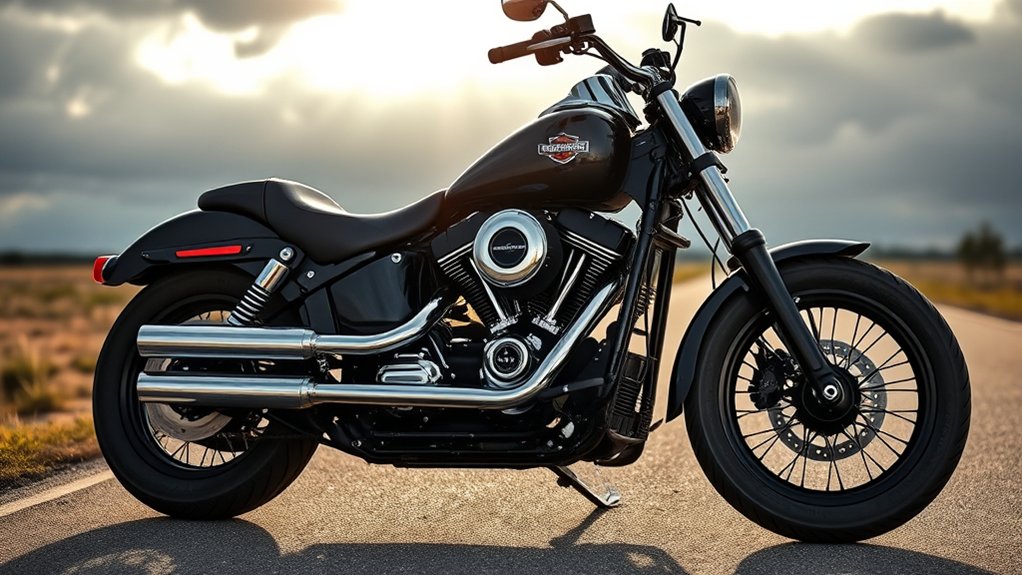
What sets these motorcycles apart from others on the road? Harley-Davidson’s unique appeal lies in their signature features that combine power, style, and heritage. When you ride one, you experience more than just transportation. You connect with a legacy.
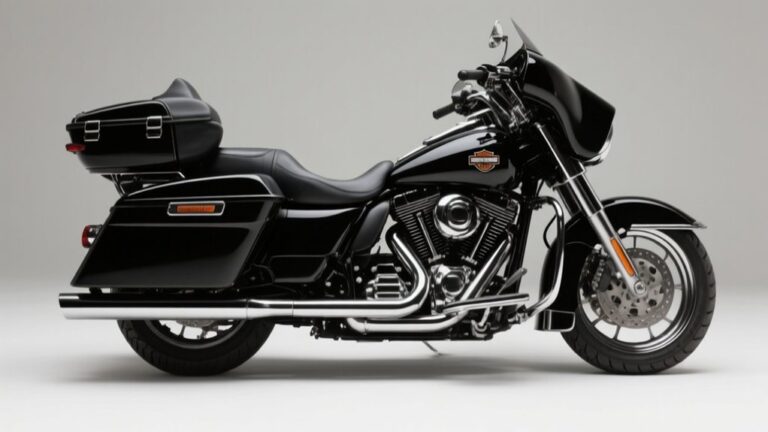
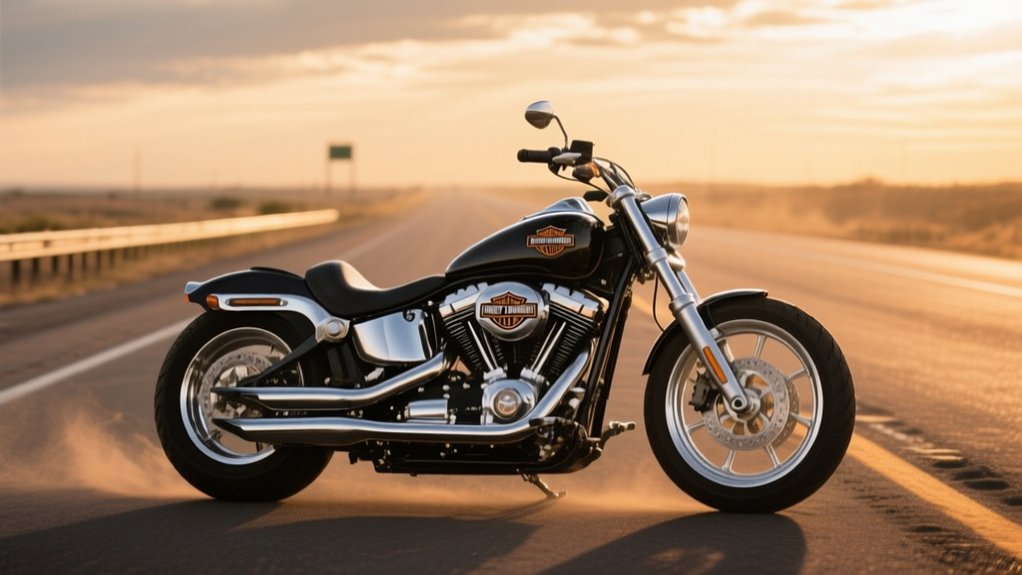
Their distinctive V-twin engines deliver that deep, rumbling sound only Harley can produce. These heavyweight, air-cooled cruiser motorcycles offer unmatched stability and comfort for long rides.
Plus, the iconic styling includes teardrop gas tanks, chrome finishes, and vintage-inspired details that honor their heritage.
The long wheelbase and greater rake enhance smooth handling and rider comfort. And with customizable designs, you can personalize your bike, making it truly yours.
All these elements come together to create a motorcycle that’s not just a machine but a symbol of freedom and American tradition.
How Harley-Davidson Became a Global Lifestyle Brand?
How did Harley-Davidson evolve from a motorcycle maker into a global lifestyle icon? You’ll see it’s all about cultivating a powerful brand identity rooted in freedom, rebellion, and American heritage. Harley-Davidson didn’t just sell motorcycles. They crafted a lifestyle.
Harley-Davidson transformed from a bike maker into an iconic lifestyle symbol of freedom and rebellion.
Through clever marketing, including branded merchandise and community groups like HOG, they built loyalty and a sense of belonging worldwide. Their iconic models and customization options let riders express themselves uniquely. This appealed across diverse cultures.
Harley-Davidson’s presence in cultural events, racing, and historic milestones further cemented its image beyond bikes.
Finally, global expansion through manufacturing and dealerships in Brazil, Thailand, and India made Harley-Davidson a worldwide cultural phenomenon. This turned the brand into a true symbol of adventure and independence.
How Harley-Davidson Builds Community and Celebrates Culture?
Beyond crafting motorcycles and a lifestyle, Harley-Davidson excels at weaving a tight-knit community where riders feel a genuine connection. You really experience this through the brand’s commitment to heritage and shared identity.
Harley-Davidson builds community and celebrates culture by uniting riders via the Harley Owners Group (HOG), a vast, organized club that fosters camaraderie. They also host rallies, rides, and events that honor the brand’s rich American heritage.
Plus, they offer customizable bikes and branded merchandise that deepen emotional bonds. The brand weaves patriotic themes and military history into its storytelling and image, too.
And they cultivate cultural symbols and iconic models that unite riders under a proud legacy.
What Innovations Keep Harley-Davidson Ahead in Motorcycles?
Why does Harley-Davidson continue to lead in motorcycle innovation after more than a century? It all starts with the iconic V-Twin engine, pioneered in 1907, which set the benchmark for powerful cruisers.
Harley-Davidson’s century-long innovation journey began with the groundbreaking V-Twin engine in 1907.
You’ll appreciate how the Softail series, launched in 1984, blends classic Harley styling with modern chassis technology, offering both comfort and performance.
Harley-Davidson never stops evolving. Their Milwaukee-Eight engine platform delivers smoother rides and enhanced power, showcasing ongoing innovations.
Beyond engines, they leverage advanced manufacturing techniques like CNC machining and 3D printing, ensuring unparalleled design precision.
Even as the electric bike market emerges, Harley stays ahead with the LiveWire, proving their commitment to innovation while honoring their heritage.
You can see why Harley-Davidson remains a leader in motorcycle excellence.
Frequently asked questions
What Types of Harley-Davidson Merchandise Are Available Besides Motorcycles?
You’ll find a wide variety of Harley-Davidson merchandise beyond motorcycles. You can grab stylish leather jackets, t-shirts, and hats to show off your passion.
Accessories like keychains, patches, and motorcycle parts help customize your ride and gear.
Collectibles such as die-cast models and stickers add to your collection.
Plus, home items like blankets and mugs bring the Harley spirit into your daily life.
Digital products like video games also keep you connected.
How Customizable Are Harley-Davidson Motorcycles for Individual Riders?
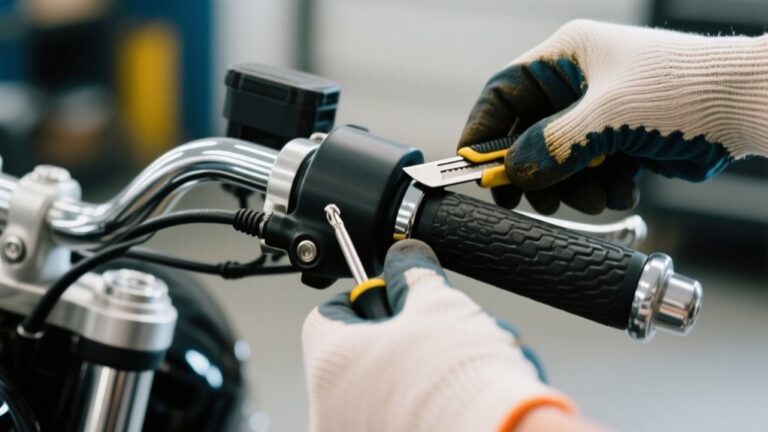
You might be surprised how deeply you can customize a Harley-Davidson motorcycle. You can pick from various engines, exhausts, seats, and handlebars, tailoring your ride exactly to your style and comfort.
Harley even offers factory-installed packages and works with aftermarket suppliers, so you’re never short on options. Whether you want a subtle tweak or a full transformation, Harley lets you create a bike that’s truly your own expression on the road.
What Safety Features Are Standard on Harley-Davidson Bikes?
Harley-Davidson bikes come standard with anti-lock braking systems (ABS) to keep you safe during sudden stops by preventing wheel lock-up.
You’ll also get bright LED lighting for better visibility, especially in low-light conditions.
Many models include traction control systems (TCS) to help you maintain stability on slippery roads.
Plus, high-visibility horns and reflective elements guarantee other drivers notice you, boosting your safety every time you hit the road.
How Does Harley-Davidson Support New Riders and Beginners?
Did you know over 80% of new Harley riders take advantage of Harley-Davidson University? They support you by offering hands-on safety training and beginner-friendly models tailored just for you.
You’ll find local dealerships hosting intro courses to boost your skills and confidence.
Plus, the Harley Owners Group connects you with experienced riders who share tips and encouragement. With their expert guidance, you’ll master riding and maintenance safely and confidently.
What Are the Typical Maintenance Costs for Harley-Davidson Motorcycles?
You can expect to spend around $300 to $500 annually on routine Harley-Davidson maintenance, like oil changes and brake adjustments.
Every 10,000 miles, a major service might cost you between $600 and $1,200 for thorough inspections and part replacements.
Keep in mind, Harley’s proprietary parts can be pricier, so costs might be higher than other brands.
Also, location, dealer rates, and warranty status impact what you’ll pay.
Final Thought
Riding a Harley-Davidson is like joining a legendary journey. Think of the freedom of the open road mingled with a rich American heritage. You’re not just buying a motorcycle; you’re embracing a lifestyle built on innovation, community, and timeless craftsmanship.
As you rev that engine, you connect with a brand that’s evolved yet stayed true to its roots. Harley isn’t just a bike; it’s an enduring symbol of rebellion and brotherhood you can feel in every mile.