Was Harley Davidson The First Motorcycle – Yes or No?
No, Harley-Davidson wasn’t the first motorcycle. That title belongs to the Daimler Reitwagen, built in 1885 with the world’s first internal combustion engine, nearly two decades before Harley’s 1903 start. Early motorized bikes by others also came before Harley.
However, Harley-Davidson quickly innovated with advanced designs and shaped motorcycle culture, becoming iconic beyond being first. If you explore further, you’ll see how Harley’s unique innovations and cultural impact defined its lasting place in history.
What Was the First Motorcycle Ever Made?
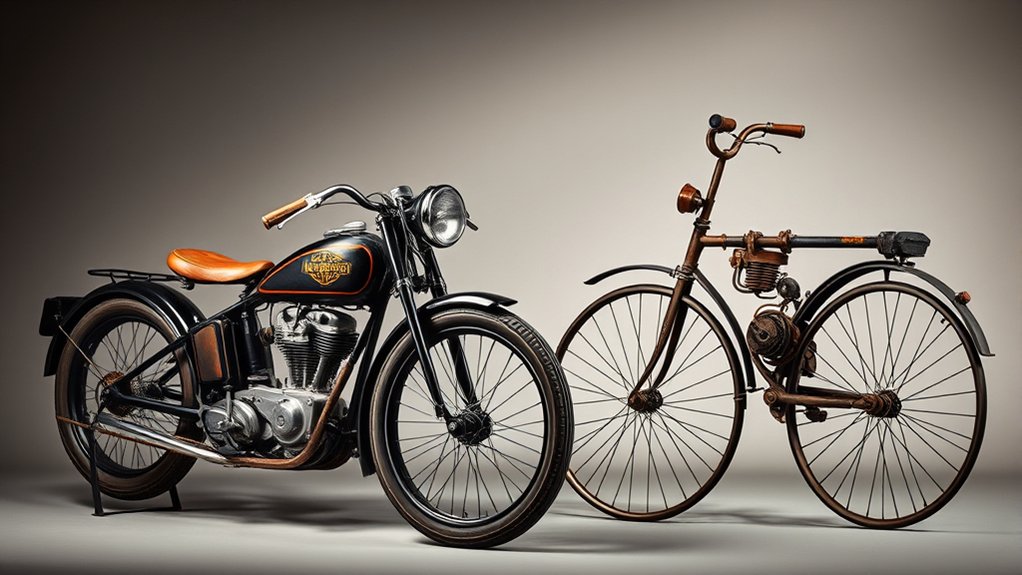
Although many early attempts at motorized bicycles existed, the first true motorcycle is generally recognized as the Daimler Reitwagen, built in 1885 by Gottlieb Daimler and Wilhelm Maybach.
The first true motorcycle, the Daimler Reitwagen, was built in 1885 by Daimler and Maybach.
You should understand that this vehicle was the first motorcycle to feature an internal combustion engine, setting it apart from earlier steam-powered and pedal-assisted motorized bicycles.
The Daimler Reitwagen utilized a single-cylinder four-stroke engine, marking a significant technological leap as the first gasoline-powered motorcycle.
While other early motorized bicycles preceded it, none combined gasoline propulsion with a motorcycle frame as effectively.
Knowing this, you can see why the Daimler Reitwagen holds its place as the first motorcycle, demonstrating the practical application of the internal combustion engine in personal transportation for the first time.
Why Wasn’t Harley-Davidson the First Motorcycle Brand?
Understanding the origins of the first motorcycle helps clarify why Harley-Davidson wasn’t the pioneering brand in this field. The earliest motorcycles, like the 1885 Daimler Reitwagen developed by Gottlieb Daimler and Wilhelm Maybach, predate Harley-Davidson founding by nearly two decades.
Other first motorcycle manufacturers, such as Hildebrand & Wolfmüller in 1894, also produced motorized bikes before Harley-Davidson’s entry.
While Harley-Davidson history marks its early motorcycle models from 1903, these weren’t the first but became iconic later.
You can see that Harley-Davidson’s legacy rests on innovation and cultural impact rather than being the initial creator of motorcycles. The existence of fully functional early motorcycle models means Harley-Davidson wasn’t the first motorcycle brand, though it played a pivotal role in popularizing motorized bikes.
How Did Harley-Davidson Begin Its Journey?
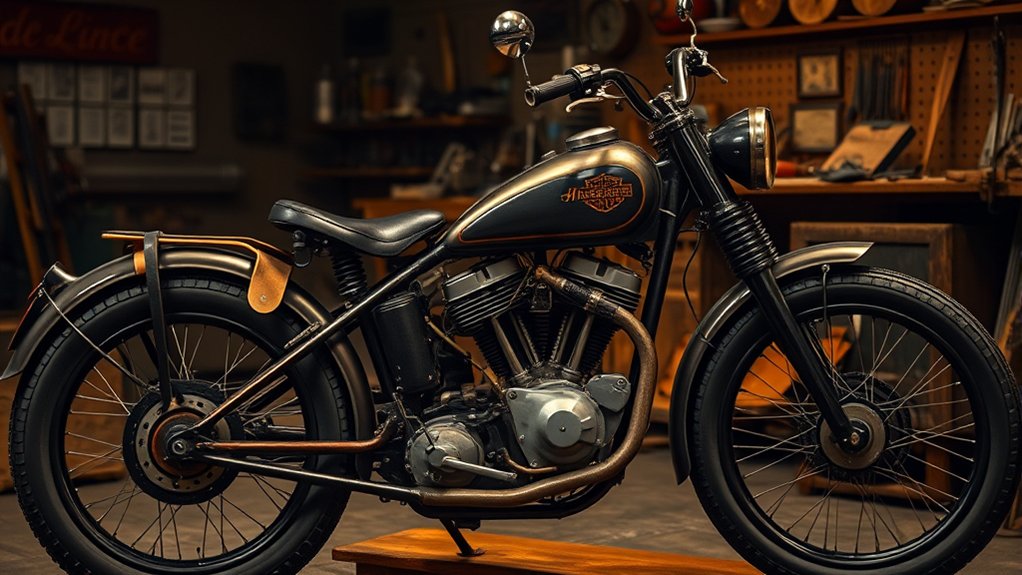
You’ll find that Harley-Davidson’s journey started back in 1903. That’s when William S. Harley and Arthur Davidson combined their passion for bicycles and engines to build their first prototype.
They were really focused on integrating a single-cylinder engine into a bicycle frame. Their goal? To create a new form of motorized transportation.
This early experimentation laid the technical groundwork for what would eventually become a pioneering motorcycle company.
Founders’ Early Inspiration
When William S. Harley and Arthur Davidson saw Anna Held riding a three-wheeler in a vaudeville show, that moment sparked their early inspiration.
You can trace Harley-Davidson’s journey back to 1901, when they began experimenting with motorized bicycles. They were driven by a shared passion for mechanics and design.
Their goal was clear: to create a reliable, lightweight motorcycle that could transform personal transportation. They focused on developing a small engine mounted on a bicycle frame, laying the groundwork for what would become their first prototype.
This combination of creativity and technical skill set the stage for Harley-Davidson’s foundation in 1903. It marked a pivotal point in motorcycle history, rooted firmly in those early inspired efforts.
Initial Prototype Development
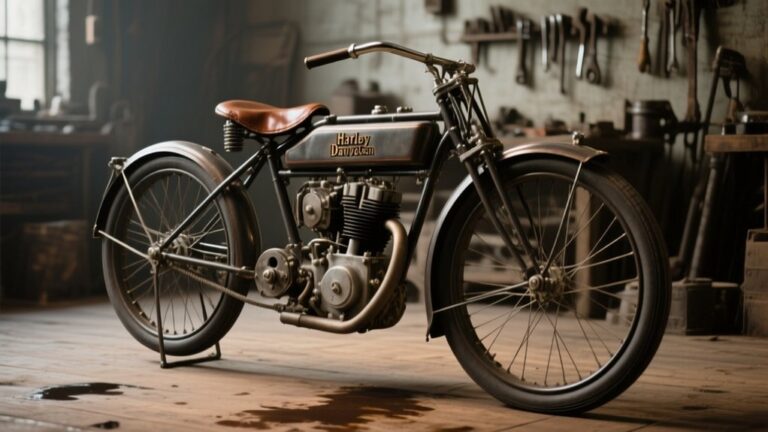
Although no verified photos or documents prove the existence of a Harley-Davidson motorcycle in 1903, William S. Harley and Arthur Davidson developed their initial prototype that year, marking a pivotal point in the company’s history. They based this first motorcycle on the De Dion-Bouton engine, equipping it with a 167 cc engine producing roughly 2 horsepower.
Early performance issues prompted significant development by 1904, when they increased the engine capacity to 405 cc, with a bore of 76 mm and stroke of 89 mm. This upgrade laid the foundation for Harley-Davidson’s future innovations.
The initial prototype’s development between 1903 and 1904 established the mechanical and design principles that propelled Harley-Davidson from concept to a pioneering motorcycle manufacturer.
It’s pretty impressive how these early steps set the stage for what the company would become.
What Early Innovations Made Harley-Davidson Unique?
Because Harley-Davidson focused on both performance and rider experience early on, it introduced several groundbreaking innovations that set it apart from competitors. You’ll notice Harley-Davidson’s early innovations included the patented Ful-Floteing Seat in 1912, which improved rider comfort through adjustable spring tension and remained in use for decades.
Their 1911 Silent Gray Fellow showcased advanced engine design by encasing moving parts, reducing noise markedly. Harley-Davidson also pushed engineering achievements by creating the first motorcycle to exceed 100 mph in 1921.
Furthermore, early models featured teardrop gas tanks, front brakes, and reliable flathead engines, which became industry standards. These technical advancements and unique styling options ensured Harley-Davidson’s motorcycles stood out, emphasizing both mechanical innovation and rider-centered design from the outset.
How Did Harley-Davidson Shape American Motorcycle Culture?
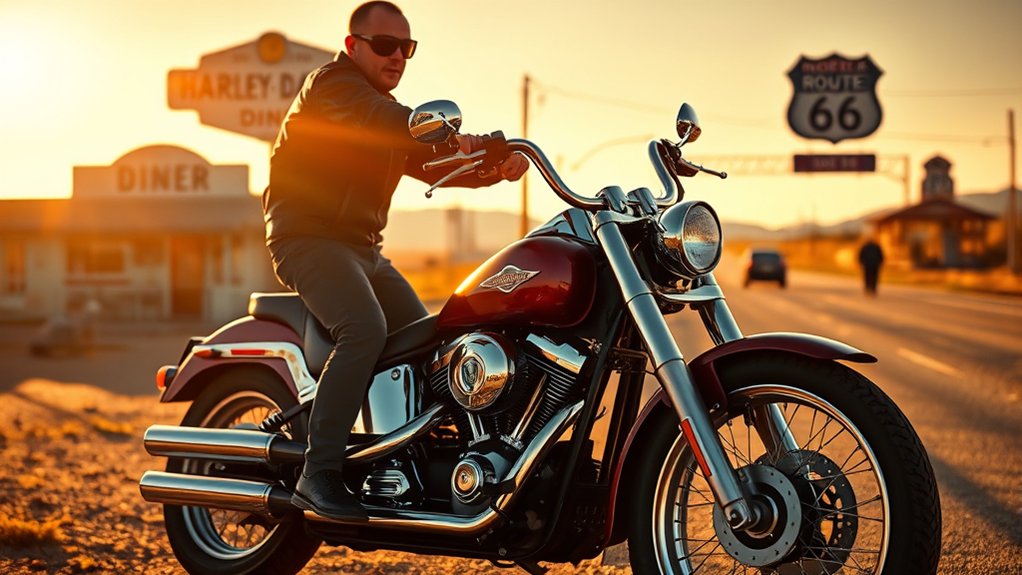
As you explore American motorcycle culture, Harley-Davidson stands out as a defining force that shaped its identity through more than just machines. Harley-Davidson’s iconic design and rugged image transformed motorcycles into symbols of freedom and rebellion.
You’ll notice how the brand’s emphasis on customization allowed riders to express individuality, fostering a unique connection between owner and bike.
Community events like the Sturgis Motorcycle Rally and the Harley Owners Group (H.O.G.) created spaces where enthusiasts bond, strengthening the culture.
Additionally, Harley’s involvement in military efforts and early racing successes boosted national pride and embedded motorcycles in America’s cultural fabric.
Where Does Harley-Davidson Fit in Motorcycle History Today?
While Harley-Davidson wasn’t the very first motorcycle manufacturer, its founding in 1903 and early innovations firmly established it as a cornerstone of motorcycle history. You can trace much of the heavyweight cruiser style back to Harley-Davidson’s Model 1 from 1905, which set design and performance standards that still influence American motorcycles today.
The company’s innovations in engine design and racing helped push motorcycle technology forward in the early 20th century. This shaped both engineering and culture in ways that still resonate.
When you study motorcycle history, Harley-Davidson’s legacy stands out not just for its age but for its lasting impact on the cruiser segment and customization culture.
Today, Harley-Davidson remains a global leader. It symbolizes American craftsmanship and the enduring spirit of motorcycling. It’s more than just a brand—it’s an icon that continues to inspire riders around the world.
Frequently asked questions
What Are the Most Popular Harley-Davidson Motorcycle Models Today?
The most popular Harley-Davidson models today are the Street Glide, Fat Boy, Sportster Iron 883, Road King, and Softail lineup.
You’ll find the Street Glide perfect for long-distance comfort, while the Fat Boy stands out with its powerful engine and bold design.
If you’re new, the Iron 883 offers lightweight handling and affordability.
The Road King blends vintage style with modern tech, and Softail models combine retro aesthetics with advanced performance.
Each of these bikes has its own unique vibe, so there’s something for everyone depending on what you’re looking for.
How Has Harley-Davidson Influenced Motorcycle Safety Standards?
Harley-Davidson has profoundly influenced motorcycle safety standards by improving engine reliability and introducing robust braking systems that enhance rider control. You’ll find their emphasis on sturdy construction and standardized lighting boosts visibility and safety on the road.
They’ve also promoted rider training programs, encouraging safer habits.
Their racing and military work advanced stability and handling, indirectly shaping safety regulations you benefit from today. It’s pretty clear their impact goes beyond just making cool bikes.
What Are Harley-Davidson’s Current Electric Motorcycle Offerings?
Harley-Davidson currently offers the LiveWire, an electric motorcycle with a 105 kW motor. It can reach speeds up to 115 mph and has a 146-mile range per charge.
You’ll also find the Serial 1 Electric Bicycle, which is powered by their Revolution Max engine. This expands their electric portfolio even more.
They’re really focused on electrification and are developing new models like the upcoming e-Adventure bike. This one’s designed for off-road use and shows their commitment to sustainable, innovative mobility solutions.
How Does Harley-Davidson Maintain Its Brand Loyalty?
Harley-Davidson maintains its brand loyalty by deeply connecting with you through rich heritage storytelling and emphasizing tradition.
They build community via clubs and rallies, letting you share experiences with fellow riders.
You can customize your bike to reflect your personality, which really enhances your bond with the brand.
Their loyalty programs and exclusive events reward your commitment.
Plus, their focus on American roots resonates with your identity, keeping you emotionally tied to the brand long-term.
It’s all about making you feel part of something bigger.
What Role Do Harley-Davidson Clubs and Communities Play Worldwide?
Harley-Davidson clubs and communities play a vital role in uniting riders like you around shared passion and loyalty. They organize events, rallies, and charity rides that deepen your connection to the brand and culture.
By customizing bikes and celebrating heritage, these groups enhance your sense of individualism and freedom.
With over 1,400 clubs and the global H.O.G. community, they also help preserve history and expand Harley’s presence worldwide.
Final Thought
You might be surprised to learn Harley-Davidson wasn’t the first motorcycle, despite its legendary status. Ironically, while others raced to invent the earliest models, Harley-Davidson refined and revolutionized the ride, shaping American culture with innovation and style.
So, even if it didn’t start the motorcycle story, Harley-Davidson made sure you’ll never forget its chapter. It’s a story built on grit, heritage, and unmistakable rumble. Sometimes, being first isn’t what truly defines greatness.