How Many Miles Can A Harley Last – The Real Answer
You can expect your Harley to reliably last beyond 100,000 miles with proper care, though mileage varies by model and engine. Touring models often surpass 300,000 miles, while Sportsters typically reach 20,000 to 30,000. Engines like Evolution and Twin Cam offer strong longevity but may need upgrades like cam chain tensioners around 40,000 miles.
Consistent maintenance, quality parts, and mindful storage are essential. Understanding these factors helps you optimize performance and durability over time. Taking care of your bike really pays off in the long run.
What Counts As High Mileage For Harley-Davidson Motorcycles
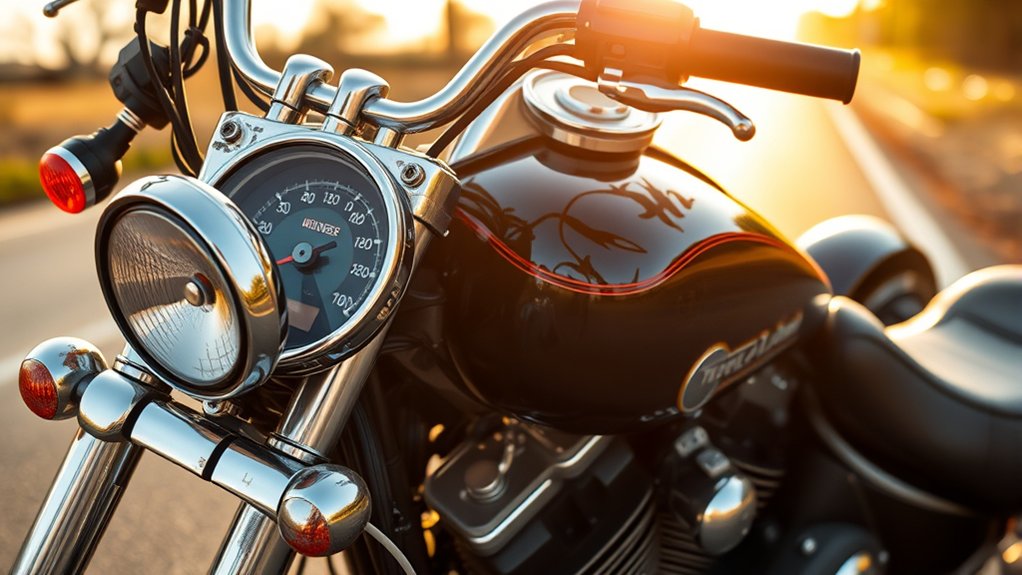
While the definition of high mileage varies by model and maintenance, Harley-Davidson motorcycles typically hit high mileage between 45,000 and 60,000 miles. For you evaluating a used motorcycle, understanding this is essential.
Touring models often exceed 100,000 miles, some reaching over 300,000 with consistent maintenance.
Touring models can surpass 100,000 miles, with some exceeding 300,000 through diligent maintenance.
Conversely, Sportsters consider 20,000 to 30,000 miles high mileage, though many surpass this with proper care.
Remember, 40,000 miles on a Harley-Davidson isn’t necessarily high; many remain reliable beyond this threshold.
High mileage depends on the bike’s type, usage patterns, and upkeep quality. When appraising a Harley-Davidson, focus on documented maintenance history rather than mileage alone to gauge its true condition and longevity potential.
Harley-Davidson Engine Lifespan Explained
You’ll find that a Harley-Davidson engine’s lifespan really depends on a few key things: how durable the design is, the usual mechanical wear points, and, of course, how well you take care of it.
For example, knowing about common issues like cam chain tensioner wear on Twin Cam engines can make a big difference. On the other hand, the Evolution and Milwaukee-Eight models are built pretty tough right from the start.
If you stay on top of maintenance schedules and deal with repairs as soon as they come up, you’ll be able to keep your engine running strong for a long time.
Engine Durability Factors
Because Harley-Davidson engines rely heavily on consistent maintenance, their lifespan can exceed 100,000 miles when you perform regular oil changes and use quality parts. Engine durability and longevity hinge on adhering to specific mileage thresholds and maintenance schedules.
For example, Twin Cam engines need cam chain tensioner upgrades around 40,000 miles to maintain reliability. Post-2017 Milwaukee-Eight engines push durability further, often surpassing 150,000 miles. The Evolution engine is renowned for reaching 100,000 miles with minimal upkeep.
| Engine Type | Mileage Threshold | Maintenance Focus | Expected Longevity |
|---|---|---|---|
| Evolution (Evo) | 100,000 miles | Basic oil changes | High |
| Twin Cam | 40,000 miles | Tensioner upgrades | Moderate to High |
| Milwaukee-Eight | 150,000+ miles | Quality parts, oil | Very High |
| General Maintenance | Continuous | Regular inspections | Critical for longevity |
Common Mechanical Issues
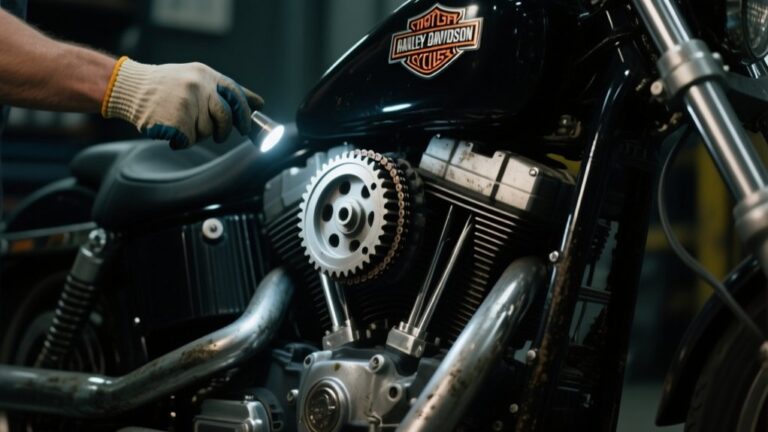
As Harley-Davidson engines rack up the miles, you’ll start to notice some common mechanical issues like cam chain tensioner failures, clutch wear, and oil leaks.
The cam chain tensioner is super important; if it goes bad, it can mess with your valve timing and cause engine damage.
Clutch parts naturally wear down over time because of friction, which can affect how your bike performs and means you’ll need to replace them eventually.
Oil leaks often pop up from worn seals or gaskets, and if you don’t take care of them, they can mess with your bike’s lubrication.
These problems directly affect your engine’s lifespan, so it’s really important to keep an eye on how your parts are doing.
Maintenance is key to avoiding early failures, but knowing about these common issues helps you stay ahead of repairs.
Taking care of these things quickly keeps your Harley running strong and reliable well past 100,000 miles.
Maintenance Impact On Lifespan
Recognizing common mechanical issues like cam chain tensioner failures and clutch wear highlights the importance of maintenance in preserving your Harley’s engine lifespan. Regular maintenance, including consistent oil changes and scheduled servicing, is essential to maximize mileage longevity.
Upgrading components such as cam chain tensioners in Twin Cam engines prevents premature wear and costly repairs. Proper servicing also involves timely replacement of ignition, fuel, and electrical parts, which markedly reduces engine stress over time.
Maintaining a documented service history ensures your engine performs reliably at high mileage. By committing to proper servicing, especially on older models, you can extend your Harley’s engine lifespan beyond 150,000 miles.
Ultimately, your Harley’s longevity directly depends on the quality and frequency of your maintenance efforts.
Harley Mileage Benchmarks By Model
When evaluating Harley mileage benchmarks by model, you’ll find that touring bikes like the Street Glide and Electra Glide commonly surpass 100,000 miles with regular maintenance.
Different Harley-Davidson models show varied high mileage thresholds based on engine design and usage.
Harley-Davidson models exhibit diverse mileage limits influenced by engine type and riding conditions.
For example, touring models often exceed 100,000 miles. Some even surpass 300,000 miles.
Sportster bikes typically reach 20,000 to 30,000 miles, but can go beyond 100,000.
Softail and Dyna models average around 40,000 to 50,000 miles, with many exceeding 100,000.
Evolution and Twin Cam engines are known for their longevity and frequently last beyond 100,000 miles.
Mileage capacity really depends on the specific engine architecture and build quality of each model.
Understanding these benchmarks helps you set realistic expectations for engine longevity across Harley-Davidson models.
Why Maintenance Matters More Than Mileage
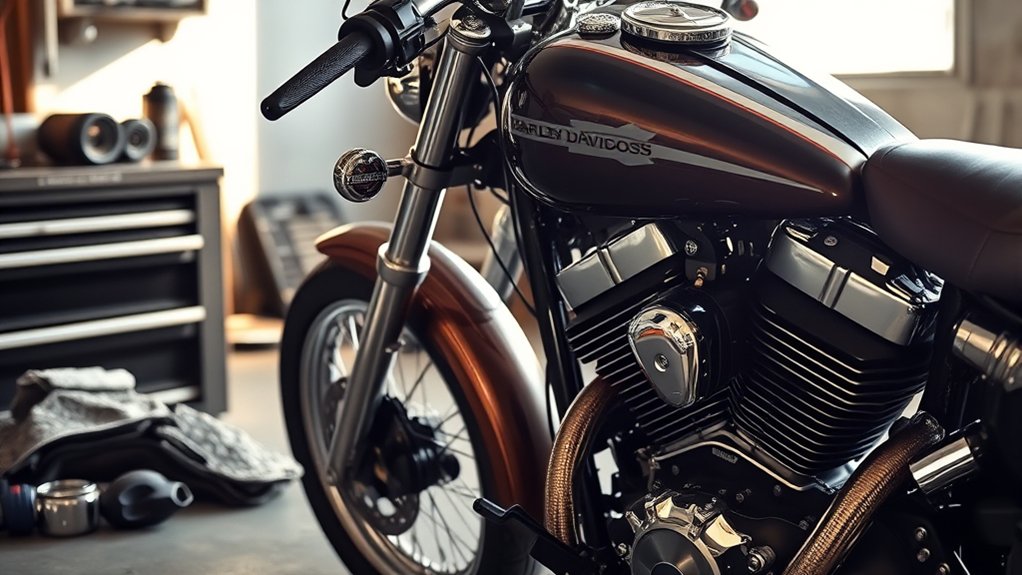
You’ll get the most out of your Harley by keeping up with regular oil changes and swapping out parts when they’re due. It might seem simple, but these small steps really add up.
Plus, storing your bike the right way helps stop wear and rust from sneaking in too soon. When you pay attention to these maintenance habits, your bike will run smoothly and last way longer than just what the mileage might suggest.
Consistent Oil Changes
Changing your Harley’s oil every 3,000 to 5,000 miles plays a crucial role in preserving engine integrity and extending its lifespan. Regular oil changes guarantee Harley-Davidson engines remain lubricated, minimizing friction and overheating. These are key factors in engine longevity.
Neglecting this maintenance leads to sludge buildup and heightened wear, which can drastically reduce engine life. So, focus on consistent oil changes as a cornerstone of your bike’s regular maintenance routine.
Remember to use high-quality oil and filters for peak performance. Replace oil within the recommended mileage intervals to keep things running smoothly.
Prevent sludge buildup to reduce engine stress, and maintain proper lubrication to avoid overheating.
It’s important to prioritize oil changes over total mileage when it comes to engine health. This disciplined approach directly impacts your Harley’s durability more than mileage alone.
Timely Component Replacements
Although mileage often grabs the spotlight, timely replacement of critical components like cam chain tensioners and drive belts plays a far greater role in preserving your Harley’s engine health.
Regular maintenance, including scheduled oil and fluid changes, supports engine longevity by reducing wear and preventing contamination.
Timely replacements of wear parts such as clutches and brakes maintain excellent performance and minimize risks of catastrophic failures.
By sticking to preventive maintenance intervals, you can extend your Harley’s miles without issues considerably, avoiding costly repairs.
Addressing minor problems promptly helps preserve reliability and ensures your motorcycle operates smoothly over the long term.
Ultimately, focusing on component condition rather than just mileage is key to maximizing your Harley’s lifespan and sustaining its performance.
Proper Storage Practices
Since proper storage directly influences your Harley’s longevity, focusing on how and where you store it matters more than just tracking mileage. Proper storage minimizes corrosion and mechanical degradation, guaranteeing your motorcycle remains in peak condition.
Even if your bike is regularly serviced, neglecting storage can accelerate wear.
To optimize long-term storage and maintain engine health, follow these key practices:
- Store your Harley in a climate-controlled garage to prevent rust and corrosion.
- Use a breathable cover to shield against dust, moisture, and UV damage.
- Drain or stabilize fuel to avoid gumming in the fuel system.
- Start and run the engine periodically to circulate oil and maintain lubrication.
- Keep the storage area clean and dry to reduce exposure to damaging elements.
Adhering to these steps ensures your Harley stays mechanically sound beyond its mileage.
Just a little extra care when storing can make a big difference over time.
Common Problems On High-Mileage Harleys
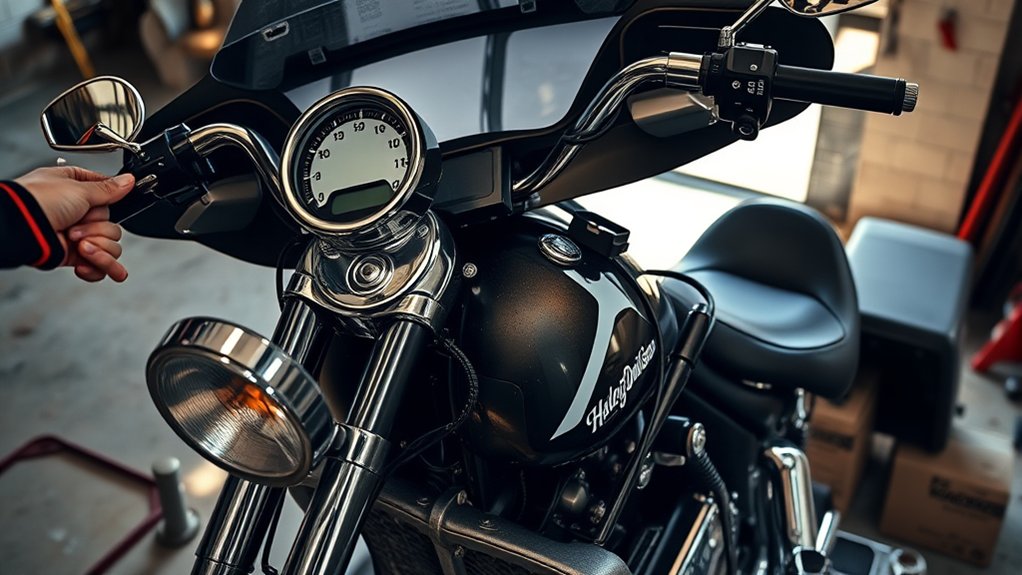
When you ride a Harley with high mileage, you’ll likely encounter specific mechanical issues that need attention to keep the bike running smoothly. One common problem is cam chain tensioner wear, especially in Twin Cam engines. If not upgraded, this causes rattling that shows engine wear.
Clutch plates and cables usually need replacement or adjustment after about 50,000 miles because they stretch over time. Electrical faults also become more common past 100,000 miles. These include failing alternators and faulty wiring.
Oil leaks often develop around rocker boxes, primary covers, and transmission seals as gaskets degrade. Plus, critical components like wheel bearings, suspension parts, and brake systems require regular inspection and servicing.
Doing this helps ensure safety and keeps your bike performing at its best. Addressing these issues promptly helps maintain your Harley’s reliability despite high-mileage challenges.
It’s all about staying on top of the maintenance so your bike keeps running strong.
How Your Harley’s Age Impacts Its Lifespan
Even if you keep your Harley meticulously maintained, the bike’s age inevitably influences its overall lifespan. Harley age affects material integrity and component wear, which can reduce reliability despite low mileage. Maintenance plays a critical role in mitigating these effects, but older Harleys often demand more frequent attention.
Harley age impacts reliability despite low mileage, requiring more frequent maintenance to mitigate wear and material degradation.
Here are some key impacts of Harley age on lifespan:
- Deterioration of rubber parts, seals, and gaskets
- Degradation of electrical systems increasing failure risk
- Increased susceptibility to material fatigue and corrosion
- Necessity for more frequent maintenance and part replacements
- Dependence on proper storage conditions to preserve component life
Knowing these factors helps you manage your Harley’s longevity effectively. This way, it stays reliable over time, no matter the mileage.
What To Look For When Buying A High-Mileage Harley
Before committing to a high-mileage Harley, you’ll want to carefully examine its maintenance history and mechanical condition. Start by reviewing the Harley-Davidson’s complete maintenance records to verify consistent oil changes, belt replacements, and any component upgrades.
Inspect for leaks, rust, worn tires, and brake pads. These are signs of neglected upkeep. Test the clutch, transmission, and electrical systems to make sure everything runs smoothly despite the high mileage.
Pay special attention to cam chain tensioners, especially on Twin Cam engines. Find out if replacements or upgrades have been done.
Finally, arrange a professional pre-purchase inspection to uncover any hidden issues and thoroughly assess the motorcycle’s condition.
This careful evaluation helps you make a confident decision when buying a high-mileage Harley. It’s worth taking the time to get it right!
Tips To Maximize Your Harley’s Lifespan And Value
To maximize your Harley’s lifespan and preserve its value, you need to stick to a strict maintenance schedule that includes regular oil changes and timely component replacements. Proper care is key to hitting high mileage and boosting your bike’s longevity.
Make sure to perform routine maintenance like oil and filter changes at the recommended intervals. It’s also smart to replace worn cam chain tensioners and upgrade critical parts before they cause issues.
Perform routine oil and filter changes, and replace worn parts early to prevent costly problems.
Keep your bike stored in a garage or use a cover to protect it from the elements. Watch out for small problems such as oil leaks or electrical faults, and fix them as soon as you notice them.
Whenever possible, try to cruise consistently on the highway. This helps reduce engine stress and can really extend your Harley’s high mileage potential.
Taking these steps will keep your ride running strong for years to come.
Frequently asked questions
Can Harley-Davidson Motorcycles Be Customized for Better Longevity?
Yes, you can customize your Harley-Davidson for better longevity by upgrading to high-quality, performance-oriented parts. Replacing wear items like cam chain tensioners, belts, and seals regularly helps prevent failures. It’s all about staying ahead of problems before they start.
Proper tuning, oil changes, and cooling system maintenance optimize engine performance and reduce stress. When you keep these basics in check, your bike runs smoother and lasts longer.
Installing reputable aftermarket components like custom exhausts, air filters, and fuel management systems also boosts efficiency and durability. These upgrades help your bike stay reliable and go the distance.
How Does Riding Style Affect Harley-Davidson Fuel Efficiency?
Your riding style directly impacts Harley-Davidson fuel efficiency. Aggressive acceleration and high speeds increase fuel consumption, while steady cruising helps conserve fuel.
Frequent stops and city traffic cause engine idling and repeated acceleration, which reduces mileage per gallon.
To maximize efficiency, try to maintain consistent highway speeds. Also, make sure your tires are properly inflated and keep up with regular maintenance.
Even though different Harley models vary, your throttle control and riding habits play the biggest role in optimizing fuel economy.
Are There Specific Harley Models Better Suited for Long-Distance Touring?
Yes, you’ll find Harley’s Touring models like the Street Glide, Road King, and Electra Glide are engineered specifically for long-distance riding. They come with larger fuel tanks, advanced suspension, and comfortable seating designed to reduce fatigue on extended trips.
Their robust engines and electrical systems handle sustained mileage better, especially when you keep up with regular maintenance and component upgrades. This helps ensure durability and reliability over many thousands of miles.
What Are the Best Insurance Options for High-Mileage Harleys?
For high-mileage Harleys, you should prioritize insurers offering specialized policies or discounts that recognize the bike’s durability. Look for coverage that requires maintenance records to prove regular servicing. This helps ensure you stay eligible for those benefits.
Classic or vintage models might qualify for specialty motorcycle insurance plans. It’s a good idea to opt for extensive options like roadside assistance and rental reimbursement. These add-ons help protect your investment.
Always compare multiple quotes to find affordable premiums tailored specifically to your high-mileage Harley-Davidson’s unique needs. Taking the time to shop around can really pay off.
How Does Harley-Davidson Resale Value Change With Mileage?
You’ll notice Harley-Davidson resale value decreases with mileage, but less sharply than other brands.
With proper maintenance, a Harley over 50,000 miles can retain 60-80% of its original value.
Even models exceeding 100,000 miles remain desirable, though prices drop.
Detailed service records boost resale worth considerably.
Final Thought
Think of your Harley as a finely tuned clock. Miles are like the ticks, but maintenance is the winding key. Just like a clock’s precision depends on care, your Harley’s longevity hinges on regular attention, not just mileage.
High miles don’t spell doom. They’re really just chapters in a well-maintained story. By understanding engine lifespan and addressing wear early, you make sure your Harley keeps running smoothly.
It’s like a clock that never misses a beat, no matter how many ticks pass. So, keep up with the care, and your bike will keep going strong for miles to come.