How Long Does Motorcycle Training Last – The Real Numbers
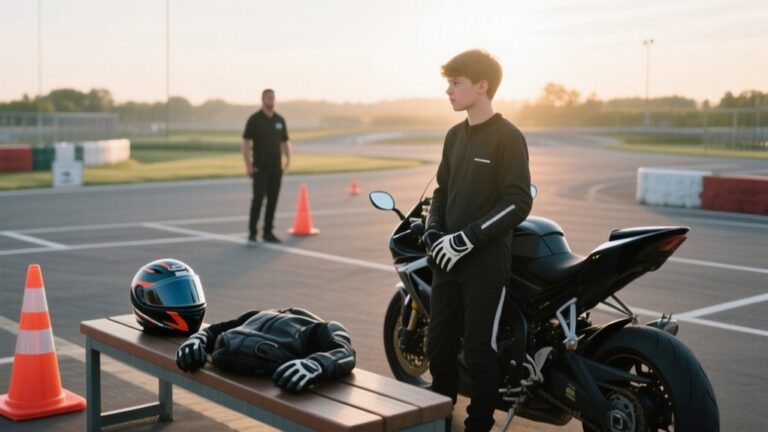
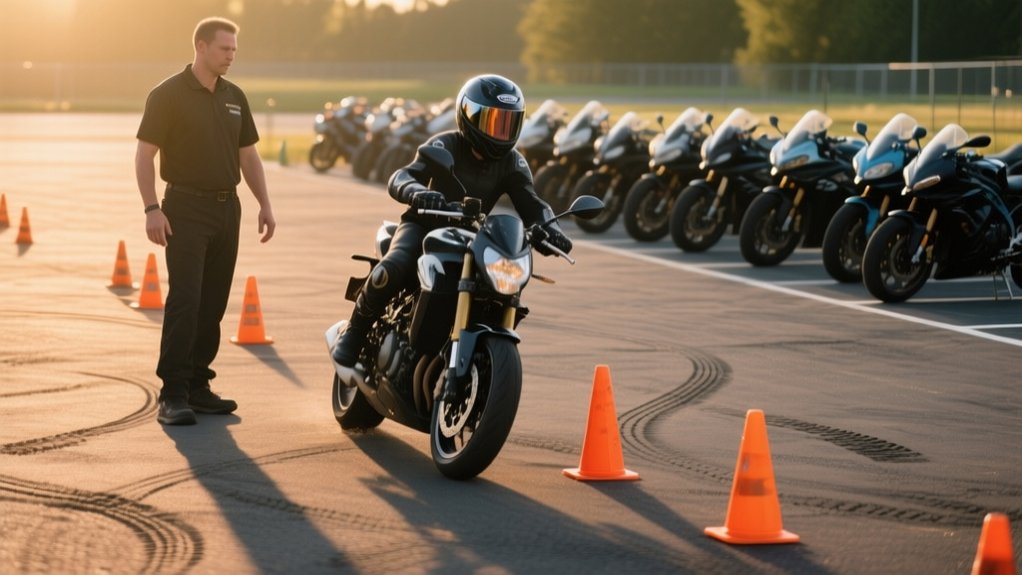
Motorcycle training lasts between 5 and 17 hours, depending on the course. The Basic Rider Course takes about 2 days with up to 17 hours of classroom and practical riding. Intermediate courses last around 9 hours, while three-wheel training takes roughly 5 hours.
Advanced clinics are single-day, 9-hour sessions for experienced riders. You’ll need a valid permit or license before enrolling. Timing for license issuance varies by state.
Keep going to discover more detailed course info and requirements.
How Long Does the Basic Rider Course Last, and What Does It Cover?
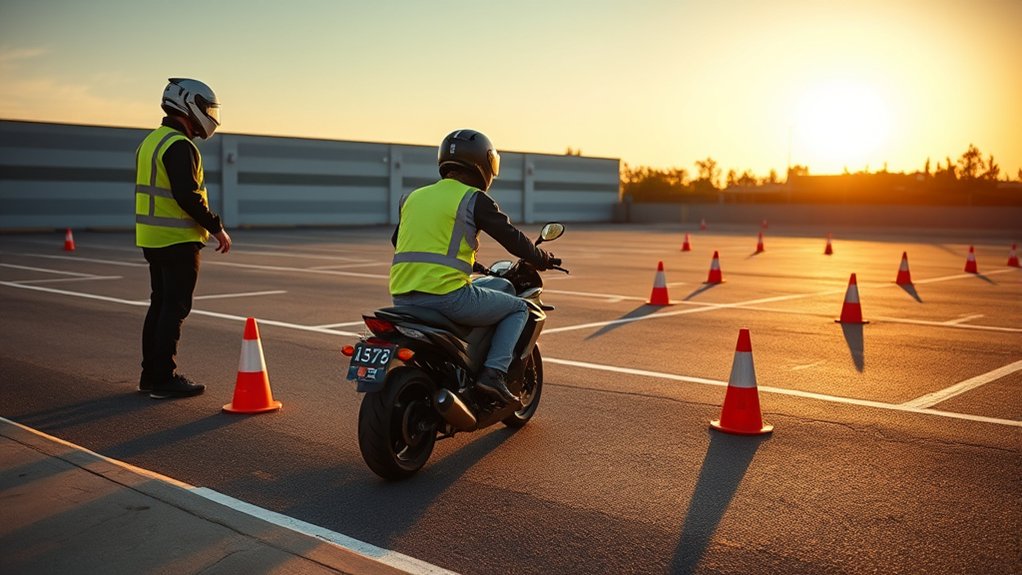
Although the Basic Rider Course typically spans two days, it packs about 16 to 17 hours of essential training into that time. The course duration includes a classroom portion lasting around 5 to 6 hours, where you’ll learn motorcycle controls, safety principles, and riding strategies.
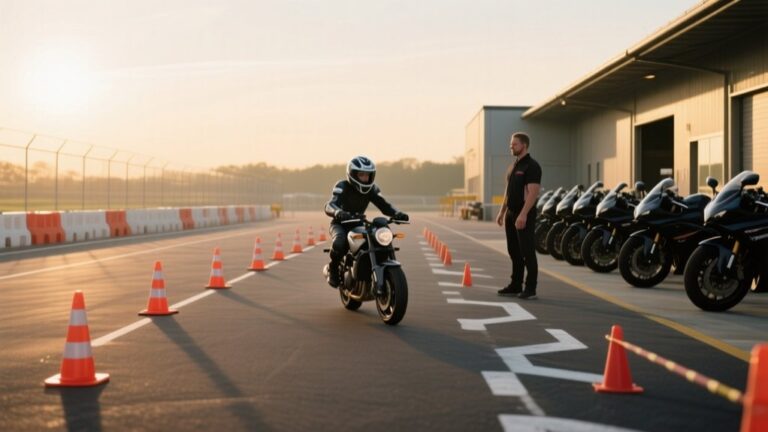
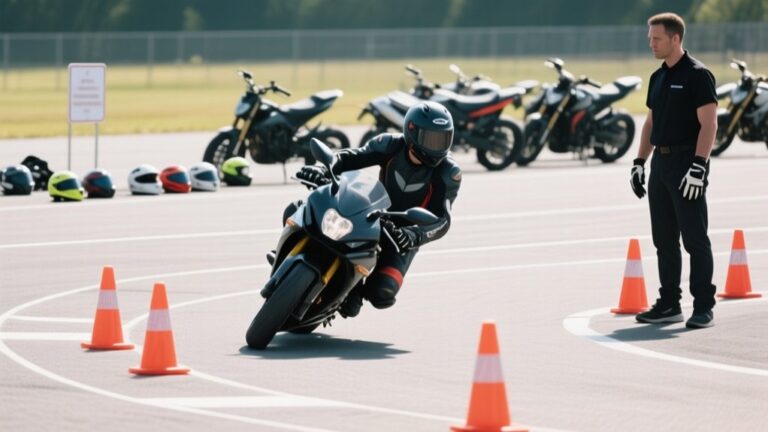
The remaining 10 hours focus on practical motorcycle training through riding exercises such as stopping, turning, and emergency maneuvers. These hands-on sessions help build your confidence and skills on the road.
Successfully completing the course often waives the need for a separate skills test at the DMV, which simplifies your licensing process. When you finish, you’ll get a completion card that proves you completed the training and can speed up getting your motorcycle license.
What Permits and Licenses Do You Need Before Your Motorcycle Course?
Before you start your motorcycle course, you’ll need the right permit or license based on your state’s requirements. For example, in Pennsylvania and Michigan, this usually means having a valid Class M permit or a driver’s license with a motorcycle endorsement.
Also, make sure your permit stays valid throughout the entire training period so you remain eligible. It’s a simple step but really important to avoid any hiccups during your course.
Required Permit Types
Since you need the proper permits to participate in motorcycle training, it’s important to understand the specific requirements in your state.
In Pennsylvania, you must have a valid Class M motorcycle permit or license before registering for most courses, including advanced ones like the ARC or IRC. You can get a motorcycle learner permit at PennDOT Driver License Centers, and it must remain valid throughout your training.
In Michigan, obtaining a motorcycle endorsement involves either completing an approved safety course or passing the skills test with a Temporary Instruction Permit (TIP).
Each state sets clear rules, so securing the correct permit, whether a learner permit, Class M license, or motorcycle endorsement, is essential to legally and effectively participate in your motorcycle training program.
Licensing Eligibility Criteria
Understanding the specific permits and licenses you need before starting your motorcycle course guarantees you meet all legal requirements and can focus on learning.
To attend most Pennsylvania motorcycle courses, you must have a valid motorcycle permit or Class M license. You can get or replace your permit at PennDOT Driver License Centers, and it must remain valid throughout your training.
For riders under 18, holding a motorcycle learner permit for six months plus 65 hours of supervised riding is mandatory before licensing. A Class M license is also required to obtain a motorcycle endorsement or attend advanced clinics.
| Requirement | Details |
|---|---|
| Motorcycle Permit | Issued at PennDOT Driver License Centers |
| Permit Validity | Must be valid throughout the course |
| Licensing Eligibility | Under 18: 6 months permit + 65 hours riding |
| Valid License | Class M needed for advanced clinics |
| Motorcycle Endorsement | Requires Class M license |
Permit Validation Process
What permits and licenses do you need to join a Pennsylvania motorcycle safety course? You must have a valid Class M motorcycle permit or license issued by PennDOT to register and participate. Your permit must remain valid for the entire course duration, so check its expiration before enrolling.
As a permit holder, you’re required to hold the Class M permit for at least six months and complete 65 hours of supervised riding before licensing.
On course day, bring your permit or license as proof of eligibility. Without it, you can’t participate.
If you’re enrolling in advanced courses like ARC or IRLW, a valid Class M license, not just a permit, is mandatory.
This permit validation process guarantees you meet PennDOT’s requirements and are prepared for safe riding.
Duration and Content of Intermediate and Three-Wheel Motorcycle Rider Courses
You’ll spend about 9 hours completing the Intermediate Rider Course. This time is split between classroom lessons and riding practice, focusing on advanced skills like emergency braking. It’s a great way to build on what you already know.
Now, the Three-Wheel Rider Course takes roughly 5 hours. It combines theory and hands-on riding, all tailored specifically for three-wheeled vehicles.
Both courses are designed to fit into a single day, which makes planning your training a lot easier. So, whether you’re looking to sharpen your skills or try something new, these courses have you covered.
Intermediate Course Length
Although both courses target experienced riders, the Intermediate Rider Course (IRC) and the Three-Wheel Rider Course (3WRC) differ markedly in duration and focus. The Intermediate Rider Course typically spans about 8 hours, combining classroom instruction with extensive riding practice.
This course length allows you to engage in practical exercises designed to refine your skills and enhance safety. The motorcycle training duration includes a written test and hands-on riding sessions, making it an all-encompassing full-day commitment for experienced riders.
Key components of the Intermediate Rider Course include:
- Classroom instruction covering advanced riding techniques and safety principles
- Practical exercises that emphasize control and hazard avoidance
- A written test to reinforce knowledge and understanding
This structure ensures you get thorough skill refinement within a concise timeframe. It’s a well-balanced setup that fits neatly into a single day without feeling rushed.
Three-Wheel Course Details
While the exact duration of the Three-Wheel Rider Course (3WRC) isn’t specified, you can expect a blend of classroom instruction and hands-on riding sessions tailored to three-wheeled motorcycle operation. This free Pennsylvania-specific training course focuses on skill improvement, safe riding techniques, and vehicle control.
To enroll, you must hold a valid PA Class C driver’s license with an M endorsement or permit. The course balances theory and practice to meet PA license requirements and enhance rider confidence.
| Component | Focus Area | Purpose |
|---|---|---|
| Classroom Instruction | Safety & Rules | Understand three-wheel laws |
| Riding Sessions | Vehicle Control | Practice handling skills |
| Skill Improvement | Confidence Building | Boost safe riding ability |
| PA License Requirements | Enrollment Criteria | Verify eligibility |
| Hands-on Training | Real-world Scenarios | Apply techniques effectively |
Course Content Overview
Building on the specifics of the Three-Wheel Rider Course, it’s important to understand how both the Intermediate Rider Course (IRC) and the 3WRC structure their training to maximize skill development.
The IRC includes 4 hours of classroom instruction and 5 hours of riding practice, focusing on advanced skills and safety protocols.
The 3WRC, lasting about 9 hours, blends classroom time with hands-on riding practice tailored to three-wheeled motorcycles.
Both courses are designed for completion within a day or over a weekend, depending on the course schedule.
They typically conclude with a motorcycle knowledge test to assess your understanding.
Key Course Content Includes:
- Classroom sessions covering safety protocols and motorcycle knowledge
- Riding practice emphasizing skill refinement
- Final assessments to ensure course completion and competence
Duration and Audience for the Advanced Riding Clinic
Since the Advanced Riding Clinic (ARC) targets experienced motorcyclists, you’ll need a valid license and at least 3,000 miles of riding under your belt to enroll.
The Advanced Riding Clinic requires a valid license and minimum 3,000 miles of riding experience to enroll.
The ARC’s duration totals nine hours, combining four hours of classroom instruction with five hours of practice riding.
This training course is designed specifically for experienced riders who want to enhance their riding skills and improve safety.
The course length typically fits into a single day, often held over a weekend, allowing you to complete it without disrupting your schedule.
Keep in mind, the Advanced Riding Clinic isn’t a licensing course but a focused opportunity to refine your technique and boost confidence on the road.
If you’re serious about advancing your skills, this course is an efficient, practical choice.
Equipment and Preparation for Motorcycle Courses
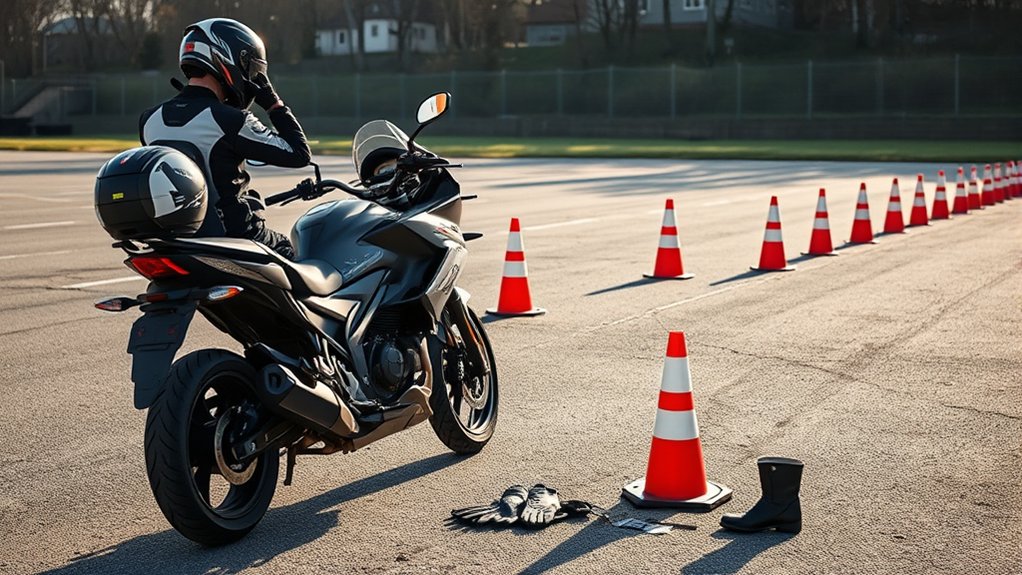
Before you start your motorcycle course, make sure you have the right equipment and preparation in place. Proper equipment and safety gear are critical to meeting training requirements and ensuring a safe experience.
For Basic Rider Courses, training motorcycles are provided, so you don’t need your own bike.
However, if you use your motorcycle, it must have valid registration, insurance, and inspection. Always wear a helmet and protective clothing, which are often provided or strongly recommended.
Prepare the following for a smooth course:
- Valid Class M permit or license, plus pens for classroom activities
- Layered clothing and rain gear to stay comfortable during rides
- Snacks and water to maintain energy throughout the training sessions
This preparation helps you focus fully on learning and safety. It’s all about being ready so you can enjoy the ride and get the most out of your training.
When Will You Receive Your Motorcycle License After Completing the Course?
After you complete your motorcycle training course, the timing for receiving your license varies by state. In Pennsylvania, the Department of Transportation usually issues your motorcycle license within 120 days after course completion.
Michigan offers immediate license issuance once you pass the tests and submit your documentation.
Meanwhile, Missouri grants a license shortly after completing the Basic Rider Course, waiving additional tests.
If you’re seeking an out-of-state endorsement in Michigan, submitting your course completion card starts the endorsement process. License issuance typically happens within a few days.
Generally, the licensing authority processes your motorcycle license within a few weeks, depending on your state’s processing time.
Understanding these timelines helps you plan ahead and makes sure you’re ready to ride legally as soon as possible.
Frequently asked questions
Can I Retake a Motorcycle Training Course if I Fail?
Yes, you can retake a motorcycle training course if you fail. Most providers allow multiple attempts, though some might require a waiting period or charge extra fees.
If you struggle repeatedly, they may ask you to complete additional practice or review sessions before enrolling again.
It’s best to check with your specific course provider to understand their retake policies, any limits on attempts, and potential costs involved.
Are Motorcycle Training Courses Available Online?
You won’t believe it, but yes, motorcycle training courses are available online! You can tackle safety lessons and written exams right from your couch, often in about five hours.
These online segments set you up perfectly for the hands-on riding that follows. You’ll find that many states require this online step before in-person training. So, it’s a convenient, flexible way to start mastering motorcycle skills at your own pace.
Do Motorcycle Courses Offer Financial Aid or Discounts?
Yes, many motorcycle courses offer financial aid or discounts. You can often find free or low-cost options, especially if you’re military, a senior, or a resident of certain states.
Some programs partner with sponsors to reduce fees or provide free online components. It’s a good idea to check directly with the course provider because discount availability and eligibility criteria vary widely depending on your location and the specific program you choose.
How Do Weather Conditions Affect Course Scheduling?
Weather conditions can cause your motorcycle course to be delayed, rescheduled, or even canceled for safety. Rain, snow, or poor visibility reduce traction and increase risks during riding exercises, so instructors monitor forecasts closely.
You should check weather updates before class and stay prepared for changes. Sometimes, courses move indoors or postpone sessions until conditions improve to guarantee your safety and effective learning.
It’s all about making sure you get the best experience without unnecessary risks.
Is Prior Riding Experience Required for Advanced Courses?
Yes, you generally need prior riding experience for advanced motorcycle courses. Most programs expect you to have at least 3,000 miles or equivalent skills before enrolling. Some even require a valid motorcycle license or permit.
If you lack experience, it’s wise to build basic skills and confidence first. That way, you’ll be fully prepared and safe during advanced training.
This approach guarantees you get the most out of the course.
Final Thought
Think of motorcycle training as your roadmap to freedom on two wheels. Each course, from basic to advanced, equips you with skills that build your confidence and safety, mile by mile. By preparing properly and understanding the time commitment, you’re not just earning a license. You’re mastering the ride.
So gear up, stay focused, and embrace the journey ahead. Your road to riding mastery starts the moment you take that first lesson.