Where To Go For Motorcycle Training – Best Options
When choosing where to go for motorcycle training, look for programs certified by recognized authorities like the MSF. Make sure they offer experienced instructors and thorough lessons.
Think about whether you prefer group classes for social learning or private sessions for a more personalized focus. Also, consider nearby professional schools, community-based courses, or flexible online options that fit your needs.
Advanced and safety certification courses can really boost your skills and confidence. Keep exploring until you find the training approach that’s just right for you.
Key Factors To Evaluate In Motorcycle Training Programs

When choosing a motorcycle training program, you need to focus on several key factors to guarantee you get the most effective and safe instruction.
First, check if the program is certified by a recognized authority, such as the Motorcycle Safety Foundation (MSF). This ensures the curriculum meets safety and quality standards.
Ensure your motorcycle training is certified by trusted authorities like the MSF for quality and safety.
Next, consider the experience and qualifications of the instructors. Skilled trainers can adapt lessons to your skill level and provide valuable feedback.
Look for programs that offer thorough coverage, including both classroom theory and practical riding exercises.
Also, assess the student-to-instructor ratio to ensure personalized attention.
Finally, verify the availability of modern, well-maintained motorcycles and safety gear.
Prioritizing these elements helps you learn efficiently while minimizing risks on the road.
Choosing Between Group And Private Motorcycle Training
Although both group and private motorcycle training have their merits, choosing the right format depends on your learning style, budget, and goals.
Group sessions often provide a social environment where you can learn alongside others. You get to benefit from shared experiences and peer support.
Private training offers personalized instruction tailored to your specific needs. This usually means faster progress and focused attention.
Consider these factors when deciding:
- Your preferred pace: Do you want individualized feedback or a structured group setting?
- Cost considerations: Group classes tend to be more affordable, while private lessons usually cost more.
- Comfort level: Some riders feel more confident learning alone; others thrive in a group dynamic.
Best Professional Riding Schools Near You
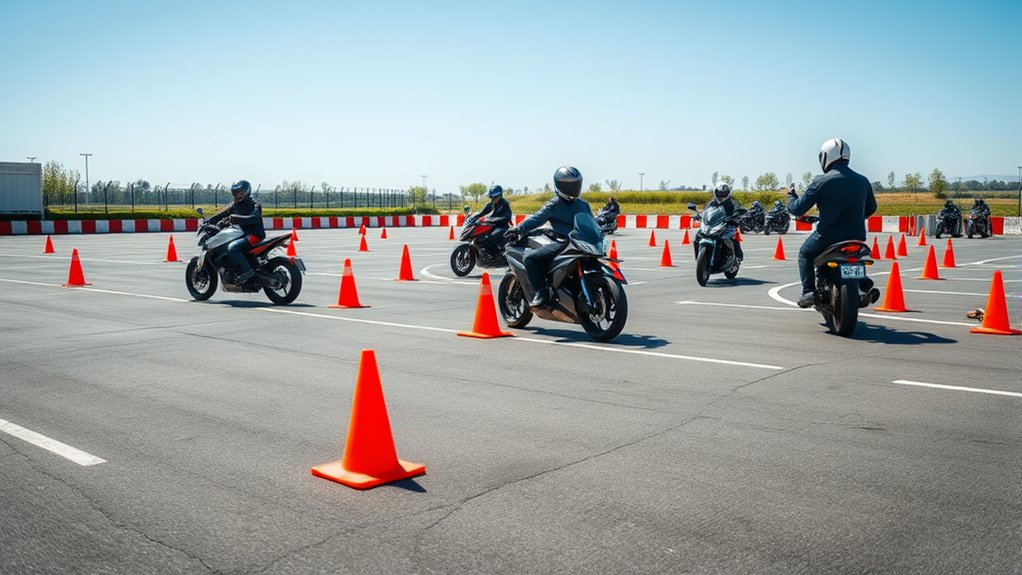
Where can you find the best professional riding schools near you? Start by researching accredited institutions with certified instructors and excellent safety records.
Look for schools offering tailored courses that fit your skill level and goals. Proximity matters, but quality and reputation should guide your choice.
Here’s a quick comparison to help you evaluate options:
| School Name | Certification | Course Types Offered |
|---|---|---|
| RiderPro Academy | MSF Certified | Beginner, Advanced, Safety |
| Urban Moto School | DMV Approved | Private, Group, Refresher |
| SafeRide Institute | Experienced Instructors | Basic, Intermediate, Skills |
Choosing a professional school guarantees structured training, builds confidence, and improves your riding skills effectively. It’s definitely worth the investment!
Community-Based Motorcycle Courses And Their Benefits
Because community-based motorcycle courses often focus on local needs and accessible training environments, they offer unique advantages for riders at all levels. When you choose these courses, you benefit from tailored instruction that fits your community’s traffic conditions and road types.
Plus, the smaller class sizes mean you get more personalized attention. You’ll also find the atmosphere welcoming, which encourages questions and active learning.
Key benefits include:
- Practical skills aligned with local riding environments
- Affordable pricing compared to larger professional schools
- Opportunities to connect with fellow local riders and build a supportive network
Online Motorcycle Training Options For Flexible Learning
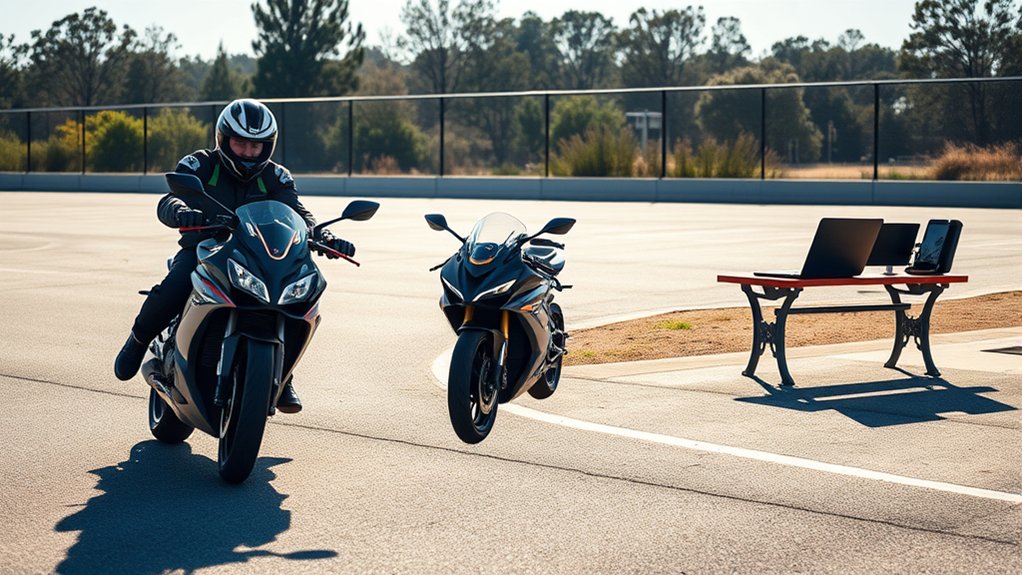
You can take advantage of online motorcycle training courses that offer flexible scheduling, so you can learn at your own pace. These virtual options provide all-inclusive lessons and are available through top platforms designed for effective skill-building.
Benefits Of Virtual Courses
How can virtual motorcycle training courses fit into your busy schedule? They offer unmatched flexibility, letting you learn at your own pace without sacrificing other commitments. You can access lessons anytime, anywhere, making it easier to balance work, family, and training.
Plus, virtual courses often provide interactive content that keeps you engaged and helps you retain essential safety knowledge.
Consider these key benefits of virtual courses:
- Convenience: Study whenever and wherever it suits you.
- Cost-Effective: Save on travel and accommodation expenses.
- Customized Learning: Replay lessons to master difficult topics.
Top Online Training Platforms
When searching for online motorcycle training, several reputable platforms stand out for their all-encompassing curricula and user-friendly interfaces. Sites like Motorcycle Safety Foundation (MSF) offer thorough courses covering essential riding skills, safety protocols, and traffic laws.
Another excellent option is RiderCourse, which combines interactive lessons with video demonstrations to enhance your learning experience.
These platforms provide quizzes and progress tracking, so you can monitor your development effectively. Furthermore, courses from platforms like eRider focus on beginner to advanced techniques, ensuring you gain confidence before hitting the road.
Choosing a platform with certification options can also streamline your path to licensing.
By selecting one of these trusted online training options, you’ll build a solid foundation while enjoying the convenience of flexible, self-paced learning. It’s a great way to prepare yourself without the pressure of a classroom setting.
Plus, you can fit the lessons around your own schedule.
Flexible Scheduling Advantages
Beyond the extensive content offered by top online training platforms, flexible scheduling stands out as a major benefit for motorcycle learners. You don’t have to rearrange your entire day or miss important commitments. Instead, you can tailor your learning around your lifestyle, making progress at your own pace.
This flexibility helps you stay consistent and motivated.
When you choose online motorcycle training with flexible scheduling, you can access lessons anytime, day or night, fitting training into your busiest days. You can also pause and review materials as needed, ensuring thorough understanding.
Plus, you get to balance work, family, and practice without pressure or rush.
This approach empowers you to gain skills efficiently while maintaining control over your schedule. In the end, it leads to a better learning experience and safer riding habits.
Beginner Motorcycle Training Programs
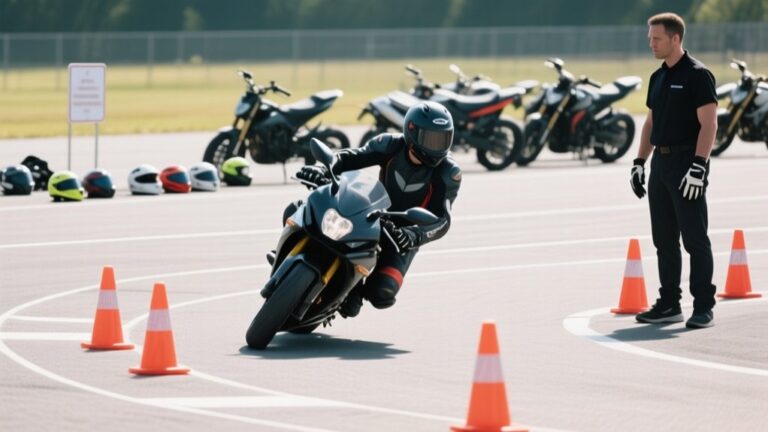
Although starting on a motorcycle can feel intimidating, beginner motorcycle training programs provide structured guidance to build your skills and confidence safely. These programs focus on essential techniques like balance, throttle control, braking, and turning, giving you a solid foundation.
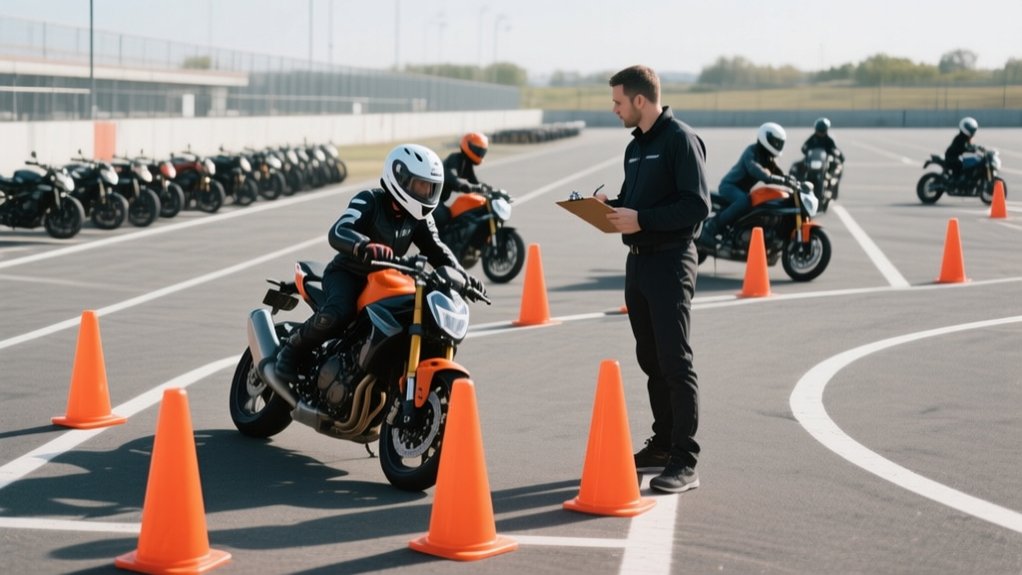
Instructors use controlled environments, which let you practice without the hazards of traffic. You’ll also learn important safety protocols and road rules specific to motorcycling.
Most programs combine classroom lessons with hands-on riding, ensuring you understand both theory and practice.
By completing a beginner course, you often qualify for licensing benefits and insurance discounts. Choosing a reputable program with certified instructors maximizes your learning and safety.
This approach helps you start your riding journey well-prepared and confident on the road.
Advanced Motorcycle Training Options
Once you’ve got the basics down, it’s a great idea to push yourself a little further with some advanced motorcycle training options.
You might want to check out track riding schools—they’re perfect for honing your skills in a controlled environment. Or maybe defensive riding courses catch your eye; they’re all about boosting your safety on the road.
There are also performance riding clinics if you’re looking to improve your control and handling. These programs really help you ride smarter, faster, and with way more confidence.
Track Riding Schools
When you’re ready to push your riding skills to the next level, track riding schools offer specialized training designed to sharpen your control, precision, and confidence on a closed course. These programs focus on high-performance techniques that help you handle your motorcycle at speed, in turns, and under varied conditions without street hazards.
You’ll learn how to master cornering lines and braking points with expert guidance. Plus, you’ll improve throttle control and body positioning for better stability. And you’ll get to understand the dynamics of traction and bike feedback.
Track riding schools provide a controlled environment where mistakes become learning opportunities. This allows you to ride faster and safer.
Whether you’re an experienced rider or moving up from basic courses, this advanced training hones skills that translate directly to improved street performance and heightened awareness.
Defensive Riding Courses
Building advanced skills on the track sharpens your control and confidence, but real-world riding demands a different focus.
Defensive riding courses teach you how to anticipate hazards and react effectively to unpredictable traffic situations. These programs emphasize risk management, proper scanning techniques, and safe following distances, helping you avoid collisions before they happen.
You’ll learn strategies for dealing with adverse weather, poor road conditions, and aggressive drivers. Many courses incorporate practical exercises that simulate emergency maneuvers, improving your decision-making under pressure.
By mastering defensive riding, you reduce your chances of accidents and increase your overall safety on the road.
If you ride regularly in urban or high-traffic environments, investing in a defensive riding course is essential to protect yourself and others. It’s a smart move that pays off every time you hit the road.
Performance Riding Clinics
How can you push your riding skills beyond basic safety and control? Performance riding clinics are designed for experienced riders looking to sharpen precision, speed, and advanced techniques. These clinics focus on high-level skills that improve your confidence on twisty roads or racetracks.
You’ll learn to manage body positioning for better cornering, optimize throttle and brake control under varied conditions, and execute emergency maneuvers smoothly and effectively.
Unlike beginner courses, performance clinics emphasize real-world application and advanced dynamics, helping you ride more fluidly and react quicker. They often involve professional instructors, track time, and personalized feedback.
If you want to elevate your riding with focused training that challenges your limits safely, performance riding clinics are the ideal next step. Give it a try and see how much more you can get out of your ride!
Certification And Safety Courses Offered Alongside Training
What certifications and safety courses should you consider alongside your motorcycle training? Look for programs offering the Motorcycle Safety Foundation (MSF) certification. It’s widely recognized and often required for licensing.
Many training centers also provide advanced safety courses focused on hazard perception, emergency braking, and cornering techniques. These courses not only enhance your riding skills but also boost your confidence on the road.
You might also want to consider first aid and CPR classes tailored for motorcyclists. These prepare you to respond effectively in emergencies.
Some providers offer rider coaching and refresher courses to keep your skills sharp over time.
How Pricing And Course Length Affect Motorcycle Training Choices
When you’re picking a motorcycle training course, it’s all about finding the right balance between cost and how long the course takes.
Some programs are budget-friendly and still teach you the essential skills without eating up too much of your time.
Knowing these trade-offs makes it easier to choose the training that fits both your schedule and your wallet.
Cost Versus Duration
Although the cost of motorcycle training can vary widely, understanding how pricing aligns with course length helps you make a more informed decision. Shorter courses typically cost less but might rush vital skills.
On the other hand, longer courses offer thorough instruction at a higher price.
When evaluating options, consider these factors:
- Skill retention: Longer courses often provide more practice time, improving long-term safety.
- Scheduling flexibility: Shorter courses fit busy schedules but may demand intense focus.
- Value for money: Higher costs don’t always guarantee better quality; assess what’s included.
Balancing cost and duration ensures you choose training that fits your budget without compromising essential skills.
Budget-Friendly Training Options
Since budget constraints often shape your training choices, understanding affordable motorcycle training options is essential. You’ll find that many community colleges and local riding schools offer shorter, less expensive courses that cover essential skills without unnecessary extras.
These budget-friendly options often focus on core riding techniques and safety, making them ideal if you want to learn efficiently without overspending. Keep in mind, though, that shorter courses might require you to practice more on your own to gain confidence.
Furthermore, some programs offer payment plans or discounted group rates, so don’t hesitate to ask about financial assistance.
Tips For Getting The Most Out Of Your Motorcycle Training
To get the most out of your motorcycle training, you’ll need to actively engage with both the instruction and hands-on practice. Pay close attention to your instructor’s guidance and ask questions whenever something isn’t clear.
Engage fully with instruction and practice, listening closely and asking questions to maximize your motorcycle training.
Practice every skill thoroughly, because repetition builds confidence and muscle memory.
Keep these tips in mind during your training:
- Stay focused and minimize distractions to absorb information better.
- Take notes on key techniques and safety tips for later review.
- Use downtime to mentally rehearse maneuvers and visualize smooth execution.
Frequently asked questions
What Gear Is Essential for Motorcycle Training Sessions?
You need a DOT-approved helmet to protect your head, sturdy gloves for grip and protection, and a durable jacket with armor to shield your upper body.
Wear long pants, preferably reinforced riding pants or jeans, and over-the-ankle boots to safeguard your feet and ankles.
Don’t forget eye protection, either a helmet visor or goggles. This gear keeps you safe, comfortable, and confident during your motorcycle training sessions.
It really makes a difference when you’re out there learning the ropes.
Can Motorcycle Training Help With Insurance Discounts?
Yes, motorcycle training can help you qualify for insurance discounts. Many insurers recognize that completing a certified training course reduces your risk on the road. So, they offer lower premiums as a reward.
Make sure you keep your completion certificate because your insurer will likely ask for it.
Always check with your specific insurance provider beforehand to understand their policies. That way, you’ll know how much you can save by completing formal motorcycle training.
Are There Age Restrictions for Enrolling in Motorcycle Training?
Did you know that over 80% of motorcycle training programs require participants to be at least 16 years old? Age restrictions do vary, but most courses set a minimum age to guarantee safety and legal compliance.
Some states even offer specialized youth programs starting at 15. You’ll want to check local regulations and specific course requirements before enrolling.
This way, you can make sure you meet the age criteria and get the most out of your training.
How Do Weather Conditions Affect Training Schedules?
Weather conditions can substantially affect your motorcycle training schedule. Rain, snow, or icy roads often lead to cancellations or rescheduling because they increase safety risks. Trainers prioritize your safety, so they may delay sessions during severe weather.
You should prepare for flexible timing and check updates regularly. If you’re training outdoors, expect adjustments.
But indoor or simulator-based courses might continue unaffected, helping you stay on track despite bad weather.
Is Motorcycle Training Available for Electric Bikes?
Yes, you can find motorcycle training specifically for electric bikes. Many training schools have adapted their courses to include electric models, recognizing their unique handling and power delivery.
When you sign up, make sure the program offers hands-on experience with electric motorcycles so you can get comfortable with their instant torque and quieter operation.
This specialized training guarantees you ride safely and confidently, no matter the bike type.
Final Thought
Choosing the right motorcycle training program can make all the difference in your riding journey. Whether you opt for group sessions, private lessons, or online courses, focus on what fits your schedule, budget, and learning style.
Remember, quality training guarantees you ride safely and confidently. Take advantage of advanced courses and certifications to sharpen your skills further. With the right preparation, you’ll be ready to hit the road with confidence and control.