
Motorcycle Training Look Where You Want To Go – Guide
You’ll improve your motorcycle control and safety by learning to look where you want to go. Focus your eyes on your intended path, not right in front of your wheel. This helps guide your balance and steering naturally.
Moving your head expands your awareness and helps you spot hazards early. Practice low-speed maneuvers to build confidence. Try to avoid common gaze mistakes like fixating on obstacles.
Mastering this skill makes riding smoother and safer. Keep exploring and you’ll find tips to train your eyes and boost your riding confidence even more.
Why “Look Where You Want To Go” Matters
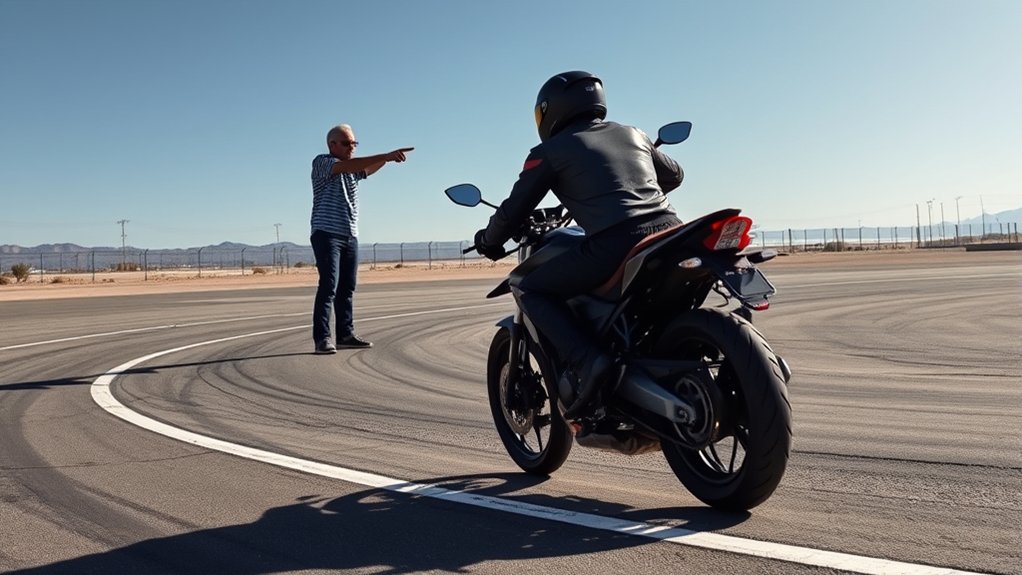
One of the most important habits you can develop as a rider is to look where you want to go. Focusing your gaze on your intended path sharpens your riding skills and enhances motorcycle safety by helping you maintain better control.
When you concentrate on your desired lane positioning or turn, you reduce the chances of overcorrecting or making sudden steering errors.
This habit improves your balance and steering accuracy, allowing you to maneuver smoothly and confidently. Studies show that riders who consistently practice looking where they want to go are better prepared to spot hazards early and respond effectively.
What “Look Where You Want To Go” Means for Riders
When you keep your eyes on where you want to go, your motorcycle kind of just follows along naturally. It makes steering feel smoother and way more precise.
Plus, having your vision focused ahead really sharpens your reaction time.
That way, you can handle whatever comes your way more safely.
Visual Focus Importance
Although it might seem simple, where you focus your eyes directly influences how your motorcycle moves. By looking where you want to go, you naturally guide your bike along the safest and smoothest path. Developing strong visual focus improves your riding skills by enhancing balance, control, and reaction time.
When you intentionally direct your gaze toward your intended travel points, you increase safety and hazard awareness. This helps you avoid the instinct to steer toward obstacles.
Scanning your environment and maintaining good visual habits helps you anticipate changes and navigate curves confidently.
Steering And Vision
Your eyes don’t just gather information. They actively guide your motorcycle’s path. When you “Look where you want to go,” you use your vision to steer smoothly and confidently.
Keeping your head turned toward your intended path lets your bike follow naturally. This improves your riding skills and balance. Try to avoid fixating on obstacles. Instead, keep a forward glancing focus.
This helps you anticipate hazards and make controlled steering adjustments.
| Vision Focus | Steering Impact | Riding Skills |
|---|---|---|
| Look ahead | Smooth turns | Balance improvement |
| Scan environment | Natural bike response | Hazard anticipation |
| Avoid distractions | Controlled adjustments | Confident control |
Mastering this connection between steering and vision will really enhance your overall riding control.
How Focusing Your Eyes Helps You Balance and Steer
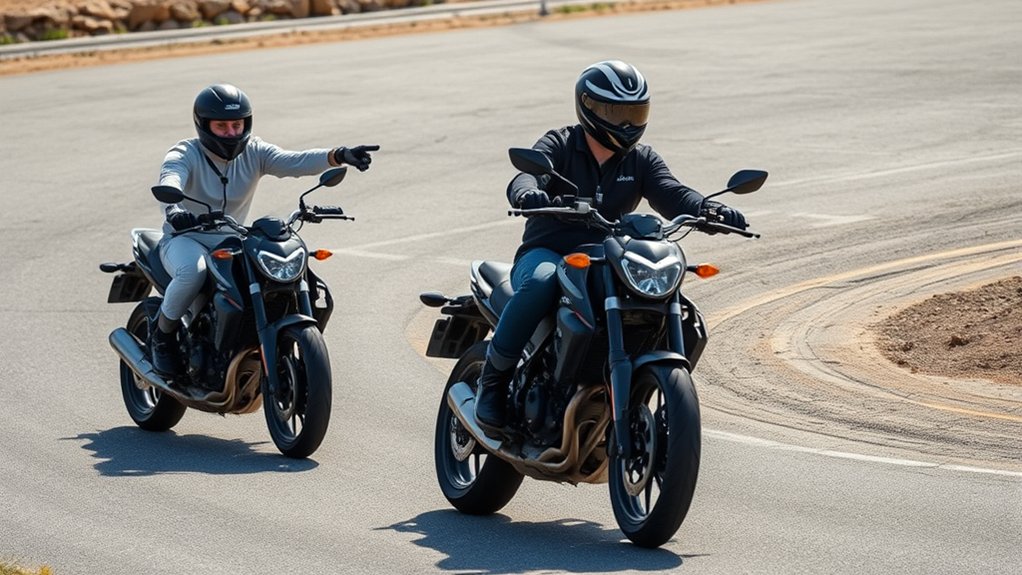
When you focus your eyes on where you want to go, your body naturally balances and steers the motorcycle in that direction. It’s like your eyes are guiding your whole body without you even thinking about it.
Using visual steering techniques, such as looking through turns, helps you anticipate what’s coming up on the road. This way, you can make smooth adjustments instead of sudden moves.
Just keep your gaze ahead, and you’ll find it easier to stay in control and react quickly if any obstacles pop up.
Eye Focus And Balance
Because your eyes guide your brain, focusing on where you want to go sharpens your balance and steering control. Your eye focus directly impacts your riding skills by helping your brain coordinate movements with precision. Maintaining steady visual scanning allows you to anticipate hazards and adjust smoothly.
Properly focusing on distant points gives your brain stable reference points, which enhances your sense of balance. Move your eyes smoothly rather than darting them, and you’ll maintain better control and stability.
Keep your gaze ahead, not on close objects. Use smooth visual scanning, not rapid eye movements. Focus on where you want to turn or avoid.
Rely on distant reference points to steady your balance. Mastering eye focus improves your balance and overall riding skills considerably.
Visual Steering Techniques
Although steering a motorcycle involves many physical skills, where you focus your eyes plays a crucial role in how smoothly you balance and control your bike. Visual steering techniques rely on looking where you want to go, which helps your brain and body coordinate smoother balance and steering movements.
When you fix your gaze on your intended path, your motorcycle naturally follows that line of sight, improving directional control.
Maintaining a steady, forward-looking gaze lets you anticipate hazards early and react confidently. At the same time, using peripheral vision keeps you aware of your surroundings without losing focus.
By practicing these steering techniques, you’ll reduce over-correcting and enhance your overall stability on the road.
In the end, this makes your rides safer and more enjoyable. Just keep your eyes where you want to go, and your bike will follow. It’s that simple!
How Moving Your Head Helps You Spot Hazards
How can moving your head improve your ability to spot hazards on the road? Head movement plays a vital role in enhancing your situational awareness and hazard detection. By actively turning your head, you expand your peripheral vision and better scan your surroundings. This way, you catch potential dangers early.
Here’s why head movement matters:
- It helps you identify obstacles and vehicles in blind spots.
- It improves your ability to anticipate other drivers’ actions.
- It makes sure you’re looking in the direction you intend to go.
- It keeps you consistently aware of changing road conditions.
Incorporating proper head movement into your riding routine sharpens your hazard detection skills and keeps you safer. It helps you prepare to react swiftly and confidently. Give it a try next time you’re on the road!
Practice Low-Speed Maneuvers Using This Technique
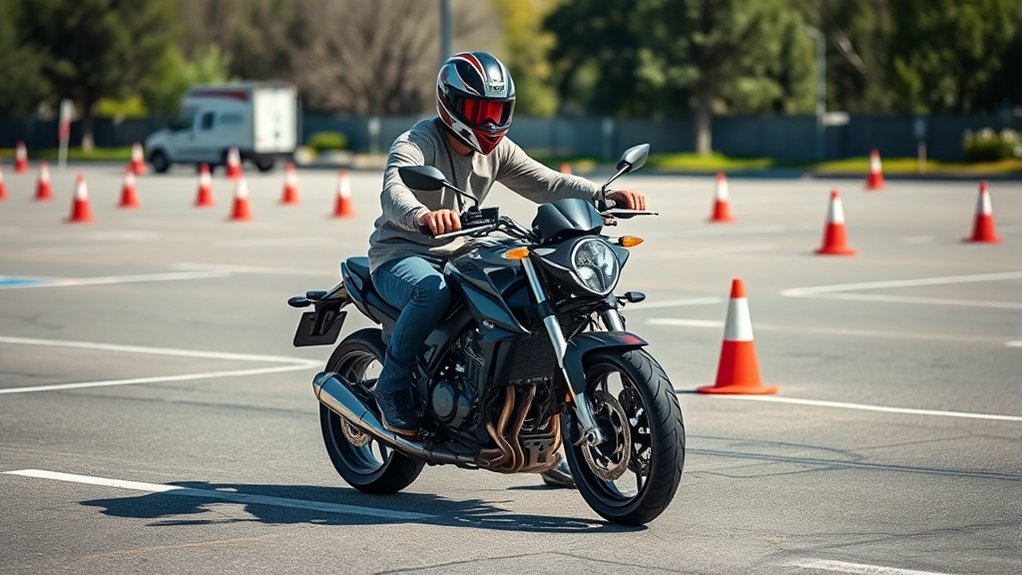
You’ll get better at low-speed control by really focusing on where you want to go and keeping your throttle steady.
When you use the clutch and throttle smoothly, it makes slow starts and tight turns way easier to handle.
Just keep your eyes on the target, and your bike will naturally follow.
Focus On Target
Where should you focus your eyes when mastering low-speed maneuvers on a motorcycle? Always lock your focus on the target ahead. This technique improves your riding control and balance by keeping your head steady and your eyes fixed on the intended path.
When you concentrate on your target, you steer smoothly and avoid over-correcting. It makes precise adjustments easier, too.
Remember to:
- Keep your eyes on the path you want to follow
- Use the target as a guide for smooth steering
- Anticipate obstacles by focusing ahead
- Build confidence through consistent focus
Smooth Throttle Control
Although mastering low-speed maneuvers can be challenging, smooth throttle control makes the process much easier and safer. You need to practice maintaining a steady, gradual throttle to accelerate and decelerate smoothly, keeping engine RPMs consistent. Avoid sudden surges or drops that can disrupt your motorcycle’s balance and stability.
Combine throttle control with clutch and brake inputs to execute precise turns, U-turns, and slow-speed maneuvers confidently. Developing a feel for the throttle in a controlled environment helps you make small, incremental adjustments effortlessly.
Consistent throttle control is key to improving your balance and stability. This makes low-speed riding more predictable and secure. Focus on this technique, and you’ll find low-speed maneuvers less intimidating and much more manageable.
Just take it step by step, and you’ll get the hang of it in no time.
Use Your Gaze Effectively During Turns and Curves
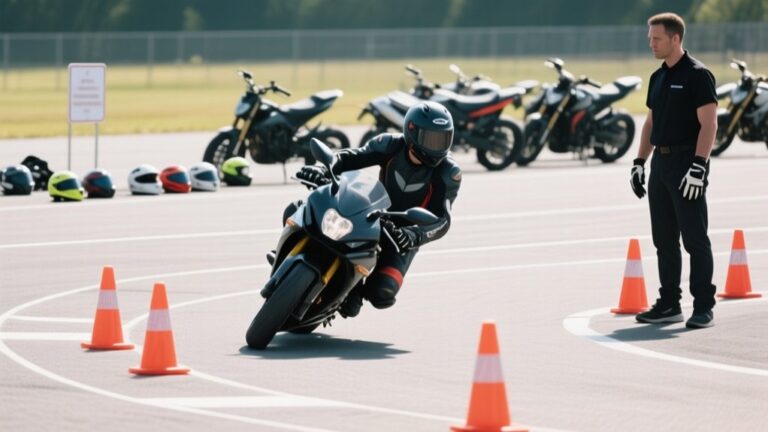
When steering turns and curves, focusing your gaze on the path ahead helps you maintain balance and control. Using your gaze effectively is a vital riding technique that guides your motorcycle smoothly through the line you want to take.
Don’t look directly at the road right in front of your wheel; instead, look through the turn to where you want to exit. This approach enhances steering accuracy by letting your bike follow your gaze naturally. It also allows you to anticipate road conditions and adjust accordingly.
Plus, it reduces rider fatigue by maintaining steady, focused vision. And it builds your confidence and safety during turns and curves.
Mastering this gaze technique will improve your overall riding fluidity and control.
Boost Your Confidence and Safety With This Strategy
How can focusing your gaze boost both your confidence and safety on the road? When you keep your eyes on where you want to go, your body naturally aligns with that path. This simple trick helps improve your balance and reduces the chances of overcorrecting.
It also helps you spot hazards faster, so you can react quickly. As you get better at this, your confidence grows because you feel more in control.
| Benefit | Effect on Riding |
|---|---|
| Visual Focus | Guides smooth steering |
| Anticipation | Quick hazard response |
| Confidence Boost | Reduces anxiety and errors |
Using this approach lets you ride with more precision and confidence. That way, every journey becomes safer and more enjoyable.
Avoid These Common Gaze Mistakes
Why do some riders struggle with maintaining proper gaze while riding? It often comes down to instinctively focusing on hazards or obstacles. This can disrupt control and cause unsafe maneuvers.
To ride smoothly, you need to train your gaze to scan the road effectively without fixating on dangers.
Avoid these common gaze mistakes:
- Staring directly at turns or obstacles, making your bike follow the wrong line.
- Fixating on hazards, which increases sudden, risky reactions.
- Shifting your gaze to distractions, losing awareness of surroundings.
- Neglecting proper scanning, reducing your ability to anticipate road conditions.
Tips to Train Your Eyes and Mind to Look Ahead
Mastering your gaze sets the foundation, but training both your eyes and mind to look ahead sharpens your riding skills. To boost your visual awareness, keep your eyes focused well ahead while scanning your surroundings regularly. This helps you anticipate hazards and adapt quickly.
Use your peripheral vision to monitor side traffic and obstacles without shifting your gaze. Practice target fixation by deliberately focusing on where you want to go. This improves control and reduces risk.
Make it a habit to look through turns and around curves, guiding your path smoothly and confidently.
Continuously train your mind to process visual information faster, enhancing reaction times. By combining these techniques, you’ll elevate your riding skills and stay safer on the road.
How Rider Coaches Help You Improve Your Gaze
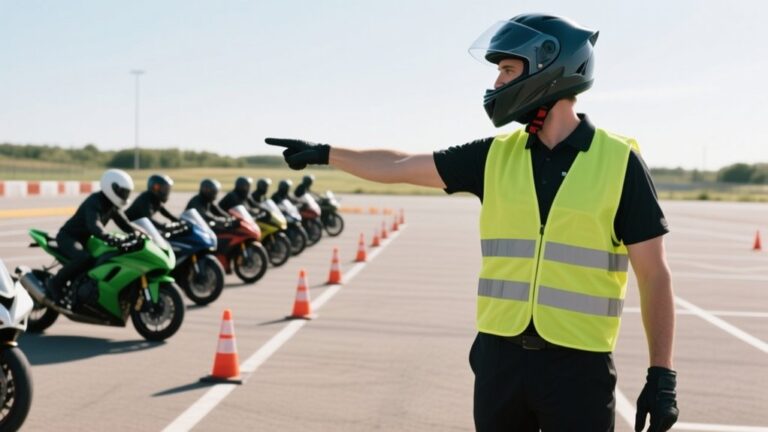
Although developing a strong gaze might seem natural over time, rider coaches play an essential role in speeding up your progress by teaching you to look where you want to go, not where you don’t. They help you master the art of scanning and staying aware, which sharpens your control and safety on the road.
Rider coaches focus on training your gaze to follow the intended path through turns and intersections. They provide real-time feedback on your eye movement habits, helping you notice things you might miss on your own.
They also work on enhancing your scanning techniques so you can spot hazards early.
Plus, they reinforce how your gaze affects your balance and trajectory, giving you better overall control.
Frequently asked questions
What Type of Motorcycle Is Best for Practicing This Gaze Technique?
You’ll want a lightweight, dual-sport or standard motorcycle with upright handlebars for the best control when practicing the gaze technique. Bikes in the 250cc to 500cc range work great because they’re easy to handle and won’t overwhelm you.
Look for models with a relaxed riding position and simple controls. This way, you can focus on where you want to go without struggling against aggressive ergonomics.
Avoid high-performance sport bikes. They make smooth head movement tough.
Can This Technique Be Applied During Off-Road Riding?
Absolutely, you can apply this technique off-road, and it’s a game-changer. When you focus your gaze where you want to go, you naturally steer your bike more smoothly through loose dirt, obstacles, and tricky terrain.
It helps you anticipate changes and react faster.
Trust your eyes to guide your body and throttle control. With practice, you’ll navigate trails confidently and safely.
You’ll turn challenging off-road rides into thrilling adventures.
How Does Weather Affect Using the “Look Where You Want to Go” Method?
Weather can challenge your ability to use the “look where you want to go” method effectively. Rain, fog, or snow reduce visibility and traction. This demands more focus on control, which can distract you.
Strong winds and cold gear may limit your head movement. That makes it harder to direct your gaze naturally. Still, stay sharp. Scan ahead more often and adjust your speed to keep safe while practicing this technique in tough conditions.
Are There Any Recommended Eye Exercises to Improve Focus While Riding?
Oh sure, just stare at your phone all day and expect laser-sharp focus on the road. Brilliant plan! Instead, try eye exercises like shifting focus between near and distant objects to boost your quick-switch skills.
Practice smooth scanning to reduce fatigue and enhance hazard detection.
Work on peripheral awareness too; it helps you spot surprises early.
Don’t forget to rest your eyes during long rides to keep them sharp and responsive. You’ve got this!
How Long Does It Typically Take to Master This Gaze Habit?
You’ll typically need around 10 to 15 hours of focused practice to master the “look where you want to go” gaze habit.
You’ll notice improvements within the first few hours, but consistent reinforcement is key to making it second nature.
Stay mindful during your rides and consider getting feedback from a certified instructor.
They can help speed up your progress and build your confidence more quickly.
Keep at it!
Final Thought
Remember, your eyes are the compass guiding your ride. Look where you want to go, and your body will follow. By training your gaze to focus ahead, you’ll steer more smoothly, balance better, and spot hazards before they become problems.
Keep practicing this simple but powerful technique, and you’ll build confidence and safety on every twist and turn. Trust your vision and let it lead you to a safer, smarter ride.