
What Is The Purpose Of The Motorcycle Safety Training Program
The motorcycle safety training program helps you develop essential riding skills and confidence, so you can handle real-world challenges safely. It teaches you techniques like evasive maneuvers, hazard recognition, and risk management to reduce accident risks.
You’ll also learn legal requirements and how to use protective gear effectively. This program prepares you for safer, smarter riding and lowers injury chances. Keep exploring to understand how these courses can fully equip you for the road ahead.
Why Motorcycle Safety Training Matters

Why should you prioritize motorcycle safety training before hitting the road? Motorcycle safety training is essential because it equips you with the rider skills needed to handle real-world challenges confidently. This safety training focuses on vital techniques like evasive maneuvers and risk management, which directly help reduce accidents.
When you complete a safety course, you not only boost your competence but also develop safer riding habits. These habits considerably lower your risk of crashing. Plus, the programs emphasize wearing proper protective gear and improving your visibility—both key to preventing injuries.
Building Core Riding Skills and Confidence
You’ll learn key riding techniques like steering, braking, and evasive maneuvers—basically, the building blocks of safe riding.
As you practice these skills out on the road, you’ll notice your confidence growing bit by bit. This hands-on experience makes sure you’re ready to handle unexpected situations with better control and awareness.
Essential Riding Techniques
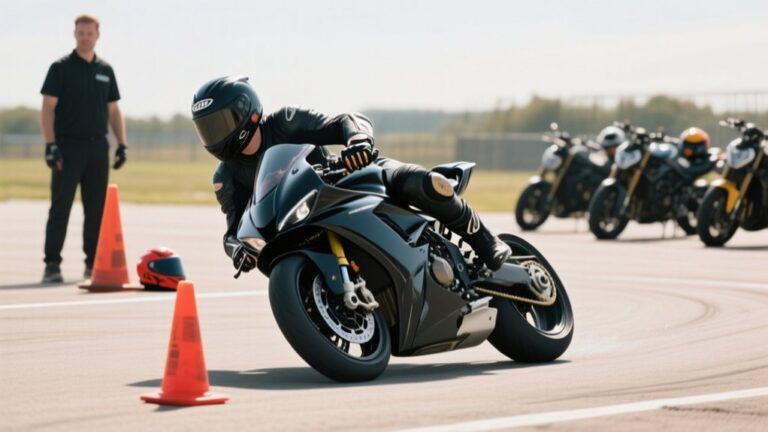
Although riding a motorcycle can feel challenging at first, mastering essential techniques like proper cornering, braking, and evasive maneuvers will considerably improve your control and confidence on the road.
The Motorcycle Safety Training Program focuses on skill development through structured practice of these riding techniques, emphasizing safety and hazard avoidance. You’ll build muscle memory for core maneuvers, which helps you respond quickly and effectively to unexpected dangers.
This foundation is crucial for managing risk and riding confidently in real-world situations.
| Technique | Purpose | Benefit |
|---|---|---|
| Proper Cornering | Maintain balance & speed | Smooth turns, better control |
| Controlled Braking | Prevent skidding | Safe stopping distances |
| Evasive Maneuvers | Avoid hazards | Quick risk response |
| Obstacle Avoidance | Navigate safely | Reduce accident risk |
| Controlled Acceleration | Manage speed | Smooth, safe riding |
Confidence Through Practice
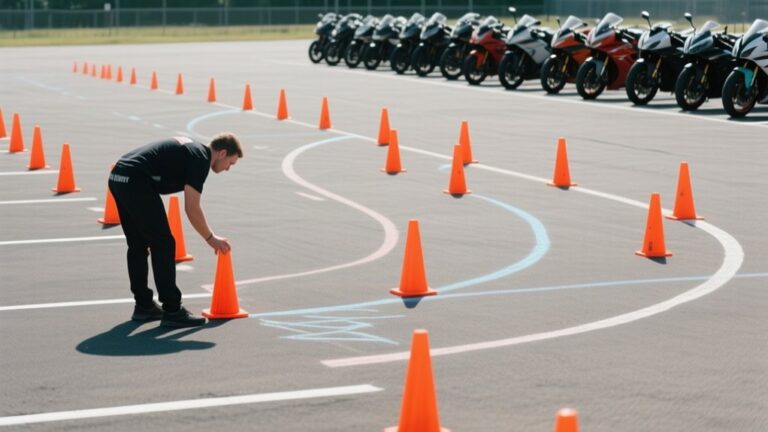
As you practice core riding skills like cornering, braking, and evasive maneuvers in a structured setting, your confidence on the motorcycle will steadily grow. The Motorcycle Safety Training Program emphasizes hands-on practice, guiding you through progressive challenges that mimic real-world scenarios.
This approach helps reduce anxiety and builds comfort, transforming uncertainty into solid rider confidence. By completing structured courses, you gain essential experience in controlled environments, allowing you to master skills before facing traffic.
The repeated practice and constructive feedback ensure you develop competence and trust in your abilities. Studies show that riders who engage in thorough training report higher confidence levels, which directly contributes to safer, more responsible riding on the road.
With focused practice, you become a more skilled, confident rider.
Risk Awareness and Hazard Management in Motorcycle Safety Training
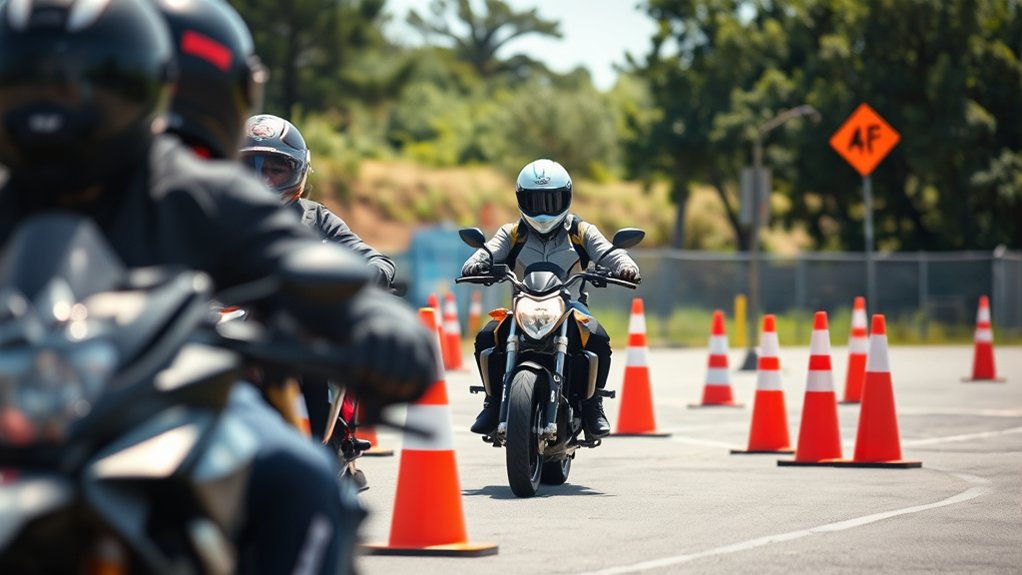
How can you stay safe on the road when unexpected hazards pop up? Motorcycle safety training teaches you risk awareness and hazard management so you’re ready for these moments.
Safety courses help build your situational awareness. That way, you can spot dangers early and know how to respond effectively.
You’ll learn techniques like keeping safe distances, proper lane positioning, and evasive maneuvering. These skills help you handle sudden obstacles with confidence.
Evaluating road conditions and visibility keeps you proactive and lowers your chances of crashing.
| Hazard Type | Risk Factor | Management Strategy |
|---|---|---|
| Sudden Obstacles | Unpredictable traffic | Evasive maneuvering |
| Poor Visibility | Low light or weather | Adjust speed and positioning |
| Road Conditions | Slippery or uneven | Assess and adapt riding style |
| Following Distance | Tailgating vehicles | Maintain safe gaps |
These skills give you the power to manage risks and ride safer every time.
Licensing Benefits and Legal Requirements for Riders
Why should you prioritize completing a motorcycle safety training course before getting your license? Because it offers clear licensing benefits and helps you meet legal requirements efficiently. Many states waive the skills test if you complete an approved Motorcycle Safety Foundation (MSF) course, making the licensing process smoother.
After finishing, you’ll often receive a completion card valid for one year. This card serves as proof of competency and can substitute for the riding exam when applying for your motorcycle license.
Remember, having the proper license, usually a Class M, is legally required to ride any motorcycle.
If you’re a new or young rider, completing an MSF course not only guarantees you comply with state laws but also equips you with essential skills for safer riding.
Advanced Motorcycle Training for Experienced Riders
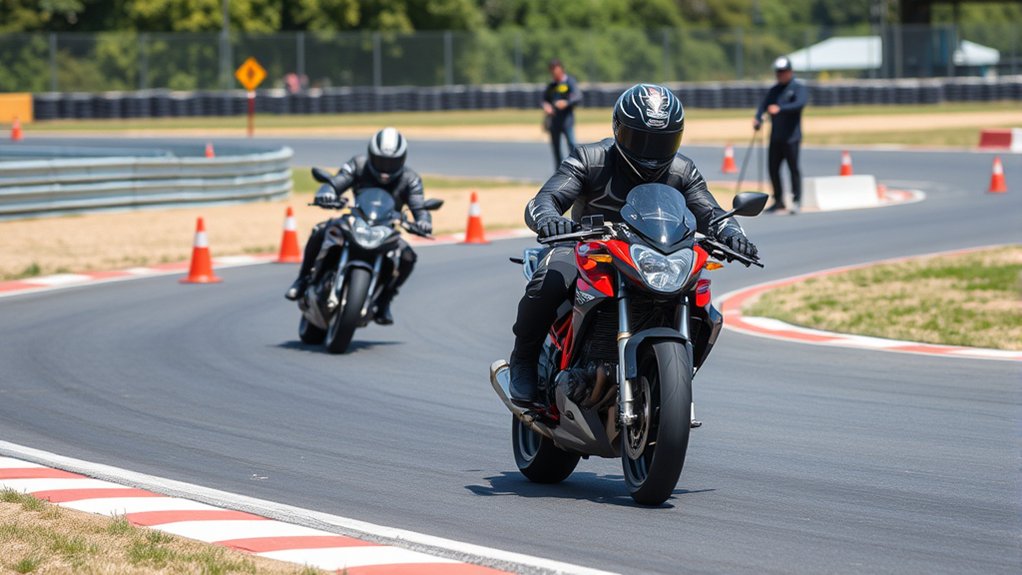
What next step can you take to elevate your riding skills beyond basic proficiency? Advanced motorcycle training is designed specifically for experienced riders like you. It helps refine safety techniques and master high-level maneuvers.
Elevate your riding skills with advanced training tailored for experienced motorcyclists seeking expert techniques and maneuvers.
These programs, such as the Advanced Rider Course (ARC), aren’t licensing requirements. Instead, they focus on expert control and decision-making. When you enroll, you bring your own street-legal motorcycle and protective gear.
You’ll practice skills including maximizing traction and ground clearance, executing precise cornering techniques, and performing emergency braking effectively.
You’ll also learn to master challenging road conditions confidently and enhance crash-avoidance strategies.
How Training Programs Reduce Accidents and Save Lives
Building on the advanced skills you develop in specialized training, these programs play an essential role in reducing accidents and saving lives on the road. Motorcycle safety training boosts rider awareness and teaches you to anticipate hazards, lowering crash risks by up to 50%.
You’ll also adopt safer habits, like consistently wearing proper safety gear, which lessens injury severity if an accident occurs. This focused training sharpens your decision-making, helping you avoid dangerous situations before they arise.
| Benefit | Impact |
|---|---|
| Accident Reduction | Up to 50% fewer crashes |
| Rider Awareness | Enhanced hazard recognition |
| Safety Gear Usage | Increased use, reducing injuries |
| Life Saving Skills | Improved competence saves lives |
These programs empower you to ride smarter and safer every time.
Finding and Registering for Motorcycle Safety Courses
You can find motorcycle safety courses all across the country through groups like the Motorcycle Safety Foundation and local state programs. It’s pretty easy to register, too. Most places offer online sign-ups, and there are regional centers ready to help you lock in your spot.
To get started, just check out the official websites or reach out to local providers. They’ll help you explore where courses are held and guide you through the sign-up process in a way that works best for you.
Course Locations Overview
Wondering how to find the right motorcycle safety course near you? California offers over 100 course locations, making it easier for you to access quality motorcycle safety courses. You can search by zip code or distance radius to pinpoint nearby training course options.
Here’s what to keep in mind: Course locations include detailed maps with clickable icons for more info. Some sites may be marked “Coming Soon” or “Inactive,” so check for updates.
All Basic Rider Courses provide motorcycles, so you don’t need to bring one.
Courses are free, with some refundable fees if canceled by Louisiana DPS. Each regional center offers specific weekend schedules, and registration links are available.
Registration Process Guide
Although signing up for a motorcycle safety course might seem complex at first, the registration process is straightforward once you know where to look. Start by visiting the training provider’s website or contacting local centers to find available courses near you. You can often search by zip code or location type to find convenient options.
After selecting a course, complete the registration by signing up online, keeping in mind specific registration windows and deadlines. Many programs require you to finish an online e-Course at least a week before the on-range sessions.
Be aware that registration fees may be refundable only under certain conditions, and some regions ask for a refundable deposit. Following these steps will guarantee a smooth registration and get you ready for your motorcycle safety training.
Frequently asked questions
What Types of Motorcycles Are Used in Training Courses?
Training courses use various motorcycles depending on your skill level. For beginner courses, they provide standard, street-legal bikes, so you don’t need your own.
If you’re experienced, you’ll usually ride your own street-legal motorcycle, as long as it meets safety requirements.
Some advanced courses let you practice on sport bikes, cruisers, or touring bikes.
Specialized classes even use trikes, sidecars, or Can-AM Spyders to teach you specific handling skills for those vehicles.
It really depends on what you want to learn and how comfortable you are.
Are There Any Age Restrictions for Enrolling in the Program?
Yes, you’ll find age restrictions when enrolling in the Motorcycle Safety Training Program. If you’re 16 or 17, you must complete a course, pass exams, and earn a card before getting licensed.
Adults 18 and older can join basic, intermediate, or advanced courses without age limits, depending on experience. These rules guarantee you meet state requirements while gaining valuable skills to ride confidently and safely.
How Long Does the Typical Training Course Last?
Think of the typical motorcycle training course as a weekend adventure, lasting about 10 to 11 hours. It blends online lessons with hands-on riding.
If you’re sharpening skills, expect around 5 hours of focused practice.
For instructors, it’s a longer journey, about 65 hours over three weekends.
These courses fit neatly into a few days, making it easy for you to gain confidence and mastery without overwhelming your schedule.
Can the Training Program Accommodate Riders With Disabilities?
Yes, the training program can accommodate riders with disabilities. You’ll find adaptive techniques and modified motorcycles tailored to your needs.
The program offers individualized assessments to guarantee your safety and effective learning.
Don’t hesitate to reach out to coordinators before enrolling. They’ll work with you to explore available accommodations.
This way, you’ll get the support you need to confidently develop your riding skills and enjoy the experience safely.
Is There Financial Assistance Available for Course Fees?
You’d think motorcycle safety courses cost a fortune, but guess what? Many states, like Pennsylvania and Louisiana, offer free or heavily subsidized training.
You can often snag scholarships, financial aid, or even waive licensing tests after completing these programs.
Just reach out to local providers or state programs. They’re enthusiastic to help you ride safe without breaking the bank.
Don’t hesitate; financial assistance is usually just a call away!
Final Thought
When you invest in motorcycle safety training, you’re not just learning skills. You’re embracing a shield that guards your life. Think of it as your roadmap through risk, guiding you to ride with confidence and awareness.
This program equips you to handle hazards, meet legal requirements, and even advance your abilities. Don’t let uncertainty steer your journey. Take control, train smart, and ride safe.
Because every lesson learned is a life saved.