How Many Hours Motorcycle Training – Quick Answer
You’ll spend about 15 to 18 hours on motorcycle training, including practical riding, classroom lessons, and an online e-Course you complete at your own pace. Most riding practice happens over two days, focusing on essential skills like turning, stopping, and emergency maneuvers.
Training hours can vary by course type and location, but completing it often waives riding tests and may earn insurance discounts.
Keep going to discover how this process sets you up for safer, faster licensing.
How Long Does Motorcycle Training Take?
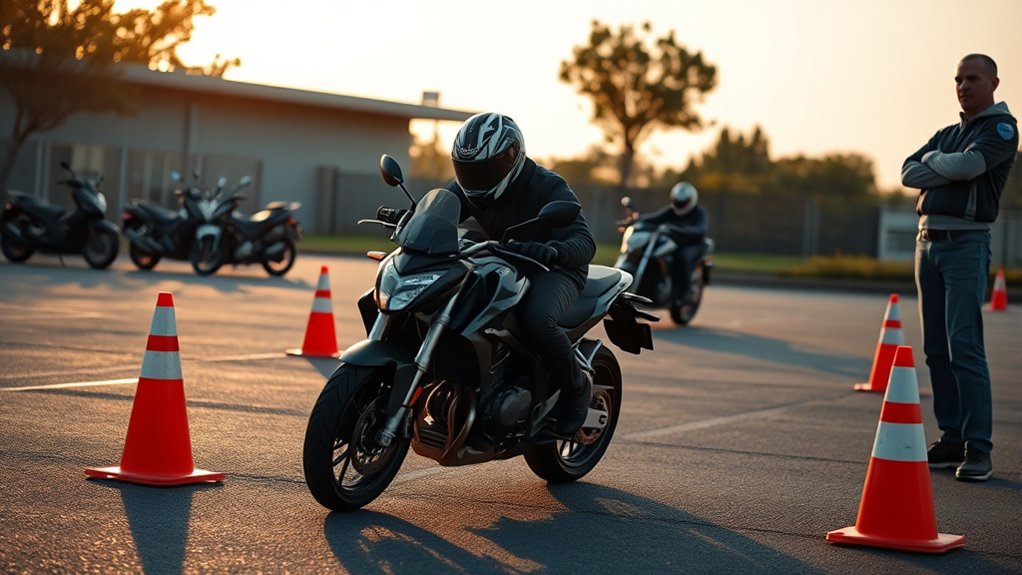
How long does motorcycle training take? Typically, you’ll spend about 15 to 18 hours completing motorcycle training, including classroom sessions, riding practice, and an online e-Course.
Motorcycle training usually takes 15 to 18 hours, combining classroom learning, riding practice, and an online course.
The practical riding portion usually lasts 10 to 12 hours over two days, giving you hands-on experience under professional supervision. Before you hit the road, you’ll complete an online e-Course that takes roughly 5 hours, preparing you with essential knowledge.
Training schedules vary, with some courses condensed into a single weekend and others spread across multiple weekdays. Overall, most beginner motorcycle training programs are designed to be completed within two to three days, allowing you to learn efficiently without overwhelming your schedule.
This structure guarantees you receive thorough training while progressing at a manageable pace.
What You’ll Learn During Motorcycle Training
Although motorcycle training covers various topics, it focuses primarily on equipping you with essential riding skills and safety techniques. You’ll master straight-line riding, turning, stopping, shifting gears, emergency braking, swerving, and low-speed maneuvers.
The course sharpens your motorcycle safety awareness while practicing cornering, lane changes, and obstacle avoidance in controlled settings. Understanding motorcycle dynamics and proper techniques boosts your confidence and reduces risks.
| Feeling | Skill Gained | Result |
|---|---|---|
| Empowered | Emergency Braking | Safer Riding |
| Confident | Cornering | Smooth Control |
| Alert | Obstacle Avoidance | Accident Prevention |
This training transforms you into a skilled, safety-conscious rider who’s ready for real-world challenges.
How Online eCourses Fit Into Motorcycle Training Time
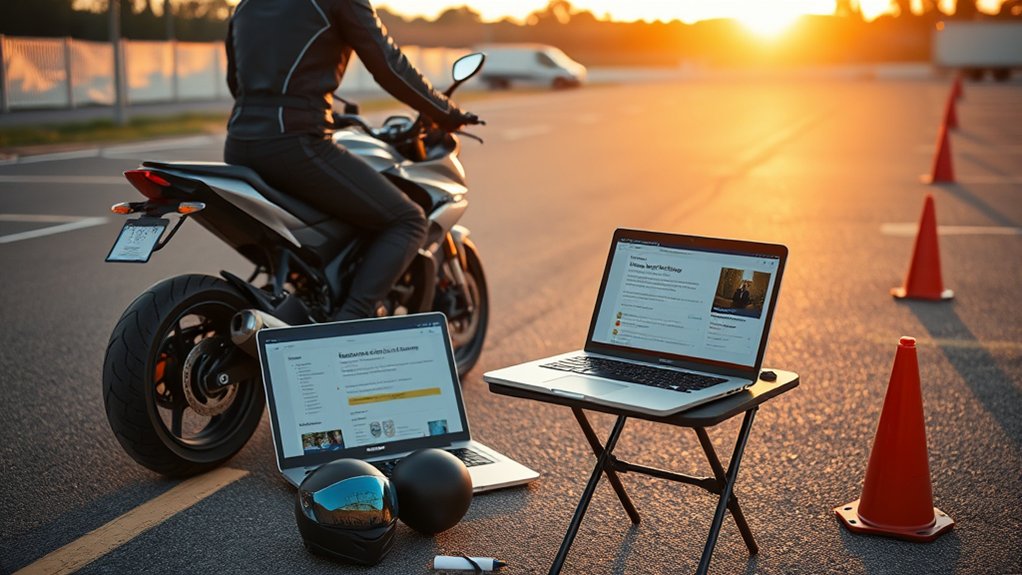
Because online eCourses provide foundational knowledge, you can complete about five hours of instruction at your own pace before attending in-person riding sessions. This online eCourse covers essential topics like motorcycle controls, safety strategies, and basic riding principles through engaging graphics and videos.
By finishing this digital portion first, you reduce the time needed for classroom instruction during your motorcycle training. While the online eCourse doesn’t count toward your hands-on riding hours, it’s often a prerequisite for starting practical sessions.
This flexible format lets you fit the theoretical learning into your schedule conveniently. Overall, incorporating an online eCourse streamlines your motorcycle training, ensuring you arrive prepared and ready to focus on developing real-world riding skills.
Why Motorcycle Training Hours Vary by Course and Location
You’ll notice that motorcycle training hours can really vary depending on the course structure. Basic programs usually need less time, while advanced ones take longer since they cover more skills.
On top of that, the number of hours you have to complete often depends on where you live. Different regions have their own licensing rules that affect the required training time.
Knowing these details makes it easier to pick the right course that fits both your location and skill level.
Course Structure Differences
When you enroll in a motorcycle training course, the total hours you’ll spend can vary a lot depending on the course level and location. Course structure plays a big role in deciding how long your training will be. Basic, intermediate, and advanced programs are designed differently to meet different goals.
For example, basic courses usually mix online eLearning with in-person riding. They offer flexible total hours, typically around 15 to 18.
Intermediate and advanced courses focus more on practical riding exercises. This means less classroom time and adjusted total hours.
Also, location-specific programs might add or cut down classroom or online parts. This depends on local rules and training goals.
Knowing these differences can help you pick a program that fits your schedule. Plus, you’ll get detailed training tailored just for your skill level.
Regional Licensing Requirements
How do regional licensing requirements affect the number of motorcycle training hours you need? Licensing requirements vary widely depending on your location, influenced by local laws and safety priorities. Some regions mandate a set number of practical training hours on a motorcycle, while others emphasize online coursework or written exams.
The type of course you take, whether basic, intermediate, or advanced, also impacts your total training hours. Plus, whether your training is part of a government-mandated program or offered through private providers can affect the required hours.
Because of these jurisdictional differences, you’ll want to check your specific region’s licensing requirements. That way, you’ll know exactly how many training hours you need before you can ride legally and confidently.
What to Expect During Motorcycle Training Riding Hours
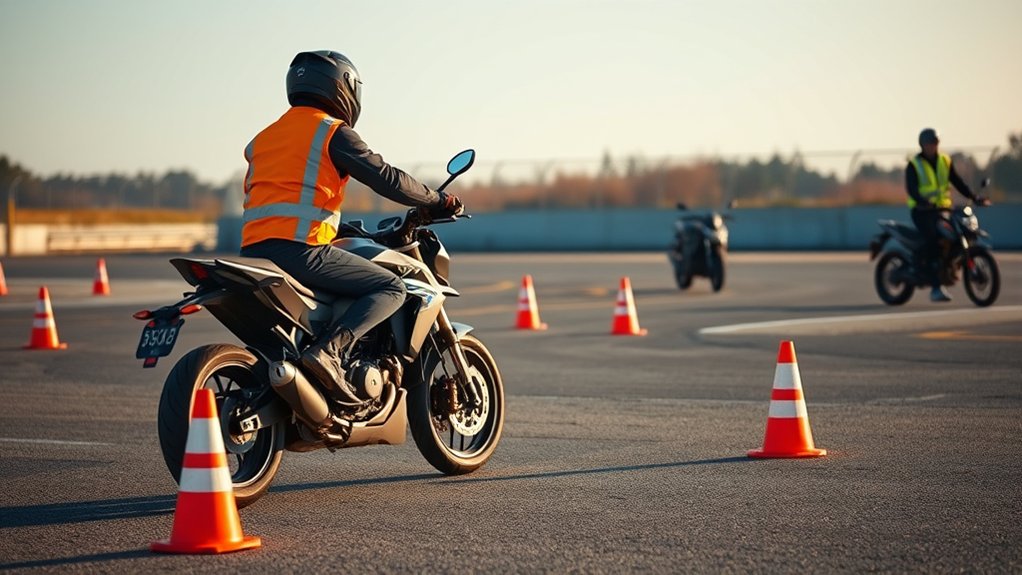
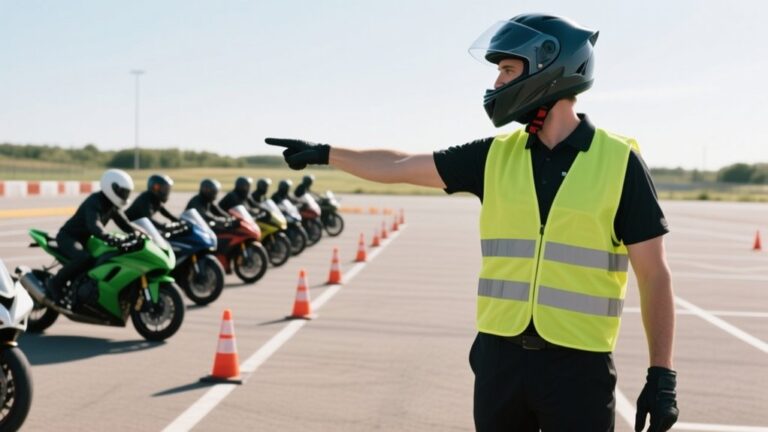
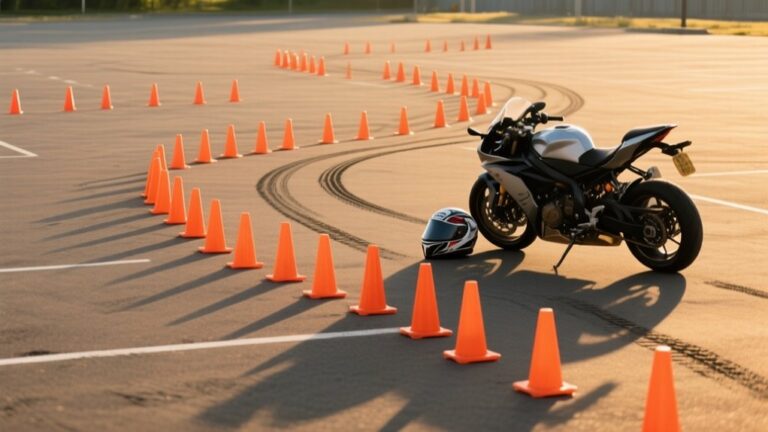
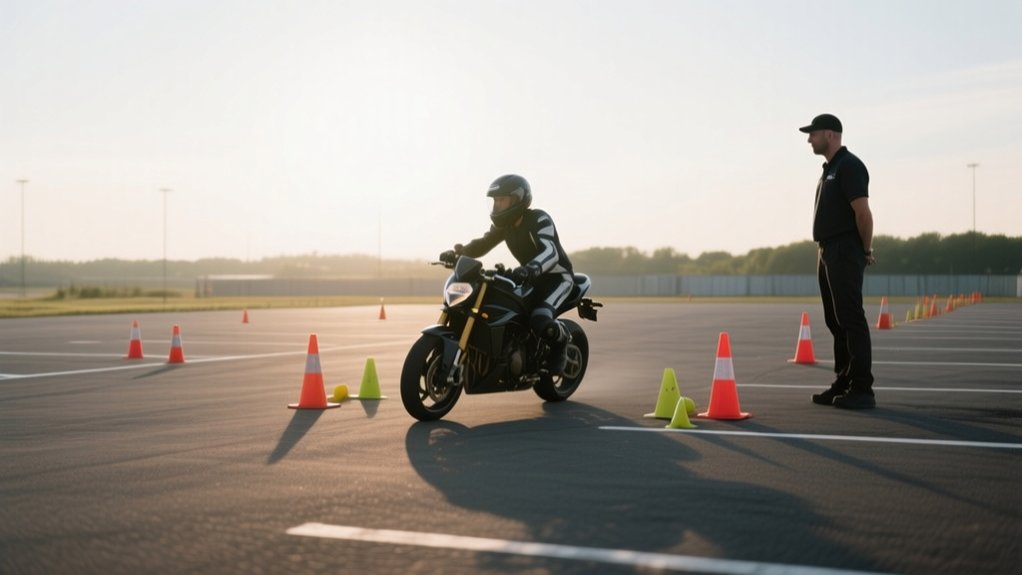
During your motorcycle training riding hours, you’ll be working on important riding skills by practicing controlled maneuvers like turning, stopping, and swerving. It’s not just about riding; you’ll get to focus on the basics that keep you safe on the road.
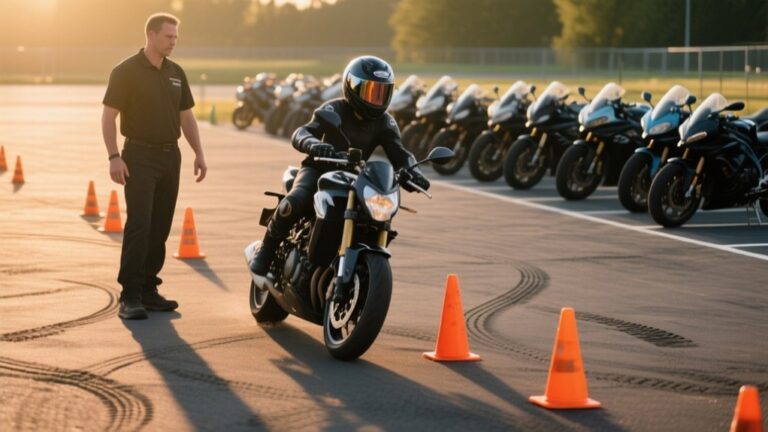
You’ll do a mix of individual and group exercises out on a designated outdoor range. Don’t worry, everything is supervised by experienced RiderCoaches who are there to help you along the way.
Expect plenty of hands-on practice that will boost your confidence and improve your control.
Plus, you’ll be riding at safe speeds, following a well-organized schedule that keeps things running smoothly.
Riding Skills Development
Although motorcycle training riding hours typically span just two days, they pack in around 10 hours of hands-on practice that will sharpen your control and confidence. During these training hours, you’ll focus on developing essential riding skills that form the foundation of safe motorcycle operation.
Expect to practice straight-line riding, smooth stopping, and basic turning techniques. Instructors provide personalized feedback to refine your technique and boost your confidence.
Key riding skills you’ll develop include:
- Low-speed maneuvers like U-turns and lane changes to enhance control
- Shifting gears and emergency braking for real-world preparedness
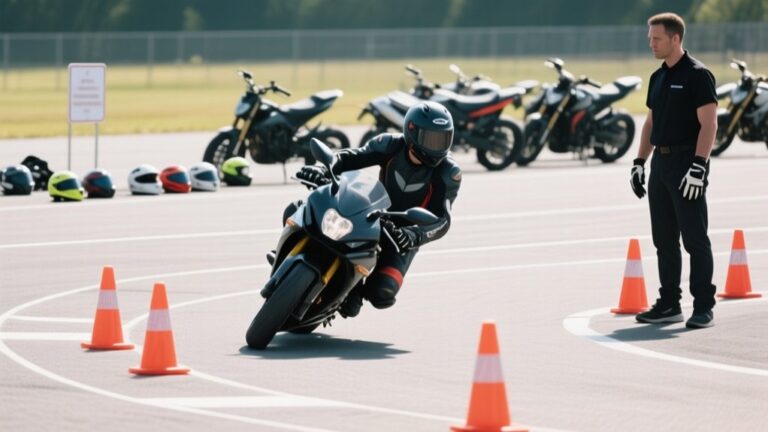
- Tight cornering exercises to build precision and balance
These training hours guarantee you leave with a solid skill set, ready to handle various riding conditions safely.
Maneuvering And Control
What skills will you master in motorcycle training riding hours? You’ll focus on maneuvering and control, spending about 10 hours practicing essential techniques. These include low-speed turns, U-turns, lane changes, and quick stops within controlled settings.
You’ll develop smooth throttle control, precise steering, and effective braking, all vital for safe riding. The training also covers evasive maneuvers like swerving around obstacles and emergency braking.
Practical Course Structure
Building on the skills you develop in maneuvering and control, the practical course structure guides you through focused riding exercises designed to reinforce and expand your abilities.
Practical motorcycle training typically involves 10 hours of hands-on riding exercises spread over two days. You’ll practice essential skills such as straight-line riding, turning, and swerving.
You’ll also work on emergency braking and low-speed maneuvers. The course follows a gradual progression from basic controls to more complex techniques.
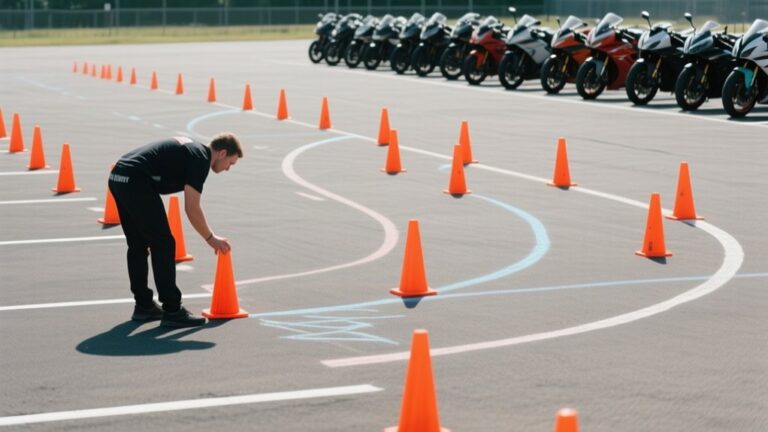
These sessions take place in controlled environments, like range areas, under instructor supervision.
Throughout the course, you’ll receive personalized feedback to sharpen your riding techniques. This structured approach guarantees you build confidence and competence systematically, making the most of your practical motorcycle training time.
How Finishing Training Helps You Get Licensed and Save on Insurance
How can finishing your motorcycle training speed up getting your license and lower your insurance costs? Completing motorcycle training often waives the riding test requirement, so you get licensed faster. Licensing authorities accept certificates from approved courses as proof of your riding skills, which makes the process simpler.
Beyond licensing, insurers recognize the value of your training by offering insurance discounts. These discounts happen because of the essential safety skills you’ve learned, which help reduce accident risks. Many states even provide explicit insurance discounts for riders who complete approved motorcycle safety courses.
Frequently asked questions
What Type of Protective Gear Is Required for Motorcycle Training?
You must wear a DOT-certified helmet during all motorcycle training sessions to protect your head.
Always choose sturdy, over-the-ankle boots for foot safety.
Long-sleeved shirts or jackets and long pants help prevent abrasions.
Gloves are essential for hand protection and a better grip.
Don’t forget eye protection, like goggles or glasses, to shield your eyes from wind and debris.
This way, you stay safe and focused while riding.
Are There Age Restrictions for Enrolling in Motorcycle Training?
You won’t find age restrictions that reach to the moon, but motorcycle training usually requires you to be at least 16 years old. Some programs might set the minimum at 18, depending on where you live.
If you’re under 18, you’ll probably need parental consent.
Don’t worry about an upper limit, there isn’t one. Just check your local rules before signing up, and you’ll be good to go.
Can I Retake Motorcycle Training if I Fail the First Time?
Yes, you can retake motorcycle training if you fail the first time. Most programs allow multiple attempts, but the number of retakes and waiting periods vary by provider and location.
You might need to pay extra fees for additional attempts.
To avoid surprises, check your training provider’s specific policies on retakes and any required waiting times. That way, you can plan your practice and eventual success confidently.
Is Motorcycle Training Available for Electric Motorcycles?
Imagine the quiet hum of an electric motorcycle as you glide through your training course. Yes, motorcycle training is definitely available for electric motorcycles. You’ll find many providers offering electric models or letting you bring your own, ensuring you master skills tailored to these bikes.
The courses cover essential riding techniques and highlight unique handling and torque features. This prepares you confidently for both electric and traditional motorcycles on the road. It’s a great way to get comfortable with the differences and similarities before hitting the street.
Do Training Courses Provide Motorcycles or Must I Bring My Own?
Most motorcycle training courses provide motorcycles for you to use during the sessions, so you usually don’t need to bring your own.
However, some advanced or specialized courses might require you to bring a street-legal bike.
Always check the specific course details before enrolling to confirm their policy.
This way, you’re prepared and meet their requirements without any surprises on training day.
Final Thought
As you gear up for your motorcycle training, imagine the hours stacking. Each one sharpens your skills and builds your confidence. The exact time varies, but every moment brings you closer to mastering the road.
Whether online or hands-on, your training shapes your safety and saves money. Ready to finish strong? Your license waits just beyond those final riding hours.
It reveals freedom and peace of mind. Keep pushing—you’re almost there.