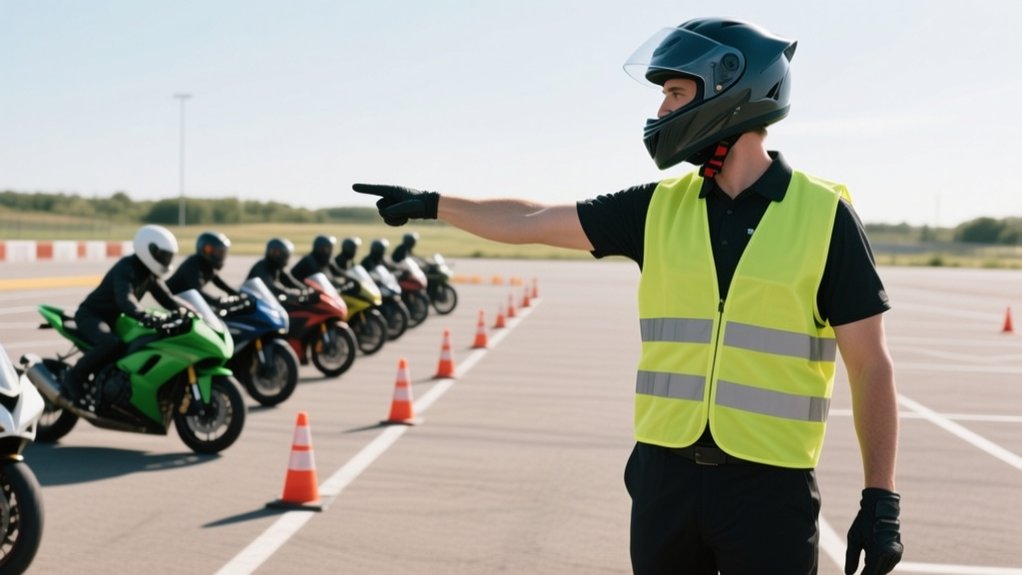
How To Become A Motorcycle Training Instructor – Easy Guide
To become a motorcycle training instructor, you’ll need a full motorcycle license held for at least three years, a clean riding record, and a high school diploma or GED.
Then, complete a department-approved instructor training program and pass required assessments, including background checks. Gaining strong communication skills and practical teaching experience is key.
Once certified, you can start your own business or work for training schools. Keep going to discover how to sharpen your skills and boost your career.
Basic Qualifications To Become A Motorcycle Instructor
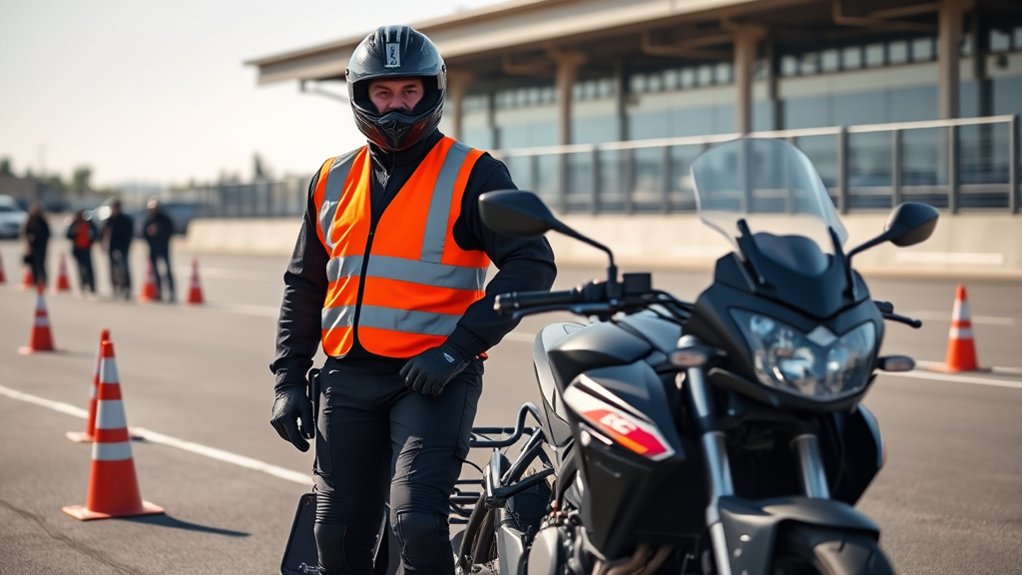
Before you can start teaching others how to ride, you’ll need to meet several basic qualifications to become a motorcycle training instructor. First, you must be at least 21 years old and hold a full motorcycle license, category A2 or A, for at least three years.
Your riding skills should be solid, proven by a clean driving record with no more than three current points or six points in the past four years.
Educationally, a high school diploma or GED is usually required. While completing instructor training is mandatory, that step comes after you meet these initial qualifications.
Focus on maintaining excellent riding skills and a spotless driving record to guarantee you’re ready.
Meeting these qualifications sets a strong foundation for your journey as a motorcycle instructor. It’s all about being prepared so you can confidently teach others how to ride safely.
Getting Trained And Certified As A Motorcycle Instructor
To become a certified motorcycle instructor, you’ll need to complete a department-approved training program. This program covers key teaching methods and important safety standards.
You’ll also need to have held a full motorcycle license for at least three years and pass the required assessments.
Joining an Approved Training Body can really help, too. They offer valuable support and mentorship to guide you through the whole process.
Instructor Training Programs
Although becoming a certified motorcycle instructor requires dedication, enrolling in a department-approved training course is your essential first step. These instructor training programs, offered by recognized providers, combine classroom lessons, range exercises, and coaching scenarios to sharpen both your riding and teaching skills.
Completing the course successfully earns you certification and prepares you for the mandatory assessment, such as the DVSA evaluation. Throughout the program, you’ll focus on safety standards, effective communication, and instructional techniques vital for future instructors.
Remember, professional development doesn’t stop after certification. Maintaining your instructor status requires ongoing training and periodic recertification to stay updated with industry regulations.
Embrace these training programs as the foundation for a rewarding career guiding others safely on motorcycles.
Certification Requirements
When you decide to become a motorcycle training instructor, you’ll need to meet specific certification requirements that guarantee you’re fully prepared and qualified. To start, you must hold a full, unrestricted motorcycle licence (category A2 or A) for at least three years and pass a thorough background check, including an enhanced DBS.
Completing an approved instructor training program is essential, followed by passing the DVSA assessment to prove your competency. Here’s what you need to focus on:
- Hold a valid motorcycle licence for a minimum of three years
- Complete department-approved instructor training
- Pass the DVSA assessment successfully
- Clear an enhanced background check
Meeting these certification requirements allows you to deliver official training courses and maintain your status as a professional motorcycle instructor. It’s all about making sure you’re fully equipped to teach others safely and effectively.
Finding Approved Motorcycle Instructor Training Programs
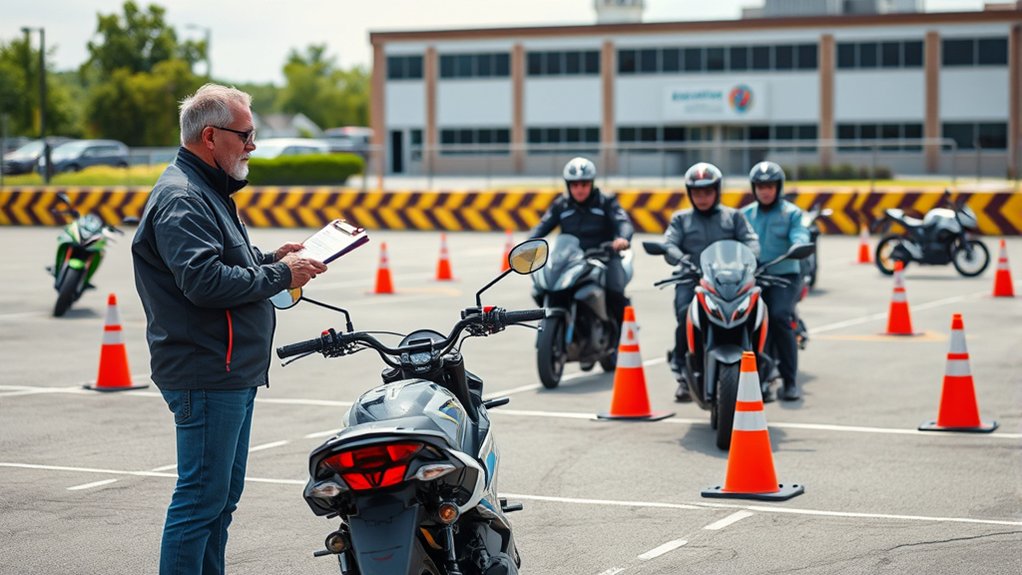
Since becoming a certified motorcycle training instructor requires official recognition, you’ll need to find an approved training program that meets the standards set by the Department of Transportation or other regulatory bodies.
These approved training programs cover essential topics like motorcycle safety, legal requirements, and effective teaching techniques.
You can usually find a list of authorized providers on government or transportation department websites.
Completing one of these programs is mandatory before applying for instructor licensing or certification.
Most courses blend classroom learning with practical teaching exercises, ensuring you’re prepared to train others confidently.
Key Skills Of A Successful Motorcycle Instructor
To succeed as a motorcycle instructor, you need a blend of strong communication skills and technical expertise. You’ll guide students by breaking down complex techniques clearly while demonstrating excellent technical riding ability.
Patience is key; you’ll reassure nervous learners and provide feedback calmly.
Patience helps calm nervous riders and offers constructive feedback with confidence and care.
Your adaptability lets you tailor lessons to different personalities and learning speeds. Maintaining professionalism ensures you build trust and create a positive environment.
Safety practices must be at the forefront of every session, keeping both you and your students protected.
Key skills include:
- Clear communication skills for effective teaching
- Patience to support and encourage students
- Strong technical riding ability and safety knowledge
- Adaptability to meet diverse learning needs
Master these, and you’ll thrive as a successful motorcycle instructor.
Gaining Practical Experience Before Teaching Alone
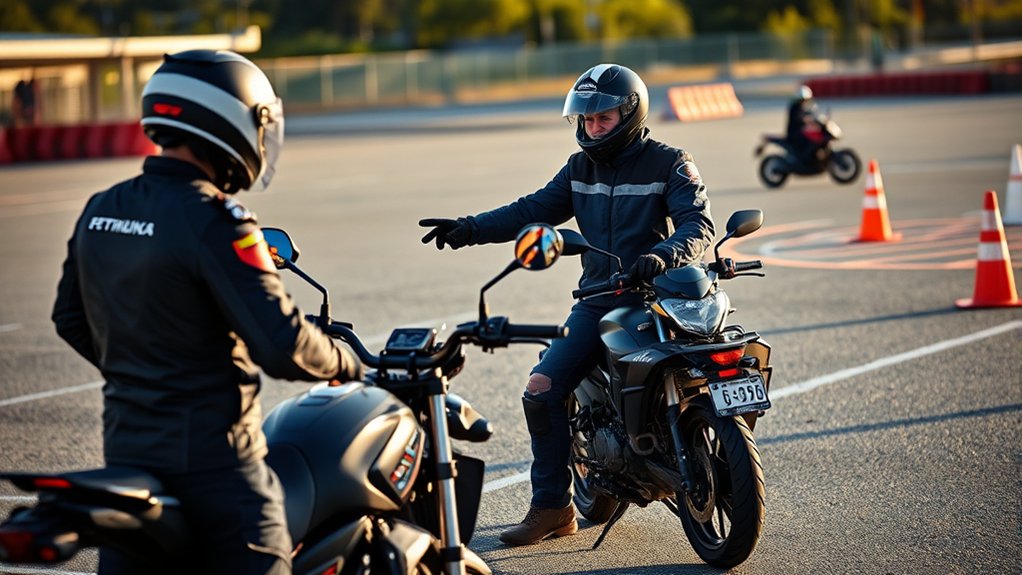
Although becoming a certified instructor marks a significant milestone, gaining practical experience before teaching alone is essential to your success. You’ll start by shadowing instructors during training sessions, observing their methods and safety procedures. This hands-on exposure lets you absorb effective teaching techniques while reinforcing your own riding skills.
Gradually, you’ll assist with on-the-job training, taking on more responsibilities under supervision. These diverse student interactions sharpen your judgment and adaptability, preparing you for solo instruction.
Maintaining a high standard of personal riding ability throughout this phase ensures you set a positive example.
Daily Duties Of A Motorcycle Instructor
When you step into the role of a motorcycle instructor, your day quickly fills with a variety of important tasks that go beyond just teaching riding skills. Your daily duties include preparing both classroom lessons and on-road riding sessions to guarantee students grasp essential techniques and safety.
You’ll also inspect training bikes and safety equipment daily to make sure everything is secure and reliable. Checking that student documentation is in order and providing the necessary safety gear before lessons is another key part of the job.
You’ll monitor and record student progress, offering clear and constructive feedback along the way. Explaining legal requirements and demonstrating riding techniques helps build students’ confidence too.
It’s a busy role, but every task plays a part in helping riders learn safely and effectively.
Motorcycle Instructor Earnings: What To Expect
If you’re thinking about a career as a motorcycle instructor, it’s good to know how your earnings might grow over time. As a newly qualified instructor, you can expect to make around £150 per day. But as you gain experience and pick up additional instructor qualifications, your earning potential goes up.
Training organizations usually charge students £30-£40 per hour. This affects your pay depending on how often classes run and how many students are in each one. If you work full-time as a motorcycle training instructor, you might earn about £35,000 a year.
Urban areas tend to offer higher rates, so location can make a difference. Plus, if you specialize in advanced rider training, you can boost your income even further.
| Experience Level | Typical Earnings |
|---|---|
| Newly Qualified | £150 per day |
| Experienced | Higher daily rates |
| Full-Time Annual | ~£35,000 |
| Training Organizations | £30-£40 per hour fees |
| Advanced Qualifications | Increased potential |
Starting Your Own Motorcycle Instructor Business
Before you can launch your own motorcycle instructor business, you’ll need to secure the right qualifications and invest in essential equipment like bikes, safety gear, and insurance. You must hold a full motorcycle license for at least three years and obtain DVSA-approved instructor certification to meet licensing requirements.
Next, create a solid business plan covering marketing, administration, and safety compliance. Consider these steps to get started:
- Purchase quality bikes and certified safety gear
- Obtain extensive insurance coverage
- Develop a clear business plan with training packages and pricing
- Explore franchise options for branding and operational support
Challenges And Rewards Of Working As A Motorcycle Instructor
You’ll deal with physical challenges working outdoors in all kinds of weather. Plus, there are mental demands as you help students overcome their fears. Staying patient and communicating clearly will be key to supporting their growth and building confidence.
Even with those hurdles, you’ll find a lot of personal reward in watching your students succeed and become safer riders. It’s really fulfilling to see them improve and gain confidence on the road.
Physical And Mental Demands
Although working as a motorcycle training instructor presents physical and mental challenges, it offers rewarding opportunities to make a real difference. You’ll need strong physical endurance to handle outdoor conditions and mental resilience to navigate teaching challenges. Balancing safety and student confidence demands sharp concentration and effective stress management.
Here’s what you can expect:
- Physical endurance to work outdoors in varying weather
- Mental resilience for managing diverse student needs
- High concentration levels to guarantee safety during training
- Stress management skills for dynamic traffic situations
Despite these demands, you’ll find satisfaction in helping students develop skills and confidence. Ultimately, this promotes safer riders on the road. Your role is essential, and the rewards of shaping responsible motorcyclists make the challenges worthwhile.
Overcoming Student Challenges
How do you help students overcome their fears and build confidence on a motorcycle? You rely on patience and empathy, understanding that each learner faces unique student challenges. By offering reassurance and focusing on gradual skill-building, you create a safe environment where nervous or hesitant riders can progress at their own pace.
Managing diverse personalities means adapting your approach. Some students may be confident, others resistant to instruction, but your steady support helps them all. You stay attentive to their needs, guiding them through mistakes without pressure.
This balance of empathy and patience not only eases anxiety but also fosters trust. Overcoming these hurdles is tough, but seeing your students grow more confident and capable makes the challenges worthwhile.
Personal Growth Opportunities
What makes working as a motorcycle instructor truly rewarding is the chance to transform nervous beginners into confident, skilled riders while promoting safer roads. As you guide students through their learning journey, you’ll experience significant personal growth.
The role challenges you physically and mentally, helping you develop patience and sharpen your communication skills. You’ll also learn to provide constructive feedback that encourages improvement without discouragement.
This personal development fosters a strong sense of fulfillment, knowing you’re shaping safer riders and potentially saving lives.
Here’s what you’ll gain:
- Enhanced patience dealing with diverse learning speeds
- Improved communication skills for clear, effective teaching
- Ability to give constructive feedback that motivates
- Deep personal fulfillment from supporting student success
This career truly blends challenge with meaningful rewards.
Frequently asked questions
What Types of Motorcycles Are Best for Instructor Training?
You’ll want smaller motorcycles like 125cc or 250cc models for instructor training because they’re easier to handle and perfect for beginners. Choose dual-purpose or lightweight bikes with upright riding positions to keep comfort and control high.
Pick reliable motorcycles with simple controls so your students can focus on learning, not fiddling with complicated gear.
Also, go for cost-effective options to keep maintenance and repairs manageable, ensuring your training runs smoothly.
How Do Instructors Stay Updated With Changing Traffic Laws?
You stay updated with changing traffic laws by regularly checking official government websites and transportation authority updates. You’ll want to subscribe to industry newsletters and bulletins for timely alerts.
Attending seminars, workshops, or conferences helps you grasp new regulations firsthand.
Plus, participating in professional development courses keeps your knowledge fresh.
Collaborating with licensing authorities and safety organizations guarantees you get official guidance on any legal changes affecting motorcyclists.
Are There Any Physical Fitness Requirements for Motorcycle Instructors?
You don’t need to be an athlete to become a motorcycle instructor, but you can’t afford to be sedentary either. While no strict fitness standards exist, you’ll want good physical health to demonstrate riding skills and manage outdoor sessions.
Standing, walking, and quick reflexes help you assist students effectively. Staying fit also boosts your endurance for long days and keeps your eyesight and hearing sharp. These are key for safety and clear communication.
Can Motorcycle Instructors Teach Other Types of Vehicle Training?
You generally can’t teach other vehicle types just by being a motorcycle instructor. You’ll need separate licenses and certifications for cars or commercial vehicles.
However, if you pursue additional qualifications, you can expand your teaching scope.
The skills you develop in motorcycle training, like safety awareness and instruction techniques, are valuable and transferable. But you’ll still have to meet each vehicle category’s specific regulatory requirements before you can teach them.
What Insurance Is Needed to Work as a Motorcycle Instructor?
You’ll need thorough insurance that covers public liability, professional indemnity, and your equipment.
Public liability insurance is a must to protect you from claims if a student or third party gets injured during training. Make sure your policy explicitly covers your training bikes and safety gear.
Often, your employer or training organization will require specific insurance, so double-check their requirements.
In some places, carrying minimum insurance is legally mandatory before you start teaching.
It’s a good idea to get all this sorted before you begin to avoid any surprises.
Final Thought
Becoming a motorcycle instructor is like steering your own bike through winding roads. It’s challenging but thrilling. With the right qualifications, training, and hands-on experience, you’ll confidently guide others on their riding journey.
Embrace the daily grind and rewards. Every lesson is a chance to light up someone’s passion for the open road. Keep your skills sharp and stay patient.
Watch your career accelerate toward success and fulfillment. You’ve got this!