What Oil Is Best For Harley Davidson – The Full Story
For your Harley-Davidson, choose oil viscosity based on your model and the climate. Newer models usually need SAE 20W-50. Older air-cooled engines do better with SAE 60, especially in hotter conditions.
Synthetic oils like AMSOIL offer great heat resistance and consistent film strength. Plus, they come with JASO MA certification, which is essential for wet-clutch systems. Pairing synthetic oil with a quality filter can really help maximize your engine’s life.
There are affordable options out there, but it’s always best to follow your owner’s manual. Keep reading if you want to learn how to optimize your oil selection and maintenance.
What Oil Viscosity Is Best for Your Harley-Davidson?
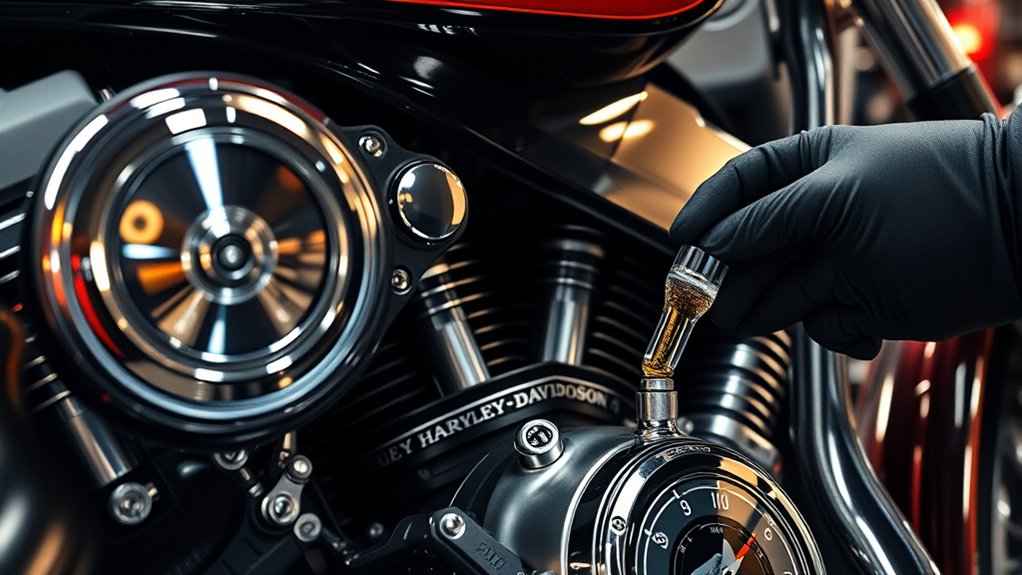
When choosing oil viscosity for your Harley-Davidson, consider the engine type and ambient temperature to guarantee ideal performance. Most modern Harley-Davidson models benefit from SAE 20W-50 oil, which offers the best engine lubrication and wear protection across a broad range of ambient temperatures.
If you ride an older air-cooled Harley, SAE 60 oil suits higher operating temperatures better, ensuring consistent lubrication under heat stress.
In colder climates, a slightly lower viscosity like 20W-40 may improve cold starts without sacrificing protection.
Using the correct oil viscosity maintains proper shifting and clutch function while preventing premature wear. Always refer to your Harley owner’s manual to confirm the recommended viscosity for your model and conditions.
This helps ensure the most suitable balance between lubrication and wear protection for your engine’s longevity.
Benefits of Synthetic Oils for Harley Engines
You need oil that can handle extreme heat without breaking down, and synthetic oils do exactly that by maintaining their viscosity even above 300°F. This means your engine stays protected because the oil doesn’t thin out when things get hot.
Plus, this better heat resistance helps reduce engine wear and keeps those critical parts safe when your bike is under stress.
Enhanced Heat Resistance
How does synthetic oil enhance heat resistance in Harley-Davidson engines? Synthetic oil offers superior high-temperature stability, which means it keeps the right viscosity even when things get really hot. This is important because it stops the oil from thinning out, ensuring your engine stays well lubricated during those intense rides.
Harley-Davidson engines, especially the V-twins, generate a lot of heat. That’s why heat resistance is so important—to keep your bike performing well and to reduce wear and tear.
Synthetic oils are better at resisting oxidation and breaking down from heat compared to conventional oils. This helps the oil last longer and keeps the lubrication effective for more miles.
Plus, synthetic oil absorbs and dissipates heat more efficiently. That helps your Harley run within the best temperature range, which means less stress on engine parts and fewer chances of premature breakdowns.
Choosing synthetic oil is a smart move because you’re actively protecting your engine from the high-heat challenges that come with Harley riding. It keeps things running smoother and extends the life of your bike.
Improved Engine Longevity
Although Harley-Davidson engines endure intense operating conditions, using synthetic oils markedly improves their longevity by maintaining stable viscosity and reducing friction.
Synthetic oils offer superior thermal stability, minimizing engine wear even under high temperatures typical of Harley riding.
They resist oxidation and breakdown, preventing sludge and deposit buildup that can impair engine efficiency. This guarantees consistent lubrication during demanding rides, which directly contributes to extended engine life.
Harley-specific synthetic oils, like AMSOIL, are formulated to meet the high-performance requirements of these engines, enhancing durability and performance.
When you perform regular oil changes with synthetic oils, you reduce wear and support ideal engine function.
Ultimately, this maximizes your Harley-Davidson’s engine longevity and reliability on the road.
Why Wet-Clutch Compatibility Is Crucial for Harley Oils
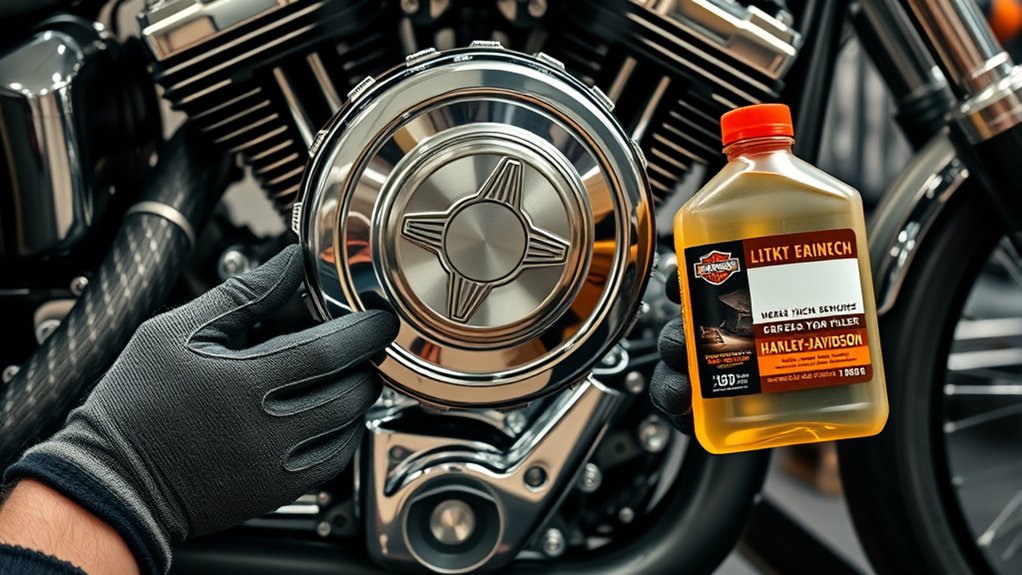
Because Harley-Davidson engines use wet clutches, the oil you choose must meet specific formulation standards to guarantee proper clutch slipping and engagement. Wet-clutch compatibility is critical. Oils lacking this can cause clutch slippage, overheating, and accelerated wear.
You need oil certified JASO MA or MA2, which ensures ideal friction characteristics for smooth clutch operation. Using conventional automotive oils or non-compatible motorcycle oils risks additives that impair clutch performance, leading to transmission issues.
Synthetic oil designed for Harley-Davidson wet clutches maintains consistent film strength and friction control, protecting clutch plates and gears. Prioritizing oil compatibility with wet-clutch systems prolongs clutch life, prevents slippage, and ensures reliable transmission function.
Don’t compromise on oil quality. Wet-clutch compatibility directly impacts your Harley’s performance and durability.
Choosing the Right Oil for Different Harley-Davidson Models and Climates
When selecting oil for your Harley-Davidson, you need to think about both the model’s engine specs and the climate where you’ll be riding.
Newer models usually call for SAE 20W-50 oil. On the other hand, older air-cooled engines do better with SAE 60 to get the best engine protection.
If you’re riding in colder weather, a lighter oil like 20W-40 helps improve cold starts. But when it’s hotter, you want a thicker oil like SAE 60 to keep things lubricated even under heat and heavy load.
Synthetic oils, such as AMSOIL 20W-50, offer excellent high-temperature stability and consistent engine protection no matter the conditions.
Always check your owner’s manual to make sure the oil viscosity matches your Harley-Davidson’s engine and the service intervals you expect.
Picking the right oil means your bike will perform well and last longer, whatever the riding environment.
How Oil Filters Affect Your Harley’s Engine Longevity

Selecting the right oil for your Harley-Davidson sets the foundation for engine health. But protecting that oil from contaminants relies heavily on the quality of your oil filter. A high-quality oil filter traps dirt and debris effectively, preventing engine wear that compromises engine longevity.
Using filters that meet or exceed OEM standards, like genuine Harley or Fram filters, guarantees ideal filtration and reliable oil flow during oil changes. Low-quality filters often use inferior media, allowing contaminants to circulate and accelerate engine wear.
Proper installation and selecting the correct oil filter type are essential to avoid leaks that reduce filtration efficiency. By prioritizing a quality oil filter and replacing it regularly during oil changes, you protect your Harley-Davidson’s engine and maximize its lifespan.
When and How Often Should You Change Your Harley Oil?
Although your Harley-Davidson’s engine can handle extended use, you should change the oil every 5,000 miles or at least once a year to maintain peak performance. This oil interval aligns with Harley-Davidson’s service requirements and guarantees ideal engine protection.
If you ride in harsh conditions, like dusty, cold, or wet environments, consider changing your oil more often.
Always replace both the engine oil and filter during each oil change to prevent contaminants from damaging your engine.
Before storing your bike for winter or extended periods, make sure to perform an oil change to avoid degradation.
Using high-quality synthetic oils can help extend oil intervals without compromising protection, but don’t skip regular oil level and condition checks.
Staying on schedule with oil changes is key to preserving your Harley’s reliability and longevity.
It’s worth the effort to keep your bike running smoothly for years to come.
Comparing AMSOIL and Other Popular Harley-Davidson Oils
Because your Harley-Davidson engine demands robust protection under high heat and stress, choosing the right oil is crucial. AMSOIL synthetic oils, like SAE 20W-50, provide superior heat resistance and engine protection compared to many Harley-Davidson oils, including conventional oil options.
While popular oils such as Sunoco’s Syn3 meet OEM specs, they may not offer the same cost-efficiency or thermal stability as AMSOIL’s synthetic formulations. Conventional oils like Super Tech 20W-50 are affordable and reliable but lack the longevity and high-temperature performance synthetic oils deliver.
For maximum engine protection during oil change intervals, pairing AMSOIL with high-quality filters, such as Fram, ensures enhanced filtration and durability.
Ultimately, synthetic oils like AMSOIL outperform conventional and many OEM oils in maintaining engine health under demanding conditions.
Affordable Oils and Filters for Harley Maintenance
While premium synthetic oils like AMSOIL offer outstanding protection, many riders look for budget-friendly alternatives that still meet performance needs. For Harley-Davidson maintenance, affordable synthetic oil options such as Vtwin 20W-50 and Super Tech 20W-50 deliver reliable engine protection under $8 per quart.
These oils maintain viscosity and thermal stability critical for Harley engines without breaking the bank.
Pairing them with cost-effective oil filters like Fram, priced around $11, ensures filtration performance comparable or superior to OEM Harley filters.
Using affordable Fram oil filters around $11 offers filtration matching or exceeding OEM Harley standards.
Choosing store-brand synthetic oils and off-brand oil filters can considerably lower maintenance costs while preserving engine health.
By selecting these affordable products, you maintain your Harley-Davidson’s engine protection effectively and economically, making routine maintenance both practical and budget-conscious.
It’s a smart way to keep your bike running strong without spending a fortune.
Essential Tips for Checking and Changing Oil on Your Harley
Before you start checking or changing your Harley’s oil, make sure the motorcycle is on level ground and the engine is warmed up. Check the oil level using the dipstick or sight glass, confirming it’s within the range specified in your owner’s manual.
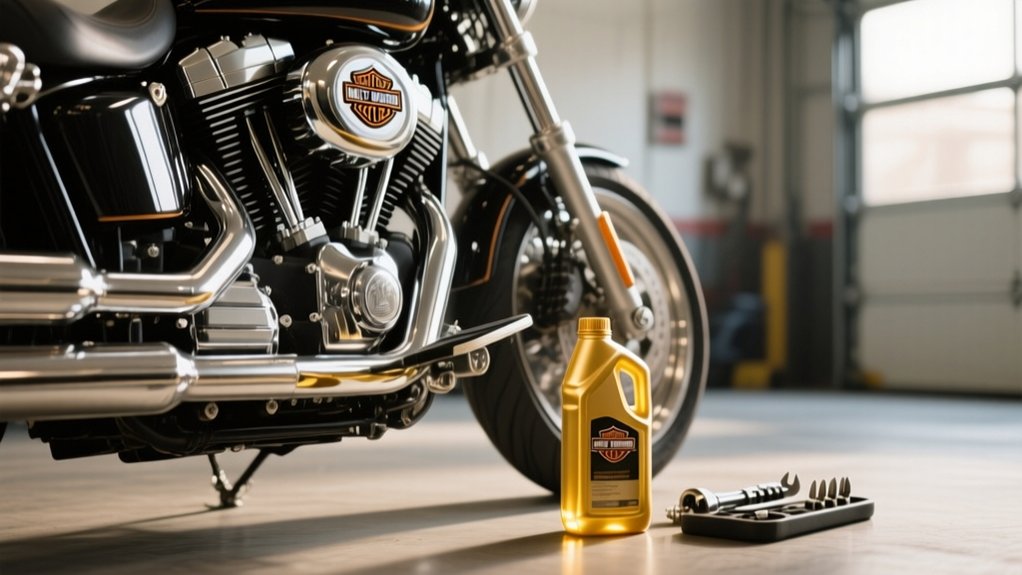
When performing an oil change, use a proper oil change kit to replace the drain plug and oil filter. This helps prevent contaminants from circulating inside your engine.
Always drain the old oil completely, including the primary fluid if your bike has that.
Refill with the recommended synthetic motorcycle oil, such as SAE 20W-50 for most models. After refilling, run the engine briefly, then recheck the oil level and top off if needed.
Following these steps guarantees efficient lubrication and extends your Harley’s engine life.
Frequently asked questions
Can I Use Automotive Oil Instead of Motorcycle Oil for My Harley?
You shouldn’t use automotive oil in your Harley. Automotive oils lack the specific additives and friction modifiers needed for wet clutch systems, which your Harley relies on.
Using them can cause clutch slipping, inadequate lubrication under high temperatures, and premature engine and transmission wear.
It’s really best to stick to motorcycle-specific oils that meet JASO MA or MA2 standards. That way, you’ll guarantee proper clutch engagement and protect your engine’s longevity and performance.
Trust me, your bike will thank you for it!
Does Synthetic Oil Affect Harley-Davidson Fuel Efficiency?
Yes, synthetic oil can improve your Harley-Davidson’s fuel efficiency by reducing internal engine friction and maintaining consistent viscosity across temperatures. This lowers engine drag, allowing your bike to run smoother and consume less fuel.
While gains are typically modest, you’ll notice better performance during extended rides or high-stress conditions.
Keep in mind, results vary depending on riding style and conditions.
But overall, synthetic oil generally supports improved fuel economy compared to conventional oils.
How Does Oil Type Impact Harley-Davidson Exhaust Emissions?
Choosing the right oil type can transform your Harley’s exhaust emissions like magic. Synthetic oils burn cleaner, reducing unburned hydrocarbons and pollutants.
Using the proper viscosity oil guarantees efficient combustion, preventing excess smoke from oil burning.
High-quality additives minimize engine deposits that cause incomplete combustion and higher emissions.
Is Break-In Oil Necessary for New Harley-Davidson Engines?
Yes, break-in oil is necessary for new Harley-Davidson engines. It contains specific additives that help seal piston rings and bearings during the essential initial miles. This reduces wear and ensures proper seating.
You’ll want to use it for about 1,000 miles before switching to a high-quality synthetic oil.
Skipping this step can lead to premature engine wear and lower long-term performance. So, don’t overlook its importance.
Can Harley Oils Be Mixed With Additives or Treatments?
You shouldn’t mix Harley oils with additives or treatments unless they’re specifically approved. Adding unapproved additives can disrupt the oil’s chemical balance, reduce lubrication, and harm your engine’s performance.
Certain treatments might interfere with your bike’s wet clutch system. Always follow Harley-Davidson’s guidelines and consult the oil manufacturer before using additives to maintain proper protection and avoid voiding your warranty.
Stick to recommended oils for the best results. It’s really the safest way to keep your engine running smoothly.
Final Thought
Choosing the right oil for your Harley-Davidson is like picking the perfect gear. It guarantees smooth performance and long engine life. Make sure you stick to the recommended viscosity and prioritize synthetic oils that work well with wet clutches.
Also, remember to replace your filters regularly. Adjust your oil choice based on your bike’s model and the climate you ride in. Changing the oil at proper intervals is key to keeping your Harley running reliably.
With the right oil and regular maintenance, your Harley will deliver peak power and durability every time you hit the road. It’s all about keeping your bike in top shape for the best ride possible.