How Often To Change Oil In Harley – Here’s the Answer
You should change your Harley’s oil every 3,000 to 5,000 miles, following the manufacturer’s maintenance schedule for best results. After the initial 1,000-mile break-in service, switch to changing engine oil about every 5,000 miles or annually under normal conditions.
Severe riding, heat, dust, or stop-and-go traffic require more frequent changes. Using synthetic oil can extend intervals, but be sure to monitor oil quality closely. Understanding these factors will help optimize your Harley’s performance and longevity.
How Often Should You Change Your Harley’s Oil?
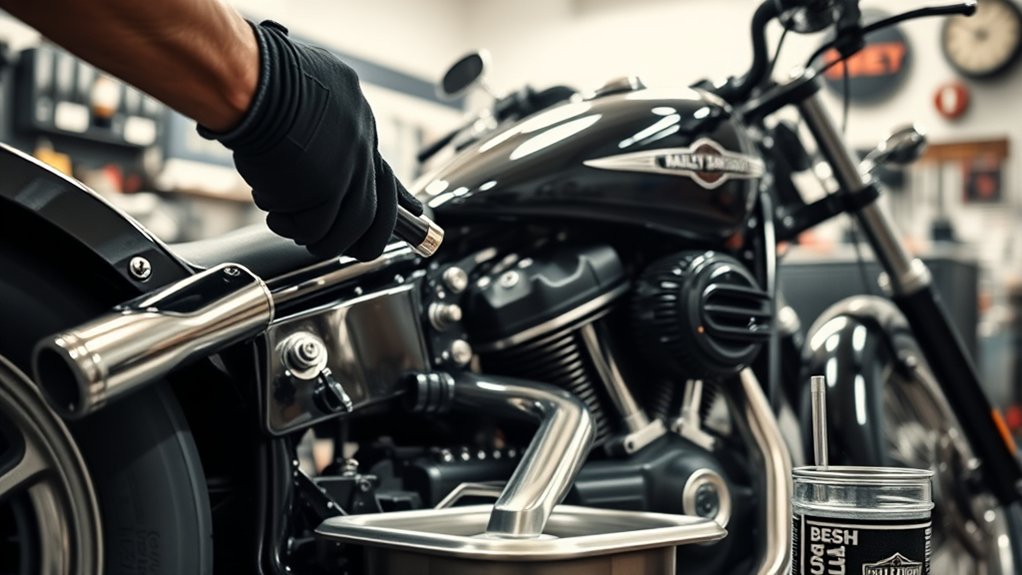
Most Harley-Davidson riders change their oil every 3,000 to 5,000 miles, depending on how and where they ride. You should follow the manufacturer’s recommended maintenance intervals for your Harley’s engine oil and oil filter.
Harley riders typically change oil every 3,000 to 5,000 miles, following manufacturer guidelines for best performance.
If you experience severe riding, such as frequent short trips, extreme heat, or dusty conditions, plan more frequent oil changes to prevent engine wear.
For riders covering long distances or high mileage, synthetic oils can extend oil change intervals up to 10,000 miles. But you must stick closely to the service schedule and regularly check the oil condition.
Monitoring your Harley-Davidson’s engine oil quality guarantees the best performance and longevity.
Sticking to precise oil change practices tailored to your riding style helps keep your bike running smoothly and avoids costly repairs. It’s really about staying on top of things so your Harley can take you wherever you want to go without any trouble.
How Riding Conditions Affect Your Oil Change Schedule
You’ll want to adjust your oil change schedule depending on how and where you ride.
For example, hot weather, aggressive riding, and stop-and-go traffic can cause your oil to break down quicker, so you’ll need to change it more often.
Also, if you’re taking a lot of short trips, riding in dusty conditions, or tackling rough terrain, these factors can speed up engine wear and cause your oil to degrade faster than usual.
Impact Of Weather
Because weather and riding conditions directly influence engine stress and oil quality, you need to adjust your oil change schedule accordingly. In hot weather, elevated engine temperature accelerates oil degradation, breaking down lubricants faster and reducing protection.
On the other hand, cold climates and infrequent rides cause condensation buildup. This leads to moisture in the oil, which promotes corrosion and diminishes lubrication.
Environmental contaminants from dusty or dirty riding conditions further degrade oil quality and increase engine wear.
All these factors together shorten the effective oil change intervals. Keeping an eye on how these variables impact your Harley’s engine lets you tailor oil changes precisely. That way, you maintain ideal performance and longevity despite varying weather and terrain-driven stresses.
Riding Style Effects
When your riding style pushes your Harley’s engine harder, it directly impacts how quickly the oil breaks down and loses its protective properties. High-performance riding generates increased heat and engine wear, which speeds up oil degradation and shortens the oil’s lifespan.
Riding frequently in hot weather makes this effect even stronger, so you’ll need to change your oil more often.
Also, if your rides are mostly short trips, water condensation builds up in the oil. This adds contaminants that break down the oil quality faster.
Riding in dusty or dirty places adds even more contaminants, meaning you’ll have to change the oil sooner.
If you don’t adjust your maintenance schedule to match your riding style, your engine could wear out faster and perform worse. To get the best protection for your engine, change your oil based on how and where you ride.
This way, you keep contaminants and oil breakdown from hurting your Harley’s longevity.
Frequency And Usage
Adjusting your oil change schedule depends heavily on the specific riding conditions you encounter. Factors like extreme temperatures, short trips, and rough terrains accelerate contaminant buildup and engine stress. This reduces the lifespan of your engine oil.
To get the most out of your Harley maintenance, you need to tailor your oil change frequency accordingly. Here’s a quick guide to help you decide when to change your oil based on your riding conditions:
| Riding Condition | Recommended Oil Change Frequency |
|---|---|
| Extreme temperatures | Every 2,000-3,000 miles |
| Short trips & infrequent | Every 2,000 miles or 6 months |
| Dusty or rough terrains | Every 2,500 miles or sooner |
Frequent oil changes become critical when you’re riding in harsh conditions. This helps prevent premature engine wear. By regularly adjusting your service intervals based on your riding style, you’ll keep your engine performing at its best and extend its life.
What Is a 3-Hole Oil Change and When to Do It
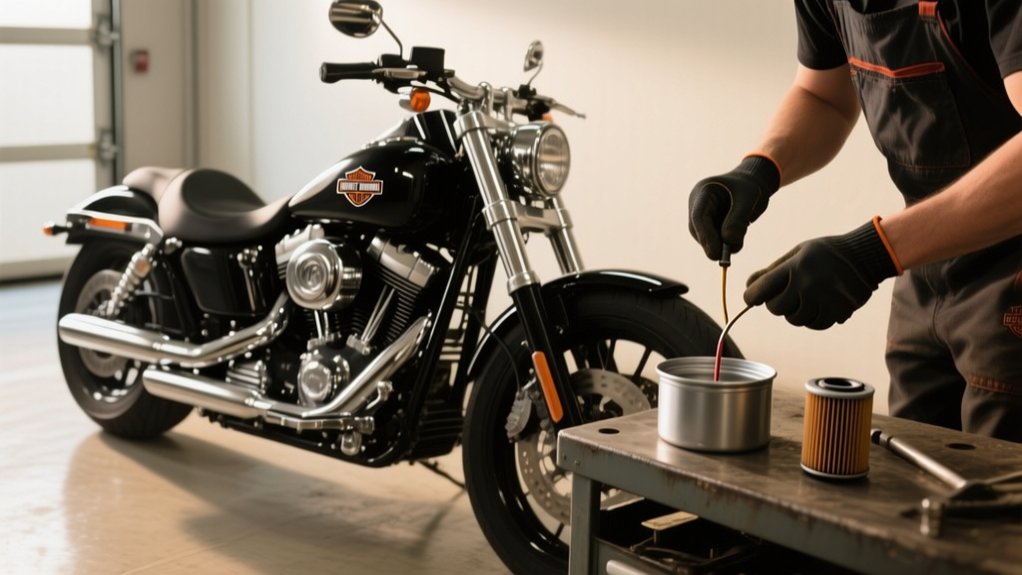
How often should you perform a 3-hole oil change on your Harley? The 3-hole service involves changing the engine oil, primary chaincase, and transmission fluid all at once.
Usually, Harley-Davidson riders plan this fluid replacement every 3,000 to 3,500 miles to match the recommended maintenance schedule.
Harley riders typically schedule the 3-hole oil change every 3,000 to 3,500 miles for optimal care.
If you ride aggressively or under tough conditions, it’s a good idea to do it more often. This helps make sure everything stays properly lubricated and your bike performs at its best.
During the service, you’ll drain and replace all three fluids, check related parts, and make sure everything is working right.
Doing the 3-hole oil change regularly keeps your engine running efficiently, extends the life of your components, and can save you from expensive repairs down the road.
Sticking to this maintenance routine is key to keeping your Harley running smooth and reliable.
Choosing Between Synthetic and Conventional Oil for Your Harley
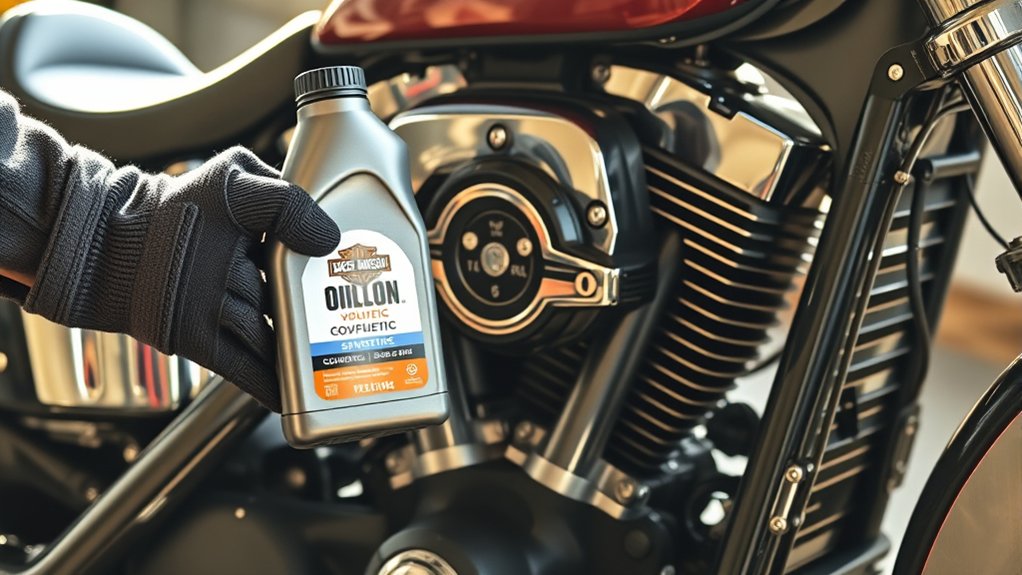
When deciding between synthetic and conventional oil for your Harley, it’s good to weigh the benefits of each. Synthetic oil offers superior thermal stability and can last up to 5,000 miles, which is pretty impressive.
On the other hand, conventional oil comes with a lower upfront cost but requires more frequent changes.
Synthetic oil really shines when it comes to enhancing engine protection and performance, especially after your bike’s break-in period.
So, choosing the right oil isn’t just about cost—it also affects how often you’ll need to maintain your bike and how long the engine will last.
In the end, picking the right oil can make a big difference in keeping your Harley running smoothly.
Benefits Of Synthetic Oil
Although conventional oil has been the standard for many riders, choosing synthetic oil for your Harley offers distinct advantages that enhance engine performance and longevity.
Synthetic oil provides superior thermal stability, resisting oil breakdown even under intense engine heat. This stability extends your oil change interval up to 5,000 miles, nearly doubling that of conventional oil.
With fewer contaminants and oil additives that degrade over time, synthetic oil maintains cleaner operation, reducing friction and improving fuel efficiency. By minimizing wear and ensuring consistent lubrication, it supports prolonged engine longevity.
Switching to synthetic oil after your break-in period optimizes performance, allowing your Harley’s engine to run smoother and more efficiently while requiring less frequent maintenance.
This practical choice benefits both your bike’s health and your riding experience.
Conventional Oil Considerations
Synthetic oil offers clear benefits for your Harley, but conventional oil still plays a significant role for many riders. Conventional oil typically requires an oil change interval of 2,500 to 3,000 miles to keep your engine well protected. During severe riding conditions, conventional oil breaks down faster, so regular oil checks are really important.
Keeping an eye on oil viscosity helps you figure out when it’s time for a change to avoid engine wear. Many riders prefer using conventional oil during the initial break-in period because it’s more cost-effective. After that, they switch to synthetic for better long-term performance.
To take good care of your Harley, it’s important to understand how your riding conditions affect oil life. If you stick with conventional oil, make sure to stay on top of oil quality checks so your engine stays healthy and runs smoothly.
Top Signs Your Harley’s Oil Needs Changing Now
When your Harley’s oil darkens, smells burnt, or feels gritty, it’s a clear sign that an oil change is overdue. Keeping an eye on specific oil signs helps you maintain peak engine performance and avoid damage.
Here are the top signs your Harley’s engine oil needs changing now:
- Dark oil with contaminants: If the oil looks cloudy or gritty, it means contaminants have built up. This reduces how well the oil can lubricate your engine.
- Increased engine noise: If you notice more engine noise or rough idling, it could be because the oil has degraded and isn’t protecting the moving parts like it should.
- Unusual oil level or moisture: A sudden drop in oil level or a milky, foamy look on the dipstick is a sign of moisture contamination. This means you need to change the oil immediately.
How Low Mileage and Storage Impact Oil Change Frequency
Recognizing the signs that your Harley’s oil needs changing is important, but understanding how low mileage and storage affect oil change frequency can further protect your engine. When you ride infrequently or store your bike for extended periods, moisture buildup and condensation accumulate in the oil. This speeds up oil degradation and increases the risk of internal corrosion.
Even with low mileage, contaminants like water and combustion byproducts settle in the oil, which can compromise your engine’s health. To avoid this, it’s a good idea to perform a pre-storage service. This includes draining the old oil and replacing it before you put your bike away for a while.
Also, changing the oil annually during storage helps prevent acid formation and gets rid of any contaminants that have built up. Short trips can increase these risks too, so you should adjust your oil change schedule accordingly.
Keeping up with this will help maintain proper lubrication and avoid premature engine wear.
What the Official Harley-Davidson Manual Says About Oil Changes
Although some riders might rely on personal experience or aftermarket advice, Harley-Davidson’s official manual provides clear, specific guidelines for oil changes to maintain ideal engine performance. You should follow the manual recommendations closely, especially during the initial break-in period and ongoing maintenance schedule.
Key points include:
- Perform the first oil change, including engine oil, primary chaincase lubricant, and transmission oil, at the 1,000-mile service to ensure proper fluid replacement.
- After the initial break-in, change engine oil at regular intervals of every 5,000 miles or annually, whichever comes first.
- Replace primary chaincase lubricant every 10,000 miles and transmission oil every 20,000 miles.
Sticking to these intervals helps keep your Harley-Davidson running efficiently and prolongs engine life. It’s really about giving your bike the care it deserves so you can enjoy the ride longer.
Easy Tips to Stay on Top of Your Harley’s Oil Changes
Since maintaining your Harley’s oil quality directly impacts engine performance and longevity, you need to monitor oil levels and condition consistently, ideally every 1,000 miles. Stick to the manufacturer’s recommended service intervals, typically an oil change every 5,000 miles or annually under normal riding conditions.
If you ride in severe conditions like extreme temperatures or dusty environments, you’ll want to adjust your maintenance schedule and change the oil more often. Keep an eye out for oil indicators such as darkening, grit, or a burnt smell—these signs mean you should perform an oil change sooner.
Regular checks and keeping detailed records help keep your Harley-Davidson running optimally and protect your warranty.
| Task | Recommendation |
|---|---|
| Oil Level Check | Every 1,000 miles |
| Oil Change Interval | Every 5,000 miles or annually |
| Severe Conditions | More frequent oil changes |
| Oil Condition Indicators | Dark color, grit, burnt smell |
| Maintenance Records | Keep detailed and updated |
Frequently asked questions
What Type of Oil Filter Is Best for Harley Big Twins?
The best oil filter for your Harley Big Twin is an OEM Harley-Davidson filter like the Screamin’ Eagle or Genuine Harley filter. These ensure a perfect fit and reliable filtration.
If you prefer aftermarket options, go for high-quality filters with 10-15 micron ratings. This range traps dirt well without restricting oil flow.
Spin-on filters with steel or aluminum casings are great for convenience.
Synthetic media filters offer better durability and capacity, although they tend to cost more.
Just make sure to pick one that’s compatible with your model and engine type.
Can I Use Motorcycle Oil in My Harley’s Primary Drive?
Yes, you can use motorcycle-specific oil in your Harley’s primary drive, but you need to make sure it meets Harley-Davidson’s recommended viscosity and additive standards.
Motorcycle oils that are made for wet clutches work best because they help prevent clutch slippage and contamination.
Avoid using standard engine oils that aren’t designed for primary drives.
It’s always a good idea to check the oil’s specifications against your bike’s manual.
That way, you keep everything running smoothly and protect the internal components effectively.
How Do I Properly Dispose of Used Harley Oil?
You shouldn’t pour used Harley oil down drains or onto the ground. Doing that contaminates water and soil. Instead, collect it in a sealed, leak-proof container to avoid spills.
Then, take it to authorized recycling centers, automotive service stations, or hazardous waste facilities. Many places even offer free disposal services.
Does Oil Color Indicate Harley Engine Health?
Oil color gives you a rough idea of your Harley’s engine health, but it’s not definitive. Darkened oil shows accumulated dirt and combustion byproducts, which is normal over time.
However, if you see sudden blackening, grit, or milky, frothy oil, that signals contamination or water presence. That needs immediate attention.
For a precise engine health assessment, rely on regular oil analysis rather than just color observation. This way, you can make better maintenance decisions.
Are Oil Additives Necessary for Harley-Davidson Motorcycles?
You don’t need oil additives for your Harley-Davidson motorcycle. Modern oils already include detergents and stabilizers designed specifically for Harley engines.
Adding aftermarket additives can cause foaming, clogging, or oil breakdown, which puts your engine at risk. It’s best to stick to the oil type recommended in your owner’s manual.
Focus on timely oil changes instead. This approach guarantees ideal engine performance and longevity without unnecessary risks from additives.
Final Thought
To keep your Harley running smoothly, change your oil every 2,500 to 5,000 miles depending on riding conditions. Did you know that neglecting timely oil changes can reduce engine life by up to 40%? Following the 3-hole oil change method and using the right oil type improves performance and longevity.
Stay proactive. Track mileage and storage periods to avoid costly damage. Stick to Harley-Davidson’s guidelines, and your bike will reward you with reliable power and efficiency.