Who Makes Harley Davidson Oil – Company Facts
Harley-Davidson oils are made by third-party manufacturers like Citgo. They produce factory-approved formulations specifically for Harley’s standards at their Houston facility. These oils, including Screamin Eagle SYN3, undergo strict testing to guarantee engine protection, durability, and warranty compliance.
Harley licenses its brand but controls quality through rigorous supplier evaluations and certifications. You get reliable, Harley-certified oils tailored for your engine’s needs. It’s all about making sure your bike runs smoothly with oils designed just for it.
Find out how Harley differentiates these products and why synthetic options like SYN3 are preferred by many riders. It’s not just oil—it’s part of what keeps your Harley performing at its best.
Who Manufactures Harley-Davidson Motor Oil and Where
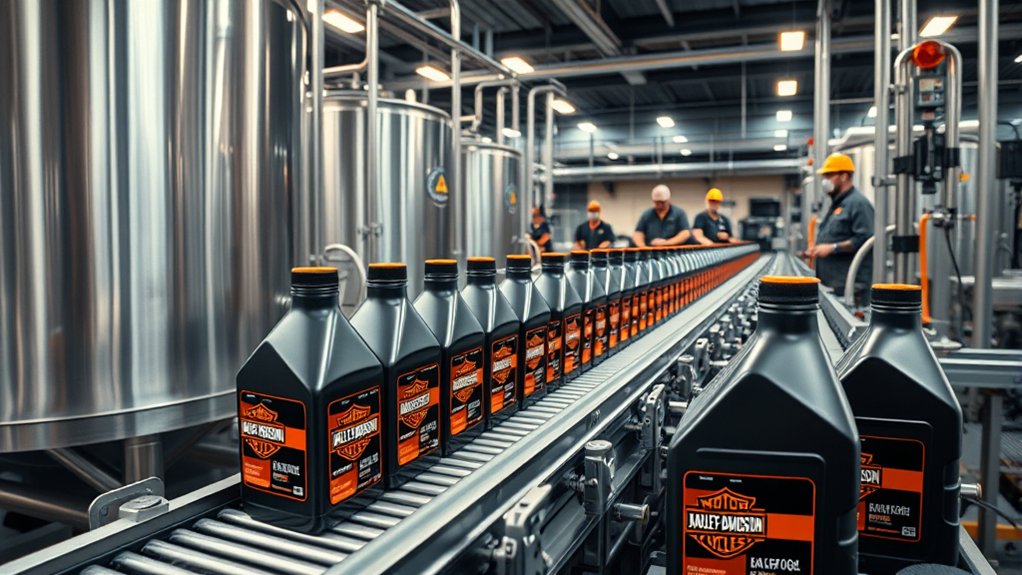
Although Harley-Davidson licenses its brand for motor oils, the actual manufacturing is handled by Citgo at their Houston, Texas facility. You should know that factory-filled oils like Screamin Eagle SYN3 and H-D 360 are produced by Citgo specifically for Harley-Davidson. This ensures they meet strict quality and performance standards.
Harley-Davidson contracts with external oil companies, and Citgo has been their primary motor oil manufacturer for many years. When you purchase Harley-Davidson motor oil, it often comes from third-party producers who meet Harley’s specifications but don’t make the oil themselves.
Independent lab tests confirm that Citgo-produced Harley oils maintain the precise formulation required for superior engine protection and performance in Harley-Davidson motorcycles. This arrangement guarantees consistency and reliability in the motor oil you use.
Harley-Branded Oil vs. OEM Oil: What’s the Difference?
You’ll find that Harley-branded oils, like SYN3, are specially formulated and tested to work with Harley engines. However, they often come from third-party manufacturers.
On the other hand, OEM oils meet Harley’s exact specifications, even though they might be private-labeled by different producers.
Brand Labeling Explained
When you choose Harley-Davidson oil, understanding the distinction between Harley-branded and OEM oils helps guarantee peak engine performance. Brand labeling plays a key role here. Harley-branded oils often come as private label products from third-party manufacturers, while OEM oils are specifically formulated and approved by Harley-Davidson.
Although formulations can overlap, OEM oils strictly comply with Harley’s specifications, ensuring consistent quality.
| Feature | Harley-Branded Oil |
|---|---|
| Branding | Harley-Davidson private label |
| Manufacturer | Third-party (e.g., Citgo) |
| Formulation | Variable |
| Approval | Not always Harley-approved |
| Packaging | Harley-branded |
OEM oils emphasize Harley’s direct control. Branded oils, on the other hand, focus on marketing convenience without guaranteed uniformity.
Manufacturing Source Differences
Since Harley-Davidson-branded oils like SYN3 are produced by external suppliers such as Citgo, understanding the manufacturing source is essential to distinguish them from OEM oils.
Harley-branded oils are typically private label products, formulated and tested to meet Harley’s specifications but manufactured by third-party chemical companies.
OEM oils labeled for Harley-Davidson often come from contract manufacturers under private label agreements, ensuring compliance with Harley’s standards.
The manufacturing source can vary, so the performance and formulation depend on the producer, not just the Harley branding.
When you compare Harley-branded oil to OEM oils, the key difference lies in the origin.
OEM oils are private label products made specifically for Harley, while Harley-branded oils may be sourced from multiple external suppliers like Citgo or others.
Quality and Performance Variations
Understanding the differences in manufacturing sources helps clarify why quality and performance can vary considerably between Harley-branded oils and OEM oils. Harley-branded oils, like SYN3, are sometimes private-labeled, which can lead to inconsistent additive quality.
On the other hand, OEM oils are specifically formulated and tested for Harley engines. They often deliver better protection and performance.
When comparing synthetic oils, independent tests show that premium aftermarket options like AMSOIL outperform Harley’s SYN3 in breakdown resistance and gear wear protection.
Key differences include:
- OEM oils are tailored for Harley engines, ensuring optimized performance.
- Harley-branded oils’ quality depends on their manufacturing source, affecting consistency.
- Synthetic oils from premium brands may offer superior additive levels, enhancing wear protection compared to Harley OEM oils.
All of this influences your engine’s longevity and reliability. So, choosing the right oil really matters.
Why Harley Uses Synthetic Oils Like Screamin Eagle SYN3
Although many oils claim to protect your motorcycle engine, Harley-Davidson specifically uses synthetic oils like Screamin Eagle SYN3 because they deliver superior wear protection and exceptional stability at high temperatures.
SYN3’s advanced formulation includes additives that enhance film strength and reduce deposits, guaranteeing your engine stays clean and durable. This synthetic oil resists breakdown six times longer than conventional oils, allowing for extended drain intervals without sacrificing performance.
Harley-Davidson recommends SYN3 to prolong both engine and transmission life, especially under high RPMs and stress. Extensive lab testing and certification back Harley’s choice, confirming SYN3’s compatibility and performance for Harley and Buell motorcycles.
Using synthetic oils like SYN3 ensures your Harley engine operates efficiently, maintaining longevity and reliability where it matters most. It’s a smart choice that keeps your ride running strong.
How Harley-Davidson Motor Oil Compares to Aftermarket Brands
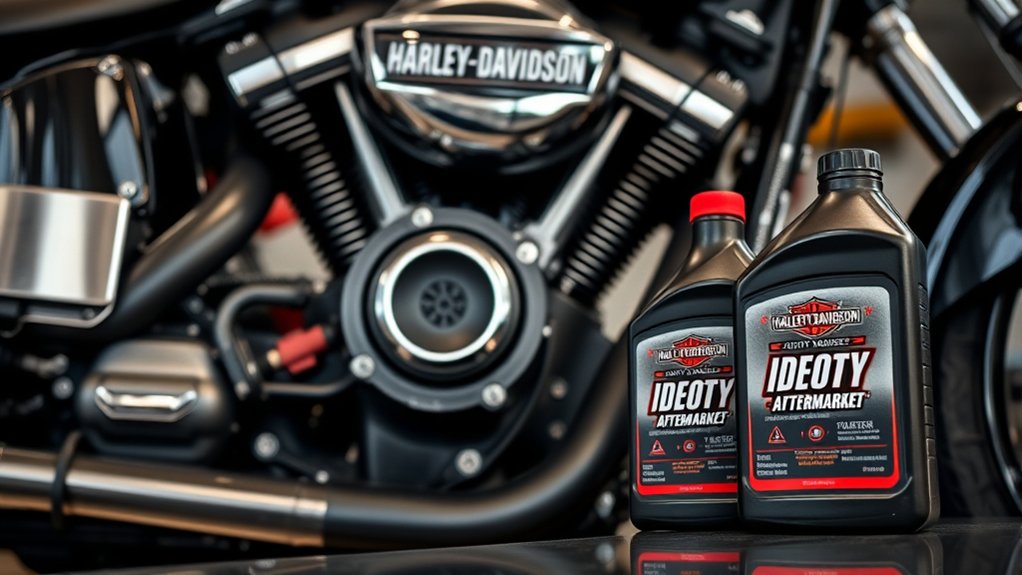
When comparing Harley-Davidson motor oil to aftermarket brands, you’ll notice some clear differences in performance and formulation. Harley’s SYN3 synthetic motor oil has a good reputation, but aftermarket brands like AMSOIL often show better features. Let’s break down how they stack up:
- Durability: AMSOIL 20W-50 lasts about six times longer without breaking down compared to SYN3. This means it can help your engine last longer.
- Wear Protection: AMSOIL contains more zinc and phosphorus, which helps protect your engine better. Independent tests back this up with lower wear scar ratings.
- Formulation Focus: Harley oils aim to be cost-effective, which might mean some trade-offs in performance.
On the other hand, premium aftermarket brands focus on advanced additives that promote ideal engine cleanliness and protection.
Harley Owner’s Guide to Oil Warranty and Usage Best Practices
Choosing the right motor oil impacts not only your engine’s performance but also your warranty coverage. Harley-Davidson recommends their factory oils like Screamin Eagle SYN3 Full Synthetic 20W-50, made by Citgo, for maximum compatibility.
However, you can use high-quality synthetic oils such as AMSOIL V-Twin 20W-50 without voiding your warranty, provided you follow proper procedures. Always drain all existing fluids thoroughly before switching oils to maintain warranty compliance and engine health.
Harley advises an initial oil change at 1,000 miles, then every 5,000 miles. But synthetic oils may allow you to safely extend those intervals.
How Harley-Davidson Selects Oil Suppliers and Why It Matters
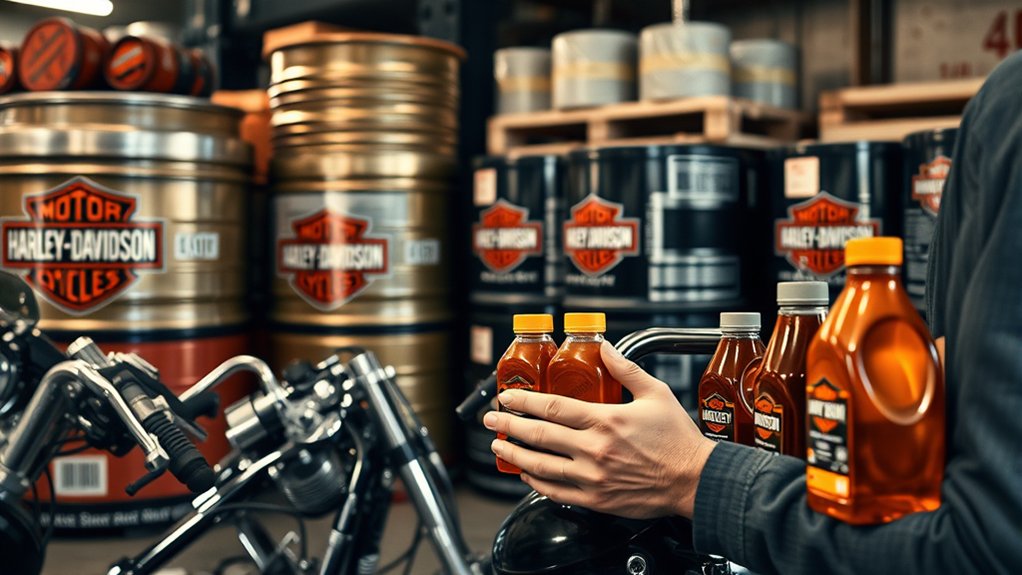
How does Harley-Davidson guarantee the oils used in their motorcycles meet stringent performance and durability criteria? They carefully select oil suppliers through a rigorous process that ensures every batch meets Harley-Davidson’s exacting standards. These standards directly affect engine protection, warranty compliance, and overall motorcycle longevity.
Here’s how Harley-Davidson chooses oil suppliers:
- Rigorous Testing: Oils go through extensive lab and field tests to prove performance and durability, even under tough conditions.
- Quality Assurance: Suppliers have to follow strict manufacturing protocols and hold industry certifications to keep quality consistent.
- Competitive Bidding: Harley looks at multiple suppliers and picks those who offer the best quality at competitive prices.
Frequently asked questions
Can Harley-Davidson Oil Be Used in Non-Harley Motorcycles?
Yes, you can use Harley-Davidson oil in non-Harley motorcycles if the oil’s viscosity and specifications match your bike’s requirements.
Their SYN3 fully synthetic oil, designed for 20W-50 engines, offers excellent lubrication and additives.
That said, you should check your owner’s manual to confirm compatibility.
It’s also a good idea to consider using a brand recommended for your specific motorcycle.
This helps maintain peak performance and keeps your warranty intact.
What Is the Recommended Oil Change Interval for Harley-Davidson Bikes?
Think of oil changes as the heartbeat of your Harley-Davidson’s engine. You should change the oil first at 1,000 miles, then every 5,000 miles thereafter to keep your bike running smoothly.
If you’re using synthetic oil like AMSOIL and quality filters, you might stretch that interval to 10,000 miles.
Don’t forget to replace primary chain case fluid every 10,000 miles and transmission fluid every 20,000 miles for peak performance.
Are Harley-Davidson Oils Environmentally Friendly or Biodegradable?
Harley-Davidson oils aren’t specifically designed to be environmentally friendly or biodegradable. They primarily use petroleum-based synthetic lubricants focused on high-performance engine protection.
You should know these oils contain additives that can harm the environment if improperly disposed of. So, it’s really important to follow proper disposal and recycling procedures to minimize the impact.
If being eco-friendly is a priority for you, you might want to consider aftermarket oils that explicitly advertise biodegradable or environmentally safer formulations.
Does Harley-Davidson Offer Oil Additives or Treatments?
No, Harley-Davidson doesn’t sell magic potions or snake oil additives for your bike. They stick to their SYN3 and H-D 360 oils, engineered precisely for their engines.
You won’t find official oil additives or treatments because Harley insists on using only their tested lubricants to maintain performance and warranty integrity.
If you’re tempted by aftermarket additives, remember they’re unapproved and might void your warranty or harm your engine.
It’s always best to follow Harley’s recommendations to keep your bike running smoothly.
Where Can I Buy Genuine Harley-Davidson Motor Oil?
You can buy genuine Harley-Davidson motor oil at authorized Harley-Davidson dealerships nationwide. This way, you’re sure to get the exact specification for your bike.
Licensed online retailers and the official Harley-Davidson website also offer authentic oils like SYN3 and H-D 360.
Plus, certified Harley-Davidson service centers and specialty motorcycle supply shops usually stock genuine oils.
Just make sure to verify the seller’s authorization. That way, you can guarantee the product’s authenticity and keep your engine running at its best.
Final Thought
Now that you know who makes Harley-Davidson oil and why the brand sticks to premium synthetic blends like Screamin Eagle SYN3, you’re better equipped to keep your bike running smoothly. Choosing the right oil isn’t just about brand loyalty. It’s about protecting your engine and warranty.
Don’t cut corners. After all, you want your Harley to perform like a well-oiled machine, not just run the mill. Stick to recommended oils and ride with confidence.