Is Harley Davidson Going Out Of Business – Myth or Fact
You’re seeing Harley-Davidson’s credit rating drop to junk status and some dealership closures, but it’s not going out of business. Revenue and profits have declined, prompting production cuts and restructuring for cost efficiency.
The company faces challenges like customer service delays and product issues but is investing in innovation and global growth under new leadership. Harley-Davidson is working to stabilize and modernize its brand while preserving its legacy. Keep exploring to understand what’s next for this iconic company.
What Harley-Davidson’s Junk Credit Rating Really Means
Although Harley-Davidson’s recent downgrade to a junk credit rating signals increased financial risk, it doesn’t mean the company is going out of business. This rating reflects concerns over Harley’s current financial health and future strategies, rather than the quality of its motorcycles.
A junk credit rating typically leads to higher borrowing costs and may limit Harley’s ability to secure favorable financing for growth or daily operations. You should understand that this status highlights financial challenges requiring strategic management, not insolvency.
Furthermore, the downgrade can affect investor confidence, potentially prompting changes in Harley’s corporate approach or market positioning. While the junk rating indicates risk, it’s a clear signal for investors and management to address these financial hurdles proactively.
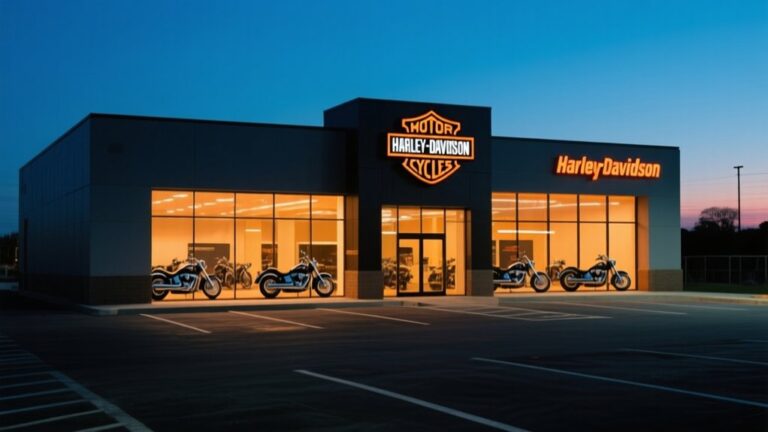
Are Harley-Davidson Dealership Closures a Sign of Trouble?
Harley-Davidson’s recent junk credit rating has raised concerns about its financial stability, which naturally makes you wonder about the impact of dealership closures on the company’s health. Some dealerships, like Harley Amsterdam and several in the US, have closed recently. But these closures are temporary and don’t mean the company is going bankrupt.
Industry experts say dealership closures happen because of declining sales, rising operational costs, import fees, or strategic industry restructuring. The good news is that Harley-Davidson’s core manufacturing and brand operations are still fully active and unaffected.
Temporary dealership closures are also pretty common during holidays or market adjustments.
How Harley’s Financial Challenges Shape Its Future Strategy
Since the company recently faced a downgrade to a junk credit rating and reported revenue of $4.47 billion alongside a net income of $339 million in 2025, its leadership has had to implement a series of strategic measures aimed at financial recovery.
Facing a junk credit downgrade, the company reported $4.47 billion revenue and $339 million net income in 2025.
You’ll see Harley-Davidson tackling its financial challenges through focused restructuring and brand revitalization efforts.
Key actions include appointing a new CEO to realign corporate strategy, initiating cost-cutting measures to improve margins, and restructuring operations to enhance financial stability.
They’re also diversifying product lines and expanding into new markets. On top of that, they’re investing in brand revitalization to strengthen customer loyalty.
These steps reflect a data-driven approach designed to stabilize Harley’s finances and position the company for sustainable growth despite current pressures.
It’s clear they’re working hard to turn things around and build a stronger future.
What Customers Are Saying About Harley’s Service and Bikes
When you take a closer look at customer feedback, you’ll notice consistent reports of long wait times for repairs. Sometimes, these delays stretch into weeks for services like tire replacements. Many riders also mention difficulties scheduling standard maintenance because dealerships have limited availability.
Moreover, numerous complaints focus on improper repairs, such as unresolved bearing issues. These problems add to customer dissatisfaction. This kind of negative service experience directly affects how loyal customers feel and influences their purchasing decisions.
Some customers prefer older Harley models, saying they’re more reliable than the newer, computerized bikes. The newer models often seem to have ongoing service problems.
What Experts and Fans Think of Harley’s Reputation
Although recent credit downgrades have raised concerns about Harley-Davidson’s financial stability, experts agree these don’t necessarily threaten the company’s long-term survival. You’ll find industry analysts and fans divided on Harley Davidson’s reputation.
Some applaud leadership changes, while others highlight ongoing issues.
Persistent electronics and motor problems since 2013 affect reliability perceptions. Dealership closures and service delays fuel concerns about customer experience.
Enthusiasts value the company’s commitment to heritage and community.
Competition from alternative brands challenges Harley’s market position. Industry analysts stress financial uncertainty but stop short of predicting collapse.
When evaluating Harley Davidson’s reputation, you should consider these nuanced views rather than assuming imminent failure. The brand faces challenges but retains a loyal following and strategic potential.
Why Harley-Davidson’s Heritage Still Matters to Riders
You know, Harley-Davidson’s heritage is more than just history—it’s a legacy of freedom that’s been shaping riders’ lives since 1903.
The brand’s iconic design and that unmistakable engine sound really make a cultural impact that connects with riders all around the world.
This strong identity? It keeps inspiring loyalty and shaping motorcycling communities across generations.
Legacy of Freedom
Because Harley-Davidson embodies American freedom, adventure, and a rebellious spirit, its heritage continues to hold significant value for riders worldwide. This legacy of freedom defines the iconic brand, connecting you emotionally to its rich history and culture.
Despite financial challenges, Harley’s commitment to preserving its heritage drives innovation and community loyalty.
- Founded in 1903, Harley-Davidson’s heritage links you to over a century of craftsmanship.
- The brand’s role in WWII military production cements its cultural significance.
- Distinctive sound and design reinforce the legacy of freedom.
- Harley’s community-building efforts foster a sense of belonging.
- Ongoing innovation ensures the brand remains relevant beyond economic hardships.
This heritage is a big reason why you and countless others stay faithful to Harley-Davidson.
Iconic Design Elements
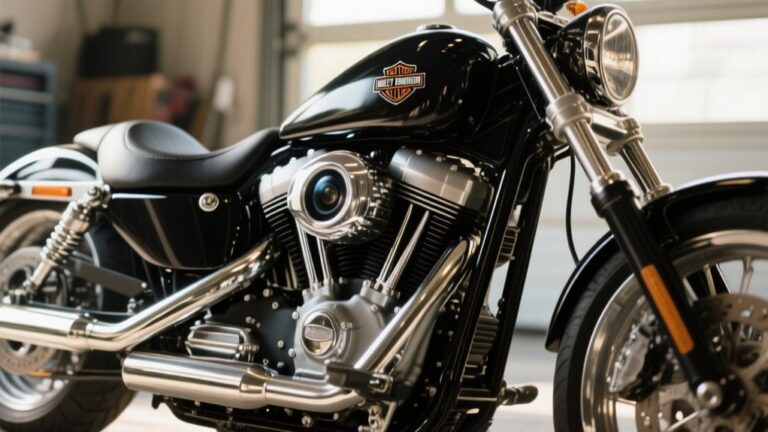
When you examine Harley-Davidson’s design, its iconic elements like the V-Twin engine, batwing fairing, and signature logo stand out as defining symbols of American motorcycle culture. You’ll notice that Harley’s heritage-inspired styling, characterized by chrome finishes and classic cruiser shapes, continues to evoke tradition and authenticity among riders.
The V-Twin engine’s deep, rumbling growl isn’t just sound; it reinforces Harley’s identity and heritage.
Even as Harley-Davidson integrates modern technology, it preserves its vintage aesthetics, appealing to both longtime enthusiasts and new customers.
This balance guarantees the iconic logo remains more than a brand mark. It’s a symbol of legacy.
These design features sustain Harley’s connection to its roots, maintaining rider loyalty and solidifying its place in American motorcycling history.
Cultural Impact Worldwide
Although Harley-Davidson has faced financial challenges, its cultural impact remains profound and far-reaching. You can see this in how Harley-Davidson’s heritage, dating back to 1903, symbolizes American freedom and adventure, resonating with riders worldwide. Its distinctive sound and iconic design cement its status across generations.
The brand’s influence goes beyond just motorcycles. It shapes a global following through community events and rallies that bring people together.
- Rich heritage symbolizes freedom and adventure
- Distinctive sound and design as cultural identifiers
- Community events fostering global belonging
- Historical milestones inspiring brand loyalty
- Influence on worldwide motorcycling culture
You’ll find Harley-Davidson’s cultural impact endures because it connects deeply with riders. It keeps a loyal global following, even when the market goes through ups and downs.
What’s Next for Harley-Davidson?
You’re seeing Harley-Davidson face some financial challenges lately, like recent downgrades and dealership closures. But don’t count them out just yet. The company has made some leadership changes and is rolling out new strategies aimed at stabilizing profits and boosting customer loyalty.
They’re really focused on preserving their brand legacy while also expanding globally and updating their product line. It’s clear they’ve a plan for recovery in mind.
Keeping an eye on these moves can help you figure out whether Harley can hold its ground in a market that’s constantly shifting.
Financial Challenges Ahead
Since Harley-Davidson’s credit rating recently dropped to junk status, you can see the company faces serious financial challenges ahead. This downgrade reflects a revenue decline to $4.47 billion in 2025 and a net income drop to $339 million, signaling ongoing financial pressures.
You should consider these critical factors:
- Credit rating downgrade limits borrowing capacity and increases costs
- Continued revenue decline stresses operational cash flow
- Production cuts and dealership closures reduce market presence
- Declining motorcycle sales highlight shifting consumer demand
- Financial challenges require effective risk management and adaptation
While the junk status doesn’t mean immediate failure, you must watch how Harley-Davidson manages these financial hurdles to determine its future stability. It’s definitely a situation worth keeping an eye on.
Leadership and Strategy
Harley-Davidson’s financial difficulties, highlighted by its recent credit downgrade, have pushed leadership to reexamine the company’s strategic direction. Under CEO Artie Starrs, Harley is accelerating restructuring efforts and brand revitalization to restore market confidence.
You’ll see investments in product innovation and technology aimed at attracting younger riders. Expanding internationally and adjusting dealership networks also factor into stabilizing finances.
Here’s a snapshot of Harley’s current strategic focus:
| Focus Area | Action | Expected Outcome |
|---|---|---|
| Leadership | New CEO Artie Starrs | Clear strategic vision |
| Restructuring | Operational adjustments | Cost efficiency |
| Brand Revitalization | Product modernization | Younger demographic appeal |
| Market Expansion | Increased international presence | Diversified revenue |
| Dealership Network | Closures and consolidation | Financial stabilization |
This data-driven approach aims to secure Harley’s long-term viability amid challenges. It’s a smart move to keep the brand relevant and financially stable going forward.
Brand Legacy Preservation
Although financial setbacks have challenged the company, Harley-Davidson remains firmly committed to preserving its brand legacy through targeted innovation and community engagement. You can expect the company to deploy strategic initiatives that balance heritage with modern demands.
Their product innovation aims to attract younger riders without alienating loyal customers. Despite a credit rating downgrade and dealership closures, Harley’s leadership focuses on revitalizing the brand and safeguarding its cultural significance.
Here’s what you should know:
- Rich heritage since 1903 shapes their brand legacy
- Strategic initiatives drive brand revitalization and market adaptation
- Product innovation targets diverse, younger demographics
- Community engagement strengthens customer loyalty and cultural ties
- Operational adjustments mitigate market pressures while preserving legacy
Through these focused efforts, Harley-Davidson endeavors to secure its future without compromising its iconic identity.
Frequently asked questions
How Long Has Harley-Davidson Been in Business?
Harley-Davidson has been in business for over 120 years. Founded in 1903 in Milwaukee, Wisconsin, it’s one of the oldest motorcycle manufacturers still operating today.
You can count on Harley-Davidson’s long history of resilience through tough times like the Great Depression and World War II.
They celebrated their centennial in 2003, marking 100 years of influencing American motorcycle culture.
And they’re still going strong, continuing to shape the scene more than a century later. It’s pretty impressive when you think about it!
Does Harley-Davidson Offer Electric Motorcycles?
Yes, Harley-Davidson offers electric motorcycles. You can choose from models like the LiveWire, introduced in 2019, which delivers 105 horsepower and about 146 miles of range per charge.
Harley-Davidson has invested heavily in electric technology, rebranding its electric division as Harley-Davidson Electric in 2021.
Their electric bikes blend classic Harley style with zero-emission powertrains. They aim to attract eco-conscious riders seeking performance and sustainability.
Where Are Harley-Davidson Motorcycles Manufactured?
Harley-Davidson motorcycles are primarily manufactured in Milwaukee, Wisconsin, where their main production facility is located. They also produce bikes internationally, with plants in Brazil and Thailand serving local markets.
Some components and models are outsourced to countries like Italy and Japan.
The Brazilian factory, opened in 1998, focuses on South American demand. Despite this global footprint, most Harley-Davidson motorcycles are assembled in the United States, maintaining their core brand identity.
Can I Buy Harley-Davidson Motorcycles Online?
Yes, you can buy Harley-Davidson motorcycles online through their official website and authorized dealer platforms. You’ll find options to customize your bike and choose home delivery or dealership pickup.
The company also offers online financing and virtual consultations to streamline your purchase.
Some models are available via third-party online retailers partnering with Harley-Davidson. This can be especially helpful if local dealerships are closed or limited in your area.
What Financing Options Does Harley-Davidson Provide?
Harley-Davidson provides flexible financing options including loans and leasing programs through partnered financial institutions. You can apply online or at authorized dealerships, with plans tailored to various credit scores and budgets.
They offer special promotional rates for new and returning riders.
Plus, you can use their online payment calculator to estimate monthly payments based on loan terms and down payments. This tool helps you choose the best financing fit for your needs. It’s pretty straightforward and makes planning your purchase easier.
Final Thought
You might see Harley-Davidson’s credit rating and dealership closures as storm clouds, but don’t mistake them for a full blackout. The company’s strategic shifts and loyal fan base act like a steady engine hum beneath the surface, driving resilience.
While financial challenges exist, Harley’s heritage and ongoing innovation fuel its ride forward. So, instead of a sunset on Harley, picture a road with twists. It’s complex but far from the end.