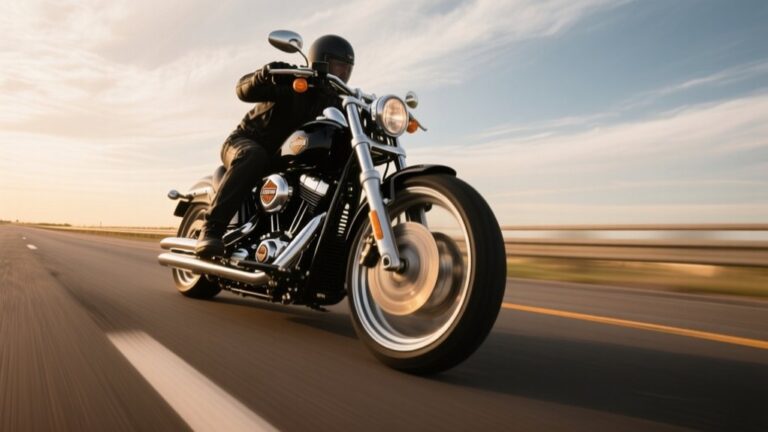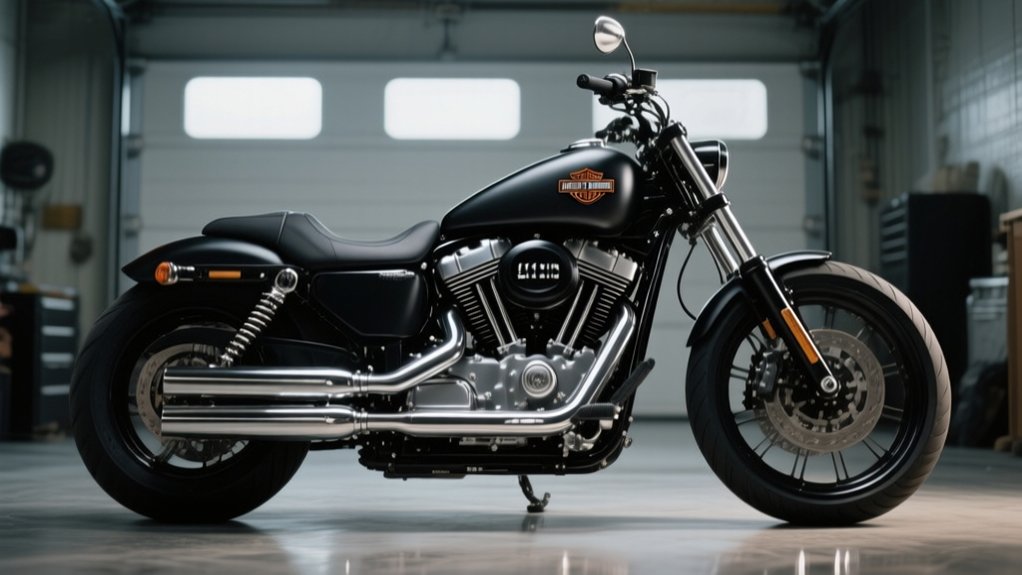
How Many Cc Is A 117 Harley – Quick Answer
You’re riding with a Harley-Davidson 117 engine that displaces exactly 1,923 cubic centimeters (cc). This large 117 cubic inch capacity boosts power and torque above smaller Milwaukee-Eight variants, delivering smooth, robust performance.
It generates roughly 101 horsepower and 123 ft-lb of torque, enhancing acceleration and ride feel. If you want to understand how this displacement translates to real-world power, fuel economy, and model advantages, more detailed insights await.
What Does “117” Mean in Harley-Davidson Engines?
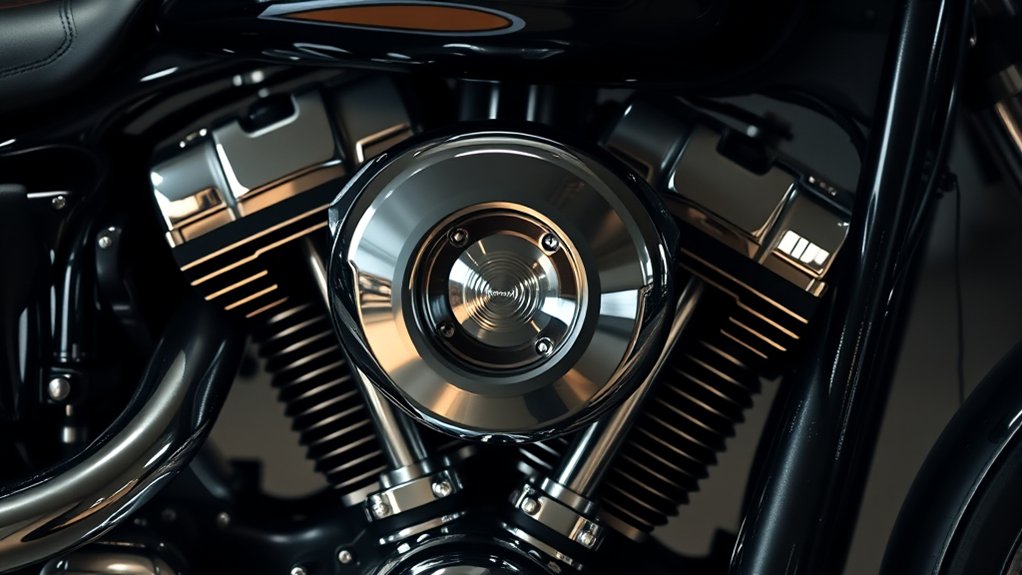
What exactly does the “117” represent in Harley-Davidson engines? It refers to the engine’s displacement, specifically 117 cubic inches, which equals approximately 1,923 cc. Displacement measures the total volume of air and fuel mixture the engine’s cylinders can draw in during one complete cycle.
In the case of the Milwaukee-Eight® 117 engine, this larger displacement means a bigger engine size compared to earlier Harley models. You’ll find that this 117 cubic inch displacement is among the largest factory options Harley-Davidson offers.
Understanding this figure helps you grasp the engine’s capacity and potential performance capabilities. Displacement directly reflects the volume within the cylinders responsible for combustion and power generation.
Why Engine Displacement Matters for Harley Performance
Because engine displacement directly impacts combustion volume, it plays an essential role in determining a Harley’s performance characteristics. The 117 engine’s 1,923 cc displacement allows for greater air-fuel mixture intake, which translates to enhanced power and torque.
When you understand displacement, you can better evaluate how an engine will perform in various riding scenarios.
Key factors influenced by displacement include:
- Power Output – Larger displacement increases horsepower and torque, improving acceleration and load capacity.
- Heat Generation – Bigger displacement produces more heat, requiring efficient cooling solutions.
- Vibration Levels – Increased displacement can amplify engine vibration, affecting ride comfort.
- Fuel Efficiency – Greater displacement often leads to higher fuel consumption, impacting range.
Displacement is vital for matching engine capabilities to your riding style and performance expectations. So, knowing what displacement means can really help you pick the right Harley for your needs.
Comparing the 117 to Other Milwaukee-Eight Engine Versions
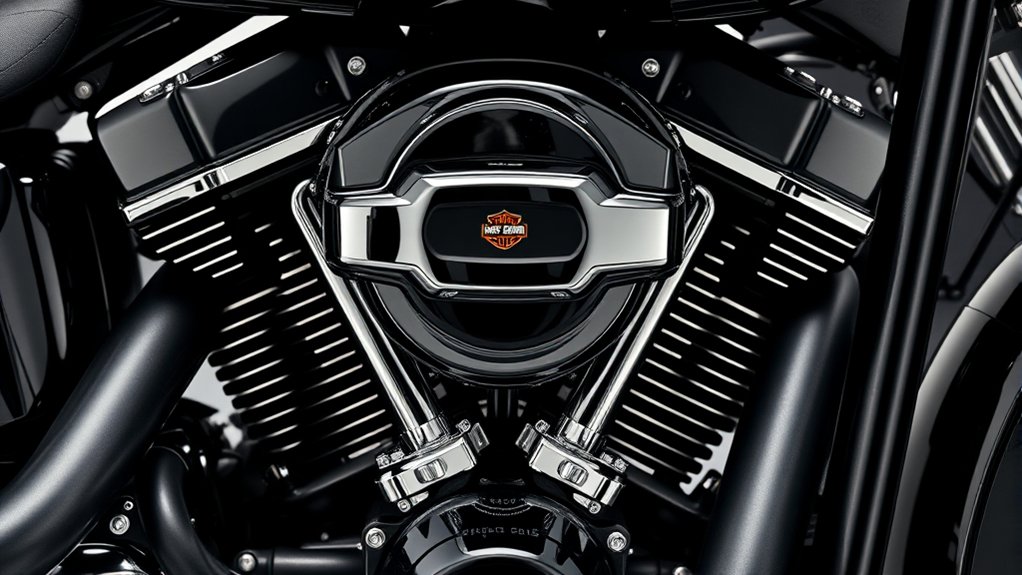
You’ll notice the 117 Milwaukee-Eight engine displaces 1,923 cc, which is larger than the 107 and 114 versions. Because of this increase in displacement, you get higher torque and more power.
Knowing these differences really helps you appreciate the performance boost in CVO models that come with the 117 engine.
Engine Displacement Comparison
When comparing the Milwaukee-Eight engine lineup, the 117 stands out with a displacement of 1,923 cc (117 cubic inches). It offers a significant performance boost over the 107 model’s 1,750 cc. This increase in engine displacement directly impacts power delivery and efficiency.
Here’s how the 117 compares within the Milwaukee-Eight series:
- The 107 engine’s 1,750 cc displacement serves as the baseline for standard Harley models.
- The 117’s 1,923 cc displacement raises the performance ceiling without reaching the 121’s 1,980 cc.
- The 121 Milwaukee-Eight, at 1,980 cc, slightly exceeds the 117, representing the current top displacement.
- The 117 balances displacement and reliability, making it a robust middle ground in Harley’s lineup.
Understanding engine displacement helps you appreciate the 117’s role in Harley’s performance spectrum. It’s all about finding the right balance for power and dependability.
Torque And Power Differences
Although the Milwaukee-Eight 117 shares its V-twin architecture with smaller variants, it delivers a notable increase in torque and horsepower that sets it apart. With 1,923 cc displacement, the 117 generates 124 ft-lb of torque—about 10-15% more than the 107 and 114 engines. This higher torque at lower RPMs improves acceleration and cruising.
Peak horsepower reaches approximately 93.75 HP, surpassing smaller Milwaukee-Eight versions for a more aggressive performance.
| Engine Variant | Displacement (cc) | Torque (ft-lb) | Peak HP | Torque Increase (%) |
|---|---|---|---|---|
| Milwaukee-Eight 107 | 1,746 | 110 | 85 | |
| Milwaukee-Eight 114 | 1,868 | 115 | 90 | 4.5% |
| Milwaukee-Eight 117 | 1,923 | 124 | 93.75 | 10-15% |
Key Specifications of the Milwaukee-Eight 117 Engine
Since performance hinges on engine design, understanding the Milwaukee-Eight 117’s key specifications is essential. This New Milwaukee-Eight V-Twin engine delivers impressive power and reliability, ideal for models like the Low Rider and Harley-Davidson® Breakout.
When you test ride these bikes, you’ll notice the impact of precise engineering.
- Displacement: 117 cubic inches (1,923 cc) with a bore of 4.1 inches and stroke of 4.5 inches.
- Cooling system: advanced air and oil-cooled design optimizes temperature management.
- Valve configuration: four valves per cylinder enhance airflow and combustion efficiency.
- Power output: approximately 101 horsepower and 123 ft-lb torque driven by a twin cam setup.
These specs combine to give you smooth, robust performance on every ride. You’ll really feel the difference when you’re out on the road.
How the 117 Engine Boosts Power on Breakout Models
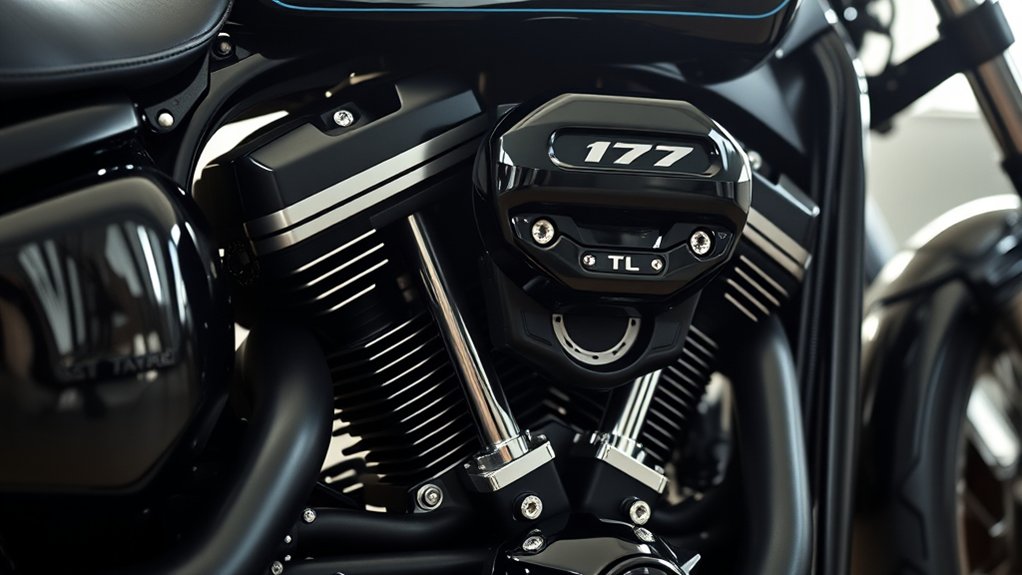
You’ll notice the Milwaukee-Eight 117 engine has a 1,923 cc displacement, which really ramps up the torque output. It delivers a solid 123 ft-lb at 3,500 RPM.
This extra power gives the Breakout models a noticeable boost in acceleration and overall performance.
Engine Displacement Impact
When you upgrade to the Harley-Davidson Milwaukee-Eight® 117 engine, you gain a significant power boost thanks to its 1,923 cc (117 cubic inches) displacement. This larger engine capacity directly impacts the Breakout models by enhancing combustion efficiency and overall performance.
Here’s how the engine displacement makes a difference: increased displacement allows for more air-fuel mixture intake, improving combustion quality. Higher combustion efficiency translates into greater horsepower output.
The 1,923 cc size supports robust power delivery, contributing to a more aggressive ride.
Plus, enhanced engine capacity enables sustained power output during extended cruising. This displacement upgrade fundamentally changes the Breakout’s performance profile, making it a muscular and commanding machine on the road.
Torque and Acceleration
Although displacement plays a crucial role, the Milwaukee-Eight® 117 engine’s true strength lies in its torque output, delivering 123 ft-lb at just 3,500 RPM. This torque provides quick throttle response and smooth acceleration, especially in low to mid-range RPMs. It really enhances your riding experience on Breakout models.
The engine’s linear power delivery ensures consistent performance across various conditions. That makes city rides and highway cruising effortless.
| Feature | Specification | Benefit |
|---|---|---|
| Torque | 123 ft-lb @ 3,500 RPM | Strong acceleration |
| Power Delivery | Linear | Smooth throttle response |
| RPM Range | Low to mid | Maximum torque where needed |
| Acceleration | Rapid | Quick throttle response |
| Riding Conditions | City & Highway | Versatile performance |
Fuel Economy of the 117 Engine
Since the Harley-Davidson Milwaukee-Eight® 117 engine has a displacement of 1923 cc (117 cubic inches), it delivers powerful performance while maintaining an estimated fuel economy of around 47 miles per gallon in combined city and highway riding.
The Milwaukee-Eight® 117 engine combines robust power with an impressive 47 mpg fuel economy.
You’ll find that this balance results from meticulous engineering focused on efficiency without sacrificing torque or horsepower.
Consider these points about the 117 engine’s fuel economy:
- Fuel efficiency varies based on your riding style. Aggressive acceleration lowers mpg.
- Terrain and load conditions impact fuel consumption considerably.
- The engine’s design integrates advanced combustion technology to optimize fuel use.
- Harley-Davidson prioritizes maintaining strong performance while improving economy.
Understanding these factors helps you maximize the 117 engine’s fuel efficiency during your rides.
Harley Models Using the 117 Engine and Their Advantages
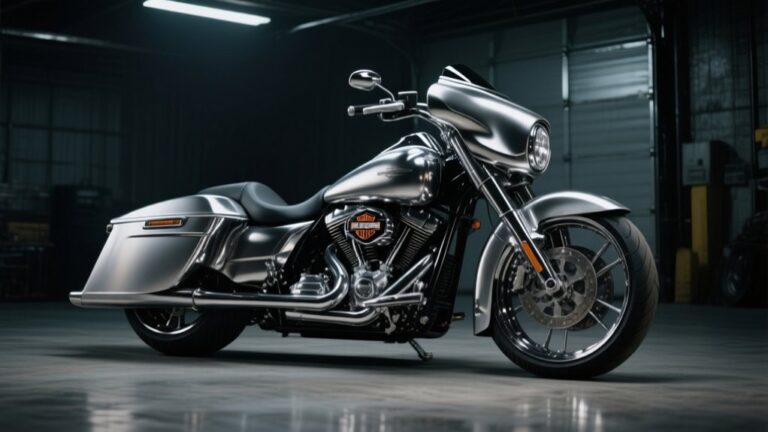
If you’re looking to experience the full potential of the Milwaukee-Eight 117 engine, several Harley-Davidson models come equipped with this powerhouse. The CVO lineup, Breakout, and Low Rider S/ST all feature this 1,923 cc V-twin engine.
It delivers up to 124 lb-ft of torque and around 101 horsepower at 4,750 RPM.
Its air and oil-cooled design with four valves per cylinder optimizes combustion efficiency and thermal management. These models benefit from enhanced power output, giving you stronger acceleration and superior highway performance compared to earlier engines.
What Riders Think About the 117 Engine’s Ride Feel
Riders consistently highlight the Milwaukee-Eight® 117 engine’s smooth and linear power delivery, which makes acceleration feel effortless and controlled. When you ride with this engine, you’ll notice immediate torque response and a commanding presence on the road.
The Milwaukee-Eight® 117 engine delivers smooth, linear power with immediate torque and commanding road presence.
Here’s what riders emphasize about the 117 engine’s ride feel:
- Massive torque output of 123 ft-lb delivers strong, confident acceleration from idle.
- Reduced vibrations improve comfort during extended rides.
- Deep, aggressive exhaust note enhances the sensory riding experience.
- Versatility supports both relaxed cruising and spirited, high-performance riding.
These aspects combine to provide you with a technically refined yet engaging ride. It allows precise throttle control and sustained power without compromising comfort or road presence.
Converting 117 Cubic Inches to Cubic Centimeters (cc)
Although engine displacement is often measured in cubic inches in the US, converting the Harley 117 engine’s 117 cubic inches to cubic centimeters (cc) gives a clearer understanding for international standards.
To convert cubic inches to cc, multiply the cubic inch value by the precise factor of 16.3871. When you apply this to the Harley 117 engine, you multiply 117 by 16.3871, which results in approximately 1,923 cc.
So, the 117 cubic inch engine is equivalent to a 1,923 cc engine.
This makes it easier for you to compare it with engines measured in metric units. Understanding this conversion helps you get a better grasp of the engine’s size and performance potential on a global scale.
Frequently asked questions
How Often Should I Service the Milwaukee-Eight 117 Engine?
You should service the Milwaukee-Eight 117 engine every 10,000 miles or once a year, whichever comes first. During service, change the oil to keep your engine running at its best and lasting longer.
Make sure to check and replace the air filter too. This helps ensure proper airflow and combustion.
It’s also a good idea to inspect the spark plugs around this time for smooth ignition.
Don’t forget to keep an eye on your coolant and oil levels regularly. Following these simple steps will help your engine run reliably and efficiently.
What Type of Oil Is Best for the 117 Engine?
You might think any oil would do, but the best type for your 117 engine is 20W-50 synthetic motorcycle oil. It’s specially formulated to handle the Milwaukee-Eight’s high heat and stress, unlike regular oils that can break down faster.
Always choose oils meeting API SN or later and JASO MA or MA2 standards.
Using the right synthetic oil keeps your engine running smoothly, preserving power and extending its life.
Are There Any Common Issues With the 117 Engine?
Yes, you might encounter some common issues with the 117 engine. Vibration and noise problems can come up, often linked to engine mounting or tuning.
Cooling system components sometimes fail, so it’s a good idea to keep an eye on them.
You’ll need to maintain the fuel system and spark plugs more frequently because of its high output.
Also, watch out for oil leaks around the cylinder heads or valve covers.
Regular servicing and proper break-in really help you avoid long-term problems.
Can the 117 Engine Be Modified for Racing?
Think of the 117 engine as a wild stallion ready to be trained for the racetrack. Yes, you can modify it for racing by upgrading the exhaust, intake, camshaft, and ECU tuning to boost power and torque.
However, you should proceed carefully, as these modifications might void your warranty and affect durability.
Always work with experienced mechanics to optimize performance without compromising reliability or safety.
How Loud Is the 117 Engine Compared to Other Models?
You’ll find the 117 engine considerably louder than other Harley models like the 107 and 114. Its high-displacement Milwaukee-Eight design and staggered 2-into-2 exhaust produce a deeper, more resonant exhaust note.
When you rev it aggressively, the decibel levels spike noticeably, offering a richer, more visceral sound.
This makes the 117’s rumble a distinct, muscular signature compared to the quieter, more subdued tones of smaller engines.
Final Thought
In short, the 117 in Harley-Davidson engines means 117 cubic inches, which converts to about 1,917 cc. This significant displacement turbocharges performance, delivering power that feels like a thunderstorm under your seat.
Understanding this helps you appreciate how Harley’s Milwaukee-Eight 117 balances raw strength with rideability. Whether you’re comparing engine specs or seeking that perfect breakout model, knowing the exact cc gives you the technical edge to choose wisely and ride confidently.