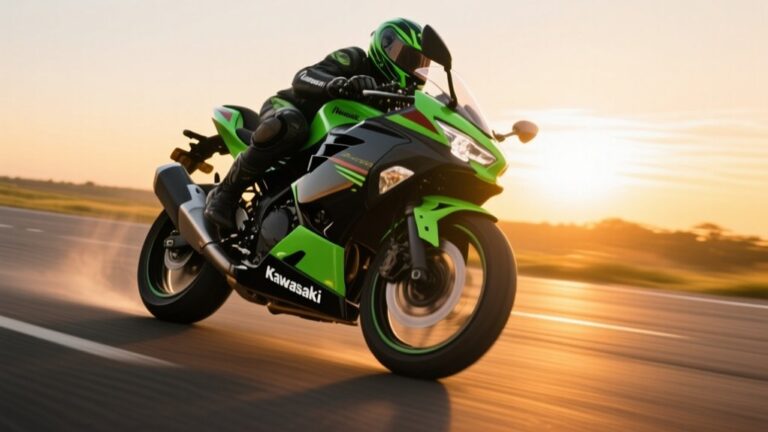
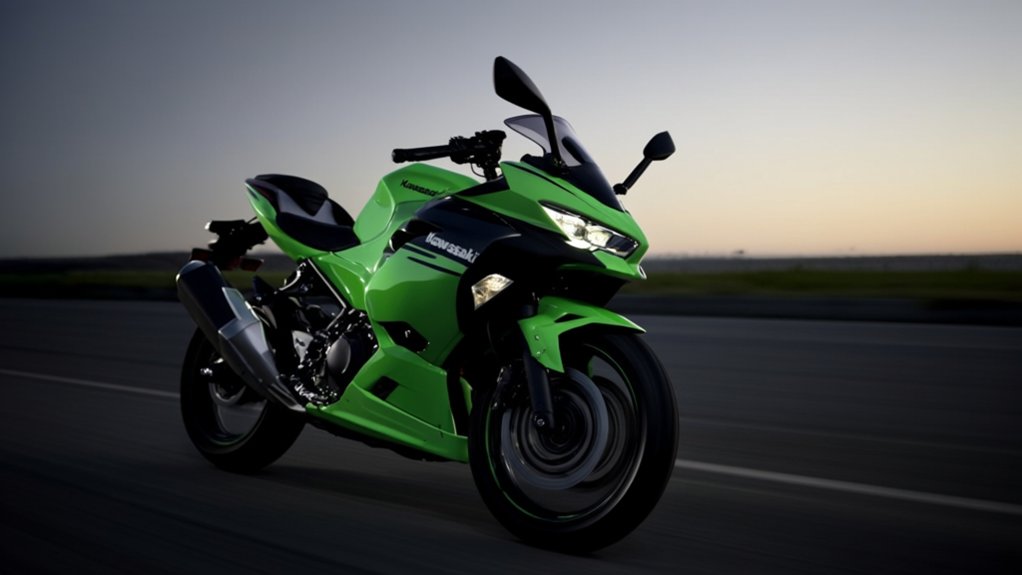
How Fast Does A Kawasaki Ninja 400 Go – Overview
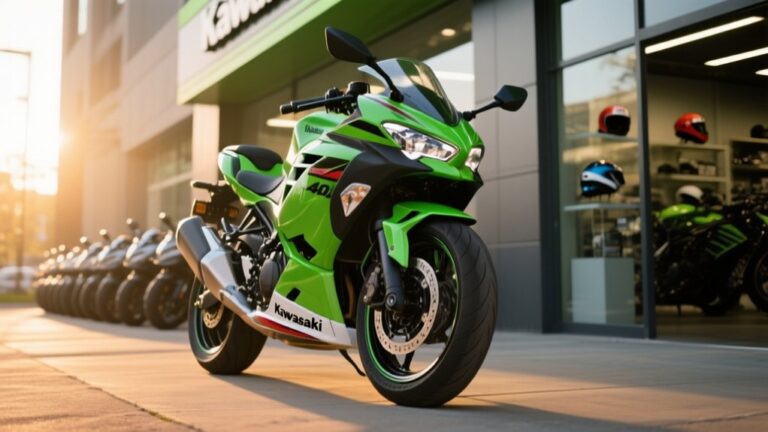
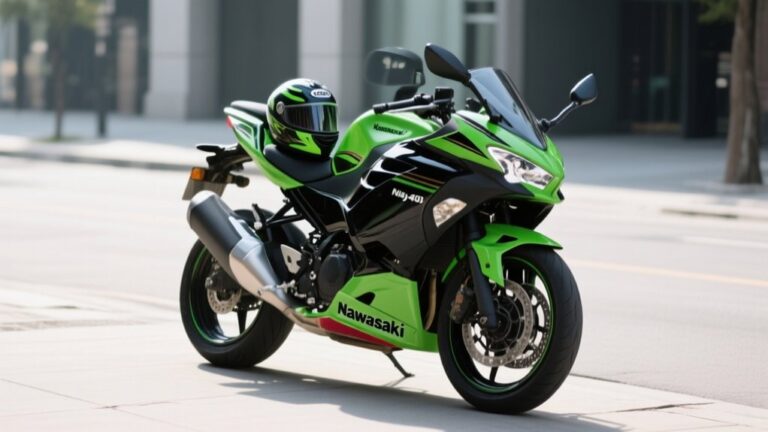
You’ll get from 0 to 60 mph in about 4.6 seconds and hit a top speed just over 110 mph on the Kawasaki Ninja 400, thanks to its 399cc twin-cylinder engine delivering 43 horsepower. It balances quick acceleration with strong top-end performance, outperforming many bikes in its class.
Factors like wind resistance and rider posture impact speed. But with the right maintenance and tuning, you can push it even further. Explore how it stacks up against rivals and ways to maximize its potential.
How Fast Can the Kawasaki Ninja 400 Accelerate and Reach Top Speed?
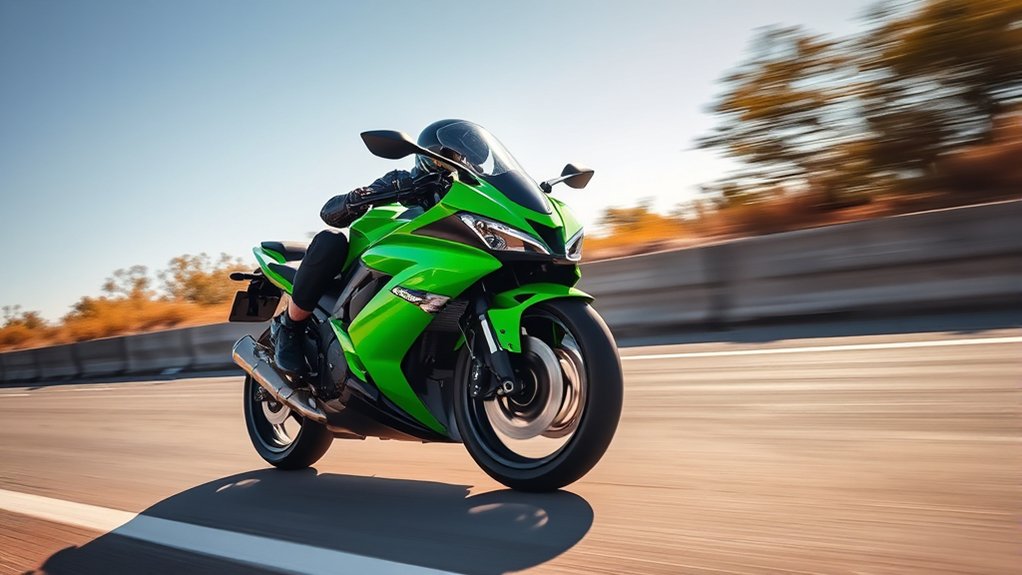
Although the Kawasaki Ninja 400 is designed as a lightweight sportbike, it packs impressive acceleration and speed that can thrill both new and experienced riders. You can expect the Ninja 400 to accelerate from 0 to 60 mph in about 4.63 seconds, showcasing its quick response in stock form.
Its top speed hovers around 112 mph, achieved near 10,600 rpm in sixth gear. Wind resistance plays a significant role, so adopting a tight tuck can boost your velocity.
If you’re looking to push boundaries, modifications can elevate the Kawasaki Ninja 400’s top speed to roughly 116-120 mph. Whether you keep it stock or tune it, this bike balances acceleration and top speed effectively, making it a standout in its class.
What Engine Features Power the Kawasaki Ninja 400’s Speed?
The Kawasaki Ninja 400’s speed is powered by a finely tuned 399cc twin-cylinder engine that delivers around 43.3 horsepower at 9,900 rpm. This gives you strong acceleration and impressive top-end performance.
Its high-revving nature lets the engine generate power efficiently across a wide rpm range, peaking above 7,000 rpm for sustained speed.
The engine’s high-revving design delivers efficient power across a broad rpm range, maintaining strength beyond 7,000 rpm.
The 11.5:1 compression ratio enhances combustion efficiency, which translates to better throttle response and output.
A large air-box combined with a downdraft intake optimizes airflow, ensuring the engine breathes smoothly at high speeds.
This balance of horsepower, compression ratio, and airflow makes the Ninja 400’s twin-cylinder engine both potent and responsive.
How Does the Kawasaki Ninja 400 Compare to Similar Bikes?
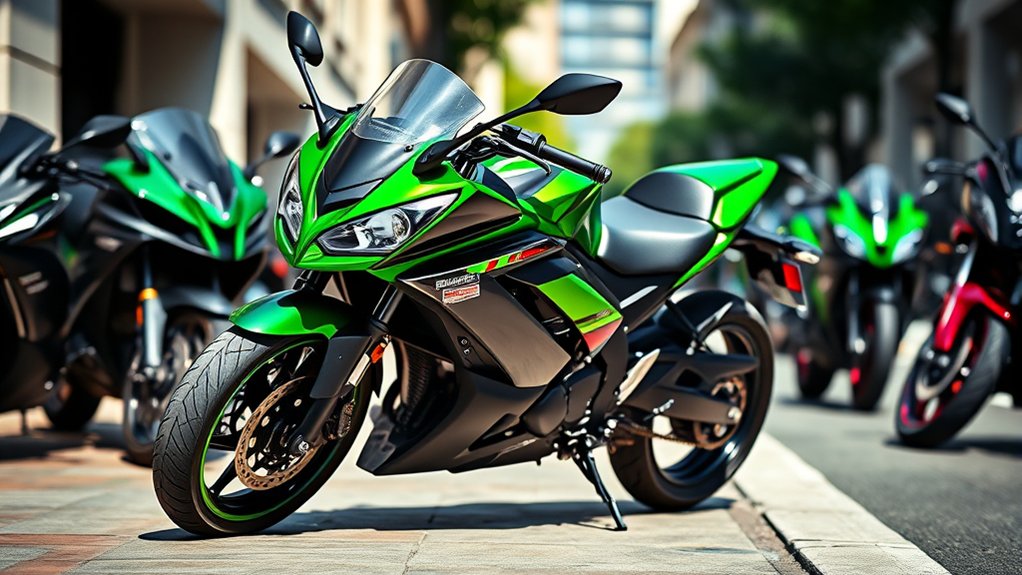
When you compare the Kawasaki Ninja 400 to similar bikes, you’ll find it stands out with a top speed around 112 mph and quick acceleration, hitting 0-60 mph in just about 4.34 seconds.
Its performance edges out many comparable bikes like the KTM 390 Duke and matches the Yamaha YZF-R3’s speed, thanks to a more powerful engine.
The Ninja 400 offers a sportier, more aggressive ride than naked bikes such as the Z400, even though they share similar top speed figures.
It also holds its own against larger models like the Ninja 500 and rivals in the 400cc sport bike category, including the Honda CBR500R and Suzuki GSX250R.
Overall, the Kawasaki Ninja 400 balances top speed and acceleration to deliver impressive performance in its class.
It’s a great choice if you want a bike that’s fast, nimble, and fun to ride.
What Real-World Factors Affect the Ninja 400’s Speed and Performance?
Because many factors come into play beyond raw engine specs, you’ll notice the Kawasaki Ninja 400’s speed and performance vary in real-world conditions. Wind resistance plays a major role. Adopting a tight tuck reduces drag and boosts top speed.
Your riding position and weight also influence acceleration and cruising velocity, especially on highways. Engine tuning, such as horsepower enhancements or fueling adjustments, can push the bike beyond its stock limits.
Rider posture, weight, and engine tuning all play key roles in boosting speed and acceleration.
Road conditions matter too. Smooth surfaces and minimal incline help you reach higher speeds, while rough or uphill roads reduce performance.
Finally, maintenance is vital. Keeping air filters clean and tires properly inflated guarantees the Ninja 400 operates efficiently, maximizing speed potential.
Paying attention to these factors lets you better understand and optimize your bike’s real-world performance.
How to Get the Most Speed Out of Your Kawasaki Ninja 400
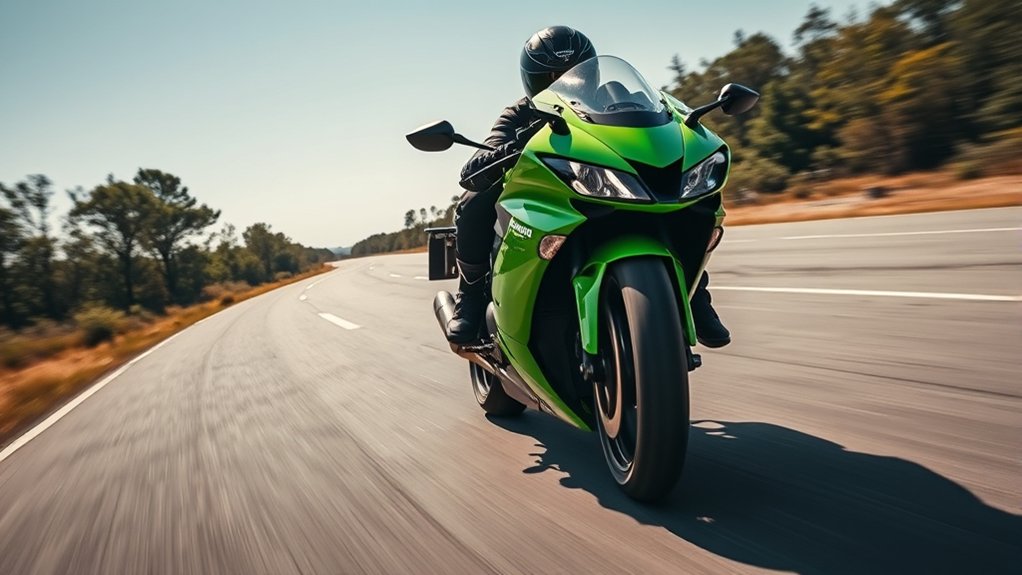
If you want to release the full speed potential of your Kawasaki Ninja 400, focusing on engine tuning and maintenance is essential. Proper engine tuning guarantees efficient combustion, while a clean air filter maximizes airflow for better performance.
You can also enhance your bike’s top speed by optimizing other components. Here are four key areas to focus on:
- Replace or clean the air filter regularly to maintain ideal airflow.
- Upgrade to lighter, high-performance tires to improve acceleration and top speed.
- Keep the chain lubricated and at the right tension to minimize power loss.
- Adjust the sprockets for a higher gear ratio to increase top speed, though expect a slight drop in acceleration.
Master these, and you’ll get the most speed out of your Ninja 400. It’s all about keeping things tuned and working smoothly.
Frequently asked questions
What Is the Fuel Efficiency of the Kawasaki Ninja 400?
The Kawasaki Ninja 400 delivers impressive fuel efficiency, averaging around 72 miles per gallon (mpg). With its 14-liter fuel tank, you can expect to ride about 200 miles before refueling.
Its 399cc engine is designed for economical daily use, helping you save on fuel costs whether you’re commuting in the city or taking longer trips. This balance of power and efficiency makes it a smart, budget-friendly choice for riders like you.
How Comfortable Is the Kawasaki Ninja 400 for Long Rides?
You’ll find the Kawasaki Ninja 400 quite comfortable for long rides, thanks to its 785mm seat height that suits various riders. Its fairing cuts wind effectively, reducing fatigue during highway stretches.
The lightweight chassis and responsive suspension keep the ride smooth and stable, even when you push it.
Some riders feel the stock suspension is a bit soft. But upgrading it can make those longer journeys even more enjoyable and less tiring.
What Safety Features Does the Kawasaki Ninja 400 Include?
You’ll appreciate the Kawasaki Ninja 400’s safety features like ABS, which prevents skidding during sudden stops and gives you better control.
Its slipper clutch stops rear wheel hop when you downshift hard, keeping rides smooth and safe.
The bright LED headlights enhance night visibility, and the lightweight chassis improves your stability in tight turns.
How Much Does the Kawasaki Ninja 400 Weigh?
The Kawasaki Ninja 400 weighs about 168 kg (370 lbs) when wet, meaning it includes all fluids and is ready to ride. This weight strikes a great balance, making the bike nimble and easy to handle, especially if you’re a beginner.
You’ll appreciate how its lightweight design helps with quick acceleration and sharp cornering. It gives you a sporty feel without overwhelming you on the road.
What Maintenance Is Recommended for the Kawasaki Ninja 400?
Picture yourself cruising smoothly. Keeping your Ninja 400 in top shape means regularly checking valve clearances every 7,600 miles and changing the oil every 3,000 to 6,000 miles with synthetic oil.
Don’t forget to replace brake fluid yearly or every 12,000 miles.
Also, inspect tire pressure and tread before every ride.
Make it a habit to regularly examine and lubricate the chain, sprockets, and suspension. This will guarantee safety and keep your bike performing at its best.
Final Thought
Your Kawasaki Ninja 400 is like a finely tuned rocket, ready to launch with precision and speed. Understanding its engine features and real-world factors helps you uncover its full potential.
By comparing it to similar bikes, you see where it stands and how to push it further. With the right knowledge and care, you’ll ride faster and smoother, making every twist of the throttle a thrilling experience.