Where Are Kawasaki Mules Made – Here’s the Answer
Kawasaki Mules are primarily assembled in Lincoln, Nebraska. Key models like the Mule SX, 610, and 2026 are engineered and manufactured in Japan for precision and quality. Japan’s advanced production guarantees higher reliability and fuel efficiency.
Global parts sourcing supports availability and cost-effectiveness. Knowing where your Mule is made really matters for performance, warranty, and support. Keep exploring to understand how manufacturing origins impact your Mule’s quality and maintenance options.
Where Are Kawasaki Mules Assembled and Manufactured?
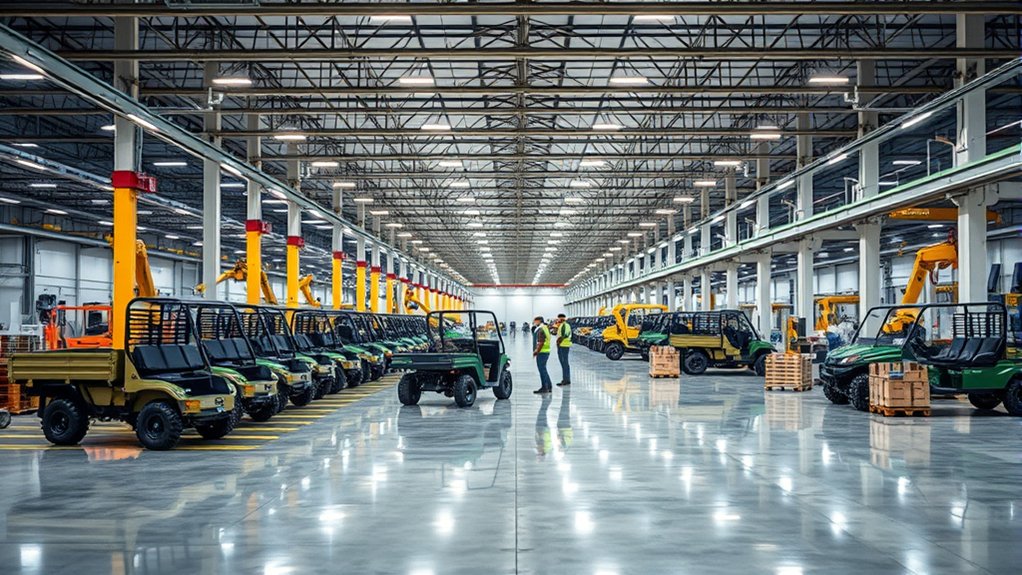
Although Kawasaki sources components globally, Kawasaki Mules are primarily assembled and manufactured in the United States at the company’s Lincoln, Nebraska facility. When you choose a Kawasaki Mule assembled in the USA, you benefit from rigorous quality control and modern manufacturing processes.
Kawasaki’s manufacturing facilities in Nebraska are equipped with advanced production lines designed to maintain high standards of durability and reliability. While parts come from various locations worldwide, the final assembly happens in these U.S. plants, ensuring each vehicle meets strict quality requirements.
Kawasaki’s commitment to American manufacturing means you get a utility vehicle built with precision and care. This approach aligns with customer expectations for robust performance and long-lasting service from their Kawasaki Mules.
Which Kawasaki Mule Models Come From Japan?
Several Kawasaki Mule models, including the Mule SX and Mule 610, are manufactured in Japan. These models benefit from Japan’s advanced engineering, ensuring high fuel efficiency and reliable Front Wheel performance. The 2026 model is also produced there, maintaining strict quality and safety standards.
Japanese production emphasizes precision and durable components. That’s key for the demanding use these vehicles face.
| Model | Key Feature |
|---|---|
| Mule SX | Exceptional Front Wheel handling |
| Mule 610 | High fuel efficiency |
| Mule 2026 | Advanced safety standards |
| Older Models | Precision engineering |
| New Models | Quality control and durability |
If you want a Kawasaki Mule known for quality and efficiency, Japanese-made models are your best bet.
Why Is Japan the Main Production Hub for Kawasaki Mules?
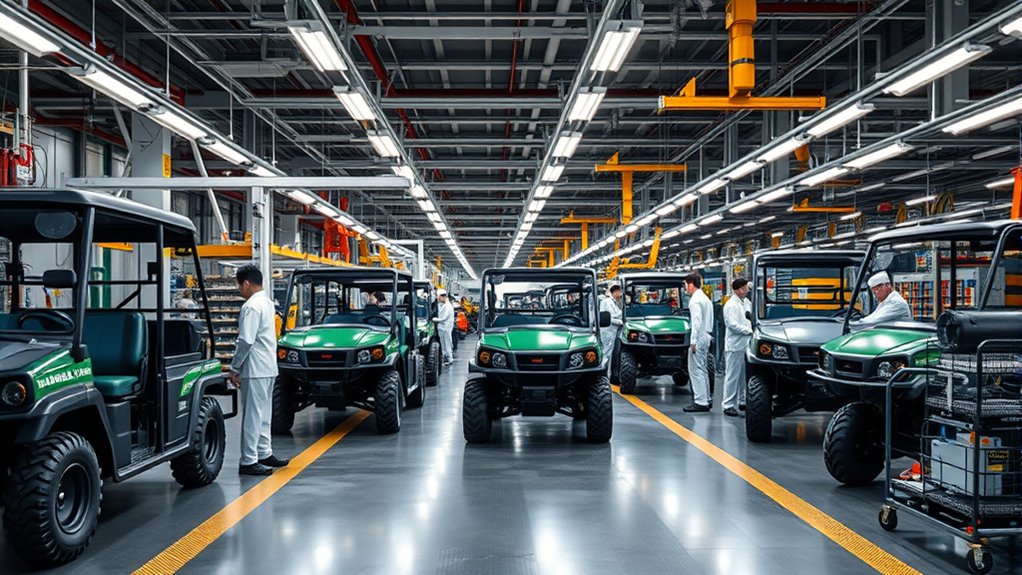
Because Kawasaki’s headquarters and main manufacturing facilities are located in Japan, the company can closely oversee production and maintain consistent quality standards. This centralization allows Kawasaki Heavy Industries to integrate design, engineering, and manufacturing processes efficiently.
You’ll find that the Japanese production of Kawasaki Mules benefits from advanced technology and precision engineering, reflecting Japan’s renowned industrial expertise. Manufacturing in Japan also enables Kawasaki to control supply chains and monitor every production stage directly.
Their extensive experience and solid reputation in Japanese manufacturing contribute profoundly to the reliability and high build quality of these utility vehicles.
How Kawasaki Ensures Quality in Mule Manufacturing
You can trust Kawasaki Mules because they’re built with precision engineering standards that make sure every component fits and works just right.
Plus, the company doesn’t just build them and move on—they conduct thorough quality inspections at every step of the manufacturing process. This way, any issues can be caught early on.
Thanks to these strict controls, Kawasaki keeps up the reliability and durability they’re famous for.
Precision Engineering Standards
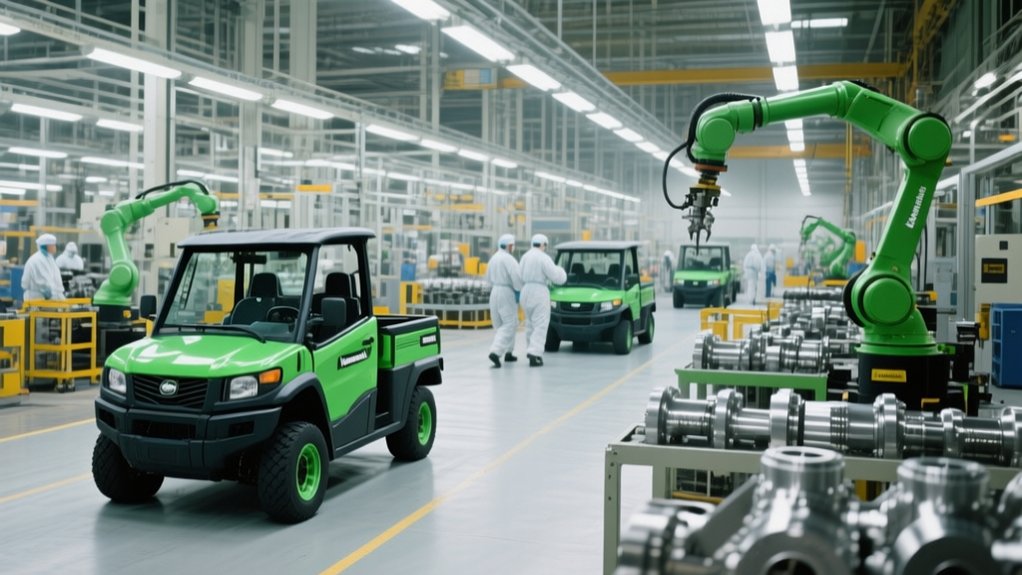
While manufacturing each Mule, Kawasaki guarantees quality by adhering to strict precision engineering standards, including ISO 9001 certification. You’ll find advanced CNC machining and robotic assembly processes used to ensure components are produced with high accuracy and consistency.
Kawasaki sources only high-grade materials and components that meet or exceed industry standards, ensuring durability and reliability. Their manufacturing facilities house testing laboratories where durability, performance, and safety evaluations are conducted on each Mule.
Moreover, Kawasaki implements continuous process improvements and regularly conducts quality audits throughout the manufacturing cycle. These measures ensure you receive a Mule built to exacting standards, combining precision engineering with robust materials and innovative production techniques for reliable, long-lasting performance.
Rigorous Quality Inspections
Kawasaki’s commitment to precision engineering extends into a thorough system of rigorous quality inspections designed to uphold the highest standards for every Mule. At multiple manufacturing facilities, you’ll find detailed component checks, performance testing, and safety assessments integrated throughout production.
Kawasaki employs advanced quality control technologies, including automated testing and inspection systems, to ensure consistency in every unit. Before any Mule leaves the factory, it undergoes a comprehensive final inspection to verify it meets strict quality benchmarks.
The quality assurance team continuously monitors production data and customer feedback, enabling ongoing improvements in manufacturing processes and product reliability. This meticulous approach ensures that each Mule delivers dependable performance and safety, reflecting Kawasaki’s dedication to superior quality.
What Global Sourcing Means for Kawasaki Mule Production and Parts
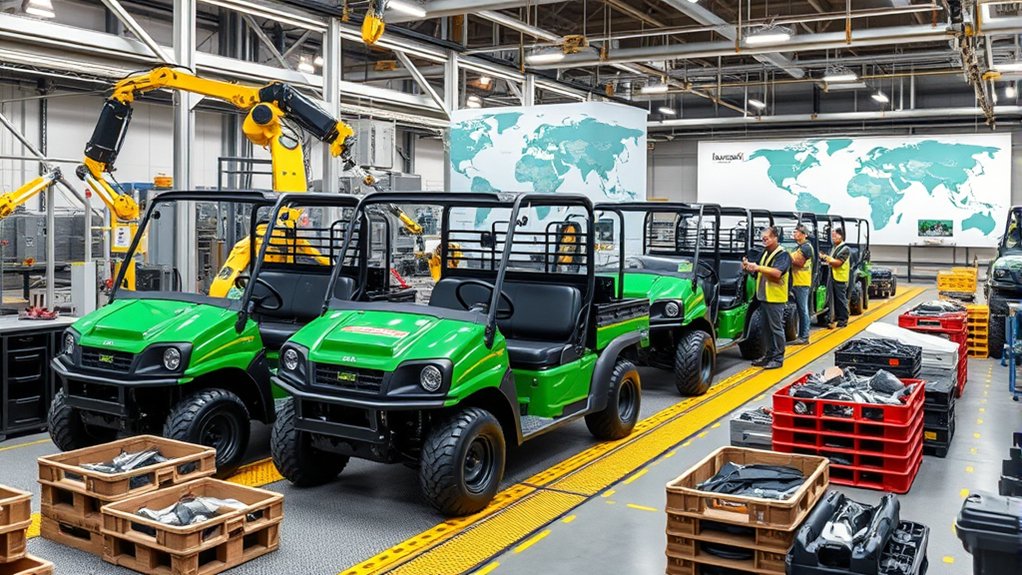
You should know that Kawasaki gets parts from all over the world to keep quality high and costs down. This global approach means they can make sure parts are always available by relying on different manufacturing centers.
When you understand where these parts come from, it’s easier to see how Kawasaki balances making things efficiently while keeping a steady supply of components.
International Manufacturing Locations
Because Kawasaki Mules serve diverse markets worldwide, their production spans multiple international locations to meet demand efficiently and control costs. You’ll find manufacturing facilities in Japan, the United States, and other Asian countries, all chosen for their advanced automotive production capabilities.
This global footprint allows Kawasaki to assemble Mules using high-quality parts sourced from various countries, ensuring each vehicle meets strict quality standards.
By strategically placing factories in key regions, Kawasaki can deliver Mules promptly to different markets and provide reliable customer support.
This international approach not only optimizes production but also helps keep pricing competitive without compromising durability or performance.
When you consider where Kawasaki Mules are made, it’s clear that their global manufacturing strategy plays a vital role in their success.
Impact on Parts Availability
The global manufacturing network behind Kawasaki Mules directly influences the availability of parts for maintenance and repairs. Since Kawasaki Mules are primarily made in Japan, you benefit from high-quality production standards.
Kawasaki’s global sourcing strategy helps maintain consistent supply chains, allowing you to access replacement parts worldwide. By sourcing components internationally, Kawasaki reduces manufacturing costs while adhering to strict quality requirements. This means you get reliable parts without compromise.
However, relying on global suppliers can sometimes affect parts availability due to shipping delays or geopolitical issues. Despite these challenges, Kawasaki’s integration of globally sourced parts generally enables quicker repairs and replacements.
This ensures you can keep your Mule operational regardless of your location. Overall, this global approach balances quality, cost, and accessibility for Mule owners like you.
Why Where Your Kawasaki Mule Is Made Matters for Reliability
Although Kawasaki Mules share a common brand reputation, where yours is made can have a big impact on its reliability. Regional manufacturing standards play a role in the build quality and durability of each unit.
For instance, models produced in Japan often benefit from higher precision engineering and stricter quality control. This usually means better long-term performance.
On the other hand, Mules made in the United States or other regions might use locally sourced materials. That can affect reliability in different ways.
Knowing where your Mule was made also helps you understand warranty terms and after-sales support since these can vary by region.
Some key things to consider include variations in quality control and engineering precision. Also, differences in material sourcing and how that impacts durability. Plus, regional labor and manufacturing practices can affect how long your Mule lasts.
When you keep these factors in mind, it’s easier to make an informed choice about your Kawasaki Mule’s expected reliability.
Where to Find Genuine OEM Parts for Kawasaki Mules
When you need to replace parts on your Kawasaki Mule, sourcing genuine OEM components guarantees the best fit and performance. You can buy these parts from authorized Kawasaki dealerships or official parts distributors. Many online retailers also offer OEM replacements, ensuring compatibility and quality.
Always verify authenticity by checking for Kawasaki branding and matching part numbers like 92045-0028 or 92045-0102. Kawasaki’s official website features a parts catalog and dealer locator to help you find genuine components for your model.
| Source | Key Features |
|---|---|
| Authorized Dealerships | Genuine parts, expert advice |
| Official Distributors | Certified OEM components |
| Online Retailers | Convenient, verified OEM parts |
| Kawasaki Website | Parts catalog, dealer locator |
| Part Numbers | Easy identification, authenticity |
How Knowing Your Mule’s Origin Helps You Make the Right Purchase
Since the manufacturing origin of your Kawasaki Mule affects regional compliance and part availability, knowing where it was made helps you choose a model that meets local regulations and service needs. By understanding your Mule’s origin, you can ensure it aligns with regional standards and avoid compatibility issues. It also helps you access genuine OEM parts and reliable service support more easily.
Knowing your Kawasaki Mule’s manufacturing origin ensures compliance, part availability, and reliable service support.
Plus, some Mules come with features tailored to specific markets, which might better suit your requirements.
Keep these points in mind when purchasing:
- Confirm compliance with local regulations to avoid legal complications.
- Verify part availability and service options in your area.
- Assess the authenticity and quality based on production location.
This knowledge lets you make a confident, informed purchase decision.
Frequently asked questions
What Is the Fuel Efficiency of Kawasaki Mules?
Kawasaki Mules typically offer fuel efficiency around 25-30 miles per gallon, depending on the model and how you use it.
For example, the 2026 Kawasaki MULE SX gets about 25 mpg under standard conditions. Your fuel economy will vary based on load, terrain, and task intensity.
With a 4.2-gallon tank, you can expect a range of roughly 105 to 126 miles before needing to refuel.
That makes it pretty efficient whether you’re using it for work or just some recreation.
How Often Should Kawasaki Mules Undergo Maintenance?
You should perform maintenance on your Kawasaki Mule every 50 hours of use or at least once a year, whichever comes first. This includes checking and replacing engine oil, inspecting the air filter, and examining the brake system.
Don’t forget to inspect wheel bearings annually.
Regularly check the coolant and drive belt.
Keeping up with these tasks helps you avoid major repairs and keeps your Mule running smoothly and safely.
What Are the Common Uses for Kawasaki Mules?
You’ll find Kawasaki Mules are commonly used for hauling tools and supplies on farms and ranches. You can rely on them in construction and landscaping for transporting materials across rough terrain.
They’re also great for outdoor recreation like trail riding and hunting.
In industrial settings, you’ll use them for moving personnel and equipment. Plus, they assist with event setups, security patrols, and groundskeeping, making them versatile work vehicles.
They really do cover a lot of ground for different tasks.
Are Kawasaki Mules Suitable for Off-Road Terrain?
Kawasaki Mules tackle off-road terrain like a mountain goat scaling rocky cliffs. You’ll appreciate their durable suspension, high ground clearance, and rugged tires that grip uneven surfaces effortlessly.
Their 401cc air-cooled engine delivers steady power, while the sturdy chassis and mechanical drum brakes keep you in control.
Whether steering through muddy trails or rocky paths, these vehicles are built for versatility and reliability. They make an excellent choice for off-road adventures.
You’ll find they handle rough terrain with ease and confidence.
What Safety Features Do Kawasaki Mules Include?
Kawasaki Mules include several key safety features to keep you secure. They come with halogen headlights and tail/brake lights for visibility.
And drum brakes on all wheels for reliable stopping power. You’ll find an oil temperature light that alerts you if the engine overheats.
The sturdy suspension systems maintain stability, while a mechanical drum park brake guarantees the vehicle stays put when parked. This gives you better control and safety during operation.
Final Thought
Understanding where your Kawasaki Mule is made is like tracing the roots of a sturdy tree. Knowing its origin reveals the strength and reliability beneath the surface. With Japan as the heart of production, Kawasaki guarantees exceptional quality through meticulous manufacturing and global sourcing.
This knowledge empowers you to make informed choices. It helps you secure genuine parts and ensures lasting performance. In the end, where your Mule comes from isn’t just a detail. It’s the foundation of trust in every ride.