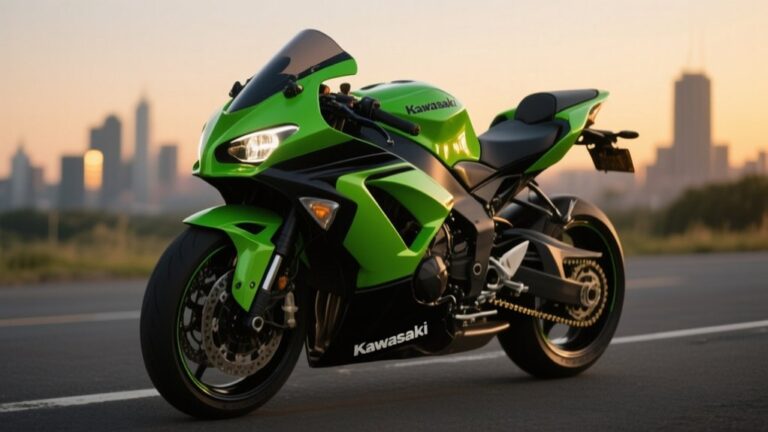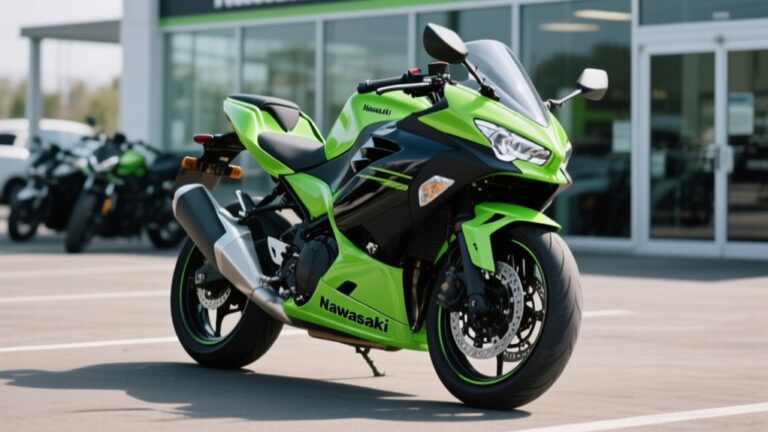
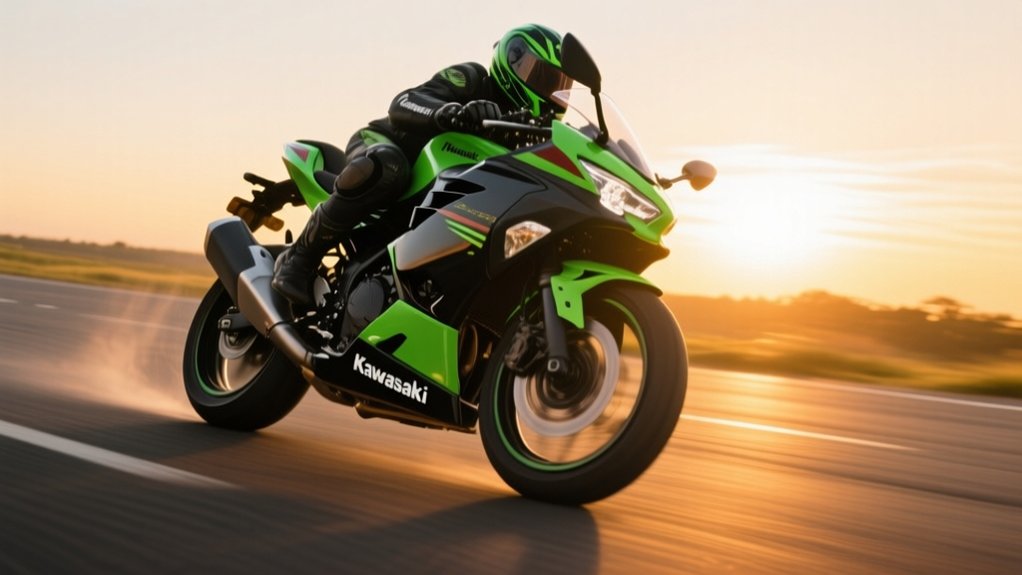
How Fast Does A Kawasaki Ninja 500 Go – Full Story
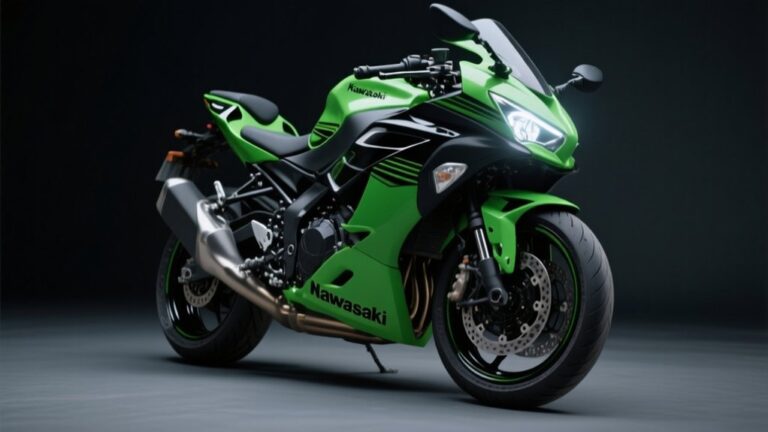
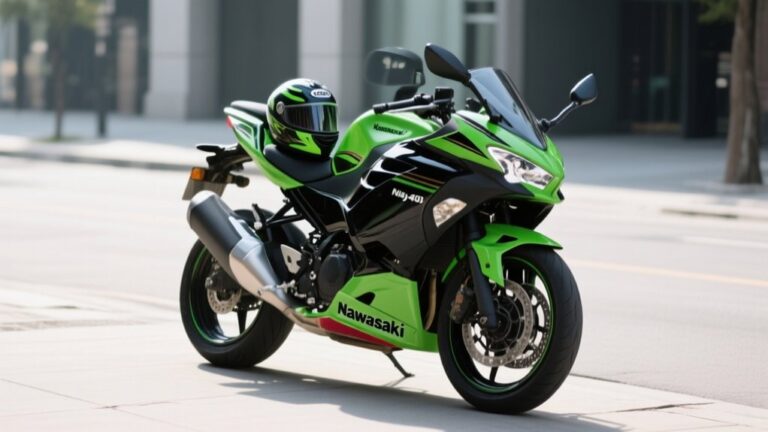
You can expect the Kawasaki Ninja 500 to reach a GPS-verified top speed of about 115 mph, although it’s capable of hitting 126 mph under perfect conditions. Its 451cc parallel-twin engine delivers smooth, responsive power and quick acceleration. Plus, the lightweight frame and aerodynamic design keep handling sharp and stable.
The six-speed gearbox and slipper clutch help you maintain control at high speeds. If you want to understand how all these features come together for an exciting ride, there’s plenty more to explore. It’s definitely a bike that offers a great balance of performance and control.
What Is the Top Speed of the Kawasaki Ninja 500?
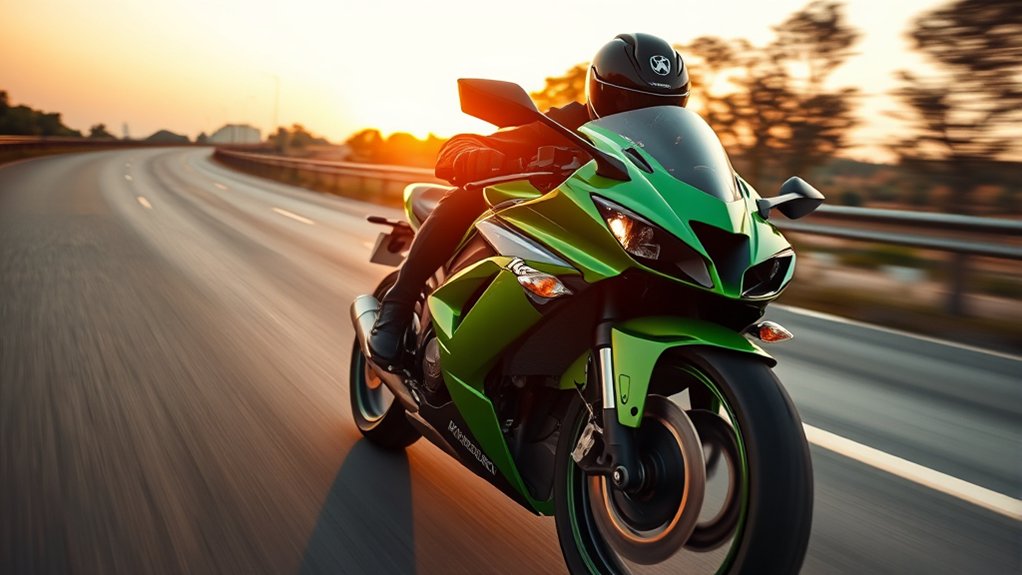
How fast can the Kawasaki Ninja 500 really go? Its top speed clocks in at about 115 mph, verified through precise GPS testing rather than relying solely on the speedometer, which may overstate it slightly at 117-118 mph. This figure reflects real-world performance you can expect under ideal conditions. Think open highways with minimal wind resistance.
The Kawasaki Ninja 500 hits a genuine top speed of about 115 mph, confirmed by GPS testing.
The Kawasaki Ninja 500 achieves this speed efficiently thanks to its aerodynamic design and lightweight frame. Both are essential for reducing drag and enhancing stability at high velocities.
While its 451cc parallel-twin engine powers you comfortably through highway cruising and overtaking, it’s the bike’s overall build that allows you to consistently reach this impressive top speed.
Understanding these factors helps you appreciate what the Ninja 500 delivers on the road.
How the 451cc Engine Powers Ninja 500’s Acceleration
You’ll really notice the 451cc engine’s 51 horsepower and broad torque curve as you accelerate from 0 to 60 mph in just about 5 seconds. It’s a smooth, powerful push that gets you moving fast.
Plus, the clutch and transmission work together so seamlessly, making sure all that power is delivered just right. When you understand how these parts interact, it’s easier to see why the Ninja 500 performs so impressively.
Engine Power Output
The Kawasaki Ninja 500 packs a punch with its 451cc parallel-twin engine, delivering 51 horsepower at 10,000 rpm and 31.7 lb-ft of torque at 7,500 rpm. This engine output guarantees a broad power band, giving you smooth acceleration throughout the rpm range, especially with strong midrange torque.
You’ll appreciate how the bike balances power and control as you approach the rpm redline near 10,000 rpm, pushing the Ninja 500 toward its top speed of around 126 mph.
Key highlights include:
- Generous horsepower and torque for responsive throttle control
- Broad power band facilitating seamless city and highway riding
- Well-balanced midrange torque supporting both acceleration and cruising
This combination makes the Ninja 500’s engine power output both versatile and thrilling.
Acceleration Performance Metrics
Although the Ninja 500’s 451cc engine might seem modest on paper, it delivers impressive acceleration that keeps you confidently ahead of traffic. Producing around 51 horsepower at 10,000 rpm, this parallel-twin powers brisk speed bursts, speeding from 0 to 60 mph in about 5.0 seconds.
Its strong performance continues through the quarter mile, which it covers in roughly 14.1 seconds at 96 mph. Thanks to a broad torque curve, you experience smooth, manageable acceleration across various speeds, making the bike versatile for city and highway rides.
The engine’s linear power delivery, combined with a lightweight chassis, ensures responsive acceleration that feels natural and controlled. When it comes to acceleration performance metrics, the Ninja 500 strikes a perfect balance between power and rideability.
Clutch and Transmission Role
When you shift through the six-speed gearbox of the Kawasaki Ninja 500, the clutch and transmission work seamlessly to harness the 451cc engine’s power for peak acceleration.
The assist clutch reduces pull effort, allowing smooth shifting even during aggressive downshifting. At the same time, the slipper clutch enhances stability control by preventing rear-wheel hop.
This precise coordination ensures consistent power delivery from the engine to the wheels.
Key features include:
- Assist clutch for easier gear changes and reduced rider fatigue
- Smooth shifting enabled by the six-speed gearbox’s optimized design
- Stability control during aggressive downshifting thanks to the slipper clutch
Together, these elements manage the Ninja 500’s torque efficiently. They enable rapid acceleration and confident handling under various riding conditions.
How Weight and Aerodynamics Affect Ninja 500 Speed
You’ll notice the Ninja 500’s lightweight frame really helps boost its speed by cutting down overall mass.
Plus, its aerodynamic design reduces drag, so you can slice through the air more efficiently.
When you put those two together—weight and aerodynamics—they work hand in hand to shape how quickly and smoothly this bike can reach its top speed.
Impact of Bike Weight
How exactly does the Ninja 500’s weight influence its speed and handling? Its lightweight steel trellis frame, with a curb weight around 372.6 lbs (non-ABS), plays a crucial role in boosting acceleration and reaching top speed.
By minimizing overall weight, you’ll notice sharper handling and easier control, especially in tight corners.
Key impacts of the Ninja 500’s weight include enhanced acceleration thanks to reduced mass, allowing quicker speed gains. It also improves handling and agility, making the bike more responsive during maneuvers.
Plus, the lower curb weight works hand in hand with aerodynamics to reduce drag and increase efficiency.
All these factors together let you push the Ninja 500 closer to its top speed of roughly 126 mph with confidence and precision. It really makes a difference when you’re out on the road or hitting the track.
Role of Aerodynamic Design
Why does the Ninja 500 feel so nimble and quick on the road? Its aerodynamic bodywork plays a vital role. By expertly directing airflow, the streamlined fairings reduce wind resistance and turbulence, boosting aerodynamic efficiency. This means you experience less drag, allowing the bike to slice through air effortlessly.
Combined with a lightweight frame, this design enhances stability and acceleration, making the Ninja 500 agile and responsive. The windscreen also minimizes wind fatigue during highway rides, helping you maintain control at higher speeds.
Thanks to these features, the Ninja 500 can reach a top speed of around 126 mph while staying stable and composed. So, the bike’s aerodynamic design not only sharpens handling but also greatly increases its speed potential.
How the Gearbox and Clutch Help You Control Speed
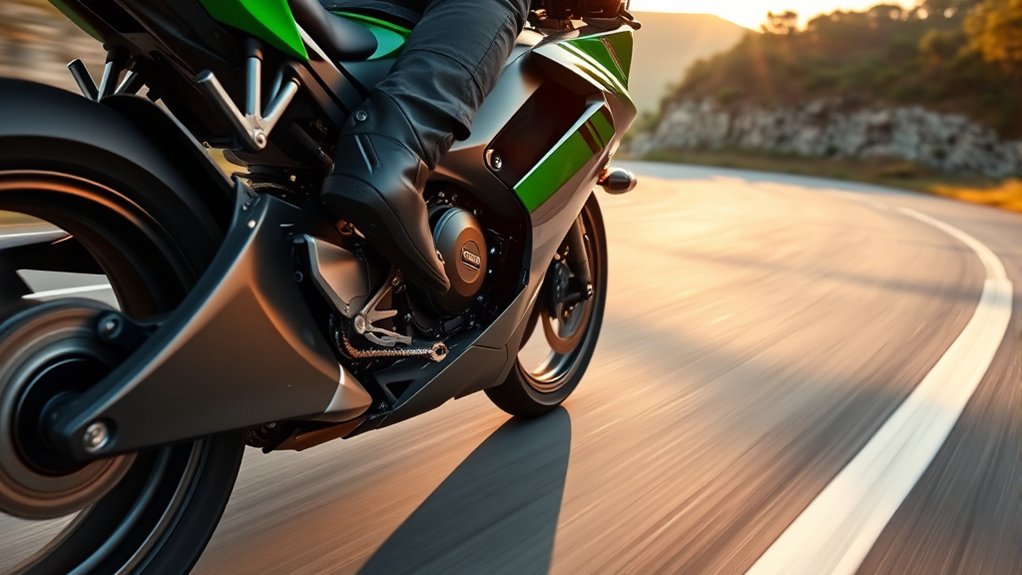
Although mastering speed on the Kawasaki Ninja 500 depends on many factors, understanding the role of its six-speed gearbox and assist and slipper clutch is key. The gearbox lets you select the right gear to maintain smooth acceleration and precise speed control.
The assist clutch reduces pull effort, making it easier to operate and reducing rider fatigue. The slipper clutch prevents rear-wheel hop during aggressive downshifting, improving stability.
Proper gear shifting at the ideal RPM, near 10,000, maximizes power and manages engine braking effectively.
Together, they deliver predictable power, letting you control speed confidently in varying situations.
- Six-speed gearbox enables smooth gear shifting and speed modulation
- Assist and slipper clutch enhance control and reduce rider fatigue
- Engine braking through clutch use allows precise deceleration without losing balance
What Riding the Ninja 500 on the Highway Feels Like
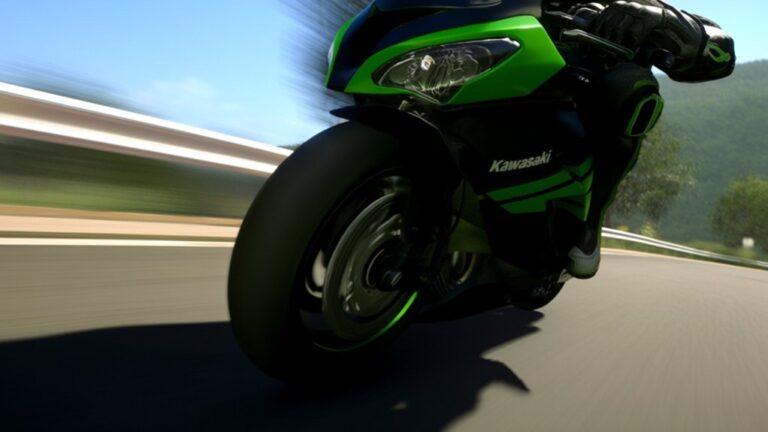
What does it feel like to ride the Kawasaki Ninja 500 on the highway? The riding experience balances smooth power and stability, especially at highway speeds around 70 mph. The 451cc engine stays within 7,500-8,000 rpm, delivering quiet, steady engine performance with minimal vibrations.
The windscreen plays an essential role in comfort, reducing wind fatigue during longer rides. Its lightweight frame and responsive suspension add to the bike’s confident handling without sacrificing rider ease.
| Aspect | Experience Description |
|---|---|
| Engine Performance | Smooth, quiet power at highway RPM range |
| Stability | Lightweight frame ensures confident rides |
| Comfort | Windscreen reduces fatigue, minimal vibration |
This combination makes highway cruising on the Ninja 500 both enjoyable and efficient.
How Ninja 500’s Handling Helps Maintain Speed Safely
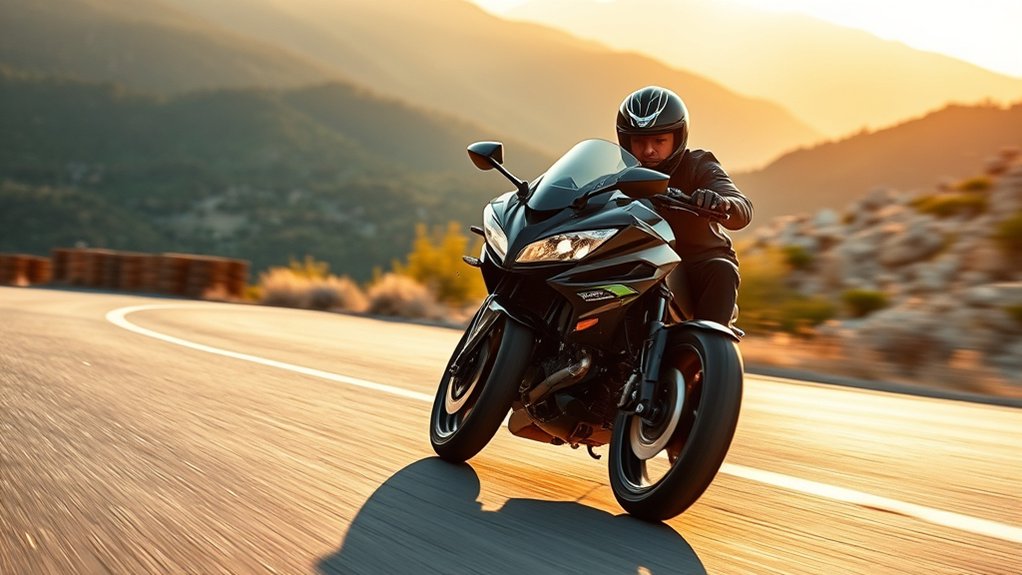
Riding the Ninja 500 comfortably at highway speeds is just one part of the experience. How the bike handles during those moments really makes all the difference in maintaining control and staying safe.
Its lightweight trellis frame and responsive suspension deliver stability and agility, so you can corner confidently without hesitation.
The 41mm telescopic front fork combined with Uni-Trak rear suspension smooths out bumps, which helps you keep control on uneven roads.
Key handling features include agile cornering, thanks to a low center of gravity and a narrow seat that let you make tight, precise maneuvers.
The effective brakes, including optional ABS, provide smooth deceleration, making sure your speed adjustments are safe and reliable.
Plus, the predictable handling means you can maintain stability and control even during dynamic riding situations.
This combination of suspension, brakes, and frame design lets you keep your speed safely without giving up on handling quality.
How Ninja 500’s Speed Compares to Similar Entry-Level Bikes
When you compare the Kawasaki Ninja 500 to other entry-level bikes, its speed and power clearly stand out. With a top speed of about 115 mph, it surpasses many 300-400cc competitors, delivering impressive highway speed.
The Kawasaki Ninja 500 outpaces many 300-400cc bikes with its impressive 115 mph top speed.
Its 51 horsepower engine boosts acceleration, allowing quicker launches and higher velocity than models like the Yamaha MT-03 and Honda CBR500R.
In a speed comparison, the Ninja 500’s quarter-mile time of 14.1 seconds shows its edge in performance within the entry-level category.
Even compared to the Ninja 400, it offers marginally better top speed and power. That makes it a balanced choice for riders seeking both manageable handling and strong speed capabilities.
Tips to Safely Explore Ninja 500’s Speed Limits
Although the Kawasaki Ninja 500 can reach speeds up to 126 mph, you should always increase your speed gradually in controlled environments to explore its limits safely.
Managing speed and safety means respecting speed limits and preparing for highway cruising with the right mindset and gear.
Focus on these key tips:
- Use proper riding posture to maintain control and balance, especially at higher speeds.
- Rely on the bike’s braking system, including ABS if available, for reliable stopping power during fast riding.
- Wear full protective gear to safeguard yourself in case of sudden maneuvers or emergencies.
Taking it step by step really helps you get comfortable and stay safe out there.
Frequently asked questions
What Is the Fuel Efficiency of the Kawasaki Ninja 500?
You can expect the Kawasaki Ninja 500 to deliver impressive fuel efficiency, typically around 55-65 mpg depending on how you ride.
Its 3.7-gallon tank lets you go roughly 210-240 miles before refueling.
If you cruise steadily on the highway, you might squeeze out even better mileage, close to 26-28 km/L.
Real-world results vary, but overall, it’s a bike that balances power and economy quite well for daily rides or longer trips.
How Often Does the Ninja 500 Require Maintenance?
You know what they say, “A stitch in time saves nine,” so don’t skip your Kawasaki Ninja 500’s maintenance. You’ll want to change the oil every 3,000 to 3,700 miles and lubricate the chain every 600 to 1,000 miles.
Check or replace the air filter every 6,000 to 12,000 miles. Swap brake fluid every 12,000 miles or two years, and inspect tires, brakes, and suspension every 3,000 to 6,000 miles to keep it running smoothly.
It’s all about staying on top of these tasks to avoid bigger problems down the road.
What Are Common Modifications to Increase Ninja 500 Speed?
To boost your Ninja 500’s speed, you often install a high-flow aftermarket exhaust for better airflow and horsepower. Upgrading sprockets, either a larger rear or smaller front, improves acceleration. You can also remap the ECU to optimize fuel and ignition.
Adding performance air filters helps the engine breathe, while switching to lightweight sport tires reduces rolling resistance. These mods work together to give your bike a noticeable speed edge. It’s all about making your ride smoother and faster without going overboard.
How Comfortable Is the Ninja 500 for Long-Distance Rides?
You’ll find the Ninja 500 fairly comfortable for long-distance rides thanks to its upright riding position and adjustable Uni-Trak suspension. These features keep you stable and supported throughout your journey.
The seat cushioning uses low-rebound urethane, offering decent comfort. That said, it might feel a bit firm after many hours on the road.
The windscreen and bodywork help cut wind fatigue. Still, adding an aftermarket screen and taking regular breaks can really boost your long-ride comfort and confidence.
What Safety Gear Is Recommended When Riding the Ninja 500?
You should always wear a DOT-approved full-face helmet to protect your head and face.
Pair that with a durable, abrasion-resistant jacket featuring armor on elbows, shoulders, and back for upper body safety.
Don reinforced riding pants or Kevlar jeans with knee and hip armor.
Don’t forget gloves with knuckle protection and a firm grip.
Finish with sturdy, non-slip boots covering your ankles to shield your feet during sudden stops or falls.
It’s all about keeping yourself as safe as possible while enjoying the ride.
Final Thought
You’ll be impressed to know the Kawasaki Ninja 500 tops out around 112 mph, making it a standout in the entry-level sportbike category. Its 451cc engine, combined with lightweight design and sharp handling, means you can confidently explore its speed while staying in control.
Remember, mastering the gearbox and clutch is key to safely releasing its potential. With these insights, you’re ready to push limits without compromising safety or fun.