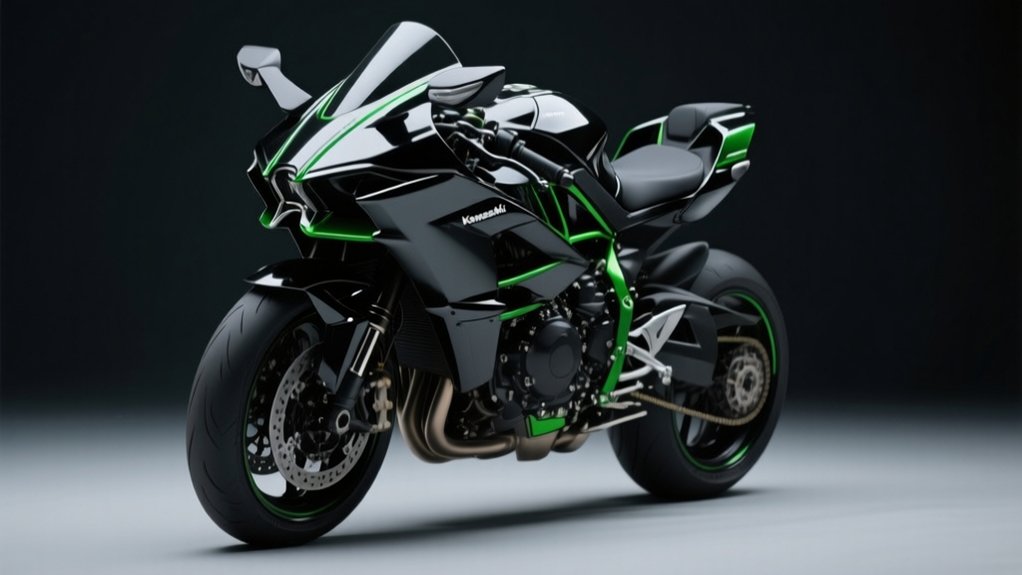
How Much Is A Kawasaki H2 – By the Numbers
If you’re eyeing a Kawasaki H2, expect prices generally between $34,400 and $42,000. It really depends on your dealer’s location and stock. Special editions like the Carbon can push costs above $40,000.
That price usually includes taxes and fees in the final out-the-door cost. Prices can fluctuate based on demand and availability. So, timing and negotiation are key to getting the best deal.
You’ll also want to take into account extra ownership expenses that add up over time. Keep that in mind before making a decision. Explore further to understand all the nuances behind these numbers.
What Does a New Kawasaki H2 Really Cost?
How much will you actually pay for a new Kawasaki Ninja H2? The MSRP typically ranges from $34,400 to about $42,000 out-the-door (OTD), depending on pricing factors like dealer negotiations and location.
Many buyers report paying close to MSRP, with some exceeding $40,000, especially for special edition models such as the Carbon.
Many buyers pay near MSRP, with special editions like the Carbon sometimes exceeding $40,000.
Remember, the purchase price includes more than the base MSRP; taxes and fees like title and dealer charges add to the final cost.
The new model cost can also be influenced by whether the bike is immediately available or must be ordered.
When comparing MSRP, consider these additional expenses and pricing factors carefully to understand the true price range you might encounter for the Kawasaki Ninja H2.
How Kawasaki H2 Prices Vary by Dealer and Location
Because Kawasaki H2 prices depend heavily on dealer practices and geographic location, you’ll often see significant variation in final purchase costs. Pricing typically ranges from $34,400 to $42,000 OTD, influenced by factors like dealer inventory and whether the bike is ordered or in stock.
Some dealers stick close to MSRP, while others adjust based on regional market demand and negotiation strategies.
Your purchase price will also reflect the dealer’s policies and local competition. In high-demand areas, you might pay closer to the top end, whereas less competitive regions could offer better deals.
Understanding how dealer location and inventory affect Kawasaki H2 pricing helps you anticipate costs more accurately and evaluate offers beyond just the sticker price.
Tips to Get the Best Deal on Your Kawasaki H2
When you’re ready to buy your Kawasaki H2, negotiating the price below the MSRP, which typically ranges from $34,400 to $42,000 OTD, can really help reduce your overall cost.
To get the best deal, focus on these strategies:
Focus on key strategies to secure the best deal on your Kawasaki H2 purchase.
- Timing and Model Year: Shop during off-peak seasons or near the end of the model year to take advantage of discounts and manufacturer incentives.
- Dealership Comparison: Do your research and compare pricing from multiple dealerships. This way, you can spot the best offers and avoid overpaying.
- Negotiation and Extras: Don’t be shy about negotiating not only the price but also extras like free accessories or maintenance packages.
It’s also worth considering ordering your H2 since dealers might offer better terms than for in-stock units.
What You’re Getting for Your Kawasaki H2 Dollars
Although the Kawasaki H2 carries a premium price tag that can reach up to $42,000 out the door, you’re investing in far more than just a motorcycle. You’re getting cutting-edge engineering, a supercharged engine, advanced electronic rider aids, and aerodynamics designed for peak performance.
The supercharged engine delivers exceptional horsepower, while electronic control systems enhance ride technology by optimizing performance features in real-time. Advanced modeling integrates chassis management and engine braking to provide seamless high-performance control.
This lets you push limits confidently. Performance management systems adjust power delivery and traction, ensuring stability and precision.
This sophisticated blend of technology and engineering means every dollar spent on the H2 translates into a meticulously crafted machine built for unparalleled speed, agility, and rider engagement.
Extra Ownership Costs You Shouldn’t Overlook
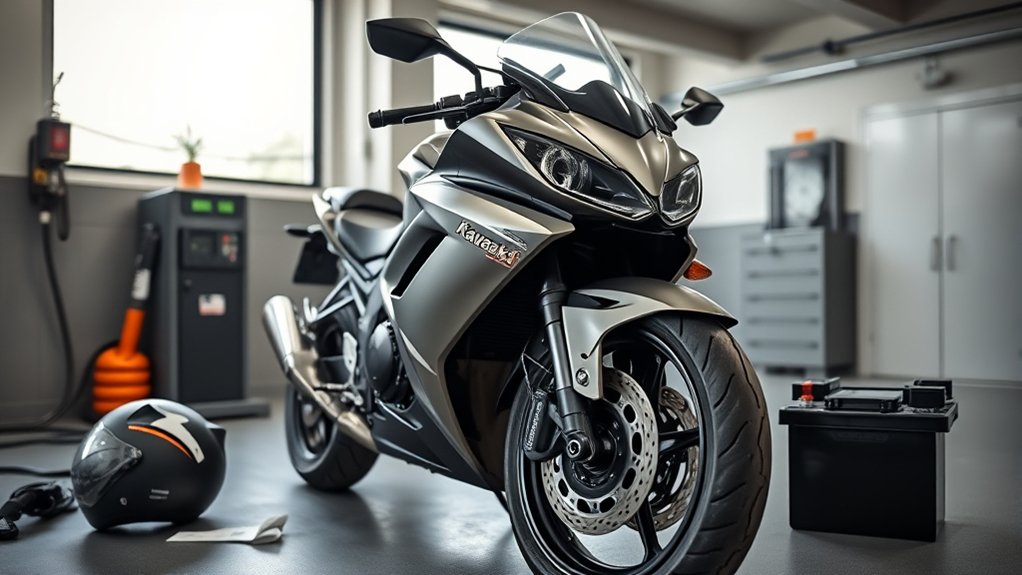
While the Kawasaki H2’s initial price reflects its high-performance engineering, you’ll also face substantial extra ownership costs that impact your overall investment. Understanding these long-term expenses is essential before committing.
Insurance premiums tend to be steep because of the H2’s powerful engine and speed potential. This means your ongoing financial outlay will be higher than average.
Maintenance expenses go up too. You’ll need specialized service for Brembo brakes, Öhlins shocks, and advanced electronics like KIBS ABS and KECS suspension.
That makes parts replacement pretty costly.
Fuel consumption is also higher than usual, thanks to the supercharged engine. So, expect your operational budget and repair costs to add up over time.
Frequently asked questions
What Is the Top Speed of the Kawasaki H2?
The Kawasaki H2 tops out at around 200 mph in its street-legal form, thanks to its supercharged engine and ram-air intake system.
If you’re looking at the H2R, the track-only variant, it can reach an impressive 226.9 mph under ideal conditions.
These top speeds come from extensive engineering focused on high performance.
How Much Horsepower Does the Kawasaki H2 Produce?
You get around 200 to 210 horsepower from the street-legal Kawasaki H2, which is impressive for a production bike. This power comes from its supercharged engine, designed to boost output without sacrificing efficiency.
If you’re looking at the track-only H2R, it cranks up to 310 horsepower, making it a beast. Its electronic controls fine-tune power delivery, so you experience both raw speed and smooth performance across riding modes.
What Advanced Safety Features Does the Kawasaki H2 Have?
You get top-tier safety with the Kawasaki H2’s Intelligent anti-lock Brake System (KIBS), which prevents wheel lock-up and rear wheel lift during braking. Its Cornering Lights boost night visibility by activating based on lean angle.
Plus, advanced aids like Traction Control (KTRC), Launch Control Mode (KLCM), and Cornering Management (KCMF) improve stability.
The IMU tracks six degrees of freedom, ensuring precise adjustments for superior control and safety. All these features work together to keep you confident and secure whether you’re carving corners or cruising at night.
It’s safety designed to match the bike’s high performance.
How Does the Kawasaki H2’s Supercharger Work?
Imagine you’re accelerating hard on the Kawasaki H2. Its supercharger spins up to 130,000 rpm, compressing air to 2.4 times atmospheric pressure.
This gear-driven, two-speed planetary system adjusts boost precisely, feeding over 200 liters per second of air into the engine.
You get explosive acceleration without heat buildup thanks to its centrifugal design minimizing thermal stress. This efficiency means you feel raw power instantly, with smooth, reliable delivery every time.
It’s a smart setup that makes every ride thrilling and responsive.
What Is the Fuel Efficiency of the Kawasaki H2?
You can expect the Kawasaki H2 to deliver impressive fuel efficiency for a supercharged hypersport bike, typically around 30-35 miles per gallon depending on your riding style and conditions.
Its advanced evaporative cooling and electronic fuel controls help you optimize consumption during aggressive rides.
With a 4.5-gallon tank, you’ll enjoy a solid range.
Plus, features like Engine Brake Control and multiple riding modes assist you in managing fuel use effectively on the road.
It’s designed to give you both power and efficiency without compromise.
Final Thought
So, how much will that Kawasaki H2 really set you back? It’s not just the sticker price you need to take into account. Dealer markups, location, and hidden ownership costs all play a part.
But here’s the twist: with the right strategy, you can access significant savings without sacrificing performance or style. Ready to dive deeper and make the smartest buy? The full picture isn’t always obvious, but knowing it changes everything.