Did Harley Move To Thailand – Here’s the Truth
Harley-Davidson has shifted production of some models like the Pan-America and Sport series to Thailand to cut costs and improve global competitiveness. This move helps navigate high European tariffs and serves growing Asian and European markets.
However, Harley still makes high-end touring bikes and trikes in the U.S. to preserve quality and heritage. The change balances cost savings with maintaining its American identity. Though, it does raise questions about jobs and brand authenticity.
You’ll find more on how this affects Harley’s future and customers.
Why Harley Is Moving Some Production to Thailand
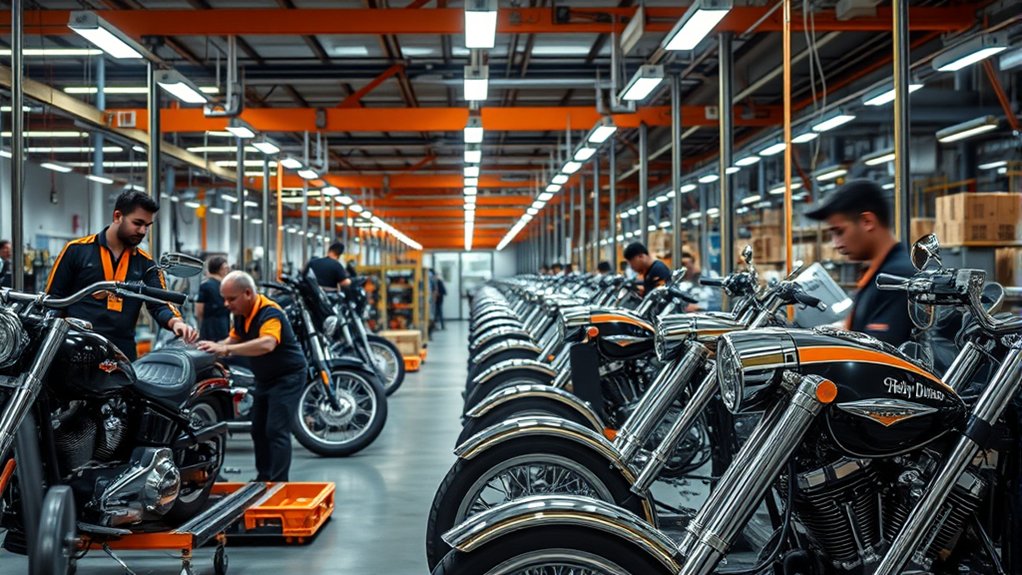
Although Harley-Davidson continues to produce motorcycles for the US market domestically, it has shifted the production of certain models, such as the Pan-America and Sport series, to its Thailand factory to cut costs and boost global competitiveness.
This production shift responds to multiple factors, including declining US sales and increased demand overseas.
Establishing the Thailand facility aligns with Harley-Davidson’s international manufacturing strategy, allowing more efficient service to Asian and European markets.
While tariffs, like the 31% import duty on US-made bikes entering Europe, initially influenced this decision, the move isn’t solely tariff-driven.
You’ll find that Harley-Davidson’s Thailand production helps navigate global trade complexities and lowers manufacturing expenses.
Ultimately, it strengthens the company’s position in competitive markets outside the US without compromising domestic production of bikes for American consumers.
How Trade Tariffs Influenced Harley-Davidson’s Manufacturing Decisions
So, here’s the deal: tariffs played a big role in Harley-Davidson’s choice to move some of their production to Thailand. When European tariffs made it more expensive to import bikes, Harley had to think smart.
They started looking for ways to cut costs, and shifting manufacturing to Thailand was a great option. This move helped them keep expenses down and stay competitive, especially in important markets overseas.
Tariffs Prompt Production Shift
When European tariffs threatened to add up to $100 million annually to Harley-Davidson’s costs, the company responded by shifting some motorcycle production to Thailand. This production shift was a strategic move to mitigate the impact of European tariffs imposed as retaliation.
Harley had already established manufacturing capabilities in Thailand before these tariffs emerged, anticipating global trade tensions.
By producing certain models in Thailand, Harley can serve both Asian and European markets more efficiently, avoiding costly tariff barriers.
Despite this adjustment, Harley continues to manufacture bikes for the U.S. market domestically, maintaining a balance between cost management and its American manufacturing roots.
This targeted production shift highlights how tariffs directly influenced Harley-Davidson’s operational decisions without compromising its commitment to U.S. production.
It’s a smart way to handle trade challenges while staying true to their brand.
Cost Impact On Operations
Because trade tariffs substantially increased manufacturing costs, Harley-Davidson moved part of its production to Thailand to maintain competitiveness and control expenses. You’ll find the decision directly tied to the impact of tariffs on costs and production strategy.
Here’s how tariffs influenced Harley’s manufacturing operations:
- European tariffs added up to $100 million annually, raising import costs considerably.
- Shifting some production to Thailand helped avoid high tariffs and lowered manufacturing expenses.
- The move gave Harley better access to growing Asian and European markets with reduced production costs.
- Despite offshoring some models, Harley kept US production for domestic sales to protect its American brand identity.
Harley-Davidson Motorcycle Models Produced in Thailand and the U.S
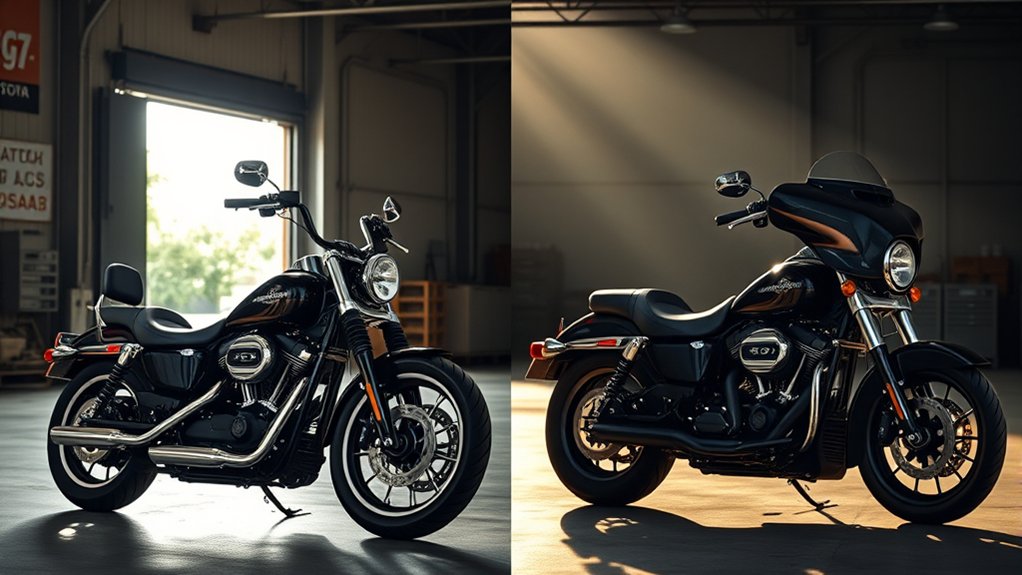
Although Harley-Davidson has shifted production of models like the Pan-America, Sportster S, and Nightster from Wisconsin to Thailand in 2025, motorcycles intended for the U.S. market will still be manufactured domestically.
Harley-Davidson moves some model production to Thailand but keeps U.S. market bikes made domestically.
The Thailand facility focuses on these specific motorcycle models to better navigate trade tariffs and serve European and Asian markets more efficiently.
Meanwhile, Harley-Davidson maintains U.S. manufacturing for its higher-end models, such as touring bikes and trikes, ensuring quality and heritage remain intact.
This division of production allows Harley-Davidson to optimize costs while meeting regional demand.
How Harley’s Production Shift Supports Global Market Expansion
By shifting production of models like the Pan-America and Sport series to Thailand, Harley-Davidson is positioning itself to reduce manufacturing costs and strengthen its competitiveness in key global markets.
This production shift supports Harley’s global market expansion by leveraging lower labor costs and meeting regional demand more efficiently. Here’s how this move benefits you as a consumer and investor:
- Reduces manufacturing expenses by employing Thai labor, where wages average $711/month versus higher U.S. costs.
- Allows Harley-Davidson to allocate $9 million in additional investments to U.S. facilities, maintaining domestic operations.
- Expands Harley’s presence in fast-growing Asian and European markets, offsetting declining U.S. sales.
- Positions the company strategically for sustained growth in global markets through diversified manufacturing hubs.
This production shift is a calculated step in Harley-Davidson’s broader expansion strategy.
How U.S. Workers and Unions Are Reacting to the Change
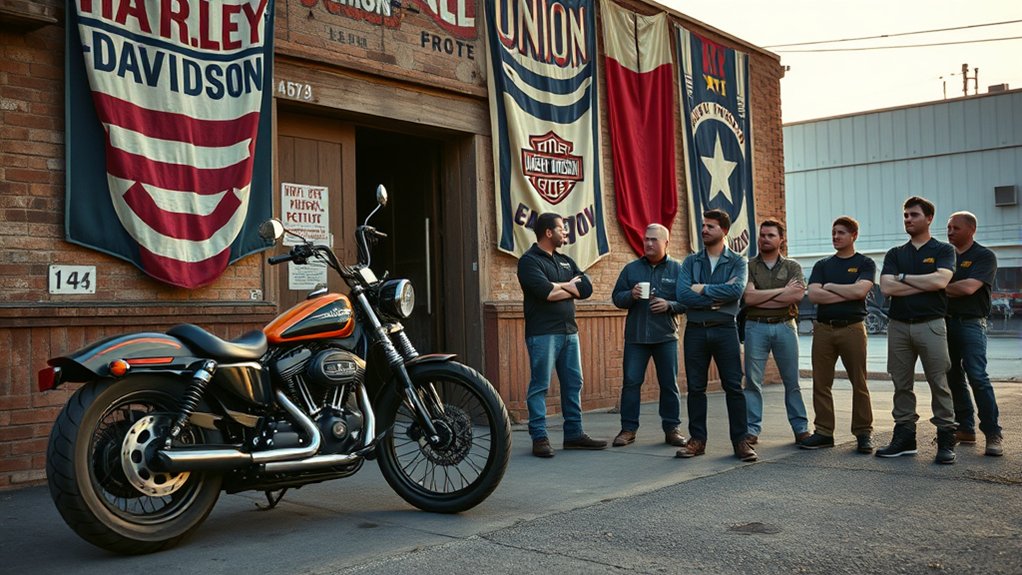
How are U.S. workers and unions responding to Harley-Davidson’s decision to shift some production overseas? Union leaders and American workers have voiced strong opposition. They accuse the company of outsourcing manufacturing and breaking promises to protect domestic jobs.
Union representatives in Wisconsin and Pennsylvania have publicly criticized the move. They’re concerned about potential job losses, even though Harley says U.S. employment won’t be affected.
Many workers feel this shift threatens the legacy of American craftsmanship and Harley’s patriotic image.
Overall, labor groups emphasize the importance of keeping manufacturing jobs in the U.S. They remain skeptical about the long-term impact on American workers.
These reactions really highlight the tension between global business strategies and the interests of U.S. labor advocates.
How Harley Is Supporting Jobs and Manufacturing in the U.S
While some Harley-Davidson production has moved overseas, the company is investing $9 million to upgrade its U.S. facilities and guarantee key models like touring bikes, trikes, and Softail remain manufactured domestically. This commitment supports US manufacturing and preserves jobs despite the shift of some production abroad.
Harley-Davidson invests $9 million to keep key motorcycle models made in the U.S., supporting domestic jobs.
Here’s how Harley-Davidson is backing American workers:
- Investing $9 million to enhance domestic manufacturing capabilities.
- Ensuring critical models for the U.S. market continue production in the U.S.
- Balancing overseas production with a focus on global competitiveness.
- Affirming commitment to supporting U.S. employment amid strategic shifts.
You can see that Harley-Davidson aims to maintain a strong domestic manufacturing presence while adapting to global market demands.
What the Production Change Means for Harley’s ‘Made in America’ Image
Though Harley-Davidson continues producing core models in the U.S., shifting some production of Pan-America and Sport series motorcycles to Thailand raises questions about the impact on its “Made in America” image.
You’ll notice this production shift aims to cut costs and boost global competitiveness, particularly in Asian and European markets.
Harley emphasizes that its core American models and design work remain domestic, maintaining key elements of its brand identity.
However, critics argue that manufacturing abroad dilutes Harley’s long-standing reputation as an American icon.
This change challenges the traditional perception tied to the “Made in America” label.
It’s forcing you to reconsider how Harley-Davidson balances global strategy with preserving its historic brand identity.
How the Production Shift Affects Motorcycle Buyers
You might notice lower prices and more availability for some Harley models overseas since production is moving to Thailand. But don’t worry—key bikes for the U.S. market will still have that American-made quality and design.
This shift does make you wonder, though, how the brand’s identity and authenticity will connect with buyers moving forward.
Pricing And Availability
Because Harley-Davidson is shifting some production to Thailand, international buyers can expect lower prices due to reduced manufacturing costs. This move targets improving global competitiveness without compromising the American-made status for U.S. models.
Here’s what you should know about pricing and availability:
Production in Thailand helps reduce tariffs and trade-related expenses, which lowers final prices abroad.
At the same time, U.S. market bikes remain produced domestically, preserving their American heritage and pricing stability.
International availability of certain models may increase as manufacturing capacity expands in Thailand.
U.S. buyers might see indirect effects on pricing and availability because of these shifting global production dynamics.
This strategic production shift aims to balance competitive pricing worldwide while maintaining core American-made offerings for domestic consumers.
It’s all about keeping Harley-Davidson strong at home and competitive everywhere else.
Quality And Brand Identity
While Harley-Davidson has shifted some production to Thailand to cut costs and enhance global competitiveness, it assures customers that core U.S. models will continue to be made domestically to preserve brand authenticity.
You might wonder how this overseas production affects the quality and brand identity you associate with Harley. The move primarily targets European and Asian markets, which could dilute the “Made in America” perception central to Harley’s appeal.
Critics worry this shift might impact craftsmanship and durability. However, Harley maintains strict quality controls across all facilities, aiming to deliver consistent standards regardless of location.
Still, if you value American manufacturing as part of Harley’s brand identity, this production change raises valid concerns about how future models will reflect that legacy.
Frequently asked questions
Will Harley-Davidson Motorcycles Made in Thailand Have Different Warranties?
Harley-Davidson motorcycles made in Thailand generally won’t have different warranties compared to U.S.-made bikes. They follow the same standards and policies. But you should check warranty details at purchase since some regional variations might exist.
Service locations or specific coverage could differ locally. Still, overall, the company aims for consistent warranty coverage worldwide.
Always review your warranty terms carefully to understand any regional nuances that could affect your bike’s protection.
Are There New Harley-Davidson Dealerships Planned in Southeast Asia?
Yes, Harley-Davidson has planned new dealerships across Southeast Asia to expand its market presence. You’ll find these dealerships in countries like Thailand, Malaysia, and Indonesia.
This supports the company’s goal to grow its brand in the region.
These new outlets will promote sales and provide better access to Harley motorcycles. It’s all part of Harley’s broader international growth plans.
They want to serve emerging markets more effectively.
How Will This Shift Impact Harley-Davidson’s Environmental Sustainability Efforts?
You might feel conflicted as Harley’s shift to Thailand offers greener manufacturing with modern, energy-efficient factories. Yet, longer shipping routes could increase emissions.
This move could lower Harley’s carbon footprint by using eco-friendly technology and stricter regulations.
However, you’ll want to watch how they manage supply chains and waste disposal because any gains risk being offset by transportation emissions.
The real impact depends on Harley’s commitment to balancing these factors carefully.
Will Parts and Accessories for Thailand-Made Models Differ From U.S.-Made Ones?
Yes, parts and accessories for Thailand-made Harley models will differ from U.S.-made ones. You’ll find regional specifications lead to variations in availability and compatibility.
Some aftermarket parts designed for U.S. bikes mightn’t fit Thailand-produced models because of different manufacturing standards and component sourcing.
While the core components stay consistent, accessories and customizations tailored for Asian or European markets may vary. This can impact your options for product customization and supply chain timelines.
Is Harley-Davidson Planning More Production Moves to Other Countries in the Future?
Picture Harley-Davidson’s factories humming not just in America, but across the globe. Yes, Harley is planning more production moves to other countries to stay competitive amid rising costs and trade challenges.
You’ll see this shift driven by a strategic focus on global markets. It makes it likely Harley will expand overseas manufacturing beyond Thailand.
This approach helps them navigate tariffs and tap into international demand efficiently.
Final Thought
You might think Harley-Davidson’s move to Thailand signals the end of its American roots, but it’s far from that. By shifting some production overseas, Harley is strategically maneuvering trade tariffs and expanding globally while still supporting U.S. jobs and manufacturing.
This change doesn’t erase its “Made in America” legacy. It’s more like a powerful engine revving to adapt in a complex market, making sure riders worldwide keep enjoying Harley’s iconic motorcycles without compromise.