Did Harley Davidson Move Overseas – The Truth
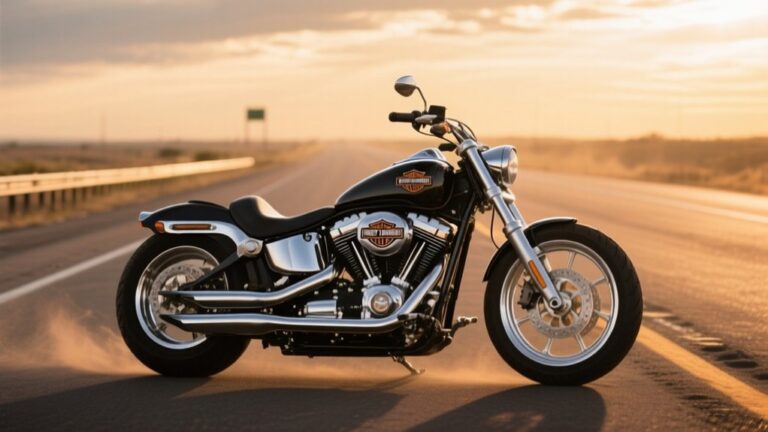
Harley-Davidson hasn’t fully moved overseas, but it has shifted production of some models like the Pan America and Sportster S to Thailand starting in 2025. This change helps reduce costs and avoid tariffs, especially in Europe.
However, key models such as Softail and Grand American touring bikes are still made in the U.S. The move balances global trade challenges with maintaining its American manufacturing roots.
Understanding this shift reveals more about Harley’s strategic response to economic pressures. It’s a smart way to keep things competitive without losing what makes Harley, well, Harley.
Which Harley-Davidson Models Are Made Outside the U.S. and Why
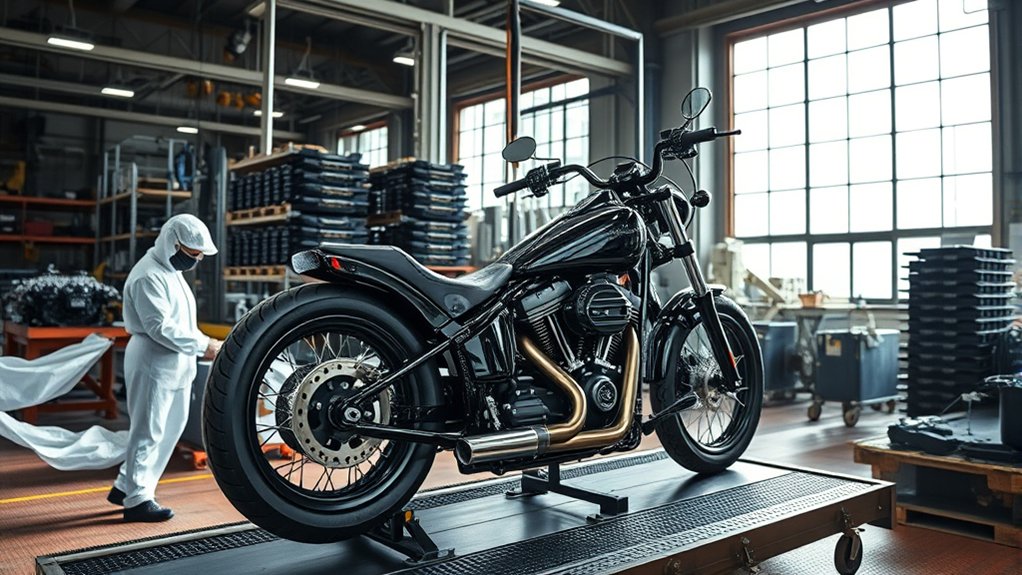
While Harley-Davidson continues to produce iconic models like the Softail and Grand American touring bikes at its Pennsylvania plant, it’s moving the production of some 2025 models, including the Pan America, Sportster S, and Nightster, to Thailand.
Harley-Davidson shifts production of select 2025 models like Pan America and Nightster to Thailand.
This shift reflects a strategic use of overseas manufacturing to better manage production costs and navigate complex economic conditions.
By manufacturing certain models outside the U.S., Harley-Davidson aims to reduce the impact of tariffs that can increase expenses on imported parts or exported bikes.
This diversification of production locations allows the company to maintain competitiveness in a global market.
However, it’s important to note that not all models are affected. Key lines remain U.S.-made, balancing cost efficiency with a domestic manufacturing presence.
Why Harley-Davidson Is Moving Some Manufacturing Overseas
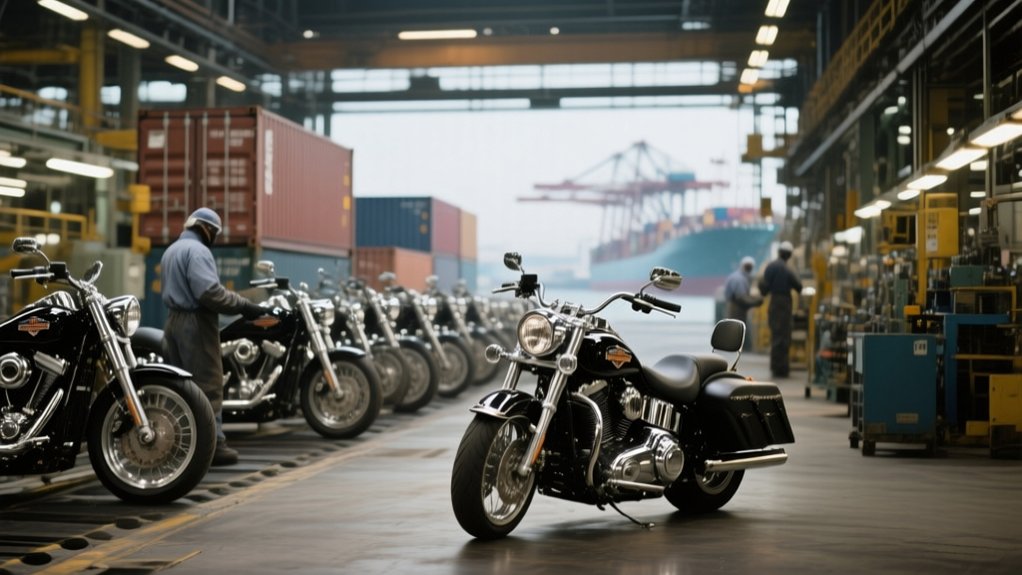
Because Harley-Davidson faces rising production costs and complex trade tariffs, it’s shifting some manufacturing overseas to remain competitive. The company is moving production of models like the Pan America and Sportster S to countries such as Thailand.
This overseas manufacturing strategy helps Harley Davidson manage costs and supply chain efficiency while avoiding retaliatory tariffs imposed by the European Union on U.S.-made motorcycles.
Despite this shift, Harley continues producing many key models, including Softail and touring bikes, in its U.S. plants.
While this move supports economic viability amid trade challenges, it has sparked concerns among union leaders and workers about job security and trust.
How Tariffs and Trade Wars Influenced Harley-Davidson’s Manufacturing Decision
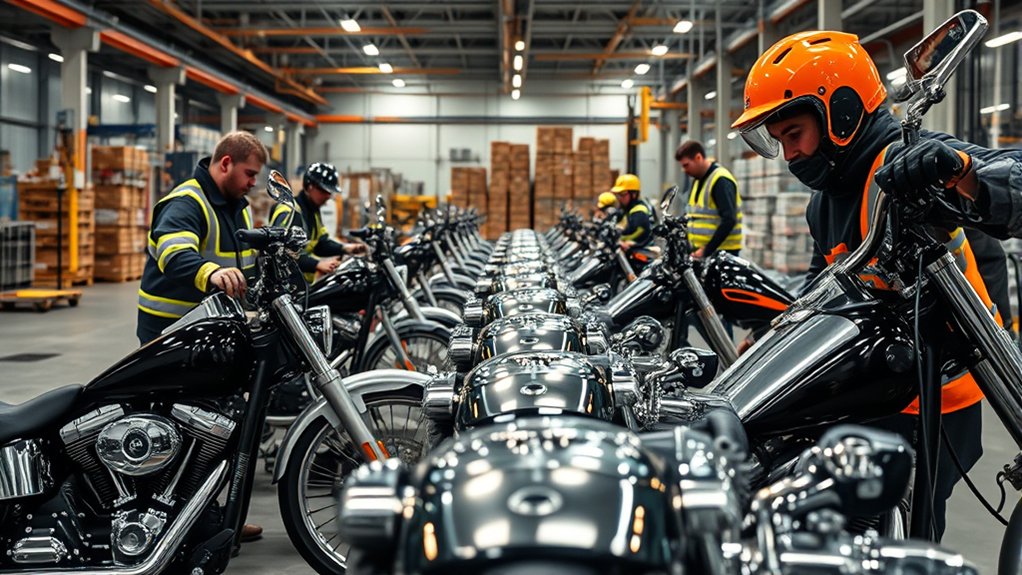
Trade tensions and tariff policies have played a big role in Harley-Davidson’s decision to move some motorcycle production overseas. Tariffs on European steel and aluminum, along with EU retaliatory tariffs, really pushed Harley’s costs up. These trade wars made the company rethink its manufacturing strategy to avoid extra expenses that could hit $100 million every year.
Because of this, Harley shifted some production to Thailand and had already moved some manufacturing to Europe back in 2018. This move helped them bypass tariffs that added more than $2,000 to the cost of each motorcycle.
By spreading out their manufacturing locations, Harley stays competitive and keeps access to key markets even with ongoing trade conflicts.
Which Harley-Davidson Production Remains in the U.S
Which Harley-Davidson motorcycles still roll off American assembly lines? The company maintains U.S. manufacturing for key Harley-Davidson models, particularly the Softail and Grand American touring bikes. These are produced domestically in Pennsylvania.
Investments like the $9 million upgrade at the York facility support this domestic production. You’ll find that the 2025 Pan America, Sportster S, and Nightster will also continue to be manufactured in the U.S., ensuring a strong presence of American-made motorcycles.
While some parts come from abroad, assembly for motorcycles sold domestically remains largely within the United States. The shift overseas mainly impacts models intended for the European market, leaving much of the U.S. manufacturing intact.
| Harley-Davidson Model | Production Location |
|---|---|
| Softail | Pennsylvania, U.S. |
| Grand American Touring | Pennsylvania, U.S. |
| Pan America (2025) | Pennsylvania, U.S. |
| Sportster S | Pennsylvania, U.S. |
| Nightster | Pennsylvania, U.S. |
Impact of Harley-Davidson’s Overseas Shift on U.S. Jobs and Industry
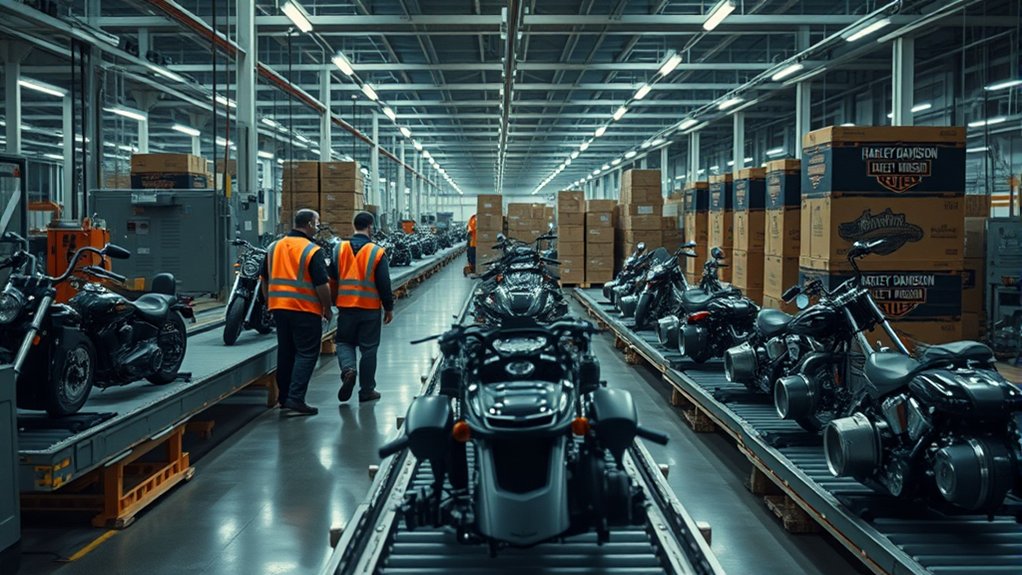
While Harley-Davidson continues to produce key models in the U.S., shifting some production overseas has had significant effects on American jobs and the manufacturing sector. You should know that Harley-Davidson’s decision to move parts of its manufacturing to Europe and Thailand aimed to reduce costs amid rising tariffs.
However, this overseas manufacturing shift led to U.S. job losses, including plant closures like the Kansas City facility in 2018. Union leaders voiced concerns about job security for workers in York, Pennsylvania, and beyond, highlighting trust issues.
Critics argue that these moves weaken the U.S. manufacturing industry by reducing domestic employment opportunities. Overall, Harley-Davidson’s overseas manufacturing strategy reflects complex trade and economic pressures but has undeniably impacted U.S. jobs and the broader manufacturing landscape.
Trump Administration’s Response to Harley-Davidson’s Shift
Because Harley-Davidson decided to shift some production overseas, the Trump administration responded with sharp criticism and threats of punitive measures. President Trump publicly condemned the move, labeling it a surrender and a “wave of the White Flag.” He threatened higher taxes on Harley-Davidson products as a direct consequence.
The administration defended its tariffs on European goods, arguing they were necessary to counteract unfair trade barriers. While the tariffs contributed to Harley-Davidson’s decision, the Trump administration framed the company’s shift as a betrayal of American manufacturing.
Trump also indicated that ongoing tariffs and trade issues would be resolved soon, urging patience.
What Unions and Workers Think About the Overseas Manufacturing Move
Although Harley-Davidson’s decision to move some production overseas aimed to address economic challenges, union leaders and workers in York, Pennsylvania, have expressed strong disappointment. The union sees this shift as a betrayal, breaking Harley-Davidson’s promise to prioritize U.S. manufacturing. This move threatens job security for union members and undermines trust built over years of loyalty.
| Concern | Union Perspective | Worker Impact |
|---|---|---|
| Job Security | At risk due to overseas production | Fear of layoffs and cuts |
| Commitment | Promises to keep jobs in the U.S. broken | Feeling of betrayal |
| Brand Image | Contradicts patriotic American values | Doubts about future stability |
You can understand how these factors fuel union opposition to the overseas manufacturing decision.
How Harley-Davidson’s History Influences Its Response to Economic Pressure
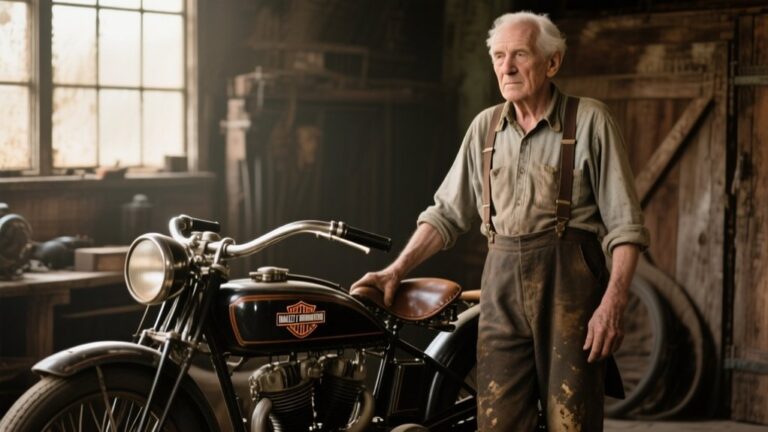
Union concerns about overseas manufacturing highlight a tension that Harley-Davidson has faced throughout its history. You’ll see this tension rooted in Harley’s resilience, shaped by surviving world wars and economic downturns. Its history as a patriotic American icon makes shifting production overseas a complex decision.
When economic pressures rise, Harley-Davidson balances maintaining its brand identity with practical solutions like relocating some manufacturing abroad. This approach reflects its commitment to American craftsmanship while adapting to global market demands.
You can understand Harley’s moves as part of a legacy defined by innovation and endurance. Its history doesn’t just influence strategy; it creates internal conflicts that challenge how the company preserves both resilience and patriotism amid economic challenges.
How Trade Policies Shape Harley-Davidson’s Business Strategy
You’ll notice that tariffs have a big impact on Harley-Davidson’s manufacturing choices. Because of these trade barriers, the company is motivated to expand production outside the U.S.
For example, by building motorcycles in places like Thailand and Europe, Harley-Davidson can avoid some of these costs. This helps them keep prices competitive.
Essentially, their global production approach is a direct response to shifting trade policies, and it plays a key role in protecting their profitability.
Tariffs Impact Manufacturing Decisions
Because tariffs on European steel and aluminum raised production costs, Harley-Davidson decided to shift some motorcycle manufacturing to Thailand to stay competitive. You’ll see that tariffs, including the EU’s 31% retaliatory tariff on U.S.-made motorcycles, markedly increased Harley’s export costs and squeezed profit margins.
To manage these financial pressures, Harley-Davidson chose to offshore certain models, allowing production closer to key markets and avoiding steep tariffs. This strategic manufacturing adjustment reflects how trade policies directly influence corporate decisions.
If you follow Harley’s example, you’ll notice tariffs can force companies to reconsider where they build products, balancing cost, market access, and competitiveness.
Ultimately, Harley-Davidson’s manufacturing shift demonstrates how tariffs shape business strategies in a globalized economy.
Global Production Strategy
Although Harley-Davidson still manufactures many motorcycles in the U.S., it has strategically shifted production of models like the Pan America and Sportster S to Thailand to address rising costs and trade barriers. This global manufacturing decision reflects how trade policies, including retaliatory tariffs from the EU and steel and aluminum tariffs, influence Harley’s business strategy.
By relocating production, the company improves supply chain efficiency and reduces exposure to tariff-related expenses. While many models are assembled domestically, Harley-Davidson increasingly sources parts and assembles components globally to remain competitive.
This diversified production approach helps the company adapt to evolving trade policies and economic pressures, preserving its market share worldwide. You can see how Harley’s global production strategy balances domestic manufacturing with international operations to optimize costs and supply chain resilience.
What Harley-Davidson’s Manufacturing Shift Means for Customers and the Future
When Harley-Davidson shifts production of certain models like the Pan America and Sportster S to Thailand and Europe, you may notice changes in pricing and availability. This overseas production helps Harley-Davidson avoid tariffs and reduce costs for the European market.
If you’re buying in the U.S., American manufacturing remains intact, with bikes assembled in Pennsylvania and Wisconsin. While this strategy keeps Harley-Davidson competitive globally, it can lead to delays or price adjustments on some models.
You might also see concerns raised by union workers about the impact on domestic jobs. Overall, this shift reflects Harley-Davidson’s balancing act between maintaining American manufacturing heritage and adapting to global market pressures.
It ultimately affects your ownership experience depending on where you purchase your motorcycle.
Frequently asked questions
When Did Harley-Davidson First Start Manufacturing Motorcycles?
Harley-Davidson first started manufacturing motorcycles in 1903, right after the company was founded in Milwaukee, Wisconsin. You’d find that their early models were handcrafted and built to handle rugged American terrain.
Over time, Harley-Davidson expanded production, introducing assembly lines to boost efficiency. So, if you’re looking into their history, know they began making motorcycles in 1903, marking the start of a long legacy in American motorcycle manufacturing.
What Are the Most Popular Harley-Davidson Models Historically?
You’ll find the most popular Harley-Davidson models include the Sportster, introduced in 1957, known for its classic appeal.
The Softail lineup stands out with its hidden rear suspension, delivering comfort.
Touring models like the Electra Glide have long attracted riders who love long-distance journeys.
The Dyna series, produced between 1991 and 2017, gained a reputation for versatility.
Meanwhile, the Street series, launched in 2014, appeals with modern urban styling.
Each of these models has its own unique charm and fan base, making Harley-Davidson a diverse brand.
How Does Harley-Davidson Design Its Motorcycles?
You might think Harley-Davidson just sticks to old designs, but they actually blend classic American style with cutting-edge engineering. They focus on bold lines, chrome, and rugged looks, while integrating Milwaukee-Eight engines and advanced suspensions.
Harley-Davidson uses rider feedback and market research to guarantee every model reflects freedom and heritage. They update technology and customization options constantly to meet modern riders’ evolving preferences.
Who Founded Harley-Davidson and Where?
You should know that Harley-Davidson was founded by William S. Harley and Arthur Davidson in Milwaukee, Wisconsin, back in 1903. William Harley designed the first motorcycle prototype, while Arthur Davidson contributed to its engine development.
Together, they aimed to build a reliable, American-made motorcycle for both transportation and recreation. Their collaboration laid the foundation for Harley-Davidson’s reputation for craftsmanship and innovation rooted in Milwaukee.
What Are Harley-Davidson’s Environmental Policies?
Imagine roaring engines paired with green fields. Harley-Davidson balances power with responsibility. You’ll see they invest heavily in fuel-efficient, low-emission motorcycles and embrace electric models.
Their factories cut waste, save water, and boost energy efficiency. They’re committed to slashing greenhouse gases by using renewable energy and streamlining operations.
Plus, Harley supports recycling and community sustainability projects. They’re serious about reducing environmental impact while riding forward.
Final Thought
Think of Harley-Davidson as a seasoned rider steering a winding road filled with tariffs and trade twists. While some models now roll off assembly lines overseas to avoid steep tariffs, key production still hums in U.S. factories, preserving jobs and heritage.
This balance reflects Harley’s strategic shift, not abandoning its roots but adapting to global pressures. Like a biker adjusting speed on rough terrain, Harley-Davidson moves carefully, blending tradition with economic reality for a sustainable ride ahead.