What Is Direct Access Motorcycle Training – What to Know
Direct Access Motorcycle Training lets you quickly earn a full motorcycle licence by training on powerful bikes of at least 595cc and 40 kW. You must be 24 or older, pass a theory test, and complete practical Module 1 (off-road) and Module 2 (on-road) tests.
The course typically lasts 3 to 5 days and includes gear, bike hire, and tuition. Keep going to understand eligibility, costs, and how to choose the right provider.
What Is the Direct Access Scheme (DAS) Motorcycle Training?
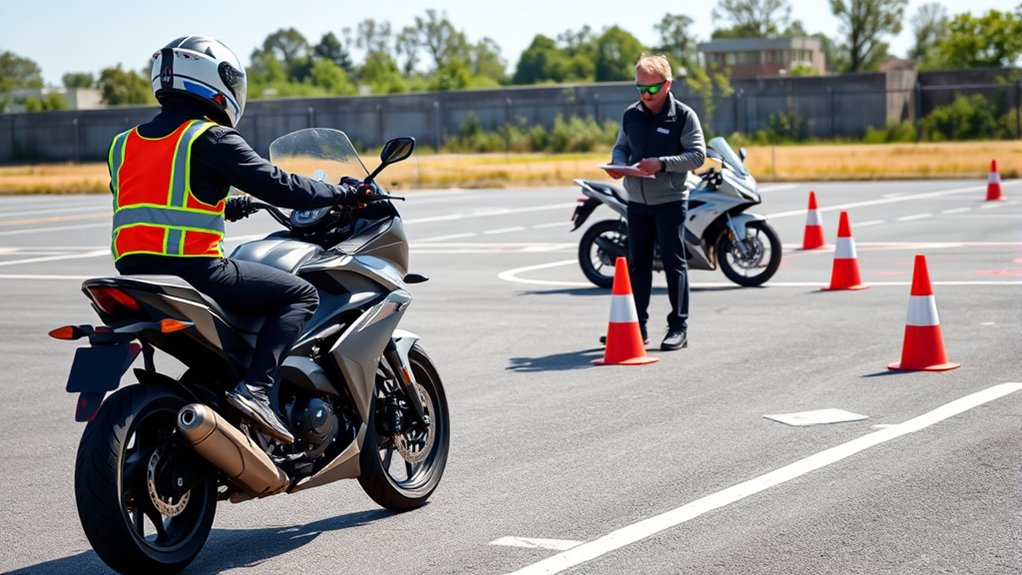
Although many new riders start on smaller bikes, the Direct Access Scheme (DAS) lets you train directly on larger motorcycles of at least 595cc with a minimum of 40 kW (54 BHP) if you’re 24 or older.
DAS is a structured motorcycle training scheme designed to help you gain a full motorcycle licence efficiently and safely. You’ll complete two practical tests: Module 1 focuses on off-road skills, while Module 2 assesses your on-road riding abilities.
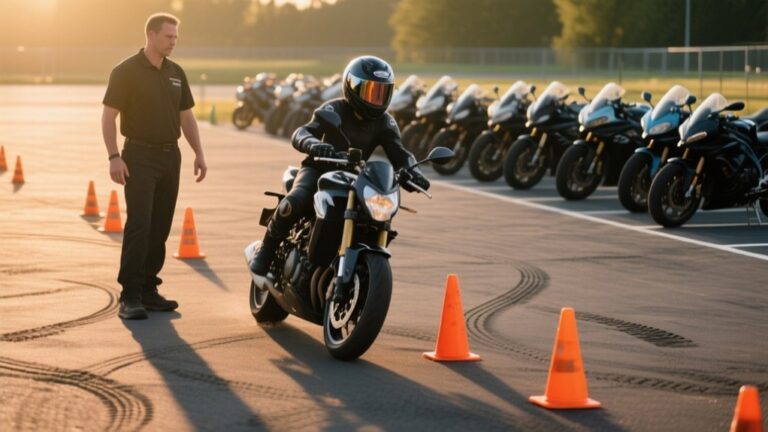
During training, instructors work with a maximum of two learners, ensuring close supervision and effective communication.
Passing both practical tests under the DAS grants you a full motorcycle licence, allowing you unrestricted access to all motorcycle types and sizes.
This training scheme prioritizes skill development on powerful bikes, reducing risks for new riders. It’s a great way to get confident quickly and safely on bigger machines.
Who Is Eligible for the DAS Course and What Are the Age Requirements?
Now that you understand what the Direct Access Scheme (DAS) entails, it’s important to know if you qualify to take this course.
To meet the DAS course eligibility, you must be at least 24 years old to apply directly for a full motorcycle licence. However, if you’re under 24, you can still qualify by holding an A2 licence for at least two years.
Applicants must be 24+ or have held an A2 licence for two years to qualify for DAS.
Passing the motorcycle theory test and holding a valid UK or EU driving licence are also essential rider qualifications.
The practical training requires riding a motorcycle of at least 595cc and 40 kW.
Understanding these age requirements and rider qualifications guarantees you’re ready to enrol confidently in the DAS course and progress toward your full motorcycle licence.
What Motorcycle and Gear Do You Need for DAS Training?
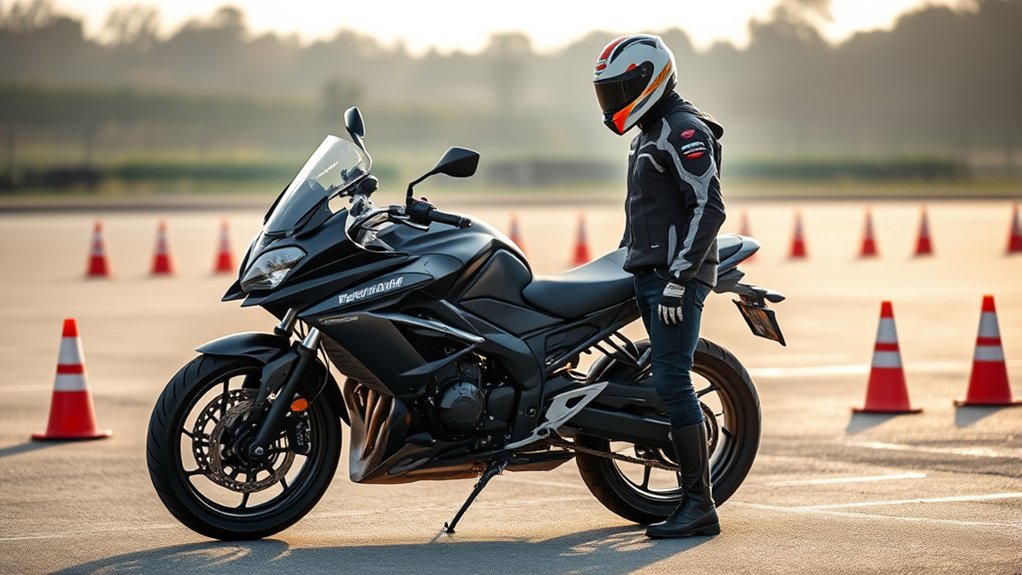
What kind of motorcycle and gear do you need to tackle DAS training effectively? You’ll use training motorcycles with at least 595cc and 40 kW power. Many centers provide beginner-friendly training bikes like the Yamaha XJ6 Diversion, Yamaha MT-07, or Suzuki Gladius.
If you bring your personal bike, make sure you have its documents ready.
Proper motorcycle gear is vital for safety and often mandatory.
Make sure to have a full-face helmet for maximum protection, a motorcycle jacket with armor, gloves designed for riding, protective clothing or a riding suit, and sturdy boots covering your ankles.
Wearing the right protective clothing and gear guarantees you meet safety standards and get the most out of your DAS training.
How Do the Module One and Module Two Tests Work in DAS?
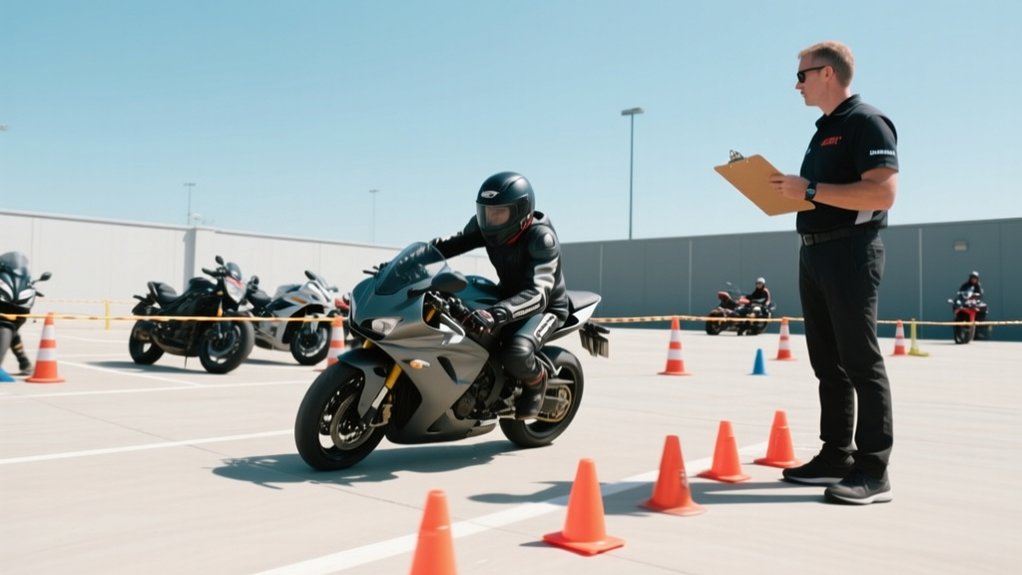
You’ll begin with Module One, which is a 20-minute off-road test. It focuses on control exercises like slow riding and emergency stops.
Once you pass that, you move on to Module Two.
Module Two is a 40-minute on-road test where an examiner guides you through real traffic.
These tests make sure you can handle the bike safely in both controlled and live environments.
Module One Overview
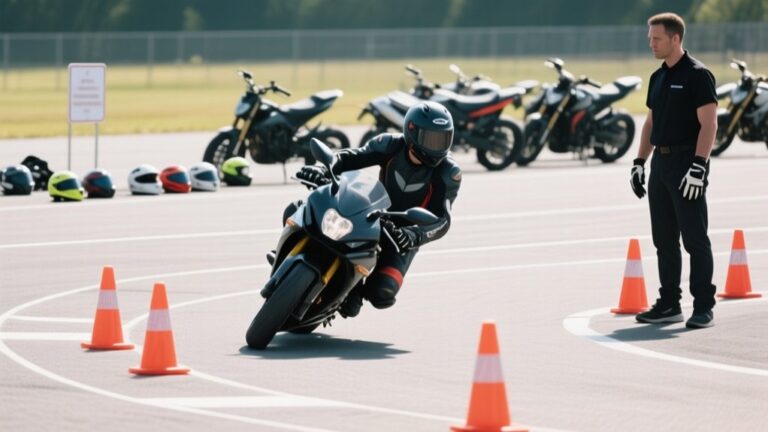
How do the Module One and Module Two tests work in the Direct Access Scheme (DAS)? Module One is a 20-minute off-road test designed to assess your essential motorcycle skills in a controlled environment. It focuses on control exercises that challenge your ability to handle the bike safely and precisely.
To pass, you must demonstrate proficiency in slow riding and balance, hazard avoidance techniques, emergency stops, cornering and swerving, and maintaining control on a motorcycle over 595cc and 40kw.
Meeting the passing standard in Module One is crucial because if you fail, you can’t proceed to Module Two. Successfully completing Module One confirms you have the foundational motorcycle skills needed before facing real-world road conditions in Module Two.
Module Two Details
Although Module One tests your control skills off-road, Module Two shifts focus to real-world riding by putting you on public roads for 40 minutes. In this on-road test, the examiner guides you via radio, evaluating your ability to navigate traffic safely and apply your road training effectively.
Unlike Module One, Module Two doesn’t require emergency stops or U-turns. Instead, it emphasizes your awareness, judgment, and smooth riding in live traffic conditions. You’ll need to demonstrate confidence in handling the motorcycle while obeying road rules and responding appropriately to changing scenarios.
Passing both modules is essential to prove your competence and progress through the DAS route. Mastering Module Two ensures you’re ready for everyday riding and the responsibilities of a full motorcycle license.
How Long Does DAS Training Take and What’s Included?
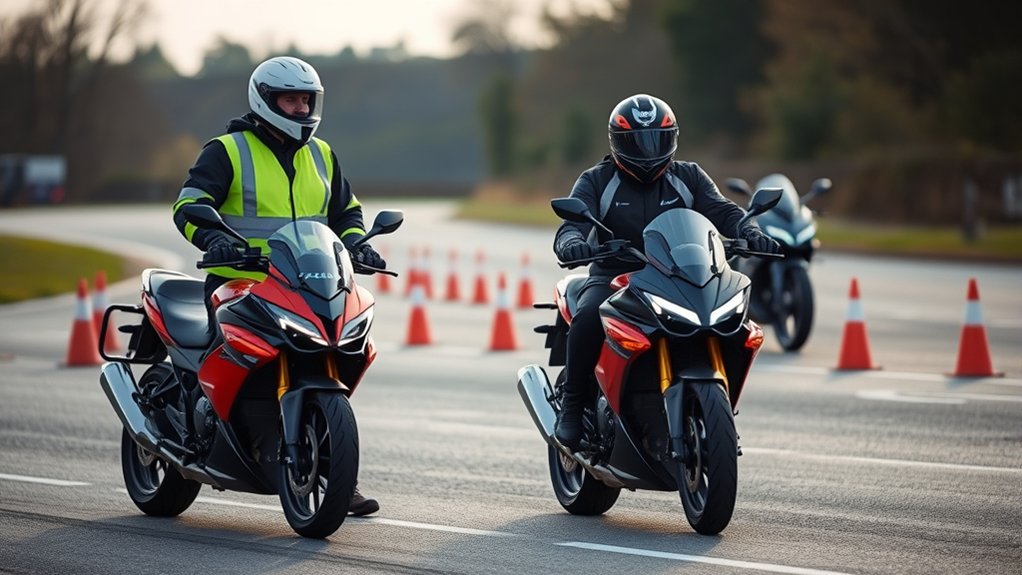
Your DAS training usually takes about 3 to 5 days, depending on your experience and how confident you feel.
The course covers everything you need — from motorcycle hire and safety gear to insurance.
Plus, it includes both Module 1 and Module 2 tests.
Typical Course Duration
Direct Access Scheme (DAS) training usually takes between three to five days, tailored to your skill level and progress. The course duration aligns with your scheduled test dates, so you’re ready for both practical modules and assessments.
Your training includes motorcycle hire, insurance, and essential safety gear, all factored into the full package cost starting from around £790. If you need extra practice, additional training days can be arranged to boost your confidence and skills before test preparation.
Here’s what the DAS training course duration covers:
- Comprehensive practical modules
- Theory test guidance
- Motorcycle handling and control
- Safety and hazard awareness
- Test preparation and mock assessments
This structure makes sure you gain the skills needed for successful completion.
Training And Test Inclusions
Since mastering both off-road and on-road skills is essential, the DAS training spans three to five days, depending on how quickly you progress.
DAS courses cover thorough training for both Module 1 and 2 motorcycle tests, ensuring you’re well-prepared for each stage. The training includes practical exercises, safety techniques, and essential riding skills needed to pass.
You won’t need to worry about extra costs, as motorcycle hire, safety gear, petrol, insurance, and test fees are all included in the course price.
From your initial lessons to scheduling and completing both tests, the instructors guide you through every step.
This structured approach helps you build confidence and competence efficiently, so you’re ready to ride safely and legally on public roads.
What Happens If You Fail a DAS Test?
What happens if you don’t pass a DAS test? If you fail, you must wait at least 10 days before you can retake it, and you’ll face extra costs for rescheduling.
Failing Module One means you can’t move on to Module Two until you pass. You’ll need additional training and practice to improve your skills.
Failing Module One requires extra training before progressing to Module Two.
Repeated failures increase both the costs and time required to get your full licence.
To prepare effectively, focus on these points:
- Identify weaknesses from the failed module
- Undertake targeted practice sessions
- Schedule extra training if needed
- Plan your retake after sufficient preparation
- Budget for potential rescheduling fees
Where Can I Book DAS Courses and How Much Do They Cost?
Where can you book your DAS course, and how much should you expect to pay? You can book DAS courses at various approved training centers across the UK, including Oxford, Banbury, and Kidlington. Booking is straightforward. You can use online platforms, call, or email approved providers directly.
It’s best to book well in advance to secure your preferred dates and allow ample preparation time. The cost of a DAS course typically ranges from £750 to £1250. These prices usually cover motorcycle hire, insurance, CBT, test fees, and all-inclusive tuition.
When comparing providers, consider what’s included in the cost to get the best value. Choosing an approved provider ensures you receive quality training and the necessary support to pass your test successfully.
Frequently asked questions
Can I Use My Own Motorcycle for DAS Training?
Yes, you can use your own motorcycle for DAS training if it meets specific requirements. Your bike must have at least 595cc and over 40kw (53.6bhp), be properly insured, registered, and in good condition.
Make sure you have all valid documentation, including proof of ownership and insurance.
Your instructor will assess the suitability of your motorcycle. If it doesn’t meet the standards, the training provider will supply a compliant bike for your course.
Are There Any Medical Requirements for DAS Training?
Worried about medical requirements for DAS training? You don’t need specific medical clearance if you’re generally healthy and fit to ride safely.
However, if you have conditions like epilepsy or serious vision problems, you should consult your doctor first. The DVLA recommends getting medical advice if you have any health concerns.
Always make sure you’re physically capable of handling a motorcycle to participate safely in DAS training. It’s better to be safe and confident before you hit the road.
How Does Weather Affect DAS Training Sessions?
Weather can profoundly impact your DAS training sessions by causing delays or rescheduling for safety. Rain, snow, or strong winds reduce tire grip and handling, making some exercises unsafe.
Poor visibility during fog or heavy rain also hinders communication and observation between you and your instructor.
Expect sessions to take longer if conditions force a focus on basic control skills. Always be prepared for flexible scheduling to prioritize your safety.
It’s all about making sure you get the most out of your training without taking unnecessary risks.
Can Previous Riding Experience Shorten the DAS Course?
Think of your previous riding experience as a well-tuned engine. It can definitely speed up your DAS course.
If you show solid skills during your assessment, you might skip some training modules or shorten the course duration.
However, you’ll still need to complete essential safety exercises to meet legal requirements.
Your instructor will tailor the course based on your confidence and ability.
This way, you can earn your full license more efficiently.
Is There Post-Training Support or Refresher Lessons Available?
Yes, many training providers offer post-training support and refresher lessons to help you maintain and improve your riding skills. You can usually book follow-up sessions at discounted rates, focusing on areas like highway riding or emergency braking.
It’s smart to ask about these options before or after completing your course, especially if you’re preparing for advanced training or returning after a break. This ongoing support boosts confidence and safety on the road.
Final Thought
By choosing the Direct Access Scheme, you’re stepping into a streamlined path to motorcycle freedom. While the journey demands focus and preparation, it’s designed to equip you with the skills and confidence you need on the road.
If you encounter a bump, remember it’s just a detour, not a dead end. Book your course wisely, gear up properly, and embrace the ride ahead. Your license is closer than you think.