
Where To Get Motorcycle Training – Where to Find It
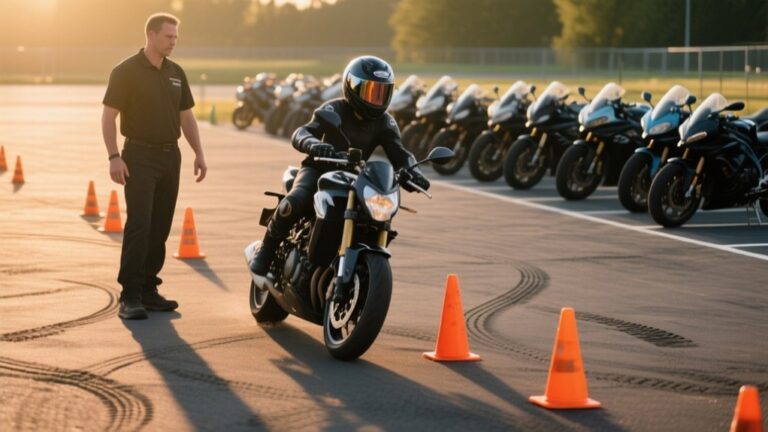
You can get motorcycle training through certified safety programs, licensed schools, DMV-approved locations, and many motorcycle dealerships offering hands-on courses. Online and hybrid options provide flexible learning with interactive modules. Look for courses matching your skill level, from beginner Basic RiderCourses to advanced training.
Many sites also offer onsite testing to simplify licensing. Make sure the program is state-approved and provides required gear or rentals. Keep exploring for detailed tips on choosing, scheduling, and preparing for your course and license tests.
Understanding Motorcycle Training Course Types
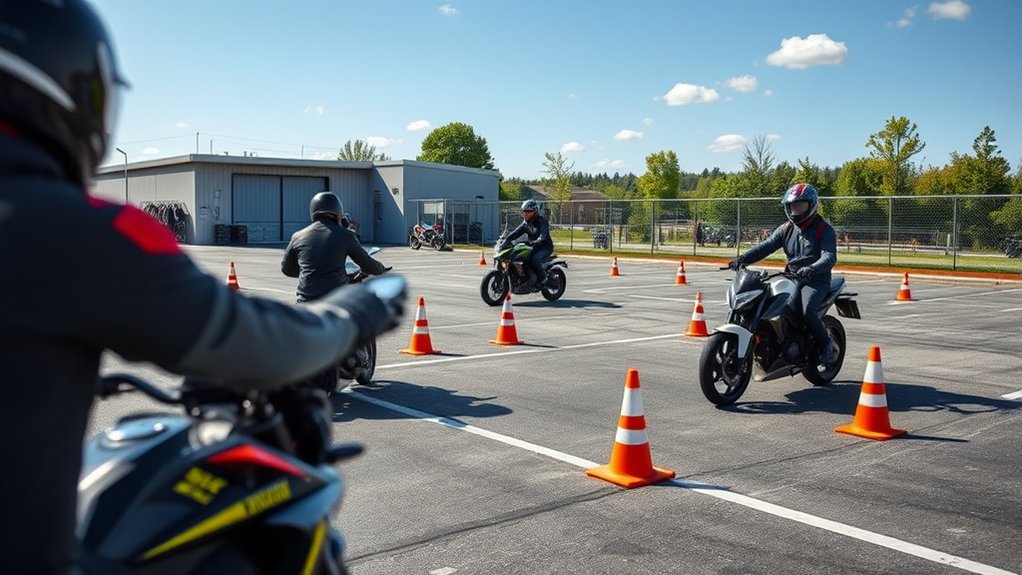
What kind of motorcycle training course do you need? Motorcycle training varies widely to match your skill level and riding goals. If you’re new, the Basic RiderCourse (BRC) is a solid start, focusing on core riding skills and safety essentials.
Courses typically include practical on-range exercises, classroom sessions, or both, depending on the provider. You can find motorcycle training at dedicated schools, dealerships, community colleges, or state DMV-approved programs.
Beyond the basics, specialized courses cater to specific vehicles like three-wheel motorcycles, dirt bikes, or adventure touring bikes. Understanding these course types helps you select the right fit before moving on to more specific skill-level options.
Knowing what’s available guarantees you get effective training tailored to your needs.
Choosing the Right Motorcycle Course for Your Skill Level
Although motorcycle training courses vary, choosing one that matches your skill level is essential for safety and progress. If you’re a beginner, start with the Motorcycle Safety Foundation’s Basic RiderCourse to master fundamental skills.
Experienced riders should consider advanced courses like the MSF ARC or TCARC to refine techniques. Select a convenient location—Everett, Monroe, Auburn, or Tacoma—and verify if equipment is provided.
Always confirm the course is approved by authorities to meet licensing requirements.
| Skill Level | Course Example | Outcome |
|---|---|---|
| Beginner | Basic RiderCourse (BRC) | Confidence, basics |
| Intermediate | MSF ARC | Skill refinement |
| Advanced | TCARC | Enhanced safety, control |
This approach guarantees your training fits your needs and promotes safe riding.
Government-Approved Motorcycle Safety Programs Explained
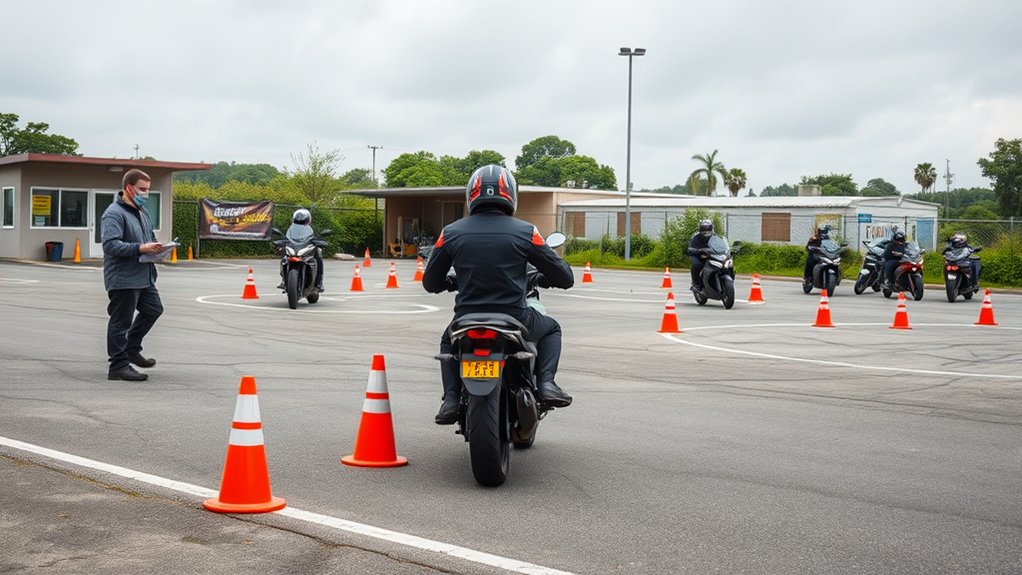
Why should you choose a government-approved motorcycle safety program? These programs are certified by state or federal agencies, so you know the training is standardized and reliable. They mix classroom instruction with practical riding exercises, making sure you pick up essential safety skills effectively.
Choose government-approved motorcycle programs for reliable, standardized training combining classroom lessons with hands-on riding skills.
Many states actually require or recognize these courses before they issue motorcycle licenses or endorsements.
Government-approved programs, like those from the Motorcycle Safety Foundation (MSF) or state-sponsored initiatives, meet or even exceed federal safety guidelines.
They go through regular review and accreditation based on strict safety standards and curriculum requirements.
When you enroll in these certified programs, you’re not just following the law—you’re also gaining proven skills that boost your safety and confidence on the road.
Choosing a government-approved program is a smart, responsible step toward becoming a skilled motorcyclist. It’s all about getting the best training to keep you safe out there.
Finding Licensed Motorcycle Training Near You
Now that you understand the benefits of government-approved motorcycle safety programs, the next step is locating licensed training near you. Start by visiting your state’s DMV website or motorcycle safety authority directory to find a list of licensed motorcycle training providers. These programs meet strict DMV and safety standards, guaranteeing quality instruction.
Licensed motorcycle training often takes place at community colleges, safety centers, or specific locations, and may include classroom lessons combined with practical riding assessments.
Many courses even provide motorcycle rentals and safety gear, so you can train without owning a bike.
Before enrolling, verify the provider’s certification through your state’s Motorcycle Safety Program or equivalent authority to guarantee your training is officially recognized and meets required standards. This way, you can be sure you’re getting trusted, thorough instruction.
Certified Riding Classes at Motorcycle Dealerships

If you’re looking for convenient, hands-on motorcycle training, certified riding classes at motorcycle dealerships offer a reliable option. These courses meet state licensing requirements and combine classroom instruction with practical riding exercises and skills assessments.
Certified motorcycle dealership classes offer convenient, hands-on training that meets state licensing requirements.
You won’t need to bring your own bike or gear, as many motorcycle dealerships provide motorcycles and safety equipment during training. Classes are scheduled regularly, and you can often register online, making it easy to find a time that fits your schedule.
Successfully completing a dealership-based course can lead to DMV license endorsements or exemptions from skills testing, which speeds up your path to becoming a licensed rider.
Choosing motorcycle dealerships for training means you get expert guidance and meet legal standards efficiently.
Online and Hybrid Motorcycle Training Options
You can take advantage of online motorcycle training to learn essential safety and riding skills at your own pace. Often, these courses meet DMV requirements, making them a convenient option.
Hybrid courses are another great choice. They mix online lessons with hands-on practice at certified centers, so you get the best of both worlds.
Just make sure you have a reliable device and a steady internet connection, so you can access the course materials without any hassle.
Benefits of Online Learning
Although learning to ride a motorcycle requires hands-on practice, online and hybrid training options give you the flexibility to complete theoretical lessons at your own pace and from any location.
Online learning allows you to fulfill classroom requirements, like the MSF Basic eCourse, in just 3-5 hours. These courses often include interactive modules, quizzes, and videos that reinforce safety principles and improve retention.
By choosing online learning, you can avoid scheduling conflicts and reduce the time commitment compared to traditional classes. This approach guarantees you’re well-prepared before hitting the range for practical sessions.
Embracing online learning means you control your study environment and timing, making motorcycle training more accessible and efficient without compromising the quality of your theoretical knowledge.
Hybrid Course Structure
How can you balance convenience with hands-on experience in motorcycle training? The hybrid course structure offers the perfect solution by combining online theoretical learning with in-person practical sessions.
You complete interactive modules and assessments remotely, at your own pace. Then, you focus on riding skills during range days.
With a hybrid approach, you’ll enjoy flexible scheduling that fits your lifestyle and certified courses that meet licensing requirements. Plus, the engaging online content covers safety and fundamentals.
There’s less classroom time, which means more emphasis on real-world riding. And you get expert instruction during hands-on practice sessions.
This structure guarantees you grasp essential knowledge before applying it on the road. Many providers, including the Motorcycle Safety Foundation, offer certified hybrid courses, making it easier for you to get trained effectively and efficiently.
Technology Requirements
Because online and hybrid motorcycle training relies heavily on digital interaction, guaranteeing you have a reliable internet connection and a compatible device is essential. You’ll need a computer, tablet, or smartphone capable of running updated web browsers with proper security settings.
Many courses include interactive modules, videos, and quizzes that require this technology to function smoothly.
Some programs also demand specific software or apps to access virtual lessons, simulations, or testing platforms. For hybrid options, you’ll coordinate online coursework with in-person riding sessions separately.
Moreover, stable internet and a webcam are often necessary for proctored exams. Before enrolling, review the technical system requirements provided by the course to ensure your technology setup meets all specifications for a seamless training experience.
Training Locations Offering Onsite Motorcycle License Testing
You can find plenty of training locations that offer onsite motorcycle license testing, which makes the whole process quicker and way more convenient. These centers usually let you schedule both your knowledge and skills tests on the same day, and they send the results straight to the DMV.
What’s great about taking your test onsite is that you get to ride familiar routes, so you’re not facing anything unexpected.
Plus, it helps you avoid extra trips back and forth, saving you both time and stress.
Testing Locations Overview
Where can you take both your motorcycle knowledge and skills tests without multiple trips? Many testing locations now offer onsite motorcycle license testing, making the process smoother and more efficient.
At participating centers, you can complete both tests on the same day, saving time and effort.
These locations operate Monday through Friday, 9 am to 5 pm, and report your results to the Department of Licensing within 24 hours.
Testing routes are designed to be familiar and fair, giving you a clear chance to demonstrate your riding skills.
Key features of these testing locations include:
- Onsite knowledge and skills tests offered together
- Convenient weekday hours
- Streamlined reporting to the DOL
- Familiar, standardized testing routes
- Eliminates multiple office visits and appointments
Scheduling License Tests
How do you schedule your motorcycle license tests at training locations that offer onsite testing? First, contact a DMV-approved motorcycle training school that provides both written and riding skills exams onsite. Scheduling is typically done by appointment during weekday hours, often between 9 AM and 5 PM.
Making sure to book your test in advance is important to secure your preferred time slot. When you arrive, you’ll complete your exams on familiar, standardized routes designed to assess your skills effectively.
After passing the onsite skills test, you can often bypass separate DMV testing and receive your motorcycle endorsement directly. Test results are usually sent to the DMV within 24 hours, speeding up the licensing process.
Stay organized and confirm your appointment details to guarantee a smooth scheduling experience. It’s really about planning ahead and keeping things on track!
Onsite Testing Benefits
Scheduling your motorcycle license tests at training locations that offer onsite testing comes with several advantages that can simplify and speed up the entire process. With onsite testing, you complete both knowledge and skills assessments in one visit, avoiding extra trips to the DMV.
Test results are reported within 24 hours, which helps move your licensing timeline along faster. You can schedule tests during normal hours, typically Monday through Friday, making it easy to fit into your routine. Testing takes place on familiar routes within the training facility, which can really help reduce test-day anxiety.
Here are some key benefits of onsite testing:
- Completing knowledge and skills tests in one appointment
- Faster license processing with quick DMV reporting
- Convenient scheduling during regular hours
- Familiar testing environment on designated routes
- Eliminates multiple visits to different offices
It’s a straightforward way to get your license without all the extra hassle.
Understanding Course Costs, Scheduling, and Registration
Although course costs vary, you can generally expect to pay up to $150 per class. Some locations even offer free or discounted rates for minors.
To get started, complete your registration online through the training center’s website or by contacting them directly. Since classes are scheduled regularly at multiple locations and fill quickly, you should register as early as possible to secure your spot.
Be prepared to confirm payment during registration, as many courses require this step to finalize enrollment.
Always verify specific scheduling, costs, and registration policies with the training provider to avoid surprises.
Following these steps guarantees you’re properly registered, informed, and ready to attend your motorcycle training without any last-minute issues.
Preparing for Motorcycle Training and License Tests
Before attending your motorcycle training or taking license tests, you should research local DMV-approved programs that meet your state’s requirements. Make sure to complete any necessary prerequisite courses, like the MSF Basic eCourse.
Research DMV-approved programs and complete required courses like the MSF Basic eCourse before training or testing.
As a new rider, preparing properly guarantees your first day goes smoothly and sets you up for success on the second day and beyond. You’ll want to schedule your skills test and knowledge exam at authorized centers. Also, confirm registration details, costs, and any required documents.
Don’t forget to wear appropriate gear, including a DOT-approved helmet. Learn the fundamentals thoroughly during your Rider Course. And be sure to familiarize yourself with open road rules for your motorcycle endorsement.
This kind of preparation helps you confidently pass your first-time Driver License exam. Plus, it gets you ready to hit the open road safely.
Frequently asked questions
What Safety Gear Is Required During Motorcycle Training Sessions?
During motorcycle training sessions, you must wear a DOT-approved helmet, gloves, a long-sleeve shirt, heavy denim or riding pants, and over-the-ankle boots.
Make sure your helmet fits snugly and is properly secured. Full-face helmets offer the best protection.
Gloves and boots shield you from abrasions and injuries if you fall.
Always confirm with your training provider whether they supply gear or if you need to bring your own.
It’s better to be prepared than caught off guard!
Can I Use My Own Motorcycle for Training Courses?
Yes, you can use your own motorcycle for training courses, but you’ll need to confirm this with the training provider first. Make sure your bike meets their safety, size, and condition requirements. You might need to provide proof of insurance and registration.
Some courses may charge extra fees or have restrictions on the motorcycle’s age or model. Always check these details beforehand to guarantee you’re compliant and safe during training. It’s better to be prepared than to face any surprises on the day.
Are There Age Restrictions for Enrolling in Motorcycle Training?
Age restrictions for motorcycle training vary, but you’ll usually need to be at least 15 or 16 to enroll. Remember, you can’t put the cart before the horse.
If you’re under 18, you might need parental consent.
You’ll also have to complete a rider education course before getting your license.
Adults typically face no upper age limit.
How Long Does a Typical Motorcycle Training Course Last?
A typical motorcycle training course lasts between one and two days, usually totaling 6 to 8 hours. You’ll spend time both in the classroom and on the bike practicing riding skills.
Some beginner courses fit into a single weekend, while advanced ones can take multiple days.
If you opt for online theory lessons first, you can reduce your in-person time. Always check your local program’s schedule to plan accordingly.
It’s a good idea to know what to expect before you sign up. That way, you can make the most of your training.
Is Motorcycle Training Mandatory Before Getting a License?
Yes, motorcycle training is mandatory in many states before you can get your license or endorsement. However, this requirement varies depending on where you live.
Even if it’s not compulsory, completing a certified course often lets you skip the DMV skills test. So, it’s worth checking your state’s laws carefully.
Some states even allow experienced riders to bypass training altogether.
That said, it’s always a good idea to prioritize training. It helps you build your skills and ride safely, no matter what the legal requirements say.
Final Thought
Choosing the correct course can confidently catapult your skills and safety. Whether you’re looking for government-approved programs, dealership classes, or convenient online options, finding licensed training near you is key. Stay savvy about scheduling, costs, and testing locations to streamline your success.
Prepare proactively, practice persistently, and pass proficiently. Your motorcycle mastery starts with smart, structured training, so seize the session that suits your skill set and start steering safely today!