How To Drain A Harley Gas Tank – The Right Way
To drain your Harley gas tank the right way, first make sure the bike is off, cool, and on level ground. Then, disconnect the battery for safety.
Next, find the drain plug or the fuel line. Set up a two-hose system: one hose will drain the fuel, and the other helps prevent spills. Secure all connections with clamps or rags to stop leaks and vapors.
Place a catch container properly below the tank and handle fuel carefully for disposal. Follow these steps exactly to avoid hazards and spills. If you want to master the process, be sure to explore more details.
Prepare Your Harley and Workspace for Safe Draining
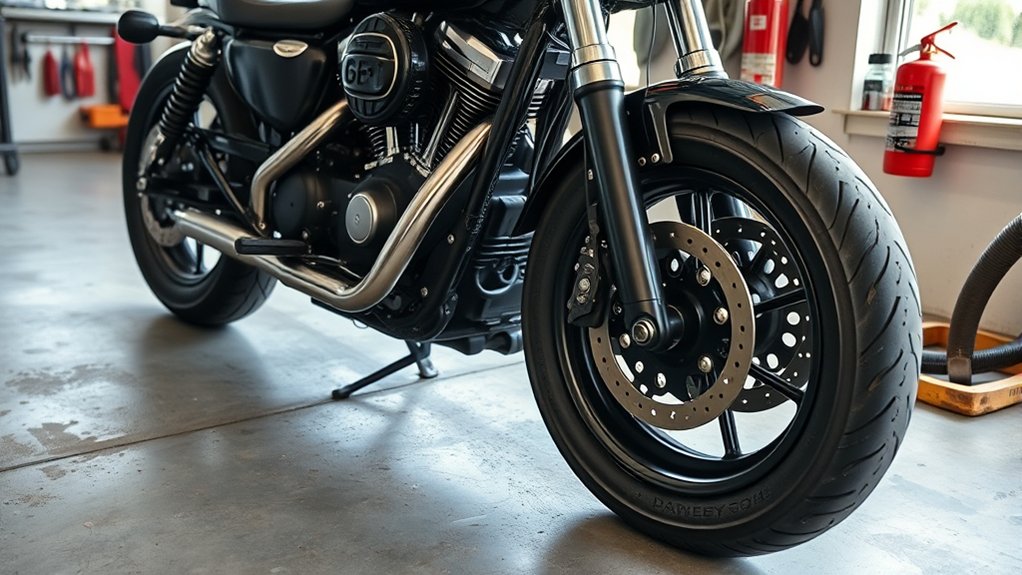
Before you start draining your Harley gas tank, how do you guarantee a safe and efficient setup? First, confirm your Harley is off, parked on a level surface, and the engine is cool to prevent fuel vapor ignition.
Ensure your Harley is off, on level ground, and cool before draining fuel to prevent vapor ignition.
Disconnect the battery to eliminate sparks during the drain process.
Organize your workspace by gathering all necessary equipment, like hoses, catch containers, rags, and quick connect fittings. Make sure you do this in a clean, well-lit area.
Wear protective gloves and eye protection to avoid contact with fuel.
Also, clear the workspace of ignition sources and open flames to minimize fire risk.
Taking these precautions creates a controlled environment. That way, your Harley’s fuel drain goes smoothly while keeping you and your equipment safe.
Choose Tools to Drain Your Harley Gas Tank
Choose hoses that have the right diameter and length. This will make sure the fuel flows efficiently and you can easily reach inside the tank. It’s all about making the job smoother.
Also, grab some quick connect fittings. They help speed up the draining process and cut down on spills, which is always a win.
Don’t forget to have a suitable container ready. You want to catch the drained fuel safely without worrying about any overflow. It’s better to be prepared!
Essential Drainage Equipment
When draining your Harley gas tank, selecting hoses with the correct diameter and length guarantees a secure, efficient fuel flow and prevents leaks. You’ll need reliable equipment to guarantee safety and effectiveness.
Use fuel lines with appropriate diameter to maintain steady flow and avoid spillage. Acquire quick connect fittings from salvage yards or automotive stores to enable easy disconnection without damage. Employ rags at hose connections to create airtight seals, preventing leaks during draining.
Position a catch can or approved container to safely collect drained fuel, avoiding environmental hazards. Accessing crossover line or throttle body quick connect fittings further simplifies the process, reducing the need for tank removal.
Proper equipment choice is critical for efficient, safe Harley gas tank drainage.
Selecting Proper Hose Sizes
Although selecting the right hose size might seem straightforward, using an inner diameter between 1/4 inch and 3/8 inch guarantees ideal fuel flow without clogging or spillage.
Choose fuel-resistant hoses made from reinforced rubber or high-quality PVC to withstand gasoline exposure and maintain flexibility.
Make sure the hose length, typically between 3 to 6 feet, comfortably reaches from the Harley’s gas tank to your catch container.
Match the hose diameter precisely to the outlet size of your fuel system components for a secure, spill-proof connection.
Use secure fittings or couplings; quick connect fittings are recommended to prevent leaks during draining.
Selecting proper hose sizes and compatible fittings ensures a safe, efficient fuel transfer while protecting your workspace from hazards.
Find and Access the Gas Tank Drain Plug or Fuel Line
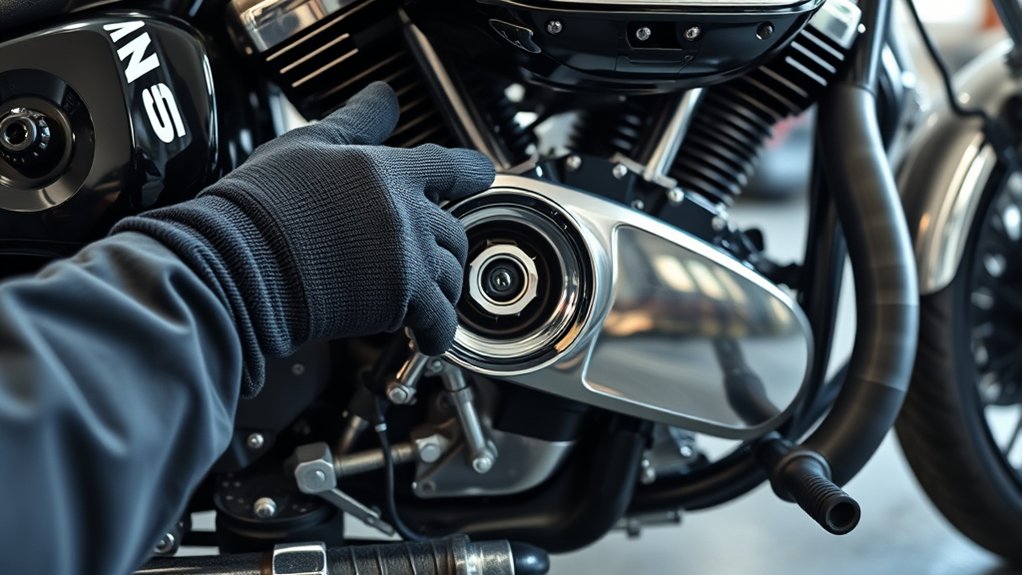
First, you’ll want to find the drain plug or the fuel line connection, which is usually near the bottom of the gas tank or on the crossover line. If you’re not sure exactly where that is, check your service manual or look up the manufacturer’s diagrams—they can be a big help in pinpointing the spot.
Once you know where to look, remove any panels that might be blocking your access. It’s easier to work when you have a clear path to the drain plug or fuel line.
Also, gather the tools you’ll need, whether that’s something for quick connect fittings or just regular screws.
Before you get started, make sure the bike is turned off and that you’re working in a well-ventilated area. Safety first!
This way, you can proceed confidently without any surprises.
Locating The Drain Plug
Before you begin draining your Harley’s gas tank, you’ll need to locate the drain plug or fuel line connection. This is usually found at the bottom or side of the tank, accessible through the frame or body panels.
Start by consulting your Harley’s service manual to identify the exact drain plug location on your model. Make sure the motorcycle is securely supported and the ignition is off to prevent any hazards.
Next, remove any obstructing panels or covers to expose the underside of the fuel tank. Take a close look for a dedicated drain plug.
If you don’t see one, some models might require you to access crossover lines or quick connect fittings instead.
Getting the drain plug right is really important for safe and efficient fuel tank drainage on your Harley.
Accessing Fuel Line Connections
When you access the fuel line connections, make certain the engine is off and the key is removed to prevent any accidental ignition.
Begin by locating the fuel line or crossover line linking the gas tank to the engine. Identify the drain plug or drain port on the tank, which may require removing an access cover or panel.
Use appropriate tools to carefully disconnect the quick connect fitting or crossover line, ensuring you don’t damage the fuel line or connectors.
Once disconnected, position a container to catch fuel and proceed to drain the tank through the opened fuel line or drain port.
Properly securing and reconnecting the fuel line after draining is essential to maintain system integrity and prevent leaks.
Just take your time with this step to make sure everything is tight and secure. That way, you avoid any problems down the road.
Use a Two-Hose Setup to Drain Old Gas Without Removing the Tank
Although you don’t need to remove the tank, you’ll want to set up two hoses to drain the old gas efficiently. This two-hose setup guarantees a controlled, spill-free process when you drain the gas tank.
Follow these steps:
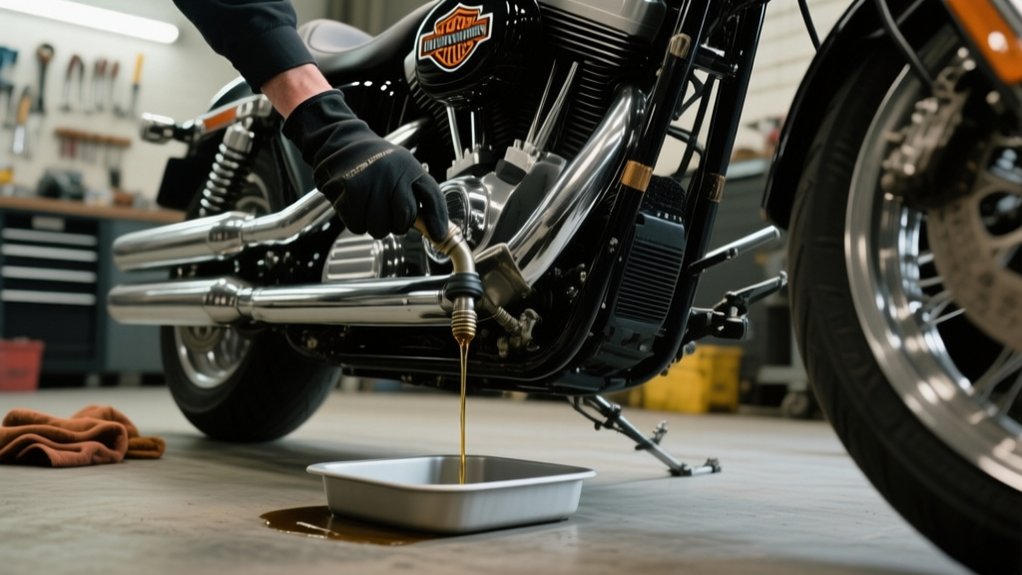
First, connect one hose to the bottom of the gas tank so gravity can do its job and let the fuel drain into a catch can positioned below.
Connect a hose at the tank’s bottom to let gravity drain fuel into a catch can below.
Then, insert a second hose above the gas level inside the tank to help prevent any spillage during draining.
Use quick connect fittings for secure attachment and easy removal of the hoses. Also, seal hose connections with rags to minimize fuel vapor escape and keep everything airtight.
This method lets you safely and effectively drain old gas from your Harley’s gas tank without removing it. It’s a simple way to avoid mess and hassle.
Seal Hose Connections to Prevent Leaks and Fumes
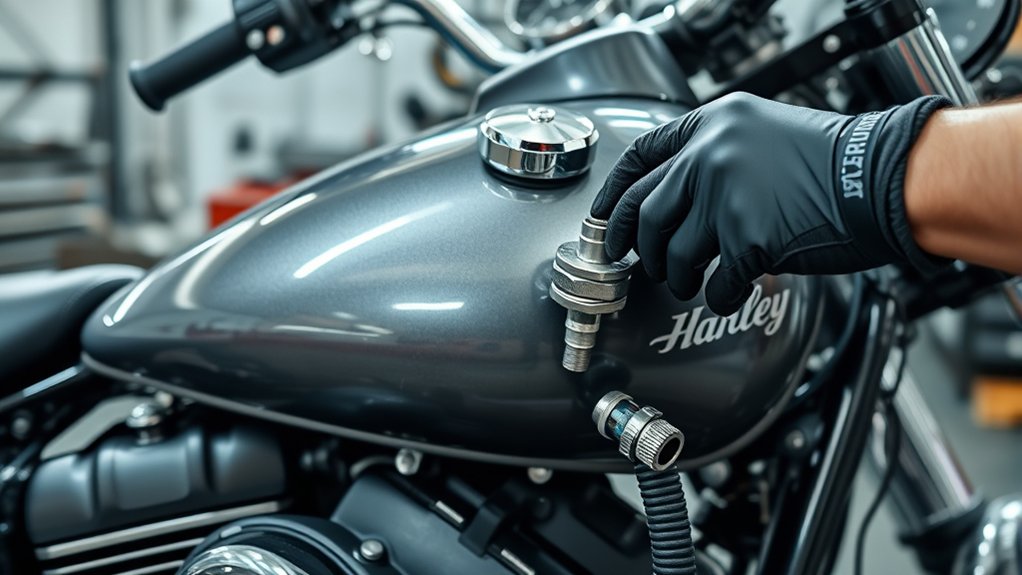
To prevent fuel leaks and harmful fumes during draining, you need to seal all hose connections tightly with rags. Start by wrapping rags securely around each connection point before attaching the hoses. This provides an effective barrier that minimizes spillage.
Make sure all hose fittings are firmly attached to maintain an airtight connection. This is critical for safe fuel drainage.
Regularly inspect the hose seals throughout the process to confirm they remain intact and airtight. That way, you prevent any fuel leaks or vapors from escaping.
Properly sealed hose connections not only enhance safety but also prevent environmental contamination. Neglecting this step increases the risk of hazardous fumes and spills.
Position the Catch Can to Prevent Harley Gas Tank Spills
Ensuring the catch can sits directly below the Harley gas tank’s drain point is essential for effective fuel collection. Proper positioning minimizes spills and keeps your workspace clean. Follow these key steps for spill prevention:
Position the catch can directly beneath the Harley gas tank drain to prevent spills and maintain a clean workspace.
First, align the catch can precisely under the drain point so gravity guides the fuel directly into it.
Next, secure the catch can on a stable, level surface or mount to prevent tipping.
Then, adjust the catch can’s height to stay below the drain outlet, reducing splash risk.
Before you open the drain, double-check the whole setup to avoid leaks.
Taking these simple steps really helps keep things neat and safe.
Drain the Gas Tank Using Crossover or Throttle Lines
When you disconnect the crossover or throttle body quick connect, you gain direct access to the fuel inside your Harley’s tank. Start by plugging one side of the crossover line to prevent uncontrolled fuel spillage.
Next, attach a drain hose securely to the open end of the crossover line, directing the fuel flow into an appropriate catch container.
Utilizing the existing quick connect fittings minimizes disassembly and streamlines the process. Make sure your Harley is turned off and you’re working in a well-ventilated area to mitigate fire hazards.
This method efficiently drains the fuel tank without removing it, leveraging the crossover line’s accessibility.
Follow these steps precisely to maintain safety and control while draining the fuel tank via the crossover line and drain hose setup. It’s a straightforward way to get the job done without extra hassle. Just take your time and stay safe throughout the process.
How to Safely Handle and Dispose of Old Gas
Although draining your Harley’s gas tank is crucial, handling the old fuel safely is just as important to prevent hazards and environmental damage. Follow these safety steps for proper fuel disposal.
First, drain old gas into a sealed, labeled container rated for flammable liquids. This helps avoid spills and contamination. Make sure the fuel has completely cooled before you handle it to reduce ignition risks.
Wear protective gloves and eye protection to keep irritation at bay while transferring the fuel.
When it’s time to get rid of the drained gas, only take it to authorized hazardous waste facilities or recycling centers. Never dump it in regular trash or storm drains.
Fix Common Problems When Draining Your Harley Gas Tank
If you encounter issues like fuel leaks or slow drainage, check that all hose connections are airtight and firmly sealed with rags or clamps. Proper sealing prevents fuel leaks and guarantees efficient draining.
Make sure the drain hose is fully inserted and positioned below the tank. Have a catch container ready to collect fuel safely. Using quick connect fittings can make access easier, but always double-check their tightness.
Here’s a troubleshooting guide:
| Problem | Solution |
|---|---|
| Fuel leaks | Tighten hose connections; reseal |
| Slow drainage | Fully insert drain hose; check angle |
| Hose connection loose | Use clamps or rags for sealing |
Keeping hose connections secure and properly sealed is key to avoiding spills and making the draining process smooth on your Harley.
Frequently asked questions
How Often Should I Drain the Gas Tank on My Harley?
You should drain your Harley’s gas tank every 6 to 12 months to prevent fuel degradation.
If you plan to store your bike for an extended period, drain it more frequently to avoid stale fuel damaging the engine.
Also, drain it immediately if you notice starting issues or poor performance.
Staying proactive with fuel management ensures peak engine function and prevents clogged fuel lines.
This is especially important during seasonal storage or long inactivity periods.
Can I Use Any Container to Catch the Drained Fuel?
You can’t just use any container to catch drained fuel. It’s tempting to grab whatever’s handy, but only approved fuel containers prevent leaks, spills, and fire hazards effectively.
Using a container with a secure lid stops fumes from evaporating and reduces environmental risks. Always pick one rated for flammable liquids and sized appropriately for your tank’s capacity.
This keeps you safe and guarantees proper fuel storage and transport.
Is It Necessary to Drain the Tank Before Long-Term Storage?
Yes, you should drain the tank before long-term storage. Doing so prevents fuel degradation and varnish buildup that can clog fuel lines and injectors.
Old fuel absorbs moisture, which promotes rust and corrosion inside the tank. Draining also reduces the risk of leaks and spills during storage.
If you prefer, you can add a fuel stabilizer instead. But completely draining the tank is the safest way to keep your Harley’s fuel system in good shape.
What Are the Signs of a Clogged Fuel Drain Plug?
If your bike hesitates like a runner with a stitch, you might’ve a clogged fuel drain plug.
You’ll notice slow acceleration or trouble starting, like your engine’s gas is stuck in traffic.
Check for debris or rust-colored sediment around the plug. These are red flags.
Reduced or inconsistent fuel flow confirms blockage.
If you find yourself cleaning or swapping the plug often, it’s time to act before damage builds up.
Can Draining Fuel Improve My Harley’s Performance?
Yes, draining fuel can improve your Harley’s performance. Removing old, stale fuel gets rid of varnish and water that mess with combustion. This helps prevent clogging in injectors or carburetors, so fuel flows more smoothly and the engine responds better.
After draining, filling up with fresh, high-quality fuel optimizes combustion efficiency. It also reduces knocking and boosts power output.
Making a habit of regularly draining your fuel is a key maintenance step. It helps keep your engine running at its best and improves fuel efficiency.
Final Thought
Draining your Harley gas tank the right way not only protects your bike but also safeguards your health and the environment. Did you know that improperly disposed fuel contributes to over 1.2 million gallons of hazardous waste annually? By following these precise steps, you minimize the risks of leaks and fumes while ensuring efficient fuel removal.
Stay meticulous, use proper tools, and handle old gas responsibly. This way, you keep your Harley running smoothly and help keep the environment safe. It’s easier than you might think when you take it step by step.