
Top 12 Best Road Bike Medium Models You Can’t Miss
Riding a bike that doesn’t fit right is a daily frustration for many cyclists, making every trip uncomfortable and inefficient. Finding the best road bike medium matters because it hits the sweet spot between size and performance for riders around 5’6” to 5’10”. A too-small or too-large frame often leads to knee pain, back aches, or difficulty handling the bike properly.
The key factors for a good road bike medium include frame material, proper sizing, and gear range. Aluminum or carbon frames are common, with carbon offering lighter weight around 15-18 pounds, while aluminum typically weighs a bit more but stays sturdy.
Fit depends on frame geometry and seat tube length, about 54-56 cm for a medium frame. Gear options usually include 2×11 or 2×12 setups, balancing speed and climbing power for most riders. Getting these right makes a noticeable difference in ride quality and safety.
Need a Quick Check?
| Image | Product | Price |
|---|---|---|
Our Top Picks 1  | Schwinn Volare Road | Check Price |
Our Top Picks 2  | SAVADECK Carbon Road | Check Price |
Our Top Picks 3  | HILAND 700C Road | Check Price |
Our Selected Top 12 Road Bike Medium Worth Considering
This list features twelve carefully chosen medium-sized road bikes, highlighting their performance, suitability for different riders, and key advantages and drawbacks. Each review offers clear insights to help you find a bike that fits your needs and riding style.
1. Schwinn Volare 1300 Road Bike
Long rides on smooth pavement demand a bike that combines speed and comfort without weighing you down. Perfect for riders between 5’8 and 6’2, the Schwinn Volare 1300 Road Bike stands out for its lightweight aluminum frame that strikes a nice balance between durability and agility.
Getting it ready feels straightforward thanks to the trigger-style shifters which help you switch through 14 speeds smoothly. Day-to-day rides become a breeze on paved roads as the 700c wheels and Schwinn sport tires keep you rolling fast yet comfortable. The ergonomic drop handlebar places you in a more aerodynamic posture to maintain better control and lessen fatigue on longer rides.
This bike handles city streets and quick training sessions with solid efficiency, shifting gears precisely when the terrain changes. Its rigid alloy fork and caliper brakes keep things responsive.
Most praise focuses on the excellent frame weight and comfortable ride position, while some mention the lack of suspension as a limitation on rougher surfaces.
The bike delivers a smooth and responsive ride on paved roads, praised mostly for its light frame and comfortable ergonomics. Some find the lack of suspension limiting when encountering rougher surfaces, which can make the ride feel less forgiving.
Riders focused on road cycling and fitness who want agility and speed will appreciate this bike. Those frequently dealing with uneven terrain or seeking more powerful brakes may want to explore other options.
Pros
- Lightweight aluminum frame for agile riding
- Precise 14-speed trigger shifters
- Comfortable ergonomic drop handlebar
- Good fit range for medium riders
Cons
- No suspension for bumpy roads
- Caliper brakes less powerful in wet conditions
| Specification | Details |
|---|---|
| Bike Type | Road Bike |
| Number Of Speeds | 14 |
| Suspension Type | Rigid |
| Frame Material | Aluminum |
| Brake Style | Caliper |
| Intended Riding Terrain | Paved Roads |
2. SAVADECK Carbon Road Bike
Weighing just 8.9kg, this carbon road bike matches lightweight design with sturdy construction, making it ideal for intermediate riders looking to climb hills with ease. Its T800 carbon fiber frame stands out as the key feature, offering a tough yet light ride that’s smooth on paved roads.
Setting up the bike is quick because it arrives 90% pre-assembled. Attaching the handlebar, front wheel, seat post, and pedals usually takes about 15 minutes, even without prior mechanical skills.
The 18-speed gears and drop bar shifters provide responsive control for varying inclines and speeds during everyday rides.
The bike performs well on paved terrain, thanks to its lightweight frame and 18-speed derailleur system. The use of T800 carbon fiber adds strength while keeping weight low.
V brakes work effectively, though some feedback points to occasional issues with stopping power in wet conditions. It’s a solid build that balances performance and practicality.
The bike’s standout feature is its ultra-lightweight T800 carbon frame, which helps with easier hill climbs and acceleration. Most praise centers on the quick and simple assembly, while common complaints focus on V brake performance under wet conditions. Its weight and gear system contribute to satisfying daily rides on paved surfaces.
Intermediate cyclists seeking a lightweight, durable bike for road use will appreciate its design and ease of setup. Those who often ride in wet climates or prefer smoother rides on rough roads might consider models with hydraulic disc brakes and some suspension features instead.
Pros
- Very lightweight at just 8.9kg
- Pre-assembled, easy setup in 15 minutes
- Strong carbon frame five times harder than aluminum
- 18-speed gears for versatility on hills
Cons
- V brakes less effective in wet weather
- Rigid suspension can feel harsh on rough roads
| Specification | Details |
|---|---|
| Bike Type | Road Bike |
| Weight | 8.9kg (19.6lb) |
| Number Of Speeds | 18 |
| Brake Style | V Brake |
| Frame Material | T800 Carbon Fiber |
| Suspension Type | Rigid |
3. HILAND 700C Aluminum Road Bike
Someone looking for a versatile road bike that handles both city streets and light gravel will appreciate its lightweight design. It suits riders who want speed without sacrificing control, with its standout feature being a strong yet lightweight aluminum frame that helps maintain good pace over longer rides.
Setting up the bike is straightforward, thanks to the adjustable seat and quick release feature. Day-to-day rides feel smooth on the 700C tires, which reduce rolling resistance, making it easier to pedal farther with less effort. The 14-speed derailleur system allows simple shifting across different terrains, so it adapts well when switching between paved roads and unpaved trails.
Performance emphasizes speed and control, with the bike’s rigid suspension and durable build standing out. The dual caliper brakes provide reliable stopping power and feel lighter than disc brakes. One common downside is that the brakes can require occasional adjustment to keep them feeling tight.
It performs well for commuting and casual road riding but leans more toward lighter terrain rather than technical or rough conditions.
The bike is praised for its lightweight frame and smooth shifting, making it enjoyable on city streets and light gravel paths. The braking system offers good stopping power but can require regular adjustment to maintain performance.
Those looking for a solid road and light off-road commuter will find this a good fit. Riders who require suspension for extremely rough terrain or stronger brake performance should look at other options.
Pros
- Lightweight aluminum frame for faster riding
- 14-speed drivetrain for versatile terrain handling
- Adjustable and quick release seat for comfort
- Reliable dual caliper brakes with stable stopping force
Cons
- Brakes may need regular tuning
- Rigid suspension less forgiving on rough trails
| Specification | Details |
|---|---|
| Bike Type | Road Bike |
| Number Of Speeds | 14 |
| Suspension Type | Rigid |
| Brake Style | Caliper |
| Wheel Size | 700C |
| Bicycle Gear Shifter Type | Drop Bar |
4. Tommaso Monza Sport Aluminum Road Bike

Lightweight aluminum frame and reliable Shimano Tiagra drivetrain make it a great fit for intermediate riders focused on paved road cycling. Its biggest strength lies in offering smooth gear shifts and solid braking, perfect for road workouts and fitness rides without suspension worries.
Setting up the bike is straightforward, with a trigger shifter that changes through 20 speeds quickly. The linear pull brakes respond well on paved surfaces, making daily rides feel controlled. The moderately sized frame feels comfortable for medium-sized riders, helping maintain a steady pace on fitness routes without added distractions.
It rides well across paved roads with efficient power transfer thanks to the cassette gear system. The aluminum frame balances weight and durability, while Shimano Tiagra components provide reliable shifting.
Strong points include smooth gear transitions and solid build quality. A typical downside is the absence of suspension, which can make rough patches less comfortable.
Smooth gear shifting with Shimano Tiagra stands out as a strong point, ensuring easy speed adjustments on the go. Most common complaint is the lack of suspension, which makes rides over uneven surfaces feel harsher than some riders might prefer.
Those looking for a dependable, lightweight road bike for training and fitness on smooth pavement will appreciate the setup. Riders seeking comfort on rougher roads should consider a bike with suspension options for a gentler ride.
Pros
- Lightweight aluminum frame
- Smooth 20-speed shifting
- Effective linear pull brakes
- Good for paved road fitness rides
Cons
- No suspension for rough terrain
- Limited to paved roads only
| Specification | Details |
|---|---|
| Bike Type | Road Bike |
| Number Of Speeds | 20 |
| Brake Style | Linear Pull |
| Frame Material | Aluminum Frame |
| Drivetrain | Shimano Tiagra |
5. SAVADECK A7L Pro Full Carbon Racing Bike

SAVADECK A7L Pro Full Carbon Racing Bike suits riders looking for a lightweight road bike with smooth shifting. It excels with an ultralight full carbon build, making climbing and acceleration easier on paved roads. Its strength lies in the combination of weight and precise gear changes for serious road cycling.
Setup involves getting familiar with the Shimano R7120 24-speed groupset, which offers reliable and smooth shifting between gears. The rigid frame and dual disc brakes provide solid control and stopping power.
Day-to-day rides feel responsive thanks to the lightweight carbon parts, including the frame, fork, wheelset, handlebar, and seat post, all weighing just 8.8kg.
Performance on inclines is impressive because the bike’s carbon fiber materials are strong yet light, allowing for faster climbs and quicker acceleration. Its build quality stands out with T800 carbon that is much harder than aluminum alloy. The smooth shifting from the Shimano groupset draws compliments, though some riders note the need for regular maintenance on the high-end components to keep performance sharp.
The bike receives strong praise for its combination of a super light T800 carbon frame and smooth Shimano R7120 shifting that delivers reliable performance on paved roads. The most common complaint relates to the need for upkeep on the groupset to maintain the precise gear changes over time.
Riders who want a fast, climbing-friendly road bike on smooth pavement will appreciate this model. Those who need suspension or plan to ride on rougher terrain should consider alternatives better suited for those conditions.
Pros
- Ultralight full carbon build at 8.8kg
- Smooth and precise 24-speed Shimano shifting
- Strong dual disc brakes for reliable stopping
- Rigid frame optimized for road performance
Cons
- High-end components require regular maintenance
- Fully rigid, no suspension for rough roads
| Specification | Details |
|---|---|
| Bike Type | Road Bike |
| Number Of Speeds | 24 |
| Suspension Type | Rigid |
| Additional Features | Dual Disc Brake, Lightweight |
| Brake Style | Disc |
| Intended Riding Terrain | Paved Roads |
6. Hybrid 700C 24-Speed City Commuter Bike

Riding feels smooth and controllable on city streets and light trails, making it a steady choice for everyday commuting. Suits riders looking for a reliable medium-sized road bike that handles various urban terrains with ease. Its biggest strength lies in the 24-speed drivetrain, offering plenty of gears for different elevations and speeds.
Setting it up is straightforward, and the adjustable seat ensures a comfortable fit for different heights. The internal wiring keeps the bike’s look clean and reduces drag while protecting cables from dirt and weather. Dual disc brakes provide strong stopping power, so riding in traffic or on mixed terrain feels much safer and more confident.
Performance strikes a good balance between speed and control, handled well by the 3 x 8 drivetrain that shifts precisely with trigger shifters. The carbon steel frame is lightweight yet stable, giving a solid ride feel.
Praise often highlights smooth gear changes, while some mention the suspension might not fully absorb rougher bumps.
The bike receives strong praise for precise and easy gear shifting thanks to its 3 x 8 drivetrain with trigger shifters. A common complaint points out that the dual suspension setup doesn’t completely absorb harsher bumps, which can affect comfort on very uneven trails.
This bike will satisfy anyone needing a versatile medium road bike that works well across city and light off-road use. Riders seeking a more advanced suspension or a lighter frame might look at other models built specifically for rough terrain or racing.
Pros
- Lightweight carbon steel frame for stability
- Internal wiring reduces drag and keeps clean look
- Wide 24-speed range for varied terrain
- Dual disc brakes for reliable stopping
Cons
- Suspension may not smooth very rough surfaces fully
- Carbon steel frame not as light as aluminum or carbon
| Specification | Details |
|---|---|
| Bike Type | City Bike, Road Bike |
| Number Of Speeds | 24 |
| Suspension Type | Dual |
| Brake Style | Disc |
| Bicycle Gear Shifter Type | Trigger |
| Intended Riding Terrain | Paved Roads, Unpaved Trails, Urban Terrain |
7. Jupiter 17 19 Inch Hybrid Bike

Lightweight and versatile, perfect for medium-sized riders seeking a reliable hybrid bike that handles a wide range of terrains. Its biggest strength lies in balancing durability with easy handling on both paved roads and unpaved trails, making it a solid choice for daily commuting or weekend rides.
Setup is straightforward thanks to the adjustable seat and quick release feature that lets you find the right fit fast. Shifting through 21 Shimano EF500 speeds is smooth, helping you tackle both steep hills and flat stretches without hassle. Dual disc brakes provide consistent stopping power, and the multiple mounting points make it easy to customize with racks or bottle holders for practical day-to-day use.
The rigid aluminum alloy frame feels sturdy without being heavy, which shows in how responsive the bike is on various surfaces. Gear changes remain precise, contributing to an enjoyable ride across gravel and city roads. Some users mention the lack of suspension as a downside on rough trails, but that’s expected in this bike type.
Strong points include reliable brakes and a frame built to last.
Smooth and reliable shifting with the Shimano EF500 system earns praise for making climbs and flat roads easy to manage. The common complaint revolves around the rigid frame’s lack of suspension, which can lead to discomfort on bumpier paths.
A great fit for riders who want a dependable bike for mixed terrain commuting and casual rides. Those planning long off-road adventures with rough surfaces might want a model with suspension for added comfort.
Pros
- Lightweight aluminum alloy frame
- Smooth 21-speed Shimano EF500 drivetrain
- Dual disc brakes for strong stopping power
- Multiple mounting points for accessories
Cons
- No suspension limits comfort on rough trails
- Seat comfort could be improved for long rides
| Specification | Details |
|---|---|
| Bike Type | Hybrid Bike |
| Number Of Speeds | 21 |
| Suspension Type | Rigid |
| Brake Style | Disc |
| Frame Material | Aluminum Alloy |
| Additional Features | Adjustable Seat, Dual Disc Brake, Quick Release Seat |
8. Pipleo 700C Aluminum Road Bike
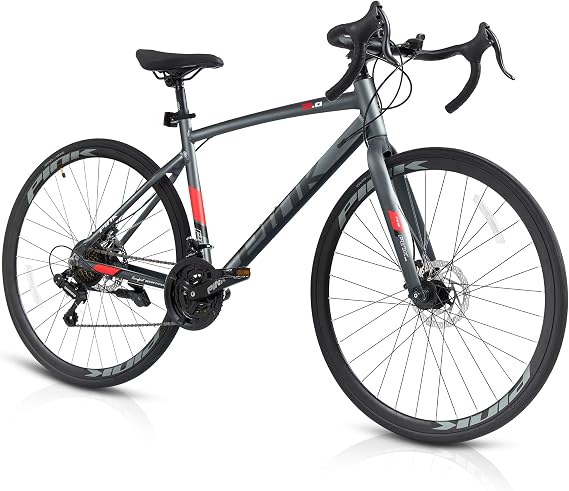
Aluminum frameset sets a solid base for riders looking for a medium-sized road bike. It suits those wanting a combination of speed control and durability, especially for city commutes and paved roads. Precision shifting stands out as the bike’s strongest feature, making gear changes smooth and reliable.
Setting up involves familiarizing yourself with the SHIMANO 21-SPEED drivetrain, offering quick and precise shifts, which help on varying terrains. Daily rides benefit from the dual-disc brakes that stop you quickly and wear less over time.
The front suspension adds some comfort on rough city streets, while the 700x28C tires handle mixed pavement and light gravel confidently.
Performance on roads is stable and responsive, gaining praise for how easily it tackles hills thanks to the HyperGlide+ technology. Build quality feels durable, with cables routed inside the frame reducing drag. Most commonly, riders note the bike’s braking as a highlight, though some mention the weight and suspension feel could be improved for more aggressive riding.
Shift quality earns high praise for its sharpness and reliability, making gear adjustments smooth for riders. Most feedback points to the front suspension as feeling limited when used off-smooth urban roads or on longer rides. The brakes consistently stand out for quick, confident stopping.
Anyone keen on city commuting with occasional hill challenges will find the setup fitting. Those needing a lightweight race-focused bike or advanced suspension should consider alternatives better suited to aggressive or varied terrain riding.
Pros
- Quick 0.3s precision SHIMANO shifting
- Dual-disc brakes offer strong stopping power
- 700x28C armored tires resist wear on mixed surfaces
- Internal cable routing cuts wind resistance
Cons
- Front suspension feels basic for rough terrains
- Weight may be noticeable on steep climbs
| Specification | Details |
|---|---|
| Bike Type | Road Bike |
| Number Of Speeds | 21 |
| Suspension Type | Front |
| Brake Style | Disc |
| Intended Riding Terrain | Paved Roads, Urban Terrain |
9. SAVADECK A7L Pro Full Carbon Racing Bike

Lightweight design stands out immediately, making it ideal for riders seeking speed and agility on paved roads. Its full carbon fiber construction keeps overall weight down to just 8.9kg, which suits medium-sized cyclists looking to improve their race performance with a nimble and responsive bike.
Setup involves fine-tuning the Shimano R7120 groupset with 24 speeds, offering smooth and reliable shifting on both front and rear derailleurs. Dual disc brakes provide dependable stopping power, while the rigid suspension design keeps weight minimal. Regular rides feel responsive, and the carbon frame absorbs road vibrations well, keeping the experience comfortable even over longer distances.
Performance on paved terrain is precise and efficient. The carbon fiber frame and components contribute to a lightweight ride that feels surprisingly stiff, allowing power transfer to the pedals without waste.
Reviews frequently highlight the dependable shifting system as a plus, while some users note the price point as a downside, considering the absence of suspension features and the focus on race readiness.
The bike offers crisp and dependable shifting paired with a light carbon frame, praised for race-ready performance. Its most frequent criticism involves the lack of suspension, which may limit comfort on uneven terrain or longer rides off smooth roads.
Enthusiasts aiming for speed and crisp handling on paved roads will appreciate the design and components. Casual cyclists or those expecting a more forgiving ride over mixed surfaces might want to consider a bike with suspension or a more budget-friendly option.
Pros
- Extremely lightweight at 8.9 kg
- Smooth shifting with Shimano R7120
- Strong carbon fiber build
- Reliable dual disc brakes
Cons
- No suspension for rougher surfaces
- Price may be high for casual riders
| Specification | Details |
|---|---|
| Bike Type | Road Bike |
| Number Of Speeds | 24 |
| Suspension Type | Rigid |
| Brake Style | Disc |
| Frame Material | Full Carbon Fiber T800 |
| Weight | 8.9kg (19.62 lb) |
10. 700C Shimano 14-Speed Road Bike

High-carbon steel frame combined with Shimano’s 14-speed drivetrain makes for a reliable road bike suited for riders who want smooth rides and confident hill climbing. Its biggest strength is the balance of aerodynamic design and dependable shifting, aimed at daily commuting and weekend rides alike.
Setup involves adjusting the seat for comfort, which is easy thanks to the adjustable feature. The dual disc brakes give a solid stopping power in urban traffic or on longer routes. The kickstand adds convenience when parking during breaks, and the 700x28C tires with aerodynamic rims keep the ride steady and efficient on paved roads.
Performance feels steady with the rigid suspension and precise Shimano A050 12-speed derailleurs handling gear changes without hesitation. Built with an aerodynamic high-carbon steel frame, it holds a good pace without feeling too heavy.
The most appreciated feature is its smooth shifting; some mention the steel frame adds a bit more weight compared to aluminum models.
Shifting on this bike is responsive and reliable, giving riders confidence on hills and flats alike. The rigid steel frame contributes to stability but can feel heavier and less forgiving on rough roads compared to lighter materials or models with suspension.
Anyone prioritizing smooth gear changes and solid stopping will appreciate the drivetrain and disc brakes. Riders seeking a lighter bike or more comfort over uneven surfaces might want to consider alternatives with different frame materials or suspension setups.
Pros
- Precise Shimano A050 12-speed shifting
- High-carbon steel frame feels solid and stable
- Dual disc brakes offer strong stopping power
- Adjustable seat for personalized comfort
Cons
- Steel frame adds noticeable weight
- Rigid suspension limits shock absorption
| Specification | Details |
|---|---|
| Bike Type | Road Bike |
| Number Of Speeds | 14 |
| Suspension Type | Rigid |
| Brake Style | Disc |
| Additional Features | Adjustable Seat, Dual Disc Brake, Kickstand, Multi-Speed |
11. Tommaso Sterrata Aluminum Gravel Bike

Finding a bike that handles both smooth roads and rougher trails without weighing you down can be tricky. Designed for intermediate riders, the Tommaso Sterrata Aluminum Gravel Bike is a solid pick for anyone who wants a lightweight adventure bike built to handle a mix of paved and unpaved terrain.
Its biggest strength is balancing versatility with a manageable weight.
Setting up the bike involves getting comfortable with its 24-speed Shimano Claris drivetrain, which offers enough gear options for climbing hills or cruising flats. The trigger shifters make it easy to switch gears quickly on the fly. Day-to-day rides feel agile thanks to the no-suspension, lightweight aluminum frame that keeps things responsive and fast without extra bulk.
The bike delivers solid performance across different surfaces, from paved streets to gravel paths, with disc brakes that offer reliable stopping power in various conditions. The build is solid and focused on durability, even though some riders might miss having suspension on rougher trails. The most common downside mentioned is how the lack of suspension can make rough terrain less comfortable on longer rides.
Strong points include its lightweight frame and reliable disc brakes that work well both on roads and unpaved trails. The most common issue is the absence of suspension, which makes longer rides on rough surfaces less comfortable for some riders.
Those who want a versatile bike for mixed terrain and value lightness and strong brakes will appreciate this model. Those expecting to tackle very rough trails or needing more comfort might want to look for bikes with suspension options instead.
Pros
- Lightweight frame for easier handling
- Disc brakes ensure reliable stopping power
- Wide gear range suits varied terrain
- Trigger shifters offer quick, precise gear changes
Cons
- Lack of suspension reduces comfort on rough trails
- Not ideal for riders needing advanced shock absorption
| Specification | Details |
|---|---|
| Bike Type | Adventure Bike |
| Number Of Speeds | 24 |
| Suspension Type | no-suspension |
| Additional Features | Lightweight |
| Brake Style | Disc |
| Bicycle Drivetrain Type | Shimano Claris |
12. HILAND 700C Aluminum Road Bike

700C wheels offer faster rolling and better momentum, making the bike a good fit for riders who want speed and efficiency on paved roads. The biggest strength lies in the lightweight aluminum frame that feels responsive on climbs and keeps the entire setup agile.
Setting up the bike is straightforward thanks to the adjustable and quick release seat, letting you dial in your fit easily. The drop bar shifters and 14-speed drivetrain provide a range of options for urban terrain and longer rides. Its rigid suspension suits smooth pavement, keeping the ride precise without unnecessary bounce.
Performance-wise, the bike rolls quickly and keeps pace well, particularly when sprinting or covering longer distances. The aluminum frame’s lightness helps with acceleration and handling around corners. Customers appreciate the speed and build quality, but some find the caliper brakes less powerful on steep descents or in wet conditions.
The bike excels at maintaining speed with its lightweight frame and fast-rolling 700C wheels, making rides more efficient. Common feedback notes that the caliper brakes do not always provide enough stopping power on steep or wet terrain, which can be a concern for safety-conscious riders.
Riders who focus on road cycling and want a responsive, quick bike on smooth surfaces will enjoy this one. Those frequently facing rough roads or needing stronger braking capabilities might want to consider other options with suspension or more powerful brakes.
Pros
- Lightweight aluminum frame for better climbing
- 14-speed drivetrain suits varying road conditions
- Quick release seat allows fast adjustments
- 700C wheels maintain momentum effectively
Cons
- Caliper brakes may struggle in wet weather
- Rigid suspension feels harsh on rough roads
| Specification | Details |
|---|---|
| Bike Type | Road Bike |
| Number Of Speeds | 14 |
| Suspension Type | Rigid |
| Brake Style | Caliper |
| Frame Material | Aluminum Alloy |
| Wheel Size | 700C |
Best Medium Road Bikes Comparison Table
| Product | Speeds | Brake Style | Frame Material | Skill Level |
|---|---|---|---|---|
| Schwinn Volare Road | 14 | Caliper | Aluminum | Intermediate |
| SAVADECK Carbon Road | 18 | V Brake | – | Intermediate |
| HILAND 700C Road | 14 | Caliper | – | – |
| Tommaso Monza Sport | 20 | Linear Pull | Aluminum | Intermediate |
| SAVADECK A7L Carbon | 24 | Disc | – | – |
| Hybrid 700C Commuter | 24 | Disc | – | – |
| Jupiter 17 Hybrid | 21 | Disc | – | – |
| Pipleo 700C Road | 21 | Disc | – | – |
| SAVADECK A7L Pro | 24 | Disc | – | – |
| Shimano 700C Road | 14 | Disc | – | – |
| Tommaso Sterrata Gravel | 24 | Disc | – | Intermediate |
| HILAND Aluminum Road | 14 | Caliper | – | Moderate |
- Speeds14
- Brake StyleCaliper
- Frame MaterialAluminum
- Skill LevelIntermediate
- Speeds18
- Brake StyleV Brake
- Frame Material–
- Skill LevelIntermediate
- Speeds14
- Brake StyleCaliper
- Frame Material–
- Skill Level–
- Speeds20
- Brake StyleLinear Pull
- Frame MaterialAluminum
- Skill LevelIntermediate
- Speeds24
- Brake StyleDisc
- Frame Material–
- Skill Level–
- Speeds24
- Brake StyleDisc
- Frame Material–
- Skill Level–
- Speeds21
- Brake StyleDisc
- Frame Material–
- Skill Level–
- Speeds21
- Brake StyleDisc
- Frame Material–
- Skill Level–
- Speeds24
- Brake StyleDisc
- Frame Material–
- Skill Level–
- Speeds14
- Brake StyleDisc
- Frame Material–
- Skill Level–
- Speeds24
- Brake StyleDisc
- Frame Material–
- Skill LevelIntermediate
- Speeds14
- Brake StyleCaliper
- Frame Material–
- Skill LevelModerate
How to Choose the Right Road Bike Medium
Choosing the right road bike medium depends on frame size, fit, and intended use, as these factors ensure comfort and efficiency while riding. Getting the fit right helps prevent injuries and reduces the need for costly adjustments or replacements later on.
Frame Size and Fit
Sizing errors with a medium frame become obvious quickly. A frame too tall or short throws off riding posture, causing discomfort or even pain during longer journeys. The geometry of the frame directly controls how you sit, stretch for the handlebars, and respond to the road; it dictates balance and steering precision.
Uncomfortable reach to the handlebars can tire your arms, while an incorrect seat height reduces pedaling efficiency and can lead to knee strain.
Good medium frames allow enough adjustability to dial in the fit. Seat heights can often shift several centimeters, and some offer handlebar reach adjustments or varying stem lengths. Standard medium frames suit riders roughly between 5’6” and 5’10”, but you’ll want to check the detailed geometry specs like top tube length and stack height to ensure a natural position.
Weight and Materials
The weight of a bike significantly affects control and effort on climbs or during acceleration. Medium frames made from aluminum typically offer a good balance of weight and cost but may feel stiffer.
Carbon fiber frames are lighter and absorb road buzz well but usually come at a higher price point. Steel frames, while heavier, provide durability and a smooth ride but add noticeable weight that can slow things down on hills.
Lightweight materials translate into less effort riding uphill and quicker responses in sprints. For many riders, mediums in the 18-20 pound range strike a good compromise.
Components like wheels and seatposts also impact overall weight. Paying attention to the frame material plus these parts often leads to a more enjoyable and responsive ride.
Components and Drivetrain
Shifting quality can make or break the riding experience. Lower-end gears often feel sloppy, with delays or missed shifts, while higher-grade derailleurs and shifters offer precise and consistent engagement. A medium road bike typically has between 16 to 22 gears, enough to handle steep climbs, flat roads, and descents without sacrificing simplicity.
Groupsets from reputable brands provide smoother gear changes and require less frequent cable adjustments or replacements. Maintenance is easier with higher-tier groupsets because their components are built to tighter specifications and use better seals against dirt. Reliable shifting helps maintain momentum and reduces rider fatigue.
Comfort and Ride Quality
Tire width affects not only grip but also how well vibrations are absorbed. Narrow 23-25mm tires are common for speed but transmit more road buzz, which can cause hand numbness or fatigue.
Wider tires around 28mm or above improve comfort by cushioning impacts but add a small amount of rolling resistance.
Saddle design plays a key role for longer rides; insufficient padding or poor shape leads to soreness. Saddles with cutouts or ergonomic shaping help reduce pressure in sensitive areas.
The frame and fork compliance, how well they flex to absorb bumps, also affects ride smoothness. Materials and construction methods that absorb shocks can improve comfort on rough tarmac.
Braking System
Rim brakes are lighter and easier to maintain but lose effectiveness when wet or muddy. Disc brakes provide more consistent stopping power in all weather and on descents, which is crucial for safety.
Many medium bikes now come with mechanical or hydraulic disc systems offering better modulation.
Brake responsiveness matters most on varied terrain where quick control can prevent crashes. Hydraulic discs require less frequent adjustment but need occasional bleeding of fluid, while mechanical pads need cable tuning and pad replacement more often.
Durability varies by material; rotor and pad wear are normal but should be monitored to avoid reduced braking performance.
Optimizing Your Riding Experience with a Medium Road Bike
Choosing the right frame size significantly impacts comfort and efficiency on the road. A medium road bike typically fits riders between 5’6 and 5’10, but it’s important to consider factors like inseam length and torso height to avoid discomfort during long rides.
Key adjustments can make the ride smoother:
- Set saddle height so your leg extends almost fully at the bottom of the pedal stroke.
- Adjust handlebar reach to prevent overstretching, which reduces strain on your back and shoulders.
- Use clipless pedals or well-fitted shoes to increase pedaling efficiency.
Properly fitted shoes and gloves also contribute by improving grip and reducing fatigue. Testing your riding position indoors or on stationary trainers before hitting longer routes helps fine-tune these details. This preparation lets you focus on the ride itself rather than battling soreness or numbness.
Essential Maintenance Tips to Prolong Your Road Bike’s Lifespan
Routine maintenance keeps a road bike running smoothly and extends its life, especially if you ride frequently. Cleaning the chain regularly with a degreaser prevents buildup that leads to poor shifting and increased wear.
Basic maintenance includes:
- Lubricating the chain after cleaning, but wiping off excess to avoid attracting dirt.
- Checking tire pressure before every ride; road bikes perform best between 80-120 psi depending on tire width and rider weight.
- Inspecting brake pads for wear and replacing them before they become too thin.
- Ensuring bolts on the stem, handlebars, and seat post are tightened to recommended torque settings.
Regularly examining cables for fraying or rust and replacing them helps maintain consistent shifting and braking response. These small efforts reduce the risk of breakdowns during rides and protect your investment over time.
Comparing Medium Road Bikes: Performance Differences Across Popular Models
Medium road bikes from different brands can feel distinctly different even if their specs seem similar on paper. Frame geometry, materials used, and component choices all affect ride quality and performance.
Notable aspects include:
- Aluminum frames offer stiffness and affordability but can transmit more road vibration compared to carbon frames.
- Carbon frames often provide better vibration damping, which reduces rider fatigue on longer rides.
- Groupsets like Shimano 105 versus Ultegra differ in weight and shifting precision, impacting smoothness and responsiveness.
- Wheelset design influences acceleration and climbing efficiency; lighter wheels improve performance but may come at a higher cost.
Test riding multiple models allows you to feel handling differences firsthand. Matching your riding style and priorities with a bike’s characteristics ensures better satisfaction over ignoring subtle performance contrasts.
People Also Asked
How Do I Properly Size a Medium Road Bike Frame?
A medium road bike frame generally fits riders between 5’7″ and 5’10”. Measuring your inseam and comparing it with the bike’s frame size chart helps ensure a good fit. Adjusting the seat height and handlebar position further tailors comfort during rides.
What Maintenance Is Needed to Keep a Road Bike Running Smoothly?
Regular cleaning and lubrication of the chain, checking tire pressure, and inspecting brake pads are essential. Using a bike stand for maintenance makes the process tidier and easier, especially when tuning gears or brakes. Frequent checks help avoid bigger mechanical issues.
Are Medium Road Bikes Compatible with Different Types of Pedals?
Medium road bikes commonly accept both clipless and flat pedals. Swapping pedals only requires the right tool like a pedal wrench, making it easy to switch depending on riding style. Be sure to confirm the pedal thread size matches the crank arms.
How Long Should a Medium Road Bike Last with Regular Use?
A medium road bike can last anywhere from 5 to 15 years with routine maintenance. Replacing worn components like tires, brake pads, and chains extends its lifespan. Storage in a dry place will also prevent rust and unnecessary wear.
What Are Common Problems Experienced with Medium Road Bikes?
Common problems include chain slipping, brake squeal, and flat tires. These issues often result from lack of maintenance or rough riding conditions. Carrying spare tubes and a basic repair kit makes roadside fixes manageable.
Conclusion
Choosing the right medium road bike depends mainly on fit, frame material, and gearing options. A proper fit ensures comfort and control during rides.
Frame material affects weight and ride feel, while the gearing should match the terrain you plan to ride most. These factors together shape the bike’s performance and your riding experience.
Consider how much space you have to store the bike and your budget before making a final decision. Also think about how often you’ll use it to find a model that suits your needs without overspending. The comparison table and detailed picks above can help you weigh these aspects and choose the best option for your cycling routine.