
Top 12 Best License Plate Backup Camera You Must Own!
Backing up a vehicle can turn into a guessing game without a reliable best license plate backup camera. Many cheap or poorly designed models produce grainy images or install awkwardly, making tight parking spots more stressful.
The last thing anyone wants is to rely on a blurry or lagging image when reversing, as it can lead to scratches or worse accidents.
The main differences in these backup cameras come down to image clarity, mounting fit, and weatherproofing. A good camera offers at least 720p resolution with a wide 120-degree field of view for clear visibility.
It should fit snugly around the license plate without obstructing the plate itself or being vulnerable to knocks. Weather resistance rated at IP67 or higher is critical since the camera will face rain, dirt, and car wash sprays regularly.
Need a Quick Check?
| Image | Product | Price |
|---|---|---|
Our Top Picks 1  | PMD2A-S Metal Camera | Check Price |
Our Top Picks 2  | ERT01 HD Backup Camera | Check Price |
Our Top Picks 3  | Wired License Plate Camera | Check Price |
Our Selected Top 12 License Plate Backup Camera Worth Considering
This list features carefully chosen license plate backup cameras, highlighting their performance, suitability for different vehicles, and key strengths and weaknesses. Each review helps readers understand how the cameras function and which option might best meet their specific needs.
1. PMD2A-S Metal Rearview Backup Camera
Sharp image quality stands out as the main feature here, making it ideal for anyone needing clear vision while reversing. The PMD2A-S Metal Rearview Backup Camera suits those who want reliable performance day and night with enhanced light handling thanks to its Japanese-made chip.
Installation is straightforward by mounting in the license plate area and connecting via RCA to a compatible screen. Switching between HD and AHD modes allows for tuning the video signal to match different display types.
The wide 170-degree field of view covers backing areas well, helping avoid blind spots regularly encountered on narrow drives and parking.
Clarity in picture quality remains excellent even in low light or harsh sunlight, supporting confident parking maneuvers. The metal build feels solid and weather-resistant, standing up to outdoor conditions. Some reviews mention occasional signal stability issues, but the majority praise the image detail and brightness as superb.
Image quality impresses users with great clarity in diverse lighting, while some experience intermittently unstable signals. The metal casing adds confidence in the camera’s durability outdoors. Setup remains approachable but depends on matching the RCA connector on the display.
Anyone wanting a sharp and wide rear view for enhanced safety will appreciate this camera’s features. Users with non-RCA monitors or seeking consistently rock-solid signals might explore other options better tailored to those needs.
Pros
- Clear, high-definition 1080p video
- Wide 170-degree viewing angle
- Supports HD and AHD switching
- Durable metal construction
Cons
- Signal stability can vary
- Requires RCA-compatible screen
| Specification | Details |
|---|---|
| Video Capture Resolution | 1080p |
| Field Of View | 170 degrees |
| Connector Type | RCA |
| Voltage | 12 |
| Optical Sensor Size | 1/2.7in |
2. ERT01 HD Rear View Backup Camera
A solid backup camera that fits directly on your license plate and works with many vehicles might be just what you need. The ERT01 HD Rear View Backup Camera stands out for its wide 148-degree viewing angle and compatibility with 12-24V power systems, ideal for cars, trucks, SUVs, and minivans that support CVBS video signals.
It delivers clear 720p video, which makes backing up safer than relying on mirrors alone.
Installation is straightforward, thanks to the included 26ft RCA video cable and simple 12-24V wiring. It hooks up to any display that accepts RCA input, so it works well with many aftermarket radios or existing screens.
Since it’s designed for wired connection, once installed the video feed stays steady without delays or interference. Its wide-angle lens covers a broad area behind the vehicle, helping you spot obstacles that might be missed otherwise.
Video quality is sharp enough for everyday parking and reversing tasks, with a 720p resolution and decent performance even in low light with a 0.1 lux rating. The camera housing is compact and mounts neatly within the license plate frame for a clean look. Most users praise how dependable the wired connection is, but some notice that it only works with vehicles using CVBS video signals, which limits compatibility with newer digital systems.
The camera provides clear, reliable video thanks to its wired connection, making reversing safer and easier. The main drawback is the limited compatibility, as it only supports CVBS signal types, which means some newer vehicles won’t work with it. Setup requires some effort with wiring, but the included cable length helps with positioning.
People driving cars or older vehicles that support RCA input and need a dependable, clear rear view will appreciate this camera. Those with newer cars using digital video systems or wanting wireless options might want to look into other models designed for their setups.
Pros
- Wide 148-degree angle lens for broad rear view
- Supports 12-24V power, fits many vehicle types
- Long 26ft RCA cable for flexible installation
- Clear 720p resolution even in low light
Cons
- Only compatible with CVBS video systems
- Wiring installation can be tricky for some
| Specification | Details |
|---|---|
| Video Capture Resolution | 720p |
| Field Of View | 148 degrees |
| Voltage | 24 volts |
| Connector Type | RCA |
| Screen Size | 9.15 inches |
3. Wired License Plate Backup Camera with Monitor
Backing up in tight spots is tricky without a clear view behind your vehicle. Ideal for drivers who want a reliable and detailed rear view, this camera system shines with its sharp 1080P resolution and a large 7-inch display.
It suits anyone needing clearer visuals to avoid obstacles and park with confidence.
Installation involves mounting the camera on the license plate and the monitor on the dash or windshield using a suction cup. The wired connection ensures stable video without interruptions. The wide 170-degree lens paired with LED lights brightens dark areas, making nighttime backing safer and easier to manage from behind the wheel.
The camera provides a crisp 1080P image that reflects real-time surroundings with natural colors. Built with a 1/3 inch CMOS sensor and a sturdy LCD display, it feels solid and reliable.
Users appreciate the clear and comprehensive view, though some note that the camera cable length may require adjustment for certain vehicles.
Users find the image quality impressively clear during day and night thanks to the camera’s 1080P output and LED illumination. The most common issue is the fixed length of the wiring, which might require additional modification on some cars to fit properly.
Those wanting a sharp, dependable backup view with easy-to-mount hardware will be satisfied. Drivers needing longer cables or higher monitor resolution may want to explore other options more tailored to those needs.
Pros
- Clear image with 1080P resolution
- Wide 170-degree viewing angle
- LEDs improve night vision
- Flexible monitor mounting options
Cons
- Cable length may not suit all vehicles
- Monitor resolution is 720p, less sharp than camera
| Specification | Details |
|---|---|
| Screen Size | 7 inches |
| Video Capture Resolution | 720p |
| Optical Sensor Size | 1/3 inch |
| Field Of View | 149 degrees |
| Connector Type | RCA |
| Voltage | 12 volts |
4. License Plate Rear View Backup Camera

750 TV Lines and a 170-degree wide viewing angle offer clear, detailed images even at night, making this backup camera well suited for drivers who need reliable visibility in low light. Its super HD night vision stands out as its main strength, improving safety during nighttime driving.
Installation involves mounting the camera on the license plate area and connecting it to a 12V system, which fits most cars. The camera comes set for rear view with guide lines, but by cutting specific wires, you can switch to front camera mode or disable the guide lines, giving flexibility depending on the installation preference. Restarting the radio after adjustments is required to get the image right.
The camera delivers sharp video with 750 TV lines and clear color even at night, thanks to its nano lens and LED lighting. It feels sturdy and well-made, designed for outdoor use. Praise often focuses on the night clarity and wide angle, though some note the need to restart the radio after wire changes as a minor hassle.
The clarity and night vision quality are highly praised for improving safety in dark conditions. The most common complaint is the need to restart the car radio after adjusting wiring to change settings, which can be inconvenient during installation.
Drivers looking for a reliable camera that works well at night with versatile installation options will appreciate this model. Those seeking full HD image quality or a plug-and-play device without extra setup steps might prefer other products.
Pros
- Super HD night vision for clear images in darkness
- Wide 170-degree viewing angle
- Adjustable guide lines and front/rear camera option
- Compatible with 12V car systems
Cons
- Requires radio restart after wiring changes
- Image resolution lower than full HD
| Specification | Details |
|---|---|
| Voltage | 12 volts |
| Field Of View | 170 degrees |
| Video Capture Resolution | 750 |
| Effective Still Resolution | 960 pixels |
| Connector Type | RCA |
5. License Plate Night Vision Backup Camera
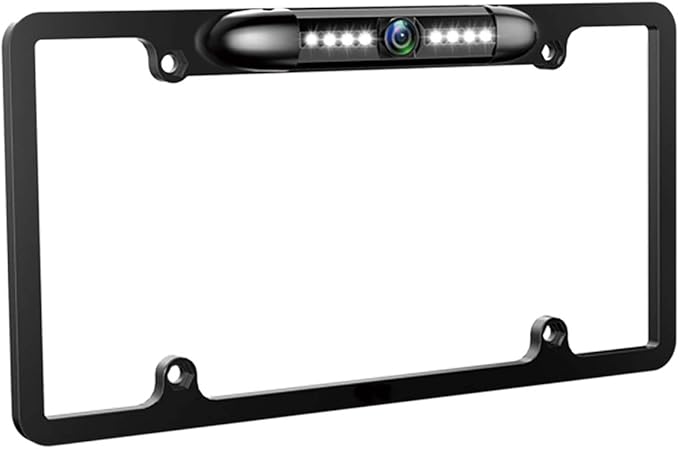
People who want a reliable backup camera without changing their vehicle’s look will find this a solid choice. It suits most cars with a standard US license plate and stands out for its night vision capability, making parking in low light much safer.
Installation is straightforward since it mounts like a license plate frame, holding your plate securely without blocking any information. The 170° wide-angle lens gives a broad view behind the car. Day-to-day, the option to turn the guide lines on or off lets you customize your view depending on your preference or monitor setup.
The camera delivers clear 720p video with a sensitive CMOS sensor, capturing good detail even at 0.2 lux in low light. It feels sturdy as it doubles as a heavy-duty plate frame.
Most praise centers on its strong night vision, while the occasional complaint involves screen compatibility for guide line settings or fitting unusual plate sizes.
Most people appreciate the strong night vision and wide viewing angle, which improve parking safety after dark. Common complaints include issues with guide lines not disappearing on certain monitors and the need to check plate size compatibility carefully before purchase.
The camera fits drivers wanting a sturdy backup solution built into a plate frame. Those with custom or non-standard license plates or who need a monitor with flexible guide line settings might want to explore other options.
Pros
- Works with most standard US license plates
- Wide 170° viewing angle for better visibility
- Night vision performs well in low light conditions
- Guide lines can be easily turned off
Cons
- Must confirm license plate size before buying
- Guide line may not disappear on some monitors
| Specification | Details |
|---|---|
| Screen Size | 0.33 inches |
| Voltage | 12 volts |
| Lens | Macro lens, 170° wide viewing angle |
| Video Capture Resolution | 720p |
| Optical Sensor Technology | CMOS |
| Lux Rating | 0.2 lux |
6. License Plate Frame Rear View Backup Camera

Offering a built-in license plate frame with a wide 170° viewing angle, this backup camera is great for anyone wanting better rear visibility without extra parts sticking out. Its real strength lies in combining a sturdy frame and clear night vision into one neat upgrade tailored for standard US plates.
Installation fits vehicles running on 12 DC power and uses a simple RCA connector to hook to your monitor. The camera’s 795-pixel resolution and CMOS sensor provide vivid color images. Setup is straightforward since it directly replaces your license plate frame, keeping wiring hidden and tidy for everyday use.
The camera delivers clear images with a 170-degree field of view, covering all blind spots behind the car. It’s built from durable materials to protect your license plate while adding a stylish look. Common praise highlights the improved night vision, while some note the 480p video resolution might feel less sharp compared to higher-def options.
Reviewers often praise the camera’s effective night vision that really helps seeing obstacles when reversing in the dark. The most common downside mentioned is the lower 480p video quality, which can look grainy compared to sharper cameras.
This license plate backup camera suits drivers wanting a neat, sturdy solution already combined with a frame, especially those driving vehicles with 12-volt DC power. It may not be ideal for users seeking full HD video clarity or those with different power requirements.
Pros
- Wide 170° viewing angle covers blind spots
- Built into heavy-duty license plate frame
- Good night vision with upgraded sensor
- Easy RCA connection to standard monitors
Cons
- Video resolution limited to 480p
- Only compatible with 12 DC power systems
| Specification | Details |
|---|---|
| Voltage | 12 volts |
| Connector Type | RCA |
| Optical Sensor Technology | CMOS |
| Real Angle of View | 170 degrees |
| Video Capture Resolution | 480p |
| Effective Still Resolution | 795 pixels |
7. HD License Plate Backup Camera with Night Vision
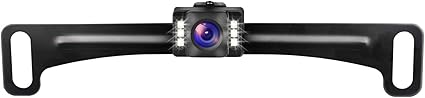
HD License Plate Backup Camera with Night Vision suits drivers wanting a clear, convenient rear or front view while parking. Its biggest strength is the ability to switch between front and rear camera modes easily, plus clear images both day and night thanks to the upgraded sensor and LEDs.
Installation involves mounting it on the license plate area and deciding whether to use it as front or rear camera by cutting a specific wire. The camera connects via an RCA cable to a 12V car display, usually 4 inches in size. Turning guide lines on or off is simple by cutting another wire and restarting the radio to set the image properly.
Image quality is sharp at 480p resolution with a 170-degree wide angle view, great for spotting obstacles or blind spots. The camera’s full glass lens and 6 bright LEDs help keep visuals clear in low light. It’s sealed well to prevent fog or water entry.
Most praise comes from the clear night vision, while some mention restarting the radio after wiring changes is a bit of a hassle but necessary.
Clear night vision with six bright LEDs stands out as its best feature. Restarting the radio after cutting wires to switch camera setting frustrates some users since it’s not entirely intuitive.
Drivers needing versatile front or rear viewing and good night visibility will appreciate this camera. Those wanting higher resolution or easier installation steps might want to consider other options.
Pros
- Switch between front and rear camera modes
- Clear images in both day and night
- Waterproof and fog resistant design
- Wide 170-degree field of view
Cons
- Restarting radio needed after wiring changes
- Resolution limited to 480p
| Specification | Details |
|---|---|
| Screen Size | 4 inches |
| Voltage | 12 volts |
| Optical Sensor Technology | CMOS |
| Field Of View | 170 degrees |
| Video Capture Resolution | 480p |
8. HD License Plate Rear View Backup Camera

Backing up with clear vision makes parking less stressful, and this camera fits perfectly on your license plate frame. Ideal for those who want better rear visibility without complicated setups, its standout feature is delivering sharp, bright images no matter the lighting conditions.
Wiring it into your car screen is straightforward with the RCA connector. The camera’s cable is well-shielded to keep the signal steady, and installation stays solid thanks to its design, which resists water and wear.
Day-to-day, the wide 170-degree view captures everything behind, making reversing safer and smoother in busy or tight spots.
It does exactly what it’s meant to with good image clarity and consistent performance in both daylight and darkness. Built tough, this camera handles weather exposure without issues. People praise the sharp 1080p quality and reliable signal, though some mention the wired setup isn’t as quick to install compared to wireless alternatives.
Sharp image quality with stable signals in varied lighting comes up as the biggest plus. The wired connection, while reliable, leads to longer installation compared to wireless models. Waterproof and tough, the camera handles weather well and keeps image quality consistent.
Good for drivers comfortable with basic wiring who want dependable video clarity on an RCA display. Those seeking a quick, wireless setup might want to explore other options. Excellent choice for anyone prioritizing clear visuals in bright and dim environments.
Pros
- Clear 1080p resolution with good lighting adaptation
- Waterproof and durable for outdoor use
- Wide 170-degree fisheye lens for expansive rear view
- Stable signal due to pure copper shielded cable
Cons
- Wired installation can be time-consuming
- Only compatible with RCA input screens
| Specification | Details |
|---|---|
| Voltage | 12 volts |
| Lens | Fisheye |
| Field Of View | 170 degrees |
| Video Capture Resolution | 1080p |
| Connector Type | RCA |
9. AHD 1080P License Plate Backup Camera

Clear image quality and simple installation make this backup camera a solid choice for drivers wanting to improve rear visibility. It fits well on most cars and trucks due to its license plate mounting style and supports both AHD and CVBS signals, so it suits a range of vehicle systems. The sharp 1080p resolution is its standout feature.
Installing the camera involves mounting it on the license plate area and connecting via RCA. Switching between AHD and CVBS modes is easy by cutting a wire loop, and the guide lines can be turned off the same way.
Everyday use shines with its bright display and accurate color, helping with parking and reversing without fuss.
Performance is solid with a 1080p CMOS sensor delivering clear images even in low light, thanks to good brightness and color saturation. Build quality seems sturdy enough for outdoor use, although some users mention occasional fitment issues with certain plate holders.
Most praise the picture clarity while a few find the wiring a bit fiddly.
Pictures consistently stand out for clarity and brightness, improving confidence when reversing. Several note the wiring setup demands patience, especially the need to cut loops to switch signals or turn off guide lines. Fitment works well but can be a tight squeeze on some license plate frames.
Drivers who have a compatible display system and want a noticeably clearer image will appreciate this camera. Those with non-AHD radios, or who prefer plug-and-play setups without wire modification, might consider alternatives that are easier to install or guaranteed to match their system out of the box.
Pros
- Sharp 1080p image quality
- Switchable AHD and CVBS signals
- Wide 170-degree field of view
- Guide lines can be toggled off
Cons
- Not all radios support AHD signal
- Wiring requires manual cutting of loops
| Specification | Details |
|---|---|
| Optical Sensor Technology | CMOS |
| Lens | Fisheye |
| Real Angle of View | 170 degrees |
| Video Capture Resolution | 1080p |
| Connector Type | RCA |
| Compatible Devices | 12-24V cars trucks pickup RV suv |
10. JPP Front/Rear License Plate Backup Camera

Metal plating frames this camera, designed to fit all standard US license plates and shield your plates from weather damage. It suits small to medium vehicles, giving a unique look while offering clear visibility.
Its standout feature is the option to control distance lines and image mirroring to match your driving needs.
Installation is straightforward, connecting through an RCA connector and running on 12 volts, which fits most cars and RVs. The camera includes eight LEDs for night vision, making it reliable even in zero-light conditions.
You can adjust distance tick marks and switch between positive and mirror images with simple settings that come built in, helping you park with confidence every day.
The camera provides a wide 170-degree field of view thanks to a 1/4 inch CMOS lens, capturing clear color images at 648 pixels resolution. Night vision works well, and the frame itself feels sturdy in everyday weather. A frequent comment is how useful the adjustable guide lines are, though some mention the video capture resolution of 420 is not the highest available, which may affect image detail.
The most praised feature is how the adjustable guide lines help in tight spots, combined with reliable night vision. The most common issue noted involves the image resolution, which may appear less sharp compared to higher-end cameras.
Drivers who want a straightforward, weather-resistant backup camera with useful parking guides will appreciate this model. Those seeking higher video resolution or a larger display might consider other options better suited to their needs.
Pros
- Fits all standard US license plates
- Includes night vision with 8 LEDs
- Adjustable distance lines and image mirroring
- Wide 170-degree viewing angle
Cons
- Video resolution limited to 420
- Small 0.25 inch screen size
| Specification | Details |
|---|---|
| Voltage | 12 volts |
| Field Of View | 170 degrees |
| Optical Sensor Technology | CMOS |
| Video Capture Resolution | 420 |
| Connector Type | RCA |
11. Wired License Plate Backup Camera

Clear visuals stand out with this wired license plate backup camera, perfect for anyone wanting reliable and sharp rearview footage. Its real-time color video quality is a big plus, especially for those with a compatible RCA head unit and a 12v power source seeking dependable parking assistance.
Installation requires connecting it through an RCA cable to your vehicle’s head unit and a 12v power supply, which suits many aftermarket car systems. The camera’s wide 149° lens means you get a broad view behind your vehicle, and the six built-in LEDs help a lot when backing up in low light or at night.
The system consistently avoids signal interference thanks to the stable CVBS-NTSC output. Since the camera is waterproof, rain or snow doesn’t affect daily use much.
Image quality remains clear and detailed thanks to the 720p resolution and advanced CMOS sensor. The build feels solid, with an IP69K waterproof rating signaling serious resistance to harsh weather and water jets.
Users appreciate the bright night vision, but some might find the absence of a screen limiting since it only provides the camera component. All said, it performs well at its core job without many distractions.
Bright LED lights make nighttime backing safer and the high-quality 720p video provides clear visuals. Some find the lack of a monitor inconvenient, as it only supplies the camera without a viewing screen. The installation depends on having a head unit with RCA input and a 12v power supply.
Anyone with an aftermarket head unit that accepts RCA signals wanting a straightforward, durable backup camera would benefit from this choice. Drivers lacking a compatible display or preferring an all-in-one system might prefer another option with an included monitor.
Pros
- Clear real-time video with accurate colors
- Wide 149-degree view captures more area
- Effective night vision with built-in LEDs
- Waterproof design handles rain and snow well
Cons
- Camera only, no display screen included
- Requires compatible head unit with RCA input
| Specification | Details |
|---|---|
| Video Capture Resolution | 720p |
| Field Of View | 149 degrees |
| Lens | Wide Angle |
| Voltage | 12 volts_of_direct_current |
| Connector Type | RCA |
| IP Rating | IP69k Waterproof |
12. KENWOOD CMOS-230LP License Plate Backup Camera

KENWOOD’s CMOS-230LP license plate backup camera stands out with its wide 128-degree horizontal and 103-degree vertical field of view. It suits drivers who want clear rear vision in a compact, weatherproof unit that fits discreetly on any vehicle.
Its biggest strength is providing a broad, reliable image for safer reversing and parking.
Installation is straightforward because it connects to any radio system with an RCA video input, matching most aftermarket models. The camera’s small size means it doesn’t interfere with the plate or car style, and it handles daily weather well without fogging or damage.
Using it is simple as it consistently delivers a clear picture through the wide-angle lens, making backing up easier in tight spots.
Picture quality delivers effective clarity with 330,000 pixels and 1080p video capture, giving a detailed view behind the vehicle. The waterproof design takes on rain and dirt without issues, making it dependable over time.
Reviews highlight good image coverage as a strong point. Some note the display size is modest, so details aren’t as large as on bigger units, which can be a minor inconvenience for some.
The camera delivers wide rear vision and durable construction that works reliably in daily conditions. The image clarity helps with parking, but the relatively small screen size means you might have to focus more compared to larger displays. Some users find the fixed lens angle limiting in certain vehicle setups.
Anyone needing a straightforward, durable camera with broad compatibility will appreciate this model. Drivers wanting larger screens or adjustable viewing angles might look elsewhere for more customization options. It fits well for those prioritizing simplicity and weather resistance over advanced features.
Pros
- Wide-angle lens covers large rear area clearly
- Compact size fits discreetly on license plate
- Waterproof build for all-weather use
- Universal RCA connection suits many radios
Cons
- Small display size may limit detail visibility
- Fixed lens angle cannot be adjusted
| Specification | Details |
|---|---|
| Field Of View | 128 degrees |
| Real Angle of View | 103 degrees |
| Effective Still Resolution | 330000 pixels |
| Video Capture Resolution | 1080p |
| Connector Type | RCA |
| Voltage | 12 volts |
Best License Plate Backup Cameras Comparison Table
| Product | Voltage | Real Angle of View | Effective Resolution | Compatible Devices |
|---|---|---|---|---|
| PMD2A-S Metal Camera | 12V | 170 degrees | 2073600 pixels | Screen with RCA connector |
| ERT01 HD Backup Camera | 24V | 148 degrees | 720 pixels | Audio Devices |
| Wired License Plate Camera | 12V | 149 degrees | 1920 pixels | Monitor |
| Standard License Plate Camera | 12V | 170 degrees | 960 pixels | 12V cars |
| Night Vision Plate Camera | 12V | 170 degrees | – | 12V cars |
| Frame Rear View Camera | 12V | 170 degrees | 795 pixels | Monitor |
| HD Night Vision Camera | 12V | 170 degrees | 480 lines/inch | 12V cars |
| HD License Plate Camera | 12V | 170 degrees | 1080 pixels | Car screen RCA interface |
| AHD 1080P Camera | 12-24V | 170 degrees | 1080 pixels | 12-24V vehicles |
| JPP Front Rear Camera | 12V | 170 degrees | – | Small-medium vehicles |
| Wired Plate Backup Camera | 12V | 149 degrees | – | RCA head unit required |
| KENWOOD CMOS-230LP Camera | 12V | 103 degrees | – | Aftermarket car stereo |
- Voltage12V
- Real Angle of View170 degrees
- Effective Resolution2073600 pixels
- Compatible DevicesScreen with RCA connector
- Voltage24V
- Real Angle of View148 degrees
- Effective Resolution720 pixels
- Compatible DevicesAudio Devices
- Voltage12V
- Real Angle of View149 degrees
- Effective Resolution1920 pixels
- Compatible DevicesMonitor
- Voltage12V
- Real Angle of View170 degrees
- Effective Resolution960 pixels
- Compatible Devices12V cars
- Voltage12V
- Real Angle of View170 degrees
- Effective Resolution–
- Compatible Devices12V cars
- Voltage12V
- Real Angle of View170 degrees
- Effective Resolution795 pixels
- Compatible DevicesMonitor
- Voltage12V
- Real Angle of View170 degrees
- Effective Resolution480 lines/inch
- Compatible Devices12V cars
- Voltage12V
- Real Angle of View170 degrees
- Effective Resolution1080 pixels
- Compatible DevicesCar screen RCA interface
- Voltage12-24V
- Real Angle of View170 degrees
- Effective Resolution1080 pixels
- Compatible Devices12-24V vehicles
- Voltage12V
- Real Angle of View170 degrees
- Effective Resolution–
- Compatible DevicesSmall-medium vehicles
- Voltage12V
- Real Angle of View149 degrees
- Effective Resolution–
- Compatible DevicesRCA head unit required
- Voltage12V
- Real Angle of View103 degrees
- Effective Resolution–
- Compatible DevicesAftermarket car stereo
How to Choose the Best License Plate Backup Camera
Choosing a license plate backup camera involves considering image quality, ease of installation, and weather resistance to ensure clear vision and durability. Selecting the right features helps avoid costly replacements and complicated setups, making driving safer and more convenient in the long run.
Camera Resolution and Image Quality
Blurry or pixelated video feeds are frustrating and defeat the purpose of having a rearview camera. Cameras with at least 720p resolution provide noticeably sharper images, which makes identifying obstacles easier.
Having crisp video becomes especially important on narrow streets or tight parking spots where precision matters.
Color accuracy helps distinguish objects better in daylight, while a camera’s low-light performance ensures the image remains clear during evening or cloudy conditions. A viewing angle between 120 to 170 degrees is ideal to cover enough ground without too much distortion. Narrow fields leave blind spots, while extremely wide angles often stretch the edges making objects harder to interpret in daily use.
Installation and Compatibility
The mounting process varies widely by vehicle and camera design. Some brackets fit most standard plates, but others require adapters for non-standard sizes. A secure, vibration-free fit makes a difference in video stability and longevity.
It’s practical to check that the camera can be adjusted slightly after installation for the best angle.
Compatibility with the car’s existing display system is critical to avoid additional screens or complicated adapters. Both analog and digital inputs should be considered, with wireless models offering easier installs. Wireless cameras reduce clutter but sometimes introduce occasional signal dropouts, which can be frustrating during daily driving.
Durability and Weather Resistance
Outdoor exposure means cameras need proper waterproof and dustproof ratings like IP67 or higher. Less durable models often fog up or stop working after heavy rain or dusty drives, leading to unreliable images. The materials surrounding the lens and casing should resist impacts from road debris or accidental knocks.
Repeated vibrations from driving on rough roads can loosen connections or damage the camera housing if materials are not strong enough. Corrosion resistance is essential in areas with salty roads or coastal climates to prevent rust that shortens device life. Cameras built with stainless steel or quality plastics tend to last longer without maintenance.
Power Supply and Connectivity
Most cameras draw power by connecting to the reverse light circuit, which ensures they activate only when backing up. Battery-powered units avoid wiring hassles but need frequent recharging or replacement, which can be inconvenient.
Wireless options often require both power wiring and a transmitter, so the setup can still be involved.
Signal interference can cause flickering or loss of the video feed, especially on wireless kits installed near other electronics. Wired versions usually provide more stable connections but need cables long enough to reach the dashboard cleanly without stretching.
Checking cable quality and secure plug fittings reduces the risk of accidental disconnects from movement.
Safety Features and Regulations
Parking guidelines printed on the video feed help judge distances and angles more accurately, reducing collisions during tight maneuvers. Some cameras also include dynamic trajectory lines that move with the steering, greatly improving parking confidence.
Devices lacking these features may leave drivers guessing about clearance spaces.
Compliance with vehicle safety and electrical standards ensures the camera won’t interfere with other systems or cause legal issues. Automatic activation upon shifting into reverse is crucial to prevent distractions and save battery.
Cameras requiring manual turning on risk being forgotten and then not providing help when needed most.
Installation Tips for Optimal License Plate Backup Camera Performance
Placing the camera at the correct height can make a significant difference in the view you get from a license plate backup camera. Align the camera so it points slightly downward, capturing a wide angle that covers the area right behind the vehicle and any approaching obstacles.
Use a level during installation to avoid a tilted image. Secure the camera tightly to prevent movement or vibrations, which can blur the video feed.
Routing the cables away from sharp edges and heat sources helps avoid damage over time. Consider using waterproof connectors to protect against moisture. Many kits include adjustable brackets that let you fine-tune the angle after installation; take advantage of these to get the best coverage.
Finally, test the camera with your display before finishing up the installation to confirm the view is clear and properly aligned.
How to Maintain and Clean Your License Plate Backup Camera for Longevity
Cleaning the camera lens regularly is key to maintaining a clear image. Use a soft, lint-free cloth with mild soap and water to gently wipe the lens. Avoid harsh chemicals or abrasive materials, as these can scratch or damage the lens coating.
Check the camera after heavy rain or snow to remove dirt or debris that may have accumulated.
Inspect the wiring and connections periodically to catch loose connections or frayed cables early. Ensuring the mount remains secure prevents misalignment caused by vibration or impact.
Parking in areas with frequent dust or mud buildup means you should clean the lens more often to keep visibility at its best. Protecting the camera from corrosion with occasional silicone spray on exposed metal parts can extend its lifespan.
Comparing License Plate Backup Cameras with Other Backup Camera Types
License plate backup cameras are designed to mount directly on the license plate frame, making them easy to install without drilling new holes. Their placement provides a stable, centered rear view, which suits most standard vehicle designs. In contrast, bumper-mounted cameras often require more complicated installation and are closer to the ground, which can lead to a narrower field of view or more exposure to dirt and damage.
Some roof or high-mounted cameras offer a broader perspective and can show more of the rear surroundings but might miss low obstacles just behind the bumper. License plate cameras strike a balance between convenience and coverage, though they might be more exposed to road grime compared to cameras mounted higher up on the vehicle. Choosing between these types depends on your vehicle’s layout and your priorities for installation and camera angle.
People Also Asked
How Do I Install a License Plate Backup Camera Properly?
A license plate backup camera installs by replacing your existing license plate with a bracket that holds the camera. Make sure to route the wiring carefully through the trunk or bumper area to avoid pinching or water exposure. Testing the camera angle before fully mounting helps achieve the best rear view.
What Size License Plate Backup Camera Fits Most Vehicles?
Most license plate backup cameras are designed to fit standard U.S. license plates, around 6 by 12 inches. Check the mounting holes and spacing to ensure compatibility with your plate and vehicle. Some cameras come with adjustable brackets to fit different plate sizes.
Are License Plate Backup Cameras Safe to Use in Rain?
License plate backup cameras generally have waterproof ratings such as IP67 or IP68, making them safe to use in rain. It is important to confirm the camera has a solid seal and the wiring connections are well protected from moisture. Regularly check the lens for dirt or water spots that can reduce visibility.
How Long Does a Typical License Plate Backup Camera Last?
The typical lifespan of a license plate backup camera can range from three to five years, depending on build quality and usage conditions. Exposure to extreme weather or poor installation can shorten this period. Replacing or upgrading the camera after a few years ensures clear image quality.
What Common Problems Occur with License Plate Backup Cameras?
Common problems include blurry images from dirt or condensation on the camera lens and wiring issues causing intermittent signal loss. Vibration from driving sometimes loosens the camera mount. Routine cleaning of the lens and securing wires firmly can help avoid these issues.
Conclusion
Choosing a license plate backup camera comes down to clear image quality, ease of installation, and compatibility with your vehicle. The camera needs to provide a good view of what’s behind you, connect without complex wiring, and fit your existing license plate frame or mounting location.
These factors ensure it helps with parking and reversing without added frustration.
Consider how often you plan to use the camera and your budget before making a decision. A simple, affordable model might be enough for occasional use, while frequent drivers might want something more reliable and durable.
Check the comparison table and product details above to find the option that matches your needs best.