
Top 12 Best Backup Camera for Boat That Will Blow Your Mind
Backing a boat without a reliable camera can quickly turn into a frustrating and risky task. The best backup camera for boat avoids blurry images, distorted colors, and poor night vision that cheap models often suffer from. Many of these cameras fail when exposed to water spray or salt, leaving you blind at critical moments.
A dependable camera ensures you have a clear view of the area behind the boat, especially in tight marinas or crowded docks.
The key factors that set apart a good backup camera for boat include waterproof rating, image clarity, and mounting options. Look for cameras rated at least IP67 or higher to handle constant exposure to water without damage.
Resolution matters too; a 720p or 1080p camera strikes a good balance between detail and data processing. Finally, flexible mounting brackets or magnetic bases make installation easier and help maintain the camera’s position, reducing the need for frequent adjustments or cleaning.
Need a Quick Check?
| Image | Product | Price |
|---|---|---|
Our Top Picks 1  | Generic 1080P Wireless Camera | Check Price |
Our Top Picks 2  | AUTO-VOX 2 Solar Camera | Check Price |
Our Top Picks 3  | Magnetic Wireless Camera | Check Price |
Our Selected Top 12 Backup Camera for Boat Worth Your Money
This list features twelve backup cameras designed specifically for boats, highlighting their performance, suitability for different users, and key advantages and disadvantages. Each review offers clear insights to help you find a reliable and practical camera that fits your boating needs.
1. Wireless 1080P Backup Camera
Perfect for anyone with a boat who wants a reliable, clear view behind without complicated wiring. Its standout feature is the magnetic quick install, letting you place and remove it easily while keeping solid grip in rough conditions.
Setup takes just a minute thanks to the base with six strong magnets that stick firmly to metal surfaces. The soft rubber coating ensures no scratches on the boat’s paint while holding steady. The 7-inch LCD screen offers a wide 170-degree field of view, making daily reversing and docking simpler and safer.
Picture quality is impressive with 1080p resolution and night vision enhanced by Pemacom’s algorithm, improving clarity by about 80%. The camera’s wide-angle lens captures a broad scene behind the boat clearly.
A common compliment highlights the camera’s secure magnetic attachment even in harsh temperatures. The most frequent complaint mentions the USB connector, which might not suit every boat’s setup.
The camera holds firmly thanks to its six powerful magnets and performs well visually, especially in low light. Picture clarity upgrades and strong magnetic grip are praised, while the USB connection draws most concerns for use with various setups.
Good choice for boaters who want easy mounting and clear HD images without hardwiring. Those needing a universal connector or adaptable mounting may prefer a different model better suited to their specific boat configuration.
Pros
- Quick magnetic installation in under a minute
- Excellent image clarity with HD night vision
- Wide 170-degree viewing angle
- Soft rubber coating protects paintwork
Cons
- USB connector may limit compatibility
- Some setup adjustments required for perfect angle
| Specification | Details |
|---|---|
| Screen Size | 7 inches |
| Field Of View | 170 degrees |
| Video Capture Resolution | 1080p |
| Voltage | 12 volts |
| Connector Type | USB |
2. AUTO-VOX 2 Solar Wireless Backup Camera
Backing up a boat onto a trailer can be tricky, especially when you’re trying to line up in tight spots or keep an eye on blind areas. This solar-powered dual-camera setup suits those who want clear views of two important angles behind their boat, making slow backing and alignment less of a guessing game.
Installation involves mounting the two wireless cameras where you want to monitor, then plugging the 7.2 display into a 12-volt power source, usually your vehicle’s car charge outlet. Day to day, the split-screen shows both camera feeds at once without any channel switching, which really helps when moving in close quarters or lining up a hitch without having to keep looking away.
The cameras deliver clear 1080p video with a wide 130-degree viewing angle, giving you a solid look behind and beside your boat. Construction feels solid enough for outdoor use, and solar power helps keep things running without frequent charging. People appreciate the dual views and bright, large screen.
Still, some mention wireless connection can drop in challenging environments.
Most people praise the dual camera views and split-screen display for making hitching and tight backing easier and safer. A common concern involves occasional wireless connection drops which can interrupt the video feed.
Anyone needing clear views of multiple rear angles and an easy wireless setup will find this very useful. Those wanting guaranteed signal stability or running off different voltages should consider other models.
Pros
- Dual camera views reduce blind spots
- 7.2″ split screen keeps both angles visible
- 1080p resolution provides clear images
- Wireless setup simplifies installation
Cons
- Wireless signal can occasionally drop
- Limited to 12-volt power systems
| Specification | Details |
|---|---|
| Screen Size | 7.2 inches |
| Voltage | 12 volts |
| Optical Sensor Technology | CMOS |
| Real Angle of View | 130 degrees |
| Video Capture Resolution | 1080p |
3. Magnetic Wireless Backup Camera
Offering a 120-degree wide-angle lens with 1080p video capture, this backup camera is perfect for boat users who want a clear view behind them using their smartphone as a display. Its wireless design and 45-foot transmission range make it ideal for those needing flexibility without cluttered cables.
Setting it up involves charging the camera for 8-10 hours using the included USB Type-C cable before first use. Mounting requires a metal plate on aluminum alloy carriages, ensuring a solid hold. Once paired with a smartphone or tablet, the camera automatically shuts off after 30 minutes of inactivity, so you’ll need to power it on with each use.
The camera delivers sharp, 1080p footage with a CCD optical sensor, giving good visibility for backing up a boat. It’s built with durable materials suitable for outdoor use, but some users find the need to restart the device after it shuts down annoying.
The wireless connection stays stable within its 45-foot range, though beyond that, signal strength drops.
The camera’s sharp 1080p video and wide viewing angle provide reliable visibility when reversing a boat. A common drawback involves restarting the camera each time it powers down after 30 minutes, which some find inconvenient during frequent short uses.
Boat users who want a straightforward wireless setup with smartphone integration will appreciate this camera. Those needing continuous operation without manual restarts or a built-in screen should consider other options.
Pros
- Wide 120-degree field of view
- 1080p clear video resolution
- Compatible with most smartphones and tablets
- Wireless design reduces cable clutter
Cons
- Requires long initial charging (8-10 hours)
- Automatically shuts off after 30 minutes of inactivity
| Specification | Details |
|---|---|
| Field Of View | 120 degrees |
| Video Capture Resolution | 1080p |
| Optical Sensor Technology | CCD |
| Compatible Devices | Smartphone, android phone, android tablet, iPhone, ipad |
| Connector Type | USB type c |
4. AUTO-VOX 2 Solar Wireless Backup Camera System

This system works great for people with boats who want a backup camera that’s simple to install and easy to switch between trailers or campers. Its biggest strength lies in having two cameras, one fixed for the boat and the other wireless and portable which can be shifted as needed.
Installation takes about three minutes without any drilling or complicated wiring. One camera can be kept permanently on the boat while the second attaches magnetically to other vehicles or trailers.
The 7.2-inch monitor plugs into a 12-volt lighter socket and powers up instantly, making regular reversing tasks simpler and safer.
The dual-camera setup provides a wide 130-degree view, and the infrared CMOS sensor handles low-light conditions well. The housing feels solid and weather-resistant, ideal for marine use. While most appreciate the no-fuss wireless design, some note occasional signal interference as a minor inconvenience.
Most people appreciate how easy it is to set up and move the wireless camera between trailers, making it a practical choice for those with multiple vehicles. The drawback mentioned more than once is that the wireless signal can sometimes be unstable, causing brief connection interruptions.
Those who want quick installation and value having cameras for more than one trailer will be satisfied with this system. People needing a perfectly stable connection in all conditions might want to explore wired alternatives or specialized marine cameras.
Pros
- Quick three-minute installation
- Fixed and portable dual cameras included
- Wide 130-degree viewing angle
- 7.2-inch screen with clear 1080p resolution
Cons
- Occasional wireless signal interference
- Magnetic base may not suit all mounting surfaces
| Specification | Details |
|---|---|
| Screen Size | 7.2 inches |
| Voltage | 12 volts |
| Optical Sensor Technology | CMOS infrared |
| Real Angle of View | 130 degrees |
| Video Capture Resolution | 1080p |
5. EWAY Magnetic Wireless Backup Camera

Magnetic wireless setup makes this backup camera especially handy for boaters needing easy installation and solid image quality. It suits anyone wanting a dependable, wide-angle view behind their boat while avoiding tangled wires and complicated mounts. Its biggest strength lies in the 150-degree field of view that captures a broad area clearly.
Setup involves pairing the camera wirelessly with your smartphone or tablet, using the dedicated app. Maintaining Local Network access is essential for a steady connection, especially on iPhones.
Charging the camera requires turning it off and allowing a full 8 hours initially to protect the battery. The compact 3.5-inch display fits easily into your device, and the wide lens gives you a good perspective directly from your phone screen.
The camera delivers crisp 720p video with a reliable wireless signal within 30 feet, helping avoid blind spots while maneuvering your boat. It has a solid, compact design and requires no cables on the boat itself. Users appreciate the sizable field of view and wireless convenience most; the main downsides come from charging rules and occasional app permission hiccups on certain phones.
The wireless camera offers clear 720p images and wide-angle coverage that boaters appreciate most. Some struggle with the app on iPhones due to network permission settings, and charging demands the camera be off, which can feel inconvenient.
Ideal for boaters wanting quick wireless setup and broad viewing angles on their mobile devices. Those who want constant charging or simpler app compatibility may want to look into other models.
Pros
- Wide 150-degree field of view
- Wireless connection up to 30 feet
- Works with smartphones and tablets
- Compact 3.5-inch display size
Cons
- Needs camera off to charge properly
- iPhone app requires special permissions
| Specification | Details |
|---|---|
| Screen Size | 3.5 inches |
| Field Of View | 150 degrees |
| Video Capture Resolution | 720p |
| Connector Type | wireless |
| Compatible Devices | Smartphone, Tablet |
6. RV Wireless Backup Camera for Furrion
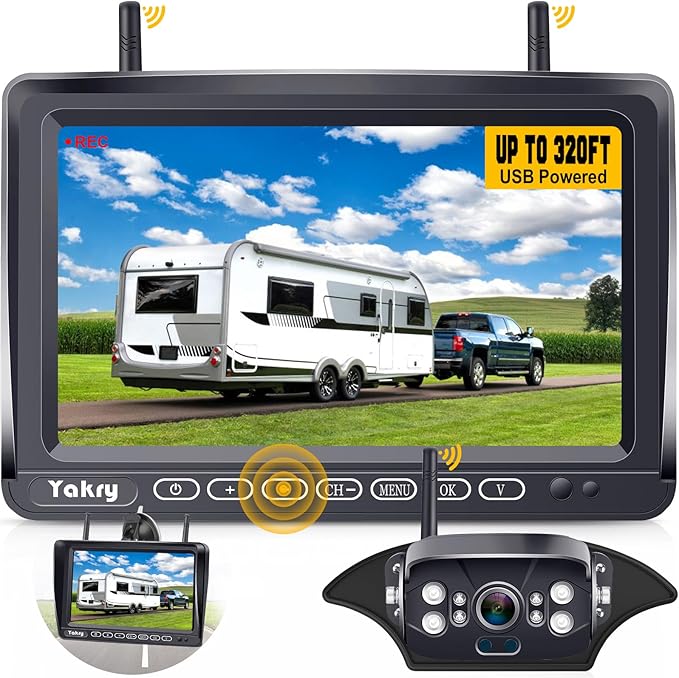
Furrion Y27 RV Wireless Backup Camera is designed for boat users who want a reliable and stable wireless camera system. It suits those wanting a wide view and solid signal range to improve safety when maneuvering, with its standout feature being the unique dual-antenna design that boosts signal stability and refresh rate.
Installing the camera is straightforward with the included Furrion bracket and pigtail wire, making it accessible to anyone comfortable with basic DIY. The 7-inch LCD screen connects wirelessly, removing cable clutter. Daily use benefits from the 150-degree wide-angle lens, giving a broad rear view, and the stable signal minimizes interruptions even at distances up to 320 feet on vehicles.
Performance is strong thanks to the CMOS sensor and 1080p video capture delivering clear images, especially in low light with a 0.1 lux rating. The camera’s solid build matches practical marine needs. Positive feedback highlights its stable wireless signal, while the most frequent complaint touches on occasional signal dropouts under certain conditions.
The wireless system often stays stable over long distances thanks to dual antennas, improving confidence while backing up. The main issue reported is occasional signal interruptions, which can be a concern depending on the surrounding environment and interference.
Boaters who want a straightforward setup and consistent performance within 320 feet will be satisfied with this camera. Those needing longer-range or no signal interruptions might consider alternative systems with stronger wireless frequencies or wired options.
Pros
- Dual-antenna design for stable signal
- Wide 150-degree viewing angle
- Simple installation with Furrion bracket
- High-resolution 1080p video
Cons
- Possible signal dropouts in some conditions
- Working range limited to 320ft on vehicles
| Specification | Details |
|---|---|
| Screen Size | 7 inches |
| Voltage | 12 volts |
| Field Of View | 150 degrees |
| Video Capture Resolution | 1080p |
| Optical Sensor Technology | CMOS |
| Connector Type | Wireless |
7. Magnetic 1080P Wireless Backup Camera

Mounting the camera onto the boat’s metal surface takes no time at all, making it perfect for boaters who appreciate quick setup and reliable performance. Ideal for anyone who frequently switches between vehicles, its magnetic base and wireless design make using it on the water simple and convenient.
Installation is straightforward with the strong magnetic mount snapping on securely without any drilling or tools. Day-to-day use is simple because the camera wirelessly connects to a 7-inch display, giving a clear widescreen view. Portability shines here, letting you move the camera between your boat and other vehicles without any fuss over wires or mounting brackets.
The camera captures sharp 1080p video with a wide 170-degree field of view, making it easy to see obstacles behind the boat. Its build feels solid, especially the magnetic base which firmly holds the camera even on bumpy rides.
Most praise centers on the easy installation and strong hold, while the main complaint points to the fixed lens angle restricting flexibility in certain setups.
Most users appreciate how the magnetic mount holds firmly even on rough surfaces, making installation and transfer between vehicles very easy. The limitation comes from the fixed wide-angle lens, which sometimes does not capture exactly the required view behind the boat.
Great for boaters who want a fast, wire-free backup camera that can move between vehicles. Those needing adjustable angles or voltage compatibility beyond 12 volts might want to consider alternatives.
Pros
- Super-strong magnetic mount holds tight
- Wireless setup means no complicated wiring
- Wide 170-degree field of view
- Quick installation under one minute
Cons
- Fixed lens angle reduces viewing flexibility
- Only compatible with 12-volt systems
| Specification | Details |
|---|---|
| Screen Size | 7 inches |
| Voltage | 12 volts |
| Field Of View | 170 degrees |
| Video Capture Resolution | 1080p |
| Connector Type | Wireless |
8. Yakry RV Wireless Backup Camera

This backup camera is perfect for boat users looking for a dependable view behind their vessel, featuring a reliable wired connection that prevents signal drops. Perfect for those who prioritize clear, uninterrupted visuals over wireless convenience.
Installation can be done in around 8 minutes by connecting the monitor to a cigarette lighter adapter and wiring the camera and monitor together, eliminating separate power sources. Daily use is straightforward with a 7-inch HD LCD screen that displays a crisp 1080p image, and the wide-angle 150-degree lens ensures a broad field of view behind the boat.
The camera delivers clear and stable video without interruptions thanks to its wired setup, making backing up safer and simpler. Built to be waterproof, it handles marine conditions well.
Most users praise its easy installation and dependable signal. Some note that being wired might be less flexible for certain setups compared to wireless options.
Reliable signal transmission is the strongest praise, with no interruptions during use. The main drawback is the wired design, which some find less flexible for varying boat configurations compared to wireless units.
Those wanting a dependable, clear feed without losing signal will appreciate this wired camera. People needing more freedom in camera placement or avoiding wires might look for a wireless alternative.
Pros
- Stable signal with wired connection
- Quick installation in about 8 minutes
- Waterproof for marine environments
- Clear 1080p video quality
Cons
- Wired setup can limit mounting options
- Monitor requires constant 12V power source
| Specification | Details |
|---|---|
| Screen Size | 7 inches |
| Voltage | 12 volts |
| Lens | Wide Angle, 150 degrees |
| Video Capture Resolution | 1080p |
| Connector Type | wired |
9. DOUXURY Wireless RV Backup Camera System

Designed with a wireless setup and dual antennas, this backup camera system is perfect for boaters looking for dependable rearview visibility without complex wiring. Its strongest point is the stable signal that keeps the video feed clear even at longer distances, making it practical for large watercraft requiring extended range.
Setting up involves mounting the wireless camera on your boat and connecting the 7-inch LCD monitor inside the cabin. The system supports up to 4 cameras on a 4-split screen, letting you keep an eye on blind spots, the hitch, and overhead clearance all at once.
Wide-angle optics provide ample coverage without blind zones, and the wireless signal holds well without lag during daily use.
Performance stands out with a crisp 1080p resolution and a wide 170-degree field of view, providing detailed images even in low light with its 0.1 lux rating. The build combines a sturdy camera with advanced CCD optical sensor technology.
People praise its rock-solid connection supported by dual antennas. The typical downside is the wireless signal range limitation through vehicles, which some find shorter than expected at 180 feet.
The wireless backup camera features a very reliable 1080p video feed thanks to the dual-antenna design, but the connection range shortens significantly when signal must pass through vehicles. This balance affects the flexibility of placement around larger boats with metal obstacles.
Boaters wanting multiple views on a single screen and stable wireless transmission will appreciate this system. Those needing longer signal reach in cluttered areas or a larger display might want to consider alternative setups.
Pros
- Wireless design with reliable dual-antenna signal
- Clear 1080p video with wide 170-degree view
- Supports up to 4 cameras on one monitor
- Low-light performance with 0.1 lux rating
Cons
- Signal range limited to 180ft through vehicles
- Screen size might feel small for some users
| Specification | Details |
|---|---|
| Screen Size | 7 inches |
| Voltage | 12 volts |
| Field Of View | 170 degrees |
| Video Capture Resolution | 1080p |
| Wireless Signal Range | 320ft open, 180ft through vehicles |
| Optical Sensor Technology | CCD |
10. EWAY Magnetic Wireless Backup Camera System

Magnetic attachment and wireless setup stand out for anyone needing a backup camera on a boat or trailer. Suited for boats under 60ft, it offers a reliable 100ft wireless range, making it easy to install and trust while reversing or docking. Its biggest strength lies in combining convenience with solid video clarity.
Setup involves just sticking the camera magnetically to any metal surface, no drilling or wiring required. It pairs wirelessly with a 5-inch LED screen that fits easily inside a boat cabin or vehicle. Day-to-day use benefits from a wide 150-degree lens angle and 1080p resolution, providing clear views without complicated mounts or cables getting in the way.
The camera delivers crisp images even in low light, thanks to a 0.1 lux rating and a CMOS sensor. The build is durable enough for outdoor use on marine equipment, though some may find the magnetic attachment less secure on rougher waters or very bumpy rides.
Most praise focuses on the ease of installation and clear picture quality, while common complaints center on occasional wireless interference at longer distances.
Easy magnetic installation and clear 1080p video are often praised as they simplify setup and provide reliable visibility. The most frequent drawback occurs when the wireless signal drops or the magnetic mount shifts during motion on uneven surfaces. It’s a balance between convenience and occasional signal interruptions.
This system suits anyone needing a quick, no-fuss camera setup for boats or trailers under 60 feet. Those requiring rock-solid connections in very rough conditions or longer vehicles might want to look at wired alternatives for more stability.
Pros
- No wiring or drilling needed for installation
- Strong 100ft wireless WiFi range
- Wide-angle 150-degree lens for better visibility
- Clear 1080p HD video quality
Cons
- Magnetic mount may shift on rough waters
- Wireless signal occasionally loses connection
| Specification | Details |
|---|---|
| Screen Size | 5 inches |
| Wireless Range | 100FT digital range |
| Field Of View | 150 degrees |
| Video Capture Resolution | 1080p |
| Optical Sensor Technology | CMOS |
| Voltage | 12 volts |
11. Wireless 7 Backup Camera for Trucks

Perfect for large boats needing clear visibility behind, this 7-inch backup camera handles wide open spaces with a 170-degree real angle of view. Its biggest advantage is the long 66ft video cord, suited to vehicles like RVs and flatbed trucks, so it easily adapts to boats with bigger rear decks or trailers.
Setting it up involves wiring to your boat’s ACC and reverse gear circuit, so it powers on automatically when you shift into reverse. The easily accessible button on the monitor lets you switch channels quickly.
Daily use is straightforward with the LCD screen showing a crisp 1080p image, helping you maneuver confidently in tight spots or crowded docks.
Performance stands out for its sharp image quality and wide lens, giving a clear, broad view behind the boat. The system feels solid and built for heavy-duty use, though some have noted the wiring can be a bit tricky if you’re not used to vehicle electronics. It’s a reliable backup camera with straightforward functionality.
Sharp 1080p resolution and wide 170-degree view provide excellent visibility for large vehicles but the wired setup requires some skill with electrical connections. The camera turns on automatically with the reverse gear, making it easy to use once installed.
Best suited for people comfortable with wiring who need a long cable reach for larger vessels. Those wanting a simple plug-and-play or wireless setup might want to consider other options.
Pros
- Works with 9~36V wide voltage range
- Long 66ft extension video cord
- Automatic power on/off with reverse gear
- Clear HD 1080p video quality
Cons
- Wired installation can be complicated
- No wireless option included
| Specification | Details |
|---|---|
| Screen Size | 7 inches |
| Voltage | 12 volts |
| Field Of View | 170 degrees |
| Video Capture Resolution | 1080p |
| Connection Type | Wired |
| Video Capture Format | MP4 |
12. Rohent Wireless Solar Backup Camera System

Backing up a boat in tight spots gets a lot simpler with this solar-powered camera system, especially for those who want an easy, wire-free setup. Great for boaters who need a clear, wide-angle view without messing with complicated installs or power connections.
Setting it up takes just a minute thanks to a strong magnetic mount that sticks firmly on metal surfaces. For boats with non-metal bodies, the included metal plate offers flexible mounting options.
The 7-inch monitor gives a sharp 1080p HD image straight away, and the solar panel plus 15000mAh battery keep the camera running without needing to plug into the boat’s electrical system.
The camera delivers a crisp, wide 120-degree view in daylight and infrared for darker conditions. It feels solid and stays put well during trips.
The strongest praise highlights the quick magnetic install and reliable wireless connection. Some users note the magnetic mount can be less secure on rough waters or non-metal surfaces without extra mounting help.
Strongest praise centers on how fast and easy the magnetic mounting is, speeding installation without tools or wiring. Common complaints focus on the magnetic mount’s hold not always feeling secure on boats without metal surfaces or during choppy conditions.
Someone wanting a straightforward, wire-free backup camera that clamps instantly to metal will find this practical and dependable. Those with boats lacking metal sections or who often face rough waters might want to consider a more permanent mounting solution.
Pros
- Quick 1-minute magnetic install
- Solar panel eliminates need for wiring
- Wide 120-degree view lens
- High-resolution 1080p video quality
Cons
- Magnet less reliable on non-metal surfaces
- May need extra mounting aid in rough waters
| Specification | Details |
|---|---|
| Screen Size | 7 inches |
| Voltage | 12 volts |
| Video Capture Resolution | 1080p |
| Field Of View | 120 degrees |
| Battery | 15000mAh rechargeable |
| Connector Type | 4-pin |
Best Backup Cameras for Boats Comparison Table
| Product | Screen Size | Compatible Devices | Voltage | Real Angle of View |
|---|---|---|---|---|
| Generic 1080P Wireless Camera | 7 inches | Truck, pickup, car, RV | 12 volts | 170 degrees |
| AUTO-VOX 2 Solar Camera | 7.2 inches | Car, SUV, trailer, truck | 12 volts | 130 degrees |
| Magnetic Wireless Camera | 6.3 inches | Smartphone, android, iPhone | 5 volts | 120 degrees |
| AUTO-VOX 2 Solar System | 7.2 inches | Monitor | 12 volts | 130 degrees |
| EWAY Magnetic Camera | 3.5 inches | Smartphone, tablet | 5 volts | 150 degrees |
| Furrion RV Wireless Camera | 7 inches | Monitor | 12 volts | 150 degrees |
| Magnetic 1080P Wireless | 7 inches | RV, truck, trailer, SUV | 12 volts | 170 degrees |
| Yakry RV Camera | 7 inches | Monitor | 12 volts | 150 degrees |
| DOUXURY RV Camera System | 7 inches | RV, semi, box truck | 12 volts | 170 degrees |
| EWAY Magnetic System | 5 inches | RV, trailers, campers | 12 volts | – |
| Generic Wireless Truck Camera | 7 inches | Trucks, SUVs, vans | 12 volts | 170 degrees |
| Rohent Solar Camera System | 7 inches | Monitor | 12 volts | 120 degrees |
- Screen Size7 inches
- Compatible DevicesTruck, pickup, car, RV
- Voltage12 volts
- Real Angle of View170 degrees
- Screen Size7.2 inches
- Compatible DevicesCar, SUV, trailer, truck
- Voltage12 volts
- Real Angle of View130 degrees
- Screen Size6.3 inches
- Compatible DevicesSmartphone, android, iPhone
- Voltage5 volts
- Real Angle of View120 degrees
- Screen Size7.2 inches
- Compatible DevicesMonitor
- Voltage12 volts
- Real Angle of View130 degrees
- Screen Size3.5 inches
- Compatible DevicesSmartphone, tablet
- Voltage5 volts
- Real Angle of View150 degrees
- Screen Size7 inches
- Compatible DevicesMonitor
- Voltage12 volts
- Real Angle of View150 degrees
- Screen Size7 inches
- Compatible DevicesRV, truck, trailer, SUV
- Voltage12 volts
- Real Angle of View170 degrees
- Screen Size7 inches
- Compatible DevicesMonitor
- Voltage12 volts
- Real Angle of View150 degrees
- Screen Size7 inches
- Compatible DevicesRV, semi, box truck
- Voltage12 volts
- Real Angle of View170 degrees
- Screen Size5 inches
- Compatible DevicesRV, trailers, campers
- Voltage12 volts
- Real Angle of View–
- Screen Size7 inches
- Compatible DevicesTrucks, SUVs, vans
- Voltage12 volts
- Real Angle of View170 degrees
- Screen Size7 inches
- Compatible DevicesMonitor
- Voltage12 volts
- Real Angle of View120 degrees
How to Choose the Best Boat Backup Camera
Choosing a boat backup camera involves focusing on durability, waterproofing, and clear image quality to handle harsh marine environments. Prioritizing easy installation and reliable night vision helps avoid costly replacements and improves safety when maneuvering in tight spaces.
Image Quality and Visibility
On bright sunny days, some backup cameras struggle to deliver a clear image because glare and direct sunlight overwhelm the screen, making it difficult to discern obstacles behind the boat. In contrast, a camera with at least 720p resolution ensures decent clarity, while higher resolutions provide finer detail for tighter docking. Wide viewing angles around 120 degrees or more are practical since they show a broad area behind the vessel, reducing blind spots.
Night visibility varies greatly. Cameras equipped with infrared LEDs or strong low-light sensors offer usable images after sunset, which is critical for early morning or evening maneuvering. Without this feature, the video feed can be grainy or nearly black, leaving you guessing about proximity to docks or other boats.
Choosing models with solid low-light ratings makes daily use less stressful in all lighting conditions.
Waterproofing and Durability
Marine environments expose cameras to relentless water spray, salt, and UV rays, which can damage standard electronics quickly. Devices rated IP67 or higher provide dependable protection against water immersion and dust, key to lasting through heavy use. The casing material matters; stainless steel or reinforced plastic remain corrosion-free longer than basic metals.
Boats vibrate a lot when underway, so the camera housing and mounts need to be solid to avoid image shake or mechanical failure. Plastics can crack under repeated stress, while metal constructions absorb shocks better, even from accidental bumps.
Cameras built for marine use often specify these durability factors to handle life on open water.
Mounting and Installation
Not all boats have the same mounting points, which affects how easily a camera attaches. Some models offer adjustable brackets allowing installation on transoms, rails, or even custom spots without drilling large holes. This flexibility is handy when preserving the boat’s finish is a priority.
Securing the camera firmly prevents it from shifting or falling off in rough seas. That requires good mounting hardware and ideally rubber gaskets or pads to avoid scratches.
Cable routing also plays a role; models with waterproof connectors and long cables make tidier, safer installations. Remember to check compatibility with your boat’s wiring setup for smooth integration.
Power and Connectivity
Most backup cameras run on 12V power common in boats, but current draw varies. Cameras consuming under 1 amp reduce strain on your electrical system and make it simpler to add other electronics.
Some units benefit from direct battery connection combined with a fuse for safety.
Transmission options split mainly between wired and wireless. Wired connections offer more stable video feeds without interference but require careful cable runs. Wireless cameras reduce installation complexity but can experience signal dropouts, especially with metal boat structures in the way.
Assess whether your display supports the transmission method and if you need adapters or extenders.
System Integration and Controls
Integrating with your boat’s multifunction display streamlines monitoring multiple systems, but compatibility varies between brands and screen sizes. Standalone monitors work as straightforward solutions but add extra cockpit clutter.
Responsive user interfaces on displays or remote controls allow quick changes to camera view or brightness, which helps adapt to changing light or water conditions.
Adjustable camera angles improve visibility without repositioning hardware physically. Cameras that support remote tilt or pan controls save time and effort at the helm. Practical control layouts, knobs, buttons, or touchscreen, make routine adjustments easier during navigation or docking maneuvers.
Maximizing Safety with Backup Cameras: Best Practices for Boaters
Backup cameras on boats provide a direct view of what’s behind, helping to avoid collisions with docks, other vessels, or submerged objects. Keeping the camera lens clean is crucial; saltwater and spray can obscure the image quickly. Many boaters mount the monitor where it’s easily visible from the helm without obstructing other instruments.
Bright daylight can sometimes wash out the screen, so choosing a camera system with adjustable brightness or a shade can improve usability. Using the camera in restrictive spaces like marinas or crowded anchorages helps maintain situational awareness.
Regularly checking cables and connections prevents interruptions from corrosion or wear. Balancing reliance on backup cameras with looking around is essential since cameras can’t capture everything outside their field of view.
How to Properly Install and Position a Backup Camera on Your Boat
Position the backup camera as far aft as possible to maximize the rear view area. Mounting it just below the stern rail or on a vertical surface works well. Ensure the lens is angled slightly downward to capture the waterline and any obstacles near the hull.
Using waterproof connectors and sealing all connections with marine-grade silicone reduces the chance of water damage. Run wiring along existing cable channels or secure it with clamps to prevent snagging.
Avoid spots where waves or spray will frequently cover the lens, though some lens cleaning during operation is often necessary. After installation, test the system in calm water to confirm the field of vision and monitor placement are optimal for clear visibility from the helm.
Comparing Backup Cameras to Rearview Mirrors and Spotters for Boating Safety
Backup cameras provide a continuous, detailed view directly behind the boat, which traditional rearview mirrors cannot offer on watercraft due to limited angles and movement. They are especially helpful in tight docking situations where spotting small objects below the boat’s blind spot is important.
Compared to having a spotter, cameras allow the operator to maintain control without needing additional personnel, but spotters offer flexibility to observe areas cameras may miss, such as beside the boat. Rearview mirrors remain low-maintenance and do not require power, making them dependable in all conditions. Using a combination of backup cameras and mirrors with spotters can provide the most comprehensive safety coverage, reducing chances of accidents during reversing or maneuvering in crowded waterways.
People Also Asked
How Do I Properly Install a Backup Camera on My Boat?
Secure the backup camera firmly on the transom or near the stern of the boat using marine-grade adhesive or screws. Make sure the cable runs in a protected route to avoid chafing or water damage. Test the angle to capture the full rear view before finalizing installation.
What Size Backup Camera Is Ideal for Marine Use?
Cameras around 4 to 7 inches in size are typical for boat use, balancing visibility and space. Smaller cameras might miss details, while very large ones can be cumbersome to mount and see clearly. Choose one with wide viewing angles for better coverage of the area behind the boat.
How Do I Maintain a Boat Backup Camera for Long Life?
Rinse the camera with fresh water after each use in saltwater environments to prevent corrosion. Regularly clean the lens with a soft cloth to avoid haze or salt buildup. Check wiring insulation and connections at least once a season to catch wear or loose fittings early.
Are Boat Backup Cameras Compatible with All Navigation Systems?
Most marine backup cameras work with standard video inputs like RCA or HDMI; compatibility varies depending on the navigation system’s input options. Some systems require adapters or specific brands for full function. Confirm your current system’s connection type before purchase to avoid extra wiring hassles.
What Common Problems Occur with Marine Backup Cameras?
Common issues include water ingress causing fogged lenses or electrical shorts. Loose connections from vibrations and salt corrosion often disrupt the feed too. Regular inspection and using waterproof connectors help avoid these problems and keep the image steady and clear.
Conclusion
Choosing a backup camera for your boat comes down to a few important points. Look for a camera with clear image quality that can handle water and weather conditions.
It should also be easy to install and connect to your display, so you can rely on it when docking or reversing. Durability matters since saltwater and sun exposure can quickly wear down a cheap model.
Consider how much space you have on your boat and how often you’ll use the camera to help pick the right model and price. Budget and features should match your needs without paying for extras you won’t use. Review the comparison table and detailed picks above to find the option that fits your setup best.