
Top 12 Best Home Electric Car Charging Station Picks Revealed!
Plugging in an electric car only to find the charger is slow or unreliable quickly wears down patience. The best home electric car charging station doesn’t just deliver power; it fits the daily routine without forcing extra steps.
Many chargers on the market either take too long to fill the battery or come with bulky cables that tangle or get in the way. That slow charging or constant handling frustration could mean you end up leaving the car plugged in for hours, tying up your garage or driveway.
A solid home charger starts with its power output, typically around 7.2 kW for a good balance between speed and home electrical limits. Look for a station with durable, weather-resistant materials since it often sits outdoors or in a garage.
The cable length should be enough to reach every usual parking spot without excess bulk, usually about 18 to 25 feet. Safety features like ground fault protection and automatic shutoff prevent damage to the car and home wiring, while a simple design makes keeping it clean easier, reducing buildup that can affect charging efficiency.
Need a Quick Check?
| Image | Product | Price |
|---|---|---|
Our Top Picks 1 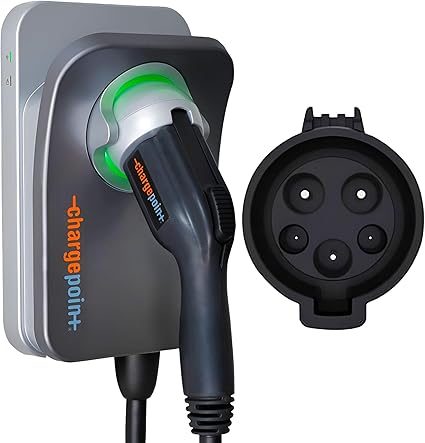 | ChargePoint HomeFlex | Check Price |
Our Top Picks 2  | MACH 2 Hardwired EV | Check Price |
Our Top Picks 3  | J1772 Level 2 Charger | Check Price |
Our Selected Top 12 Home Electric Car Charging Station You Can Trust
This list features carefully chosen home electric car chargers designed for everyday use, highlighting their performance, suitable users, and key advantages and drawbacks. Each review helps you understand which charger fits different needs and preferences for convenient and reliable home charging.
1. ChargePoint HomeFlex Level 2 EV Charger
Long charging times at home disappear with this Level 2 EV charger, ideal for electric car drivers seeking faster and smarter charging. Its biggest strength lies in its flexible power delivery, charging at up to 50 amps to juice up your vehicle faster than standard chargers.
Setting up requires a hardwired connection with 240 volts input, so professional installation is a must. Once running, controlling the charger through the ChargePoint Mobile App makes scheduling charges and checking battery status smooth and convenient.
The app also lets you connect to smart home devices and get alerts, while built-in WiFi ensures remote control and troubleshooting options.
Charging at 240 volts and delivering a steady 50 amps means it handles the main job well, cutting down charge time significantly compared to lower-powered units. The build quality feels solid, matching its reliable performance.
Many appreciate the extensive North American charging network access. Some mention app connectivity can sometimes act up, causing troubleshooting delays.
Strong praise focuses on its fast and flexible charging with a solid network of public stations. The mobile app provides useful control, though some users face occasional WiFi connection issues that can disrupt smooth operation.
Ideal for someone comfortable setting up hardwired electric equipment and wanting faster home charging plus remote control. Those seeking a plug-and-play option or needing stronger WiFi support might want to consider alternatives.
Pros
- Charges at up to 50 amps for faster power delivery
- Mobile app controls and smart home integration
- Access to 274k+ North American charging stations
- Reliable build with solid performance
Cons
- Requires professional hardwired installation
- WiFi connectivity can be inconsistent at times
| Specification | Details |
|---|---|
| Output Voltage | 240 volts_of_alternating_current |
| Input Voltage | 240 volts |
| Current Rating | 80 A |
| Amperage | 50 A |
| Connector Type Used on Cable | Hardwired (J1772)-Non Tesla |
| Number of Ports | 1 |
2. MACH 2 Level 2 Hardwired EV Charger
Offering 11.5KW of power on a 240-volt circuit, it handles all EVs across the US with ease. Perfect for anyone wanting a reliable Level 2 charger that works for Tesla and non-Tesla vehicles alike.
Its key strength is compatibility, covering every electric vehicle using either J1772 or NACS connectors.
Installation involves hardwiring to a 240-volt supply, which suits homes or parking lots well. The included PRO 1 adapter lets Tesla drivers skip buying extra gear. Daily use feels straightforward thanks to the bright display and weatherproof enclosure, so it stands up well outdoors without fuss or fragile parts to worry about.
Performance matches expectations with a steady 48-amp current and fast charging times relative to standard outlets. The build quality is sturdy and weather-resistant, certified to strict safety standards like UL 2594:2022 Ed.3. Most praise centers on its solid construction and reliability; a common gripe involves its single-port setup limiting simultaneous charging.
The charger is highly praised for its sturdy construction and reliable performance in tough outdoor weather. Its main limitation is the single port, which means only one vehicle can use it at a time, frustrating users with multiple EVs needing charging simultaneously.
Those with a Tesla or any other EV will appreciate the universal compatibility and convenience of the included adapters. Users needing to charge more than one vehicle at once or looking for a plug-and-play option may want to consider other products.
Pros
- Compatible with all US electric vehicles
- Weatherproof design suits outdoor use
- Includes Tesla adapter (PRO 1)
- High 11.5KW power output for quick charging
Cons
- Only one charging port available
- Requires professional hardwired installation
| Specification | Details |
|---|---|
| Output Voltage | 240 volts |
| Input Voltage | 240 volts_of_alternating_current |
| Current Rating | 48 A |
| Amperage | 48 |
| Connector Type Used on Cable | Dual: Type 1 SAE J-1772 & NACS Tesla |
3. Level 2 J1772 Home EV Charger
People looking for a fast and flexible home charging solution for their electric vehicle will find the Level 2 J1772 Home EV Charger a strong fit. It stands out for offering up to 50 amps of power, which means much quicker charging than a standard wall outlet, ideal for getting your car ready faster.
Setting up involves plugging into a 240V NEMA 14-50 outlet, making it compatible with common home setups. The 27.3-foot cable length adds convenience, allowing easy connection even across tricky parking spots.
Daily use gets simplified with smart WiFi and an app that helps control charging remotely, whether your car’s parked in the garage or outside.
The charger delivers reliable Level 2 charging at a whopping 11 kW, cutting down wait times significantly. Its build feels solid, and the long cable prevents awkward positioning.
Users praise the app connectivity and cable length the most. Common drawbacks include its dependency on a specific NEMA 14-50 plug and that some might find the app setup slightly tricky.
Charging speed and cable length earn the most praise, making the experience quick and flexible at home. The main complaint revolves around needing the specific NEMA 14-50 plug, which may not be convenient everywhere. The app adds a smart layer but might take time to master.
Those wanting a powerful, adjustable Level 2 charger with remote control features will appreciate this unit. It suits users with existing compatible outlets or those willing to install them. Alternatives may suit better if you lack the required plug or prefer a simpler setup process.
Pros
- Adjustable current levels for battery care
- WiFi and app connectivity included
- Long 27.3-foot cable for easy parking
- High power output up to 50 amps
Cons
- Requires NEMA 14-50 outlet installation
- App can be complicated to set up
| Specification | Details |
|---|---|
| Connector Type | J1772 |
| Input Voltage | 240 volts |
| Amperage | 50 A |
| Wattage | 11 KW |
| Plug Type | NEMA 14-50 |
| Charging Cable Length | 27.3 FT |
4. MSI EV Premium Level 2 Charger

Designed for home electric vehicle charging, the MSI EV Premium Level 2 Charger offers a solid 9.6kW power output that adds up to 39 miles of range per hour. Its standout feature is the long 7.5-meter cable, making it flexible enough to handle different parking setups with ease.
Setup is straightforward, connecting to a 240-volt power source with a 40-amp current rating. The Type 1 SAE J1772 connector works with many international EV models, so compatibility is usually not an issue.
The generous cable length means you won’t have to worry about how close you park to the charger, making daily use more convenient.
The charger reliably delivers a steady 40A current, ensuring fast charging sessions. Build quality meets safety standards, holding UL and Energy Star certifications.
Users often praise its dependable power and the security of a 5-year warranty, though some find its single-port design limiting if multiple vehicles need charging.
The charger’s long cable and reliable power delivery are frequently highlighted as major advantages, helping avoid parking hassles. A common complaint is related to having just one port, which can be inconvenient for users with more than one electric vehicle.
People with a single EV who want straightforward and safe home charging will find it suits their needs well. Those needing to charge multiple vehicles at once should consider models with multiple ports or separate chargers instead.
Pros
- Long 7.5-meter charging cable for flexible parking
- Compatible with multiple international EV models
- UL and Energy Star certified for safety and efficiency
- 5-year warranty with global customer support
Cons
- Only one charging port available
- May not be ideal for households with multiple EVs
| Specification | Details |
|---|---|
| Input Voltage | 240 volts |
| Current Rating | 40 A |
| Power Output | 9.6kW / 40A |
| Connector Type | Type 1 SAE J1772 |
| Charging Cable Length | 7.5 meters |
| Number of Ports | 1 |
5. Autel Level 2 EV Charger

The Autel Level 2 EV Charger is made for people with electric vehicles who need fast and reliable home charging. Its biggest strength lies in delivering high-speed charging with up to 12kW and 50 amps, which means you can add about 37 miles of range every charging hour. It’s ideal for those who need quick turnaround times between drives.
Setting up the charger is straightforward, and the 25-foot cable offers plenty of reach to plug into most EVs without struggle. The cable remains flexible even in freezing temperatures, so daily charging doesn’t get complicated when winter hits. The single MagSafe connector makes it compatible with many electric and plug-in hybrid vehicles, keeping your routine simple and efficient.
Performance is solid with a steady 240-volt output at a 50-amp current rating, handling fast charging with no frequent issues. It feels well-built and durable, designed by a trusted automotive brand with years of experience.
Most praise focuses on its speed and cable quality, while the main complaint comes from users who might want a charger with multiple ports.
The charger receives praise for its fast speed and dependable cable that doesn’t stiffen even in harsh cold weather. A common drawback is that it only has a single port, which might inconvenience households with multiple electric vehicles.
People needing quick, strong charging with a reliable cable will appreciate the Autel Level 2 EV Charger. Homes with multiple EVs or those wanting advanced connectivity might want to consider other options offering multiple ports or smart features.
Pros
- High speed charging at 12kW and 50A
- Long 25-foot durable cable
- Cable stays flexible in cold temperature
- Compatible with many EV and hybrid models
Cons
- Only one charging port limits multiple vehicle use
- Not suitable for users needing integrated smart features
| Specification | Details |
|---|---|
| Output Voltage | 240 volts |
| Input Voltage | 240 volts |
| Current Rating | 50 A |
| Amperage | 50 A |
| Connector Type | MagSafe |
| Number of Ports | 1 |
6. Level 2 J1772 Hardwired EV Charger

Charging an electric car at home becomes simple and reliable with a Level 2 J1772 Hardwired EV Charger. Perfect for anyone with nearly any non-Tesla EV, it provides powerful, consistent charging via a hardwired installation.
Its biggest advantage is the long cable that comfortably reaches across a garage or driveway.
Installation requires a licensed electrician because it’s hardwired into your home’s electrical system, ensuring safety and full power delivery. The 25-foot cable length means you don’t have to park unusually close to the charger. Daily use is straightforward; just plug in your EV with the familiar J1772 connector and let it charge overnight without worry about adapters or compatibility.
Performance-wise, it delivers up to 48 amps on a 60 amp 240-volt circuit, enough to fully charge most EVs overnight. The charger’s build is solid, weighing just over 21 pounds and sized compactly for garage mounting.
Most praise focuses on the cable length and compatibility; the common complaint involves the need for professional installation due to its hardwired design.
The charger offers impressive compatibility and a generous cable length, making daily charging smooth and accessible. Most feedback highlights ease of use and reliable power, while installation is noted as a hurdle since it needs professional wiring.
Those seeking fast, consistent home charging for non-Tesla EVs will appreciate this unit. Those who prefer a plug-and-play or portable option might want to consider a plug-in charger instead.
Pros
- Works with every non-Tesla EV without adapter
- Extra-long 25 ft cable for easy reach
- Provides up to 48 amps for fast charging
- Compact size fits well in most garages
Cons
- Hardwired installation requires a licensed electrician
- Not a plug-in unit, limiting portability
| Specification | Details |
|---|---|
| Item Dimensions | 4 x 9.45 x 9.45 inches |
| Item Weight | 21.1 pounds |
| Maximum Current | 48A |
| Voltage | 240V |
| Installation Type | Hardwired |
| Connector Type | J1772 |
7. Level 2 J1772 Wall EV Charger

Great for anyone needing a reliable Level 2 charger at home, this unit handles a wide range of electric vehicles with a simple plug-in design. Its biggest strength is the universal J1772 connector that fits most EV brands, making it versatile for many garages.
Installation is straightforward with a NEMA 14-50 plug that requires a compatible outlet and a 50A circuit breaker. Everyday use is easy since the built-in GFCI protection adds safety during charging.
The reasonably compact size and moderate weight help in wall mounting without too much effort.
Charging at 40 amps gives solid power for overnight or daily top-ups. The build feels sturdy and well-made, suitable for regular home use. Common praise highlights reliability and compatibility, while the main complaint revolves around the need for a Tesla adapter, which is sold separately.
Reliability and wide compatibility make it a dependable choice for many people who drive EVs. The most frequently noted downside is the missing Tesla adapter, which adds extra cost and effort for Tesla drivers.
Homeowners with non-Tesla EVs find this charger fits well into their setup and power needs. People with Teslas might want to choose chargers that come with the needed adapter or are made specifically for Tesla vehicles.
Pros
- Works with most electric vehicles and plug-in hybrids
- Easy plug-in installation with NEMA 14-50
- Built-in GFCI safety protection
- Compact size and manageable weight
Cons
- Tesla requires separate adapter (not included)
- Needs a 50A circuit breaker and outlet installation
| Specification | Details |
|---|---|
| Item Weight | 17.06 pounds |
| Package Dimensions | 18 x 14.5 x 10.2 inches |
| Plug Type | NEMA 14-50 |
| Maximum Current | 40A |
| Model Number | NECS-ACW-9.6-1-US-3028 Button Version |
| Compatibility | Universal J1772 connector for most North American EVs |
8. Level 2 Portable EV Charger

Compact and built with portability in mind, this Level 2 Portable EV Charger suits drivers who need a flexible charging solution both at home and on the go. Its standout feature is the adjustable current up to 40A, letting you control your charging speed with ease and precision.
Setting it up requires a compatible NEMA 14-50 outlet, which most home garages have or can easily install. The portable design means it’s not permanently fixed, so you can bring it to work or travel spots. Adjusting the current with a simple button keeps daily charging efficient, whether you need a quick top-up or a full overnight charge.
Charging power reaches a solid 9.6kWh at 240V and 40A, significantly faster than standard Level 1 chargers. The build feels sturdy and weighs about 11.59 pounds, making it manageable for frequent moves. Most users praise the clear control over charging speed, though some mention the need for an added adapter when using it with Tesla vehicles.
One of the most appreciated features is the ability to pick your charging amperage, providing flexibility for different electric car models and situations. The most common issue involves needing an extra adapter to charge Tesla vehicles, which adds to the setup complexity.
People looking for adaptable charging speeds and portability will be pleased with this charger. People who don’t have a NEMA 14-50 outlet at home or who want a built-in Tesla charger should consider other options.
Pros
- Adjustable current from 10A to 40A
- Portable and easy to carry
- Fast 240V charging at 9.6kWh
- Simple control button for charging speed
Cons
- Requires separate Tesla adapter for Tesla cars
- Relies on specific NEMA 14-50 outlet
| Specification | Details |
|---|---|
| Amperage | 40 A |
| Wattage | 9600 watts |
| Plug Type | NEMA 14-50 |
| Voltage | 240V |
| Item Weight | 11.59 pounds |
9. ELEGRP Level 2 Portable EV Charger

Fast charging and adjustable power levels stand out right away in this portable EV charger. Ideal for those with varying home electrical capacities who want a quick, flexible charging solution.
It fits perfectly in garages or driveways where a longer reach is necessary to avoid moving the car around.
Setup is straightforward with the NEMA 14-50 plug that works with 240V outlets, making it truly plug-and-play. Daily charging is convenient thanks to the 25-foot cable length, which gives plenty of room to reach the car without hassle.
The timing delay lets you schedule charging during off-peak hours, helping lower electricity costs and managing your EV’s range confidently.
Charging happens at up to 9.6 kW, which is significantly faster than Level 1 chargers, and the adjustable current levels let you tailor power based on your home’s electrical capacity. Its solid build feels safe and reliable, reinforced by ETL certification and ELEGRP’s PBE protection against overheating. Users typically praise its fast and steady charging but sometimes note the product’s size as a bit bulky for storage or transport.
Charging speed and safety features are frequently praised, especially the ability to adjust current levels and the inclusion of PBE protection. The consistent complaint involves the size and weight, as it is somewhat bulky and heavier than comparable portable chargers.
People with sufficient garage space and a need for fast, adaptable charging will find this charger a solid fit. Those looking for something more compact or lightweight who charge less frequently might want to consider other options.
Pros
- Adjustable current levels for home electrical compatibility
- 25-foot cable length offers flexible reach
- ETL certified with overheating protection
- Programmable delay for off-peak charging
Cons
- Product dimensions make it large and somewhat bulky
- Weighs 13.2 pounds, which may be heavy for some
| Specification | Details |
|---|---|
| Charging Power | Up to 9.6 kW |
| Current Levels | 16/20/24/32/40A |
| Cable Length | 25 feet |
| Plug Type | NEMA 14-50 (240V) |
| Certification | ETL Certified |
| Weight | 13.2 pounds |
10. Flex EV Level 2 Wall Connector

Fast charging is the main draw here, ideal for anyone who wants reliable and efficient home charging for their electric vehicle. Suited for American EV models, it cuts down on waiting time compared to lower power chargers, making it a practical choice for daily use and short trips.
Setup requires a 240-volt input and a bit of technical installation know-how, but once up and running, it stays fixed to your wall, ready to go whenever you need it. The waterproof and dustproof casing means you don’t have to worry about weather or dirt interfering with daily charging, which is convenient for any home environment.
Charging happens at 32 amps with steady power conversion, keeping your EV powered up quickly and consistently. Its sturdy build holds up well outdoors, resisting rain, snow, and dust.
Most users praise the fast charge, but some find the installation process a bit tricky or wish it was easier to move once mounted.
Charging speed and weather resistance get high marks from people using this charger daily. Complaints mostly center on the challenge of getting it properly mounted on the wall and the station’s fixed position after installation.
Those who want fast, reliable home charging and don’t mind a technical setup will be happy with this. People who want a portable or very simple plug-and-play solution might find a different model better suited to their needs.
Pros
- Stable and fast charging performance
- Durable waterproof and dustproof design
- Compatible with most US electric vehicles
Cons
- Wall mounting can be complicated
- Not easy to relocate once installed
| Specification | Details |
|---|---|
| Input Voltage | 240 volts |
| Current Rating | 32 A |
11. Level 2 NEMA 14-50 EV Charger

Charging your electric vehicle at home can be slow or unreliable, but this Level 2 NEMA 14-50 EV Charger really speeds things up for anyone with compatible electric or plug-in hybrid cars. Its biggest strength lies in delivering up to 26 miles of range per hour of charging, cutting down waiting time significantly.
Setup is straightforward as long as you have a NEMA 14-50 outlet ready to go. Once plugged in, the SAE J1772 connector fits a wide range of EVs. Daily use feels consistent and secure, delivering steady power without fuss.
The charging speed feels noticeably quicker than standard Level 1 chargers, so you don’t have to plan around long recharging sessions.
The charger consistently performs its job well, pushing 7.68kW at 32 amps and maintaining stable output at 240 volts. It’s solidly built and designed for electric and hybrid vehicles, with common praise pointing to its charging speed and straightforward design. A frequent complaint focuses on the limited range of plug compatibility due to the specific NEMA 14-50 requirement.
Charging speed is widely praised for being significantly faster than Level 1 chargers, delivering consistent, stable power throughout the session. However, many users noted that the unit only works with a NEMA 14-50 outlet, limiting its usability in homes without this specific setup.
Drivers of EVs and plug-in hybrids that accept the SAE J1772 connector and can install a NEMA 14-50 outlet will find this highly practical and efficient. Those without the correct outlet or needing different connector types should consider other options better suited to their home or vehicle setup.
Pros
- Delivers up to 26 miles of range per hour of charging
- Compatible with many electric and hybrid vehicles
- Secure, easy-to-use SAE J1772 connector
- Consistent 7.68kW output at 32A
Cons
- Requires a NEMA 14-50 outlet for installation
- Not compatible with EVs needing other plug types
| Specification | Details |
|---|---|
| Output Voltage | 240 volts |
| Input Voltage | 240 volts |
| Current Rating | 32 A |
| Amperage | 32 A |
| Connector Type Used on Cable | SAE J1772 |
12. DEWALT Level 2 EV Charger

Delivering up to 48 Amps at 240 volts, this Level 2 DEWALT EV charger is ideal for anyone wanting fast, reliable charging at home. It stands out for its ability to add up to 46 miles of range per hour, making it a strong choice for daily EV drivers needing quick turnaround.
Installation requires hardwiring, which means setting it up might need a professional electrician. The 25 ft cable gives flexibility for different parking spots, and the LCD screen keeps you informed at a glance. Using the DEWALT App lets you start, stop, and schedule charges remotely, plus track how much energy you use with your phone.
Charging is consistently quick and stable, thanks to its adjustable current from 12 to 48 amps tailored to your vehicle’s needs. The unit’s waterproof NEMA 4X enclosure means it holds up well outside or indoors. The app is praised for convenience, though some find scheduling features could be more intuitive.
The biggest praise comes from the reliable and fast charging performance combined with durable build quality that handles outdoor conditions well. The most common issue noted is the learning curve with the app’s scheduling feature, which some find less straightforward than expected.
People looking for a powerful, weatherproof charger with smart remote control will appreciate this. Those who prefer plug-and-play setups or simple apps without a learning curve might want to consider other models.
Pros
- Adjustable current from 12 to 48 amps
- Includes long 25 ft UL-certified cable
- Works with all SAE J1772 EVs
- Waterproof for outdoor use (IP66 rated)
Cons
- Hardwired installation required
- Scheduling in app can be tricky to use
| Specification | Details |
|---|---|
| Connector Type | SAE J1772 |
| Number of Ports | 1 |
| Input Voltage | 240 volts |
| Current Rating | 48 A |
| Power Output | 11.5 kW |
| Cable Length | 25 ft |
Best Home Electric Car Charging Stations Comparison
| Product | Amperage | Input Voltage | Connector Type | Number of Ports |
|---|---|---|---|---|
| ChargePoint HomeFlex | 50 A | 240 volts | Hardwired J1772 | 1 |
| MACH 2 Hardwired EV | 48 A | 240 volts | Dual J1772 & NACS | – |
| J1772 Level 2 Charger | 50 A | 240 volts | J1772 | – |
| MSI EV Level 2 | 40 A | 240 volts | Type 1 SAE J1772 | 1 |
| Autel Level 2 Charger | 50 A | 240 volts | MagSafe | 1 |
| J1772 Hardwired Charger | – | – | J1772 | – |
| J1772 Wall Charger | – | – | – | – |
| Portable Level 2 Charger | 40 A | – | – | – |
| ELEGRP Portable Charger | – | – | – | – |
| Flex EV Wall Connector | 32 A | 240 volts | – | – |
| NEMA 14-50 Charger | 32 A | 240 volts | SAE J1772 | – |
| DEWALT Level 2 Charger | 48 A | 240 volts | SAE J1772 | 1 |
- Amperage50 A
- Input Voltage240 volts
- Connector TypeHardwired J1772
- Number of Ports1
- Amperage48 A
- Input Voltage240 volts
- Connector TypeDual J1772 & NACS
- Number of Ports–
- Amperage50 A
- Input Voltage240 volts
- Connector TypeJ1772
- Number of Ports–
- Amperage40 A
- Input Voltage240 volts
- Connector TypeType 1 SAE J1772
- Number of Ports1
- Amperage50 A
- Input Voltage240 volts
- Connector TypeMagSafe
- Number of Ports1
- Amperage–
- Input Voltage–
- Connector TypeJ1772
- Number of Ports–
- Amperage–
- Input Voltage–
- Connector Type–
- Number of Ports–
- Amperage40 A
- Input Voltage–
- Connector Type–
- Number of Ports–
- Amperage–
- Input Voltage–
- Connector Type–
- Number of Ports–
- Amperage32 A
- Input Voltage240 volts
- Connector Type–
- Number of Ports–
- Amperage32 A
- Input Voltage240 volts
- Connector TypeSAE J1772
- Number of Ports–
- Amperage48 A
- Input Voltage240 volts
- Connector TypeSAE J1772
- Number of Ports1
How to Choose the Best Home Charger
Choosing the right home charger depends on compatibility with your vehicle, charging speed, and installation needs. Prioritizing these factors ensures efficient energy use, reduces electricity costs, and prevents potential issues, making charging easier and more convenient over time.
Charging Power and Speed
Charging speed usually depends on the voltage and current rating supported by the device. A common household circuit delivers 240 volts and 30 to 50 amps, which provide charging rates around 7 to 11 kilowatts.
This fits most electric vehicles with smaller and medium battery capacities and results in overnight charging times between 4 and 8 hours.
Smaller chargers with lower amp ratings can extend charging time significantly, which impacts how soon the vehicle can be used again. Larger units rated for 40 to 60 amps charge faster but require heavier-duty wiring and breakers. Energy efficiency is generally stable across models, but consistent current delivery at the correct voltage prevents wasted power and potential battery strain over time.
Devices supporting 32 amps or higher work well for most daily needs, balancing speed with home electrical system limits.
Installation Requirements
Compatibility with the home’s electrical system is essential. Most units require dedicated 240-volt circuits with appropriate breakers, usually 30 to 60 amps depending on the charger’s specifications. Homes without this setup will need electrical panel upgrades or additional wiring, which generally means professional installation.
Mounting style affects space and convenience. Wall-mounted units save floor space and keep cables tidy but need a suitable wall surface near the parking spot.
Freestanding options require more room but can be placed flexibly. Clearances should allow easy access to the car port or garage, avoiding tight spots that complicate plugging in. Understanding these requirements ahead of purchase prevents costly adjustments after installation.
Connector and Vehicle Compatibility
Plug type compatibility determines if the charger fits the vehicle without adapters. Common standards include Type 1 (SAE J1772) mostly for American and Japanese EVs, and Type 2 (Mennekes) preferred in Europe. Some models also support CHAdeMO for fast charging but fewer home units have this.
Checking the vehicle’s inlet type before choosing avoids compatibility issues.
Cable length can impact convenience during daily use. Standard cables run from 16 to 25 feet, which covers most parking spots, but shorter cables sometimes lead to awkward connections or stretching. Many chargers offer built-in cable management systems to keep cables organized and safe, preventing damage and tripping hazards.
Safety Features
Protection features guard against electrical hazards that can arise during charging. Overcurrent protection prevents the circuit from drawing more current than the wiring safely supports, which could cause fires.
Overheating sensors shut down charging if the device or cable gets too hot, preserving equipment and safety. Short circuit interrupts power flow instantaneously if a fault occurs. These protections are vital for safe daily operation.
Most devices are rated for outdoor use with weather-resistant enclosures rated at least IP44, which handles splashing water and dust exposure. Units without proper sealing are better suited for indoor garages.
Confirm that the charger carries safety certifications like UL or CE, which means it conforms to recognized electrical and safety standards.
Smart Features and User Interface
Some devices connect to mobile apps, allowing charge monitoring, scheduling, and remote control. This can help manage electricity costs by scheduling charging during off-peak hours.
Real-time usage data helps track energy consumption for budget planning.
Controls through built-in displays or smartphone apps vary in complexity. Basic ones offer simple start/stop commands and timers, while advanced interfaces provide notifications for faults or when charging completes. Clear indicators and straightforward menus are useful for quick status checks without needing external devices.
Optimizing Your Home Setup for Faster EV Charging
Electric car chargers operate most efficiently when matched to your home’s electrical capacity. Chargers with higher amperage require a circuit that can handle their load without tripping breakers or causing voltage drops. Installing a dedicated 240-volt circuit is often necessary for Level 2 chargers, which significantly reduces charging time compared to standard 120-volt outlets.
Location matters for convenience and cable management. Positioning the charger near where you park the car minimizes wear on the cables and reduces clutter. Keep in mind the length of the charging cable, too short, and you might have to reposition the vehicle frequently.
- Ensure your electrical panel can support the charger’s power requirements.
- Consider future needs, such as a second EV or faster charging.
- Use a licensed electrician to inspect and upgrade wiring if needed.
Essential Maintenance Tips to Prolong Your Charger’s Lifespan
Regular cleaning of your EV charger’s connectors and cables prevents buildup of dirt and corrosion that can interfere with proper contact. Avoid using harsh chemicals; mild soap and water with a soft cloth work well. Inspect the charger for cracks, exposed wires, or other damage periodically.
Keep the charging area dry and free of debris. Moisture or dust can affect electronics over time.
Store the cable properly to prevent kinks or strain on connections. Keep your charger’s software up to date, especially if it includes a display or app interface, to ensure optimal performance and timely alerts.
- Disconnect power before cleaning or inspecting for safety.
- Check for firmware updates from the manufacturer regularly.
- Replace damaged cables or connectors promptly to avoid hazards.
Safety Precautions When Installing and Using Electric Car Chargers
Before installation, verify that your home’s wiring complies with local electrical codes. Using a qualified electrician ensures connections are secure and grounded properly.
The charger should be mounted at a height that allows easy plug-in without strain but keeps cables off the ground to prevent wear and water damage.
During use, never force the connector into the vehicle port. Align it properly to avoid damaging pins or seals. Avoid charging during extreme weather conditions if the charger is not rated for outdoor use or does not have adequate weatherproofing.
- Install a circuit breaker dedicated solely to the EV charger.
- Use chargers with built-in safety features like ground fault protection.
- Do not use extension cords; these can cause overheating and fire risks.
People Also Asked
How Do I Install a Home Electric Car Charging Station Safely?
Installing a home electric car charging station safely requires hiring a licensed electrician to ensure proper wiring and adherence to local electrical codes. A dedicated circuit breaker is necessary to handle the charger’s power load. Avoid DIY installations unless you have strong electrical experience, as incorrect setup can be hazardous.
What Size Charging Station Do I Need for My Electric Car?
Choose a charging station with an output matching your vehicle’s onboard charger capacity, often between 7 kW and 11 kW for home use. A higher capacity charger can reduce charging time but might require upgraded electrical infrastructure, so check your home’s system compatibility first.
How Long Does a Typical Home Electric Car Charger Last?
A typical home electric car charger can last 10 years or more with regular use under normal conditions. The durability depends on the charger’s build quality and how well it is cared for, so protect it from weather and physical damage to extend its lifespan.
Are There Common Problems with Home Electric Car Charging Stations?
Common issues with home chargers include faults in the wiring or connectors, software glitches, and circuit breaker trips. These problems often arise from improper installation or using the charger in harsh weather without protection. Regular inspections help catch small problems early.
How Do I Properly Maintain My Electric Car Charging Station?
Keep the charging station clean and dry, and inspect the cables for wear or damage regularly to maintain it. Avoid coiling the cable tightly as it can degrade over time. Periodically check for firmware updates from the manufacturer to keep the charger functioning correctly.
Conclusion
Choosing a home electric car charging station mostly comes down to charging speed, compatibility with your vehicle, and installation requirements. A charger that’s too slow can be frustrating, while an overly complex setup may add unnecessary costs.
It’s important to balance these factors based on your daily driving needs and the type of electric vehicle you drive.
Consider your available space and budget before making a decision. A charger used daily might justify a higher upfront cost, while occasional users might prefer something simpler.
Review the comparison table and detailed descriptions above to find an option that fits your routine and home setup.