
Top 12 Best Starter Pressure Washer Deals You Can’t Miss
Pressure washing can turn into a headache when the equipment slips, stalls, or simply doesn’t deliver the water pressure needed for basic cleaning. The best starter pressure washer tackles these issues by offering reliable power without being too complicated or bulky. Many beginners end up with models that overheat quickly or have weak nozzles that spread water inefficiently, making simple jobs drag on or require extra effort.
Key factors that separate a solid entry-level pressure washer include water pressure, measured in PSI, usually between 1300 and 2000 for residential starters. A flow rate around 1.2 to 1.6 gallons per minute balances cleaning speed with manageable water use. Durability matters too; components like brass fittings and steel frames last longer than plastic ones.
Portability and weight also count since you’ll often move it around the driveway or yard. Safety features such as trigger locks help prevent accidental sprays, which is important for beginners.
Need a Quick Check?
| Image | Product | Price |
|---|---|---|
Our Top Picks 1  | Westinghouse ePX3100s Washer | Check Price |
Our Top Picks 2  | Westinghouse ePX3500 Washer | Check Price |
Our Top Picks 3  | Greenworks 2100 PSI Washer | Check Price |
Our Selected Top 12 Starter Pressure Washer Worth Considering
This list features a carefully chosen selection of beginner-friendly pressure washers, each reviewed for performance and suitability. Readers will discover the strengths and weaknesses of every model, helping identify which one best fits different cleaning needs and user experience levels.
1. Westinghouse ePX3100s Electric Pressure Washer
Westinghouse ePX3100s Electric Pressure Washer offers great cleaning power in a very compact size, ideal for those new to pressure washers. Its strongest feature is the balance between delivering solid pressure and being lightweight enough to carry around easily.
Setting up involves simply plugging it in and attaching the spray gun and lance, which are stored right on the unit for convenience. Weighing just 10 pounds, it’s easy to move around the yard or garage.
The built-in holders keep everything organized, so you don’t waste time gathering parts when a quick clean-up calls. The adjustable foam cannon adds versatility for different types of cleaning jobs.
Pressure performance is good at 1800 rated PSI and 1.2 GPM, with peaks up to 2100 PSI and 1.76 GPM at the lowest pressure setting, handling most household cleaning tasks well. The build is compact but sturdy, focused on portability without sacrificing essential power. Most praise its lightweight design and adequate cleaning force, while the most frequent complaint is that it’s not suited for extremely heavy-duty jobs or constant industrial use.
The most common positive note is how light and easy the unit is to carry and store, while still packing good pressure for typical home jobs. The key drawback is its lower water flow, which means it can struggle with very stubborn dirt or larger surfaces.
People who want a lightweight pressure washer for regular home use, like cleaning decks, windows, or cars, will be satisfied. Those needing powerful, continuous-duty washers for industrial or large-scale cleaning might want to look for something with higher PSI and GPM ratings.
Pros
- Lightweight at 10 pounds for easy transport
- Adjustable foam cannon for versatile cleaning
- Built-in holders keep everything organized
- Delivers up to 2100 max PSI for strong cleaning
Cons
- Not designed for heavy commercial use
- Limited water flow for tougher cleaning tasks
| Specification | Details |
|---|---|
| Brand Name | Westinghouse |
| Model Number | ePX3100s |
| Max PSI | 2100 |
| Rated PSI | 1800 |
| Max GPM | 1.76 |
| Rated GPM | 1.2 |
2. Westinghouse ePX3500 Electric Pressure Washer
Feeling light and easy to move around, the Westinghouse ePX3500 fits well for anyone new to pressure washers who needs decent cleaning power without the bulk. Its real strength lies in being compact and portable while packing enough punch for typical outdoor cleaning tasks.
Setting up is straightforward; the pro-style wand extends to 17.5 inches and snaps on easily with quick-connect nozzles. The 25-foot nylon braided hose coils smoothly and doesn’t tangle much.
Moving it around is simple thanks to four quick-lock wheels with 360-degree steering, and low center of gravity helps it stay upright. The onboard 20-ounce soap tank is handy for adding detergent directly when tackling tough grime.
Cleaning surfaces like decks, driveways, and cars is reliable at its rated 2000 PSI, getting most jobs done without fuss. The steel wand feels durable, but some mention the water pressure could be stronger for heavy-duty work.
Most praise the easy mobility and size, with the most common complaint about power level limits at times.
The strongest praise highlights its portability and stable, easy handling during cleaning tasks. Most users find the pressure adequate, though some say it could use more power for heavy buildup. Moving it around on wheels with 360-degree steering makes it convenient for many outdoor surfaces.
This unit suits people tackling regular home cleaning like patios, cars, and driveways with lighter grime. Those needing higher pressure for demanding jobs should look at models offering more PSI and water flow.
Pros
- Compact and lightweight for easy storage
- Quick-connect nozzles for versatile cleaning
- Anti-tip design with 360° steering wheels
- Onboard soap tank for detergent use
Cons
- Pressure may feel low for tougher jobs
- Limited water flow at rated 1.2 GPM
| Specification | Details |
|---|---|
| Max PSI | 2500 |
| Rated PSI | 2000 |
| Max GPM | 1.76 |
| Rated GPM | 1.2 |
| Weight | 19 pounds |
| Wand Length | 17.5 inches |
3. Greenworks 2100 PSI Electric Pressure Washer
Greenworks 2100 PSI Electric Pressure Washer fits perfectly for anyone tackling medium-duty cleaning around the house. Its standout feature is the easy push-button start and all-electric setup with zero maintenance hassles, making it especially beginner-friendly and practical for everyday use.
Setting it up is simple: just plug in the 35-foot power cord with the built-in safety GFCI plug, attach one of the four included nozzles or soap applicator, and you’re ready. The 20-foot tangle-free hose and quick connect system speed up switching tasks.
No gas or oils mean no tuning up or worrying about small engine parts.
Pressure-wise, it puts out a solid 2100 PSI at 1.2 GPM, enough for cleaning fences, patios, and small driveways with a bit of elbow grease. Its build is straightforward and functional.
Many appreciate how it starts instantly and runs quiet, though some mention the water pressure can struggle with heavier grime or very large areas.
The unit starts immediately and runs quietly, making daily cleaning straightforward and less stressful. However, the water pressure sometimes falls short when a tougher cleaning job calls for heavier power, which limits its ability to tackle intensely dirty surfaces without extra effort.
People wanting a simple, low-maintenance washer for small to medium jobs will find this model meets those needs well. Those requiring serious power or handling larger, dirtier areas might want to look into more heavy-duty models instead.
Pros
- No maintenance required, no gas or oil needed
- Easy push-button start with safety GFCI plug
- Includes multiple nozzles and soap applicator
- Long power cord and tangle-free hose
Cons
- Water pressure can be weak on tough grime
- Not ideal for very large or heavy-duty cleaning
| Specification | Details |
|---|---|
| Model Number | GPW2101A |
| Pressure | 2100 PSI @ 1.2 GPM |
| Power Cord Length | 35 FT |
| Hose Length | 20 FT |
| Nozzle Types Included | 25°, 40°, Turbo, Soap Applicator |
| Start Method | Push button |
4. Sun Joe SPX100-GO Electric Pressure Washer

Compact design and electric power make the SPX100-GO suited for anyone wanting a lightweight, easy-to-store pressure washer. Its biggest strength is delivering strong cleaning power without dealing with gas fumes or heavy maintenance.
Setup only takes a few minutes by attaching the hose and plugging into a power source. The built-in 13.53 oz foam bottle speeds up detergent application, making washing cars or patios quicker.
The telescoping handle and portability mean moving it around the yard is simple without strain.
Pressure at 1800 PSI and 1.7 GPM blasts off dirt, grease, and mildew effectively, standing well above standard garden hoses. It feels solid enough for frequent home use, although some users find it less powerful than gas models.
The detergent system is easy to fill and use, though a few mention the cleaning nozzle could be a bit more adjustable.
The pressure washer offers strong cleaning that easily outperforms a garden hose and includes a handy detergent system for deeper cleaning. Common feedback notes it lacks the force of gas models though, which may limit tackling very tough grime.
People who want a quiet, easy-to-handle electric washer for moderate home jobs will appreciate it. Those needing extra power for heavy-duty or commercial use may want to look at gas-powered options instead.
Pros
- Electric motor avoids gas fumes and upkeep
- Portable with telescoping handle for easy moving
- 13.53 oz detergent tank built in for quick soap use
- Pressure provides over 25 times a garden hose’s power
Cons
- Less powerful compared to gas pressure washers
- Nozzle angle adjustment could be improved
| Specification | Details |
|---|---|
| Brand Name | Sun Joe |
| Model Number | SPX100-GO |
| Max Pressure | 1800 PSI |
| Motor | 13-amp electric |
| Max Flow | 1.7 GPM |
| Onboard Detergent | 13.53 oz foam bottle |
5. Westinghouse WPX Recoil Starter Assembly
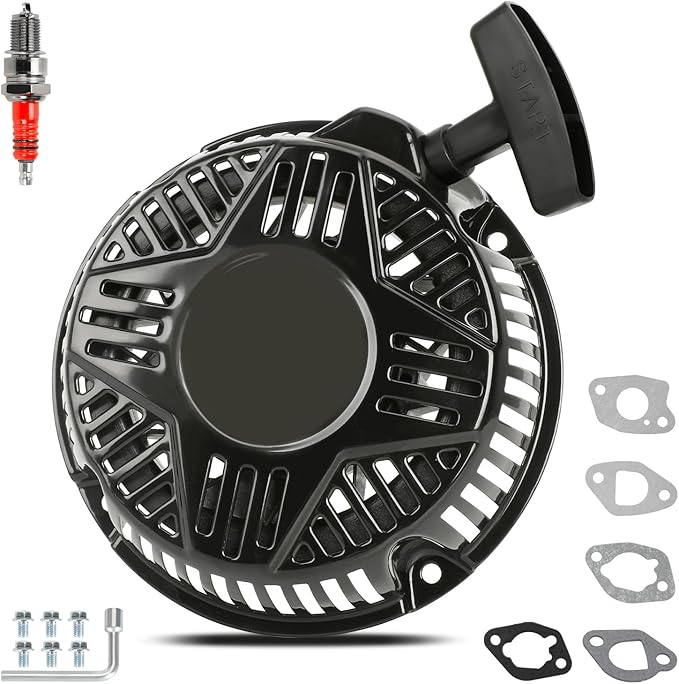
Hard to miss how well this starter assembly fits a variety of Westinghouse pressure washers and some compatible generator engines. Perfect for folks needing a reliable pull start replacement that just works without fuss. Its biggest strength lies in its wide compatibility across multiple models and brands.
Setting it up involves matching it with your specific pressure washer or generator engine that runs on 212cc OHV horizontal engines or similar sizes. Daily starting feels consistent thanks to the recoil mechanism designed to handle frequent pulls. The assembly is compact and light enough to manage easily when doing routine maintenance or repairs.
It consistently performs the job of starting engines without fail for the models it supports. Built solidly with quality materials that can withstand regular use, it earns praise for maintaining engine reliability. On the downside, some people experience occasional difficulties with installation because of fit nuances.
Otherwise, it’s a dependable part that holds up under normal pressure washer and generator use.
Strong points include its broad fit with popular Westinghouse models and several generators, leading to consistent engine starts as long as installation goes smoothly. The most common complaint revolves around the fit during installation, requiring care and sometimes extra adjustments.
People with Westinghouse WPX series pressure washers or compatible DuroStar generators will appreciate the compatibility and reliability. Anyone with engines outside the specified cc range or models not listed should look for starters specifically designed for their equipment.
Pros
- Wide compatibility with multiple pressure washers
- Lightweight and compact design
- Durable construction for reliable starts
- Easy to handle for replacements
Cons
- Installation can be tricky for some models
- Not suitable outside specified engine sizes
| Specification | Details |
|---|---|
| Product Dimensions | 12.6 x 9.06 x 2.36 inches |
| Item Weight | 1.34 pounds |
| Compatible Engines | 212cc OHV horizontal engine and similar |
| Compatible Pressure Washer Models | Westinghouse WPX2700 to WPX3600 series |
| Manufacturer | SHIQINHA |
6. PS3228 Recoil Pull Start Starter for Simpson

Replacement parts for pressure washers often fall short on fit and durability, but this starter solves the problem with precise compatibility and reliable construction. It’s ideal for anyone running a Simpson pressure washer with a Honda GX200 engine needing a straightforward fix for their pull start mechanism.
Mounting the starter is straightforward, as it matches the housing dimensions and mounting holes exactly. The smooth pull and secure lock system make starting the pressure washer every day quick and easy.
It’s designed solely for the 3200PSI 2.5GPM Simpson model, so it won’t fit other engines or models easily, ensuring you don’t waste time on mismatched parts.
The starter does its job efficiently by providing a smooth and consistent pull with a solid build that feels durable compared to lower-end alternatives. The main compliment is how reliable and simple the mounting process is, but a common gripe involves double-checking compatibility before purchase to avoid fit issues.
Materials for the external parts are carefully chosen, contributing to overall product longevity.
Reviews highlight the starter’s reliable and smooth pulling action, making it easier to start the pressure washer routinely. Most concerns revolve around ensuring perfect compatibility; mismatched orders happen when dimensions aren’t verified first. The build quality stands out as dependable, and installation aligns well with the original assembly.
People owning a Simpson 3200PSI 2.5GPM model with a Honda GX200 engine will appreciate the exact compatibility and straightforward replacement. Those with different pressure washer brands, models, or engines should look for options matching their specific setup to avoid fit or performance issues.
Pros
- Precise fit for Simpson and Honda GX200 engines
- Smooth pull operation for easy starts
- Secure locking mechanism prevents slipping
- Built with durable selected materials
Cons
- Only compatible with one specific model and engine
- Requires careful dimension check before ordering
| Specification | Details |
|---|---|
| Model Number | PS3228 |
| Compatible Pressure Washer | Simpson 3200PSI 2.5GPM |
| Engine Compatibility | Honda GX200 only |
| Mounting | Simple Mount with exact hole spacing |
| Item Count | 1 Count |
7. LOKITHOR AW401 Car Emergency Tool

Dead car batteries and flat tires can ruin any day, especially when you’re far from help. The LOKITHOR AW401 Car Emergency Tool fits well in any vehicle, offering reliable jump-start power alongside a precise digital air pump. Its biggest strength lies in combining two emergency tools into one compact device for starters and everyday drivers alike.
Getting started with this device is straightforward. The lithium polymer battery holds a strong 20000mAh capacity, making it easy to store and charge regularly.
Using the digital emergency air pump requires just setting your desired PSI or BAR, and it stops automatically when reached, which takes the guesswork out of inflating tires. The pump adds air quickly and quietly, making inflating tires a much less annoying chore on the road.
Jump-starting is what the AW401 does best, delivering a peak current of 2500A for gas and diesel engines up to 8.5L and 6.5L, respectively. The build feels solid, designed to handle rugged use without fuss. Most users highlight how dependable it is during emergencies, though some have noted the unit can be a bit bulky to carry around for everyday use.
The jump starter reliably powers up a wide range of vehicles and the digital air pump inflates tires quietly and accurately. The device’s size and weight can make it less convenient to carry day-to-day, especially for someone just needing a compact emergency tool.
Anyone needing a powerful all-in-one emergency tool for vehicles with larger engines will appreciate this device’s ability to jump start and inflate tires. People looking for something ultra-portable or primarily for small vehicles might prefer a lighter, more specialized product.
Pros
- Powerful 2500A peak current for jump starts
- Digital air pump with precise tire pressure control
- Charges most vehicles including trucks and boats
- Quiet operation during tire inflation
Cons
- Some find the unit bulky for carrying daily
- May take several minutes to fully inflate large tires
| Specification | Details |
|---|---|
| Battery Type | Lithium Polymer |
| Voltage | 12 volts |
| Peak Output Current | 2500 A |
| Battery Capacity | 20000 milliamp_hours |
| Tire Inflation Rate | 35L/min up to 150 PSI |
8. Electric Pressure Washer with Foam Cannon

2.5 GPM water flow delivers strong cleaning power in an electric pressure washer designed for beginners. It suits anyone looking to tackle patios, driveways, and car wheels without needing professional-grade gear.
The biggest strength is its ability to clean tough dirt efficiently while using less water.
Setting it up is straightforward. There are four quick-connect spray nozzles ranging from 0° to 40°, letting you adjust pressure based on the task.
The included foam cannon adds versatility for washing cars or furniture. Two rollers make moving it around simple, and the anti-tip design keeps it stable when parked.
Performance holds up well with consistent pressure for deep cleaning jobs. The build feels sturdy, and moving the unit on its rollers keeps it convenient.
Common praise highlights the power and foam cannon usefulness. The most frequent complaint involves the size, which might feel bulky for very small storage spaces.
Customers often praise the strong pressure and included foam cannon as helpful features for various cleaning tasks. Some find the size somewhat bulky, making storage and transport less convenient in tight areas. It has a sturdy feel and steady pressure output which supports thorough cleaning.
Ideal for beginners needing a user-friendly, electric pressure washer with adjustable spray options and foam application. Not suited for those who need a compact or more powerful gas-powered unit for heavy-duty or frequent use.
Pros
- Strong water flow at 2.5 GPM for efficient cleaning
- Four spray nozzles for adjustable pressure
- Foam cannon included for extra cleaning versatility
- Rollers and anti-tip base aid in easy relocation and stability
Cons
- Size may be bulky for limited storage spaces
- Electric unit may limit power compared to gas models
| Specification | Details |
|---|---|
| Water Flow | 2.5 GPM |
| Spray Nozzles | 4 quick-connect (0°, 15°, 25°, 40°) |
| Foam Cannon | Included |
| Mobility | 2 rollers, anti-tip design |
| Item Length | 35 inches |
| Manufacturer Warranty | 1 year |
9. Ryobi RY802900 Recoil Starter Replacement

People needing a reliable replacement recoil starter for the Ryobi 2900PSI pressure washer will find this part suits their needs well. Its single biggest strength lies in its sturdy construction, giving confidence that it won’t wear out quickly under typical use.
Setting it up involves checking fitment carefully to match the Ryobi RY802900 model. The recoil starter comes ready to install, which means swapping out the old one is straightforward.
Weight around one pound makes handling easy during replacement, and the compact packaging keeps the part well-protected until installation.
Performance feels solid given its main job is to engage and restart the washer smoothly. The build quality stands out as durable and not easily damaged.
A common praise is its long service life. A few users note the importance of confirming part compatibility before purchase to avoid fit issues.
This recoil starter is praised for its sturdy build and durability over time, keeping the pressure washer running reliably. Common issues occur when buyers do not check compatibility closely, resulting in parts that don’t fit correctly.
People with the Ryobi RY802900 pressure washer will appreciate the straightforward replacement and durable material. Anyone with a different model should consider other options to avoid fit problems and ensure proper operation.
Pros
- Sturdy with long service life
- Easy to install for the right model
- Lightweight for handling during replacement
Cons
- Must verify fitment before buying
- Only compatible with specific Ryobi model
| Specification | Details |
|---|---|
| Replacement Part Number | 099980858083 |
| Fits Model | Ryobi RY802900 2900PSI pressure washer |
| Package Dimensions | 7.76 x 7.28 x 1.65 inches |
| Item Weight | 1.04 pounds |
| Manufacturer | laffoonparts |
| Item Model Number | FUSFWQ684 |
10. Honda GCV190 Pull Start Recoil Starter

Designed specifically for Honda GCV190 GC190 engines, this pull start recoil starter stands out for its reliable fit and durable construction. Ideal for anyone needing a straightforward replacement part for Honda lawn mowers or pressure washers, it’s built to last and easy to install, making engine starting smooth and consistent.
Installation involves removing just three nuts with an 8mm socket, lifting out the old unit, and aligning the new starter carefully. The pull rope needs a slight tug to engage the pawl before tightening the nuts without overdoing it on the plastic housing. Using it daily, it offers consistent pull strength, helping to start your mower or pressure washer without extra effort or fuss.
Constructed from high-quality materials, this recoil starter is durable enough to withstand regular use. It handles the main job well by effectively starting the engine every time.
While users praise its solid build and reliability, some note the plastic housing requires attention to avoid over-tightening during installation to prevent damage.
The starter consistently delivers a solid and reliable pull, making starting smooth, which users appreciate. However, its plastic housing demands careful installation to avoid cracking from over-tightening nuts.
Those working with Honda GCV190 or GC190 engines will find this an easy-to-install, durable replacement part. Users needing universal fit or stronger housing may want to consider other options.
Pros
- High quality, durable material
- Easy to install with basic tools
- Consistent and reliable starting pull
- Compatible with multiple Honda engines
Cons
- Plastic housing can be damaged if over-tightened
- Only fits specific Honda engine models
| Specification | Details |
|---|---|
| Product Dimensions | 7.87 x 7.87 x 1.57 inches |
| Item Weight | 12.6 ounces |
| Compatibility | Honda GCV190 & GC190 Engines |
| Part Number | 28400-Z0Y-013ZB |
| Installation Tool | 8mm socket for nuts |
11. Ruma Recoil Starter for Black Max Ryobi

Ruma Recoil Starter for Black Max Ryobi is designed to replace the recoil starter assembly on specific Blackmax, Ryobi, and ECHO pressure washers. It suits anyone needing a reliable, direct fit replacement for their 212cc engine-powered washer. Its biggest strength lies in compatibility, making sure it works perfectly with the models listed.
Setting it up is straightforward since the starter comes with mounting bolts. It fits directly onto the engine, so daily use involves no extra adjustments.
Pulling the starter rope feels smooth and consistent, giving confidence that it will start the machine quickly without extra effort. The size and weight make it easy to handle during installation or maintenance.
The starter performs well at its core task, reliably getting the engine running. Its build is solid for a recoil assembly, which shows in the smooth pull and no sign of early wear reported.
The strongest praise points to its perfect fit and ease of installation, while the most common complaint notes it doesn’t fit any models outside the specified Blackmax, Ryobi, or ECHO washers, so ordering needs caution.
Perfect fit and ease of installation are commonly praised, ensuring direct replacement without hassle. Many users point out that it won’t work if your pressure washer model is not on the compatibility list, which causes ordering mistakes.
Those with the specified Blackmax, Ryobi, or ECHO models will appreciate this starter replacement. Anyone with a different pressure washer should look elsewhere to avoid compatibility issues and wasted effort.
Pros
- Comes with mounting bolts for easy installation
- Fits specific models exactly with no modification needed
- Lightweight at 14.4 ounces for easy handling
- Smooth pull action starts engine reliably
Cons
- Not compatible with pressure washers outside listed models
- Limited to 212cc engine-powered washers only
| Specification | Details |
|---|---|
| Product Dimensions | 6.9 x 6.9 x 1.7 inches |
| Item Weight | 14.4 ounces |
| Engine Compatibility | 212cc engine |
| Compatible Models | Blackmax BM80525VNM, BM803300H; Ryobi RY802925, RY80589; ECHO PW-3200, PW-3600 |
| Manufacturer | Ruma |
12. Ruma Recoil Starter Assembly for Generac

Pulling the cord feels smooth and reliable, making startup worry-free for anyone with a Generac pressure washer. Perfect for those looking to replace worn out recoil starters quickly, it fits a wide range of Generac models without fuss.
Its strongest point is sturdy construction that stands up to repeated use.
Installation is straightforward since it comes with mounting bolts and matches the original starter assembly exactly. The durable pull cord and recoil spring allow for consistent, easy pulls every time you need to start your pressure washer. Its bright orange color helps with quick identification during maintenance.
The assembly works well to get engines firing up reliably for 2700 to 3600 PSI pressure washers. Made with quality materials like a strong pull string and a durable recoil pulley, it stands up to daily or seasonal use.
Praises focus on its durability and fit; some note the cord length could be longer in certain setups.
The strongest praise is its durability and exact fit on Generac pressure washers ranging from 2700 to 3600 PSI. Common complaints mention the pull cord length can feel a bit short in certain setups but doesn’t significantly affect function. It reliably starts engines without added effort.
Anyone using specified Generac models with 196cc to 212cc OHV engines will appreciate the easy swap and dependable pull. Those with different brands or engine sizes should look for a starter assembly tailored to their specific pressure washer for best results.
Pros
- Fits multiple Generac engine sizes and models
- Durable pull string and recoil spring
- Bright orange for easy identification
- Includes mounting hardware for easy install
Cons
- Cord length may be short for some setups
- Only compatible with specific Generac models
| Specification | Details |
|---|---|
| Brand Name | Ruma |
| Model | GN116 |
| Compatible Engines | 196cc, 208cc, 212cc OHV engines |
| Pressure Washer PSI Range | 2700 PSI – 3600 PSI |
| Included Components | Recoil starter assembly, mounting bolts |
Best Starter Pressure Washers Comparison Table
| Product | Brand | Power | Warranty | Weight |
|---|---|---|---|---|
| Westinghouse ePX3100s Washer | Westinghouse | Electric | 2 Year Limited Warranty | – |
| Westinghouse ePX3500 Washer | Westinghouse | Electric | 3 Year Limited Warranty | – |
| Greenworks 2100 PSI Washer | Greenworks | 2100 PSI | – | – |
| Sun Joe SPX100-GO Washer | Sun Joe | Portable High-Pressure | – | – |
| Westinghouse WPX Starter | SHIQINHA | – | – | 1.34 pounds |
| Simpson PS3228 Starter | GLOXTED | 3200 PSI 2.5 GPM | – | – |
| LOKITHOR AW401 Tool | LOKITHOR | 12 volts Battery | – | – |
| Generic Electric Washer Foam | LWQ | Electric Foam Washer | 1 Year Warranty | – |
| Ryobi RY802900 Starter | laffoonparts | – | – | 1.04 pounds |
| Honda GCV190 Starter | AU-CBA0003 | – | – | 12.6 ounces |
| Ruma Black Max Ryobi Starter | Ruma | – | – | 14.4 ounces |
| Ruma Generac Starter | Ruma | 2700-3600 PSI | – | – |
- BrandWestinghouse
- PowerElectric
- Warranty2 Year Limited Warranty
- Weight–
- BrandWestinghouse
- PowerElectric
- Warranty3 Year Limited Warranty
- Weight–
- BrandGreenworks
- Power2100 PSI
- Warranty–
- Weight–
- BrandSun Joe
- PowerPortable High-Pressure
- Warranty–
- Weight–
- BrandSHIQINHA
- Power–
- Warranty–
- Weight1.34 pounds
- BrandGLOXTED
- Power3200 PSI 2.5 GPM
- Warranty–
- Weight–
- BrandLOKITHOR
- Power12 volts Battery
- Warranty–
- Weight–
- BrandLWQ
- PowerElectric Foam Washer
- Warranty1 Year Warranty
- Weight–
- Brandlaffoonparts
- Power–
- Warranty–
- Weight1.04 pounds
- BrandAU-CBA0003
- Power–
- Warranty–
- Weight12.6 ounces
- BrandRuma
- Power–
- Warranty–
- Weight14.4 ounces
- BrandRuma
- Power2700-3600 PSI
- Warranty–
- Weight–
How to Choose the Right Starter Pressure Washer
Choosing a starter pressure washer involves considering power, ease of use, and durability to match your cleaning needs. Selecting the right features helps avoid overspending on unnecessary capabilities and reduces frustration from poor performance, ensuring efficient and reliable operation.
Pressure and Flow Rate
Your patio might look fine one day but end up damaged the next after using a high-pressure washer that’s too strong. Different cleaning jobs demand different pressure levels, measured in PSI, and the flow rate, GPM, affects how long the job takes and how rinsing feels. For example, washing a car safely calls for a pressure around 1,200 to 1,900 PSI and a flow rate near 1.2 to 1.5 GPM.
Decks and patios usually need a bit more power, but pushing beyond 3,000 PSI risks damage to wood or paint.
The balance between pressure and flow is crucial. Too little pressure means scrubbing by hand after the wash. Too much, and you risk stripping surfaces or splintering wood.
Keep an eye on PSI and GPM ratings that match your typical tasks, sticking to models made for residential use rather than commercial pressure washers designed for tougher jobs.
Power Source and Portability
Electric machines nowadays tend to start with a push button and sound less like a lawn mower compared to gas models, which are louder and require regular tune-ups. Maintenance on gas units involves fuel mixing and spark plug checks, while electric models largely need just occasional hose and nozzle cleaning.
Emissions come into play, especially if you plan to use the washer indoors or in a garage, electric is always cleaner.
Corded electric washers can limit where you clean due to cord length, though some offer reliable power. Battery-powered options provide freedom to roam without tangling cables but often run shorter on juice and usually don’t reach the same pressure.
The weight and frame design make a difference too; lighter units with wheels are easier to carry and slide into garage corners for storage.
Nozzle Types and Adjustability
Switching between nozzle tips without hassle lets cleaning adapt smoothly to different surfaces. A 0-degree nozzle blasts away tough grime but edges fragile materials too harshly. A 25-degree or 40-degree tip spreads water wider, safer for things like cars and windows.
The turbo nozzle spins a narrow high-pressure stream useful for stubborn dirt, yet it can be tiring to hold steady. Adjustable nozzles save space by letting you twist between spray widths instead of swapping tips.
Check how nozzle changes feel in your hand; some models have quick-connect heads that lock securely while others twist or clip. Being able to connect brushes, extension wands, or foam sprayers adds to what your washer can handle, making it suitable beyond simple rinsing.
Durability and Build Quality
Plastic frame parts cut down weight but can crack or fade when exposed to sun and drops. Metal frames, often steel, take abuse better but add pounds that get tiring if you need to lift the unit often. Pumps made from brass or stainless steel last longer and handle mineral buildup without leaks, unlike cheaper plastic pump components that fail sooner.
Hoses need to stand up to high pressure and should feel flexible, not brittle. Sometimes a rubber cover over the hose protects against cuts and weather.
Pay attention to warranty lengths and what they cover, year-long warranties offer less peace than two or three years. Customer support availability is also a lifesaver when parts break or questions pop up.
User Safety and Ergonomics
Sustained use of handheld washers can lead to sore wrists if the handle design is awkward. Models with balanced weight distribution and padded grips reduce strain during long cleanups. Trigger locks help prevent accidental sprays while moving or setting down the unit.
Some machines also shut off automatically when the trigger is released, saving wear on the motor and avoiding unexpected bursts of water.
Clear safety instructions tucked in the manual or printed plainly on the machine warn against unsafe distances and protective gear like goggles. Missing these warnings can lead to injuries or damage. Accessible controls and intuitive features make it less likely someone will misuse the equipment out of confusion or frustration.
Proper Maintenance and Care Tips to Extend Your Pressure Washer’s Life
Keeping your pressure washer in good shape involves regular attention to a few key areas. After each use, draining the water from the pump and hoses prevents freezing and corrosion, especially in colder climates.
Changing the oil in gas models according to the manufacturer’s schedule avoids engine damage.
Simple maintenance steps include:
- Cleaning or replacing the nozzle tips to maintain consistent spray patterns and pressure.
- Checking hoses and connections for leaks or cracks before every job.
- Storing the unit indoors or under a cover to protect it from dust and moisture.
Running the washer with clean water helps avoid clogs and wear. Following these practical steps extends your pressure washer’s life and keeps it running efficiently over time.
Common Mistakes to Avoid When Using a Starter Pressure Washer
Common errors with starter pressure washers often reduce their effectiveness or cause damage. One frequent mistake is skipping the pre-use inspection, which can lead to unnoticed leaks or blockages. High pressure washers require correct nozzle selection; using a too narrow nozzle may damage surfaces or the machine.
Another issue is running the washer without sufficient water flow, which risks burning out the pump. Shutting off the machine while the trigger is still pressed can cause pressure build-up and weaken seals. Users sometimes neglect to purge the system of air, affecting spray quality.
Avoid using harsh detergents not specified for pressure washers, as they can degrade internal parts. Careful attention to these points ensures safer and more effective cleaning with the starter model.
Comparing Electric vs. Gas Pressure Washers for Beginners
Electric pressure washers offer quieter operation and require less maintenance compared to gas models. They are lighter and easier to start, which suits beginners tackling light to medium cleaning tasks around the home. Electric units need access to a power outlet, so mobility can be limited by cord length.
Gas pressure washers provide more power and greater mobility since they are not tethered to electricity. They handle tougher jobs like cleaning large driveways or decks but are heavier and need regular engine maintenance such as oil changes and fuel storage care.
Choosing between the two depends on the type and frequency of cleaning. Electric washers fit well for occasional use on delicate surfaces, while gas models better suit extended or heavy-duty applications despite requiring more upkeep.
People Also Asked
How Do I Choose the Right Size Pressure Washer for Beginners?
Pick a pressure washer with around 1300 to 2000 PSI for general cleaning tasks as a beginner. This range cleans most surfaces effectively without being too difficult to handle. Start with something lightweight and easy to move around.
What Safety Precautions Should I Follow When Using a Pressure Washer?
Always wear eye protection and avoid pointing the spray at people, animals, or fragile surfaces. Use sturdy shoes to prevent slips on wet surfaces. Keep the power cord or hose away from water to reduce the risk of electric shock or damage.
How Long Do Entry-Level Pressure Washers Typically Last with Regular Use?
Entry-level pressure washers often last a few years with regular home use, cleaning a few times per season. Consistent maintenance like cleaning filters and storing properly extends the lifespan. Heavy or commercial use wears them out faster.
What Maintenance Is Needed to Keep a Pressure Washer in Good Condition?
Flush out detergent after each use and clean the inlet filter to avoid clogs. Check hoses and nozzles for leaks or cracks regularly. Store the unit in a dry place to prevent rust and avoid leaving water in the pump overnight to protect internal parts.
Why Is My Pressure Washer Not Building Enough Pressure During Use?
A clogged nozzle or dirty filter often causes low pressure. Inspect these first and clean with water to remove debris. Also, use fresh gasoline in gas-powered models or check electrical connections for electric washers. Ensuring the spray tip matches the pressure rating helps maintain good output.
Conclusion
The main things to consider when choosing a starter pressure washer are the pressure output, water flow rate, and ease of use. Pressure and flow determine how well it cleans, so aim for a balance that fits your tasks.
Also, look for models that are straightforward to set up and store, as complicated machines can discourage regular use.
Think about where you’ll store the washer and how often you’ll use it to find the right size and price range. Cheaper models may work fine for occasional cleanup, while frequent use demands something more durable. Check the comparison table and the detailed picks above to find one that fits your needs and space.