
Top 12 Best Racing Coolant That Will Boost Your Engine Now
Racing engines run hot, and a cheap or poorly chosen coolant can lead to overheating, engine damage, or stalled performance on the track. The best racing coolant keeps temperatures stable even under extreme stress, preventing the common problem of boiling over or loss of pressure in high RPM conditions.
A quality racing coolant is mainly distinguished by its boiling point and corrosion resistance. Look for one that raises the boiling point significantly above 265°F to prevent vapor lock.
It also should protect aluminum and other engine metals from corrosion during intense heat cycles. A coolant with proper flow characteristics and compatibility with your radiator size ensures efficient heat transfer without clogging or buildup over time.
Need a Quick Check?
| Image | Product | Price |
|---|---|---|
Our Top Picks 1  | Engine Ice Racing Coolant | Check Price |
Our Top Picks 2  | Red Line Supercool | Check Price |
Our Top Picks 3 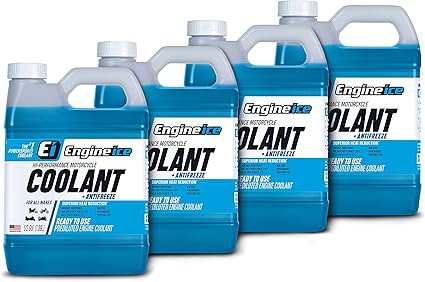 | Engine Ice TYDS008C | Check Price |
Our Selected Top 12 Racing Coolant Worth Considering
This list features carefully chosen racing coolants that balance performance, suitability, and durability for various engine types. Each review highlights how the coolant performs under racing conditions, its ideal user, and key advantages and disadvantages to help you make an informed decision.
1. Engine Ice Pure Performance Racing Coolant
This coolant comes ready to use straight out of the bottle and provides ten times the corrosion protection compared to plain water, making it perfect for racing engines that need strong, reliable cooling. Glycol-free and designed specifically for racing applications, it protects your engine’s rubber hoses and seals exceptionally well.
Setup is simple since no mixing is needed, just pour it in and go. Daily use benefits from its unique formula that prioritizes protecting rubber parts that often degrade under harsh conditions. Without the need for antifreeze properties, it suits many racing setups focused solely on cooling rather than freeze protection.
It keeps engine temperatures in check while maintaining hose and seal integrity throughout intense racing sessions. The coolant is designed to minimize corrosion more effectively than water alone. Most people appreciate how ready-to-use it is, though some mention it’s not suitable as a typical antifreeze, limiting use in colder, non-racing environments.
The strongest praise highlights its excellent corrosion protection and convenience without mixing. The most common complaint revolves around it not serving as traditional antifreeze, which some customers found limiting.
Racers needing a specialized coolant will appreciate the product’s protective formula and ease of use. Those requiring antifreeze for cold climates or everyday driving might want to consider another option.
Pros
- No mixing required; ready to use
- Protects rubber hoses and seals well
- High corrosion protection
- Glycol free for racing applications
Cons
- Not suitable for cold weather antifreeze needs
- Limited to coolant use only
| Specification | Details |
|---|---|
| Item Weight | 4.47 pounds |
| Product Dimensions | 8 x 3 x 6 inches |
| Glycol Content | Glycol free |
| Protection Level | 10X corrosion protection vs water |
| Usage Type | Coolant only, not antifreeze |
2. Red Line 81215 Supercool Antifreeze/Coolant
Anyone looking for a cooling solution that works across multiple vehicle types will appreciate this ready-to-use antifreeze. Ideal for cars, SUVs, motorcycles, trucks, and even UTVs, it offers excellent protection while helping lower engine temperatures significantly.
Its biggest strength lies in its ability to reduce operating temperatures by up to 20°F.
Setup is straightforward since the coolant comes pre-mixed 50/50, saving the time and effort of diluting before use. It’s compatible with both gas and diesel engines and safe for various materials like cast iron, aluminum, and brass. Day-to-day, it supports strong heat transfer and guards against cavitation corrosion and erosion, enhancing the durability of your cooling system without any special handling.
Performance-wise, it clearly excels in managing heat, which keeps the engine cooler during extended runs. The 5-year or 150,000-mile protection period provides confidence in its longevity. While many praise its effective corrosion protection and temperature reduction, some find the weight and packaging a bit bulky for smaller garages or cramped storage spots.
Many appreciate how well it reduces engine temperatures and defends against corrosion, keeping systems running cooler and cleaner for longer. The only frequent drawback noted involves the physical size and weight, which can be inconvenient when handling or storing the product. Despite this, performance is consistent and reliable.
Those needing a dependable antifreeze for a variety of vehicles and engine types will find it a solid choice. People looking for something lightweight or more compact could consider smaller packaging options instead. It suits users who value durability and protection over convenience in handling.
Pros
- This product comes ready to use with no mixing required
- Protects against cavitation corrosion and erosion
- Works with many vehicle types and engine materials
- Long-lasting protection for up to 150,000 miles
Cons
- Packaging can feel bulky for limited storage spaces
- Weight (1.43 pounds) slightly heavy for some users
| Specification | Details |
|---|---|
| Formula | 50/50 prediluted, ready-to-use |
| Protection Duration | 5 year / 150,000 miles |
| Compatibility | Gas and diesel engines |
| Safe for | Cast iron, aluminum, and brass systems |
| Cooling Performance | Reduces operating temperatures by up to 20°F |
3. Engine Ice TYDS008C High Performance Coolant
Engine Ice TYDS008C High Performance Coolant stands out by combining ready-to-use convenience with phosphate-free formulation. It suits powersports enthusiasts who want to cut down engine temperatures significantly, helping their machines run cooler under intense conditions without extra mixing or additives.
Setup is straightforward since the coolant comes premixed with deionized water, ready for immediate use. Its easy-to-use nature means no fuss over dilution ratios or additional treatments. Daily operation benefits from its superior head dispersion, which works to optimize horsepower and maintain lower engine temperatures consistently during rides or races.
The coolant reliably reduces operating temperatures by 10 to 20 degrees Fahrenheit, making it especially helpful for high-performance engines. It keeps boil-over temperatures below 256 degrees Fahrenheit and protects against freeze-up down to -7 degrees Fahrenheit.
Built with quality that supports demanding use, the most common praise highlights performance improvements, while some mention the limited freeze protection range as a drawback.
The coolant is praised for lowering engine operating temperatures noticeably, enhancing performance during intense use. A common limitation is the freeze protection, which doesn’t cover very low temperatures well, restricting its use in harsh winter climates.
Those focused on powersports and high-performance use will find this coolant beneficial for engine cooling without extra prep. People requiring strong freeze protection for colder areas might want to look at other options better suited to subzero conditions.
Pros
- Ready-to-use premixed formula
- Phosphate free for better engine health
- Reduces operating temperature by up to 20°F
- Supports high-performance horsepower output
Cons
- Freeze protection only down to -7°F
- May not suit extremely cold environments
| Specification | Details |
|---|---|
| Brand Name | Engine Ice |
| Manufacturer Part Number | TYDS008 |
| Size | 4 Pack |
| Unit Count | 1024 Fluid Ounces |
| Freeze Protection | -7 Fahrenheit |
| Boil Over Temperature | 256 Fahrenheit or less |
4. Engine Ice Off-Road Motorcycle Coolant and Antifreeze

Engine Ice Off-Road Motorcycle Coolant and Antifreeze is designed for serious off-road riders looking for reliable cooling in extreme conditions. Its standout feature is its ability to keep engines cool and functioning effectively during intense rides, making it well suited for motorcycles that demand consistent temperature control.
Setting up this coolant is straightforward since it replaces standard antifreeze with no extra modifications needed. The 4.53-pound bottle is easy to handle and store. Regular maintenance involves checking levels and topping off as required, benefiting from its compatibility with existing cooling systems.
The formula supports day-to-day riding by protecting the engine from overheating and corrosion even under heavy load.
Performance-wise, this coolant excels at maintaining stable engine temperatures when pushed hard, which is crucial for off-road motorcycles tackling rough terrain. The build quality in terms of formulation is solid, offering effective antifreeze properties alongside cooling. Most praise focuses on its reliability during long rides, while a common complaint is about the packaging size not being smaller or more travel-friendly.
The product’s strongest point is its consistent performance in keeping engines cool under tough off-road conditions, highly valued by users who rely on it for long rides. Common dissatisfaction centers around the size of the container, which some find cumbersome for transport or occasional use.
It suits motorcyclists who regularly push their engines hard and need dependable temperature control. Riders looking for a more compact coolant option might prefer alternatives better suited for easy carrying or infrequent use.
Pros
- Effective coolant for demanding off-road use
- Easy to handle and store 4.53-pound bottle
- Protects engine from overheating and corrosion
Cons
- Bottle size may be bulky for travel
- No smaller packaging options available
| Specification | Details |
|---|---|
| Brand | Engine Ice |
| Item Weight | 4.53 pounds |
| Package Dimensions | 8.94 x 6.18 x 3.03 inches |
| Item model number | 10850 |
| Manufacturer Part Number | 10850 |
5. Engine Ice Off-Road Motorcycle Coolant and Antifreeze

Running your off-road motorcycle cooler and preventing it from boiling over is a breeze with Engine Ice Off-Road Motorcycle Coolant and Antifreeze. It’s designed for riders who want to keep engine temps down under pressure, especially when pushing their machines hard. Its biggest strength lies in effectively cutting down operating temperatures by up to 20 degrees Fahrenheit.
Getting started is simple since the coolant comes pre-mixed with deionized water, ready for out-of-the-bottle use. You don’t need to bother with measuring or mixing, which saves time.
The phosphate-free formula means it won’t harm your engine internals, and it keeps your ride protected from freezing as low as -7 degrees Fahrenheit. Its head dispersion helps maintain horsepower, making it feel like your engine runs smoother under stress.
Engine Ice really focuses on performance, consistently delivering a drop in operating temps, which is crucial for any high-performance powersports vehicle. It’s well-made and weighs about 9.15 pounds for solid volume, housed in a container sized reasonably for storage. The major praise centers on its effectiveness at temperature reduction, while the most common gripe is related to the freeze protection limit, which might not suit very cold climates.
The strongest praise highlights its ability to lower engine temperatures significantly, keeping high-performance machines running cooler under tough conditions. Common drawbacks include the freeze protection not covering extremely low temps and the bulkiness of the packaging.
Those needing reliable temperature control for off-road motorcycles will appreciate this coolant’s ready-to-use convenience and thermal benefits. Riders in very cold regions might want to look for options with greater freeze protection.)
Pros
- Ready-to-use, premixed with deionized water
- Reduces engine operating temperature by up to 20°F
- Phosphate free, gentle on engine components
- Provides freeze protection down to -7°F
Cons
- Freeze protection limit may not suit very cold climates
- Only available in relatively heavy 9+ pound container
| Specification | Details |
|---|---|
| Manufacturer Part Number | K-EI-MOTO-2 |
| Item Weight | 9.15 pounds |
| Package Dimensions | 10.75 x 8.35 x 6.14 inches |
| Freeze Protection | -7 Fahrenheit |
| Boil Over Temperature | 256 Fahrenheit or less |
6. Engine Ice TYDS008 High Performance Coolant
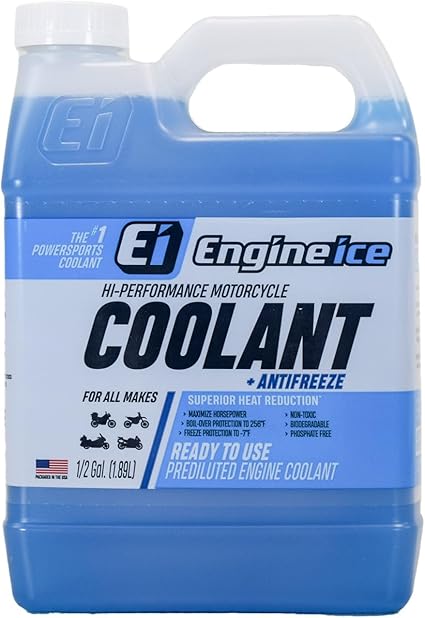
Engine Ice TYDS008 High Performance Coolant is designed for powersports vehicles that need reliable cooling under tough conditions. It stands out by cutting engine operating temperatures by up to 20 degrees Fahrenheit while being ready to use right out of the bottle, making it a solid choice for anyone wanting to keep their engine cool without extra fuss.
Setup is simple since it comes premixed with deionized water, so no additional dilution is required. It offers freeze protection down to -7°F and keeps boiling points under 256°F, meaning it handles both cold starts and intense heat during rides.
The phosphate-free formula reduces risks of corrosion and scaling, which can be a concern in high-performance scenarios. Just pour it in and get moving without worry about complicated mixing or additives.
Performance-wise, the coolant effectively keeps temperatures lower, which helps maintain engine efficiency and protects components. Its head dispersion ability contributes to maximizing horsepower. The one-pack size of 64 fluid ounces is convenient for a full fill or top-off.
A noted downside by some is that at -7°F, it’s not suited for extreme cold climates, so it’s better for moderate weather use. The balance of cooling and freeze resistance makes it a dependable everyday high-performance coolant.
The coolant is praised for lowering engine temperatures effectively and being easy to use since it does not require dilution. The most common complaint is that its freeze protection stops at -7°F, which may not suit very cold environments. It performs well on keeping heat down and maintaining engine health in moderate climates.
Enthusiasts running powersports machines in mild to moderate temperatures will appreciate the straightforward setup and solid cooling. Those expecting to face severe freezes might want to look for a coolant with stronger antifreeze capabilities.
Pros
- Reduces operating temps by 10 to 20°F
- Premixed and ready to use
- Phosphate free to prevent corrosion
- Provides freeze protection to -7°F
Cons
- Freeze protection limited to -7°F
- Only available in 64-ounce packs
| Specification | Details |
|---|---|
| Brand Name | Engine Ice |
| Model Number | TYDS008 |
| Size | 1 Pack |
| Unit Count | 64 Fluid Ounces |
| Freeze Protection | -7 Fahrenheit |
| Boil Over Temperature | 256 Fahrenheit or less |
7. VP Racing Fuels 2087 Stay Frosty Coolant

Pre-mixed and ready-to-use, this coolant comes straight from VP Racing designed for those who want a straightforward, effective solution without any fuss. It suits racers or daily drivers needing strong cooling performance and reliable protection for aluminum parts. Its biggest strength is that it applies easily and protects against freezing temperatures down to 0°F.
The bottle is ready to pour, which means no measuring or mixing is required, simplifying coolant changes considerably. Its direct replacement formula works well without adding anything extra, so you just drain the old coolant and fill in this one. Lubrication for water pumps is a bonus that helps keep your system running longer, especially in tough seasonal conditions.
Performance-wise, the blend of heat transfer agents keeps engine temperatures stable even when pushed hard, reducing overheating risks. It’s built with careful attention to protecting sensitive aluminum components, a major plus for many users. On the downside, its freeze protection limit at 0°F might be a bit high for very cold climates, and some may find that this focus means it’s less suitable for extreme winter conditions.
The strongest praise lies in its ready-to-pour design and consistent cooling performance that lowers overheating concerns while protecting aluminum parts. The most common complaint revolves around its freeze protection limit, as it doesn’t cover temperatures much below 0°F, restricting its use in harsher climates.
People looking for an easy coolant swap with dependable cooling and good protection for aluminum systems will find it highly suitable. Those living in extremely cold areas or needing deep freeze resistance may want to consider other options designed for those harsher conditions.
Pros
- Pre-mixed, no measuring needed
- Protects aluminum cooling parts
- Reduces overheating effectively
- Lubricates water pumps
Cons
- Freeze protection only to 0°F
- Not suitable for very cold winter use
| Specification | Details |
|---|---|
| Manufacturer | VP Racing |
| Brand | VP Racing |
| Model | VP Racing Fuels Stay Frosty |
| Item model number | 2088 |
| Manufacturer Part Number | 2088 |
| Freeze Protection | Down to 0°F |
8. VP Racing Fuels 2301 Stay Frosty Coolant

A cooling formula built specifically for high-heat racing engines that cuts temps significantly. It’s ideal for racers who need to push their engines harder without risking overheating or detonation. The water-based nature and no-mix use make it a major time saver in preparation.
This product can be used straight from the container with no mixing needed, making race day hassle-free. Its biodegradable, glycol-free formula eliminates concerns about toxicity or disposal issues.
Using it in a high-compression engine helps keep cylinder heads cooler, and its improved heat transfer reduces engine temperatures notably compared to standard coolants.
Engine temperatures can drop up to 30°F, which allows ignition timing to be safely advanced without worry of detonation. The specialized blend actively improves heat transfer away from critical parts. Most people praise its cooling strength and easy use, though some might find the weight of the product container a bit cumbersome at 17.4 pounds.
The strongest praise centers on the significant engine temperature reduction and the ease of use without mixing or added steps. One consistent complaint comes from the product’s weight, making it less convenient to handle frequently. The performance benefits are clear, especially in high-stress engine environments.
Those engaged in club or competitive racing with high-compression engines will find it suits their needs well, providing a reliable cooling advantage. Those looking for a general-purpose or lightweight coolant for regular street use might prefer a different option.
Pros
- Cuts engine temperature by up to 30°F
- This product comes ready to use with no mixing required.
- 100% water-based and biodegradable
- Improves heat transfer from cylinder heads
Cons
- Heavy container at 17.4 pounds
- Designed mainly for racing engines, not daily use
| Specification | Details |
|---|---|
| Manufacturer | VP Racing Fuels |
| Brand | VP Racing |
| Model | Stay Frosty Race-Ready |
| Item Weight | 17.4 pounds |
| Item Model Number | 2301-4 |
| Manufacturer Part Number | VP2301-4– |
9. VP Racing VPF2306 Stay Frosty Coolant

VP Racing VPF2306 Stay Frosty Coolant is designed for racing enthusiasts looking to keep their engines reliably cool under intense conditions. It suits those running high-performance vehicles where temperature control is critical, standing out for its race-ready formula that manages heat effectively.
Using it involves simply pouring the coolant into the racing vehicle’s cooling system, available in a convenient pail container for larger capacity needs. Staying consistent in performance means no frequent refills or worries about overheating on track days.
Its formulation helps maintain optimal engine temperature during heavy loads.
The coolant does its job well, keeping engines from overheating even in demanding racing scenarios. The pail packaging offers easy storage and handling. Positive feedback centers on its dependable cooling properties, while some note the large container size is less practical for casual use or smaller vehicles.
The product is praised for its ability to maintain stable engine temperatures during intense racing sessions. Commonly mentioned downside is the size of the container, which some find inconvenient for storage or smaller scale applications.
Racers and serious motorsport fans who regularly need heavy-duty coolant will appreciate this product. Those with less frequent racing activity or smaller vehicles might prefer a smaller, more manageable size.
Pros
- Race-ready formula for extreme conditions
- Large pail container suited for repeated use
- Keeps engine temperatures stable
Cons
- Large container may be bulky for some
- Not ideal for casual or infrequent use
| Specification | Details |
|---|---|
| Container Type | Pail |
10. VP Racing Fuels 2301 Stay Frosty Coolant

Engine temperatures can skyrocket quickly during intense racing sessions, so having a coolant that can handle extreme heat without breaking down makes a huge difference. VP Racing Fuels 2301 Stay Frosty Coolant is designed specifically for high-compression, high-heat engines, making it a solid choice for racers looking to keep their engines cooler and safer under pressure.
Setup involves simply pouring the coolant directly from the container since it’s 100% water-based and ready to use, no mixing or extra steps required. It’s biodegradable and contains no glycol, so handling and disposal are easier compared to traditional coolants.
This makes it ideal for fast preparation between races or practice runs without fussing over complex instructions.
The coolant lives up to its promise by reducing engine temps by up to 30°F compared to regular glycol-based options, which can help push ignition timing forward safely and improve combustion. The specialized heat transfer agents perform effectively, and the no-glycol formula reassures club racers concerned about toxicity. Some people note the package size is a bit bulky, which can be awkward to store or pour from.
The strongest point of this coolant is how effectively it lowers engine temperatures and allows advancing ignition timing safely, crucial for racing setups. Some find the large container size less convenient for quick handling or storage, which is the most frequent drawback mentioned.
Racers running high-compression engines in competitive settings will value how this coolant controls heat and improves performance safely. More casual users or those with conventional engines might prefer a coolant with simpler packaging or broader compatibility options.
Pros
- Reduces engine temperatures by up to 30°F
- Comes ready to use straight from the container, with no mixing required.
- Completely water-based and biodegradable
- No glycol, safer for club racing environments
Cons
- Bulky packaging can be difficult to handle
- Only suitable for high-heat racing engines
| Specification | Details |
|---|---|
| Manufacturer | VP Racing Fuels |
| Brand | VP Racing |
| Model | 2301 |
| Item Weight | 18.3 pounds |
| Package Dimensions | 10.91 x 10.43 x 7.72 inches |
| Manufacturer Part Number | 2301 |
11. Maxima Racing Oils Cool-Aide Concentrated Coolant

Maxima Racing Oils Cool-Aide Concentrated Coolant is designed to cut down engine temperatures by improving heat transfer on hot surfaces, making it ideal for racers focused on maintaining optimal temps. Its strongest feature is the ability to reduce heat efficiently without relying on glycol, nitrate, amine, or borax additives.
Setup is straightforward since it mixes easily with water and antifreeze, fitting well into existing cooling systems. It’s made for race use on paved surfaces, so day-to-day, it’s about protecting your engine without adding freeze protection.
Its concentrate form means you control the mix ratio based on your needs, keeping rust and corrosion at bay while handling the cooling demands in high-stress racing conditions.
Cool-Aide excels at heat reduction thanks to better contact with heated engine parts, proving reliable during intense runs. Its biodegradable composition adds an environmental benefit in unused form, but the lack of freeze protection limits use to racing seasons or warmer climates. Common praise highlights its cooling efficiency, while some notice it requires careful mixing and won’t replace traditional antifreeze for colder weather.
Maxima Racing Oils Cool-Aide Concentrated Coolant is praised for its ability to lower engine temperatures effectively by improving heat transfer on hot surfaces. It protects against rust and corrosion and can mix with regular water or antifreeze without issues. A common drawback is that it offers no freeze protection and is meant solely for racing on paved tracks.
Racers running on paved courses looking for reliable temperature control and corrosion protection will find the coolant suitable. Those needing freeze protection or cooler fluid for street cars or off-road use should consider alternative products designed for broader climate conditions.
Pros
- Reduces engine temperatures efficiently
- Protects against rust and corrosion
- Mixes with water and antifreeze easily
- Biodegradable in unused form
Cons
- No freeze protection included
- Designed only for race use on paved surfaces
| Specification | Details |
|---|---|
| Manufacturer Part Number | 84916-2PK |
| Size | 16 oz |
| Unit Count | 32 Fluid Ounces |
| Included Components | 2-Pack Concentrated Coolant |
| Free From | Glycol, Nitrate, Amine, Borax |
| Race Use Approved | On Paved Surfaces |
12. Ice Water Racing Coolant

Racers and performance enthusiasts looking for a coolant that handles extreme engine heat will appreciate this coolant’s ability to protect and perform. Its biggest strength is being glycol-free and environmentally friendly, making it suitable for both road and drag racing events without compromising on engine safety.
Setting up the coolant is straightforward, fitting right into typical racing engine cooling systems without fuss. Its broad spectrum corrosion inhibitors help maintain engine integrity under harsh conditions, letting you push your machine harder without fearing overheating.
Day-to-day, it stays reliable and legally compliant, which is an important detail for track use.
Heat transfer stays efficient after repeated use, supporting higher horsepower outputs without running hot. The corrosion inhibitors work well to keep the internal engine parts safe from degradation.
The strongest praise highlights its ability to prevent overheating even in rigorous conditions. Some mention the 30-day warranty as a limitation in case of issues.
Performance under extreme heat is consistently reliable, with corrosion protection helping the engine last longer. The 30-day warranty leaves little cover beyond initial use, which can be a concern for long-term dependability.
Those needing a racing coolant that meets event regulations and protects against overheating will be satisfied. Users wanting longer warranty support or larger quantities might consider alternate options better suited to extended use.
Pros
- Glycol-free and environmentally friendly
- Legal for road and drag racing events
- Strong corrosion inhibitor package
- Supports maximum heat transfer under stress
Cons
- Limited 30-day warranty period
- Single pack may require frequent repurchase
| Specification | Details |
|---|---|
| Brand Name | JEGS |
| Model Number | 555-72314 |
| Manufacturer Part Number | 72314 |
| Glycol Content | Glycol-Free |
| Included Components | Per Item Description |
| Manufacturer Warranty | 30 Days |
Best Racing Coolants Comparison Table
| Product | Brand | Weight | Size | Warranty |
|---|---|---|---|---|
| Engine Ice Racing Coolant | Engine Ice | 4.47 pounds | 8 x 3 x 6 in | – |
| Red Line Supercool | Red Line | 1.43 pounds | 7 x 4.5 x 10.8 in | – |
| Engine Ice TYDS008C | Engine Ice | – | 1024 Fluid Ounces (4 Pack) | Manufacturer Warranty |
| Engine Ice Off-Road Moto | Engine Ice | 4.53 pounds | 8.94 x 6.18 x 3.03 in | – |
| Engine Ice Off-Road Moto 2 | Engine Ice | 9.15 pounds | 10.75 x 8.35 x 6.14 in | – |
| Engine Ice TYDS008 | Engine Ice | 4.3 pounds | 64 Fluid Ounces | – |
| VP Racing 2087 Coolant | VP Racing | – | – | – |
| VP Racing 2301 Coolant | VP Racing | 17.4 pounds | – | – |
| VP Racing VPF2306 | VP Racing | – | Pail | – |
| VP Racing 2301 Coolant 2 | VP Racing | 18.3 pounds | 10.91 x 10.43 x 7.72 in | – |
| Maxima Cool-Aide | Maxima | – | 32 Fluid Ounces (2 Pack) | – |
| Ice Water Racing | JEGS | – | 1 Item | 30 Days |
- BrandEngine Ice
- Weight4.47 pounds
- Size8 x 3 x 6 in
- Warranty–
- BrandRed Line
- Weight1.43 pounds
- Size7 x 4.5 x 10.8 in
- Warranty–
- BrandEngine Ice
- Weight–
- Size1024 Fluid Ounces (4 Pack)
- WarrantyManufacturer Warranty
- BrandEngine Ice
- Weight4.53 pounds
- Size8.94 x 6.18 x 3.03 in
- Warranty–
- BrandEngine Ice
- Weight9.15 pounds
- Size10.75 x 8.35 x 6.14 in
- Warranty–
- BrandEngine Ice
- Weight4.3 pounds
- Size64 Fluid Ounces
- Warranty–
- BrandVP Racing
- Weight–
- Size–
- Warranty–
- BrandVP Racing
- Weight17.4 pounds
- Size–
- Warranty–
- BrandVP Racing
- Weight–
- SizePail
- Warranty–
- BrandVP Racing
- Weight18.3 pounds
- Size10.91 x 10.43 x 7.72 in
- Warranty–
- BrandMaxima
- Weight–
- Size32 Fluid Ounces (2 Pack)
- Warranty–
- BrandJEGS
- Weight–
- Size1 Item
- Warranty30 Days
How to Choose the Right Racing Coolant
Choosing the right racing coolant depends on factors like heat resistance, corrosion protection, and compatibility with your engine materials. Getting these right prevents overheating and engine damage, ultimately saving money on repairs and reducing downtime during races or maintenance.
Thermal Performance
Engines in racing settings often reach temperatures well beyond those of standard vehicles, pushing a cooling fluid’s ability to prevent overheating and freezing. Components inside the engine can warp or fail quickly if the fluid does not resist boiling above 265°F (about 130°C) or freezing below -40°F (-40°C). Good thermal performance means the fluid stays stable and keeps heat moving away efficiently, maintaining an engine around 190-220°F (88-104°C).
Using a coolant with poor thermal resistance leads to frequent overheating, breakdowns, or ice formation in cold climates, which cause costly repairs. A reliable formula often contains a balance of ethylene glycol or propylene glycol and additives that keep the boiling point high and the freezing point low. Strong heat dissipation keeps the engine running smoothly during laps without sudden temperature spikes.
Chemical Composition
Corrosion inside an engine’s cooling system can cause leaks and damage to aluminum heads, iron blocks, and various metal fittings. Racing fluids need corrosion inhibitors that protect these metals while withstanding high temperatures and harsh conditions. The chemical makeup includes specific additives to prevent rust, scale, and cavitation while maintaining stability over time.
Without proper chemical stability, the protective additives break down quickly, leading to pitting and degradation of engine components. A durable blend shows no phase separation and keeps its inhibitors active through long races, which is crucial for keeping engine parts intact and extending the life of the cooling system.
Compatibility
Cooling fluids must work with a variety of engine designs, from V8s to turbocharged inline-fours, and also be compatible with materials like aluminum, steel, and plastic hoses. Some fluids mix poorly with others or with plain water, which causes cloudiness or sludge buildup that clogs cooling passages.
Clear guidelines on mixing ratios and compatibility prevent these issues.
Many race teams must also follow manufacturer or regulatory mandates on fluid types or specifications. Using a product that fits these requirements reduces the chance of disqualification or warranty problems. Always check labels or technical sheets for compatibility notes before topping off a cooling system or switching brands.
Durability and Maintenance Interval
In the heat of racing, the effectiveness of coolant decreases as additives deplete and contamination builds up. Some formulas allow for 2-3 racing seasons or 25,000 miles before needing replacement, depending on conditions.
Monitoring involves checking pH, color, and concentration, with test strips or refractometers simplifying the process.
Degraded fluids lose their ability to protect against corrosion and temperature extremes, risking engine failure. Choosing a fluid resistant to thermal and chemical breakdown reduces maintenance frequency. Easily accessible test kits or transparency in fluid color help users know when to flush and refill.
Safety and Environmental Impact
Toxicity matters since fluids can spill, leak, or be drained; many contain ethylene glycol, which is poisonous if ingested. Fluids with lower toxicity like propylene glycol provide safer handling. Clear labeling ensures users wear gloves and dispose responsibly to avoid environmental or health issues.
More race teams now favor biodegradable formulas to reduce environmental impact, especially when working in pit areas. Proper instructions for use and disposal prevent contamination of soil and water.
Checking for compliance with environmental standards is vital for anyone frequently handling these products.
Proper Maintenance Practices for Racing Coolants
Racing coolants require consistent maintenance to maintain their effectiveness and protect the engine. Regularly checking coolant levels and topping off with the correct mixture helps prevent overheating and ensures optimal heat transfer.
Using distilled water instead of tap water in the coolant mix reduces mineral deposits and corrosion inside the cooling system. Flushing the coolant system periodically removes buildup and contaminants that degrade performance. Monitoring the coolant’s pH and anti-freeze concentration can help spot issues before they cause damage.
It is important to inspect hoses and clamps weekly, as leaks or cracks can compromise coolant flow. Maintaining clean radiator fins by removing debris improves airflow and cooling efficiency. Proper disposal of old coolant is crucial to avoid environmental hazards.
Following the manufacturer’s recommended service intervals for coolant replacement maintains system integrity and boosts reliability during intense racing conditions.
Common Mistakes to Avoid When Using Racing Coolant
One common mistake is neglecting to use the right coolant formulation for the specific racing engine, which can lead to corrosion or inefficient heat dissipation. Mixing different coolant types often causes chemical reactions that degrade performance and can cause gelling or sludge. Overfilling the coolant reservoir affects pressure regulation and might cause leaks.
Using untreated tap water instead of distilled or deionized water increases the likelihood of scale buildup, reducing heat transfer efficiency. Failing to check coolant concentration regularly can result in freezing or boiling issues under extreme temperatures.
Skipping routine system flushes allows contaminants to accumulate, increasing the risk of overheating. Avoid opening the radiator cap when the engine is hot to prevent injury and damage. Finally, ignoring signs of leaks or low coolant levels can quickly cause engine failures on the track.
Comparing Organic and Inorganic Racing Coolants for Performance Gains
Organic racing coolants rely on advanced additives like carboxylates to protect against corrosion for longer periods without needing frequent replacement. These coolants tend to be less toxic and more environmentally friendly while offering consistent heat transfer properties. Inorganic coolants use phosphate or silicate-based additives that provide fast initial protection but require more frequent changes due to additive depletion.
They may work well in older or less demanding engines but can cause sediment buildup in racing environments. Comparing the two, organic coolants generally maintain a stable pH longer, making them better suited for high-performance conditions.
However, inorganic coolants can sometimes be preferred where cost or traditional compatibility is prioritized. Selecting the right coolant involves balancing maintenance intervals, engine material compatibility, and performance consistency to match the specific racing setup.
People Also Asked
How Long Does Racing Coolant Typically Last Before Needing Replacement?
Racing coolant usually needs replacing every 2 to 3 years or about 30,000 miles, but it depends on the type and usage conditions. Check your coolant’s color and clarity regularly since it tends to darken or get cloudy when it’s time to change it.
Is Racing Coolant Compatible with All Types of Engine Materials?
Racing coolant is generally designed to work with a variety of engine materials like aluminum and steel, but some formulas may not suit exotic alloys. Always read product specs and your vehicle’s manual to avoid unexpected reactions.
What Safety Precautions Should I Take When Handling Racing Coolant?
Avoid direct skin contact and inhaling fumes when handling racing coolant as it contains chemicals that can be harmful. Use gloves and eye protection, and work in a well-ventilated area to reduce exposure risk.
How Do I Properly Use Racing Coolant in My Car’s System?
Fill the cooling system only when the engine is cool to prevent burns and air pockets. Make sure to bleed the system properly to remove trapped air, which can lead to overheating or inefficient cooling.
Can Racing Coolant Cause Corrosion or Other Common Engine Problems?
Racing coolant can cause corrosion if mixed with incompatible coolants or if the protective additives deplete over time. Stay on top of regular coolant changes and never mix brands or different types without checking compatibility.
Conclusion
Choosing the best racing coolant comes down to how well it protects your engine from heat, its compatibility with your vehicle’s materials, and how easy it is to use or maintain. Also consider how long the coolant lasts before needing a change, since regular maintenance impacts performance.
These factors help ensure your engine keeps running smoothly during tough racing conditions.
Think about how often you race and the space you have to store coolant. A larger container suits frequent use, while smaller sizes fit limited storage.
Staying within your budget without compromising key features also matters. Take another look at the comparison table and product details above to find the right balance for your needs.