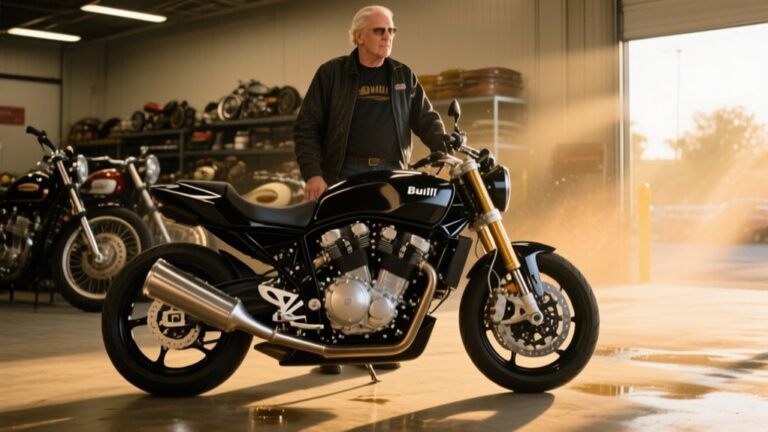
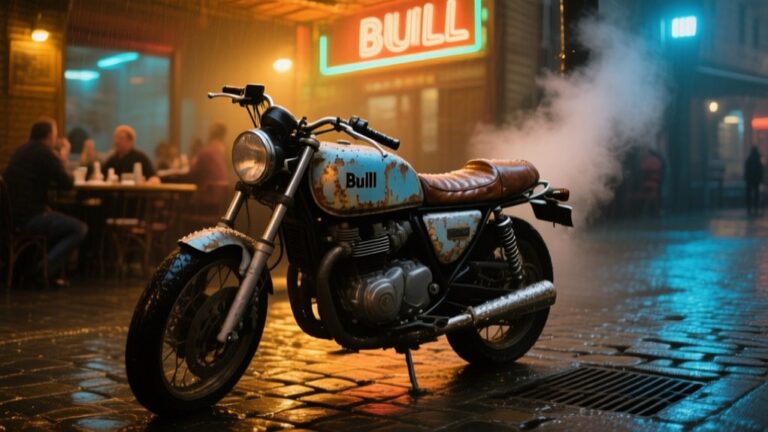
Are Buell Motorcycles Good – Straight Answer
You get a uniquely engineered Buell with a torque-rich American V-twin and nimble, agile handling that’s fun on backroads. Expect some quirks like heat buildup, cramped fit if you’re taller than 5’10”, and occasional electrical or maintenance challenges.
Parts can be spotty but affordable if you’re hands-on, and the community is loyal. If you want low-end power and character over high-revving speed, a Buell can be rewarding.
There’s more to know about ownership and performance details ahead.
What Makes Buell Motorcycles Unique in Design and Engineering

When you look at Buell motorcycles, you’ll immediately notice their unique approach to design and engineering, which sets them apart from other brands. The XB series exemplifies this with its innovative packaging: fuel stored in the frame and oil in the swingarm. This centralizes mass and lowers the center of gravity, enhancing handling and stability.
The XB models use large-displacement, torque-rich Harley-derived V-Twin engines, focusing on strong low-end torque rather than high-rev horsepower. Buell motorcycles feature a short 52-inch wheelbase combined with aggressive geometry, promoting nimble, flickable handling and an “on-edge” riding character.
Moreover, the ZTL front brake system reduces unsprung weight without sacrificing braking power. These engineering choices, including hand-built frames and inverted forks, reflect Erik Buell’s commitment to mass centralization and chassis efficiency. It’s what makes Buell motorcycles distinct in their class.
Buell Motorcycle Performance and Rider Impressions
You’ll notice Buell motorcycles deliver strong low-end torque, thanks to their Sportster-derived V-twins. This makes them really easy to handle at street speeds.
That said, they don’t shine as much when you’re pushing for high-rev performance.
Their nimble handling and relaxed ergonomics really come through on backroads. Plus, clever mass-centralizing designs help keep everything balanced and responsive.
On the flip side, the powerband peaks around 7,000 rpm, so you might feel like you’re missing out on that top-end punch some rivals offer.
Low-End Torque Benefits
Because Buell XB engines focus on strong low-end torque, you get immediate and usable power starting around 500 rpm, with peak torque hitting between 2,500 and 4,000 rpm. This torque-rich V-Twin character delivers abundant midrange grunt, making the bike feel quick during your everyday ride despite modest peak horsepower.
You’ll appreciate its tractable throttle response in city traffic, hill passes, and rolling acceleration. The combination of low-end torque and the XB’s light, short-wheelbase design encourages strong off-the-line acceleration and even wheelies if you push it.
While top-end power above 7,000 rpm is limited, Buell’s core strength lies in this low-end torque delivery, offering a practical and engaging riding experience that suits real-world conditions rather than focusing on high-rpm performance.
Handling And Ergonomics
Although Buell XBs feature a short 52-inch wheelbase and aggressive geometry, they deliver exceptional nimbleness and quick handling on twisty roads. This lets you change direction effortlessly and even pop wheelies when pushing hard.
Every aspect of their handling benefits from mass-centralized packaging and a low center of gravity. That gives you planted mid-corner stability despite the compact frame.
Ergonomics lean toward a low seat height and sporty cockpit, making the bike comfortable for shorter riders. But it can feel cramped for taller ones because of the compact legroom.
The suspension feels plush and confidence-inspiring on the street, though its performance depends on proper setup. It often needs revalving to match your weight.
Note that heat from the engine can affect comfort during slow rides or hot weather.
Powerband And Limitations
Handling and ergonomics set the stage for how a Buell feels on the road, but the powerband defines how it performs when you twist the throttle. Buell XB V‑Twins deliver strong low-end torque, making them punchy and responsive around 500–2,500 rpm despite modest peak horsepower.
The engines peak near 7,000 rpm and hit a limiter around 8,000 rpm, so you’ll notice powerband limitations compared to high-revving sportbikes. Throttle response can feel uneven on some demo or used models due to poor adjustment, but a properly tuned throttle and ECM improve midrange liveliness markedly.
While the gearbox may feel notchy initially, it usually smooths out with miles. Overall, the torquey, low-rev nature offers solid real-world fuel economy and a distinctive riding experience.
Common Buell Maintenance and Reliability Issues
Expect to address several common maintenance and reliability issues if you own a Buell motorcycle. Parts availability can be a concern, so it’s wise to stock essential spares.
Electrical failures often involve the stator and voltage regulator. Melted VR connectors and battery problems can occasionally leave riders stranded.
Oil leaks are another frequent issue, typically coming from intake seals, fittings, hoses, or exhaust hardware like loose flange nuts and broken muffler straps.
Mechanical wear also affects high-mileage bikes. Noisy crank and rod bearings and transmission concerns sometimes require rebuilds.
While the hydraulic lifter valve train reduces maintenance, you’ll still need to refresh suspension, rebuild brakes, and replace wheel or steering bearings on older models.
Regular oil changes every 2,500–3,000 miles help mitigate many reliability problems.
How Easy and Affordable Is Buell Maintenance Today?

Buell maintenance is generally pretty affordable, thanks to its Sportster-based design and low-maintenance belt drive. You can find parts easily through Harley-Davidson dealers as well as aftermarket sources.
Some common tasks you’ll run into include things like voltage regulator replacements, fuel pump repairs, and routine oil changes every 2,500 to 3,000 miles.
If you’re comfortable handling basic repairs yourself, you’ll save even more money and benefit from a strong community that’s ready to help. Just keep in mind that some rarer parts might take a bit longer to get your hands on.
Parts Availability Status
Finding parts for your Buell motorcycle can be a mixed experience. Many common parts remain available through roughly 250 Harley-Davidson (HD) dealers and aftermarket suppliers. So routine items like filters, belts, and brakes are generally easy and affordable to source.
However, parts availability for rarer XB components has declined. This has prompted many Buell owners to hoard critical spares such as front engine mounts and specific body pieces.
While routine maintenance costs tend to be lower due to the Sportster-derived architecture, you should budget for occasional replacement of known failure points like stators and fuel pumps. Online Buell and EBR forums offer valuable resources where you can find scarce parts, used components, and aftermarket upgrades when dealer stock runs low.
Common Maintenance Tasks
Routine maintenance on Buell motorcycles generally proves straightforward and cost-effective thanks to their Sportster-derived engines and simplified drivetrain design. You’ll benefit from hydraulic valve lifters that eliminate valve adjustments and a non-adjustable belt final drive, making maintenance easier and cheaper compared to chain-driven DOHC bikes.
Regular oil changes every 2,500–3,000 miles using quality oils like Mobil 1 or Redline 20-50 keep the engine running smoothly. Periodic belt inspection and replacement are essential to avoid unexpected failures.
While electrical issues like stator and regulator failures can occur, planning for spares helps minimize downtime. Suspension, brakes, and bearings might need attention on higher-mileage Buells, but parts and labor remain affordable and supported by Harley-Davidson dealers and aftermarket forums.
Owner DIY Experiences
Tackling maintenance tasks on Buell motorcycles tends to be a manageable and cost-effective experience for DIY enthusiasts. Thanks to their Sportster-derived V-twin design and hydraulic lifters, routine maintenance like oil changes and belt replacements is straightforward and less time-consuming.
Parts remain affordable and mostly available through Harley-Davidson dealers, though some items like engine mounts can be scarce.
Here’s a quick look at what you can expect:
| Maintenance Task | Notes |
|---|---|
| Oil Changes | Every 2,500–3,000 miles, simple process |
| Electrical Repairs | Keep spares for stators, TPS, fuel pumps |
| Parts Availability | Generally affordable, some rare items |
If you’re comfortable with basic tools and diagnostics (ECMdroid/Buelltooth), Buell maintenance stays DIY-friendly and wallet-conscious.
Who Should (And Shouldn’t) Buy a Buell Motorcycle?

If you appreciate a torquey American V-twin with distinctive character and tight handling, a Buell motorcycle could be a great fit.
Clean used models often come at affordable prices between $2,500 and $5,000.
Well-maintained Buell motorcycles can be found affordably, typically ranging from $2,500 to $5,000.
You should buy one if you enjoy a low-end torque-focused ride and can do your own wrenching or tap into a Buell/EBR-savvy community.
Parts often come through Harley dealers, and owners report routine DIY maintenance along with occasional mechanical or electrical quirks.
However, don’t buy one if you’re taller than about 5’10” or need roomy ergonomics.
Buell’s short wheelbase and high pegs feel cramped.
Also, if you want a high-revving superbike or track-focused performance, these bikes won’t satisfy since their engines peak around 7,000 rpm with a soft limiter.
Owner Experiences and Brand Legacy of Buell
Beyond deciding whether a Buell fits your riding style and physical preferences, it helps to understand what ownership really feels like and how the brand has earned its reputation. Buell owners form a tight-knit, active community, sharing parts and advice, which shows strong loyalty despite the brand’s shutdown.
Many riders praise Buell’s unique engineering: fuel-in-frame, oil-in-swingarm, and big-torque V-twin. They call ownership emotionally rewarding and almost “cult” like. If you get a Buell, expect to do DIY maintenance and stockpile spare parts, as dealer and Harley support can be spotty.
Recent-generation XBs, especially from 2008–2009, improved reliability and often sell used for around $3,000 to $5,000. Overall, with routine care, these bikes show good durability, though some recurring service items exist on high-mileage Buell new and older bikes alike.
Criticisms and Limitations of Buell Motorcycles
While Buell motorcycles offer distinctive engineering and a loyal following, they come with several notable drawbacks you should consider. Their V-Twin engines limit top-end power, peaking around 7,000 rpm with a rev limiter near 8,000 rpm. This might disappoint riders seeking high-revving performance or track competitiveness.
Heat management is another persistent issue. Many models direct significant engine and exhaust heat onto the rider, especially in stop-and-go traffic or hot weather, which reduces comfort during commutes.
Early and some mid-production XB models are prone to electrical issues, including failures in the stator, voltage regulator, fuel pump, and sensors. These problems can leave you stranded unexpectedly.
Furthermore, the unique ZTL single rim-mounted front disc brake feels different and may reduce confidence during aggressive braking. Parts availability and dealer support have also become uneven since Buell’s shutdown.
How Buell Motorcycles Hold Their Value in the Used Market
Buell motorcycles often hold their value modestly in the used market, with many XB-era models typically trading between $2,500 and $5,000. When buying a Buell, you’ll find that the large production numbers mean plenty of supply, which keeps prices lower than comparable Japanese or European sportbikes.
However, parts availability remains solid through about 250 Harley-Davidson dealers and active aftermarket communities. This helps maintain reasonable upkeep costs. Enthusiast loyalty has sparked growing interest in certain models, like the 2009 XB, leading to modest price gains for low-mileage, well-kept bikes.
Keep in mind, many used Buells require some TLC such as suspension or brake work, which factors into their value. Overall, the used market offers reasonable prices balanced by accessible parts and community support.
Summary: Is a Buell Motorcycle Right for You?
If you’re looking for a motorcycle that offers distinctive V-twin torque and innovative engineering within an affordable package, a Buell could be a strong contender. Buell’s torque-rich V‑twin engines and nimble handling, especially in the XB series, suit street and backroad riders who value character over outright speed.
You’ll find Buells inexpensive on the used market, with parts still available. But expect some quirks like electrical issues and cramped ergonomics if you’re tall.
| Pros | Cons |
|---|---|
| Torque-rich V‑twin engines | Occasional electrical issues |
| Affordable used prices | Cramped for taller riders |
| Innovative design (fuel in frame) | Heat in slow traffic |
If you can do your own maintenance or find a knowledgeable shop, a Buell rewards your effort with unique style and value.
Frequently Asked Questions
What Years of Buell Motorcycles Are Considered the Most Reliable?
You’ll find the late revival Buell motorcycles from 2008 to 2009 the most reliable, as they fixed earlier fuel and oil-pump issues.
Mid-era models (2003–2007) are generally dependable if you keep up maintenance but watch for electrical quirks.
Early models, especially pre-2002, tend to be hit or miss with more frequent mechanical problems.
Staying proactive with parts and upkeep dramatically boosts reliability across all eras.
Are Buell Motorcycles Street-Legal in All States?
Yes, Buell motorcycles are street-legal in all states when you meet registration requirements and state laws.
About 90% of Buell models comply with U.S. federal emissions standards, but you’ll want to make certain emissions compliance, especially if the bike has aftermarket modifications.
Each state has unique rules for title, registration, and motorcycle endorsements, so check local DMV regulations carefully to keep your Buell legal and safe for road use.
How Difficult Is It to Find Aftermarket Parts for Buell Bikes?
Finding aftermarket parts for Buell bikes can be a mixed experience. You’ll face some parts scarcity, especially for rare or late-model components. This means you might need to rely on niche suppliers like specialty shops and owner forums.
Compatibility issues can pop up, so you’ll want to verify fitment carefully. However, common consumables are generally easy to get. Dedicated communities help ease the hunt for those hard-to-find pieces.
Do Buell Motorcycles Have Factory Warranties?
Think of Buell warranties like a fading sunset. Limited warranties mainly applied when new, especially under Harley-Davidson’s era.
Today, factory coverage is rare on used Buells, and extended plans come from third parties, not the manufacturer.
Transferability options are slim, so you need to confirm any active warranty in writing before buying. Expect exclusions on electrical parts and consumables, making self-maintenance or third-party coverage a smart backup plan.
Can Buell Motorcycles Be Used Effectively for Long-Distance Touring?
You can use Buell motorcycles for long-distance touring, but you’ll need to address long range ergonomics by upgrading the seat and suspension for comfort.
Fuel range is limited due to smaller tanks, so expect more frequent stops or add auxiliary tanks.
Wind protection is minimal on most models, so consider aftermarket fairings or windshields.
With these modifications, Buells deliver good highway stability and decent fuel economy, making them viable for touring if you plan carefully.
Conclusion
If you’re drawn to innovative design and spirited performance, Buell motorcycles offer a unique ride unlike any other. However, they come with quirks in maintenance and reliability that might test your patience.
While they hold decent value and boast a passionate owner base, they’re not for everyone, especially if hassle-free upkeep is your priority. Owning a Buell is like taming a wild stallion: thrilling but demanding.
Weigh your priorities carefully before deciding.