Can You Ride A Motorcycle In The Rain – What Really Happens
You can ride a motorcycle in the rain, but your traction and visibility drop markedly. Wet roads reduce tire grip, increasing stopping distances and the risk of hydroplaning, especially with worn or underinflated tires.
Braking requires smooth, progressive inputs, and cornering should be slower with less lean. Visibility can worsen due to fogged visors and spray, so prepare with anti-fog gear and increased following distance.
Understanding these changes helps you ride safer and more confidently in wet conditions.
How Rain Impacts Motorcycle Traction and Visibility
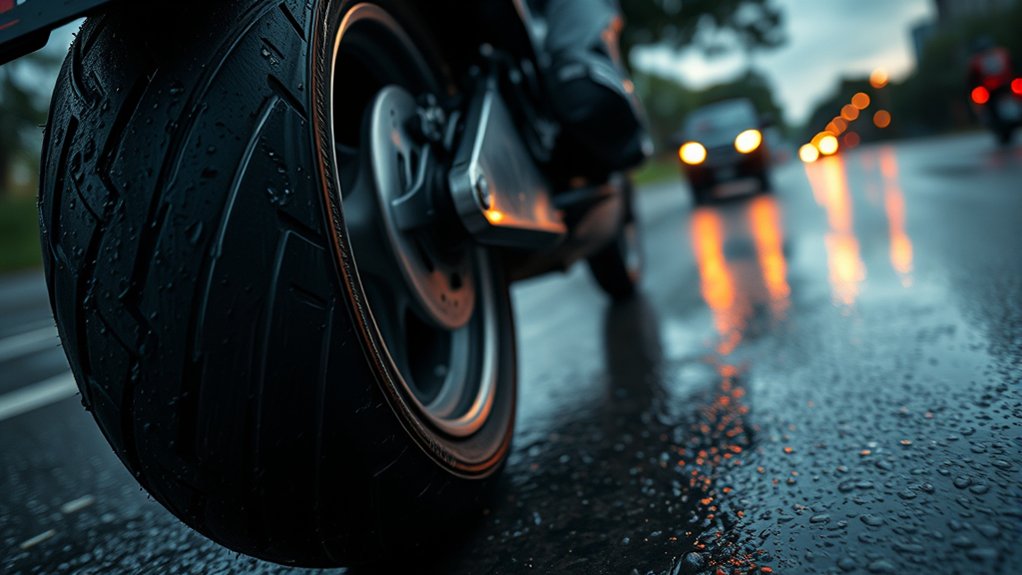
When rain starts falling, your motorcycle’s traction takes a serious hit, forcing you to adjust your riding immediately. Wet roads reduce the friction between your tires and the surface, drastically cutting grip.
Rain drastically reduces traction, demanding immediate adjustments to your motorcycle riding for safety.
During the first 10–30 minutes of rain, a slippery layer of oil and road grime mixes with water, making painted lines and manhole covers especially hazardous.
Standing water poses another risk; even shallow patches can cause hydroplaning, lifting your tires off the road and causing loss of control.
Reduced visibility compounds the danger. Water on your visor and spray from other vehicles impair your ability to spot hazards.
To maintain traction, make sure your tires have proper tread and pressure, and use wet-rated tires when possible.
Stay vigilant and adapt your riding to these challenging conditions.
Adjust Your Motorcycle Braking for Wet Conditions
When you’re braking in wet conditions, it’s a good idea to increase your stopping distance to at least twice what you’d normally use on dry roads. This helps because traction and visibility are reduced.
Make sure to apply your brakes smoothly and progressively. Focus on controlled pressure to the front brake, and use the rear brake gently, especially at low speeds. Doing this helps keep your bike stable and prevents the wheels from locking up, giving you better control when the road is slippery.
Increase Braking Distance
Increasing your braking distance is essential for safely negotiating wet roads on a motorcycle. On a wet road, braking distance can double compared to dry tarmac, so you need to start braking much earlier and maintain at least a 4-second gap to the vehicle ahead.
Your tyres play a critical role here. Cold, underinflated, or worn tyres markedly reduce grip and braking performance by impairing water dispersion and increasing hydroplaning risk. Always keep your tyres properly inflated with good tread depth.
While ABS and other electronic aids help prevent wheel lockup, they don’t eliminate the fundamental loss of grip on wet surfaces. So, even with ABS, brake earlier and more gently to maintain control. Prioritize increasing your braking distance to adapt safely to slippery conditions.
Smooth Brake Application
Frequently, riders underestimate how much they need to adjust their braking technique in wet conditions. In heavy rain, your braking distance can easily double compared to dry roads, so start braking earlier and more gradually.
Apply the front brake progressively. Build lever pressure slowly so you can feel if the front tyre begins to slip, then ease off immediately. Use smooth, small inputs on both brakes to avoid abrupt weight transfer. This helps the rear brake contribute and reduces skid risk.
Practicing gentle brake modulation in a safe area helps you understand reduced grip and when ABS or traction control activates. Remember, smooth brake application is key to maintaining control and minimizing the chance of losing traction in wet conditions.
Front Brake Control
Mastering front brake control in wet conditions demands a careful, gradual approach. In heavy rain, braking distances can roughly double, so start braking earlier and apply the front brake progressively to compensate for reduced grip and visibility.
Focus on building lever pressure slowly. If the front tire begins to break traction, ease off immediately to regain grip rather than locking the wheel. Use small, incremental increases in front lever force to detect breakaway signs like a change in lever feel or judder.
Maintain smooth weight distribution by releasing the throttle and allowing natural forward weight transfer before gently squeezing the front brake. Practice progressive front braking in a traffic-free wet area to understand your bike’s threshold and how ABS intervenes in slippery conditions.
Cornering and Leaning Safely on Wet Roads
When you’re cornering on wet roads, it’s a good idea to reduce your lean angle and keep your bike more upright. This helps you maintain better grip. Try to use smooth throttle and brake inputs. Make sure you finish any major braking before you start leaning into the turn—this helps prevent the front tyre from slipping.
Building confidence takes practice. Start with gentle, controlled maneuvers and always give yourself extra margin for the changing traction out there. It’s all about staying safe and feeling comfortable on those tricky wet surfaces.
Lean Angle Recommendations
Because wet roads reduce traction unpredictably, you should markedly reduce your usual lean angle by 10 to 20 degrees or more when cornering in the rain. This means keeping your bike more upright and following a wider or V-shaped line through corners to carry speed with less lean angle.
Wet surfaces offer less traction, so smooth steering inputs are critical to maintain control. Shift your weight slightly off the bike early to generate the necessary cornering force without aggressive lean. This helps minimize abrupt weight transfers.
Also, make sure your tyres are suitable for wet conditions and properly inflated. Wet-specific rubber and correct pressure can substantially improve grip. By adopting these lean angle recommendations, you’ll ride more safely and confidently when roads are wet and unpredictable.
Throttle and Brake Control
Adjusting your lean angle helps maintain traction, but how you manage throttle and braking plays an equally important role in wet conditions. On slippery surfaces, brake earlier and allow at least double your normal stopping distance. Start applying the front brake smoothly well before corners instead of at usual markers.
Build front-brake pressure progressively to sense any loss of grip, and immediately ease off if the front tyre begins to slide. Use gentle rear-brake inputs at low speeds to stabilize your line but avoid abrupt rear braking while leaned.
Keep your throttle neutral through turns. Hard acceleration while leaned risks breaking traction. Once upright on a straight, roll on the throttle smoothly to regain speed safely. Small, smooth control inputs minimize traction loss and help you navigate wet roads with greater confidence.
Confidence Building Techniques
Regularly practicing controlled rear-wheel slides on a flat, straight, traffic-free surface helps you understand throttle control and traction limits without the complexity of cornering.
When you ride in the rain, cornering safely means minimizing lean and following a V-shaped line. Start wide, then tighten gradually to keep more tyre contact upright. Shift your bodyweight off the seat, hanging off early to reduce lean angle, especially on worn or touring tyres.
Maintain neutral throttle through turns and avoid sudden braking while leaned over. If you must slow, do so before leaning and use gentle rear brake pressure. Always stay alert, maintain a safe following distance, and err on the side of caution by halving your usual cornering speed to adapt to wet weather’s variable grip.
Electronic Aids That Help Riding in the Rain
When you take advantage of electronic aids on modern motorcycles, riding in the rain becomes markedly safer and more manageable. ABS prevents wheel lock-up on slippery surfaces, allowing you to brake firmly without losing control.
Electronic aids like ABS make riding safely in the rain easier by preventing wheel lock-up and loss of control.
Traction control detects rear-wheel slip and modulates engine torque to reduce spin during acceleration, enhancing stability. Activating Rain mode softens throttle response and limits peak torque, helping you maintain traction in wet conditions.
Some bikes also feature cornering ABS and electronic suspension adjustments, which improve grip and control mid-turn. However, these aids work best when your tyre pressures are correct and your tyres have adequate tread.
Neglecting tyre condition or pressures will reduce the effectiveness of these systems, so always check them before riding in the rain.
Visibility Challenges and How to Overcome Them

Although rain greatly reduces your forward visibility and reaction time, you can enhance safety by doubling your following distance and slowing down. This helps make sure you can stop within the shortened sightlines.
Visors fog frequently in cool, humid conditions, so use anti-fog inserts like Pinlock or apply an anti-fog spray. Cracking your motorcycle visor slightly when safe promotes airflow and reduces fog buildup.
Heavy spray from other vehicles and glare from headlights can dazzle you. Wear a clear or lightly tinted visor and high-visibility outerwear, and avoid staring directly into oncoming lights.
Keep your visor clean by regularly wiping it with a microfibre cloth and washing off road grime. Grime causes water to bead and scatter light, which makes visibility worse.
In very poor visibility, consider pulling over safely until conditions improve.
Common Road Hazards Hidden by Rain and Puddles
Watch out for hidden dangers lurking beneath rainwater and puddles, as they can catch you off guard and compromise your control.
When riding your motorcycle in wet road conditions, puddles often conceal hazards that reduce traction and increase risk.
Keep an eye out for:
- Slick surfaces during the first hour of rain because oil mixes with water
- Potholes and debris hidden under puddles that cause sudden jolts
- Painted lines, manhole covers, and metal grids that become dangerously slippery
- Water accumulation in road depressions and inside lanes, especially where trucks have worn grooves
- Slippery leaves and clogged drains leading to localized flooding and masked defects
Choosing the Best Tires for Riding in Wet Weather

Hidden hazards beneath rain-soaked roads demand more than just careful riding. You need the right tires to maintain grip and control. You should choose all-season motorcycle tyres or touring tyres designed with deep tread grooves to enhance wet grip.
Maintaining correct tyre pressures is vital. Underinflated tyres reduce the contact patch and increase the risk of hydroplaning. Look for tyres with circumferential and lateral grooves that efficiently channel water away.
Avoid sticky summer race tyres in wet conditions, as they harden and lose grip when cold and wet.
| Tyre Type | Wet Grip Level | Key Feature |
|---|---|---|
| All-season tyres | High | Deep tread grooves |
| Touring tyres | Moderate to High | Water-dispersing compounds |
| Race tyres | Low | Poor wet temperature grip |
Preparing You and Your Motorcycle for Rain Riding
Preparing yourself and your motorcycle for riding in the rain starts with ensuring clear vision and reliable equipment. To ride safely, focus on these essentials:
Prepare for rainy rides by prioritizing clear vision and dependable gear for safe motorcycle travel.
Use a full-face helmet with an anti-fog insert or treatment to keep your visor clear. Check tyre tread depth and maintain manufacturer-specified pressures for peak water dispersion.
Wear waterproof motorcycle gear, including rain suits, boots, and gloves, to stay dry and maintain dexterity. Verify brakes and lights work properly; test brakes gently after starting to compensate for wet discs.
Choose all-purpose or sports-touring tyres and enable rider aids like ABS and traction control for better grip.
Frequently Asked Questions
Is It Legal to Ride a Motorcycle in Heavy Rain?
Yes, you can legally ride a motorcycle in heavy rain, but you must follow visibility laws and local ordinances carefully.
Your license restrictions usually don’t prohibit riding in rain, but you need to adjust your riding to wet conditions to avoid citations.
Insurance considerations remain important because fault in crashes can depend on duty of care in poor weather.
Always check local rules before riding, as some places or events may restrict riding during severe weather.
Can Rain Damage Motorcycle Electronics or Engine?
Yes, rain can damage your motorcycle’s electronics or engine if waterproof connectors and sealed relays aren’t intact. Condensation buildup inside poorly sealed components may cause ignition corrosion, leading to electrical faults or starting issues.
While modern bikes use weather-resistant parts, you should regularly check seals and wiring to prevent water ingress. If you notice stalling or misfires after wet rides, inspect for moisture and address any compromised seals promptly to protect your motorcycle.
How Does Rain Affect Motorcycle Fuel Efficiency?
You mightn’t expect it, but rain can quietly sabotage your motorcycle’s fuel efficiency.
Wet aerodynamics from soaked gear and bike surfaces increase drag. Reduced tire traction forces you to ride cautiously, which changes how you use the throttle.
Engine tuning struggles with colder, damp conditions, and fuel dilution risks rise as water affects combustion. Together, these factors typically lower your miles per gallon.
Should I Wear Waterproof Gear or Rain Suits?
Yes, you should wear waterproof layers or rain suits to stay dry and maintain safety. Opt for materials with proven durability to withstand prolonged wet conditions.
Prioritize visibility enhancement features like anti-fog visors or reflective elements. A smart ventilation strategy is essential to prevent internal dampness and overheating, ensuring comfort and focus.
Proper gear protects you, improves control, and reduces risks linked to wet riding conditions.
What to Do if My Motorcycle Hydroplanes in Rain?
If your motorcycle hydroplanes in rain, immediately reduce speed by gently closing the throttle. Keep a steady throttle and avoid braking to prevent losing control. Don’t make sudden steering moves; instead, keep the bike upright and relaxed.
Shift your weight slightly rearwards to help tires regain grip. Look for grip by staying out of deep water or ruts, and maintain correct tire pressures and good tread depth to minimize hydroplaning risk.
Conclusion
Riding in rain requires respect, readiness, and restraint. You’ll face slippery surfaces, sudden stops, and slick surprises, so stay steady and slow. Trust electronic aids, tailor your tires, and tackle turns with thoughtful technique.
Visibility varies, so keep your lights bright and your focus sharp. By preparing properly and practicing patience, you’ll protect yourself and perfect your performance. Remember, cautious control conquers the challenges of wet conditions every time.