How To Choose Motorcycle Boots Fmbmotogear – Complete Guide
You need motorcycle boots that meet CE EN 13634 Level 2 certification for top protection with reinforced toes, heels, and rigid shanks to prevent ankle injuries. Focus on a snug fit with secure heel hold, adjustable closures, and materials like full-grain leather or durable synthetics tailored to your riding style.
Weatherproofing and sole grip are essential for comfort and control. Proper maintenance extends boot life and performance.
Keep exploring to master every detail of picking the perfect boots.
Understanding CE Certification for Motorcycle Boots
When you’re choosing motorcycle boots, it’s vital to check for CE certification. This guarantees they meet strict safety standards set by EN 13634 (2017). The certification involves rigorous testing like abrasion resistance, impact protection, penetration, and transverse rigidity.
This ensures thorough defense in crashes. Look specifically for boots with a CE mark and an EN 13634 stamp indicating a Level 2 rating, the highest protection class under this standard. Level 2 ratings, like “2222” or outsole codes such as “22BWR,” confirm superior performance across all sub-tests.
Don’t rely solely on marketing claims. Always verify the manufacturer’s documentation or labeling to confirm compliance. CE-certified boots provide lab-tested assurance, which is essential for highway and long-distance riders facing higher-energy impacts.
Key Protective Features Your Motorcycle Boots Need
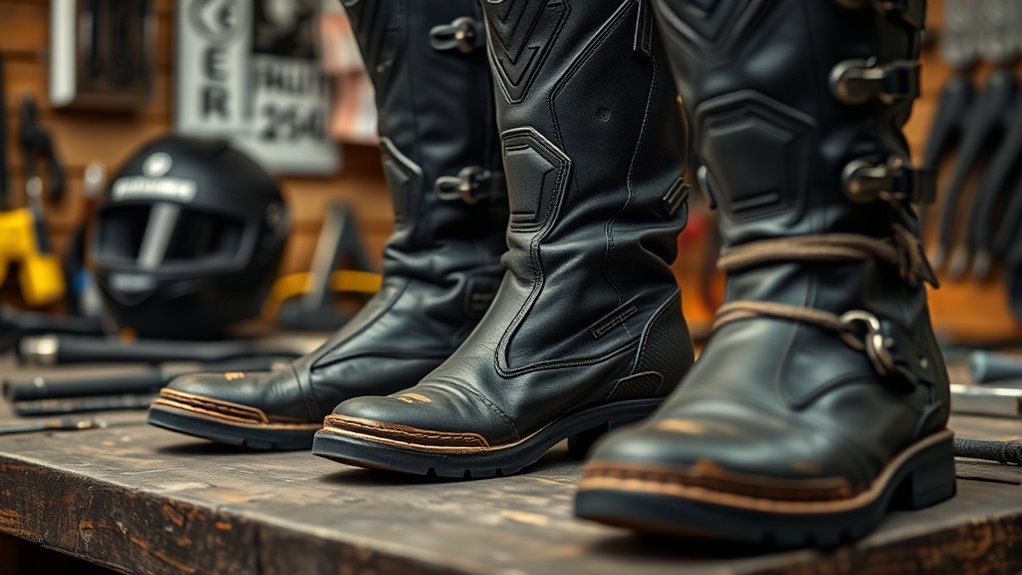
You want boots that have reinforced toe and heel cups, along with a rigid shank. These features help protect your feet from crush injuries and keep your ankles from twisting.
It’s also a good idea to look for boots with ankle armor—whether internal or external—and shin plates. These will shield your vulnerable joints and bones if you hit something.
And don’t forget about the soles. Opt for ones made of oil-resistant, high-grip rubber. They keep you stable on wet surfaces but still let you feel the pedals beneath your feet. It’s all about safety without sacrificing control.
Essential Impact Protection
Prioritize motorcycle boots that offer essential impact protection to safeguard your feet and ankles during a crash. Look for boots with a CE Level 2 certification (EN 13634). This ensures they meet strict standards for abrasion, impact, and torsional resistance.
Key features include:
- Reinforced toe and heel cups combined with a rigid shank to protect against crush injuries and twisting forces.
- Reinforced ankle protection with TPU inserts around the malleolus to shield vulnerable joint points from impact.
- Shin plates or tall boots with hard TPU guards to defend your lower legs during touring or highway rides.
These elements work together to provide thorough impact defense, giving you confidence and safety on every ride.
Ankle And Sole Reinforcements
Beyond impact protection around the shin and ankle, the structural integrity of your motorcycle boots plays a crucial role in preventing injuries. For optimal ankle protection, choose CE Level 2 boots featuring internal or external TPU, thermoplastic, or D3O ankle armour and reinforced heel cups.
A rigid shank or torsion-control plate spanning the midsole is vital to prevent ankle twisting during slides or crush impacts. Reinforced toe boxes made of steel, composite, or thick leather protect against crushing and are standard in quality boots.
Furthermore, oil-resistant soles with slip-resistant tread ensure grip and durability while maintaining pedal feel. Prioritize boots combining these ankle and sole reinforcements to maximize safety, comfort, and performance on every ride.
How to Match Motorcycle Boots to Your Riding Style
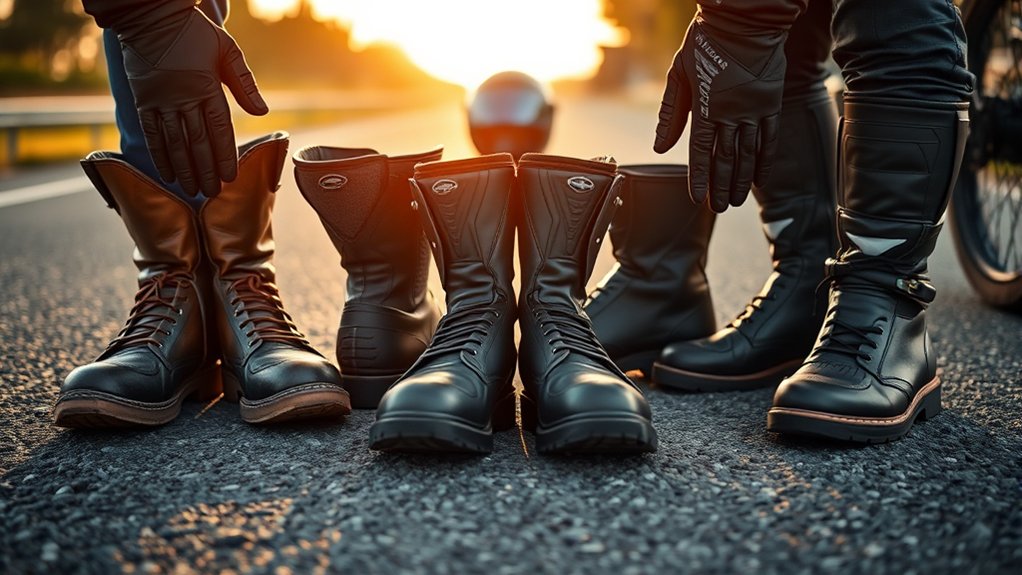
When picking out motorcycle boots, it’s important to focus on your riding style to get the best protection and comfort. For example, if you’re into touring, you’ll want boots that are durable and weatherproof. On the other hand, sport riders usually need boots with rigid support and strong impact resistance.
Finding the right balance between protection and comfort means thinking about the types of hazards you run into most often. Sometimes that means making a few tradeoffs, but it’s all about keeping yourself safe while staying comfortable on the road.
Riding Style Boot Types
When choosing motorcycle boots, matching their height, stiffness, and features to your riding style guarantees both safety and comfort.
Different riding styles demand specific boot types:
- For urban commuting, short or ankle boots offer lightweight protection with excellent ankle support and easy walking comfort.
- Touring boots, usually mid-height with waterproof membranes and cushioned soles, provide long-distance comfort and reliable protection on highways.
- Adventure and off-road boots feature tall shafts, rigid shanks, and reinforced ankle support to protect against impacts and rough terrain. Meanwhile, race boots deliver maximal shin protection with rigid plates and toe sliders, ideal for track use.
Select boots with appropriate certification levels and closure systems to match your riding routine.
This way, your gear complements your style perfectly without compromising safety or functionality.
Protection Versus Comfort
Although protection is paramount in motorcycle boots, comfort plays an equally critical role in ensuring you stay safe and focused on the road. You need boots with a snug fit that locks your heel firmly, minimizing slip without sacrificing comfort after a proper break-in.
Depending on your riding style, prioritize CE Level 2 protection with reinforced toe and heel cups, a rigid shank for pedal control, and sturdy ankle support. For highway touring, boots with a rigid shank and reinforced ankle offer long-ride protection, while sport riders require tall, stiff boots with external TPU ankle braces.
Adventure riders benefit from rigid ankle bracing and shin plates, whereas urban commuters may opt for lighter boots balancing protection and walkability. Striking the right balance between protection and comfort is essential for effective, sustained riding.
Finding the Right Fit for Comfort and Safety
Since comfort and safety hinge on fit, selecting motorcycle boots requires careful attention to how they conform to your feet. Aim for a snug fit with secure heel hold and firm ankle support to prevent sliding and injury.
A snug fit with secure heel and ankle support is essential for motorcycle boot comfort and safety.
Keep in mind a proper break-in period of 100–200 miles to guarantee lasting comfort without compromising protection. Follow these steps:
- Test boots with your riding socks; your heel should lift less than 1 cm during walking or braking.
- If you have wide feet, look for brands offering E/EE widths or choose a half size up with thicker socks.
- Select closures (zips, buckles, or BOA) that allow micro-adjustments around the ankle for a customizable fit without pressure points.
This approach guarantees boots that fit well and protect effectively.
Choosing Closures and Weatherproofing for Comfort and Protection
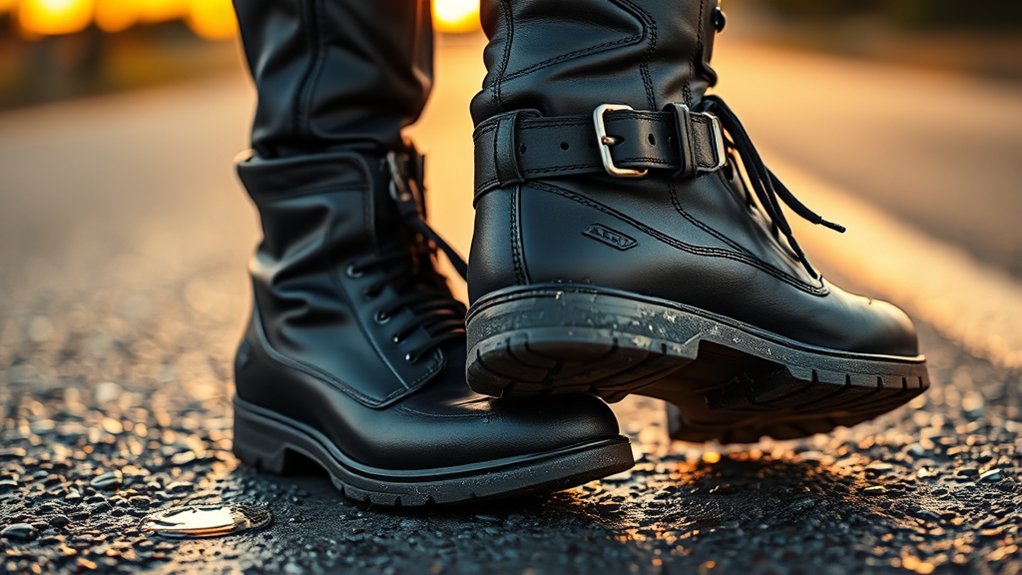
A proper fit lays the foundation, but closures and weatherproofing determine how well your boots perform day to day. Opt for closure systems that secure your heel firmly. Zippers with snap covers or buckles and ratchets offer quick, adjustable fastening without pressure points.
Waterproof membranes like Gore-Tex combined with removable liners keep your feet dry and allow drying between rides. Balance waterproofing with breathability by selecting boots featuring vent panels or breathable liners. This helps prevent overheating and discomfort.
| Feature | Benefit | Key Consideration |
|---|---|---|
| Zippers with Snap | Quick on/off, secure closure | Look for sealed storm flaps |
| Buckles/Ratchets | Repeatable micro-adjustments | Durable, replaceable hardware |
| Waterproof Membranes | Dry feet in wet conditions | Combine with breathable liners |
| Removable Liners | Easy drying and maintenance | Enhances long-term comfort |
Breaking In Your Motorcycle Boots Without Discomfort
Start breaking in your motorcycle boots by taking short rides with a snug fit. This helps the leather and liners mold naturally to your feet without creating any hotspots.
Try to avoid using heat or soaking your boots since those methods can actually make the leather stiff or even damage it. Instead, apply a leather conditioner sparingly on any stiff areas before you wear them.
Wearing your regular riding socks is a good idea, and if you want extra comfort, adding gel insoles can help ease pressure while the boots gradually soften. Just be patient—this process usually takes a few weeks.
Gradual Riding Break-In
Breaking in your motorcycle boots gradually guarantees comfort and prevents painful hot spots. To make sure your boots conform to your ankles and feet properly, follow these essential break-in tips:
- Start with short rides of 20 to 30 minutes wearing your usual riding socks or slightly thicker wool socks. This helps the boots mold correctly and prevents blistering.
- Focus on riding movements like braking, shifting, and footpeg work rather than walking, as boots soften faster under riding stresses.
- Apply a light coat of leather conditioner sparingly on stiff areas overnight to speed softening without damage.
Expect noticeable comfort improvements within 100 to 200 miles, but allow 2 to 4 weeks for a full break-in. Stop if persistent pain or rubbing occurs, as it indicates a poor fit, not normal stiffness.
Avoid Heat Or Water
Although it might be tempting to speed up the break-in process with heat or water, you should avoid these methods because they can damage your motorcycle boots.
Always avoid using heat sources like hair dryers or ovens, as they dry out and crack leather or ruin adhesives.
Do not soak boots; water shrinks leather, strips finishes, and weakens glued soles.
Instead, break boots in gradually by wearing them on short rides or during 20–30 minute indoor sessions over several days.
If your boots get wet, remove insoles, stuff them with newspaper, and air-dry away from heat to maintain shape and durability.
Use leather conditioner sparingly on stiff spots overnight to soften leather gently.
Leather Conditioning Tips
To soften your motorcycle boots without causing damage or discomfort, focus on targeted leather conditioning combined with gradual wear.
When you break in motorcycle boots, apply leather conditioner sparingly to stiff areas like the heel counter and ankle flex zones overnight, then buff off excess before riding.
Avoid heat to prevent drying or cracking.
Follow this practical routine:
- Use thick wool or double thin socks to cushion pressure points during short rides (20–30 minutes), progressively increasing wear over 1–2 weeks.
- Clean your leather motorcycle boots after each ride and reapply conditioner only as needed to maintain suppleness and water resistance.
- Expect noticeable comfort improvement after 100–200 miles, preserving the protective structure without overstretching.
This method guarantees durable, comfortable boots without compromising safety.
Comparing Leather and Synthetic Materials for Durability
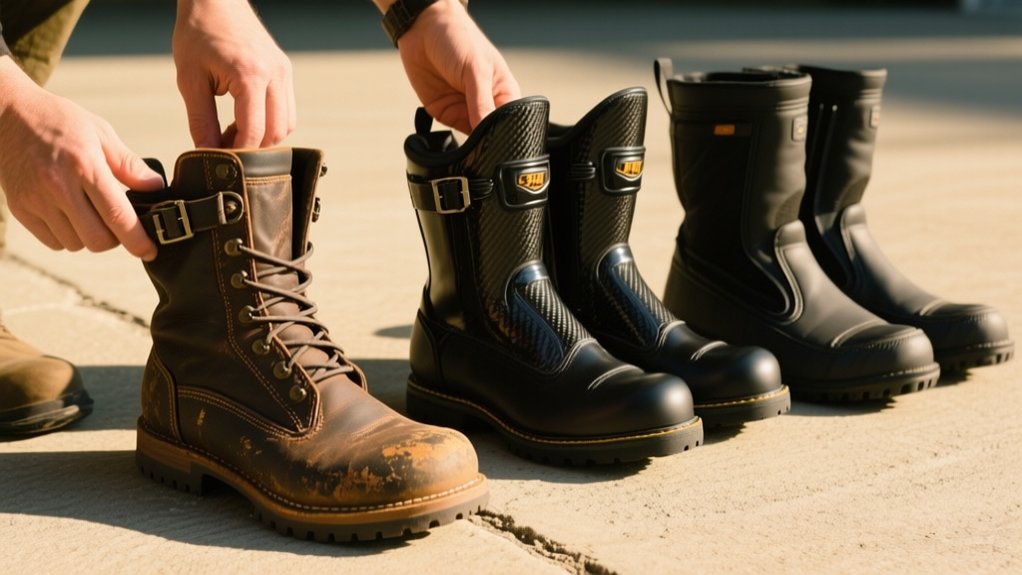
When you choose motorcycle boots, understanding how leather and synthetic materials perform over time is essential for durability. Full-grain leather stands out with superior abrasion resistance and durability, often lasting 5–10 years when you commit to regular conditioning.
Choosing motorcycle boots means knowing that full-grain leather offers unmatched durability and abrasion resistance with proper care.
It molds to your foot, enhancing fit while resisting tears better than many synthetic fabrics. Synthetic materials like microfiber and ballistic textiles offer lighter weight, better breathability, and inherent water resistance, requiring less maintenance.
However, they typically only last 2–3 seasons and can’t be rejuvenated once damaged. While synthetics hold their shape, they sacrifice long-term abrasion and puncture resistance compared to thick full-grain leather.
Ultimately, if durability and abrasion resistance matter most, investing in quality leather boots with proper conditioning secures longer service life.
How Sole Design Affects Grip and Control
Sole design frequently plays a crucial role in how well you maintain grip and control on your motorcycle.
Choosing boots with a stiffer semi-rigid sole and a reinforced shank helps reduce ankle twisting and keeps your foot stable during braking and on pegs. The sole’s material and pattern also matter greatly.
Here’s what to weigh:
- Opt for oil-resistant rubber with a defined tread grip. Vibram-style lugs prevent slips on wet or oily surfaces better than smooth soles.
- Select a lower-profile sole with a slight heel to preserve precise peg feel and shifting accuracy without compromising ankle angle.
- Look for textured toe and shift areas along with reinforced insteps. These features enhance durability and ensure consistent gear lever contact over time.
Balancing sole stiffness and flexibility safeguards safety without sacrificing comfort on long rides.
Balancing Price With Protection and Durability for Motorcycle Boots
Grip and control depend heavily on sole design, but your choice of motorcycle boots should also factor in protection and durability, especially given the wide range of prices. Aim for CE EN 13634 Level 2-certified boots. They offer superior protection with reinforced armor and rigid shanks, which are essential for high-risk riding.
Full-grain leather boots often outlast synthetic ones, providing better durability and value over time. Replaceable soles and toe sliders reduce long-term costs, making higher upfront prices more economical.
| Feature | Consideration |
|---|---|
| Protection | CE EN 13634 Level 2, armor |
| Durability | Leather vs synthetic, lifespan |
| Cost Efficiency | Replaceable soles, repairs |
Choose boots balancing these factors to maximize safety and investment.
How to Maintain and Care for Motorcycle Boots
Keep your motorcycle boots in top condition by wiping them down with a damp cloth after every ride. This helps remove grit and road contaminants that can damage leather and reduce sole traction.
Proper maintenance includes:
- Cleaning and conditioning: Use a quality leather conditioner monthly on stiff areas like the heel counter and ankle to prevent cracking and maintain flexibility. Avoid heat or water to speed break-in.
- Drying: Air-dry wet boots in a well-ventilated room with insoles removed and zippers opened. Never use radiators or hairdryers because they can dry out and crack materials.
- Waterproofing and repairs: Reapply waterproofing sprays or waxes before long trips and after heavy rain. Regularly check and replace worn parts like soles and toe sliders to keep protection and grip.
Consistent care extends your boots’ lifespan and keeps you safe on the road.
Frequently Asked Questions
Can I Wear Motorcycle Boots for Casual Everyday Use?
Yes, you can wear motorcycle boots for casual everyday use if you prioritize style versatility and comfort tradeoffs. Look for boots with sole durability and ankle mobility to handle walking without stiffness.
Water resistance adds practicality for varied weather, while everyday safety features like reinforced toes and CE protection keep you secure. Choose mid-height or short touring models with breathable linings and removable liners to balance protection and comfort throughout your day.
How Do Motorcycle Boots Perform in Extreme Cold Weather?
Motorcycle boots perform well in extreme cold when they offer thermal insulation and waterproof membranes to block moisture and wind. Look for boots with traction soles and flexible materials to maintain grip and comfort despite the cold.
Battery powered heated options enhance warmth on long rides. Windproof layering inside prevents drafts, but make certain boots fit snugly without restricting circulation. Combining these features helps you stay warm, dry, and safe in freezing conditions.
Are Motorcycle Boots Compatible With Motorcycle Gear Like Pants and Gloves?
Yes, motorcycle boots are designed to fit well with your gear. You should make sure pant tucking or overlapping works smoothly with your boots, using zippers or fasteners that secure the pant cuffs over the boot tops. This keeps the protective layering intact and prevents snagging.
For gloves, matching closure styles help keep everything tight and secure. Also, think about thermal compatibility. Pair waterproof boots with waterproof pants and breathable boots with vented gear to stay comfortable and protected.
What Are the Best Brands for Budget Motorcycle Boots?
Choosing budget motorcycle boots is like finding a reliable tool in a cluttered garage. You want quality without overspending. For Alpinestars alternatives, check out TCX bargains and Forma budget models, which offer solid protection and comfort.
Sidi value lines provide durability with replaceable soles, while Oxtar options deliver practical features. Don’t overlook Castle X for affordable, weatherproof designs. These brands balance safety and cost, ensuring you ride confidently without breaking the bank.
Can Motorcycle Boots Improve My Riding Posture or Technique?
Yes, motorcycle boots can markedly improve your riding posture and technique. By enhancing footpeg feedback and maintaining proper ankle alignment, they help you achieve consistent knee positioning and better core engagement.
This stability optimizes weight distribution and allows more precise throttle control. Proper boots reduce unwanted ankle flex and foot slippage, letting you stay balanced and responsive. Ultimately, this improves your control and confidence on every ride.
Conclusion
Choosing the right motorcycle boots is like picking your trusted steed. Both must protect and perform flawlessly. By focusing on CE certification, fit, materials, and sole design, you make certain your boots stand up to every twist and turn.
Don’t forget to match them to your riding style and weather needs. It’s all about balancing durability with comfort. With proper care, your boots will be your steadfast allies on every ride, ready to face the road ahead confidently.