How Fast Does A 250cc Motorcycle Go – Guide
A stock 250cc motorcycle typically tops out between 65 and 90 mph, depending on engine type, gearing, and bike style. Two-stroke models offer quick bursts but narrower powerbands, while four-strokes deliver smoother torque for steady speed.
Gearing tweaks and aerodynamic riding can add several mph, with sportier models reaching 100 mph after upgrades. Rider weight and maintenance also affect performance.
Understanding these factors helps you optimize your bike’s speed and efficiency. Explore the details to enhance your ride’s potential.
What Is the Typical Top Speed of a 250cc Motorcycle?
When you look at typical 250cc motorcycles, you’ll find their top speeds generally fall between 65 and 90 mph (105–145 km/h).
Most stock 250cc street and dirt bikes cluster around 70–80 mph, with modern four-stroke motocross models topping near this range.
Stock 250cc street and dirt bikes typically reach top speeds of 70–80 mph, with modern four-stroke motocross models near that mark.
Speed and performance depend heavily on engine type and gearing.
Motocross bikes favor short gearing for acceleration, which limits top speed, while desert and enduro 250cc bikes use taller gearing to reach higher velocities.
Aerodynamics and rider position also influence top speeds above 50 mph, allowing skilled riders to gain several mph.
With reversible modifications like sprocket changes and ECU tuning, you can boost a 250cc’s top speed by 5–10%, occasionally exceeding 100 mph, though this may affect reliability and rideability.
Typical Speed Ranges for Different 250cc Motorcycle Types
Different types of 250cc motorcycles exhibit distinct speed ranges based on their design and intended use. You’ll notice street/commuter bikes cruise comfortably at 55–70 mph, with top speeds near 75 to 85 mph.
Sport-style 250cc models push higher, reaching 85 to 110 mph. Motocross 250cc bikes focus on acceleration, topping out around 70 to 80 mph. Meanwhile, enduro/trail 250cc motorcycles hit 85 to 95 mph under ideal conditions.
| Motorcycle Type | Typical Speed (mph) | Top Speeds (mph) |
|---|---|---|
| Street/Commuter | 55–70 | 75–85 |
| Sport | 70–100 | 85–110 |
| Motocross/Enduro | 70–90 | 70–95 |
These speed variations reflect gearing, aerodynamics, and engine tuning specific to each 250cc type.
How Engine Type Affects Your 250cc Motorcycle’s Speed
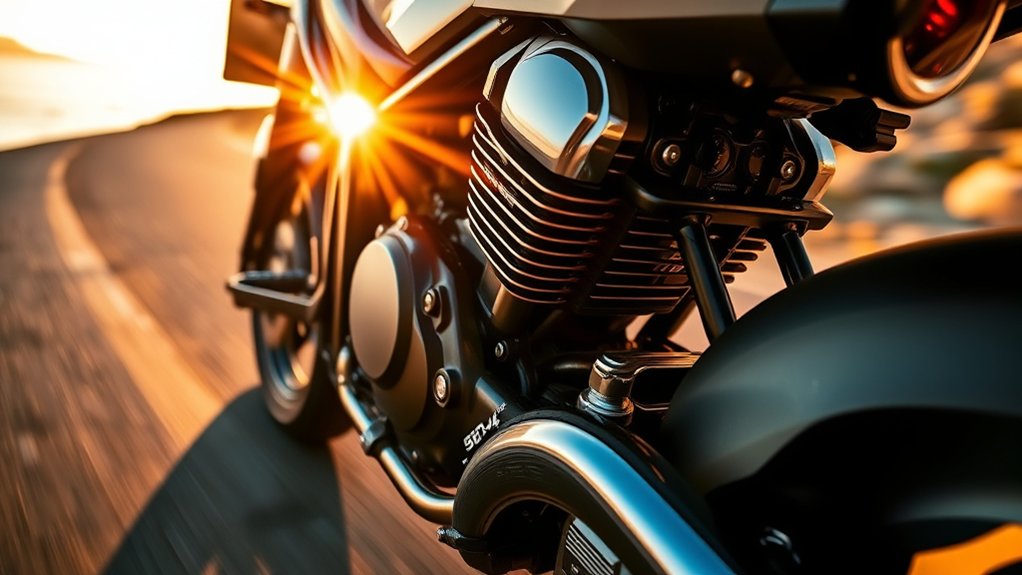
Your 250cc motorcycle’s engine type plays a big role in how it feels on the road. Two-stroke engines deliver power in a peaky, high-RPM range and tend to be lighter, which means quicker acceleration.
On the other hand, four-stroke engines provide a broader torque curve, making them better for steady, high-speed cruising.
Two-Stroke Versus Four-Stroke
Although both two-stroke and four-stroke 250cc engines deliver competitive performance, their distinct designs shape how they produce power and speed. Two-stroke 250cc engines are lighter and generate peaky, high-RPM power, often achieving higher top speeds briefly. In contrast, four-stroke engines provide smoother acceleration with broader torque, emphasizing midrange usability over explosive top-end bursts.
Key differences include:
- Two-strokes weigh about 15 lbs less, improving power-to-weight ratio and potential top speed.
- Four-strokes produce 38–42 hp with a more tractable power delivery.
- Two-strokes may require taller gearing or tuning to sustain highway speeds without overheating.
- Both engines respond to performance upgrades, but two-strokes amplify high-RPM power while four-strokes enhance overall torque range.
Understanding these distinctions helps you select a 250cc engine that fits your speed and riding style demands.
Powerband Characteristics Impact
Because engine powerband characteristics directly influence acceleration and top speed, understanding how two-stroke and four-stroke 250cc engines deliver power is essential. Two-stroke engines feature a narrow, high-RPM powerband with explosive top-end power. This enables short bursts to higher speeds but requires taller gearing to translate peak revs effectively.
Conversely, four-stroke engines produce broader, smoother torque across the rev range. They favor tractable acceleration and sustained speed with shorter gearing. The location and duration of peak power within the powerband affect your bike’s ability to overcome aerodynamic drag, which is critical for reaching typical 70–90 mph top speeds.
Tuning adjustments can shift the powerband by 5–10%, often trading low-end tractability for higher top-end flow. Matching your riding style to the engine’s powerband maximizes speed potential.
Weight And Acceleration Effects
Engine type markedly influences the weight and acceleration characteristics of a 250cc motorcycle, affecting overall speed performance. Two-stroke engines weigh about 10–15 lb less and deliver a narrow, high-RPM powerband. This results in quicker acceleration and higher short-burst top speeds.
Four-strokes, though heavier, provide broader torque and more tractable acceleration. This enhances sustained mid-range speed but slightly lowers peak top speed.
Consider these factors for optimizing weight, power, and acceleration:
- Total mass (bike + rider) markedly impacts acceleration; reducing weight by 25 lb improves 0–60 times.
- Aerodynamic drag dominates above ~50 mph; rider posture and tire type affect acceleration and top speed.
- Engine modifications boosting power by 5–10% enhance acceleration but require gearing adjustments.
- Two-strokes excel in power-to-weight ratio; four-strokes offer smoother torque delivery for varied riding conditions.
How Gearing and Transmission Influence 250cc Motorcycle Speed
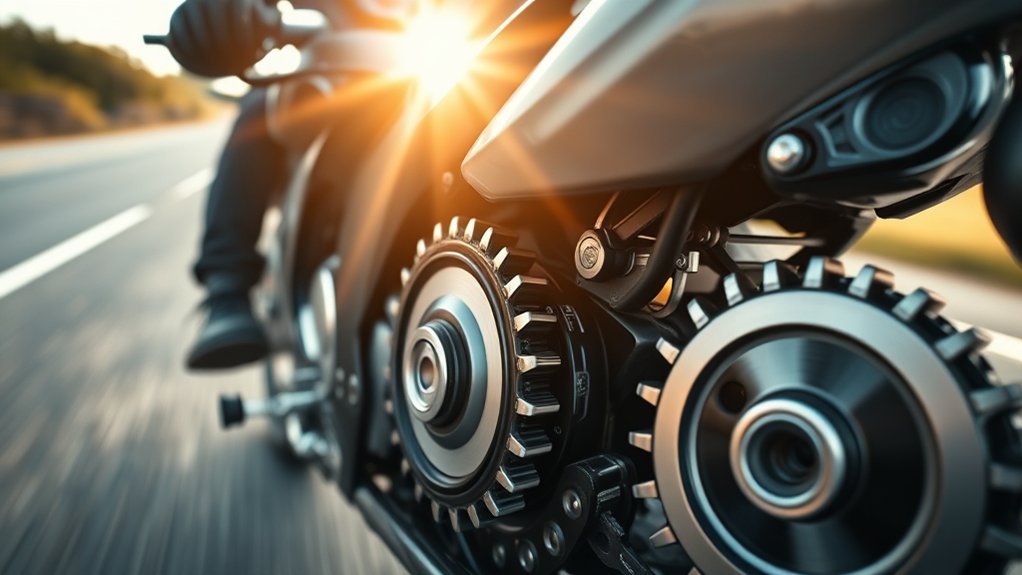
You control your 250cc motorcycle’s speed by adjusting the final drive gearing and picking the right transmission type. For example, smaller rear sprockets or larger front sprockets can boost your top speed, but they’ll also make your acceleration a bit slower.
On the other hand, close-ratio gearboxes are great if you want rapid acceleration, though they might limit how fast you can go.
Gearing Ratios Explained
Although many riders focus on engine power, the gearing ratios in your 250cc motorcycle play a crucial role in determining its top speed and acceleration characteristics. The final drive ratio directly sets wheel speed for a given engine RPM, so adjusting sprocket teeth alters gearing and top speeds.
For example, reducing rear sprocket teeth or increasing front sprocket teeth creates taller gearing, boosting top speed but reducing acceleration. Key points include:
- A single-tooth sprocket change shifts final drive ratio about 7–8%, affecting wheel RPM.
- Taller gearing increases top speed only if your engine produces enough power at higher RPM.
- Engine upgrades require retuning gearing to convert added power into higher top speeds.
- Transmission internal ratios define usable RPM range, impacting effective gearing and speed.
Understanding these factors helps optimize your 250cc bike’s performance precisely.
Transmission Types Impact
When selecting a 250cc motorcycle, the type of transmission plays a pivotal role in shaping both acceleration and top speed capabilities. A close-ratio motocross gearbox emphasizes rapid acceleration, typically capping top speed around 70–80 mph due to tighter gear spacing.
In contrast, wide-ratio transmissions found in enduro models enable higher speeds, often exceeding 85–90 mph, by offering taller top gears or overdrive options. Final drive gearing further refines performance; adjusting sprocket sizes by a few teeth can raise top speed but may reduce acceleration.
To maintain ideal engine power delivery, especially with heavier riders or increased rolling resistance, you’ll need to select gearing that keeps the engine within its powerband. After power upgrades, revising transmission type or final drive gearing is essential to convert added horsepower into actual top-speed gains.
How Rider and Bike Weight Affect 250cc Motorcycle Speed
Performance on a 250cc motorcycle hinges markedly on the combined weight of the rider and bike, which directly influences acceleration and achievable top speed. The power-to-weight ratio is critical. A heavier rider reduces it, causing slower acceleration and lower top speeds, especially on inclines.
Consider these factors:
- Adding 25 lbs can noticeably slow acceleration and limit top speed.
- Typical total mass (bike + 180 lb rider) around 410–455 lbs affects gearing and speed.
- Lighter components or less gear improve power-to-weight ratio, aiding quicker acceleration.
- Heavier riders often hit the engine’s rev limiter before top gear, reducing peak velocity.
Optimizing weight helps you exploit your 250cc bike’s performance. It makes it easier to reach its designed speed range efficiently.
How Aerodynamics and Riding Position Impact Your 250cc Bike’s Speed
Mastering your 250cc bike’s speed means understanding how aerodynamics and riding position dramatically affect your performance above 50 mph. Aerodynamic drag dominates resistance at these speeds, with power required scaling cubically.
Your frontal area and drag depend heavily on your riding position. Tucking in by lowering your torso and head can markedly reduce frontal area, cutting drag and boosting top speed by several mph.
Conversely, an upright stance with wide handlebars and knobby tires creates turbulence, reducing speed by 5 to 15 percent. Even minor improvements in drag coefficient through posture changes translate to measurable speed gains on bikes near their aerodynamic limits.
Simple Upgrades to Improve Your 250cc Motorcycle’s Top Speed
Boost your 250cc motorcycle’s top speed by making targeted upgrades that enhance power delivery, reduce drag, and improve mechanical efficiency. To push your bike’s limits and unleash better power and agility, consider these modifications:
Enhance your 250cc bike’s top speed with upgrades that boost power, cut drag, and optimize efficiency.
Upgrade exhaust systems and intake with a high-flow air filter, then remap the ECU or rejet the carburetor. This can increase peak horsepower by 5–10%, which translates to higher top speeds.
Adjust sprockets for a taller final drive by reducing rear sprocket teeth by 1–3 or adding one tooth on the front. This helps increase top-end velocity but may cost you some low-end acceleration.
Minimize aerodynamic drag by streamlining your riding position and trimming bulky plastics or number plates.
Reduce weight with lightweight components and maintain optimal tire pressure, alignment, and chain condition to decrease mechanical drag and maximize top speeds.
How to Stay Safe Riding Your 250cc Motorcycle at High Speeds
Increasing your 250cc motorcycle’s top speed demands careful attention to safety protocols, especially as you approach velocities between 65 and 90 mph.
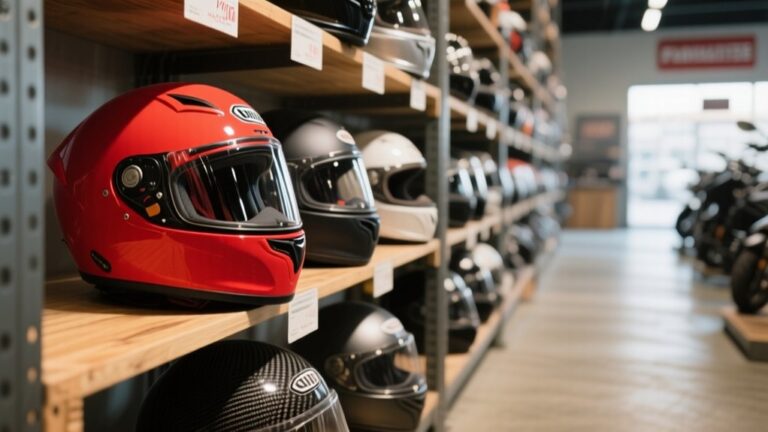
You must wear proper safety gear, including a DOT/SNELL full-face helmet, armored jacket, CE-rated gloves, boots, and knee/elbow guards to protect against high-impact injuries.
Only attempt high-speed runs in controlled environments such as closed courses or private property to minimize risks.
Always pre-ride inspect your bike, checking tire pressure, brake pads, chain tension, lubrication, and fasteners to avoid mechanical failures.
Improve stability by reducing aerodynamic drag. Tuck your torso and wear snug apparel.
When modifying for speed, retune fueling and adjust gearing incrementally, testing under safe conditions. These steps guarantee your safety while pushing your 250cc bike’s limits.
Frequently Asked Questions
What Is the Fuel Efficiency of a 250CC Motorcycle at Top Speed?
At top speed, your 250cc motorcycle’s fuel efficiency typically drops to around 30–45 mpg due to increased aerodynamic drag that demands markedly more power.
Engine mapping optimized for cruising won’t prevent this efficiency loss at high RPMs.
Also, fuel quality plays a vital role; lower-grade fuel can worsen performance and consumption.
To maximize mpg at high speeds, you need precise engine tuning and smooth throttle control, but expect a notable drop compared to moderate cruising.
How Often Should I Service My 250CC Motorcycle for Optimal Performance?
Think of your 250cc motorcycle as a finely tuned instrument. It demands routine checks every 300-500 miles to keep its rhythm smooth.
Seasonal maintenance, including coolant inspection and chain adjustments, should be done annually or as per your manual.
Don’t forget valve adjustments; they’re vital every 6,000-12,000 miles to maintain power and reliability. Stick to these precise intervals, and your bike will perform at its best, delivering consistent, safe rides every time.
Can a 250CC Motorcycle Be Used for Long-Distance Touring?
Yes, you can use a 250cc motorcycle for long-distance touring if you focus on travel comfort and luggage solutions. Upgrade your bike with a windshield and a comfortable seat to reduce fatigue.
Use soft panniers or luggage racks to carry essentials efficiently. Employ pacing strategies by maintaining moderate speeds and planning overtakes carefully to manage power limits, especially on hills or against headwinds.
This approach guarantees a safer, more enjoyable long ride.
What Are the Insurance Costs for a 250CC Motorcycle?
Insurance premiums for a 250cc motorcycle typically range from $300 to $1,000 annually, influenced by your coverage limits and personal factors like age and location.
You’ll find these premiums lower than for larger bikes.
To reduce costs, take advantage of rider discounts through safety training, installing anti-theft devices, or bundling policies.
Choosing liability-only coverage over full coverage also lowers premiums, while insuring a used 250cc usually costs less due to its lower agreed value.
How Does Weather Affect the Performance of a 250CC Motorcycle?
Imagine riding your 250cc like a knight facing dragons. Cold air acts like a power boost by increasing oxygen, which improves combustion.
But watch out: reduced tire grip in wet conditions slashes your control and safe speed.
Humidity can slightly decrease performance by impacting air density and fuel mixture.
Conclusion
You know a 250cc motorcycle offers a balance between manageable power and speed, but how fast it goes depends on factors like engine type, gearing, weight, and aerodynamics. You can tweak these to boost performance, but remember, speed without control is like a river without banks, dangerous and unpredictable.
So, while chasing top speed, always prioritize safety to guarantee every ride is both thrilling and secure.