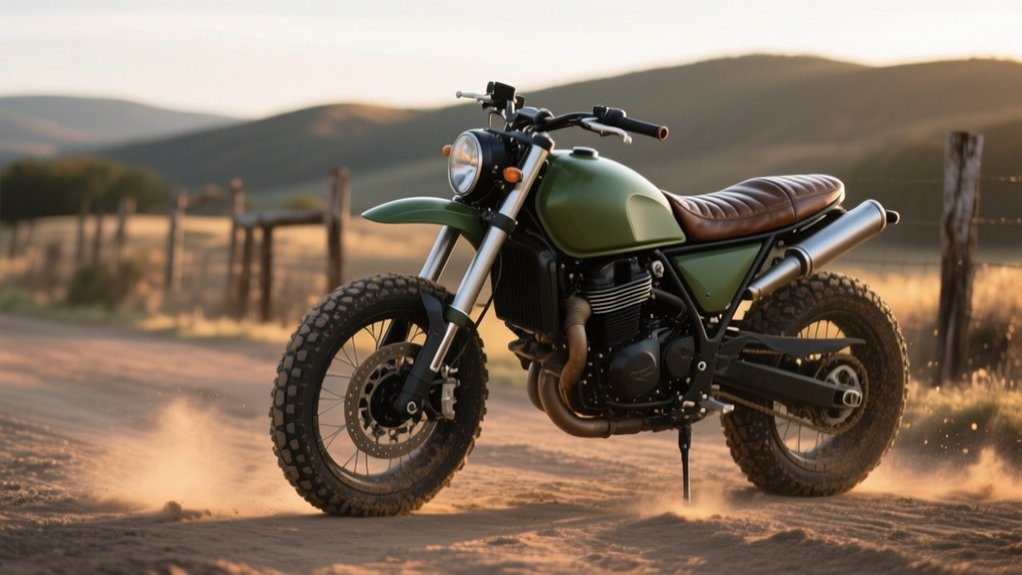
What Is A Scrambler Motorcycle – Here’s the Answer
A scrambler motorcycle blends street-ready comfort with off-road capability, giving you upright ergonomics and torquey engines ideal for stop-and-go traffic and trail riding. You’ll notice distinctive retro features like wire-spoked wheels, upswept exhausts, and long-travel suspension for handling rough terrain.
They offer versatility, combining style and practicality whether in the city or on rugged paths. Curious about which model fits your needs or how they balance classic looks with modern tech? Keep exploring for detailed insights.
What Is a Scrambler Motorcycle?
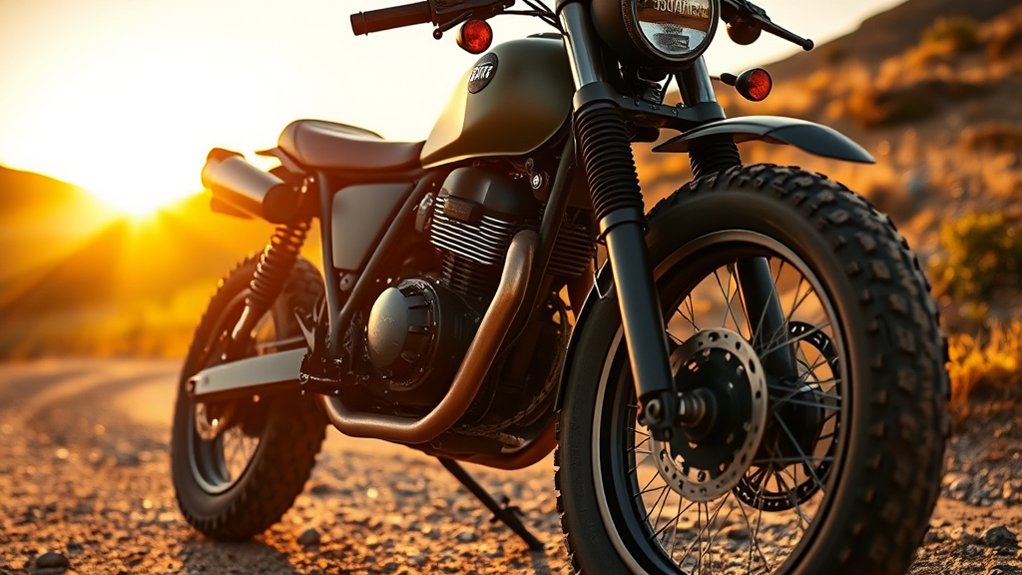
What makes a scrambler motorcycle stand out? You’ll notice the new Scrambler blends street-legal convenience with rugged off-road features. It’s designed with upright ergonomics, long-travel suspension, and distinctive elements like upswept exhausts and wire-spoked wheels.
This combination creates a versatile ride that’s equally at home on pavement or dirt. The scrambler’s torque-rich engines, often parallel-twins or single-cylinders, deliver low-to-midrange power, making it manageable without extreme gearing.
You’ll also find higher ground clearance and dual-purpose tires, enhancing control and comfort across varied terrain. Whether you choose a nimble 400-class for city rides or a powerful 1200-class for rougher trails, the scrambler motorcycle strikes a balance between retro style, simplicity, and multi-surface capability that’s hard to match.
How Do Scramblers Mix Street Style and Off-Road Ability?
By combining smart design choices, scrambler motorcycles let you effortlessly shift between city streets and rugged trails. They blend street-friendly ergonomics like an upright riding position and neutral foot placement with off-road features such as long-travel suspension and higher ground clearance. This way, you’re ready for rough surfaces without sacrificing comfort.
Rugged elements like upswept exhausts and wire-spoked wheels boost durability when tackling dirt or gravel. The engine prioritizes low-end torque, giving you smooth power delivery for both pavement roll-ons and trail throttle control.
Semi-knobby tires and sturdy disc brakes provide the perfect balance, gripping loose terrain while maintaining stability on asphalt. Whether you pick a lighter Scrambler 400 X or a more powerful Scrambler 1200, you get a nimble, versatile ride that blends street style with genuine off-road ability.
Comparing Modern and Vintage Scrambler Motorcycles
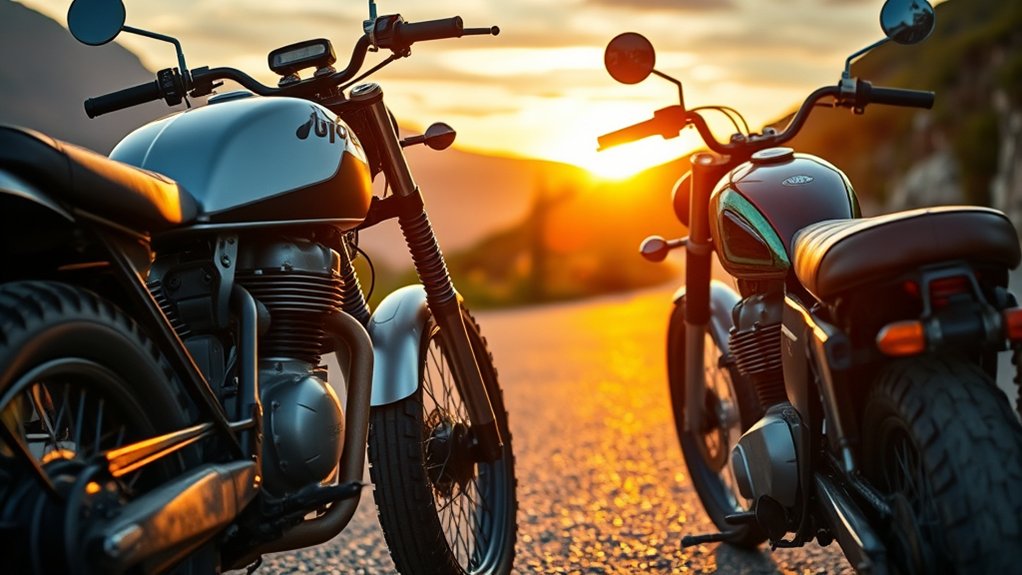
Although both modern and vintage scrambler motorcycles share a rugged, minimalist aesthetic, they differ markedly in design, performance, and technology.
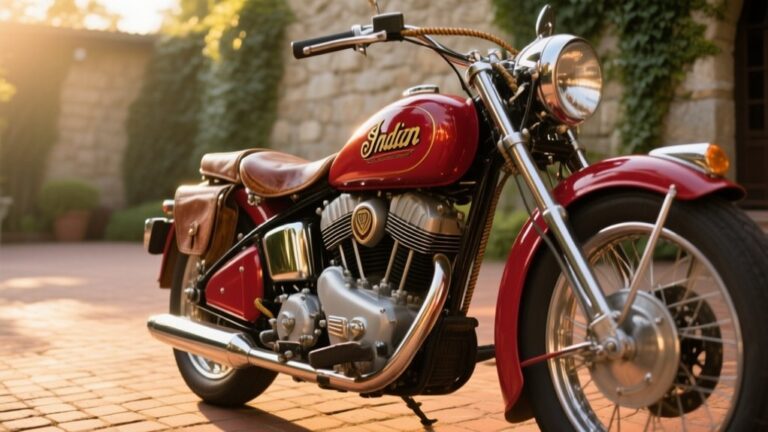
Vintage scramblers focus on heritage aesthetics, like lightweight frames, high pipes, and knobby tires, reflecting their race-derived roots. Their engine tuning aimed for simplicity and flickable handling suited for dirt tracks.
Vintage scramblers embody heritage style with lightweight frames and simple, agile engines built for dirt track agility.
In contrast, modern scramblers blend retro style with advanced off-road gear such as long-travel suspension, wire-spoked wheels, and upswept exhausts. They feature larger-displacement engines, refined chassis, and modern electronics, enhancing both street comfort and mild off-road capability.
Whether you prefer the raw charm of vintage models or the versatility and reliability of modern scramblers, understanding these differences helps you choose the bike that best fits your riding style and terrain demands.
What Features Define a Scrambler Motorcycle?
When you look closely at scrambler motorcycles, you’ll notice they combine practical design elements to tackle both city streets and light off-road trails. They feature a lightweight chassis paired with higher ground clearance and longer-travel suspension, giving you the agility to handle diverse terrain.
Their retro aesthetics stand out with wire-spoked wheels, upswept exhausts, and minimalist bodywork, blending ruggedness with classic style. Engines prioritize torque and low-to-midrange power, perfect for controlled riding on dirt or pavement.
Scramblers also embrace modular accessories, letting you customize for protection or utility without sacrificing simplicity. Chunky, dual-purpose tires enhance traction, while the overall design balances versatility and durability. When you ride one, you get a bike that’s as adaptable as it’s visually striking.
Why Does Riding Position Matter on a Scrambler?
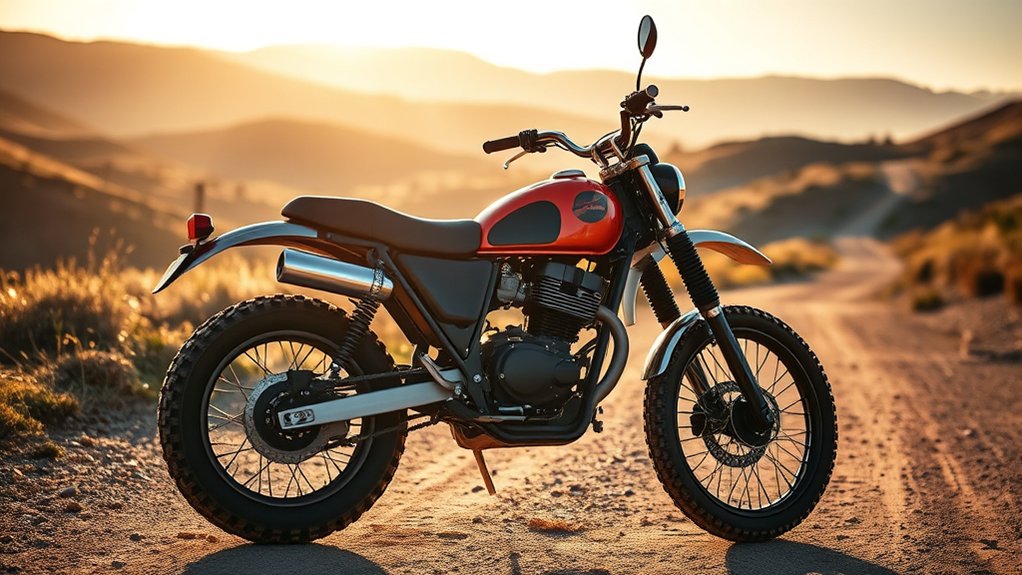
The way you sit on a scrambler shapes every aspect of your ride, from comfort to control. Riding ergonomics are essential because they directly impact how you handle the bike across varied terrains. Here’s why your riding position matters:
- An upright, neutral stance reduces fatigue by keeping your weight centered, unlike sport bikes that force a forward lean.
- Taller, flatter handlebars open your chest, offering visibility improvements critical for traffic and trail awareness.
- Stance shifts become smoother with long-travel suspension and a relaxed posture, letting you stand on pegs to absorb bumps without straining wrists.
- Footpeg placement and seat height affect your confidence and control, especially with different rider heights.
Mastering these factors guarantees you get the most from your scrambler’s versatile design.
Which Scrambler Motorcycle Model Should You Choose?
How do you decide which scrambler motorcycle suits you best? Focus on your riding style and needs. If you want lightweight handling and entry-level affordability for urban commuting, the Triumph Scrambler 400 X fits perfectly.
For more power and rough terrain capability, the Scrambler 1200 is your pick. Always test seat height and ergonomics to guarantee comfort and control.
| Model | Best For | Key Feature |
|---|---|---|
| Triumph Scrambler 400 X | Urban commuting, beginners | Lightweight handling |
| Triumph Scrambler 1200 | Long rides, rough terrain | Powerful engine, suspension |
| Both | Comfort | Ergonomics and seat height |
Choose based on experience and intended use for the best ride.
Should You Buy a New or Used Scrambler?
When you’re deciding between a new or used Scrambler, there are a few things to keep in mind.
New models come packed with the latest tech and usually include a full factory warranty, which can give you some peace of mind.
On the other hand, used bikes can be a great deal—especially if you take the time to check their maintenance history and get a thorough inspection.
It really comes down to what you need for your riding style.
So, think about how you plan to use the bike and try out both options if you can.
That way, you’ll get a feel for which one fits you best in terms of comfort and performance.
New Model Advantages
Choosing between a new or used Scrambler depends on what matters most to you—technology, cost, or customization. Picking a new model means lighter electronics, full warranty coverage, and fresh customization options from day one.
Here’s why buying new might be the better choice:
- Latest suspension and electronics improve reliability and ride quality.
- Full factory warranty keeps you covered from unexpected repairs.
- Updated emissions compliance ensures future-proof legality.
- Lighter models like the Scrambler 400 X offer nimble handling for everyday use.
If you want cutting-edge tech, peace of mind, and the freedom to personalize, a new Scrambler offers advantages that used bikes simply can’t match.
Used Bike Considerations
Although buying a new Scrambler offers the latest features and warranty protection, opting for a used model can make sense if you’re mindful of its maintenance history and condition. When considering a used Scrambler, always review service records and get a pre-purchase inspection to verify wear items like tires, brakes, chain, and suspension seals, especially since scramblers often face rough terrain.
Don’t overlook seat ergonomics. Used bikes may have aftermarket seats or altered foot pegs that affect comfort and riding position, so test-ride to guarantee a good fit. Also, think about the model’s displacement and your intended use. A lighter Scrambler 400 X suits urban riding, while the more powerful 1200 handles long trips and tough surfaces better.
These factors help you make an informed decision between new and used.
Inspection And Maintenance
Picking between a new or used Scrambler means weighing inspection and maintenance factors carefully.
New models offer peace of mind with a full factory warranty and the latest tech, reducing maintenance worries.
Used Scramblers can save you money but demand a thorough pre-ride checklist during inspection.
When considering a used bike, focus on:
- Fork seal leaks and frame damage to avoid costly repairs.
- Chain maintenance and stretch to make certain smooth rides.
- Suspension tuning history to maintain handling quality.
- Service records detailing oil/filter changes and valve checks.
Test riding both options helps confirm seat height and ergonomics suit you.
Factor in ongoing costs like tires and brake pads, plus dealer support for warranty and parts, to make an informed choice.
Why Are Scramblers Popular With Urban Riders and Adventurers?
Scramblers consistently attract urban riders and adventurers because they blend comfort, versatility, and style in one package.
Scramblers unite comfort, versatility, and style, making them ideal for both city streets and adventurous trails.
You’ll appreciate their urban maneuverability thanks to upright ergonomics, nimble handling, and smooth, torquey engines that excel in stop-and-go traffic.
Adventure versatility comes from long-travel suspension and rugged wire-spoked wheels, letting you tackle dirt trails without sacrificing street performance.
Style practicality shines through retro designs, leather seats, classic tires, and understated paint that not only look great in the city but offer durable, simple protection off-road.
Whether you choose a lightweight model for daily commutes or a larger Scrambler for rougher terrain, these bikes deliver a balanced ride.
Plus, modern tech and warranty options guarantee reliability on every journey.
Frequently Asked Questions
How Do Scramblers Perform in Extreme Off-Road Conditions?
You’ll find scramblers struggle in extreme off-road conditions due to limited suspension setup and less aggressive tire selection.
Their longer-travel suspension helps on moderate terrain, but it can’t match dedicated off-road bikes.
You’ll need to adjust your rider technique, focusing on smooth throttle control and careful line choice to avoid losing traction or balance.
Without aftermarket upgrades, scramblers perform best on gravel and light trails, not harsh rock or sand sections.
What Maintenance Is Unique to Scrambler Motorcycles?
Think of your scrambler as a wild stallion that needs special care to keep running free. Unique maintenance includes frequent chain lubrication, especially after dusty rides, to prevent grit buildup.
You’ll also want to inspect fork seals regularly because the long-travel suspension is exposed to dirt and moisture. High clearance means checking for hidden damage under the frame, like loose bolts or debris.
Staying vigilant keeps your scrambler ready for any trail challenge.
Are Scramblers Fuel-Efficient Compared to Other Bikes?
Yes, scramblers can be fuel-efficient, but it depends on factors like engine tuning and weight distribution.
Lighter models with smaller engines usually offer better fuel consumption, especially when tuned well. However, their long-travel suspension and upswept exhaust add weight and drag, slightly lowering efficiency compared to pure road bikes.
Your riding style also plays a big role.
Relaxed rides improve mileage, while aggressive off-road use drops it noticeably.
Can Scramblers Be Customized for Long-Distance Touring?
Yes, you can customize scramblers for long-distance touring by adding adventure luggage to carry essentials securely.
Comfort mods like taller handlebars, cushioned seats, and adjustable footpegs reduce fatigue on extended rides.
Wind protection is essential too. Installing a windshield or fairing helps you stay shielded from wind blast, improving ride quality.
With these upgrades, your scrambler transforms into a versatile, capable touring machine ready for diverse terrains and long hauls.
What Safety Gear Is Recommended Specifically for Scrambler Riders?
Your safety is your first adventure. When riding a scrambler, you should wear DOT approved helmets for maximum head protection, paired with knitted balaclavas for comfort and warmth under the helmet.
Off road boots are essential, offering ankle support and grip on unpredictable terrain. Combine these with CE-rated jackets, pants, and gloves to shield yourself from scrapes and falls while maintaining control on both pavement and dirt.
Conclusion
If you don’t own a scrambler motorcycle, you’re basically missing out on the ultimate ride that effortlessly blends rugged off-road power with sleek street style. These bikes aren’t just machines; they’re your ticket to conquering city streets and dirt trails like a true legend.
Whether you’re all about vintage vibes or modern tech, scramblers redefine freedom on two wheels. Trust me, once you ride one, nothing else will ever feel the same.