
Top 12 Best Recumbent Bike for Physical Therapy Reviewed
Many people find themselves frustrated with recumbent bikes that are tough on joints or awkward to use during physical therapy sessions. A cheap or poorly designed model can lead to discomfort and even worsen mobility problems. The best recumbent bike for physical therapy offers smooth, controlled motion that supports gentle exercise without strain.
Key differences lie in frame stability, seat adjustability, and resistance settings. The frame should be solid steel to hold steady at least 250 pounds, with a wide base for balance.
Seats that slide forward and back with easy-to-use levers help find the right fit for leg length, usually between 15 and 22 inches. Resistance levels need to adjust smoothly from very light to moderate intensity, allowing gradual progression without abrupt jumps.
Need a Quick Check?
| Image | Product | Price |
|---|---|---|
Our Top Picks 1  | Recumbent Bike with Arms | Check Price |
Our Top Picks 2  | Senior Recumbent Bike | Check Price |
Our Top Picks 3  | Niceday Recumbent Bike | Check Price |
Our Selected Top 12 Recumbent Bike for Physical Therapy for Different Needs
This list includes recumbent bikes designed for physical therapy, covering various needs like comfort, adjustability, and resistance levels. Each review explains its performance, ideal users, and highlights both strengths and weaknesses to help you choose the best fit for your therapy routine.
1. Recumbent Exercise Bike with Arm Exerciser
People recovering from injuries or managing joint pain benefit from equipment that offers both upper and lower body exercise with gentle impact. A recumbent bike with coordinated arm and leg motion suits those needing a full-body workout with knee and joint protection. Its biggest strength is the mix of low-impact cardio and muscle engagement in one machine.
Setting up takes about 30 minutes thanks to 80% pre-assembly, and built-in wheels make moving it around easier. Adjusting the sliding seat and handlebars helps match different heights, so you can find a comfortable riding position that reduces strain. Pedal straps keep feet stable, which supports smooth, coordinated motion during each session.
Magnetic resistance provides 16 levels that range from light recovery to more intense cardio, keeping workouts adjustable as fitness improves. The heavy-duty steel frame supports up to 450 pounds, contributing to a stable and sturdy ride. The main complaint is that the elliptical arm movement doesn’t always feel completely smooth, but the bike runs quietly without shaking.
Quiet performance and sturdy construction are highlights, especially at higher resistance levels. The arm exerciser mimics elliptical motion but can lack smoothness, sometimes disrupting rhythm. Easy adjustment and clear feedback from the LCD and app add consistent tracking, promoting steady progress during rehabilitation or fitness maintenance.
Those needing low-impact whole-body exercise with adjustable intensity find this suitable. It works well for daily recovery and general cardio but may not satisfy users wanting perfectly fluid upper body movement or outdoor durability. A simpler recumbent bike suits users focusing only on legs or with easier setup needs.
Pros
- Supports upper and lower body coordination
- Comfortable seating with adjustable backrest
- Quiet magnetic resistance system
- Tracks workout data via app and display
Cons
- Elliptical arm motion can feel uneven
- Designed mainly for indoor use despite ‘outdoor’ tag
| Specification | Details |
|---|---|
| Resistance Levels | 16 Magnetic Levels |
| Weight Capacity | 450 lbs |
| Connectivity | Bluetooth App |
| Display | LCD Monitor with Heart Rate |
| Frame | Heavy-Duty Steel |
| Setup | 80% Pre-Assembled, Transport Wheels |
2. Recumbent Exercise Bike for Seniors
Designed for seniors and adults focused on gentle rehabilitation or regular fitness, this recumbent bike adapts well to different heights and body types. Its quiet magnetic resistance and durable commercial-grade steel frame make it stand out among home exercise bikes intended for physical therapy and everyday wellness.
Setting it up is straightforward since about 85 percent arrives pre-assembled. The seat adjusts easily with a simple lever, helping you find the right fit quickly.
Wheels on the front make moving the bike simple, so you can change its position depending on where you want to use it at home. The padded seat and ergonomic backrest keep workouts comfortable during longer sessions.
Performance comes from 16 resistance levels that cover everything from light rehab to more intense sessions. The magnetic resistance system is quiet, which works well for shared spaces or mornings. The frame supports up to 400 pounds without feeling unstable.
Most praise the smooth ride and sturdy feel, though some find the digital display small and hard to read.
People appreciate the quiet, stable ride and the comfort provided by the ergonomic design. The bike handles a wide range of resistance settings well. The most common issue is the small size of the LCD screen which can make tracking progress difficult without good lighting.
The bike suits anyone needing a reliable and adjustable setup for physical therapy or at-home cardio. Those who want a larger, easier-to-read display or softer seating might prefer looking at models with bigger consoles or upholstery designed for longer comfort periods.
Pros
- Quiet magnetic resistance for low noise workouts
- Supports up to 400 pounds for sturdy use
- Adjustable seat fits different user heights easily
- Front wheels make moving the bike simple
Cons
- LCD screen is small and sometimes hard to see
- Seat padding may feel firm during long sessions
| Specification | Details |
|---|---|
| Brand Name | XVGVSV |
| Model Number | W239 |
| Resistance Levels | 16 |
| Weight Capacity | 400 lbs |
| Seat Adjustment | Lever-based system |
| Frame Material | Commercial-grade steel |
3. Niceday Recumbent Exercise Bike
Niceday RC88 is a recumbent exercise bike aimed at people needing gentle cardio or physical therapy support. It suits those with knee or lower back arthritis, or recovering from surgery, by reducing joint and back pressure. Its key strength lies in adjustable resistance levels allowing controlled, low-impact workouts.
Assembly arrives mostly done, requiring little time and tools included. Seat adjustment has eight positions, accommodating users up to 6’3 with enough legroom.
The mechanical knob lets you change resistance smoothly through 16 levels, perfect for gradual mobility improvement. A quiet 15-pound flywheel means workouts won’t disturb others, and integrated wheels simplify moving and storing the bike at home.
The bike performs steadily with a quiet magnetic resistance system, suitable for physical therapy and light cardio. Its frame holds up to 400 pounds, giving solid stability during use.
Ergonomic seat and backrest provide comfort during longer sessions. A few note the resistance knob can feel a bit stiff and the seat might be firm for some preferences but overall it supports effective rehabilitation routines.
Quiet riding and smooth resistance stand out as key benefits, creating a distraction-free environment. Comfort from the seat and backrest supports longer sessions. The most frequent drawback involves the resistance knob feeling a bit stiff at times, which could disrupt gradual resistance changes during therapy.
Ideal for users needing low-impact exercise options with adjustable intensity, especially those managing joint or back issues. Suitable for taller and heavier users thanks to its sturdy build. People preferring ultra-soft seats or very quick resistance changes might look at alternative models for personal comfort or control preferences.
Pros
- Quiet operation with magnetic resistance
- High weight capacity and stable frame
- Seat adjusts easily with good legroom
- Simple setup with included tools
Cons
- Resistance knob can be stiff to turn
- Seat firmness may not suit everyone
| Specification | Details |
|---|---|
| Resistance Levels | 16-level progressive |
| Flywheel Weight | 15 LBS |
| Weight Capacity | 400 LBS |
| Seat Adjustment Positions | 8 |
| Connectivity | Bluetooth for Kinomap & Z-WIFT app |
| Pre-Assembly | 90% |
4. YOSUDA Recumbent Magnetic Exercise Bike

Comfortable and quiet, the YOSUDA Recumbent Magnetic Exercise Bike suits people recovering from injuries or needing gentle workouts. Its greatest strength lies in adjustable seating and low-impact design, making it ideal for those with knee or back issues looking for safe exercise at home.
Setting it up takes little time thanks to most parts pre-installed and clear instructions with a video guide. The seat adjusts easily by rotating a knob and pulling it out to fit users from 4’9 to 6’2.
During workouts, the silent magnetic resistance allows you to exercise while reading or watching TV without background noise bothering others.
The frame uses light commercial-grade steel that holds up to 350 lbs, offering stability during use. Sixteen resistance levels provide a wide range of difficulty suited to beginners and more experienced riders. A padded seat and backrest keep the hips, back, and spine comfortable throughout sessions.
Some complaints mention the seat adjustment can feel slightly stiff initially but loosens with time.
Users often highlight the bike’s quiet operation during use, which makes it easy to integrate into daily routines without disturbing others. The seat adjustment is praised for its range but occasionally criticized for initial stiffness that may require some effort to work smoothly.
People recovering from injuries or those needing a gentle, joint-friendly workout will find this bike well suited to their needs. Those requiring very fast assembly or expecting advanced digital tracking features might want to consider alternatives with simpler setup or more technology.
Pros
- Quiet magnetic resistance for distraction-free workouts
- Adjustable seat fits a wide height range
- Supports up to 350 lbs with stable frame
- Padded seat and backrest for continuous comfort
Cons
- Seat adjustment can be stiff at first
- Assembly requires following detailed instructions carefully
| Specification | Details |
|---|---|
| Weight Capacity | 350 lbs |
| Seat Adjustable Range | 4’9″ to 6’2″ |
| Resistance Levels | 16 |
| Frame Material | Light commercial-grade steel |
| Model Number | lrc-01 |
| Recommended Use | Indoor |
5. MERACH Recumbent Exercise Bike

Magnetic resistance and customizable seating make the MERACH Recumbent Exercise Bike a solid fit for physical therapy needs. It suits people aiming for gentle, tailored exercise with clear feedback, prioritizing comfort and quiet operation during rehab or recovery sessions.
Setup is straightforward thanks to 80% pre-assembly and included video instructions, making it manageable in under 30 minutes. The seat adjusts across 8 positions to match leg length and comfort, while the breathable mesh backrest and thicker cushion add support for long workouts. The LCD screen shows vital workout stats, and the iPad holder lets you stay entertained or track progress with a dedicated app.
Performance feels smooth with the 6.6lb weighted flywheel and quiet dual-belt drive that keeps noise minimal. The frame supports users up to 330 pounds and stands solid during pedaling. A firm grip is assured by frosted handlebars that resist sweat.
Positive feedback highlights comfort and silent operation, while common complaints mention limited height range might not suit taller users above 5’10”.
Comfort and quiet operation stand out positively in daily use, with the magnetic resistance allowing smooth workouts that avoid loud noise in shared or home spaces. Common frustrations surround the size limits and seat firmness, which may require additional padding or adjustments for taller or very sensitive users.
People within the recommended height and weight range will find the bike reliable for steady, low-impact exercise and physical therapy. Those taller than 5’10” or needing extra seat cushioning might consider alternative models with greater adjustability or softer padding options.
Pros
- Adjustable seat tailored to leg length
- Quiet dual-belt drive system
- Comfortable, breathable mesh backrest
- Integrated app with Bluetooth connectivity
Cons
- Height range limited to about 5’10” max
- Seat may feel firm for some users
| Specification | Details |
|---|---|
| Resistance Levels | 8-Level Magnetic Adjustment |
| Flywheel Weight | 6.6 lbs Perimeter Weighted |
| Weight Capacity | 330 Pounds |
| Seated Leg Length | 28.35 – 35.43 inches |
| Product Weight | 84.9 Pounds |
| Dimensions (LxWxH) | 48.03 x 23.62 x 46.46 inches |
6. Recumbent Exercise Bike for Adults and Seniors

Steel tubing and a reclined ergonomic seating design define this recumbent bike. It suits anyone needing low-impact exercise to protect hips, knees, and back, especially seniors and those in rehab. The biggest strength lies in the adjustable resistance that meets a wide range of fitness and therapy needs.
Setting up takes about 25 minutes with clear instructions and included tools. Day-to-day use benefits from an adjustable seat sliding on a stepless rail to fit leg lengths from 4’9 to 6’3. The built-in transport wheels help when moving it around the house.
A tablet holder supports app workouts, and the LCD monitor keeps track of your progress without distractions.
Pedaling feels smooth thanks to the magnetic resistance and special flywheel, keeping noise under 15dB for quiet sessions. The welded steel frame handles weights up to 400 lbs, giving extra stability. Praise often mentions the comfortable cushion and backrest.
Some users find the mechanical resistance knob less precise compared to digital controls.
Comfortable seat and quiet pedaling stand out in daily use. Users appreciate how gentle it is on joints during rehab or weight loss. The mechanical resistance knob offers simplicity but occasionally feels less smooth or precise than some expect.
Ideal for seniors, office workers, or anyone needing low-impact cardio with reliable durability and simple controls. People wanting digital resistance adjustments or very compact folding designs might want to explore different models.
Pros
- Supports up to 400 lbs safely
- Quiet operation below 15 decibels
- Comfortable ergonomic backrest and seat
- Adjustable seat fits a wide height range
Cons
- Mechanical resistance knob can feel less precise
- Some find assembly instructions need careful attention
| Specification | Details |
|---|---|
| Weight Capacity | 400 lbs |
| Resistance Levels | 16-step mechanical knob |
| User Height Range | 4’9″ to 6’3″ |
| Noise Level | Below 15 dB |
| Frame Material | 2.5mm Reinforced Steel Tubing |
| Assembly Time | About 25 minutes |
7. Elite RB X Recumbent Exercise Bike

Comfort and adjustability stand out immediately with this exercise bike. It’s suited for individuals needing gentle, supported movement for physical therapy or low-impact cardio.
The oversized seat and flexible backrest make long sessions manageable, accommodating a wide range of body sizes and ensuring good posture throughout your workout.
Setting it up requires minimal space thanks to its compact dimensions, and moving it around is straightforward with built-in wheels and a sturdy handle. Adjust the seat forward or backward and tilt it to get the right position.
The mesh backrest helps keep you cool during exercise. You can monitor your heart rate with included sensors or a wireless strap, connecting easily to smartphones via Bluetooth. A tablet shelf lets you use your own screen for guided workouts without any membership fees.
Magnetic resistance offers 16 levels for progressing at your own pace, and programs include timed, heart rate, and wattage goals for personalized sessions. Its frame is solid, backed by a lifetime warranty, reflecting durable construction. The narrow pedal spacing mimics a natural leg motion, which is great for knee or hip rehab.
Some users find the seat adjustment steps a bit fiddly, but comfort remains a strong point overall.
Comfort during longer sessions is praised due to the cushioned, adjustable seat and breathable backrest. Many appreciate the wide range of resistance levels and Bluetooth compatibility, while a common drawback is the occasional stiffness when sliding the seat forward or backward.
People recovering from injury or those seeking low-impact cardiovascular exercise will find this bike supportive and flexible enough for gradual progress. Those wanting a softer backrest or quicker seat adjustment might want to explore other models.
Pros
- Highly adjustable seat fits most users 5’–6’5”
- Bluetooth connectivity with third-party apps
- Narrow Q factor offers ergonomic pedal spacing
- Compact size fits through standard doorways
Cons
- Seat adjustment mechanism can feel stiff at times
- Backrest limited to mesh style only
| Specification | Details |
|---|---|
| Dimensions | 49″ L x 27″ W x 43″ H |
| Weight | 115 lbs. |
| Weight Capacity | 350 lbs. |
| Resistance Levels | 16 magnetic levels |
| Seat Adjustment | Tilt 5 positions, forward/back 25 positions |
| Warranty | Lifetime frame, 7-year parts, 1-year labor |
8. Kawnina Recumbent Exercise Bike with Arm Exerciser

Offers extra stability and comfort for people needing physical therapy or gentle cardio workouts. Designed to handle up to 420 pounds, it suits both seniors and adults looking for a sturdy, supportive recumbent bike with upper body exercise included.
Setup and daily use benefit from a step-through design that makes sitting down and getting up easier, especially helpful during rehab sessions. The sliding seat adjusts smoothly to fit various leg lengths, while the backrest and wide cushion reduce discomfort during longer sessions.
Tracking progress on the backlit display and connecting to fitness apps adds motivation without extra complexity.
Magnetic resistance provides quiet operation and 16 different levels, adjusting easily for light to more intense pedaling. The steel frame feels solid and stable throughout workouts. The arm exerciser adds upper-body movement, making sessions more comprehensive.
Quiet belt-driven system is praised, though some mention the seat adjustment could be smoother and less prone to slipping.
Reports highlight steady and quiet performance as a major plus, allowing use in many settings without disturbance. The seat adjustment system’s occasional slipping stands out as the main drawback, sometimes interrupting smooth position changes. The back support and large cushion make longer sessions manageable and comfortable.
Those needing a secure, supportive bike for rehab or gentle cardio will find this a solid choice. People wanting ultra-smooth seat adjustments or more dynamic upper-body workouts might prefer other options. The sturdy frame and simple controls favor users prioritizing stability and ease over advanced features.
Pros
- Strong 420 lb frame supports heavier users
- Extra-wide cushion and breathable backrest
- Quiet belt-driven system for low noise
- Arm exerciser expands workout to upper body
Cons
- Seat adjustment rail can slip sometimes
- Arm exercising motion may feel limited
| Specification | Details |
|---|---|
| Weight Capacity | 420 lbs |
| Resistance Levels | 16-Level Magnetic Resistance |
| Frame | Reinforced Steel |
| Seat Adjustment | Infinite Sliding Seat Rail |
| Additional Feature | Arm Exerciser |
| Model Number | USNC-CBK2411 |
9. Sunny Health & Fitness Elite Recumbent Cross Trainer
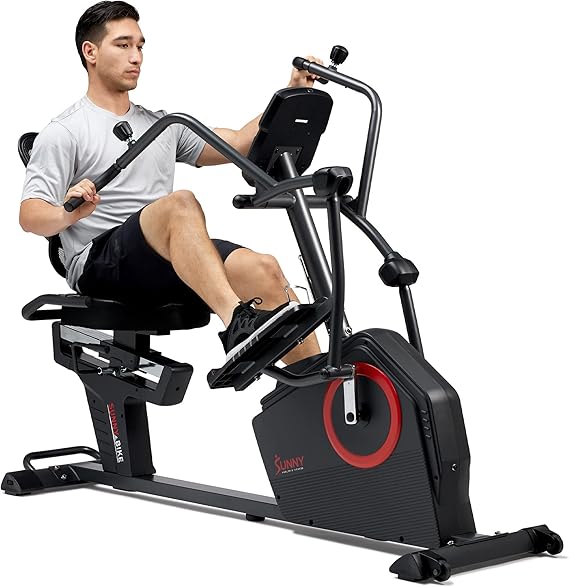
Rehabilitating from joint pain or looking for a cardio option that is gentle on the body means needing a well-built machine that offers low-impact movement. This Sunny Health & Fitness Elite Recumbent Cross Trainer suits those who want controlled workouts with adjustable resistance. Its biggest strength lies in combining full-body elliptical motion with a comfortable, support-focused seat.
Setting up takes standard time for a recumbent machine, with the user manual covering details clearly. The step-through frame makes getting on and off simple and smooth, especially important during recovery sessions.
Seat adjustment is smooth and can be done while seated, preventing interruptions. The included app opens up access to many guided workouts and scenic rides, expanding daily exercise options without extra cost.
Performance centers on its 16 levels of electromagnetic resistance, allowing workout intensity adjustments from gentle to more challenging aerobic sessions. The machine’s frame supports up to 300 lbs, offering a sturdy experience.
Moveable handles provide upper body engagement alongside foot pedals, giving a full-body workout. Praise often highlights comfort from the padded seat and mesh back, while a common complaint involves occasional complexity in mastering all electronic functions.
Comfort stands out with the padded seat and back support making longer sessions manageable. The ability to tailor resistance widely fits both mild physical therapy and more intense exercise ambitions. Complexity of the electronic controls slows some users down as they get accustomed to all features, showing it is not instantly intuitive.
This bike suits anyone aiming for low-impact cardio combined with strength work across different muscle groups. Those needing very simple displays or minimal setup might prefer other options. Its steady build and feature set work well for users wanting app-guided routines and gradual resistance progression typical in therapeutic environments.
Pros
- Easy step-through design for safe entry and exit
- Adjustable seat without needing to stand up
- Full upper and lower body engagement with movable handles
- Free app with extensive trainer-led workouts included
Cons
- Learning curve with electronic display and functions
- Short warranty on parts beyond frame
| Specification | Details |
|---|---|
| Resistance Levels | 16 electromagnetic levels |
| Weight Capacity | 300 lbs |
| Programs | 12 pre-programmed, 4 user programs |
| Seat Type | Padded with contoured mesh back support |
| App Access | SunnyFit App, free with product |
| Warranty | 3-year frame, 180 days parts |
10. VANSWE Recumbent Elliptical Exercise Bike

Supports up to 400 lbs with an 11 lb flywheel, this recumbent elliptical bike suits people needing a low-impact, full-body workout during physical therapy. Its standout feature is the ability to combine arm and leg exercise, providing cardio and strength training simultaneously in a seated, supported position.
Setup arrives about 80% complete with clear instructions and necessary tools, usually ready in an hour. The infinite seat slider adjusts precisely for heights from 5’2 to 6’5, so posture remains correct. Magnetic resistance offers eight quiet levels under 10 dB, allowing use early or late without disturbing others.
Built-in Bluetooth and app support bring fitness tracking and interactive riding to daily routines.
Construction feels solid with a heavy-duty steel frame, holding stability through each pedal or stride. Quiet operation and smooth magnetic resistance provide consistent workouts.
Praise highlights the comfort of the reclined seat and arm exerciser. A common drawback is that some find the elliptical stride less natural than cycling alone, especially during longer sessions.
Comfortable reclined seat and simultaneous arm movement receive strong praise, making workouts less stressful on joints. The quiet operation suits shared living spaces. Users mention the elliptical motion is less intuitive compared to regular recumbent cycling, which might impact session length or consistency for some.
People needing low-impact full-body training, especially during recovery or arthritis management, will find this machine appropriate. Those wanting a straightforward cycling experience or quick setup might look for simpler recumbent bikes. The heavy frame and adjustable seat accommodate many sizes, supporting long-term use in a home setting.
Pros
- Full-body workout with arm and leg exercise
- Fits users 5’2″ to 6’5″ with infinite seat adjustment
- Quiet magnetic resistance for any time use
- Supports heavy riders up to 400 lbs
Cons
- Elliptical stride can feel unnatural to some
- Assembly can take close to an hour for beginners
| Specification | Details |
|---|---|
| Weight Capacity | 400 lbs |
| Flywheel Weight | 11 lbs |
| Seat Adjustment | 29″ to 37″ inseam (infinite slider) |
| Resistance Levels | 8 magnetic |
| Noise Level | Under 10 dB |
| Connectivity | Bluetooth, Kinomap & Zwift compatible |
11. Kawnina Recumbent Exercise Bike with Arm Exerciser

People needing a recumbent bike supportive for physical therapy and low-impact workouts will find strong value here. It suits those who want a full body workout including upper body movement without straining their back.
The biggest strength lies in combining arm and leg exercise on a stable, comfortable setup.
The bike arrives mostly assembled, making initial setup straightforward. Adjusting the extra wide seat and breathable mesh backrest happens easily thanks to a stepless seat rail, fitting different heights without hassle. Day-to-day use benefits from a quiet magnetic drive under 10dB that won’t disturb others nearby.
Connecting via Bluetooth to fitness apps allows tracking progress or more engaging workouts with virtual routes.
The magnetic resistance ranges smoothly across 16 levels, allowing careful control from gentle cardio sessions to more demanding routines. The heavy-duty steel frame holds up to 420 lbs firmly, providing a stable and wobble-free ride. Most praise highlights the comfortable seat and backrest supporting long sessions.
Some complaint centers on limited arm exerciser resistance for users seeking more challenge.
Comfort during long sessions receives consistent mention thanks to the wide cushioned seat and supportive mesh backrest. The quiet operation also stands out in shared living spaces. Some express desire for stronger resistance on the arm exercisers, making it less ideal for those wanting intense upper body workouts.
This bike suits active adults and seniors who need a reliable, low-impact machine with good support for back and joints. Those looking for highly challenging upper body resistance or compact, minimalist designs might find better options elsewhere.
Pros
- Engages both arms and legs simultaneously
- Quiet magnetic resistance under 10dB
- Heavy-duty frame for stable ride
- Adjustable seat fits various heights comfortably
Cons
- Arm exerciser resistance may feel light for advanced users
- Bulkier design may require more floor space
| Specification | Details |
|---|---|
| Model Number | USNC-CBK2412 |
| Weight Capacity | 420 lbs |
| Resistance Levels | 16 magnetic levels |
| Flywheel Weight | 15 lb precision balanced |
| Seat | Extra wide cushion, adjustable stepless rail |
| Backrest | Ergonomic breathable mesh |
12. MERACH Recumbent Exercise Bike with Bluetooth

Quiet magnetic resistance and a built-in Bluetooth app set this recumbent bike apart for physical therapy at home. It suits those needing gentle but adjustable workouts with good seat support.
Its biggest strength lies in the smooth ride combined with useful real-time workout tracking via the FantomFite app.
Assembly takes about half an hour and the bike comes partly pre-assembled, making setup straightforward. The adjustable padded seat and backrest allow tailoring the fit depending on your height and comfort needs, important for back or spine issues. Hydration is easy thanks to the built-in bottle cage.
You can track heart rate through a pulse sensor, helping manage workout intensity precisely.
The bike’s 8-level magnetic resistance works smoothly and quietly, perfect for a rehab environment. The frame feels sturdy, supporting up to 300 lbs with a solid construction.
Praise often goes to the comfortable seat size that fits well during longer sessions. A common complaint highlights needing a specialized cushion for certain back injuries, not included, though one is available separately.
The seat comfort impresses during longer sessions, supporting good posture as needed for therapy. Real-time data via Bluetooth improves motivation and control over workouts. However, those with specific back pain frequently require an additional cushion designed for extra support, which is not included.
People needing a quiet, adjustable bike with monitoring features for rehab will find this one suitable. Those with severe spine issues should consider the extra cushion or look for models with built-in specialized support. Small rooms may feel crowded given its size and footprint.
Pros
- Quiet 8-level magnetic resistance system
- Comfortable adjustable padded seat and backrest
- Bluetooth app tracks stats and adds gaming features
- Easy assembly with partial pre-assembly
Cons
- Specialized cushion for back injuries sold separately
- Footprint may be large for very small spaces
| Specification | Details |
|---|---|
| Model | MR-S08 |
| Dimensions (LxWxH) | 51.97 x 25 x 38.39 inches |
| Weight Capacity | 300 lbs |
| Seat Size | 14.17 x 10.63 x 1.57 inches |
| Extended Seated Leg Length | 29.53 to 37.01 inches |
| Recommended User Height | 5’3″ to 6’2″ |
Best Recumbent Bikes for Physical Therapy Comparison
| Product | Capacity | Resistance Levels | Adjustable Seat | Heart Rate Monitor |
|---|---|---|---|---|
| Recumbent Bike with Arms | 450LBS | 16-Level Magnetic | – | Yes |
| Senior Recumbent Bike | 400LB | 16-Level | Yes | Pulse Sensors |
| Niceday Recumbent Bike | – | Magnetic | Yes | Heart Rate Handle |
| YOSUDA Magnetic Bike | 350LB | 16-level | Yes | Pulse |
| MERACH Recumbent Bike | – | Magnetic | Yes | Heart Rate Handle |
| Adult & Senior Bike | 400LBS | 16-level Adjustable | – | – |
| Elite RB X Bike | – | – | – | – |
| Kawnina Bike with Arms | 420 lbs | 16-Level | Adjustable Rail | – |
| Sunny Elite Cross Trainer | 300LB | 12 Presets | – | – |
| VANSWE Elliptical Bike | 400/450 LBS | Magnetic | – | – |
| Kawnina Arm Exerciser Bike | – | 16-level Magnetic | Adjustable Rail | – |
| MERACH Bluetooth Bike | – | – | – | – |
- Capacity450LBS
- Resistance Levels16-Level Magnetic
- Adjustable Seat–
- Heart Rate MonitorYes
- Capacity400LB
- Resistance Levels16-Level
- Adjustable SeatYes
- Heart Rate MonitorPulse Sensors
- Capacity–
- Resistance LevelsMagnetic
- Adjustable SeatYes
- Heart Rate MonitorHeart Rate Handle
- Capacity350LB
- Resistance Levels16-level
- Adjustable SeatYes
- Heart Rate MonitorPulse
- Capacity–
- Resistance LevelsMagnetic
- Adjustable SeatYes
- Heart Rate MonitorHeart Rate Handle
- Capacity400LBS
- Resistance Levels16-level Adjustable
- Adjustable Seat–
- Heart Rate Monitor–
- Capacity–
- Resistance Levels–
- Adjustable Seat–
- Heart Rate Monitor–
- Capacity420 lbs
- Resistance Levels16-Level
- Adjustable SeatAdjustable Rail
- Heart Rate Monitor–
- Capacity300LB
- Resistance Levels12 Presets
- Adjustable Seat–
- Heart Rate Monitor–
- Capacity400/450 LBS
- Resistance LevelsMagnetic
- Adjustable Seat–
- Heart Rate Monitor–
- Capacity–
- Resistance Levels16-level Magnetic
- Adjustable SeatAdjustable Rail
- Heart Rate Monitor–
- Capacity–
- Resistance Levels–
- Adjustable Seat–
- Heart Rate Monitor–
How to Choose the Right Recumbent Bike
Focus on a bike with adjustable resistance levels and a comfortable, supportive seat to ensure it suits your recovery needs and reduces strain. Choosing a model with easy step-through access helps prevent injury and frustration during use, saving time and money on replacement or additional equipment.
Ergonomics and Seat Comfort
Adjustable seat positioning makes a big difference during extended exercise sessions. A seat that moves easily both forward and backward can fit a wide range of body sizes, from shorter legs to longer limbs.
Without this feature, legs can end up either locking out or cramped, causing discomfort and reducing the effectiveness of the workout. The sliding range should cover at least 8 to 10 inches to comfortably accommodate most users. It’s best when the adjustment mechanism is smooth and secure, so you don’t have to worry about slipping or frequent readjustments mid-session.
Lumbar support plays a crucial role in preventing strain during use, especially for those with back issues. A curved backrest or built-in lumbar cushion maintains the natural spinal curve, avoiding slouching or hunching that leads to pain or fatigue.
The padding quality also counts heavily here. Thick foam or gel cushions help reduce pressure points on the lower back and buttocks, keeping long therapy sessions comfortable. Softer materials drain sweat better and feel less irritating against the skin.
A good quality recumbent bike will balance firm support with enough cushioning to avoid numbness or soreness over time.
Resistance and Power Options
Adjusting resistance smoothly from very light to moderate levels makes a big difference in recovery. Some machines jump too quickly between settings, making it tough to find the right effort for each day’s physical condition. A range of at least 10-20 levels is common and needed to support gradual progression without strain.
Magnetic resistance stands out for quiet operation and minimal upkeep, unlike mechanical systems that can squeak and demand regular adjustments. This quietness matters during long sessions or when used in shared living spaces.
Presets tailored for therapy focus on specific goals like improving joint mobility or endurance instead of general fitness routines. Some models let you build custom programs to repeat the same consistent effort, which is helpful for tracking recovery over weeks. Expect preprogrammed modes aimed at intervals ranging from 5 to 30 minutes, adjustable by intensity.
Good control panels show resistance digitally, so you don’t guess your effort level from a vague dial or knob.
Stability and Safety Features
Stepping onto a bike with a high frame can be challenging and risky, especially during physical therapy sessions. A low step-through frame design makes mounting and dismounting easier and safer. This feature reduces strain and the chance of losing balance while getting on or off.
Bikes with frames under 14 inches from the floor work best for most users. Without it, awkward movements may cause slips or falls, delaying progress and increasing frustration.
Stability depends heavily on the build quality and weight capacity. Bikes supporting at least 300 pounds and featuring a solid steel frame tend to feel rock-solid during pedaling. A wobbly bike not only disrupts smooth movement but can cause insecurity that hinders consistent exercise.
Look for a wide base and non-slip feet to minimize any shaking. Safety straps on pedals and sturdy handles near the seat provide extra support.
These also help if balance falters mid-session, offering a reliable grip or foot hold to prevent falling.
User Interface and Monitoring
The first thing that stands out during a session is the screen’s readability. Small, dim displays can be frustrating, especially for users recovering motor skills or with vision difficulties.
An ideal setup includes a clear, brightly lit display showing speed, elapsed time, distance traveled, and heart rate, all easy to scan at a glance. Screens around 5 to 7 inches ensure the numbers are readable without strain, and buttons should respond quickly without requiring too much pressure.
Controls designed for limited dexterity make a big difference. Simple, large buttons placed within easy reach minimize the effort needed to adjust settings mid-session. Devices syncing with external monitors or apps allow more comprehensive tracking.
This helps therapists and users track rehab progress accurately outside the device, preventing manual data logging errors and making routine checkups smoother.
Noise Level and Maintenance
Running a session in a quiet environment matters more than many expect. Some machines hum loudly or produce creaks during pedaling, which breaks concentration and can disturb others nearby. Models with magnetic resistance tend to be the quietest, often rated under 50 decibels, similar to a quiet conversation.
This level of sound makes it easier to focus on exercises or follow verbal instructions without strain. Machines relying on belt drives generally offer smoother, quieter rides compared to chain-driven ones that may need frequent oiling.
Cleaning surfaces frequently is part of regular use, especially in shared spaces. Sweat and dust buildup can degrade components and create hygiene concerns.
Smooth, non-porous materials like coated steel or molded plastic are easier to wipe down with disinfectant. Removable seat covers or washable padding add convenience. Durability relates closely to maintenance too, simple designs with common replacement parts (like standard pedals and belts) save time and cost later.
Checking availability from the manufacturer before purchase is practical since specialized parts can delay repairs and increase downtime.
Proper Techniques for Using a Recumbent Bike in Physical Therapy
The seat position plays a crucial role in effective physical therapy sessions on a recumbent bike. Adjust the seat so your knees have a slight bend at full pedal extension, generally about 25 to 35 degrees. This reduces strain on the joints and targets the right muscle groups.
Start with a low resistance level and gradually increase it. Staying within a comfortable range helps avoid overexertion while still promoting muscle strength and endurance. Keep your back firmly against the backrest to support the spine and maintain good posture.
- Begin each session with a 5-minute warm-up at a slow pace
- Maintain a steady cadence between 50 and 60 rpm to maximize cardiovascular benefits
- Use smooth pedal strokes, avoiding dragging or stomping
- Take breaks if you notice any discomfort or excessive fatigue
Consistency and attentive adjustments based on comfort levels greatly improve therapy outcomes when using a recumbent bike.
Maintenance and Care Tips to Extend the Life of Your Recumbent Bike
Regularly wiping down your recumbent bike after each session prevents sweat and dust buildup that can cause corrosion or damage to electronic components. Pay close attention to the console and resistance mechanism, as moisture can lead to malfunctions.
Check the moving parts at least once a month:
- Inspect pedals, seat adjustment knobs, and handlebars for any looseness or unusual noise.
- Tighten screws and bolts using the appropriate tools to avoid wobbly movements.
- Lubricate the chain or any exposed mechanical parts according to the manufacturer’s recommendations to maintain smooth operation.
The seat slider track can collect debris over time, making adjustments harder. Cleaning it with a damp cloth and mild detergent helps maintain easy seat movement. Store the bike in a dry area away from direct sunlight to protect plastic components and electronic screens from fading or cracking.
Following these steps consistently can prevent costly repairs and keep your bike functioning as intended during physical therapy routines.
Comparing Recumbent Bikes with Upright Bikes for Rehabilitation Purposes
Recumbent bikes offer a more supportive seating position compared to upright bikes, which is crucial during rehabilitation. The larger seat and backrest reduce strain on the lower back, making long sessions more comfortable and encouraging consistency in therapy.
Pedaling on a recumbent bike also requires less balance effort, which benefits those recovering from injuries affecting coordination or stability.
In contrast, upright bikes mimic traditional cycling posture. This might work well for patients aiming to restore normal cycling movements, but the lack of back support can be challenging for those with lower back pain or limited core strength.
Key rehabilitation differences to consider:
- Seat comfort: Recumbent bikes feature wider seats and backrests, reducing pressure points.
- Joint impact: Both types offer low-impact exercise, but recumbent bikes allow for a more natural leg motion without excessive hip flexion.
- Safety and stability: Recumbent bikes lower the risk of falls due to a stable seating position.
People Also Asked
How Do I Properly Size a Recumbent Bike for Physical Therapy?
Proper sizing means your legs should extend almost fully on the pedal with just a slight bend in the knee. Adjust the seat so your hips remain stable while pedaling; this helps avoid strain during therapy sessions.
What Safety Features Should I Look for in a Recumbent Bike?
Look for sturdy frames, non-slip pedals with straps, and easy-to-reach controls. Having a low step-in height also improves safety, especially if mobility is limited.
How Long Does a Typical Recumbent Bike Last with Regular Use?
A well-maintained recumbent bike usually lasts 5 to 10 years with regular home use. Cleaning and occasional tightening of bolts extend its lifespan significantly.
Can I Use a Recumbent Bike with Physical Therapy Knee Braces?
Using a recumbent bike with knee braces is possible, though you should ensure the pedals don’t press tightly against the brace. Adjust pedal position and seat to avoid discomfort.
What Are Common Problems When Using a Recumbent Bike for Therapy?
Common issues include improper seat positioning causing knee pain, slippery pedals without straps, and difficulty reaching controls. Regular checks and adjustments help keep the therapy smooth.
Conclusion
Choosing a recumbent bike for physical therapy comes down to comfort and adjustability, sturdy support for safe exercise, and ease of use for consistent workouts. The seat should fit well and allow easy access, while resistance settings need to accommodate gradual improvement in strength and endurance.
Reliability and quiet operation matter for daily use without interruptions.
Keep in mind how much space you have, your budget, and how often you plan to ride before making a choice. Bikes can vary widely in price and footprint, so matching the bike to your specific situation helps avoid frustration. Take another look at the comparison table and the detailed options above to find the best fit for your therapy needs.