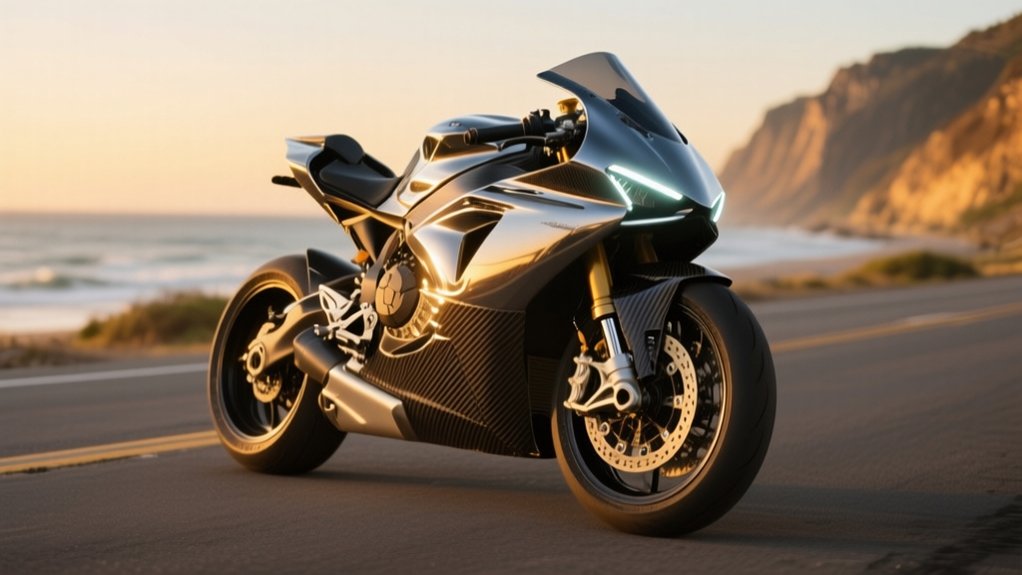
What Is The Fastest Electric Motorcycle – Simple Breakdown
The Lightning LS-218 is the fastest production electric motorcycle you can buy. It has a confirmed top speed of 218 mph and about 200 to 244 hp depending on the setup.
You’ll also get strong acceleration, premium cooling, and real-world range. With the 20 kWh pack, it can reach around 188 miles.
Other electrics may claim more in record runs. But the LS-218 leads on usable speed, performance, and road-ready practicality, and there’s more to compare.
What Is the Fastest Electric Motorcycle?
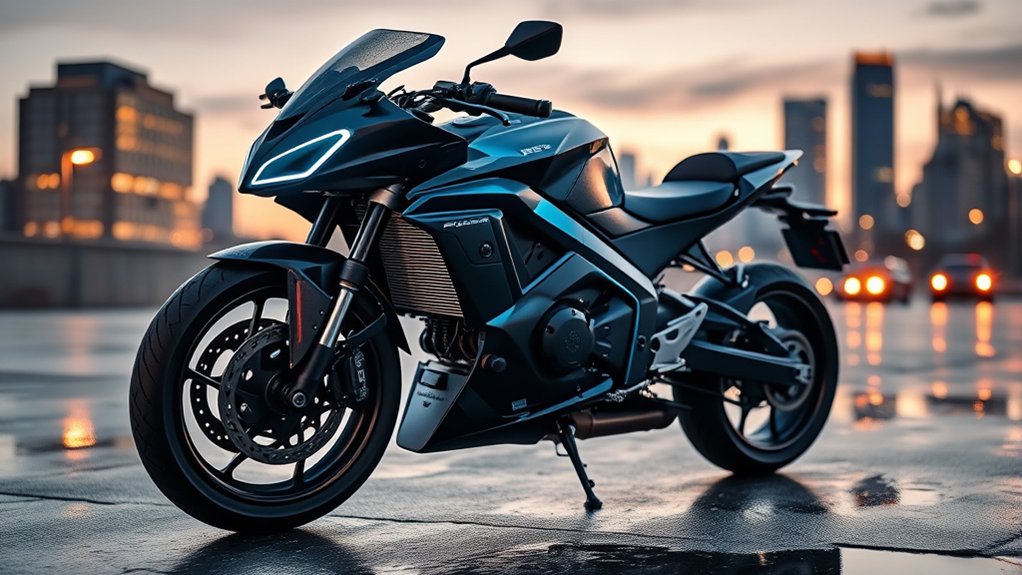
The Lightning LS-218 is the fastest production electric motorcycle.
The Lightning LS-218 is the fastest production electric motorcycle.
It has a confirmed top speed of 218 mph and a liquid-cooled motor that makes roughly 200–244 hp depending on the setup.
If you want the quickest street-legal model you can buy, the Lightning LS leads the category.
Just note that record-only bikes are different.
The Voxan Wattman has reached about 283 mph in purpose-built runs.
But it isn’t a mass-production machine.
Other consumer electrics, like the Damon Hypersport, claim over 200 mph.
Many rivals peak closer to 150–160 mph or even 120–125 mph.
Your result can still vary, because power, aerodynamics, thermal control, gearing, and firmware all affect top speed.
Why the Lightning LS-218 Leads the Pack
Lightning doesn’t just claim the top spot with the LS-218. It backs it up with a 218 mph top speed, roughly 200–244 hp depending on configuration, and brutal off-the-line acceleration.
You can hit 0–60 mph in about 2 seconds. If you want the fastest electric motorcycle, you’re looking at the Lightning LS-218.
It pairs a liquid-cooled drivetrain with serious torque. That gives you race-bike urgency on demand.
- Top speed: 218 mph
- Power: 200–244 hp
- Launch: about 2 seconds to 60
- Proof: Pikes Peak superbike win
You also get a machine built for sustained high-speed use. It has advanced electronics and premium components that justify its price.
That’s why it leads the pack.
Fastest Electric Motorcycle Range Compared
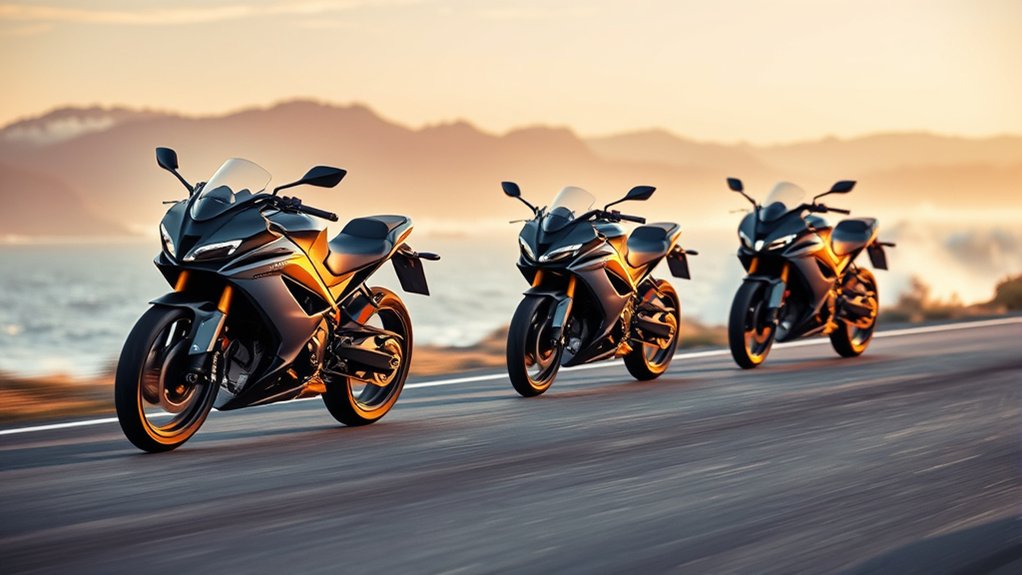
When you compare the fastest electric motorcycles by range, the Lightning LS-218 really stands out. It delivers about 188 miles on a highway-averaged test, and with its larger pack it can reach roughly 335 miles.
That said, Energica’s EGO/EGO+ RS and Zero’s SR/S typically trail it in real-world riding. Of course, your actual range depends a lot on things like battery capacity, liquid cooling, aerodynamics, and how effectively regenerative braking helps you slow down and recapture energy.
As battery density keeps improving and charging gets faster, you should expect that gap to narrow over time.
Top Range Leaders
Range is where the fastest electric motorcycles start to separate themselves
in real-world use, not just on spec sheets.
If you’re comparing top range leaders, the standouts are clear:
1. Lightning LS‑218: you can see roughly 188 miles on the highway.
The larger pack pushes much farther.
2. Energica EGO: Energicas EGO gives you about 261 miles city,
160 miles combined, and around 130 miles extra-urban.
3. Zero SR/S: you get about 171 miles city and 116 miles highway.
Regen and smart battery control help.
4. Real use: your range drops with speed, hard acceleration, and cold weather.
Smoother riding can stretch it.
For fastest electric motorcycles, that spread matters more than peak speed alone.
Battery Tech Impact
Battery tech shapes how far the fastest electric motorcycles can really go. Today’s lithium-ion NMC packs typically deliver about 250–300 Wh/kg and set the baseline for highway range.
You’ll see real-world range usually land between about 100 and 260 miles on bikes like the Lightning LS-218 and Energica. That depends on battery size and how hard you ride.
A larger battery changes the picture fast. Lightning’s 12 kWh pack returns roughly 100–120 miles, while its 28 kWh option can stretch to around 335 miles.
New chemistries may push density higher, and better thermal control, battery management, and regen can add about 10–15%. Cold weather still cuts efficiency by 20–30%, so insulated packs matter.
Charging And Efficiency
Charging efficiency can make or break the fastest electric motorcycle’s real-world range.
This matters even more when you compare big-pack bikes like the Lightning LS-218 and Energica with more efficiency-focused machines such as Zero’s SR/S.
Your battery capacity sets the baseline, but charging speed and riding efficiency decide how usable the bike feels.
1. The LS-218’s 20 kWh pack averages about 188 highway miles.
The optional 28 kWh pack can reach roughly 335 miles.
2. Energica’s 21.5 kWh bikes can hit 80% in about 40 minutes with DC fast charging.
3. Zero’s SR/S uses regen and battery management to gain about 10–15% in mixed riding.
4. Expect 20–30% range loss from speed, hard acceleration, drag, or cold weather.
You’ll get the best results when you balance battery capacity, aerodynamics, and charging access.
How Battery Tech Extends Electric Motorcycle Range
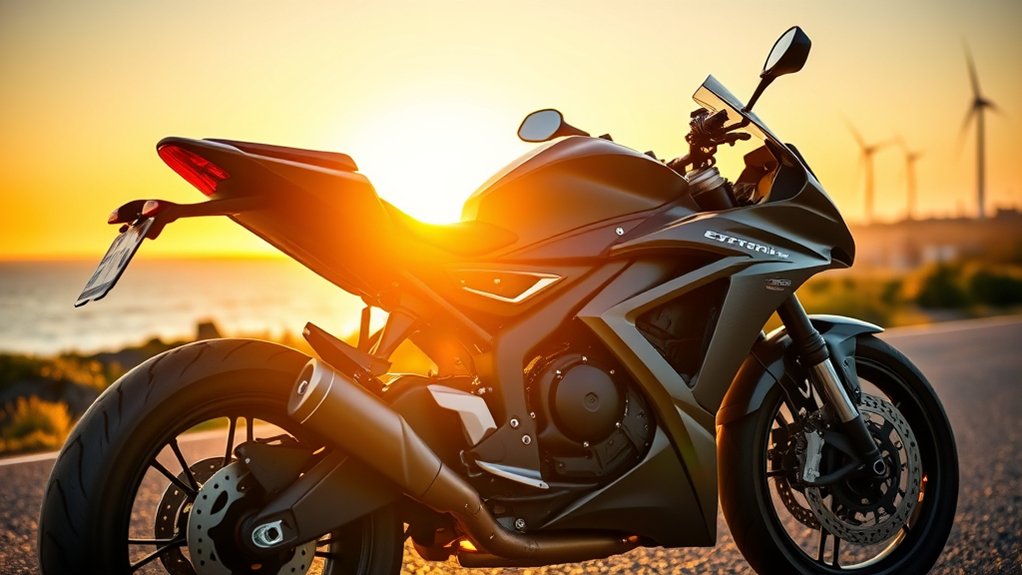
Better battery tech stretches an electric motorcycle’s range by packing more usable energy into the same, or even a lighter, pack. If you choose higher energy-density cells, you can carry more kWh per kilogram. That can add tens of percent to range, sometimes over 50%.
Bigger packs do even more. Lightning’s optional 28 kWh battery can push highway range from about 100–120 miles to roughly 335 miles.
Battery management systems and regenerative braking can raise effective range another 10–15%. They do this by controlling charge, heat, and energy recovery.
Liquid cooling also helps. It keeps cells in their best temperature window during sustained high-speed riding.
Looking ahead, solid-state and graphene-hybrid cells promise 30–50% more range. They also aim for longer cycle life, which improves real-world distance over time.
How Riding Style Changes Range
Even with advanced battery packs, how you ride can change the real-world range of an electric motorcycle by a wide margin.
If you twist the throttle hard, you’ll use more energy and lose 20–40% versus steady cruising.
- Smooth inputs: keep acceleration gradual.
- Eco mode: use range settings when possible.
- Regenerative braking: recover about 10–15% on mixed routes.
- Moderate speed: 70–80+ mph cuts range fast.
You can usually extend range by 10–30% with calmer riding and conservative braking.
Highway use reduces mileage far more than city riding, so plan accordingly.
In cold weather, battery efficiency can drop another 20–30%.
That makes gentle riding even more important.
For the best range, stay smooth, stay steady, and avoid unnecessary bursts.
How Aerodynamics and Cooling Affect Speed
When you’re chasing top speed, aerodynamic drag becomes a major limit. That’s why a streamlined fairing and a tucked riding position can help you go faster while wasting less energy.
And it’s not just airflow—cooling matters, too. Liquid cooling helps your battery and motor stay within safe temperatures during sustained runs, so they can keep delivering full power instead of throttling back.
In the end, low drag and effective heat management work together to determine how long you can hold your highest speed.
Aerodynamic Drag Reduction
At 150–200+ mph, aerodynamic drag becomes one of the biggest limits on an electric motorcycle’s top speed. The force rises with the square of velocity, and the power required to overcome it rises even faster. Aerodynamic drag reduction helps keep more motor output pushing the bike forward instead of fighting the air.
- Use full fairings to shrink frontal area.
- Shape bodywork to smooth airflow, like on the Zero SR/S.
- Tuck your body to cut drag, as high-speed runs on the Lightning LS-218 show.
- Balance cooling ducts and radiator openings so they don’t add excess drag.
At 200+ mph, small changes in fairing shape, belly pans, and windscreen angle can deliver major gains.
Liquid Cooling Benefits
Liquid cooling lets a high-speed electric motorcycle hold peak power longer. It pulls heat away from the battery and motor, which helps prevent thermal throttling and reduces voltage sag during sustained runs.
That means more consistent acceleration. Top motorcycles like the Lightning LS-218 and Energica EGO can keep chasing Fastest Electric results and mph top speed claims for longer.
Compared with air-cooled electric bikes, liquid-cooled electric motorcycles from top picks such as Zero use motors and advanced battery systems to preserve output under load. This matters because higher top speeds need stable power, not brief bursts.
For you, the benefit is simple. An electric vehicle with liquid cooling can stay near one of the fastest performance levels longer, with less power fade, better real-world speed, and stronger durability.
Heat Management at Speed
As speed climbs, heat management becomes a top limiter on an electric motorcycle’s performance. Liquid cooling helps keep the battery and motor within safe temperatures, so they can hold peak power instead of cutting back. You also need to cut drag, since aerodynamic fairings turn more motor output into actual speed.
- Liquid cooling protects the pack and inverter during sustained runs.
- Better aerodynamics reduce the power needed to push through air.
- If heat builds, cell resistance rises and voltage drops.
- Regenerative braking helps, but it won’t offset extreme thermal load.
If cooling is poor, thermal limits can kick in long before the motor hits its real top speed. Race machines push this further with bespoke bodywork and aggressive cooling setups to stay fast.
Charging a Fast Electric Motorcycle
Charging a fast electric motorcycle is easier than many riders expect, but it still takes planning.
On a DC fast charger, you can refill about 80% of an Energica’s 21.5 kWh pack in roughly 40 minutes, which makes highway stops practical.
Home or portable chargers work too, but they add only about 10–15 miles of range per hour.
Thermal management also helps maintain charge speed during repeated sessions.
| Charger type | Typical use | Result |
|---|---|---|
| DC fast charger | Long trips | 80% in ~40 min |
| Portable charger | City use | 10–15 miles/hour |
| Cold weather | Winter riding | 20–30% slower |
Use apps like PlugShare to find stations, and plan for cold conditions.
Efficiency drops below 32°F.
What a Fast Electric Motorcycle Really Costs
A fast electric motorcycle isn’t cheap, and the sticker price is only part of the bill.
You might start near $38,000 for a Lightning LS-218, and a larger battery can add several thousand more.
Expect these costs:
- Premium battery upgrade: $3,000–$5,000
- Battery replacement after 5–8 years: about $4,200
- Insurance and registration: roughly 20% higher
- Ongoing fees, tires, and maintenance: hundreds yearly
Software subscriptions can run $300–$500 a year.
Battery depreciation may add $700–$900 annually.
Tires often cost $200–$400.
Fast charging helps with trip time, but it doesn’t lower ownership costs.
If you want top speed, you’ll also pay for the range, charging hardware, and long-term upkeep.
Which Fast Electric Motorcycle Fits You Best?
Which fast electric motorcycle fits you best depends on what you value most: outright speed, usable range, or cutting-edge features.
If you want the fastest production bike and record credentials, the Lightning LS-218 leads with 218+ mph and about 200 to 244+ hp.
If you want strong speed plus practical distance, the Energica Ego+ RS gives you around 150 mph and up to about 160 miles combined.
If you ride hard on highways and want efficiency, the Zero SR/S adds aerodynamic stability, thermal management, and regen that can improve range by roughly 10 to 15%.
If you want hyperbike thrust and modern tech, Damon Hypersport or Lightning variants offer premium acceleration, long range, and charging flexibility.
Frequently Asked Questions
Which Electric Motorcycle Holds the Official Land Speed Record?
You’re looking at the Voxan Wattman streamliner, which holds the official electric motorcycle land speed record. It hit 366.94 mph (590.02 km/h) in 2021 under FIA/FTF record conditions.
You should note that Voxan built it just for speed runs, so it isn’t a production bike. If you mean street-legal production models, the Lightning LS-218 is the fastest commonly cited consumer electric motorcycle at 218 mph.
Are Fastest Electric Motorcycles Street Legal Everywhere?
No, you can’t assume the fastest electric motorcycles are street legal everywhere.
Some models are fully homologated in certain U.S. states or EU countries, while others are track-only or prototype machines.
Verify local DMV rules, VIN paperwork, lights, mirrors, brakes, and insurance requirements before you buy or ride.
Questioning the “fastest” claim reveals a bigger truth: speed matters less than legal approval.
How Much Does a Top-Speed Electric Motorcycle Weigh?
A top-speed electric motorcycle usually weighs about 400 to 600 pounds, or 180 to 270 kilograms.
You’ll often see models like the Lightning LS-218, Damon Hypersport, and Energica Ego+ RS in that range.
Battery size drives most of the weight.
Larger packs can add 100 to 300 pounds.
Liquid cooling, strong frames, and high-power electronics also increase mass for stability and performance at high speeds.
Do Fast Electric Motorcycles Need Special Tires?
Yes, you do need special tires for fast electric motorcycles.
Choose motorcycle tires rated for the bike’s top speed, ideally ZR or a specific high-speed rating.
Match the load index to the heavier battery pack.
Use reinforced, heat-resistant compounds that handle instant torque and hard launches.
Check tire pressure often.
Inspect wear before fast rides, and replace performance tires sooner than commuter tires.
What Maintenance Do High-Performance Electric Motorcycles Require?
You’ll need regular battery health checks, software updates, and BMS diagnostics
to keep a high-performance electric motorcycle running well.
Inspect liquid-cooling systems, coolant levels, brakes, tires, connectors, and charging hardware often.
You should also monitor regenerative braking, calibration, and battery degradation using cycle counts.
Plan for premium tire replacements, firmware patches, and eventual battery pack costs.
This helps protect range, safety, and performance over time.
Conclusion
So, if you want the fastest electric motorcycle, you’re really choosing between raw speed, usable range, and real-world practicality.
The Lightning LS-218 still leads the pack, but even a record-setter has limits.
As the saying goes, “all that glitters isn’t gold.”
Top speed means little if charging, cost, or range don’t fit your ride.
In the end, you’ll want the bike that matches how, where, and how often you actually ride.