
Top 12 Best Bike After Knee Replacement You Must Try Now
Using the best bike after knee replacement means avoiding the pain and stiffness that come with poorly designed pedals or improper seat height. Many people rush into buying a bike without considering how it affects their recovering joints, ending up with swelling or discomfort after just a few minutes of riding.
A bike that is not suited to post-surgery needs can make rehabilitation slower and more frustrating.
The most critical features of a good bike after knee replacement include adjustable seat height and pedal resistance so you can find a comfortable range of motion without overextending the knee. A lightweight frame, usually aluminum or carbon, helps reduce strain when moving the bike or during low-speed turns.
Smooth pedal action and wide, cushioned seats also support gentle, controlled exercise which promotes healing and builds strength gradually.
Need a Quick Check?
| Image | Product | Price |
|---|---|---|
Our Top Picks 1  | KneeSled Knee Exerciser | Check Price |
Our Top Picks 2  | Sunny Health Magnetic Pedal | Check Price |
Our Top Picks 3  | PHYCISER Motorized Pedal Bike | Check Price |
Our Selected Top 12 Bike After Knee Replacement Worth Buying
This list features a carefully chosen selection of bikes designed for comfort and support after knee replacement. Each review explains how the bike performs, identifies who it is best suited for, and highlights its key advantages and disadvantages to help readers make an informed decision.
1. KneeSled Knee Exercise Device
People recovering from knee replacement surgery or dealing with knee injuries will find the KneeSled Knee Exercise Device helpful. It suits adults of all sizes and has an easy-to-adjust fit. Its main strength lies in enabling smooth, controlled heel-slide movements that aid in recovery and improve knee flexibility.
Setting up the device is simple thanks to its universal size and adjustable rope, which fits any leg length or height without extra effort. Daily use involves sliding the heel back and forth along a smooth track that keeps movement controlled and safe. This targeted motion helps loosen stiffness and gradually increases knee mobility during rehab sessions.
The device performs consistently in guiding gentle, stable exercises that help reduce pain and improve joint function. It is built solidly with an adjustable design that accommodates all adults. Most praised for its ease of fitting and effective motion control, the common complaint is that it may feel bulky or awkward to store after use.
The biggest plus for this device is its universal sizing and smooth, controlled sliding action that helps improve range of motion without causing pain. On the downside, some find it takes up more space than expected, which could be inconvenient for small living areas.
Those who want an easy-to-use rehab tool with adjustable fit and reliable motion control will appreciate this device. People looking for a compact, easily storable product might want to consider alternatives that take up less room.
Pros
- One size fits all adults with adjustable rope
- Smooth gliding for controlled knee motion
- Targets mobility, flexibility, and joint health
- Simple setup suitable for rehab exercises
Cons
- Can be bulky to store
- Single size might feel large for some users
| Specification | Details |
|---|---|
| Model Name | Knee Sled |
| Model Number | NS101 |
| Part Number | NS101 |
| Age Range Description | Adult |
| Brand Name | KNEE SLED |
2. Sunny Health & Fitness Smart Magnetic Pedal Exerciser
Designed especially for gentle movement after knee replacement, this pedal exerciser fits well under desks and lets you exercise arms and legs with adjustable resistance. It suits those wanting low-impact activity that doesn’t strain the knee while offering flexibility between arm and leg workouts.
Setting it up is quick, requiring just 2 AAA batteries included with the unit for powering the digital monitor. You can pedal while seated, adjusting from 8 resistance levels to match your comfort. Attaching the 20LB exercise bands adds arm workouts, making it easy to move both upper and lower body without getting up.
The free app with workouts and scenic tours adds variety during sessions.
Performance feels steady and smooth through all resistance levels, supporting low-impact exercise comfortably without jarring the knee. The build is compact and stable enough for regular home use.
Most praise highlights its ease of use and the motivating app library, while a common complaint notes some users find the pedal size somewhat small for bigger feet.
The strong point lies in its simple, quiet operation combined with the versatility of arm and leg workouts plus the motivating digital app. Some users notice the pedals feel a bit cramped, especially if foot size is above average or when wearing bulky shoes.
People seeking gentle, seated exercise after knee surgery will appreciate the adjustable resistance and overall comfort. Those needing more intense workouts or larger pedal platforms might want to consider other options better tailored to their needs.
Pros
- Low-impact pedaling protects sensitive knees
- Works both arms and legs simultaneously
- Free app offers 1,000+ workouts and scenic rides
- Compact design fits under most desks easily
Cons
- Pedal size may feel small for larger feet
- Battery-powered monitor may require occasional replacements
| Specification | Details |
|---|---|
| Number of Batteries | 2 AAA batteries required (included) |
| Number of Resistance Levels | 8 |
| Power Source | Battery Powered |
| Exercise Bands Included | 20LB resistance bands |
| Connected App | SunnyFit App access, no membership fees |
3. PHYCISER Electric Motorized Pedal Exercise Bike
PHYCISER Electric Motorized Pedal Exercise Bike is designed for people recovering from knee replacement who need gentle, consistent movement to regain mobility. Its biggest strength lies in combining upper and lower body workouts, helping users stay active and improve circulation even with limited leg movement.
Setting it up at home is straightforward, and the touch controls with an LCD display make adjusting speed and resistance easy. The fixed handles and high-calf leg supports provide stability during sessions. Switching between arm and leg exercises requires just a simple change of positioning, which adds variety and helps maintain daily activity without strain.
It performs well by providing low-impact, motor-assisted exercise with 20 resistance levels to suit different recovery stages. The bike feels solid and stable during use.
Praise often highlights its smooth movement that reduces joint stiffness, but some note the maximum speed of 55 rpm can feel slow for those wanting more vigorous exercise.
The bike’s smooth, gentle movements are highly effective in easing joint stiffness and boosting circulation, which users appreciate for knee and ankle recovery. The most noticeable drawback comes from the speed limit that might not satisfy those looking for faster cycling sessions.
People seeking steady, low-impact rehabilitation with support for both arms and legs will find this exercise bike suitable. Users needing higher speed or cordless convenience might want to look at other options better suited for more intense workouts or portability.
Pros
- 2-in-1 design for arm and leg workouts
- High-calf leg supports for stability
- 20 resistance levels for gradual improvement
- Touch controls with clear LCD display
Cons
- Maximum speed of 55 rpm may feel slow
- Requires power outlet for corded operation
| Specification | Details |
|---|---|
| Maximum Speed | 55 rpm |
| Number of Resistance Levels | 20 |
| Motor Horsepower | 60 watts |
| Maximum Stride Length | 6 inches |
| Operation Mode | Automatic |
4. Exerpeutic 2000M Motorized Under Desk Exercise Bike
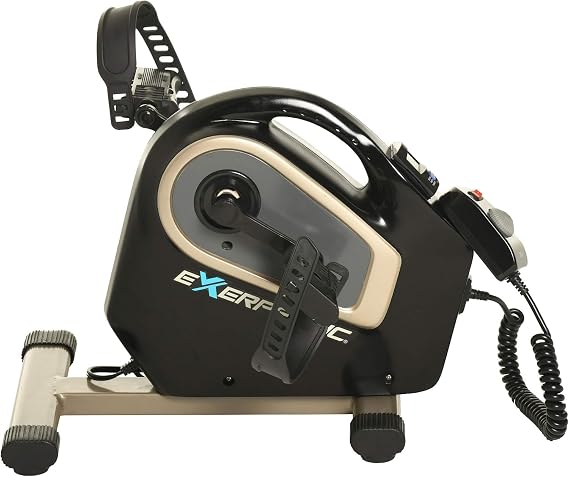
Gentle movement and easy control make this motorized under desk bike a great fit for anyone easing back into activity after knee surgery. Its biggest strength lies in the motor-assist feature, which reduces strain while helping to build strength and improve joint motion at a comfortable pace.
Setting it up is straightforward, and daily use centers around the hand-held speed controller with its long cord, so adjustments don’t require bending over. Sitting at your desk or even on a comfortable chair, you can pedal with varying resistance levels either powered by the motor or by your own effort. The 15-minute auto timer helps keep exercise sessions focused but flexible to your needs.
It performs well at providing low-impact exercise and gradually increasing muscle activity, which is key after knee replacement. The build quality is solid with rotating D-type handles for a good grip, although some find the motor’s resistance limited when powered off.
Most appreciate the range of resistance from the 24 levels, but a few mention the bike’s size can feel a bit bulky for smaller spaces.
The motor-assist feature gently supports pedaling, making it ideal for recovery, but some feel resistance options decrease once the electric assist is turned off. The LCD screen and wide range of programs provide useful feedback and options during therapy.
People looking for a low-impact, controllable rehab device will find it helpful, especially those who want to avoid putting extra stress on their knees. Those needing a compact, space-saving exercise solution might want to consider alternatives with a smaller footprint.
Pros
- Motor-assisted pedaling reduces joint strain
- Long cord on speed controller for easy adjustment
- 24 resistance levels offer customizable workouts
- Built-in 15-minute timer supports focused sessions
Cons
- Lacks resistance variety when motor is off
- May be too large for limited floor space
| Specification | Details |
|---|---|
| Controls Type | Knob |
| Display | LCD |
| Number of Resistance Levels | 24 |
| Operation Mode | Automatic |
| Power Source | Electric |
| Number of Programs | 24 |
5. MOMODA Foldable Pedal Exerciser with LCD Monitor

Great for gentle exercise after knee replacement, this foldable pedal exerciser suits anyone needing low-impact workouts at home or office. Its biggest strength lies in adjustable resistance levels that accommodate different recovery stages and strength levels.
Setting it up requires just turning a knob to pick one of five resistance levels. Using it daily is straightforward since it runs on 1 AAA battery and shows stats on a small LCD. Compact and lightweight, it fits easily under a desk or in front of a chair, so you can pedal while sitting.
The manual controls make it easy to customize without complicated steps.
Performance is solid for low-impact arm and leg cycling, helping strengthen muscles and assist knee and shoulder rehab. It feels sturdy enough for daily use, though the simplest manual adjustment may lack precision for some. Customers often praise its ease of use and comfortable pedaling, while some note the monitor’s basic display and limited software support as downsides.
Many appreciate how easy it is to use and the low resistance options that suit elderly users. Common complaints concern the simplicity of the LCD monitor and the lack of software updates.
People looking for straightforward, gentle exercise equipment will find it helpful, especially for post-knee replacement recovery. Those wanting more high-tech feedback or precise resistance control might want to explore other models.
Pros
- Five adjustable resistance levels
- Compact and foldable design
- Works for arms and legs
- Simple knob control
Cons
- Basic LCD monitor without updates
- Manual tension knob can be imprecise
| Specification | Details |
|---|---|
| Operation Mode | Manual |
| Number of Resistance Levels | 5 |
| Power Source | Battery Powered |
| Display | LCD |
| Controls Type | Knob |
| Number of Batteries | 1 AAA batteries required. |
6. Foldable Under Desk Pedal Exerciser Bike

Compact and made for easy use, the Foldable Under Desk Pedal Exerciser Bike suits anyone recovering from knee surgery or looking to boost leg and arm strength gently. Its best feature is how quiet and small it is, fitting neatly under a desk so it doesn’t get in the way.
Setting it up takes just moments because it doesn’t require power or complicated parts. You turn the knob to adjust resistance, making pedaling easier or harder depending on your comfort level.
It’s light enough to carry around and fits under most desks, so you can keep exercising while working or watching TV without making noise.
The bike does a good job providing low-intensity workouts for legs and arms, especially for those recovering from surgery. It’s solidly built with a manual operation mode and a standard handle for easy grip. The strongest point mentioned is how simple and quiet it is, while a common complaint involves limited speed options for more intense workouts.
Quiet operation and portability are praised highly, making it perfect for discreet exercise during the day. Users mention adjusting resistance easily, but some wish for more challenging settings to push beyond light exercise.
People recovering from knee or shoulder surgery will find this gentle enough for daily use. Those needing higher resistance or faster speeds should consider a different bike designed for more intense workouts.
Pros
- Quiet workout suitable for office or home
- Compact size fits under most desks
- Easy resistance adjustment with simple knob
- No power required, fully manual
Cons
- Limited speed options for more intense training
- Resistance may be too low for advanced users
| Specification | Details |
|---|---|
| Controls Type | Knob |
| Handle Type | Standard |
| Maximum Speed | 20 revolutions per second |
| Maximum Stride Length | 12 inches |
| Operation Mode | Manual |
| Power Source | NO NEED |
7. Foldable Pedal Exerciser with LCD Monitor

Compact size and adjustability make this exerciser ideal for knee replacement recovery. It suits anyone needing low-impact leg or arm workouts with clear feedback on progress. Its biggest strength is the ability to control resistance easily, allowing gradual muscle strengthening at home or work.
Setup involves placing the device under a desk or on the floor, making it easy to pedal while keeping busy with other activities like reading or chatting. The rotating knob changes resistance through five levels, helping tailor workouts from warm-up to stronger sessions. The LCD monitor tracks time, count, RPM, and calories, which keeps motivation steady during daily use.
The pedal exerciser performs steadily for both legs and arms with a maximum stride length of 15.75 inches, providing smooth, low-impact motion. It feels sturdy thanks to its D-type rotating handles, though some find the manual operation less convenient than motorized options.
The battery-powered LCD gives useful stats but needs a single LR44 battery to function.
People often praise the adjustable resistance and informative LCD monitor that help keep workouts on track. Common complaints focus on the manual operation feeling less smooth and the need for battery replacement in the display unit.
The exerciser is great for anyone recovering from knee surgery who values low-impact movement and progress tracking. Those looking for powered assistance or longer stride length might want to consider other options.
Pros
- Compact size fits under desks easily
- Adjustable tension with five resistance levels
- Clear LCD monitor tracks multiple exercise metrics
- Dual use for legs and arms
Cons
- Manual operation may feel less smooth
- Requires battery for LCD, which may run out
| Specification | Details |
|---|---|
| Maximum Stride Length | 15.75 inches |
| Number of Resistance Levels | 5 |
| Display | LCD |
| Operation Mode | Manual |
| Power Source | Battery Powered |
8. Stryde Precision Ladies Knee Support Belt

Perfect for ladies recovering from knee replacement surgery, this support belt offers targeted compression and comfort. What sets it apart is the soft, elastic silicone that conforms to your patella, making it gentle on sensitive knees while giving solid support where you need it most.
Putting it on is straightforward thanks to the adjustable hook-and-loop closure, allowing you to dial the pressure up or down depending on your activity. The strap feels lightweight and breathable throughout the day, moving with you instead of restricting motion.
Wearing it during walks or light workouts feels secure without getting in the way.
The build uses premium silicone that holds its shape well and offers consistent compression. Most find it comfortable for extended wear, especially appreciating the material’s breathability.
Complaints mainly involve sizing, those with knees smaller than 11 inches might find the fit loose. It supports daily rehab and fitness without irritation.
The soft silicone that molds to the knee is praised for comfort during long wear, while sizing issues emerge for smaller knees under 11 inches. Users find the strap easy to adjust, which helps tailor support but are advised to maintain it with hand washing only.
Those with average to larger knee sizes seeking reliable support during daily activities will appreciate this belt. Individuals with smaller knees or those looking for a machine-washable option may want to explore other products that better suit their needs.
Pros
- Lightweight and breathable silicone material
- Fully adjustable for personalized compression
- Includes two straps per pack
- Comfortable for all-day wear
Cons
- Not suitable for knees smaller than 11 inches
- Needs hand washing and careful drying
| Specification | Details |
|---|---|
| Material | Soft, highly elastic silicone |
| Fit Range | Knee circumference: 11 to 18 inches |
| Closure System | Hook-and-loop adjustable |
| Number of Items | 2 |
| Age Range | Adult |
| Model Number | Knee Strap-001 |
9. KneeRover Knee Walker with Ergonomic Hand Grips
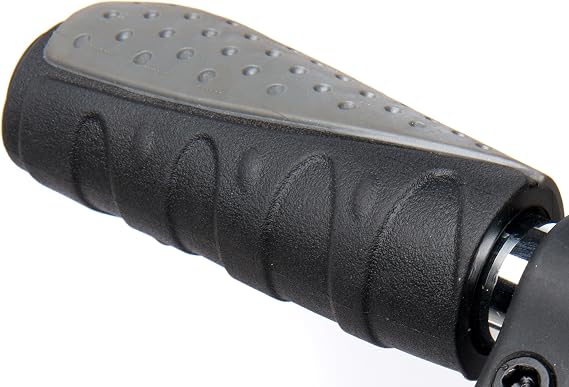
Recovering from knee surgery means you need a reliable and comfortable knee walker that helps you stay mobile without putting strain on your healing leg. The KneeRover Knee Walker with Ergonomic Hand Grips is a great fit for anyone looking for smoother control and comfort while using their knee scooter daily. The biggest strength here is how much these upgraded grips improve your control without causing hand fatigue.
Swapping out the old hand grips for these ergonomic ones is straightforward and makes a noticeable difference in how the walker handles. The soft, premium material cushions your hands better than standard grips, which helps during longer use. It fits a wide range of models, so you don’t have to worry about compatibility.
You can operate your knee scooter more confidently with the extra grip and comfort they provide day to day.
The quality material on these grips feels durable and built to last compared to the usual hard plastic grips. Comfort during operation clearly stands out as its main advantage, making moving around easier when your knee is recovering.
While some mention that getting the grip size perfect can take a bit of trial and error, most say the grip upgrade is worth the effort. These hand grips perform well at their key job, offering comfort and better control over your knee walker.
These grips get a lot of praise for improving comfort and handling when pushing the knee scooter, which is especially important during long days on your feet. The most common issue users encounter is needing to tweak or fit the grip size just right to avoid slipping or discomfort.
People seeking more comfort and better control with their knee scooter will find these grips helpful. Those wanting a full hand grip set or needing custom sizing might want to explore other options. It suits anyone looking to upgrade from standard grips without changing their entire knee walker setup.
Pros
- Soft ergonomic grips reduce hand fatigue
- Compatible with several knee scooter brands
- Easy to replace and install
- Durable, premium quality material
Cons
- Grip size may need adjustment
- Sold as single replacement piece only
| Specification | Details |
|---|---|
| Brand Name | KneeRover |
| Model Number | G1_KWPART |
| Manufacturer Part Number | G1_KWPART |
| Number of Items | 1 |
| Unit Count | 1 Count |
| Compatibility | Fits Most Knee Scooters |
10. KneeRover Memory Pad Knee Scooter Cushion

Adding 2 inches of soft memory foam padding to your KneeRover knee scooter makes using it more comfortable for anyone recovering from knee surgery or injury. It especially suits those needing extra cushioning to relieve pressure on the knee during extended use, turning a standard knee scooter into a more soothing experience.
Installing the cushion is straightforward with a hook and loop fastener, making it easy to attach and remove. Its design fits most KneeRover models except Economy and Knee Walker Jr., so double-check your scooter type.
The memory foam distributes pressure evenly across your knee pad, cutting down on friction and skin irritation, which is helpful when you need to use the scooter throughout the day.
Performance-wise, the cushion does a solid job of keeping your knee comfortable during longer walks or daily errands. The premium memory foam feels noticeably softer compared to synthetic alternatives. Some users mention how the thickness adds a cozy feel, although a few note it might shift a bit if not centered well on the knee.
The quality of the removable cover helps maintain cleanliness, adding practical value.
The cushion’s memory foam genuinely improves comfort for users spending long hours on the KneeRover, though some say the pad can move if not aligned perfectly. The removable cover is a plus for hygiene but requires occasional adjustments to keep it centered.
Anyone using a compatible KneeRover model looking to reduce knee soreness would appreciate this upgrade. Those with Economy or Knee Walker Jr. scooters should look for other padding options since this cushion doesn’t fit those models.
Pros
- Soft 2-inch memory foam eases knee pressure
- Easy installation with hook and loop fastener
- Fits most KneeRover models for wide compatibility
- Removable cover allows simple cleaning
Cons
- Does not fit Economy and Knee Walker Jr. models
- May shift slightly if knee not centered properly
| Specification | Details |
|---|---|
| Closure Type | Hook & Loop |
| Special Features | Memory foam cushion, removable cover, pressure distribution, reduces friction and skin irritation |
| Fits Models | All KneeRover models except Economy and Knee Walker Jr. |
| Dimensions Installed | 13 inches x 7 inches x 4 inches |
| Form Factor | Shell |
| Specific Uses | Knee scooter pad cover for recovery from lower leg injuries and surgeries |
11. Vive Mobility Knee Scooter Pad Cover

People recovering from knee surgery or injuries will find the Vive Mobility Knee Scooter Pad Cover a great addition for comfort during mobility. Its main strength lies in the dense foam padding that cushions the knee, reducing fatigue and pressure on the injured leg for extended use.
Attaching the pad cover to a knee scooter is straightforward, providing a soft, breathable surface to rest your leg on throughout the day. The dense foam holds its shape well, so everyday use keeps your knee comfortable without feeling like you’re kneeling directly on a hard surface. It helps distribute your weight evenly, which makes moving around less painful and tiring.
The padding effectively relieves pain by cushioning the knee and lower leg when in motion, making it easier to stay mobile for longer periods. The breathable design helps prevent discomfort from sweat during use. Some users mention that while it suits most knee scooters well, it may not fit every model perfectly, which can be a drawback if the fit isn’t quite right.
The foam padding provides noticeably comfortable cushioning for long periods on a knee scooter, significantly reducing pressure and pain. A common complaint is the fit might not be universal, so measuring your knee scooter first is important to avoid issues.
People who need extra knee comfort while using a knee scooter will appreciate this pad cover’s durable cushioning and breathable fabric. Anyone with a knee scooter that has an unusual shape might want to consider other options or check compatibility carefully before purchasing.
Pros
- Dense foam cushions reduce knee fatigue effectively
- Evenly distributes pressure across knee and lower leg
- Breathable material adds comfort during prolonged use
Cons
- May not fit all knee scooter models perfectly
- Foam thickness could feel bulky for some users
| Specification | Details |
|---|---|
| Special Features | Breathable |
| Recommended Uses For Product | Recovery |
12. NOVA Knee Scooter Gel Cushion Cover

Gel-cell cushioning with 2” double-layer offset cells makes this cover stand out for anyone needing extra comfort after knee surgery or replacement. Designed to fit most knee scooters snugly, it focuses on softening pressure points and improving circulation throughout healing.
Putting it on is simple thanks to the 360° elastic opening, which stretches around the knee scooter platform easily and stays secure. It folds and rolls up neatly for travel, meaning it’s convenient to carry in a car or plane. The padding helps protect the scooter platform from everyday wear like scratches and scuffs while you’re on the move.
The gel cushion performs well to soften impact and pressure on the injured knee, offering relief when using a knee walker for extended periods. It’s made from durable, stretchable material that holds up with regular use.
Users appreciate the comfort boost the gel-cell technology provides, although some mention it may not offer enough thickness for longer sessions or heavier individuals.
Comfort and pressure relief from the gel cushioning receive the most praise, helping reduce discomfort during use. Some users note that it might not provide enough padding for longer wear or heavier use, which is a common concern.
Anyone needing a portable, comfortable cover for typical knee scooters will find this an easy choice. Those looking for extra thick cushioning or who have larger platforms should consider other options better suited to those needs.
Pros
- Soft 2” gel cushioning for pressure relief
- 360° elastic opening for secure fit
- Travel-friendly, folds and rolls easily
- Protects from scratches and scuffs
Cons
- May feel thin for extended use
- Only fits platforms 2”–4” in height
| Specification | Details |
|---|---|
| Brand Name | NOVA |
| Model Name | Knee Gel Cushion for Knee Walker |
| Size & Fit | 15” x 7.5”; fits platforms 2”–4” in height |
| Material | Gel-cell technology, stretch fabric |
| Unit Count | 1 Count |
Best Bikes for Knee Replacement Side by Side
| Product | Power Source | Number of Resistance Levels | Operation Mode | Display |
|---|---|---|---|---|
| KneeSled Knee Exerciser | – | – | – | – |
| Sunny Health Magnetic Pedal | Battery Powered | 8 | – | – |
| PHYCISER Motorized Pedal Bike | Corded Electric | 20 | Automatic | LCD |
| Exerpeutic 2000M Desk Bike | Electric | 24 | Automatic | LCD |
| MOMODA Foldable Pedal Exerciser | Battery Powered | 5 | Manual | LCD |
| Foldable Under Desk Bike | No Need | – | Manual | – |
| Pedal Exerciser with LCD | Battery Powered | 5 | Manual | LCD |
| Stryde Ladies Knee Support | – | – | – | – |
| KneeRover Knee Walker | – | – | – | – |
| KneeRover Memory Pad | – | – | – | – |
| Vive Mobility Pad Cover | – | – | – | – |
| NOVA Gel Cushion Cover | – | – | – | – |
- Power Source–
- Number of Resistance Levels–
- Operation Mode–
- Display–
- Power SourceBattery Powered
- Number of Resistance Levels8
- Operation Mode–
- Display–
- Power SourceCorded Electric
- Number of Resistance Levels20
- Operation ModeAutomatic
- DisplayLCD
- Power SourceElectric
- Number of Resistance Levels24
- Operation ModeAutomatic
- DisplayLCD
- Power SourceBattery Powered
- Number of Resistance Levels5
- Operation ModeManual
- DisplayLCD
- Power SourceNo Need
- Number of Resistance Levels–
- Operation ModeManual
- Display–
- Power SourceBattery Powered
- Number of Resistance Levels5
- Operation ModeManual
- DisplayLCD
- Power Source–
- Number of Resistance Levels–
- Operation Mode–
- Display–
- Power Source–
- Number of Resistance Levels–
- Operation Mode–
- Display–
- Power Source–
- Number of Resistance Levels–
- Operation Mode–
- Display–
- Power Source–
- Number of Resistance Levels–
- Operation Mode–
- Display–
- Power Source–
- Number of Resistance Levels–
- Operation Mode–
- Display–
How to Choose the Right Bike After Knee Replacement
Comfort, adjustable settings, and smooth gear shifting are key factors when selecting a bike after knee replacement. Choosing the right features helps prevent strain and supports healing, ultimately saving money on medical issues and reducing the need for frequent replacements or repairs.
Adjustability and Fit
Trying to ride a bike without proper seat height and handlebar adjustments can make the knee joint feel overextended or cramped, leading to discomfort during or after rides. Riders often end up with unnecessary strain because the knee angle isn’t right, especially for those recovering or dealing with knee sensitivity.
A bike with adjustable seat and handlebars that offer at least 4 to 6 inches of range in height adjustment allows you to find the best alignment for your knee joint. This promotes a smooth pedal stroke and avoids pain.
Fine adjustments should be easy to make without tools or excessive force since re-positioning may be frequent as comfort levels or accessories change. It’s useful to have compatibility for support accessories like padded seat cushions or knee braces without the adjustments becoming cumbersome or unstable.
Pedal and Resistance System
Pedal resistance that feels harsh or jumps too quickly can aggravate sensitive knees by forcing excessive force with each stroke. Bikes designed for gentler recovery stages usually offer smooth resistance transitions and a wide range, often with 8 or more levels to suit varying leg strength.
Low-impact resistance modes reduce pressure on the knee joint, allowing for longer sessions without flare-ups.
Pedals with a flat design combined with good grip surfaces help keep feet steady without forcing a tight closure that can compress toes or joints. Features like wide platforms or straps add stability, especially during slower, controlled pedaling. This prevents the foot from slipping and reduces unnecessary twisting or sideways force on the knee.
Frame Design and Stability
Accessing a bike with high top tubes can feel risky and uncomfortable when knee mobility is limited. Low stepthrough frames or open designs make getting on and off much easier, reducing balance challenges.
This type of frame height is practical daily, preventing the need for awkward lifting or twisting motions that could strain healing tissues.
Stability while riding is crucial. A well-balanced frame that avoids wobbling even at low speeds builds confidence and safety. Weight distribution that directs less pressure through the knees, often achieved with a lower center of gravity and wider base, helps maintain balance without pushing the joint through compensating body postures.
Comfort Features
Sitting on a saddle that’s too hard or narrow causes pressure spots, leading to pain in the pelvis and making the knees work harder to maintain position. Saddles with thick, durable padding or gel inserts provide cushioning that reduces impact and soreness on longer rides.
Shape matters too; wider saddles tend to support bone structure better.
Grips designed to reduce joint strain typically include softer materials and ergonomic shapes that allow a relaxed hand position without gripping tightly. Shock absorption systems like suspension forks or seat posts help smooth out bumps from uneven surfaces, significantly decreasing jolts that transfer directly to the knees.
Portability and Storage
Transporting a bike can be a real challenge for those with limited strength or mobility if it’s heavy or bulky. Bikes weighing around 25 pounds or less are easier to lift or carry, but this depends on frame material and design. Compactness becomes important for users who need to store their bike in apartments or small spaces.
Bikes with foldable frames or quick-detach parts simplify storage and travel by shrinking the bike’s footprint. It’s important that folding mechanisms feel sturdy and solid so there’s no risk of accidental collapse during use or transport.
Durable hinges and locking levers with clear, straightforward operation improve safety and longevity over time.
Proper Bike Setup and Adjustment for Post-Knee Replacement Comfort
A correctly adjusted bike can make a significant difference in comfort after knee replacement surgery. Getting the seat height right is crucial; it should allow a slight bend in the knee at the bottom of each pedal stroke to avoid strain. The seat position forward or backward also matters, as it impacts knee alignment with the pedal.
Here are a few adjustment tips:
- Adjust the seat height to a level where your heel can touch the pedal without the knee fully extending.
- Ensure the handlebars are at a height that doesn’t force you to lean too far forward, reducing pressure on the knee.
- Check that the pedals have straps or clips to keep the feet stable and reduce unnecessary knee twisting.
Proper setup supports smooth pedaling and minimizes joint stress, which is essential during rehabilitation and everyday cycling.
Essential Safety Precautions When Cycling After Knee Surgery
Taking safety seriously after knee surgery is vital to prevent setbacks. Wearing a properly fitted helmet is non-negotiable. Gloves can offer extra grip and help avoid wrist strain in case of a fall.
Keeping the bike well maintained, especially brakes and tires, ensures better control and stability on the road or trail.
Additional safety measures:
- Warm up the knee gently before cycling to prepare the joint and muscles.
- Avoid sudden stops or sharp turns that can place unexpected loads on the knee.
- Start with shorter rides on flat, even surfaces to build endurance safely.
- Inform someone about your route or carry a phone for emergencies.
Monitoring pain or discomfort during rides helps recognize when to stop and adjust activity. Combined, these precautions reduce risks and support gradual recovery.
Comparing Recumbent vs Upright Bikes for Knee Joint Rehabilitation
Recumbent and upright bikes offer different experiences which matter for knee rehabilitation. Recumbent bikes place the rider in a reclined position, distributing weight more evenly and reducing pressure on the knees. This design often allows for greater back support, making longer sessions more comfortable.
Upright bikes mimic traditional cycling posture, which might be more familiar and engage more muscles, but can increase strain on the knees if positioning is off. Upright bikes usually require more balance, which could be challenging early in recovery.
Choosing between the two depends on:
- Comfort during use and any existing joint pain
- Physical stability and balance capabilities
- Space availability, since recumbent bikes tend to be larger
- Therapist or doctor recommendations based on individual needs
Both types can effectively improve joint mobility and strength, but matching the bike style to personal comfort and physical condition is key.
People Also Asked
How to Choose Bike Size After Knee Replacement Surgery?
Select a bike with a size that allows for a slight bend in the knee at the lowest pedal position. This reduces strain while pedaling. Getting a professional fitting at a local bike shop can help ensure comfort and prevent overextension.
Is It Safe to Bike Soon After Knee Replacement?
Starting to bike is possible a few weeks after surgery, but it depends on your doctor’s advice. Begin with short, slow rides on flat terrain to gauge comfort and avoid sudden pain. This gradual approach aids recovery without overloading the joint.
What Bike Features Are Best for Knee Pain Relief?
Bikes with adjustable seat height and pedal position work best for knee pain relief. Smooth, circular pedaling motion and low pedal resistance also help minimize joint stress. Using padded shorts and flat, stable pedals can reduce discomfort.
How Long Can a Bike Last with Frequent Knee Use?
A quality bike can last several years with regular use after knee replacement, provided it is well-maintained. Worn-out components like pedals or saddle should be replaced promptly to avoid putting uneven pressure on the knee. Routine lubrication and brake checks keep it safe.
What Common Problems Occur Biking After Knee Replacement?
Common issues include knee stiffness, pain from improper seat height, and difficulty with clipping in if using clipless pedals. Muscle fatigue around the knee is also frequent and can be managed by adjusting riding intensity and stretching before and after rides.
Conclusion
Comfort and ease of use matter most when choosing a bike after knee replacement. Look for models with adjustable seats and handlebars to reduce strain on your knee. A smooth, quiet ride can help avoid jarring movements.
Also consider the bike’s weight and stability to feel safe during your sessions.
Think about where you’ll keep the bike and how often you’ll use it to find the best fit for your space and budget. Take another look at the comparison table and the detailed picks above to match a bike with your specific needs. This approach helps ensure your choice supports steady, comfortable exercise without aggravating your knee.