What Happens When Ecm Goes Bad On Harley – Simple Breakdown
When your Harley’s ECM goes bad, it messes with fuel injection and ignition timing. This can cause rough running, hard starts, or even stalling. You might notice power loss and erratic throttle response too.
Irregular shifting signals can affect how the transmission performs. Fuel economy usually takes a hit because the air-fuel mixture gets off balance. Plus, diagnostic trouble codes often pop up when the ECM isn’t working right.
Sometimes, fixing wiring issues or reprogramming the ECM can help. But if problems keep coming back, you might need to replace the unit. Knowing what happens when the ECM fails helps you keep your bike’s engine running smoothly.
What Is the Harley ECM and Why It Matters
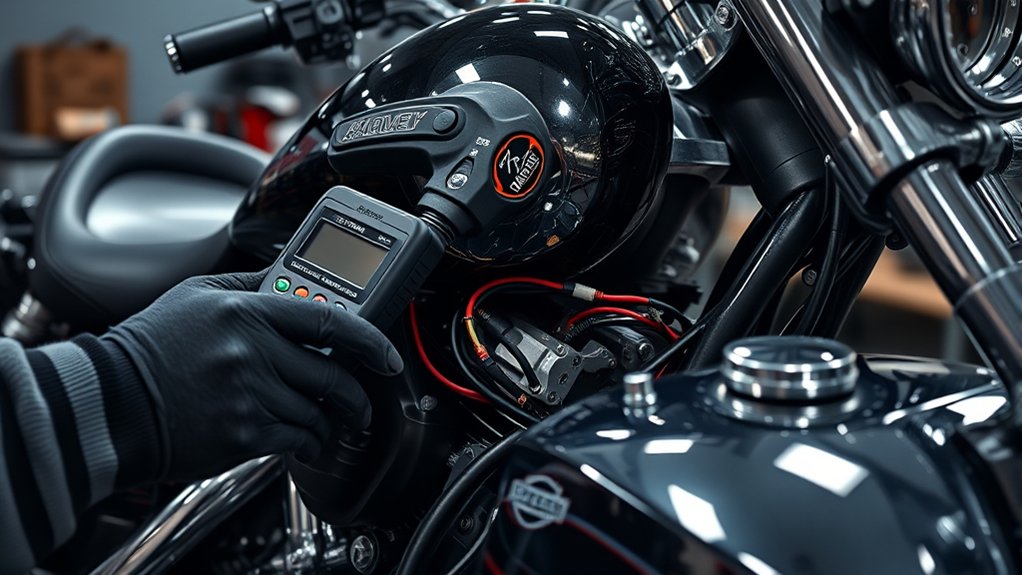
Although it may be hidden from plain sight, the Harley ECM plays a critical role in your motorcycle’s performance by controlling fuel injection, ignition timing, and other essential engine functions. Acting as the engine’s brain, the ECM processes real-time data from multiple sensors to optimize engine performance.
It precisely manages fuel injection to ensure efficient combustion and adjusts ignition timing for smooth acceleration and power delivery. Located typically under the seat or within the wiring harness, the ECM’s proper function is crucial for maintaining fuel efficiency and engine health.
If the ECM fails, these finely tuned processes can be disrupted, directly affecting how your Harley runs. Understanding the ECM’s role helps you appreciate its importance in preserving your motorcycle’s reliability and performance.
Common Symptoms of a Failing Harley ECM
When your Harley’s ECM begins to fail, you’ll notice distinct symptoms that directly impact engine performance and rideability. You might experience rough running or misfires caused by incorrect fuel and ignition timing. Difficulty starting or frequent stalling at low speeds often signals ECM malfunction.
The check engine light will likely come on, alerting you to potential ECM issues or a malfunctioning sensor.
Sudden power loss or hesitation during acceleration further indicates ECM problems affecting engine response.
You might also see irregular shifting because the ECM sends improper signals to the transmission control system. These performance issues reflect the ECM’s critical role in managing engine and transmission functions.
How ECM Issues Affect Engine Performance, Starting, and Transmission
When your Harley’s ECM acts up, you might have trouble starting it—things like difficulty cranking or the engine stalling unexpectedly. This happens because the ECM isn’t controlling fuel and spark the way it should.
You’ll probably also notice that acceleration and throttle response aren’t as smooth. That’s because the ECM is struggling to manage timing and fuel delivery properly.
On top of that, your transmission shifts might start feeling rough or unpredictable. This is due to incorrect information being sent to the TCM, which throws off the timing of gear changes.
Engine Starting Problems
How does a faulty ECM impact your Harley’s engine starting and overall performance? When the ECM malfunctions, it disrupts the precise control of fuel systems and ignition timing. This can lead to engine starting problems like difficulty cranking, misfires, or even a complete failure to start.
Incorrect signals to fuel injectors cause improper fuel delivery, which results in irregular idling or stalling right after you turn the ignition on.
Plus, a faulty ECM can mess with transmission shift timing, causing rough or delayed gear changes once the engine is running.
To figure out what’s going on, you’ll need diagnostic tools to pull error codes related to the ECM, sensors, or wiring faults that affect startup.
Taking care of these ECM-related engine starting problems quickly helps make sure your Harley stays in peak shape and runs reliably.
Acceleration And Throttle Issues
Although your Harley’s engine and transmission systems are designed to work seamlessly together, a failing ECM can disrupt this balance by causing delayed throttle response and unsteady acceleration. The ECM relies heavily on the throttle position sensor to monitor input accurately. When it’s faulty, it misinterprets throttle commands, leading to sluggish or erratic engine behavior.
Your engine management system struggles to regulate fuel delivery and ignition timing correctly. This causes stuttering, misfires, or hesitation during acceleration. When this happens, engine performance and drivability take a hit, making your ride unpredictable.
On top of that, the ECM’s failure to coordinate signals between the throttle and fuel systems may result in sudden power loss. This further impacts acceleration consistency. Catching and fixing ECM issues early helps keep your Harley’s throttle and engine management sharp, ensuring smooth power delivery and responsiveness.
Transmission Shift Irregularities
Issues with the ECM don’t just affect throttle response and acceleration. They can also disrupt your Harley’s transmission operation.
An ECM malfunction often causes transmission shift irregularities by sending incorrect or delayed data to the Transmission Control Module (TCM). This miscommunication leads to rough, herky-jerky shifts, unexpected engine revs, or the transmission getting stuck in the wrong gear.
These irregularities usually happen alongside engine performance issues like stalling or loss of acceleration.
To accurately diagnose transmission problems linked to ECM failure, you need to scan for error codes and check sensor signals. This precise approach helps avoid unnecessary repairs and makes sure you fix the root cause of your Harley’s shifting issues.
That way, you keep your engine and transmission running at their best.
Why Harley ECM Failure Lowers Fuel Economy

Because the Harley ECM controls fuel injection timing and mixture, any failure disrupts this critical process and lowers fuel economy. When ECM failure occurs, it sends incorrect signals to the fuel injectors, causing improper fuel delivery. This leads to an imbalanced air-fuel mixture, forcing the engine to run either too rich or too lean.
Both conditions increase fuel consumption and reduce mileage. Furthermore, a malfunctioning ECM distorts sensor data essential for precise fuel regulation, resulting in inconsistent engine tuning.
As a consequence, your Harley’s fuel system can’t maintain ideal combustion efficiency, causing noticeable drops in fuel economy.
Understanding how ECM failure affects fuel injectors and the air-fuel mixture clarifies why you experience reduced fuel efficiency when your Harley’s ECM goes bad. It’s all about keeping the right balance so your bike runs smoothly and economically.
How to Diagnose ECM Problems on Your Harley
When you suspect your Harley’s ECM is malfunctioning, pinpointing the problem requires systematic diagnosis using specialized tools and techniques.
To accurately diagnose ECM issues, follow these steps:
- Use an OBD-II scanner to retrieve error codes like P0600 or P0606, which directly indicate ECM problems.
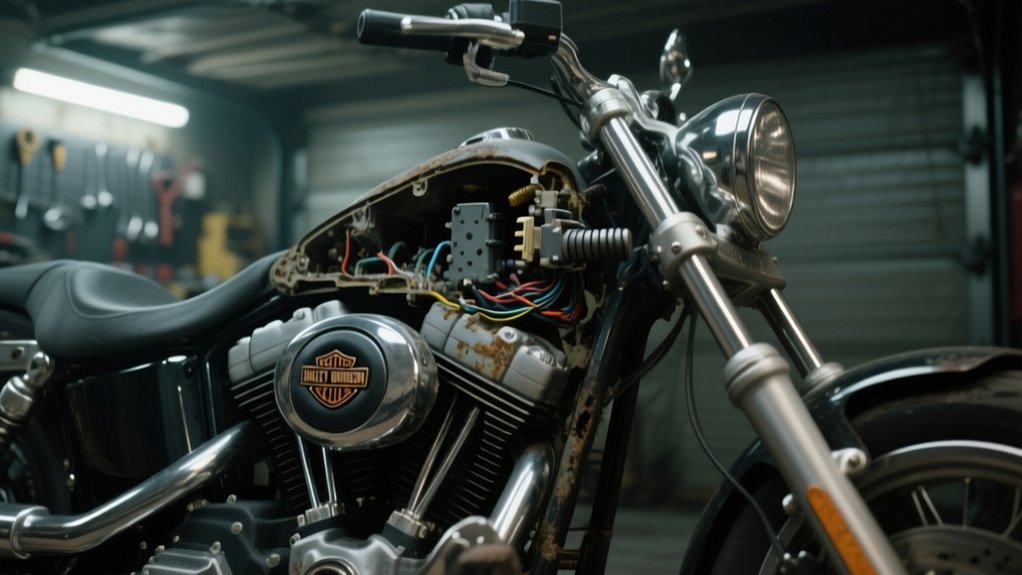
- Inspect wiring connections for looseness or damage to ensure proper sensor communication.
- Perform voltage and resistance tests on ECM pins with a multimeter to detect electrical faults.
- Note specific symptoms such as engine stalling, poor acceleration, or check engine light activation as indicators of ECM malfunction.
Make sure to consult Harley-specific diagnostic manuals for precise interpretation of error codes and troubleshooting protocols.
This structured approach helps you swiftly identify ECM issues without guesswork.
Fixing or Replacing a Faulty Harley ECM
You can often repair or reprogram a faulty Harley ECM to save time and money instead of just replacing it outright. It’s usually worth trying to fix it first, especially if you have the right tools and know-how.
But when replacement is necessary, make sure you install a pre-programmed unit. You’ll also want to use a compatible diagnostic tool to reflash it for your specific model.
Proper wiring and keeping the firmware updated are key to making sure your ECM runs smoothly and avoids future problems.
ECM Repair Options
Although ECM failure can disrupt your Harley’s performance, you have several repair options that can restore its functionality without a full replacement. ECM repair starts by diagnosing and addressing faulty components, such as damaged circuits or internal failures.
Once identified, authorized technicians can often rebuild or repair the module, extending its lifespan cost-effectively. After repairs, reprogramming the ECM ensures it matches your specific Harley model, maintaining ideal performance.
Consider these repair options:
- Thorough diagnostic testing to pinpoint faults
- Circuit-level repairs or component replacements
- Reprogramming to tailor the ECM to your bike’s specifications
- Preventive measures like proper installation and environmental protection
These steps help you avoid costly replacements while keeping your Harley running smoothly. It’s definitely worth exploring these options before deciding on a full ECM swap.
Reprogramming And Replacement
If your Harley’s ECM shows persistent faults that resist repair, reprogramming or replacement becomes necessary to restore reliable engine management. Reprogramming involves updating the Engine Control Module’s software to correct calibration errors and improve communication with other control units. This ensures peak performance.
Many specialized services can diagnose and reset the ECM’s internal firmware, syncing it precisely to your motorcycle’s model and year.
When reprogramming fails or the ECM is irreparable, replacement is required. This process means installing a pre-programmed Engine Control Module tailored to your Harley’s specifications.
Proper reprogramming or replacement not only prevents further engine malfunctions but also keeps you in line with warranty requirements.
Preventing ECM Failure: Maintenance and Environmental Tips
When maintaining your Harley’s ECM, protecting it from environmental factors is essential to prevent failure. Effective ECM protection hinges on regular maintenance and mindful environmental control.
Follow these critical steps to safeguard your ECM:
- Inspect and secure wiring connectors regularly to avoid corrosion and loose connections that can damage the ECM.
- Keep the engine bay clean and dry, minimizing moisture, dirt, and debris exposure.
- Ensure proper heat shielding and ventilation to prevent overheating from extreme temperatures.
- Use high-quality, weather-resistant covers or enclosures when parking outdoors to shield the ECM from harsh elements.
Taking these simple steps can really make a difference in keeping your ECM running smoothly. It’s all about staying proactive and paying attention to the little things.
Frequently asked questions
Can a Bad ECM Cause Electrical System Failures Beyond the Engine?
Yes, a bad ECM can cause electrical system failures beyond the engine. You’ll notice issues like flickering lights, dead circuits, or blown fuses because the ECM mismanages power distribution.
It can disrupt accessories such as gauges, turn signals, and audio systems by sending incorrect signals. This erratic behavior compromises safety features and causes unpredictable faults.
Basically, it impacts your Harley’s overall electrical system reliability.
How Long Does It Typically Take to Replace a Harley ECM?
Replacing a Harley ECM typically takes you about 1 to 2 hours if you’re skilled.
If the ECM isn’t pre-programmed, you’ll need extra time for reprogramming, adding 30 to 60 minutes.
Accessing the ECM might require removing panels, which can extend the process slightly.
Overall, you should expect a straightforward ECM replacement to fit within a half-day workshop session.
That’s assuming no complications come up during installation or coding.
It’s usually a pretty smooth job if you know what you’re doing.
Are There Aftermarket ECM Options for Harley Motorcycles?
Yes, you can use aftermarket ECMs for Harley motorcycles, and they’re often more than just replacements. Don’t worry about compatibility; many come pre-programmed for specific models, which makes installation a lot easier.
These units offer precise tuning options, increased horsepower, and better fuel management. Just make sure you choose a reputable brand and follow tuning guidelines to get the best results.
Proper setup helps prevent issues and really maximizes your Harley’s potential with an aftermarket ECM.
It’s definitely worth considering if you want to boost your bike’s performance.
Does a Faulty ECM Affect Harley’s Safety Features Like ABS?
Yes, a faulty ECM directly affects Harley’s safety features like ABS. When your ECM malfunctions, it disrupts sensor communication, causing the ABS warning light to come on or the system to become unresponsive.
This means incorrect data gets sent to the ABS module, which can mess with your braking performance. That increases the risk of skidding or losing control while riding.
Can Software Updates Prevent ECM Failure on Harley Bikes?
Think of software updates as the tune-ups for your Harley’s brain. Yes, they can prevent ECM failure by patching bugs and enhancing system stability.
When you regularly update, you guarantee your ECM stays compatible with new hardware and processes sensor data accurately.
This proactive maintenance reduces the risk of malfunctions, keeps your bike performing at its best, and extends the ECM’s lifespan.
It safeguards your ride against unexpected electronic hiccups. So, staying on top of updates really pays off in the long run.
Final Thought
When your Harley’s ECM goes haywire, it’s like your bike’s brain decides to take an unplanned vacation. Suddenly, everything’s off, from engine timing to fuel efficiency. You might feel like you’re wrestling a gremlin under the hood every time you try to start it.
But don’t panic. Diagnosing and fixing ECM issues is straightforward once you know what to look for. Keep up with maintenance, and your Harley will keep running as sharp as a scalpel.